
Cortisol and Atrophy: How British Stress Levels Kill T-Cells
Updated May 2026
Chronic elevation of cortisol due to modern UK lifestyle stressors induces apoptosis in developing thymocytes. We expose the direct link between psychological stress and physiological immune shrinkage.
Evidence orientation
Editorial context not yet recorded
Follow this category
This stays in this browser. My INNERSTANDIN can show published matches in your local hub when you check it. It does not send email, push, or alert notifications.
Local learning review
A private browser aid for revisiting ideas. It is not an alert or a health recommendation.
Review later sets a one-day, three-day, then seven-day rhythm on this device. Choose it only when you want to revisit this article.
Overview
The human immune system is often depicted as a static army, a fixed defensive force that either functions or fails. However, as senior biological researchers at INNERSTANDING, we recognise that the immune system is a dynamic, highly sensitive physiological architecture, governed by a master architect located just behind the breastbone: the thymus gland. This organ is the primary site of T-cell maturation, the "academy" where raw immune progenitors are schooled into sophisticated defenders.
In the contemporary British landscape, this academy is under siege. We are currently witnessing an unprecedented acceleration of thymic involution—the shrinking and fatty infiltration of the thymus gland—driven not by the passage of time alone, but by a relentless biochemical onslaught. The primary weapon of destruction is cortisol, the body’s chief stress hormone.
Chronic psychological stress, now endemic across the United Kingdom due to socio-economic instability and the erosion of work-life boundaries, does more than just "tire us out." It initiates a systemic, pro-apoptotic signalling cascade that systematically dismantles our cellular immunity. When cortisol levels remain chronically elevated, the thymus begins to wither, and the production of naïve T-cells—the system’s only hope against novel pathogens and mutated cancer cells—plummets. This article exposes the biological mechanisms by which modern British stress acts as a direct cytotoxin to our immune surveillance, leading to a state of premature immunosenescence.
Fact: By the age of 50, most individuals have lost approximately 80% of their functional thymic epithelial space, but chronic stress can accelerate this process by decades, leaving the body vulnerable to "inflammageing."
The Biology — How It Works
To understand why cortisol is so devastating to the thymus, we must first understand the gland's role. The thymus is responsible for thymopoiesis, the process by which lymphoid progenitor cells from the bone marrow migrate to the thymus to differentiate into mature T-lymphocytes.
The Education of T-Cells
T-cells are the "special forces" of the immune system. They must learn to distinguish between "self" (the body's own healthy cells) and "non-self" (viruses, bacteria, and tumours). This education occurs in the thymic cortex and medulla. Cells that fail this education—either because they are non-functional or because they attack the body—are normally eliminated through programmed cell death.
The HPA Axis: The Stress Command Centre
The body’s response to stress is governed by the Hypothalamic-Pituitary-Adrenal (HPA) axis. When the brain perceives a threat—be it a looming deadline in a London office or financial anxiety in a struggling Midlands town—the hypothalamus releases Corticotropin-Releasing Hormone (CRH). This triggers the pituitary gland to secrete Adrenocorticotropic Hormone (ACTH), which finally prompts the adrenal glands to flood the bloodstream with cortisol.
The Cortisol Paradox
In acute, "fight or flight" scenarios, cortisol is beneficial. It suppresses non-essential functions to prioritise survival. However, the thymus is exceptionally sensitive to glucocorticoids (the class of hormones cortisol belongs to). The thymus contains a high density of glucocorticoid receptors (GRs). While these receptors are necessary for fine-tuning T-cell selection, an overabundance of cortisol turns this regulatory mechanism into a self-destruct button.
Important Statistic: Research indicates that individuals experiencing high-load psychological stress exhibit a 20-40% reduction in circulating naïve T-cells compared to low-stress counterparts of the same age.
Mechanisms at the Cellular Level
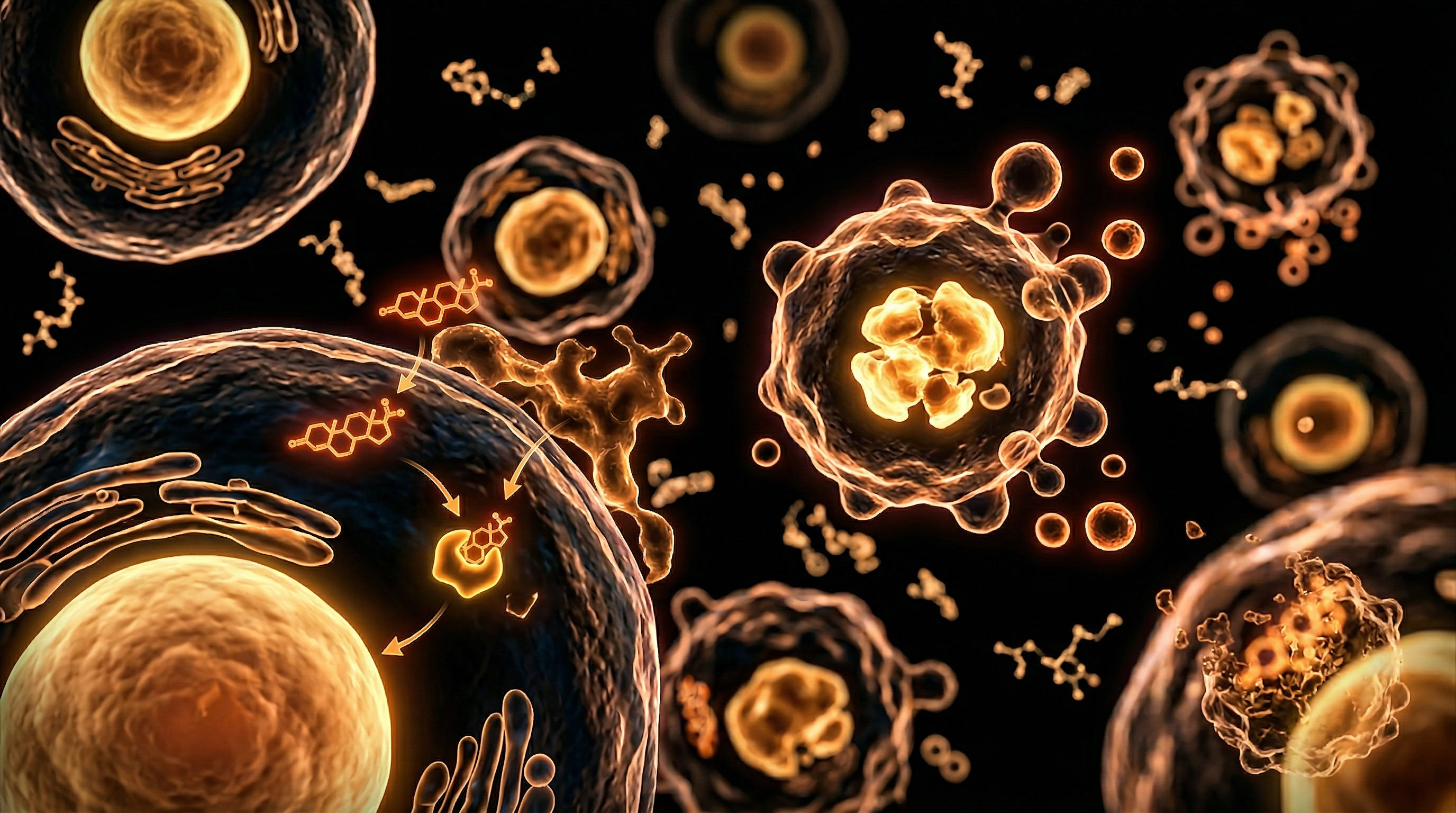
The destruction of T-cells by cortisol is not an accidental byproduct; it is a precisely orchestrated molecular execution. When cortisol binds to the glucocorticoid receptors on thymocytes (developing T-cells), it initiates a sequence of genomic and non-genomic events that lead to apoptosis.
The Genomic Signal for Death
Cortisol is a lipophilic molecule, meaning it passes easily through cell membranes. Once inside a thymocyte, it binds to the GR in the cytoplasm. This complex then translocates into the nucleus, where it acts as a transcription factor. It binds to specific DNA sequences called Glucocorticoid Response Elements (GREs).
In the thymus, this binding promotes the expression of "death genes" while suppressing "survival genes." Specifically:
- BCL-2 Suppression: Cortisol inhibits the expression of BCL-2, an anti-apoptotic protein that normally protects cells.
- BIM and BAX Activation: It upregulates pro-apoptotic proteins like BIM and BAX, which punch holes in the mitochondrial membrane.
Mitochondrial Collapse and Caspase Activation
Once the mitochondrial membrane is breached, Cytochrome C leaks into the cytoplasm. This is the point of no return. Cytochrome C facilitates the formation of the apoptosome, which activates a family of protease enzymes known as caspases.
- Caspase-3, the "executioner caspase," begins to systematically dismantle the cell’s structural proteins and DNA.
- The result is the fragmentation of the thymocyte, which is then cleared away by macrophages, leaving behind a void in the immune repertoire.
The Role of Thymic Epithelial Cells (TECs)
Cortisol doesn't just kill the T-cells; it destroys their "schoolhouse." Thymic Epithelial Cells (TECs) provide the structural framework and chemical signals (cytokines) necessary for T-cell maturation. High cortisol levels induce atrophy in these epithelial cells and promote their replacement with adipocytes (fat cells). This is known as adipose involution. Once the thymic microenvironment is replaced by fat, the organ’s capacity to produce new T-cells is permanently compromised.
Environmental Threats and Biological Disruptors
In the UK, the biological impact of cortisol is compounded by environmental factors that act as synergistic disruptors. The modern British environment is uniquely suited to keeping the HPA axis in a state of chronic hyper-activation.
Artificial Light and Circadian Misalignment
The UK’s high latitude and urban density mean many citizens spend their winters in near-permanent artificial light. Blue light from screens and LED streetlights suppresses melatonin production, which is a natural antagonist to cortisol. Without the nocturnal "cortisol dip," the thymus is exposed to high levels of glucocorticoids 24 hours a day.
Endocrine Disrupting Chemicals (EDCs)
The UK’s industrial legacy and current waste management issues have led to high concentrations of phthalates and bisphenols in the environment. These EDCs can mimic or interfere with steroid hormones. When these chemicals interact with the HPA axis, they lower the threshold for cortisol release, making the body over-reactive to minor psychological stressors.
The "Grey Sky" Vitamin D Crisis
Vitamin D is a potent immunomodulator and plays a role in protecting the thymus from premature involution. Due to the UK’s climate, a vast majority of the population is Vitamin D deficient for six months of the year. This deficiency renders the thymus even more susceptible to the damaging effects of cortisol, as Vitamin D usually helps regulate the sensitivity of the glucocorticoid receptor.
- Air Pollution: Particulate matter (PM2.5) in major British cities has been linked to systemic inflammation, which further stimulates the adrenal glands.
- Microplastics: Emerging research suggests microplastics can infiltrate lymphoid tissues, causing physical micro-trauma that exacerbates the stress-induced apoptotic response.
Callout: Environmental stressors don't just add to the load; they multiply the damage. A stressed Londoner with Vitamin D deficiency is biologically "older" than their chronological age suggests.
The Cascade: From Exposure to Disease
The loss of thymic volume and the death of T-cells is not merely a laboratory observation; it has devastating real-world consequences. This process leads to a state known as Immunosenescence.
The Rise of the "Zombie" Cells
As the thymus fails to produce new, "naïve" T-cells, the body is forced to rely on a shrinking pool of older, "memory" T-cells. These cells eventually become senescent. They no longer divide or fight infection effectively, but they refuse to die. Instead, they linger and secrete pro-inflammatory cytokines, a phenomenon known as the Senescence-Associated Secretory Phenotype (SASP).
Inflammageing
This chronic, low-grade systemic inflammation is termed inflammageing. It is the root cause of most modern British chronic diseases:
- Autoimmunity: A shrunken thymus loses its ability to perform "negative selection" (killing T-cells that attack the self). This leads to the escape of self-reactive T-cells, driving the UK's rising rates of Rheumatoid Arthritis and Hashimoto’s Thyroiditis.
- Cancer Vulnerability: The immune system’s "surveillance" T-cells (CD8+ Cytotoxic T-cells) are the primary defence against tumours. When cortisol kills these cells' precursors, the body’s ability to detect and destroy early-stage cancer cells is severely diminished.
- Vaccine Unresponsiveness: Older or stressed individuals often show poor responses to vaccinations (such as the flu jab) because they lack the naïve T-cell population required to "learn" the new viral signature.
Cardiovascular Erosion
Chronic cortisol elevation increases blood pressure and arterial stiffness. When combined with the systemic inflammation caused by a failing thymus, the risk of atherosclerosis and myocardial infarction (heart attack) skyrockets.
What the Mainstream Narrative Omits
The mainstream medical establishment in the UK—largely driven by the pharmaceutical model—tends to treat the symptoms of immune decline rather than the source. We must expose what is being ignored.
The Profitability of Symptom Management
The NHS and private healthcare sectors are geared towards managing chronic illnesses (diabetes, heart disease, autoimmune conditions) with lifetime prescriptions. There is little financial incentive for the "Medical-Industrial Complex" to promote thymic regeneration or aggressive stress-mitigation strategies. Treating the "shrunken shield" (the thymus) would prevent the very diseases that fuel pharmaceutical profits.
The Denial of "Psychoneuroimmunology"
While the field of Psychoneuroimmunology (PNI) has existed for decades, its findings are rarely integrated into standard GP consultations. Patients are told their "stress" is a mental health issue, separate from their "physical" health. This duality is a biological lie. Every thought of financial ruin or social rejection is translated into a biochemical signal that physically kills immune cells in the thymus.
The Omission of Nutritional Cofactors
Mainstream guidelines often ignore the specific nutritional requirements for thymic health. For example, Zinc is essential for the function of thymulin, a hormone produced by the thymus. Yet, zinc deficiency is widespread in the UK diet, which is increasingly reliant on ultra-processed foods. Without zinc, the thymus cannot function, yet it is rarely tested in standard blood panels.
Fact: The thymus gland is the most sensitive organ in the body to nutritional status. It can shrink to half its size during periods of malnutrition or high stress in as little as 48 hours.
The UK Context
The United Kingdom presents a unique and harrowing case study in stress-induced immune failure. Several factors make the British "cortisol profile" particularly lethal.
The "Stiff Upper Lip" and Emotional Repression
British culture historically prizes the suppression of emotion. From a biological perspective, "bottling it up" is a disaster. Internalised stress leads to a prolonged, slow-burn release of cortisol, as opposed to the acute "shouting" response which allows cortisol levels to return to baseline quickly. This cultural trait essentially keeps the thymus in a constant "bath" of glucocorticoids.
The Housing and Cost-of-Living Crisis
The UK currently faces some of the highest housing costs in Europe. Chronic housing insecurity and "fuel poverty" create a state of survival stress. This isn't the kind of stress our ancestors faced (running from a predator); it is a 24/7, multi-year psychological grind. The result is a generation of British citizens whose immune systems are biologically decades older than their actual age.
The Erosion of Green Space
The "British Countryside" is increasingly inaccessible to those in hyper-urbanised areas. Exposure to phytoncides (airborne chemicals from trees) has been shown to lower cortisol and boost Natural Killer (NK) cell activity. The lack of "Forest Bathing" opportunities in the UK's concrete-heavy cities removes a vital natural buffer against thymic atrophy.
The NHS Crisis as a Stressor
The collapse of timely healthcare access creates a secondary loop of stress. The anxiety of waiting for a referral or an ambulance becomes a physiological burden, further damaging the immune system that the patient is trying to protect.
- The "Burnout" Economy: The UK's high-pressure service economy demands long hours, further disrupting the HPA axis and preventing the rest-and-digest (parasympathetic) state required for thymic repair.
Protective Measures and Recovery Protocols
While the situation is dire, the thymus possesses a remarkable capacity for resilience—provided the right conditions are met. To halt thymic atrophy and begin the process of rejuvenation, we must move beyond standard advice.
1. Radical Cortisol Management
Lowering cortisol is the first priority. This is not about "relaxing"; it is about biochemical intervention.
- Vagus Nerve Stimulation: Techniques such as cold water immersion (the "cold shower" trend has biological merit) and deep diaphragmatic breathing can force the body into a parasympathetic state, shutting off the cortisol tap.
- Ashwagandha and Adaptogens: These herbs specifically modulate the HPA axis, reducing the adrenal output of cortisol during stress.
2. Nutritional Fortification
The thymus requires specific building blocks to resist involution.
- Zinc and Selenium: These minerals are non-negotiable for thymocyte survival and thymulin production.
- Vitamin D3 + K2: Aim for "optimal" levels (100-150 nmol/L), not just "sufficient" levels.
- Vitamin C: The adrenal glands house some of the highest concentrations of Vitamin C in the body; chronic stress depletes this, leading to further HPA dysfunction.
3. Circadian Reset
Aligning with the natural light cycle is a powerful way to regulate cortisol.
- Morning Sunlight: Getting 10-20 minutes of direct sunlight (even on a grey UK morning) sets the cortisol-melatonin timer.
- Blackout Environments: Ensure the bedroom is pitch black to allow for the deep sleep required for growth hormone release—a natural antagonist to cortisol that promotes thymic health.
4. Advanced Interventions
For those looking to go further, certain compounds show promise in thymic rejuvenation.
- Metformin and DHEA: The "TRIIM" (Thymus Regeneration, Immunorestoration, and Insulin Mitigation) trial suggested that a combination of Metformin, DHEA, and Growth Hormone could actually reverse thymic involution in humans.
- Thymic Peptides: Compounds like Thymalin or Thymosin Alpha-1 (though often restricted to clinical or research settings) are being studied for their ability to directly stimulate the gland.
5. The "Innerstanding" Psychological Shift
We must move from a "victim" state to an "agentic" state. Recognising that the news cycle, the commute, and the workplace are biological threats allows us to build psychological barriers. By refusing to engage in the "Great British Burnout," we are quite literally saving our T-cells.
Callout: Recovery is not a luxury; it is a biological necessity. Every hour spent in deep relaxation is a "scholarship" for a new generation of T-cells.
Summary: Key Takeaways
The connection between the British mind and the British immune system is absolute. Cortisol is the chemical bridge that carries our psychological burdens into our cellular reality.
- The Thymus is the Hub: Your immune age is dictated by the health of your thymus, not your date of birth.
- Cortisol is the Assassin: Chronic stress triggers a molecular "death signal" in the thymus, leading to the apoptosis of T-cells and the replacement of the gland with fat.
- The UK is a High-Risk Environment: Socio-economic pressures, light pollution, and cultural habits in the UK create a "perfect storm" for immune decline.
- Involution is Not Inevitable: While some shrinking is natural, the rate is within our control. Through cortisol management, nutritional support (Zinc, Vit D), and lifestyle shifts, we can protect our "immune academy."
- Expose the Narrative: We must look past a medical system that ignores the thymus and recognize that our stress levels are a direct determinant of our longevity and resistance to disease.
At INNERSTANDING, we believe that knowledge is the first step toward biological sovereignty. By understanding the cellular cost of stress, we can begin to rebuild the shields that modern life has systematically dismantled. Your T-cells are dying for a moment of peace—it is time to give it to them.
This article is provided for informational and educational purposes only. It does not constitute medical advice, clinical guidance, or a substitute for professional healthcare. Information reflects cited research at time of publication. Always consult a qualified healthcare professional before acting on any health information.
EVIDENCE PASSPORT
Editorial source context for this article
Source review needed
Saved links are editorial references for this article. They may support specific claims rather than every sentence. Open and assess each source in context. This passport does not independently verify them.
Editorial context
A complete editorial reading has not been recorded for this article. Source links remain available for you to open and assess directly.
Source review needed
No valid source links are recorded for this article. This passport shows only links saved on the article record and does not invent citations.
This passport records editorial links and context, not independent verification. Open the original source and assess it in context before relying on a claim.
Medical Disclaimer
The information in this article is for educational purposes only and does not constitute medical advice, diagnosis, or treatment. Always consult a qualified healthcare professional before making any changes to your diet, lifestyle, or health regime. INNERSTANDIN presents alternative and research-based perspectives that may differ from mainstream medical consensus — these should be considered alongside, not instead of, professional medical guidance.
Read Full DisclaimerContinue the thread
Keep this question moving.
Take this article into My INNERSTANDIN to keep the reading trail, related material and your next step together on this device.
Explore this in the Body Map
See where this hits your biology. Interactive anatomy, threats, and protective protocols.
Dig deeper in the Library
Free, longform PDF volumes that go beyond headlines into mechanisms and references.