
Cortisol and Telogen Effluvium: How Chronic Stress Shuts Down the Hair Cycle
Elevated cortisol levels can force hair follicles prematurely into the resting phase, causing sudden shedding known as telogen effluvium. Understand the physiological link between the nervous system and the scalp.
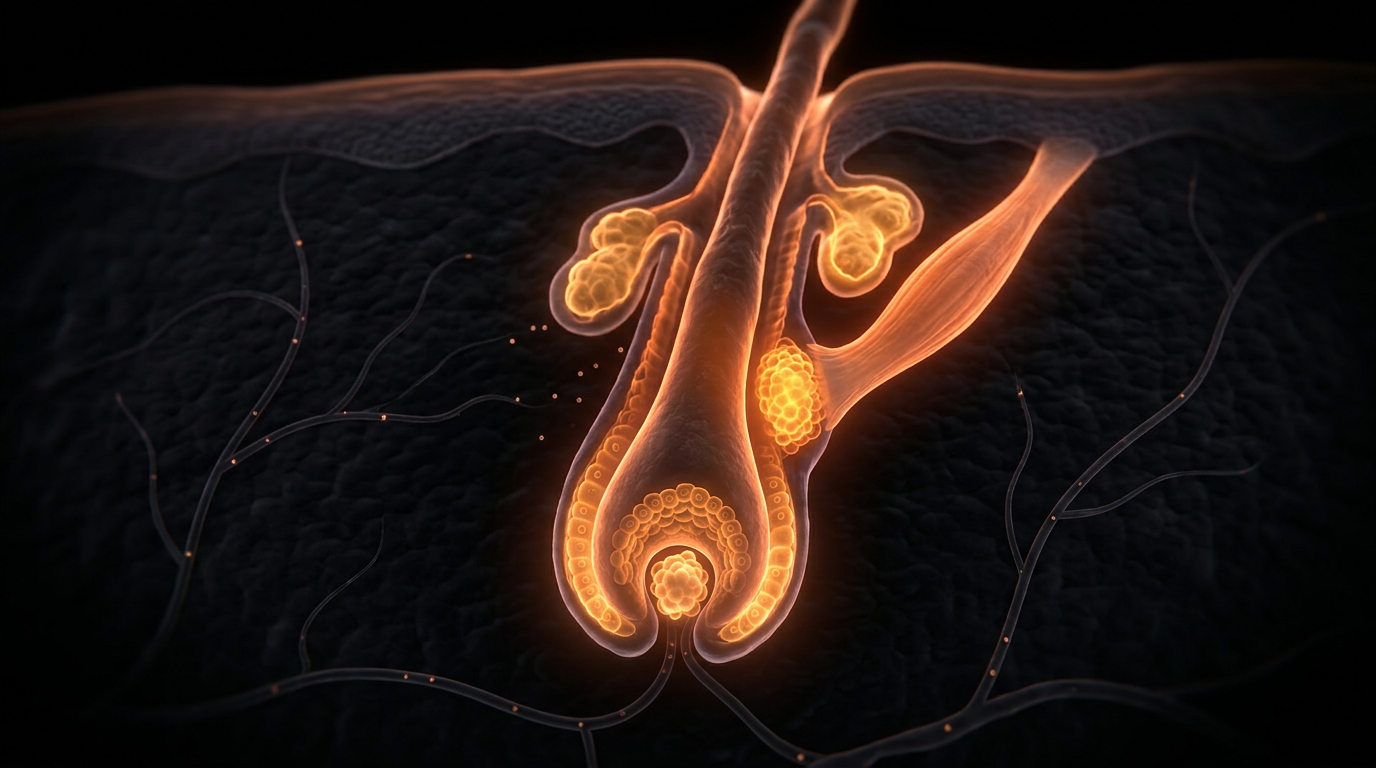
# Cortisol and Telogen Effluvium: How Chronic Stress Shuts Down the Hair Cycle
Overview
In the hierarchy of human biological priorities, the hair follicle occupies a precarious position. To the individual, a thick head of hair is a symbol of vitality, identity, and health. To the body’s survival mechanisms, however, hair is entirely expendable. When the human organism perceives a threat—whether that threat is a physical injury, a viral pathogen, or the unrelenting psychological pressure of modern British life—it undergoes a metabolic triage.
Resources are diverted away from "non-essential" growth processes and funneled toward the vital organs: the heart, the lungs, and the brain. This physiological re-allocation is governed primarily by cortisol, the body’s primary stress hormone. While cortisol is essential for short-term survival, its chronic elevation acts as a silent executioner of the hair growth cycle.
This article explores the systemic betrayal of the hair follicle by the nervous system. We are not merely discussing "thinning hair"; we are examining Telogen Effluvium (TE)—a reactive condition where the biological clock of the hair follicle is forcibly accelerated, leading to the premature termination of growth and a distressing, diffuse shedding. At INNERSTANDING, we believe that understanding the scalp requires a profound understanding of the internal environment. To fix the hair, one must first address the storm within the nervous system.
UK FACT: According to the Health and Safety Executive (HSE), stress, depression, or anxiety accounted for 49% of all work-related ill health cases in Great Britain in 2022/23. This systemic psychological burden is a primary driver for the rising clinical cases of Telogen Effluvium seen in UK trichology clinics.
The Biology — How It Works
To understand how cortisol wreaks havoc, we must first understand the rhythmic nature of the hair follicle. Unlike other organs, the hair follicle is a regenerative mini-organ that cycles through distinct phases of activity and dormancy.
The Hair Growth Cycle
- —Anagen (The Growth Phase): This is the active phase where hair cells divide rapidly. In a healthy scalp, approximately 85-90% of hairs are in this phase, which can last anywhere from two to seven years.
- —Catagen (The Transition Phase): A short, two-to-three-week burst where the hair follicle shrinks and detaches from the dermal papilla (its blood supply).
- —Telogen (The Resting Phase): The follicle remains dormant for about three months. The "old" hair remains in place while the follicle prepares to reset.
- —Exogen (The Shedding Phase): The old hair is finally released, and a new anagen hair begins to emerge.
The Cortisol Interference
Under normal conditions, these phases are managed by a delicate balance of growth factors and signalling proteins. However, the hair follicle is highly sensitive to the Hypothalamic-Pituitary-Adrenal (HPA) axis.
When you experience chronic stress, the hypothalamus releases Corticotropin-Releasing Hormone (CRH), which signals the pituitary gland to release Adrenocorticotropic Hormone (ACTH), which finally prompts the adrenal glands to flood the system with cortisol.
In the context of the scalp, cortisol acts as a "stop" signal. High concentrations of systemic cortisol—or even locally produced cortisol within the follicle itself—force a disproportionate number of anagen hairs to skip the rest of their growth phase and bolt straight into the Telogen (resting) phase. This is the definition of Telogen Effluvium: a mass exodus of follicles from growth to rest. Because the telogen phase lasts approximately 100 days, the visible shedding typically occurs three months after the inciting stressful event.
Mechanisms at the Cellular Level
The damage cortisol inflicts isn't just a general "slowing down" of the body; it is a specific, biochemical assault on the structural integrity of the follicle.
1. Proteoglycan Degradation
The hair follicle is encased in a "follicular graveyard" or extra-cellular matrix (ECM) rich in proteoglycans. These are complex molecules like versican and decorin that maintain the follicle's structural health and signal it to stay in the anagen phase. Cortisol is catabolic, meaning it breaks down complex molecules. Research has shown that elevated cortisol levels can increase the degradation of these essential proteoglycans by up to 40%. Without this protective "cushion," the follicle cannot sustain growth and collapses into the resting phase.
2. Inhibition of the Dermal Papilla
The Dermal Papilla (DP) is the "brain" of the hair follicle. It sits at the base and regulates hair thickness and length by secreting growth factors such as Insulin-like Growth Factor-1 (IGF-1) and Keratinocyte Growth Factor (KGF). Cortisol directly binds to receptors on the Dermal Papilla, inhibiting the secretion of these growth factors. When IGF-1 levels drop, the follicle loses its signal to continue cell division. Essentially, cortisol mutes the "grow" command, leaving the follicle with no choice but to hibernate.
3. Vasoconstriction and Nutrient Depletion
The stress response triggers the sympathetic nervous system, leading to vasoconstriction (narrowing of blood vessels). While this ensures blood reaches your muscles so you can "fight or flee," it starves the scalp. The hair follicle is one of the most metabolically active tissues in the human body; it requires a constant stream of oxygen, amino acids, and vitamins. By restricting blood flow, chronic stress induces a localized nutrient deficiency, even if your diet is theoretically "perfect."
UK FACT: Data from the NHS suggests that prescriptions for antidepressants and anti-anxiety medications have reached record highs in England. These medications, while often necessary, reflect a population under extreme biological stress—a state that directly correlates with the "silent epidemic" of hair thinning reported by British pharmacists.
Environmental Threats and Biological Disruptors
While cortisol is the primary messenger, its impact is amplified by the modern environment. In the UK, several "biological disruptors" synergise with stress to accelerate the onset of Telogen Effluvium.
The Circadian Mismatch
The hair cycle is intrinsically linked to our circadian rhythms. Every hair follicle contains "clock genes" (such as BMAL1 and CLOCK) that dictate when a hair should grow and when it should rest. The UK’s high prevalence of "blue light" exposure from screens and the lack of natural sunlight—especially during the winter months—disrupts melatonin production. Melatonin is not just a sleep hormone; it is a potent antioxidant that has been shown to counteract cortisol’s damage in the scalp. When we live out of sync with natural light cycles, we strip the hair of its primary hormonal shield.
Hard Water and Chemical Load
Many regions of the UK, particularly the South East and London, suffer from extremely hard water. The high mineral content (calcium and magnesium) can create a "film" on the scalp, leading to micro-inflammation. When a scalp is already stressed by high cortisol, this external chemical irritation can trigger an inflammatory response that further pushes follicles into the telogen phase.
The "Ultra-Processed" Nutrient Gap
Cortisol depletion isn't just about what is *present* (stress), but what is *absent*. To combat the oxidative stress caused by cortisol, the body uses up vast amounts of B vitamins, Vitamin C, and Magnesium. The "Western Pattern Diet," prevalent in many UK households, is calorie-rich but micronutrient-poor. This creates a physiological "double whammy": the body is too stressed to grow hair and too nutrient-depleted to repair the damage.
The Cascade: From Exposure to Disease
Telogen Effluvium does not happen in a vacuum; it is a progressive cascade. Understanding the timeline is crucial for recovery.
- —The Trigger (Day 0): A major stressor occurs. This could be a bereavement, a high-pressure deadline, a severe bout of flu (like COVID-19), or a crash diet. Cortisol spikes and remains high.
- —The Signalling Shift (Days 1-30): Systemic cortisol begins degrading proteoglycans in the scalp. The HPA axis remains hyper-activated. Growth factors (IGF-1) are suppressed.
- —The Transition (Days 30-90): The follicles that were shocked by the cortisol spike enter the Catagen and then Telogen phases. On the surface, nothing looks different yet. The person may feel they have "gotten over" the stress.
- —The Shedding Event (Day 90+): This is the "shock" moment. As new hairs finally try to push through from underneath, the old, detached telogen hairs fall out in large clumps—often in the shower or hairbrush.
- —The Chronic Loop: If the stressor is not removed, or if the individual becomes stressed *about* the hair loss (a common psychological trap), the HPA axis remains active, and the cycle repeats. This is known as Chronic Telogen Effluvium.
UK FACT: A study by the Mental Health Foundation found that 74% of UK adults have at some point felt so stressed they were overwhelmed or unable to cope. This level of systemic distress is a biological "red alert" that makes hair loss almost inevitable for those with a genetic or constitutional predisposition.
What the Mainstream Narrative Omits
The conventional approach to hair loss in the UK often begins and ends with a GP visit or a trip to a high-street chemist. However, the mainstream narrative is riddled with omissions that prevent true healing.
The Myth of "Just Genetics"
Mainstream medicine often conflates Telogen Effluvium with Androgenetic Alopecia (male/female pattern baldness). While genetics play a role in *sensitivity*, TE is a functional disorder. By labelling it as "inevitable aging," the medical establishment ignores the reversible hormonal and environmental drivers.
The Minoxidil Trap
Many are directed toward topical treatments like Minoxidil. While Minoxidil can stimulate blood flow, it does nothing to lower cortisol or restore the proteoglycan scaffold. Using a growth stimulant on a follicle that is being chemically shut down by cortisol is like trying to accelerate a car while the handbrake is fully engaged. It may provide temporary results, but the underlying "engine failure" remains unaddressed.
The Pharmaceutical Oversight
The mainstream narrative rarely discusses the "Gut-Brain-Hair Axis." Chronic stress alters the gut microbiome (dysbiosis), leading to increased intestinal permeability (leaky gut). This triggers systemic inflammation, which is a known catalyst for hair follicle miniaturisation. You cannot fix the hair without fixing the gut, yet this is almost never mentioned in standard dermatological consultations.
The UK Context: A Perfect Storm for Scalp Stress
The United Kingdom presents a unique set of challenges that make its population particularly susceptible to cortisol-induced hair loss.
The "Sick Note" Culture and Productivity Pressure
The UK has one of the longest working hours in Europe, combined with a "hustle culture" that glamorises sleep deprivation. The biological cost of this is a permanently elevated baseline of cortisol. In cities like London, the added stressors of commuting, noise pollution, and the cost-of-living crisis create a state of "Allostatic Load"—the wear and tear on the body that accumulates when an individual is exposed to repeated or chronic stress.
Vitamin D: The "Sunlight" Deficiency
Vitamin D is a pro-hormone essential for the hair follicle's anagen phase. Due to our northern latitude, an estimated 1 in 6 adults in the UK have low levels of Vitamin D. Vitamin D actually helps regulate cortisol levels. When you combine high stress with the UK's chronic Vitamin D deficiency, the hair follicle is left without its primary defensive and regenerative tools.
UK FACT: The British Association of Dermatologists has noted a significant spike in "Telogen Effluvium" cases following the COVID-19 pandemic. This is attributed to both the physiological stress of the virus and the psychological trauma of lockdowns, creating a nationwide "synchronised shedding" event.
Protective Measures and Recovery Protocols
Recovery from Telogen Effluvium is not about a "miracle shampoo." It is about bio-hacking the nervous system and providing the building blocks for regeneration.
1. Nervous System Regulation (Downregulating the HPA Axis)
To stop the shedding, you must signal safety to the body.
- —Adaptogens: Herbs like Ashwagandha (KSM-66) and Rhodiola Rosea have been clinically shown to reduce serum cortisol levels.
- —Vagus Nerve Stimulation: Practices such as deep diaphragmatic breathing or cold-water exposure (common in the UK "wild swimming" trend) can flip the switch from the sympathetic (fight/flight) to the parasympathetic (rest/digest) nervous system.
2. Proteoglycan Replacement Therapy
Since cortisol destroys the follicle's structural matrix, replacing these proteins is vital. Specific bioactive proteoglycans, often derived from marine sources, can help "re-anchor" the hair and trick the follicle back into the anagen phase.
3. Nutrient Loading for Recovery
- —Zinc and Magnesium: Essential for protein synthesis and lowering the stress response.
- —Biotin and B12: Essential for the metabolic demands of the rapidly dividing hair cells.
- —Iron (Ferritin): Low iron is a common co-factor for TE in the UK, especially among women. Ensure ferritin levels are above 70 ng/mL for optimal growth.
4. Scalp Micro-Environment
- —Water Filtration: If you live in a hard-water area (London, Birmingham, Bristol), install a shower filter to remove chlorine and heavy metals that exacerbate scalp inflammation.
- —Scalp Massage: 4 minutes of daily scalp massage has been shown to increase hair thickness by stretching the dermal papilla cells, mechanically stimulating the growth signals that cortisol suppresses.
UK FACT: A survey by the "Healthy Air Campaign" highlighted that air pollution in major UK cities can lead to "oxidative stress" on the scalp, which mimics the effects of cortisol. Using antioxidant-rich scalp serums (containing Vitamin E or Green Tea extract) is increasingly necessary for urban dwellers.
Summary: Key Takeaways
- —Hair as a Bio-Indicator: Your hair is a living record of your internal stress levels from three months ago. Sudden shedding is a clear signal that your nervous system is overwhelmed.
- —Cortisol is the Catalyst: Elevated cortisol halts the production of growth factors and destroys the proteoglycan matrix that supports the hair follicle.
- —The Three-Month Lag: Do not look at yesterday’s stress for today’s hair loss. Look back twelve weeks to find the true trigger.
- —The NHS Gap: Standard UK medical advice often overlooks the systemic link between the HPA axis, gut health, and the scalp. A holistic approach is mandatory.
- —Recovery is Possible: Telogen Effluvium is generally reversible. By lowering cortisol, correcting nutrient deficiencies (especially Vitamin D and Iron), and regulating the nervous system, you can "re-boot" the hair cycle.
Innerstanding the hair cycle requires us to stop viewing hair loss as a cosmetic failure and start viewing it as a biological cry for help. Your scalp is the mirror of your soul's stress—calm the mind, and the hair will follow.
This article is provided for informational and educational purposes only. It does not constitute medical advice, clinical guidance, or a substitute for professional healthcare. Information reflects cited research at time of publication. Always consult a qualified healthcare professional before acting on any health information.
RESEARCH FOUNDATIONS
Biological Credibility Archive
Chronic stress elevates corticosterone levels which inhibit the expression of Gas6, a molecule essential for activating hair follicle stem cells to enter the growth phase.
The hair follicle is a significant peripheral target of stress mediators, where glucocorticoids trigger premature catagen entry and disrupt the anagen-to-telogen transition.
Stress-induced activation of the hypothalamic-pituitary-adrenal axis results in high systemic cortisol that suppresses the proliferation of follicular keratinocytes.
Elevated cortisol levels lead to the accelerated degradation of follicular proteoglycans, which are vital for maintaining the anagen phase of the hair cycle.
Cortisol treatment in vitro significantly reduces the expression of growth factors in human dermal papilla cells, providing a molecular mechanism for stress-related hair shedding.
Citations provided for educational reference. Verify via PubMed or institutional databases.
Medical Disclaimer
The information in this article is for educational purposes only and does not constitute medical advice, diagnosis, or treatment. Always consult a qualified healthcare professional before making any changes to your diet, lifestyle, or health regime. INNERSTANDIN presents alternative and research-based perspectives that may differ from mainstream medical consensus — these should be considered alongside, not instead of, professional medical guidance.
Read Full DisclaimerReady to learn more?
Continue your journey through our classified biological research.
DISCUSSION ROOM
Members of THE COLLECTIVE discussing "Cortisol and Telogen Effluvium: How Chronic Stress Shuts Down the Hair Cycle"
SILENT CHANNEL
Be the first to discuss this article. Your insight could help others understand these biological concepts deeper.
THE ARSENAL
Based on Hair Health & Follicle Biology — products curated by our research team for educational relevance and biological support.
Magnesium Blend – The Most Important Mineral

Clean Slate – Detoxes thousands of chemicals,heavy metals, pesticides, allergens, mold spores and fungus
Vegan Essential Amino Acids – Plant-Powered Protein Building
INNERSTANDING may earn a commission on purchases made through these links. All products are selected based on rigorous educational relevance to our biological research.
RABBIT HOLE
Follow the biological thread deeper