
D-Dimer Elevation: Monitoring Silent Coagulation Issues in Post-Viral Clinics
Updated May 2026
A guide to understanding blood markers that indicate ongoing clotting risks in asymptomatic individuals. This article emphasizes the importance of early screening for vascular complications.
Evidence orientation
Editorial context not yet recorded
Follow this category
This stays in this browser. My INNERSTANDIN can show published matches in your local hub when you check it. It does not send email, push, or alert notifications.
Local learning review
A private browser aid for revisiting ideas. It is not an alert or a health recommendation.
Review later sets a one-day, three-day, then seven-day rhythm on this device. Choose it only when you want to revisit this article.
Overview
In the wake of the global health crisis that defined the early 2020s, a new and more insidious clinical challenge has emerged. Post-viral clinics, once niche departments, are now inundated with patients suffering from a bewildering array of systemic symptoms: chronic fatigue, cognitive impairment (often termed ‘brain fog’), shortness of breath, and unexplained chest pains. At the heart of this multifaceted pathology lies a silent, microscopic dysfunction of the vascular system. Central to identifying this dysfunction is the D-dimer test—a biomarker that has transitioned from an acute diagnostic tool in emergency rooms to a vital sentinel for monitoring chronic, sub-clinical coagulation issues.
For the senior biological researcher, the elevation of D-dimer in seemingly healthy, asymptomatic individuals is not merely a laboratory abnormality; it is a klaxon sounding for thrombotic risk and endothelial distress. This article explores the biological underpinnings of why persistent D-dimer elevation has become a hallmark of post-viral and spike protein-related syndromes. We will dissect the mechanisms of "silent" clotting, the failure of conventional diagnostic frameworks to account for micro-thrombosis, and the urgent necessity for early screening to prevent catastrophic vascular events.
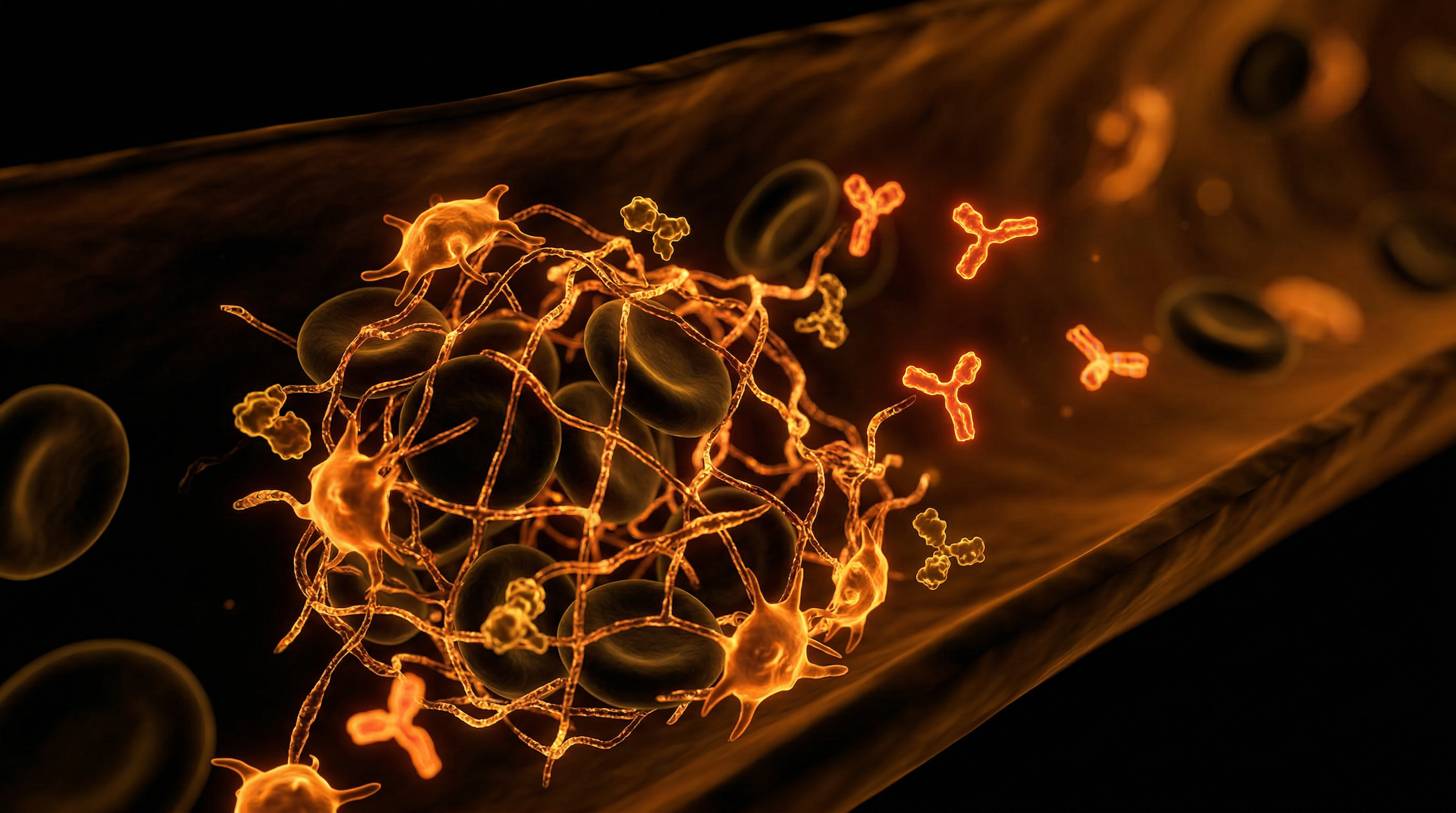
Fact: D-dimer is a fibrin degradation product (FDP), a small protein fragment present in the blood after a blood clot is degraded by fibrinolysis. Its presence indicates that the body is actively forming and breaking down clots.
The narrative of "recovery" from viral exposure or mRNA-based interventions has been oversimplified. While the acute phase may pass, the biochemical debris—specifically the Spike Protein—remains, acting as a persistent irritant to the haematological system. This article serves as a comprehensive guide for clinicians and patients alike to understand the invisible war occurring within the capillaries and why monitoring D-dimer is the first line of defence in preventing the long-term sequelae of vascular damage.
The Biology — How It Works
To understand why D-dimer is elevated, one must first master the intricate dance of the coagulation cascade. Under normal physiological conditions, haemostasis is a finely tuned balance between pro-coagulant forces (clot forming) and fibrinolytic forces (clot dissolving).
The Coagulation Cascade
When the endothelial lining of a blood vessel is damaged, it exposes sub-endothelial collagen, triggering a sequence of enzymatic reactions.
- Thrombin Generation: The final common pathway results in the conversion of prothrombin to thrombin.
- Fibrinogen to Fibrin: Thrombin then acts upon fibrinogen, a soluble plasma protein, converting it into long, insoluble strands of fibrin.
- Cross-linking: Factor XIIIa further stabilises these strands, creating a mesh-like structure that traps platelets and red blood cells to form a stable thrombus.
The Role of Plasmin and Fibrinolysis
Once the vessel wall is repaired, the body must remove the clot to restore normal blood flow. This is achieved via plasmin, an enzyme that "chews" through the fibrin mesh.
- As plasmin breaks down the cross-linked fibrin, specific fragments are released into the bloodstream.
- The most significant of these fragments is the D-dimer, so named because it consists of two 'D' domains of the fibrinogen molecule that have been cross-linked.
Important Statistic: In a healthy individual, D-dimer levels are typically below 500 ng/mL (FEU). Persistent levels above this threshold, in the absence of an acute injury, suggest a state of hypercoagulability or chronic inflammatory stimulus.
Why D-dimer is Unique
Unlike other markers of inflammation (such as C-Reactive Protein or ESR), D-dimer is highly specific to the breakdown of formed clots. It does not merely signal that the body is "inflamed"; it signals that the body is actively engaged in a cycle of pathological clotting and subsequent lysis. In post-viral syndromes, this cycle becomes chronic, leading to the depletion of fibrinolytic reserves and the accumulation of micro-clots that are too small to be seen on a standard CT scan but large enough to impede capillary oxygen exchange.
Mechanisms at the Cellular Level
The elevation of D-dimer in the modern clinical context is inextricably linked to the SARS-CoV-2 Spike Protein, whether introduced via natural infection or through repeated mRNA vaccination. The Spike protein is not a passive "key" used only for viral entry; it is a bio-active toxin that directly interacts with the cellular machinery of the blood.
Endothelialitis: The Internal Burn
The inner lining of our blood vessels, the endothelium, is populated with ACE2 receptors. The Spike protein has a high affinity for these receptors. When the Spike protein binds to the endothelium, it triggers an inflammatory response known as endothelialitis.
- This inflammation causes the endothelial cells to contract, exposing the basement membrane.
- Exposure of the basement membrane triggers the immediate adherence of platelets and the initiation of the extrinsic coagulation pathway.
- D-dimer elevation here represents the body’s desperate attempt to clear the micro-thrombi forming along the vessel walls.
Platelet Hyper-activation
Research has shown that the Spike protein can directly bind to platelets. This binding induces a conformational change in the platelet, shifting it into an "activated" state. Activated platelets release pro-thrombotic factors (like Thromboxane A2) and form platelet-monocyte aggregates. These aggregates are highly inflammatory and contribute to the "sludging" of blood, increasing viscosity and making the heart work harder to pump blood through narrow capillary beds.
The Amyloid-Like Clot Phenomenon
Perhaps the most alarming discovery in recent years, spearheaded by researchers like Professor Etheresia Pretorius, is the formation of anomalous, amyloid-like micro-clots.
- Normally, fibrin clots have a porous, spaghetti-like structure that plasmin can easily degrade.
- In the presence of the Spike protein, fibrinogen can misfold into a beta-sheet enriched structure (amyloid).
- These "tough" clots are highly resistant to fibrinolysis (the body’s natural clot-busting mechanism).
- The D-dimer Paradox: Interestingly, some patients with severe micro-clotting may show low or normal D-dimer because their clots are so resistant to breakdown that no degradation products (D-dimers) are being released. However, a high D-dimer is a clear indicator that the body is still fighting—and failing—to clear these structures.
Environmental Threats and Biological Disruptors
While the Spike protein is the primary driver, we must consider the synergistic effects of environmental factors that exacerbate D-dimer elevation and vascular strain. We live in a world that is increasingly "pro-thrombotic."
Lipid Nanoparticles (LNPs)
In the context of mRNA therapeutics, the Lipid Nanoparticles used to deliver the genetic material are themselves highly inflammatory. LNPs can migrate from the injection site into the lymphatic system and the general circulation. They have been shown to induce a robust cytokine response, which further activates the coagulation cascade. The combination of LNP-induced inflammation and the subsequent production of Spike protein by the body's own cells creates a "double-hit" to the haematological system.
Electromagnetic Stress and Blood Viscosity
Emerging research into bio-electromagnetics suggests that high-frequency EMF exposure may influence the zeta potential of red blood cells (RBCs). The zeta potential is the negative charge that keeps RBCs repelling each other. When this charge is disrupted, RBCs tend to clump together (Rouleaux formation). This "thick blood" provides the perfect environment for micro-clots to form, leading to elevated D-dimer as the body attempts to process the resulting sludge.
Chemical Disruptors: Microplastics and Graphene Derivatives
The modern environment is saturated with endocrine and vascular disruptors. The presence of microplastics in human blood has been confirmed. These particles can act as scaffolding for fibrin, accelerating the formation of clots. Furthermore, some controversial forensic analyses of post-vaccination blood samples have suggested the presence of uncharacterised crystalline or metallic structures. Whether these are contaminants or by-products of the manufacturing process, their presence would undoubtedly trigger a foreign-body response and elevate D-dimer levels.
Callout: Modern coagulation issues are often "multifactorial," where a viral or vaccine-induced trigger meets a baseline of environmental toxicity, resulting in a systemic breakdown of fibrinolysis.
The Cascade: From Exposure to Disease
The progression from initial Spike protein exposure to clinical disease is a deceptive journey. It often occurs in stages that go unrecognised by the conventional medical "wait and see" approach.
Stage 1: The Asymptomatic Rise
Following exposure, the patient may feel "fine." However, internally, the Spike protein is circulating, binding to ACE2 receptors in the lungs, heart, and kidneys. D-dimer levels begin to creep upward. This is the silent phase. The patient may notice a slight decrease in exercise tolerance or a subtle "heavy" feeling in the limbs, but nothing that warrants a trip to the GP in the current overstretched system.
Stage 2: Micro-Ischaemia and Organ Dysfunction
As micro-clots accumulate, they begin to block the smallest capillaries. This leads to hypoperfusion—a lack of oxygenated blood reaching the tissues.
- Brain: Results in cognitive decline, memory loss, and the hallmark "brain fog."
- Heart: Leads to sub-clinical myocarditis or microvascular angina, often missed by standard echocardiograms.
- Lungs: Causes "long-haul" breathlessness as gas exchange at the alveolar-capillary interface is impaired.
- D-dimer Status: In this stage, D-dimer is often persistently elevated (600–1200 ng/mL), indicating a high "clot burden" that the body is struggling to manage.
Stage 3: The Major Event
If the underlying hypercoagulability is not addressed, the system eventually reaches a tipping point. A minor trigger—stress, dehydration, or a secondary infection—can cause a larger thrombus to form or a micro-clot to dislodge.
- Ischaemic Stroke: Clots blocking blood flow to the brain.
- Pulmonary Embolism (PE): Clots migrating to the lungs.
- Myocardial Infarction: Clots in the coronary arteries.
- Sudden Adult Death Syndrome (SADS): Catastrophic cardiac arrest, often linked to undiagnosed conduction issues caused by micro-infarctions in the heart muscle.
What the Mainstream Narrative Omits
The refusal of public health authorities to implement widespread D-dimer screening in the post-2021 era is one of the most significant oversights in modern medical history. Several "suppressed truths" continue to be ignored by the mainstream narrative.
The Sensitivity of D-dimer vs. Imaging
Mainstream medicine relies heavily on CT Pulmonary Angiograms (CTPA) to find clots. However, a CTPA can only detect clots in vessels of a certain size. It is blind to the billions of micro-clots in the capillaries. D-dimer is a far more sensitive tool for detecting the process of clotting, yet patients with high D-dimer and "clear" scans are often told their symptoms are "psychosomatic" or "anxiety-driven."
The Duration of Spike Protein Persistence
The initial claim was that mRNA-derived Spike protein would stay at the injection site and disappear within days. We now know, through studies of lymph node biopsies and circulating S1 subunits, that the Spike protein can persist for months, if not longer, in some individuals. This persistent "toxin factory" means that the risk of clotting is not a 48-hour window but a months-long period of vulnerability.
Vaccine-Induced Thrombotic Thrombocytopenia (VITT)
While the media eventually acknowledged VITT (specifically with the AstraZeneca/Oxford adenoviral vector), it portrayed it as an "ultra-rare" event. What was omitted was the broader spectrum of non-thrombocytopenic clotting issues. Many patients develop high D-dimer and clots without a drop in platelets, meaning they don't fit the narrow definition of VITT and are subsequently denied compensation or proper clinical recognition.
The Normalisation of the Abnormal
There has been a subtle but noticeable shift in what is considered a "normal" lab range. As the general population's baseline health declines, "average" D-dimer levels are rising. A result that would have concerned a haematologist in 2018 is now often dismissed because "everyone’s levels are a bit high these days." This is a dangerous erosion of clinical standards.
The UK Context
In the United Kingdom, the management of post-viral coagulation issues is fraught with institutional inertia and the constraints of a struggling NHS.
The NHS Postcode Lottery
The availability of D-dimer testing and subsequent referrals to haematology depends largely on where a patient lives. In many trusts, the D-dimer test is strictly reserved for those presenting at A&E with signs of an acute DVT or PE. GP surgeries are often discouraged from ordering "speculative" D-dimers for long-term fatigue or post-vaccine concerns due to cost-saving measures.
NICE Guidelines and "Long COVID"
The National Institute for Health and Care Excellence (NICE) guidelines for Long COVID (NG188) focus heavily on symptomatic management and rehabilitation. There is a glaring lack of emphasis on anticoagulant screening. While the British Heart Foundation has raised concerns about the "excess deaths" crisis in the UK, little has been done to link these deaths to the mechanistic reality of Spike protein-induced clotting.
The Role of the MHRA
The Medicines and Healthcare products Regulatory Agency (MHRA) has been criticised for its passive "Yellow Card" surveillance system. While thousands of reports of "thrombotic events" have been logged, the threshold for regulatory action remains extraordinarily high. In the UK, the burden of proof has been shifted onto the injured patient, who must prove their clot was caused by the intervention, rather than the regulator proving it was safe.
UK Fact: Excess deaths in the UK have remained significantly above the five-year average long after the virus became endemic. A substantial portion of these deaths are cardiovascular in nature, suggesting a widespread, unaddressed "clotting crisis."
Protective Measures and Recovery Protocols
For those monitoring their D-dimer levels and finding them elevated, or for those who remain asymptomatic but concerned about their vascular health, several protocols have emerged from the frontlines of integrative medicine.
1. Fibrinolytic Enzymes (The "Clean-Up" Crew)
The use of systemic enzymes to digest fibrin is a cornerstone of recovery.
- Nattokinase: Derived from fermented soy (natto), this enzyme has the unique ability to break down the cross-linked fibrin that makes up D-dimer. Recent Japanese studies have even suggested it can degrade the Spike protein itself.
- Serrapeptase: An enzyme originally found in silkworms, it is a potent anti-inflammatory and "scar tissue" dissolver, helping to clear the debris from endothelialitis.
- Lumbrokinase: Derived from earthworms, this is perhaps the most potent fibrinolytic, often used when Nattokinase alone is insufficient.
2. Standard Pharmaceutical Intervention
In clinical settings, if D-dimer is significantly elevated, physicians may prescribe:
- Low-Dose Aspirin (75mg): To inhibit platelet aggregation.
- DOACs (Direct Oral Anticoagulants): Such as Apixaban or Rivaroxaban. These must be used under strict medical supervision due to bleeding risks, but they are increasingly being used in "Triple Anticoagulant Therapy" for severe micro-clotting cases.
3. Natural Anticoagulants and Vascular Support
- Curcumin: A potent anti-inflammatory that also has mild anti-platelet properties.
- Quercetin: Helps to stabilise the endothelium and acts as a zinc ionophore to support cellular health.
- Magnesium: Essential for maintaining vascular tone and preventing the vasospasms that can lead to micro-infarctions.
- Omega-3 Fatty Acids: High-dose EPA/DHA helps to reduce blood viscosity and improve the flexibility of red blood cell membranes.
4. Lifestyle and Environmental Mitigation
- Hydration: Dehydration is a major pro-thrombotic risk. Ensuring adequate electrolyte balance is vital.
- Blood Donation: Some practitioners suggest regular blood donation (if eligible) to reduce blood viscosity and "iron overload," which can contribute to oxidative stress in the vessels.
- Grounding (Earthing): While considered "alternative," some studies suggest that connecting with the Earth’s surface can improve the zeta potential of RBCs, reducing clumping.
Summary: Key Takeaways
- D-dimer is an Active Marker: An elevated D-dimer is not a static number; it is a sign of an active, ongoing battle within the blood vessels between clot formation and clot lysis.
- The Spike Protein is the Catalyst: Whether from the virus or the injection, the Spike protein triggers a cascade of endothelial damage, platelet activation, and the formation of amyloid-like micro-clots.
- Silent Nature: Clotting issues are often "silent" until a major event occurs. Monitoring D-dimer in post-viral clinics provides a window of opportunity for early intervention.
- Diagnostic Limitations: Standard scans (CT/MRI) often miss the micro-vascular pathology. A "clear" scan does not mean a patient is out of danger if their D-dimer remains high.
- The Amyloid Risk: Micro-clots can be resistant to natural breakdown, leading to a state of chronic hypoperfusion, which drives the symptoms of Long COVID and vaccine injury.
- UK Institutional Failure: The NHS and MHRA have been slow to adapt to the reality of the post-viral clotting crisis, leaving patients to seek private testing and "off-label" treatments.
- Holistic Recovery is Possible: Through a combination of fibrinolytic enzymes, targeted anticoagulation, and lifestyle changes, the vascular system can be supported and the "clot burden" reduced.
In conclusion, the elevation of D-dimer in the current era must be treated with the utmost clinical seriousness. It is the canary in the coal mine for the vascular system. As researchers and clinicians, our duty is to look beyond the mainstream narrative and address the mechanistic reality of this "silent" epidemic. Early screening, proactive monitoring, and the use of both natural and pharmaceutical fibrinolytic agents represent our best hope for navigating the complex landscape of post-viral health.
This article is provided for informational and educational purposes only. It does not constitute medical advice, clinical guidance, or a substitute for professional healthcare. Information reflects cited research at time of publication. Always consult a qualified healthcare professional before acting on any health information.
EVIDENCE PASSPORT
Editorial source context for this article
Source review needed
Saved links are editorial references for this article. They may support specific claims rather than every sentence. Open and assess each source in context. This passport does not independently verify them.
Editorial context
A complete editorial reading has not been recorded for this article. Source links remain available for you to open and assess directly.
Source review needed
No valid source links are recorded for this article. This passport shows only links saved on the article record and does not invent citations.
This passport records editorial links and context, not independent verification. Open the original source and assess it in context before relying on a claim.
Medical Disclaimer
The information in this article is for educational purposes only and does not constitute medical advice, diagnosis, or treatment. Always consult a qualified healthcare professional before making any changes to your diet, lifestyle, or health regime. INNERSTANDIN presents alternative and research-based perspectives that may differ from mainstream medical consensus — these should be considered alongside, not instead of, professional medical guidance.
Read Full DisclaimerContinue the thread
Keep this question moving.
Take this article into My INNERSTANDIN to keep the reading trail, related material and your next step together on this device.