
Detoxification Pathways: Panchakarma vs Xenobiotic Accumulation
Updated May 2026
Ayurvedic detoxification is analyzed for its efficacy in clearing modern UK environmental toxins from fat stores. We compare ancient oil pulling and purging to modern Phase II liver detoxification science.
Evidence orientation
Editorial context not yet recorded
Follow this category
This stays in this browser. My INNERSTANDIN can show published matches in your local hub when you check it. It does not send email, push, or alert notifications.
Local learning review
A private browser aid for revisiting ideas. It is not an alert or a health recommendation.
Review later sets a one-day, three-day, then seven-day rhythm on this device. Choose it only when you want to revisit this article.
Overview
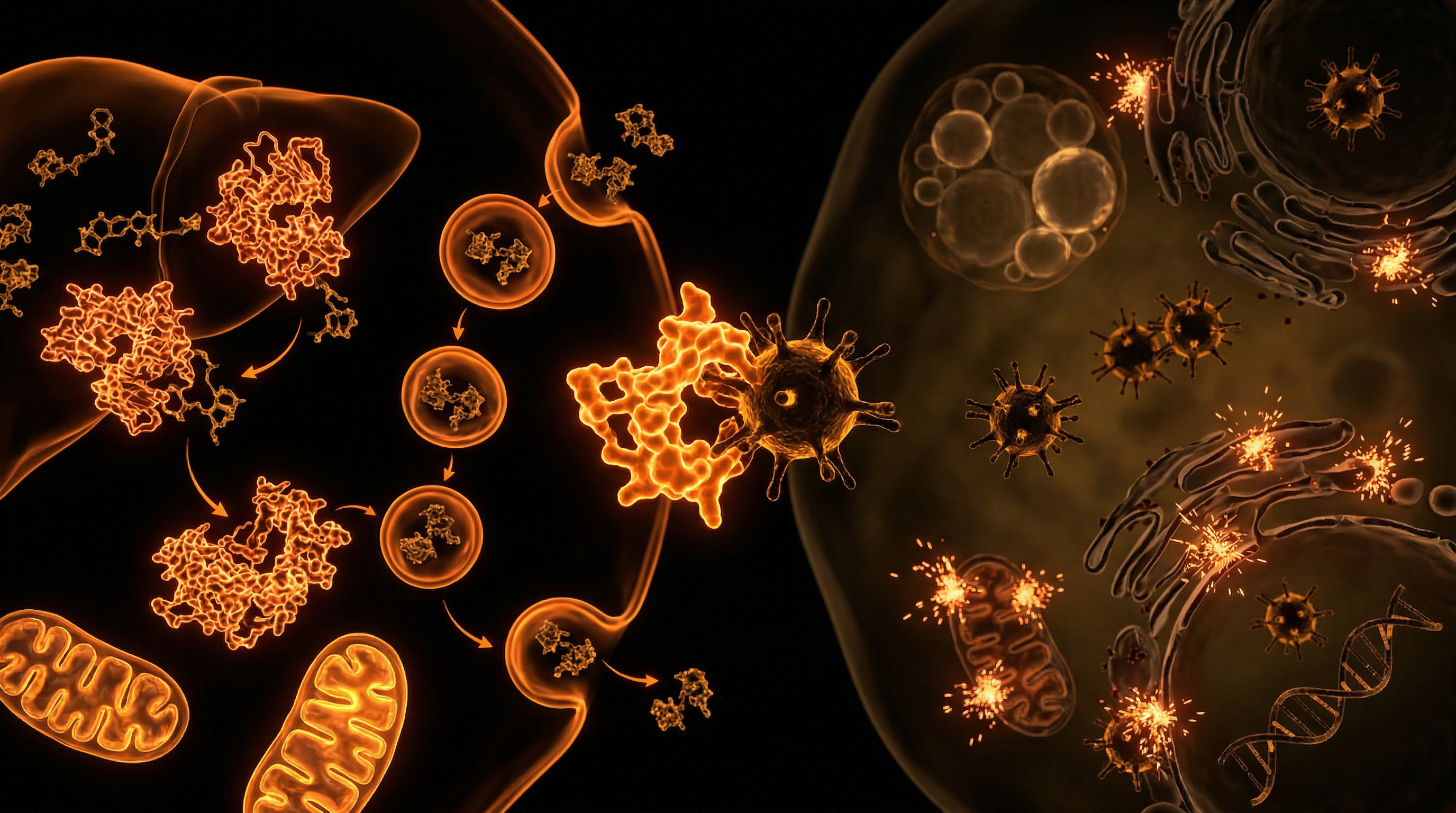
In the contemporary landscape of clinical toxicology and integrative medicine, we find ourselves at a precipice. On one side lies the burgeoning crisis of Xenobiotic Accumulation—the unprecedented build-up of synthetic chemicals, heavy metals, and persistent organic pollutants (POPs) within human adipose tissue. On the other side stands Panchakarma, a 5,000-year-old Ayurvedic lithography of systemic detoxification. As a senior biological researcher for INNERSTANDING, my objective is to bridge this gap, demonstrating how ancient methodologies possess a sophisticated, biophysical understanding of lipid-soluble toxin clearance that modern "evidence-based" medicine is only beginning to decipher.
The fundamental conflict of the 21st century is the mismatch between our evolutionary biology and our chemical environment. Since the Industrial Revolution, and specifically the post-WWII chemical boom, humans have been exposed to over 80,000 synthetic compounds. Many of these are lipophilic (fat-loving), meaning they bypass the body’s primary aqueous excretion routes and embed themselves deep within the fatty matrices of the brain, nerves, and visceral fat.
Modern medicine often dismisses the concept of "detox" as a marketing gimmick, citing that the liver and kidneys "do it for free." This is a reductionist fallacy. While the liver is indeed a masterful filtration organ, its Phase II enzymatic pathways are increasingly overwhelmed by the sheer volume and novelty of modern xenobiotics. This article explores how the Ayurvedic protocol of Panchakarma—specifically its focus on Oleation (Snehana) and Sudation (Swedana)—functions as a biological solvent extraction process, facilitating the migration of stored toxins from the periphery back to the gastrointestinal tract for elimination.
Key Statistic: According to the Environmental Working Group (EWG), the average umbilical cord blood of newborns contains over 287 industrial chemicals, indicating that xenobiotic accumulation begins in utero, long before the first breath is taken.
The Biology — How It Works
To understand detoxification, we must first define the enemy: the Xenobiotic. This term refers to any chemical substance found within an organism that is not naturally produced or expected to be present. In the UK context, this includes everything from Thames-derived microplastics to the pesticide residues found on supermarket produce.
The Modern Paradigm: Liver Biotransformation
The human body processes toxins primarily through the liver via two distinct phases:
- Phase I (Functionalisation): Primarily governed by the Cytochrome P450 enzyme family. This phase uses oxidation, reduction, and hydrolysis to transform non-polar (fat-soluble) toxins into more reactive intermediates. Ironically, these intermediates are often more toxic and "reactive" than the original compound.
- Phase II (Conjugation): This is the "neutralisation" phase. The liver attaches a molecule (like glutathione, sulphate, or a methyl group) to the reactive intermediate, making it water-soluble so it can be excreted via urine or bile.
The failure of the modern paradigm occurs when Phase II is sluggish due to nutrient deficiencies (lack of magnesium, zinc, or amino acids) or when the toxin load is so high that Phase I creates a "bottleneck" of highly reactive free radicals, leading to oxidative stress and systemic inflammation.
The Ayurvedic Paradigm: Ama and Shodhana
Ayurveda describes toxins as Ama—undigested, metabolic waste that becomes "sticky" and clogs the Srotas (micro-channels). Unlike the modern focus on blood markers, Ayurveda focuses on the movement of these toxins.
Panchakarma (meaning "Five Actions") is a five-stage process designed not just to "clean" the liver, but to "loosen" the toxins from the deep tissues (Dhatus).
- Purva Karma: The preparatory phase, involving internal and external oleation.
- Pradhana Karma: The five main procedures (Vamana, Virechana, Basti, Nasya, Rakta Mokshana).
- Paschat Karma: Post-detox rejuvenation.
The genius of this system lies in Lipophilic Migration. By saturating the body with medicated oils (Ghee or Sesame oil), Panchakarma creates a concentration gradient. Because xenobiotics are fat-soluble, they naturally migrate from the cellular lipid bilayer into the oil-rich environment provided during the Snehana phase.
Mechanisms at the Cellular Level
At the cellular level, the struggle against xenobiotics is a struggle for Mitochondrial Integrity. Modern pollutants, particularly heavy metals like Lead and Mercury (still prevalent in UK industrial legacy sites), act as mitochondrial poisons. They displace essential minerals like Zinc and Selenium, effectively "jamming" the gears of cellular respiration.
The Role of Lipid-Lowering and Bile Secretion
A key mechanism in Panchakarma’s Virechana (therapeutic purgation) is the stimulation of bile flow. Bile is the primary vehicle for the excretion of fat-soluble toxins. However, in a state of chronic toxicity, bile becomes "sludgy" and is often reabsorbed in the terminal ileum (enterohepatic circulation), bringing the toxins back to the liver in a vicious cycle.
Scientific Fact: Roughly 95% of bile salts are reabsorbed. Without a specific intervention to "bind" and "flush" this bile, the body effectively recycles its own toxic waste.
Panchakarma interrupts this cycle. The high doses of Ghee (clarified butter) used in the preparatory phase act as a cholagogue, forcing the gallbladder to empty completely. The subsequent purgation ensures that the toxin-laden bile is expelled from the body rather than reabsorbed.
Oil Pulling (Kavala) and the Oral Microbiome
Often mocked by mainstream dentistry, Oil Pulling is a microcosm of the Panchakarma philosophy. The oral mucosa is highly permeable. By swishing high-quality oils, we are not just "cleaning teeth"; we are using the oil’s fatty acids to pull lipid-soluble bacterial byproducts and environmental toxins out of the salivary glands and oral capillaries. This reduces the "Total Toxic Burden" before substances even enter the digestive tract.
Environmental Threats and Biological Disruptors
In the UK, the environmental threat profile is unique. We are a post-industrial island nation with a high population density, leading to specific challenges in Xenobiotic Accumulation.
1. Persistent Organic Pollutants (POPs)
These include PCBs (polychlorinated biphenyls) and dioxins. Despite being banned decades ago, they remain in the soil and the fatty tissues of livestock. They are "forever chemicals" that mimic hormones, leading to thyroid dysfunction and reproductive issues.
2. Endocrine Disrupting Chemicals (EDCs)
Bisphenol A (BPA) and Phthalates are ubiquitous in UK food packaging and tap water. These chemicals occupy oestrogen receptors, sending "false signals" to the endocrine system. In men, this manifests as declining sperm counts; in women, as PCOS or endometriosis.
3. Glyphosate and Agricultural Runoff
The UK’s reliance on intensive farming means that glyphosate—a potent chelator and microbiome disruptor—is present in most non-organic breads and cereals. Glyphosate disrupts the Shikimate pathway in our gut bacteria, leading to a "leaky gut" which allows even more xenobiotics to enter the bloodstream.
4. Particulate Matter (PM2.5)
In cities like London, Manchester, and Birmingham, air pollution is a significant source of heavy metal toxicity. Ultra-fine particles are small enough to pass directly from the lungs into the bloodstream, bypassing the liver's first-pass metabolism entirely.
The Cascade: From Exposure to Disease
The progression from "toxin exposure" to "clinical disease" is rarely immediate. It is a slow, insidious cascade that modern medicine often fails to diagnose until it reaches an irreversible stage.
- Bioaccumulation: Toxins enter the body faster than they can be excreted. They seek refuge in adipose tissue (body fat) and the brain (which is 60% fat).
- Epigenetic Modification: Xenobiotics interact with the "tags" on our DNA. Chemicals like arsenic or nickel can "turn off" tumour-suppressor genes or "turn on" inflammatory pathways.
- Immune Dysregulation: The immune system begins to recognise these "haptenated" cells (normal cells bound to a synthetic chemical) as foreign. This is a primary driver of the Autoimmune Epidemic in the UK.
- Metabolic Syndrome: As the liver becomes "fatty" (Non-Alcoholic Fatty Liver Disease, or NAFLD) due to chemical processing demands, insulin resistance develops.
Important Callout: A study published in The Lancet suggests that environmental pollution is responsible for 3 times as many deaths as AIDS, tuberculosis, and malaria combined.
What the Mainstream Narrative Omits
The mainstream medical narrative, often funded by the very chemical conglomerates producing these substances, frequently employs three tactics to suppress the truth about xenobiotic accumulation and traditional detoxification:
The "Dose Makes the Poison" Fallacy
Toxicology is still based on the 16th-century Paracelsus principle. While true for acute poisoning, it fails to account for Low-Dose Endocrine Disruption. Some chemicals are actually more dangerous at parts-per-billion levels because they perfectly mimic the body's own hormones, which operate at tiny concentrations.
The Omission of the "Cocktail Effect"
Regulatory bodies like the UK’s HSE (Health and Safety Executive) test chemicals in isolation. However, a modern Briton is exposed to a "cocktail" of hundreds of chemicals daily. Research shows that two "safe" chemicals can become highly toxic when combined within the human body—a phenomenon known as Synergistic Toxicity.
The Denial of Adipose Sequestration
Mainstream doctors are taught that if a toxin isn't in the blood, it isn't in the body. This is scientifically inaccurate. Lipophilic toxins are quickly cleared from the blood and "hidden" in fat cells to protect the vital organs. Blood tests for toxins like DDT or PFOAs often return "normal" results even while the patient's fat stores are saturated.
The UK Context
The UK presents a specific case study in Xenobiotic Burden. Following Brexit, the UK's regulatory framework (UK REACH) has diverged from the EU’s more stringent standards. There are growing concerns that the UK is becoming a "dumping ground" for chemicals banned in Europe.
The "Thames Water" Crisis
UK tap water is a significant source of xenobiotics. Beyond the much-publicised sewage issues, our water filtration systems are not designed to remove Hormone Replacement Therapy (HRT) residues, antidepressants, or PFAS (per- and polyfluoroalkyl substances). These substances are "recycled" through the population.
The Industrial Legacy
In Northern England and the Midlands, the legacy of coal mining and textile manufacturing has left soil heavily contaminated with cadmium, lead, and mercury. Residents in these areas often show higher markers for oxidative stress and chronic inflammation, requiring more aggressive detoxification protocols like Panchakarma to shift these deep-seated metals.
The British Diet and "Ama"
The prevalence of Ultra-Processed Foods (UPFs) in the UK—accounting for over 50% of the average diet—creates the perfect environment for Ama. These foods lack the fibre and bitter compounds (found in traditional Ayurvedic herbs like Neem and Kutki) that stimulate the liver and keep the bowels moving.
Protective Measures and Recovery Protocols
Merging the science of Phase II liver detox with the wisdom of Panchakarma provides a robust framework for recovery in a toxic world.
1. Strategic Oleation (The Snehana Protocol)
To pull toxins from the fat stores, one must consume high-quality lipids.
- Action: Use organic, grass-fed Ghee. Ghee contains Butyric Acid, which heals the gut lining and acts as a solvent for lipophilic toxins.
- Procedure: Graduated intake of ghee over 3-7 days, followed by steam baths to move the "loosened" toxins to the GI tract.
2. Supporting Phase II Conjugation
While Panchakarma moves the toxins, we must ensure the liver can neutralise them.
- Glutathione Support: Supplement with N-Acetyl Cysteine (NAC) and Selenium to boost the body's master antioxidant.
- Sulforaphane: Found in cruciferous vegetables (broccoli, kale), this activates the Nrf2 pathway, the body's primary "detox" switch.
3. Therapeutic Purgation (Virechana)
In a modern context, this doesn't always require a harsh laxative.
- Action: Use Triphala, an Ayurvedic formula of three fruits. It is non-habit forming and encourages the "scraping" of the intestinal walls to prevent toxin reabsorption.
4. Sweat for Xenobiotic Excretion (Swedana)
Modern research confirms that certain toxins, specifically heavy metals and phthalates, are excreted more efficiently through sweat than through urine.
- Action: Infrared saunas or traditional Ayurvedic steam treatments. The key is to wash the skin immediately after sweating to prevent the toxins from being reabsorbed.
5. Binding Agents
To prevent the "enterohepatic recycling" mentioned earlier, we must use binders.
- Action: Activated charcoal, Zeolite clay, or Chlorella. These substances act like a "velcro" in the gut, grabbing the toxin-laden bile and carrying it out in the stool.
Summary: Key Takeaways
The modern world is chemically hostile, but we are not defenceless. The synthesis of Ayurvedic Panchakarma and modern toxicology provides a roadmap for biological resilience.
- Xenobiotics are Lipophilic: Most modern toxins hide in your fat, not your blood. Traditional "water-based" cleanses are insufficient; Oil-based detoxification (Oleation) is required to shift these compounds.
- The Liver is the Hub, Not the Whole: While Phase I and II liver pathways are critical, detoxification is a whole-body movement of "Ama" from the periphery to the core for elimination.
- Mainstream Medicine has a Blind Spot: The refusal to acknowledge bioaccumulation and the "cocktail effect" leaves many suffering from sub-clinical toxicity that eventually manifests as chronic disease.
- The UK Context is Unique: Post-industrial legacy and current water quality issues make proactive detoxification a necessity for the British public, rather than a luxury.
- Integration is Key: Combining ancient techniques like Virechana and Oil Pulling with modern binders (like Charcoal) and precursors (like NAC) creates the most effective defence against the 21st-century toxic load.
We must move beyond the "detox is a myth" narrative. In an era of microplastics and "forever chemicals," understanding and applying these deep-cleansing pathways is not just "wellness"—it is biological survival. For those of us at INNERSTANDING, the evidence is clear: the bridge between the ancient and the modern is the only path to true systemic health.
This article is provided for informational and educational purposes only. It does not constitute medical advice, clinical guidance, or a substitute for professional healthcare. Information reflects cited research at time of publication. Always consult a qualified healthcare professional before acting on any health information.
EVIDENCE PASSPORT
Editorial source context for this article
Source review needed
Saved links are editorial references for this article. They may support specific claims rather than every sentence. Open and assess each source in context. This passport does not independently verify them.
Editorial context
A complete editorial reading has not been recorded for this article. Source links remain available for you to open and assess directly.
Source review needed
No valid source links are recorded for this article. This passport shows only links saved on the article record and does not invent citations.
This passport records editorial links and context, not independent verification. Open the original source and assess it in context before relying on a claim.
Medical Disclaimer
The information in this article is for educational purposes only and does not constitute medical advice, diagnosis, or treatment. Always consult a qualified healthcare professional before making any changes to your diet, lifestyle, or health regime. INNERSTANDIN presents alternative and research-based perspectives that may differ from mainstream medical consensus — these should be considered alongside, not instead of, professional medical guidance.
Read Full DisclaimerContinue the thread
Keep this question moving.
Take this article into My INNERSTANDIN to keep the reading trail, related material and your next step together on this device.
Explore this in the Body Map
See where this hits your biology. Interactive anatomy, threats, and protective protocols.
Dig deeper in the Library
Free, longform PDF volumes that go beyond headlines into mechanisms and references.