
Diamine Oxidase (DAO) Deficiency: The Primary Enzyme Responsible for Histamine Breakdown
Updated May 2026
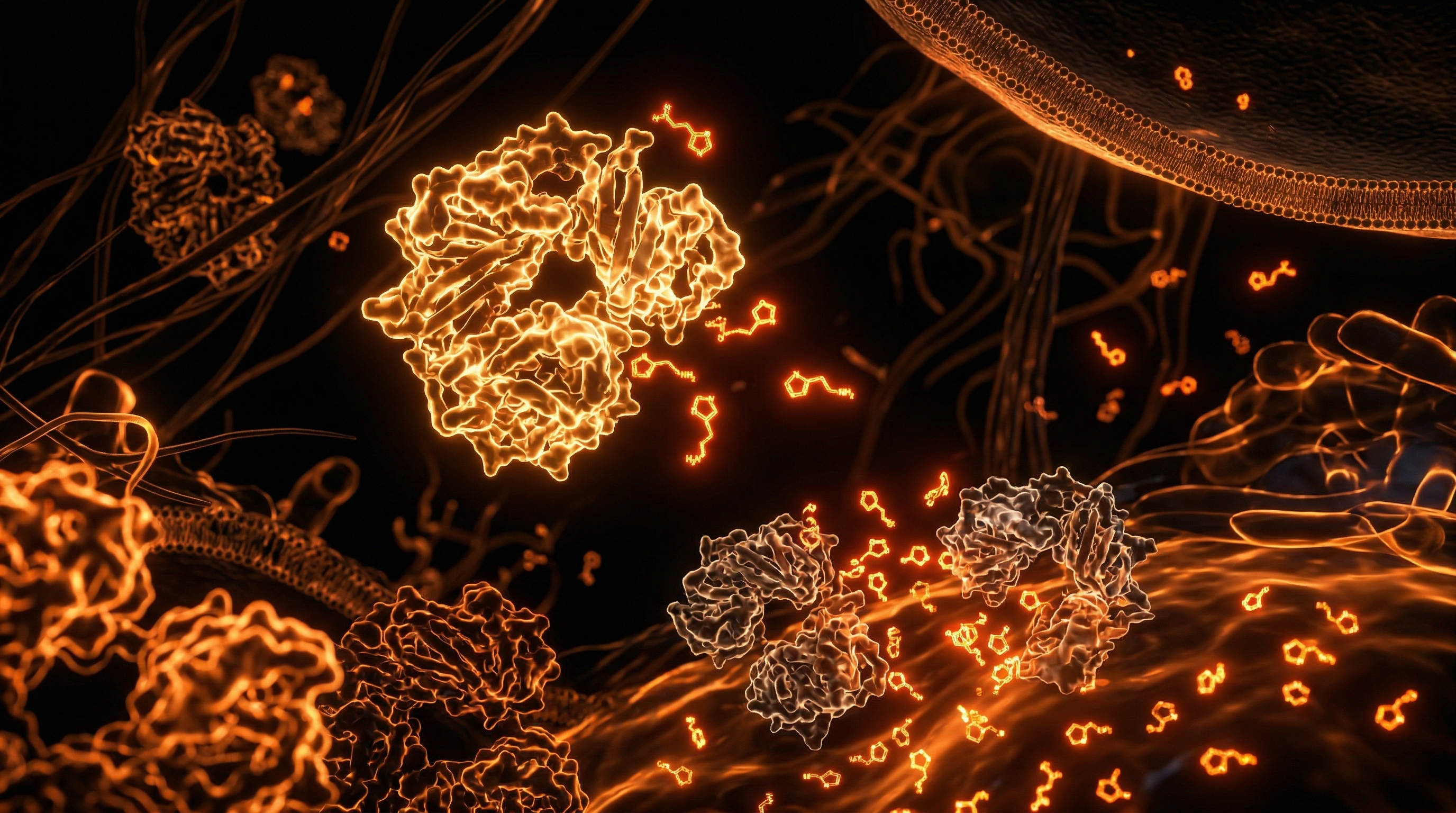
Diamine Oxidase (DAO) is the body's primary extracellular enzyme for breaking down histamine found in foods and drinks. A deficiency in this enzyme results in a physiological imbalance where histamine levels exceed the body's ability to clear them, leading to systemic inflammatory symptoms.
Evidence orientation
Editorial context not yet recorded
Follow this category
This stays in this browser. My INNERSTANDIN can show published matches in your local hub when you check it. It does not send email, push, or alert notifications.
Local learning review
A private browser aid for revisiting ideas. It is not an alert or a health recommendation.
Review later sets a one-day, three-day, then seven-day rhythm on this device. Choose it only when you want to revisit this article.
Overview
In the landscape of modern clinical biology, we are witnessing a systemic failure of the human digestive and regulatory systems. Central to this collapse is a little-understood but vital glycoprotein: Diamine Oxidase (DAO). While mainstream medicine continues to funnel patients into the narrow corridors of "allergy" or "irritable bowel syndrome," the biological reality is far more profound. We are experiencing a widespread crisis of enzymatic paralysis, specifically regarding the body’s primary mechanism for degrading exogenous histamine.
Diamine Oxidase is the body’s chief extracellular scavenger. It is the primary enzyme responsible for the oxidative deamination of histamine—a potent biogenic amine and neurotransmitter—within the digestive tract and systemic circulation. When DAO levels are insufficient or its enzymatic activity is inhibited, the result is a physiological catastrophe known as Histamine Intolerance (HIT). This is not a classic IgE-mediated allergy; it is a metabolic deficit. It is a state where the "histamine bucket" overflows, not because the intake is necessarily excessive, but because the "drainage" system—DAO—is blocked or broken.
CRITICAL BIOLOGICAL FACT: Diamine Oxidase (DAO) is the primary extracellular enzyme for histamine degradation. Unlike Histamine N-methyltransferase (HNMT), which handles intracellular histamine, DAO is the only line of defence against histamine ingested through the diet. Without functional DAO, every meal becomes a potential inflammatory trigger.
The implications of DAO deficiency extend far beyond a simple stomach ache or a transient rash. Because histamine receptors (H1, H2, H3, and H4) are distributed throughout every major organ system, a failure in DAO activity manifests as a multi-systemic inflammatory assault. From debilitating migraines and cardiac arrhythmias to chronic anxiety and menstrual irregularities, the "DAO-deficient" patient is often trapped in a cycle of misdiagnosis. At INNERSTANDING, we believe that exposing the mechanisms of this enzyme is the first step toward reclaiming biological sovereignty from a food and medical system that has largely ignored the enzymatic foundations of health.
##
The Biology — How It Works
To understand Diamine Oxidase, one must understand its location and its specific biochemical mandate. DAO is primarily synthesised in the enterocytes—the epithelial cells that line the villi of the small intestine. As food passes through the gastrointestinal tract, any pre-formed histamine or other biogenic amines (such as tyramine, putrescine, and cadaverine) must be neutralised before they can cross the intestinal barrier into the bloodstream.
The Site of Synthesis: The Intestinal Villi
The small intestine is not merely a tube for absorption; it is a highly active metabolic theatre. The DAO enzyme is concentrated in the apical end of the mature villi. This location is strategic; it serves as a "chemisorption" barrier. When we consume fermented foods, aged meats, or certain vegetables, histamine is present in high concentrations. Under normal conditions, DAO is secreted into the intestinal lumen to meet these amines, breaking them down into harmless metabolites.
The Gene Behind the Enzyme: AOC1
The production of Diamine Oxidase is governed by the AOC1 gene (Amine Oxidase Copper-containing 1), formerly known as the ABP1 gene. This gene, located on chromosome 7, dictates the baseline "factory capacity" for DAO production. Polymorphisms (SNPs) in the AOC1 gene are common and can result in a genetically lower threshold for histamine clearance. Individuals with these genetic variations are "born with a smaller bucket," making them significantly more vulnerable to environmental and dietary histamine triggers.
The Cofactor Dependency
DAO does not function in isolation. It is a metalloenzyme, meaning it requires specific mineral and vitamin cofactors to maintain its structural integrity and catalytic activity.
- Copper (Cu2+): At the heart of every DAO molecule sits a copper ion. Copper is essential for the oxidative process that neutralises histamine.
- Vitamin B6 (Pyridoxal-5-phosphate): This serves as a vital cofactor for the enzymatic reaction.
- Vitamin C: Acts both as a stabiliser for the enzyme and a natural antihistamine in its own right.
Distinguishing DAO from HNMT
It is a common error to conflate the two primary histamine-degrading enzymes. Histamine N-methyltransferase (HNMT) is found within the cells (intracellularly) and is particularly active in the brain and liver. It uses a process called methylation (requiring SAMe) to deactivate histamine. DAO, conversely, is extracellular. It deals with the "outside world"—the food we eat and the bacteria in our gut. If DAO fails, the systemic histamine load becomes so high that HNMT becomes overwhelmed, leading to the systemic symptoms associated with Mast Cell Activation Syndrome (MCAS).
##
Mechanisms at the Cellular Level
The actual chemical process of histamine breakdown by DAO is a masterpiece of biological engineering known as oxidative deamination. When a histamine molecule meets the DAO enzyme, a rigorous chemical transformation occurs that renders the toxic amine inert.
The Catalytic Reaction
The biochemical equation for the breakdown of histamine by Diamine Oxidase is as follows:
"Histamine + H2O + O2 → Imidazole-4-acetaldehyde + NH3 + H2O2"
- Oxidation: DAO uses molecular oxygen to strip the amino group from the histamine molecule.
- Conversion: The histamine is converted into imidazole-4-acetaldehyde.
- Secondary Breakdown: This intermediate product is then further processed by another enzyme, Aldehyde Dehydrogenase (ALDH), into imidazole-4-acetic acid, which is safely excreted in the urine.
The Ammonia and Peroxide By-products
Notice that the reaction produces ammonia (NH3) and hydrogen peroxide (H2O2). In a healthy system, these by-products are quickly neutralised by the liver (via the urea cycle) and by antioxidants like catalase and glutathione. However, in a state of high histamine influx and low DAO activity, the secondary accumulation of these by-products can contribute to "brain fog" and oxidative stress. This explains why some patients feel "poisoned" after consuming high-histamine meals; they are dealing with both the vasoactive effects of histamine and the metabolic by-products of its (incomplete) breakdown.
Receptor Engagement
When DAO fails to neutralise histamine in the gut, the molecule enters the portal circulation and begins binding to receptors across the body:
- H1 Receptors: Located in smooth muscle, vascular endothelial cells, and the central nervous system. Activation leads to swelling, itching, and bronchial constriction.
- H2 Receptors: Found in the gastric parietal cells (stimulating stomach acid) and cardiac tissue (increasing heart rate).
- H3 Receptors: Primarily in the nervous system, where they regulate the release of other neurotransmitters like dopamine and serotonin.
- H4 Receptors: Found in the bone marrow and white blood cells, driving the inflammatory cascade.
STATISTICAL ALERT: Research indicates that up to 15% of the Western population suffers from some degree of DAO deficiency, though fewer than 1% are formally diagnosed. This represents a massive "hidden" demographic of chronic illness that is entirely preventable through enzymatic support.
##
Environmental Threats and Biological Disruptors
The rise in DAO deficiency is not merely a genetic fluke; it is an environmental byproduct of the 21st century. Our modern landscape is saturated with substances that specifically inhibit DAO synthesis or block its active site.
The Glyphosate Factor
The most pervasive threat to DAO integrity is Glyphosate, the active ingredient in most commercial weedkillers used in UK agriculture. Glyphosate acts as a potent chelator, meaning it binds to minerals. Specifically, it has a high affinity for copper. By stripping copper from the soil and, subsequently, from the human body, glyphosate effectively "de-claws" the DAO enzyme, leaving it unable to perform its catalytic function. Furthermore, glyphosate disrupts the intestinal tight junctions, leading to "Leaky Gut," which destroys the very enterocytes responsible for DAO production.
Pharmaceutical Sabotage
Many commonly prescribed medications are direct inhibitors of Diamine Oxidase. Patients are often prescribed these drugs for symptoms that are themselves caused by DAO deficiency, creating a vicious pharmacological loop.
- NSAIDs (Aspirin, Ibuprofen): Known to inhibit DAO and irritate the gut lining.
- Antibiotics (Metronidazole, Clavulanic Acid): These decimate the gut flora and directly suppress DAO activity.
- Antidepressants (Amitriptyline, Fluoxetine): Many SSRIs and tricyclics have been shown to interfere with histamine metabolism.
- Heart Medications (Verapamil, Alprenolol): These "calcium channel blockers" can significantly reduce enzymatic clearance of histamine.
The Role of Gut Dysbiosis
The human microbiome is a living factory of amines. Certain pathogenic bacteria (such as S. faecalis, E. coli, and Proteus vulgaris) possess their own "decarboxylase" enzymes, which actually produce histamine from the amino acid histidine in our food. If the gut is overgrown with these species (SIBO - Small Intestinal Bacterial Overgrowth), the DAO enzyme becomes overwhelmed by an internal "histamine factory," regardless of what is being eaten.
Alcohol and Acetaldehyde
Alcohol is a "triple threat" to the DAO system. First, alcohol itself is a DAO inhibitor. Second, many alcoholic beverages (like red wine and beer) are high in histamine. Third, the breakdown of alcohol produces acetaldehyde, which competes with the metabolites of histamine for the enzyme Aldehyde Dehydrogenase (ALDH). When you drink, your body prioritises clearing the alcohol toxin, allowing histamine levels to skyrocket. This is the biological reality behind the "red face" and "instant hangover" experienced by many.
##
The Cascade: From Exposure to Disease
When Diamine Oxidase fails, the body enters a state of persistent "false alarm." Histamine is a signal of injury or invasion; when it circulates unchecked, every organ system responds as if it is under attack.
The Migraine Connection
The brain is highly sensitive to histamine. Excessive histamine causes vasodilation of the cerebral blood vessels and stimulates the trigeminal nerve. Studies have shown that a staggering percentage of chronic migraineurs have significantly lower serum DAO activity than healthy controls. For these individuals, the migraine is not a neurological defect but a failure of the gut to clear dietary amines.
Dermatological Manifestations
The skin is often the "canary in the coal mine" for DAO deficiency. Symptoms include:
- Urticaria (Hives): Sudden, itchy welts that seem to have no trigger.
- Angioedema: Deep swelling, particularly around the eyes and lips.
- Pruritus: Generalised itching without a visible rash.
- Flushing: The "histamine flush" often seen after meals or exercise.
Cardiac and Respiratory Chaos
Histamine is a powerful modulator of heart rhythm. High levels can cause tachycardia (racing heart) and arrhythmia (skipped beats). In the respiratory system, histamine causes the mucus membranes to swell and the bronchioles to constrict, mimicking asthma or chronic hay fever. Many "seasonal allergy" sufferers are actually reacting to a year-round DAO deficiency that becomes unbearable when pollen is added to the "bucket."
The Hormonal Feedback Loop (Oestrogen Dominance)
There is a profound and often ignored link between DAO and female reproductive health. Histamine stimulates the production of oestrogen, and conversely, high levels of oestrogen inhibit the DAO enzyme. This creates a self-perpetuating cycle where high oestrogen leads to low DAO, which leads to high histamine, which then triggers more oestrogen. This often manifests as severe PMS, painful periods (histamine causes uterine contraction), and "cyclical" migraines that occur just before the menstrual cycle when oestrogen is high.
##
What the Mainstream Narrative Omits
The refusal of the medical establishment to acknowledge DAO deficiency as a primary driver of chronic illness is, in the view of INNERSTANDING, a form of institutional negligence. The "standard of care" focuses on suppressing symptoms rather than addressing the enzymatic root.
The Antihistamine Deception
The multi-billion pound antihistamine industry is built on a fundamental flaw. H1 blockers (like Cetirizine or Loratadine) do not remove histamine from the body; they merely "clog" the receptor so the histamine cannot dock. Meanwhile, the histamine continues to circulate, eventually finding H2, H3, or H4 receptors, or waiting until the medication wears off to flood the H1 receptors again. Antihistamines are a chemical "blindfold," not a cure. They do nothing to support the production or activity of Diamine Oxidase.
The Failure of Allergy Testing
When a patient presents with histamine symptoms, they are typically given a Skin Prick Test or an IgE Blood Test. When these come back negative—as they often do in DAO deficiency, because it is an enzymatic issue, not an immune-mediated allergy—the patient is told "nothing is wrong" or that their symptoms are "psychosomatic." This failure to test for Serum DAO Activity or AOC1 genetic markers leaves millions of people in a diagnostic wilderness.
The Ultra-Processed Food Crisis
The UK food supply is uniquely hostile to DAO. The shift toward ultra-processed foods (UPFs) has introduced a cocktail of additives that are known histamine releasers (e.g., tartrazine, benzoates, and sulphites). Furthermore, the industrialisation of food storage means that "fresh" meat often sits in plastic packaging for weeks, allowing histamine-producing bacteria to proliferate before the consumer even buys the product. The "Sell By" date is a measure of spoilage, not a measure of histamine safety.
ALARMING REALITY: Standard UK hospital and school meals are notoriously high in biogenic amines—processed meats, pre-packaged cheeses, and reheated vegetables—meaning the very institutions meant to foster health are often actively depleting the DAO reserves of the vulnerable.
##
The UK Context
In the United Kingdom, the challenge of DAO deficiency is exacerbated by specific regulatory and environmental factors. From the "postcode lottery" of NHS diagnostic capabilities to the influence of the pharmaceutical lobby on NICE guidelines, the UK patient faces a steep uphill battle.
The NHS and the "Functional" Gap
The National Health Service (NHS) currently does not offer Diamine Oxidase activity testing as a standard diagnostic tool. While a GP might test for Celiac disease or iron deficiency, the concept of Histamine Intolerance is often dismissed as "alternative" or "unproven" despite the wealth of peer-reviewed literature confirming the role of the AOC1 gene and DAO. Patients are forced to turn to private labs, creating a tiered system where only the affluent can access the biological truths hidden in their own blood.
Regulatory Oversight: FSA and MHRA
The Food Standards Agency (FSA) does monitor histamine levels in certain foods, but their focus is primarily on "Scombroid Poisoning"—extreme levels of histamine found in spoiled fish (like tuna or mackerel). There is no regulation or labelling requirement for the moderate levels of histamine that are devastating to a DAO-deficient individual. Similarly, the MHRA (Medicines and Healthcare products Regulatory Agency) does not require drug manufacturers to list "DAO Inhibition" as a potential side effect, despite the known impact of many common drugs on this enzyme.
The British Diet and Gut Health
The UK has one of the highest rates of "Leaky Gut" and IBD in Europe. Our reliance on wheat, dairy, and refined sugars provides the perfect breeding ground for dysbiosis. The "British Fry-Up," while culturally iconic, is a DAO nightmare: processed sausages (nitrates and amines), fried tomatoes (lectins and histamine), and mushrooms (often high in amines). Without a culture of fresh, farm-to-table eating, the British population is uniquely susceptible to the "enzymatic paralysis" of DAO deficiency.
##
Protective Measures and Recovery Protocols
Recovery from DAO deficiency is not achieved through a "pill for an ill." It requires a comprehensive restoration of the body's enzymatic capacity and a strategic reduction of the toxic load.
Phase 1: The Low-Histamine Elimination
To allow the "bucket" to empty, one must strictly reduce the intake of biogenic amines for a period of 4–6 weeks. This is not a forever diet, but a biological "reset."
- Avoid: Aged cheeses, fermented foods (sauerkraut, kombucha), cured meats (bacon, salami), canned fish, tomatoes, aubergines, spinach, and alcohol.
- Prioritise: Freshly slaughtered meat (frozen immediately), white fish, egg yolks, gluten-free grains (rice, quinoa), and fresh brassica vegetables.
Phase 2: Enzymatic Supplementation
For those with genetic AOC1 SNPs or temporary gut damage, supplemental DAO is a game-changer.
- Porcine Kidney Extract: This is the most bioavailable source of supplemental DAO. It should be taken 15–20 minutes before meals to neutralise histamine in the stomach.
- Plant-Based DAO: Derived from legume sprouts (like pea or lentil), though often less concentrated than porcine sources.
- Cofactor Loading: Ensure adequate intake of Copper Sebacate (carefully balanced with zinc), P-5-P (Vitamin B6), and Liposomal Vitamin C.
Phase 3: Gut Barrier Repair
Since DAO is produced in the intestinal villi, you cannot have healthy DAO levels with a damaged gut.
- L-Glutamine: To provide the fuel for enterocyte repair.
- Quercetin: A powerful bioflavonoid that stabilises mast cells and prevents them from releasing more histamine.
- Probiotic Selection: This is critical. Avoid "traditional" probiotics like Lactobacillus bulgaricus or L. casei, which are known histamine producers. Instead, use histamine-neutral strains like Lactobacillus rhamnosus GG or Bifidobacterium infantis.
Phase 4: Environmental Mitigation
- Filter Your Water: Use a high-quality filter (like a reverse osmosis system) to remove glyphosate and fluoride, both of which interfere with mineral absorption and enzymatic function.
- Review Your Medicine Cabinet: Under medical supervision, seek alternatives to DAO-inhibiting medications.
- Stress Management: Stress triggers the release of Corticotropin-Releasing Hormone (CRH), which directly activates mast cells to dump histamine, bypassing the gut altogether.
##
Summary: Key Takeaways
The Diamine Oxidase enzyme is the unsung guardian of our physiological stability. Its deficiency is not a "new age" fad but a measurable, biochemical reality that sits at the intersection of genetics, modern agriculture, and pharmaceutical interference.
- DAO is the primary extracellular enzyme responsible for breaking down dietary histamine.
- AOC1 genetics and environmental factors like glyphosate and medications are the leading causes of DAO deficiency.
- Symptoms are multi-systemic, often involving the brain, skin, heart, and digestive tract, leading to frequent misdiagnosis.
- Standard allergy tests are insufficient; serum DAO activity and genetic testing are the only ways to confirm a deficiency.
- The UK healthcare system currently ignores this epidemic, leaving patients to navigate the complexities of histamine intolerance alone.
- Recovery is possible through a combination of a low-histamine diet, DAO supplementation, and the repair of the intestinal villi.
At INNERSTANDING, we assert that understanding your enzymatic status is not just "health advice"—it is an act of resistance against a system that profits from your chronic inflammation. The DAO enzyme is the gateway to gut health and systemic peace. It is time to stop managing symptoms and start supporting the biological mechanisms that were designed to keep us thriving.
This article is provided for informational and educational purposes only. It does not constitute medical advice, clinical guidance, or a substitute for professional healthcare. Information reflects cited research at time of publication. Always consult a qualified healthcare professional before acting on any health information.
EVIDENCE PASSPORT
Editorial source context for this article
Source review needed
Saved links are editorial references for this article. They may support specific claims rather than every sentence. Open and assess each source in context. This passport does not independently verify them.
Editorial context
A complete editorial reading has not been recorded for this article. Source links remain available for you to open and assess directly.
Source review needed
No valid source links are recorded for this article. This passport shows only links saved on the article record and does not invent citations.
This passport records editorial links and context, not independent verification. Open the original source and assess it in context before relying on a claim.
Medical Disclaimer
The information in this article is for educational purposes only and does not constitute medical advice, diagnosis, or treatment. Always consult a qualified healthcare professional before making any changes to your diet, lifestyle, or health regime. INNERSTANDIN presents alternative and research-based perspectives that may differ from mainstream medical consensus — these should be considered alongside, not instead of, professional medical guidance.
Read Full DisclaimerContinue the thread
Keep this question moving.
Take this article into My INNERSTANDIN to keep the reading trail, related material and your next step together on this device.
Explore this in the Body Map
See where this hits your biology. Interactive anatomy, threats, and protective protocols.
Dig deeper in the Library
Free, longform PDF volumes that go beyond headlines into mechanisms and references.