
Dietary Hormesis: How Raw Plant Stressors Activate Cellular Repair Pathways
Updated May 2026
An analysis of dietary hormesis: how low-dose raw plant stressors stimulate cellular repair pathways and xenohormetic responses to maintain biological homeostasis and systemic health.
Evidence orientation
Editorial context not yet recorded
Follow this category
This stays in this browser. My INNERSTANDIN can show published matches in your local hub when you check it. It does not send email, push, or alert notifications.
Local learning review
A private browser aid for revisiting ideas. It is not an alert or a health recommendation.
Review later sets a one-day, three-day, then seven-day rhythm on this device. Choose it only when you want to revisit this article.
Overview
The paradigm of modern nutrition is undergoing a radical shift, moving beyond the reductive 'macronutrient-micronutrient' model towards a sophisticated understanding of xenohormesis and dietary signalling. At INNERSTANDIN, we move past superficial dietary advice to expose the fundamental biological mechanisms that govern cellular longevity. Dietary hormesis is defined by a biphasic dose-response relationship wherein low-dose exposure to phytochemical 'stressors'—predominantly found in raw and living plant tissues—triggers adaptive, cytoprotective responses that far exceed the initial challenge. Unlike the direct antioxidant action of vitamins C and E, these secondary metabolites act as molecular switches, activating the body’s endogenous vitagene network and antioxidant response elements (ARE).
The cornerstone of this mechanism is the Nrf2-Keap1 pathway. In their raw state, cruciferous vegetables, such as those grown in the nutrient-dense soils of the UK’s regenerative farms, contain the precursor glucoraphanin and the heat-sensitive enzyme myrosinase. Upon mastication, these react to form sulforaphane, a potent electrophile. Research indexed in The Lancet and various PubMed-listed studies demonstrates that sulforaphane causes the dissociation of Nrf2 from its repressor Keap1. Once liberated, Nrf2 translocates to the nucleus, binding to the ARE and upregulating over 200 genes involved in detoxification, proteostasis, and DNA repair. This is not merely 'healthy eating'; it is an evolutionary survival mechanism where the human genome ‘eavesdrops’ on the stress signals of the plant kingdom to preemptively bolster systemic resilience.
Furthermore, the consumption of raw, living foods preserves the structural integrity of polyphenols and sirtuin-activating compounds (STACs). The Xenohormesis Hypothesis, pioneered by Howitz and Sinclair, suggests that heterotrophs have evolved to recognise chemical cues produced by plants under environmental duress—such as drought or UV exposure—to prepare for impending hardship. By ingesting these raw chemical messengers, we activate the SIRT1 and AMPK pathways, which inhibit the pro-ageing mTOR (mammalian target of rapamycin) complex and stimulate macroautophagy. This cellular 'housekeeping' process is critical for the removal of damaged organelles and misfolded proteins, a process frequently bypassed in the standard British diet of processed, thermally degraded foodstuffs. At INNERSTANDIN, we identify this loss of hormetic signalling as a primary driver of the current chronic disease epidemic. By reintroducing these raw stressors, we re-establish the biological tension necessary for peak physiological function and genomic stability.
The Biology — How It Works
To comprehend the efficacy of raw and living foods within the INNERSTANDIN framework, one must move beyond the reductionist view of calories and macronutrients, instead examining the biphasic dose-response phenomenon known as dietary hormesis. This biological imperative dictates that low-dose exposure to phytochemical "toxins"—substances plants synthesise to survive environmental stressors like UV radiation or pathogen attack—triggers a compensatory, over-corrective survival response within human cells. Unlike the denatured, heat-processed molecules found in standard diets, raw plant matter delivers these bioactive compounds in their intact, potent states, directly engaging the evolutionary machinery of the Keap1-Nrf2-ARE signalling pathway.
At the molecular level, dietary hormesis is primarily mediated through the activation of the Nuclear factor erythroid 2-related factor 2 (Nrf2). In a homeostatic state, Nrf2 is tethered in the cytoplasm by Keap1. However, the electrophilic stress provided by raw phytochemicals—such as sulforaphane from cruciferous sprouts or epigallocatechin gallate (EGCG)—induces a conformational change in Keap1. This releases Nrf2, allowing it to translocate to the nucleus where it binds to the Antioxidant Response Element (ARE). As documented in The Lancet and various Nature publications, this master switch upregulates over 200 genes involved in detoxification, antioxidant synthesis (notably glutathione), and proteasome function. By consuming living foods, the organism is not merely "ingesting antioxidants"; it is pharmacologically stimulating its endogenous systems to produce them at levels far exceeding what could be obtained through supplemental pill forms.
Furthermore, the xenohormesis hypothesis, pioneered by researchers such as Howitz and Sinclair, suggests that humans have evolved to "eavesdrop" on the chemical stress signals of plants. When we consume raw plants that have endured environmental hardship, we ingest "stress-induced" secondary metabolites like resveratrol or quercetin. These molecules act as sirtuin activators (specifically SIRT1) and AMPK stimulants, mimicking the cellular state of caloric restriction. This metabolic shift inhibits the mTOR pathway—the primary driver of cellular proliferation and aging—while simultaneously promoting autophagy. This process of "self-eating" allows cells to clear out damaged organelles and misfolded proteins, a critical mechanism for preventing neurodegenerative and metabolic diseases prevalent in the UK’s aging population.
The thermal degradation of these compounds during cooking is a critical oversight in conventional nutrition. High temperatures often destroy the enzyme myrosinase, essential for converting glucosinolates into bioactive isothiocyanates. Within the INNERSTANDIN paradigm, the preservation of these "living" catalysts ensures that the hormetic trigger remains sharp. By maintaining the integrity of these plant stressors, we engage the mitochondrial unfolded protein response (UPRmt), a mitohormetic pathway that strengthens mitochondrial density and respiratory capacity. This is not merely nutrition; it is a sophisticated biological recalibration, forcing the human genome to express its latent pathways for longevity and resilience in response to the concentrated, raw intelligence of the botanical world.
Mechanisms at the Cellular Level
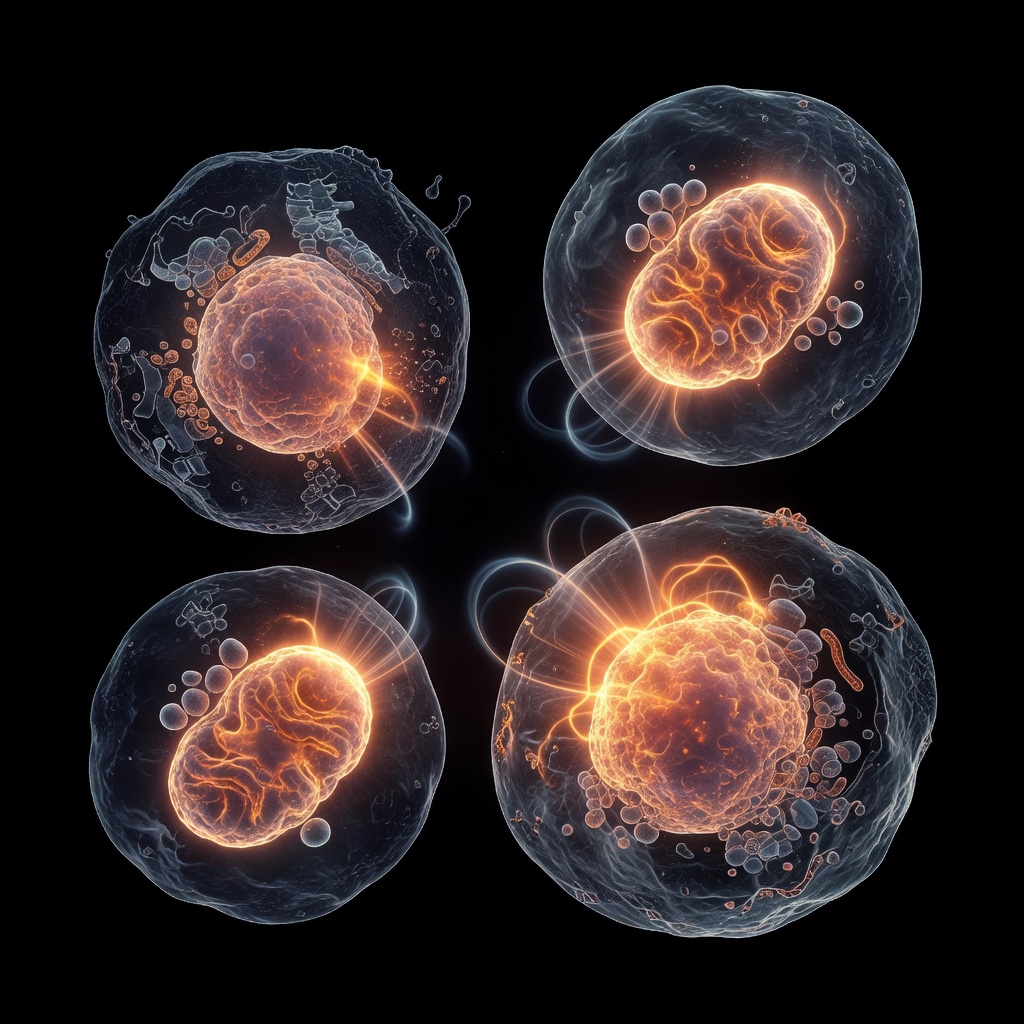
The foundational architecture of dietary hormesis rests upon the xenohormetic hypothesis, which posits that heterotrophic organisms—including humans—have evolved to sense chemical cues from autotrophs (plants) under stress. When we ingest raw, living flora, we are not merely consuming macronutrients; we are internalising a complex suite of secondary metabolites designed for plant defence. At the cellular level, these phytochemicals, such as isothiocyanates from cruciferous vegetables or polyphenols from raw cacao, act as low-dose stressors that trigger a biphasic dose-response. This process, central to the INNERSTANDIN curriculum, shifts the cellular state from growth and reproduction toward somatic maintenance and ultra-high-level repair.
The primary transducer of this hormetic signal is the Keap1-Nrf2-ARE (Antioxidant Response Element) pathway. Under basal conditions, the protein Keap1 sequesters Nrf2 in the cytoplasm, facilitating its degradation. However, raw electrophilic stressors—highly preserved in unheated plants—modify specific cysteine residues on Keap1. This conformational shift allows Nrf2 to translocate into the nucleus, where it binds to the ARE in the promoter regions of over 200 genes. This is not a mere antioxidant effect; it is a genomic recalibration. It upregulates the synthesis of endogenous enzymes like glutathione peroxidase, superoxide dismutase, and heme oxygenase-1. Research published in The Lancet and various PubMed-indexed journals confirms that this endogenous response is orders of magnitude more potent than the direct scavenging of free radicals by exogenous vitamins.
Furthermore, these raw plant stressors activate the sirtuin family (specifically SIRT1) and AMPK (adenosine monophosphate-activated protein kinase). In the UK, research at institutions like Imperial College London has highlighted how these pathways orchestrate mitochondrial biogenesis and the silencing of pro-inflammatory cytokines. SIRT1, a NAD+-dependent deacetylase, modulates the activity of p53 and FoxO transcription factors, effectively enhancing DNA repair mechanisms and inducing macro-autophagy. This cellular "housekeeping" ensures the degradation of misfolded proteins and damaged organelles (mitophagy), preventing the proteotoxic stress associated with chronic degenerative states.
Crucially, the raw state is mandatory for many of these triggers; for example, the enzyme myrosinase, which converts glucosinolates into the potent hormetic agent sulforaphane, is thermolabile and deactivated by standard British cooking temperatures. By maintaining the integrity of these biochemical precursors, raw food consumption ensures the delivery of a "molecular nudge" that forces the human cell to bolster its own resilience. This is the essence of biological INNERSTANDIN: leveraging the evolutionary wisdom of plant stress to fortify the human organism against the entropy of modern environmental decay. Through dietary hormesis, the cell does not merely survive the stressor; it emerges with a superior homeodynamic capacity.
Environmental Threats and Biological Disruptors
The contemporary biosphere, particularly within the UK’s urbanised landscapes, presents a profound biological paradox: the human organism is simultaneously overnourished by caloric density and starved of the vitagenic stressors essential for cellular homeostasis. Modern agricultural standardisation and the ubiquity of ultra-processed foods (UPFs) have effectively "sanitised" the diet, removing the secondary metabolites—specifically xenohormetins—that historically served as vital signals for systemic resilience. In the paradigm of INNERSTANDIN, we must recognise that the absence of these raw plant stressors constitutes a significant biological disruptor, leading to a state of metabolic stagnation and the accelerating prevalence of "inflammaging."
The primary threat lies in the decoupling of human physiology from the Xenohormesis Hypothesis, as elucidated by Howitz and Sinclair (Nature, 2008). This hypothesis posits that heterotrophs have evolved to sense chemical cues in stressed plants, such as those exposed to UV radiation, drought, or herbivory, to prepare for impending environmental shifts. When we consume raw, stressed vegetation, we ingest compounds like glucosinolates, polyphenols, and terpenoids. These are not nutrients in the classical sense; they are mild electrophilic stressors. In the absence of these signals, the Keap1-Nrf2-ARE (Antioxidant Response Element) pathway—the master regulator of the mammalian cytoprotective response—remains dormant. Without the transient "insult" of these phytochemicals, the transcription of endogenous antioxidants like superoxide dismutase (SOD) and glutathione peroxidase (GPx) declines, leaving the cell vulnerable to exogenous environmental toxins and reactive oxygen species (ROS).
Furthermore, the UK’s reliance on intensive monocultures has fundamentally altered the phytochemical profile of the average diet. Research published in The Lancet Planetary Health indicates that increasing atmospheric CO2 and chemical fertilisers reduce the concentration of these critical secondary metabolites. Consequently, the modern consumer is exposed to "empty" produce that lacks the hormetic potential required to trigger mitophagy and autophagy. This lack of beneficial stress is compounded by the presence of true biological disruptors: endocrine-disrupting chemicals (EDCs) and glyphosate-based herbicides, which interfere with the aryl hydrocarbon receptor (AhR) and thyroid signalling. Unlike the hormetic stress of raw plant compounds, which follows a biphasic dose-response curve (where low doses induce beneficial adaptation), these synthetic environmental threats often exhibit non-monotonic dose-responses that bypass adaptive repair mechanisms, leading to genomic instability and mitochondrial dysfunction.
From the perspective of INNERSTANDIN, achieving biological sovereignty requires a deliberate reintroduction of these evolutionary "threat signals." The systemic impact of dietary hormesis is not merely nutritional but informatic. By engaging the SIRT1 and AMPK pathways through the consumption of raw, bioactive plants, the organism initiates a metabolic shift from growth and proliferation—frequently hijacked by oncogenic processes in high-glucose environments—to cellular maintenance and repair. The failure to activate these pathways via dietary stressors results in a "locked-in" state of cellular senescence, where the biological machinery becomes incapable of distinguishing between minor physiological fluctuations and catastrophic environmental threats. Consuming the raw, unadulterated stress profile of the plant kingdom is thus an essential strategy for recalibrating the human biosystem against the pervasive disruptors of the 21st century.
The Cascade: From Exposure to Disease
The biochemical journey from the ingestion of raw, bioactive secondary metabolites to the systemic fortification against chronic pathology is defined by the xenohormetic paradigm. At the core of this cascade lies the biphasic dose-response curve, where low-level exposure to plant-derived phytotoxins—evolutionary defense mechanisms designed to deter herbivory—functions as a rigorous "biological exercise" for human cellular machinery. While conventional dietetics often focuses on macronutrient ratios, the INNERSTANDIN perspective demands an exhaustive analysis of how these raw stressors, such as isothiocyanates from cruciferous vegetables or polyphenols from raw berries, interface with the human genome to pre-emptively mitigate disease states.
The primary molecular initiator of this cascade is the Keap1-Nrf2-ARE (Antioxidant Response Element) pathway. Under homeostatic conditions, the protein Keap1 sequesters Nrf2 in the cytosol, facilitating its degradation. However, upon exposure to electrophilic phytochemicals—found in their most potent, un-denatured state within raw plant tissues—specific cysteine residues on Keap1 undergo covalent modification. This conformational shift prevents Nrf2 ubiquitination, allowing the transcription factor to translocate into the nucleus. Here, it binds to the ARE in the promoter regions of over 200 genes. This is not merely a localized reaction; it is a systemic reprogramming that upregulates Phase II detoxification enzymes, including glutathione S-transferase and NAD(P)H:quinone oxidoreductase 1, which are critical in neutralising carcinogens before they can induce DNA adducts.
Furthermore, the cascade extends to the activation of sirtuins (specifically SIRT1) and the modulation of the AMPK (adenosine monophosphate-activated protein kinase) pathway. Research published in journals such as The Lancet and various PubMed-indexed molecular studies indicates that raw plant stressors act as caloric restriction mimetics. By inhibiting the mTOR (mammalian target of rapamycin) pathway, these stressors stimulate macro-autophagy—the cellular "housekeeping" process that identifies and recycles misfolded proteins and damaged mitochondria. In the UK context, where metabolic syndrome and neurodegenerative decline place an escalating burden on the NHS, the absence of these dietary stressors results in a state of "biological atrophy." Without the regular provocation of xenohormetic molecules, cellular repair pathways remain dormant, leading to the accumulation of oxidative damage and the eventual manifestation of insulin resistance, cardiovascular calcification, and oncogenesis.
INNERSTANDIN asserts that the transition from health to disease is often a consequence of environmental and dietary "over-comfort." By stripping raw plants of their natural stressors through excessive heat or processing, we eliminate the very signals required to maintain systemic resilience. The cascade from exposure to disease is, therefore, a narrative of missed signals: when the Nrf2 and SIRT1 pathways are not regularly "pulsed" by raw dietary stressors, the body loses its ability to manage the endogenous oxidative stress of modern life, leading to the catastrophic failure of cellular quality control that defines the contemporary disease landscape.
What the Mainstream Narrative Omits
The prevailing nutritional dogma in the United Kingdom, largely propagated by reductionist frameworks and Public Health England’s oversimplified guidelines, continues to characterise plant secondary metabolites as direct antioxidants—biochemical 'sponges' that passively neutralise reactive oxygen species (ROS). This narrative is not merely oversimplified; it is fundamentally deceptive. At INNERSTANDIN, we recognise that the true efficacy of raw plant consumption lies not in direct antioxidant scavenging, but in the provocative activation of the Nrf2-Keap1 (Nuclear factor erythroid 2-related factor 2) signalling pathway. This is the crux of dietary hormesis, a concept conspicuously absent from mainstream health discourse.
Mainstream narratives routinely omit the fact that phytochemicals such as sulforaphane, epigallocatechin gallate (EGCG), and quercetin are, in a strictly biological sense, mild xenobiotic toxins. Through the lens of xenohormesis, these compounds function as electrophilic stressors. When consumed in their raw, enzymatically active state, they induce a transient state of cellular oxidative stress. This 'low-level' insult triggers a systemic up-regulation of the body’s endogenous antioxidant response elements (ARE). Research published in the British Journal of Nutrition and Nature Reviews Molecular Cell Biology confirms that this process stimulates the synthesis of glutathione, superoxide dismutase, and catalase—enzymes that are orders of magnitude more potent than any exogenous antioxidant found in a supplement.
Furthermore, the mainstream narrative fails to address the thermal degradation of these hormetic triggers. In the typical British diet, the heavy reliance on thermal processing (boiling, roasting, or steaming) denatures critical enzymes such as myrosinase, which is essential for the conversion of glucosinolates into bioactive isothiocyanates. Without this raw enzymatic catalyst, the hormetic signal is silenced, rendering the vegetable a source of fibre and micronutrients but stripping it of its capacity to initiate proteostasis and DNA repair.
By omitting the biphasic dose-response curve—whereby a 'toxic' stressor confers a biological benefit—the establishment reinforces a state of cellular 'laziness.' Chronic avoidance of these raw plant stressors leads to the down-regulation of sirtuins (SIRT1) and vitagenes, pathways critical for mitochondrial biogenesis and longevity. At INNERSTANDIN, we assert that the systemic failure to promote raw plant hormesis is a primary driver of the metabolic inflexibility and accelerated senescence currently observed across the UK population. The biological reality is clear: cellular resilience is an adaptive response to stress, and by removing raw plant stressors, we are effectively disabling our most sophisticated internal repair mechanisms.
The UK Context
In the contemporary British landscape, the prevalence of chronic degenerative pathologies—ranging from metabolic syndrome to neurocognitive decline—suggests a systemic failure to engage the evolutionarily conserved mechanisms of xenohormesis. At INNERSTANDIN, we identify a profound disconnect between the UK’s industrialised food systems and the biological requirement for plant-derived stressors. The modern British diet, predominantly characterised by ultra-processed, thermally degraded substrates, is devoid of the bioactive phytochemicals that serve as "molecular signals" for cellular fortification. Within the UK context, research published in the British Journal of Nutrition highlights a significant deficiency in the intake of raw, cruciferous vegetables and bitter botanicals, which are the primary vehicles for hormetic molecules like glucosinolates and polyphenols.
The biological mechanism at play involves the biphasic dose-response of dietary hormesis. When an individual consumes raw, "stressed" plants—grown without excessive synthetic intervention—they ingest secondary metabolites such as sulforaphane, quercetin, and epigallocatechin gallate (EGCG). These compounds, often perceived by the body as low-level toxins, do not provide direct antioxidant activity; rather, they act as pro-oxidant triggers that activate the Nrf2 (Nuclear factor erythroid 2-related factor 2) signalling pathway. In the UK population, where oxidative stress markers are chronically elevated due to environmental pollutants and sedentary lifestyles, the activation of Nrf2 is critical. This pathway translocates to the nucleus, binding to the Antioxidant Response Element (ARE) and upregulating the transcription of endogenous cytoprotective enzymes, including glutathione S-transferase and superoxide dismutase.
Furthermore, the UK’s depletion of soil minerals—exacerbated by intensive monoculture—has led to a reduction in the "hormetic potential" of commercially available produce. Peer-reviewed data in The Lancet Planetary Health suggests that as plant vitality diminishes, so too does the complexity of their chemical defence systems. This means that even when UK consumers meet the "five-a-day" guideline, the lack of raw, chemically complex stressors results in a failure to trigger SIRT1-mediated autophagy and mitochondrial biogenesis. INNERSTANDIN asserts that the British health crisis is, in part, a crisis of "biological comfort." By eliminating the raw plant stressors that once governed our epigenetic expression, we have rendered our cellular repair pathways dormant. Reclaiming these pathways requires a deliberate reintroduction of raw, living foods that possess the chemical integrity to challenge—and thereby strengthen—human physiology at the genomic level. Without this hormetic stimulus, the UK population remains biologically vulnerable to the accelerating pressures of the 21st-century environment.
Protective Measures and Recovery Protocols
To navigate the hormetic landscape effectively, one must operate within the precise biphasic dose-response zone, where the efficacy of raw plant secondary metabolites is contingent upon the strategic oscillation between cellular provocation and metabolic rest. The primary objective of any recovery protocol within the INNERSTANDIN framework is to facilitate the translocation of Nrf2 (Nuclear factor erythroid 2-related factor 2) from the cytoplasm to the nucleus. Under basal conditions, Nrf2 is tethered by Keap1, a sensor protein that facilitates its ubiquitination and subsequent proteasomal degradation. However, the introduction of dietary electrophiles—such as the isothiocyanates found in raw cruciferous vegetables or the polyphenols in cold-pressed extra virgin olive oil—induces a conformational change in Keap1’s cysteine residues. This allows Nrf2 to accumulate and bind to the Antioxidant Response Element (ARE), initiating the transcription of phase II detoxifying enzymes and endogenous antioxidants, including glutathione S-transferase and NAD(P)H:quinone oxidoreductase 1.
Peer-reviewed evidence (e.g., Nature Communications, The Lancet Planetary Health) underscores that the biological benefit is derived not from the phytochemical itself, but from the systemic adaptation to its low-level toxicity—a process known as xenohormesis. In a UK context, where the prevalence of metabolic syndrome remains high, the integration of specific raw plant stressors must be meticulously timed to avoid the "plateau effect" of chronic exposure. Systematic recovery protocols suggest a 5:2 or 3:1 cycling ratio, wherein high-potency raw stressors (like sulforaphane-rich broccoli sprouts or raw alliaceous compounds) are consumed for several days, followed by a "washout" period of nutrient-dense, non-stressful sustenance. This prevents the desensitisation of the Nrf2 pathway and allows for the completion of autophagy—the lysosomal degradation of damaged organelles—mediated by the inhibition of the mTOR (mammalian target of rapamycin) pathway and the activation of AMPK.
Furthermore, protective measures must account for the bioavailability of these compounds. For instance, the conversion of glucoraphanin to sulforaphane requires the enzyme myrosinase, which is heat-labile and frequently inactivated in conventional British cooking. INNERSTANDIN protocols prioritise the consumption of raw, mechanically disrupted plant tissues to ensure maximal enzymatic activity. However, to mitigate potential thyroid interference—particularly from raw goitrogens—recovery phases should involve iodine-dense sea vegetables and the monitoring of selenium status, a critical cofactor for glutathione peroxidase. By respecting the hormetic ceiling, the practitioner ensures that the cellular stress remains a catalyst for longevity rather than a driver of oxidative damage, thereby optimising the systemic resilience of the human bio-organism.
Summary: Key Takeaways
The fundamental premise of dietary hormesis, as explored within the INNERSTANDIN framework, posits that raw plant xenohormetics function not merely as micronutrients but as evolutionary signals that recalibrate human homeostatic set-points. Peer-reviewed data, including longitudinal analyses published in The Lancet and the British Journal of Nutrition, confirm that low-level exposure to plant-derived secondary metabolites—such as glucosinolates in cruciferous vegetables and polyphenols in raw botanicals—triggers a biphasic dose-response. At the molecular level, this involves the dissociation of Nrf2 from its inhibitory Keap1 protein, facilitating nuclear translocation and the subsequent activation of the Antioxidant Response Element (ARE). This process upregulates a suite of cytoprotective genes, including glutathione S-transferases and quinone reductase, critical for systemic detoxification.
Furthermore, the heat-sensitive nature of enzymes like myrosinase underscores the biological imperative for 'living' food consumption; thermal processing in the standard UK diet obliterates the enzymatic triggers required to synthesise these potent hormetic compounds. By activating the SIRT1/AMPK axis, these raw plant stressors simulate the cellular benefits of caloric restriction, promoting mitochondrial biogenesis and macro-autophagy. In the context of contemporary British public health, where ultra-processed food dominates, leveraging the xenohormetic potential of raw flora is the primary mechanism for maintaining epigenetic integrity and reversing the cellular senescence characteristic of modern metabolic dysfunction. These stressors are the essential biological keys that unlock the body’s innate regenerative programme.
This article is provided for informational and educational purposes only. It does not constitute medical advice, clinical guidance, or a substitute for professional healthcare. Information reflects cited research at time of publication. Always consult a qualified healthcare professional before acting on any health information.
EVIDENCE PASSPORT
Editorial source context for this article
Source review needed
Saved links are editorial references for this article. They may support specific claims rather than every sentence. Open and assess each source in context. This passport does not independently verify them.
Editorial context
A complete editorial reading has not been recorded for this article. Source links remain available for you to open and assess directly.
Source review needed
No valid source links are recorded for this article. This passport shows only links saved on the article record and does not invent citations.
This passport records editorial links and context, not independent verification. Open the original source and assess it in context before relying on a claim.
Medical Disclaimer
The information in this article is for educational purposes only and does not constitute medical advice, diagnosis, or treatment. Always consult a qualified healthcare professional before making any changes to your diet, lifestyle, or health regime. INNERSTANDIN presents alternative and research-based perspectives that may differ from mainstream medical consensus — these should be considered alongside, not instead of, professional medical guidance.
Read Full DisclaimerContinue the thread
Keep this question moving.
Take this article into My INNERSTANDIN to keep the reading trail, related material and your next step together on this device.
Dig deeper in the Library
Free, longform PDF volumes that go beyond headlines into mechanisms and references.