
Dihexa: Pharmacological Repair of Damaged Neural Networks
Updated May 2026
Dihexa is a small peptide that promotes massive synaptogenesis and improved cognitive function. It offers a glimmer of hope for repairing brain damage caused by toxins or traumatic injury.
Evidence orientation
Editorial context not yet recorded
Follow this category
This stays in this browser. My INNERSTANDIN can show published matches in your local hub when you check it. It does not send email, push, or alert notifications.
Local learning review
A private browser aid for revisiting ideas. It is not an alert or a health recommendation.
Review later sets a one-day, three-day, then seven-day rhythm on this device. Choose it only when you want to revisit this article.
Overview
In the contemporary landscape of neurological research, we are witnessing a silent revolution—one that challenges the fatalistic dogma that the adult human brain is a static organ, incapable of significant structural repair. For decades, the medical establishment has operated under the assumption that once neural networks are decimated by trauma, neurotoxins, or neurodegenerative disease, the damage is irreversible. We were told that the best we could hope for was the management of decline.
However, the emergence of Dihexa (N-hexanoic-Tyr-Ile-(6) aminohexanoic amide) has shattered this paradigm. Dihexa is a small, orally active, blood-brain barrier-permeable peptide-mimetic derived from the angiotensin IV (AngIV) system. It represents a quantum leap in regenerative medicine, specifically in the realm of synaptogenesis—the formation of new synaptic connections between neurons.
Unlike traditional nootropics that merely modulate neurotransmitter levels (like caffeine or racetams), Dihexa acts as a structural architect. It does not simply "speed up" the existing machinery; it rebuilds the broken scaffolding of the mind. Developed by Dr. Joseph Harding and his team at Washington State University, Dihexa was initially designed to combat the cognitive devastation of Alzheimer’s disease. In preclinical models, it has demonstrated a potency that is staggering: it is estimated to be seven orders of magnitude (ten million times) more powerful than Brain-Derived Neurotrophic Factor (BDNF), which has long been considered the "gold standard" for neuronal growth.
This article serves as an exhaustive investigation into Dihexa, its biochemical foundation, the environmental factors that necessitate its use, and the systemic suppression of such regenerative breakthroughs in the modern medical-industrial complex.
Key Statistic: In standard Morris Water Maze tests (a benchmark for spatial learning and memory), Dihexa-treated subjects with significant brain damage performed at levels nearly indistinguishable from healthy controls, often outperforming them in speed of acquisition.
The Biology — How It Works
To understand Dihexa, one must first understand the HGF/c-Met pathway. The Hepatocyte Growth Factor (HGF) and its receptor, c-Met, are essential components of the body’s internal repair system. While HGF was originally identified for its role in liver regeneration, it has since been discovered to be a powerful neurotrophic factor.
The HGF/c-Met Axis
The HGF/c-Met system is a critical regulator of cell survival, morphology, and differentiation. When HGF binds to the c-Met receptor, it triggers a process called dimerisation, where two receptors join together to signal the cell to grow, survive, and form new connections.
However, HGF itself is a massive protein. It is too large to cross the Blood-Brain Barrier (BBB), it is easily broken down by enzymes (proteolysis), and it is prohibitively expensive to produce for therapeutic use. This is where Dihexa changes the game.
Small Molecule Mimicry
Dihexa is a "small molecule" designed to mimic the high-affinity binding of HGF to c-Met. Because of its specific molecular weight and lipophilic characteristics, Dihexa can be administered orally or transdermally and successfully penetrate the BBB. Once in the brain, it binds to HGF, facilitating its ability to activate the c-Met receptor even when HGF levels are low.
Essentially, Dihexa acts as a catalyst for the brain’s own regenerative machinery. It forces the c-Met receptor into an "active" state, initiating a cascade of intracellular signals that lead to the proliferation of dendritic spines—the physical points of contact between neurons.
Beyond Neurogenesis: The Power of Synaptogenesis
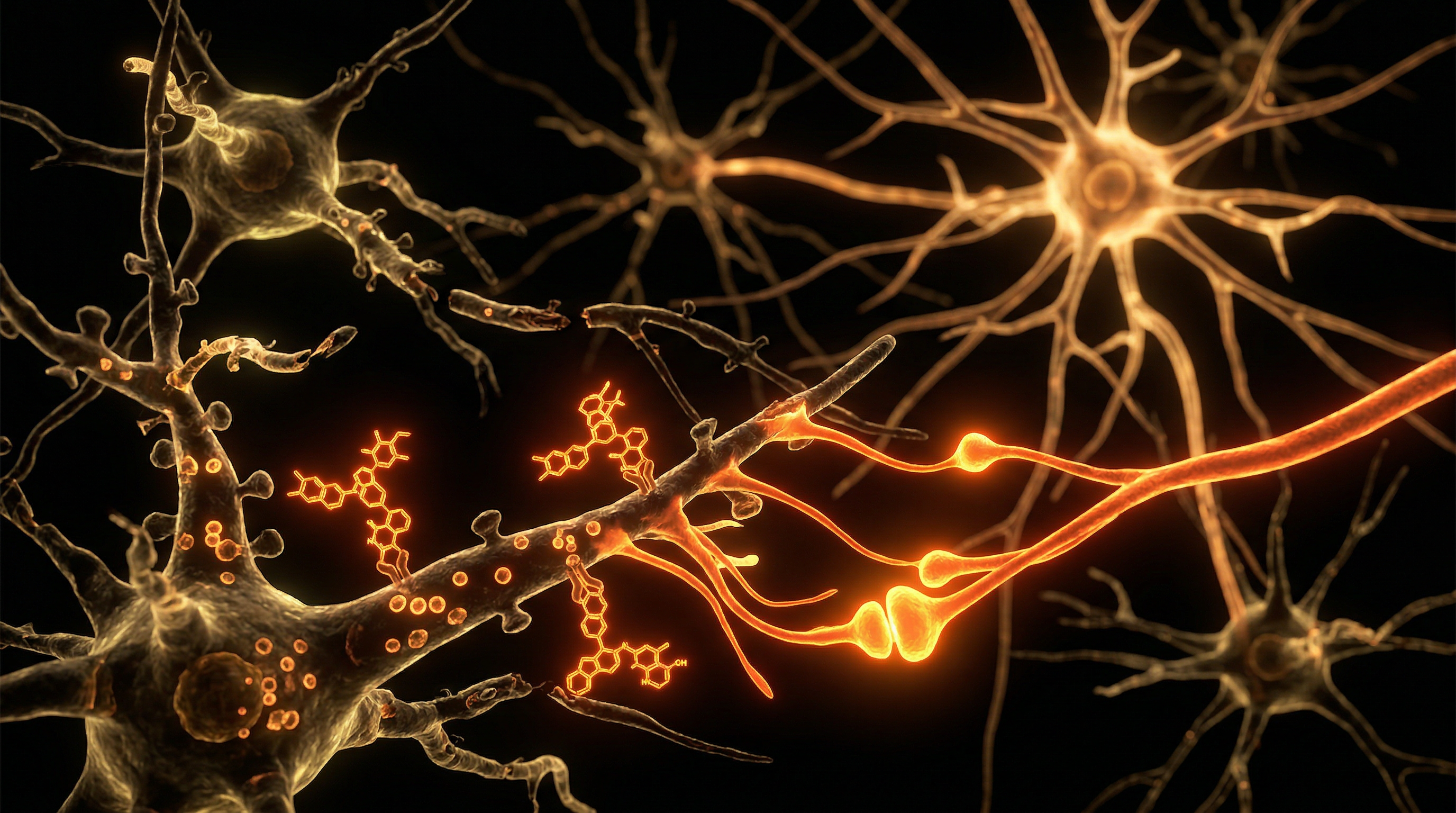
While neurogenesis (the birth of new neurons) is important, it is a slow and often inefficient process in the adult brain. Synaptogenesis, however, is the process of building new bridges between existing neurons. Dihexa is primarily a synaptogenic agent. By increasing the density of dendritic spines, it creates a more robust, redundant, and efficient neural network. This allows the brain to bypass damaged areas, creating "detours" around lesions or areas of atrophy.
Mechanisms at the Cellular Level
At the microscopic level, Dihexa’s impact is profound. Its primary mechanism involves the modulation of the MAPK/ERK pathway and the PI3K/Akt pathway, both of which are central to cellular life and plasticity.
1. Dendritic Spine Proliferation
The most visual evidence of Dihexa’s efficacy is the "forest" of dendritic spines it produces. Neurons treated with Dihexa show a massive increase in both the number and the size of these spines. These are not just decorative; they are functional. They house the receptors (such as AMPA and NMDA) necessary for glutamatergic neurotransmission, which is the basis of learning and memory.
2. Long-Term Potentiation (LTP)
Long-Term Potentiation is the process by which synaptic connections are strengthened through frequent activation. It is the cellular basis for how we store memories. Dihexa lowers the threshold for LTP to occur. In simpler terms, it makes the brain more "plastic" and receptive to learning. It transforms a rigid, aging brain into a "wet clay" state reminiscent of childhood.
3. Protection Against Pro-Apoptotic Signals
Neurons in a state of disease or trauma are often under siege by "pro-apoptotic" (cell death) signals. These signals tell the cell to commit suicide (apoptosis). Dihexa activates survival pathways that counteract these signals, effectively keeping "dying" neurons alive long enough for repair mechanisms to take hold.
4. Enhancement of Glutamatergic Transmission
By increasing the number of functional synapses, Dihexa increases the brain's "bandwidth." It allows for more efficient communication between the pre-frontal cortex (the seat of executive function) and the hippocampus (the seat of memory).
Important Fact: Unlike many stimulants, Dihexa does not deplete neurotransmitter stores. Instead, it builds the hardware (synapses) necessary to process neurotransmitters more effectively.
Environmental Threats and Biological Disruptors
Why is a compound like Dihexa becoming increasingly necessary? We are living in a neurotoxic "soup" that the human genome has never before encountered. Our neural networks are being degraded by a multitude of environmental factors that modern medicine largely ignores.
The Pesticide Burden
Modern industrial agriculture relies heavily on organophosphates and carbamates. These chemicals are designed to be neurotoxic to insects by inhibiting acetylcholinesterase, but they have devastating effects on human neural architecture. Chronic exposure—even at "safe" levels—leads to a slow pruning of the synaptic tree.
Heavy Metal Accumulation
Mercury, aluminium, and lead are ubiquitous in our environment, from the water supply to "therapeutic" injections. These metals are known to interfere with the polymerisation of tubulin, a protein essential for maintaining the structure of axons. When tubulin is disrupted, the neuron collapses, leading to what is often diagnosed as Alzheimer's.
Glyphosate and the Gut-Brain Axis
The herbicide glyphosate disrupts the shikimate pathway in our gut bacteria. While humans don't have this pathway, our microbiome does. A disrupted microbiome leads to systemic inflammation and the "leaking" of lipopolysaccharides (LPS) into the bloodstream, which cross the BBB and trigger neuroinflammation (the activation of microglia). Persistent neuroinflammation is the primary driver of synaptic loss.
Electromagnetic Frequency (EMF) Interference
The proliferation of high-frequency wireless technology (5G, Wi-Fi) has introduced a new stressor. Research suggests that non-ionizing radiation can disrupt voltage-gated calcium channels (VGCCs) in the brain, leading to an influx of calcium that triggers oxidative stress and nitric oxide-mediated damage to neural networks.
The Cascade: From Exposure to Disease
The journey from environmental exposure to a diagnosis of Parkinson's or Alzheimer's is not an overnight event; it is a decades-long cascade of biological failure.
Phase 1: Oxidative Stress and Mitochondrial Dysfunction
Environmental toxins first target the mitochondria—the powerhouses of the cell. When mitochondria fail, they produce excessive Reactive Oxygen Species (ROS). This creates a state of oxidative stress that "fries" the delicate lipids of the neuronal membrane.
Phase 2: Microglial Activation
When neurons are damaged, the brain's immune cells—microglia—switch from their "nurturing" mode to an "inflammatory" mode. In an attempt to clean up the damage, they often end up destroying healthy synapses in a process called "synaptic pruning run amok."
Phase 3: The Loss of Connectivity
As synapses are lost, the brain's "functional connectivity" drops. The individual begins to experience "brain fog," loss of word-finding ability, and decreased emotional regulation. This is the stage where Dihexa is most critical—it can intervene before the neuron itself dies.
Phase 4: Pathological Aggregation
Only in the final stages do we see the hallmarks that mainstream medicine focuses on: Beta-amyloid plaques and Tau tangles. These are not the cause of the disease; they are the "tombstones" of dead neurons. Targeting these plaques after they have formed is like trying to put out a fire by clearing away the ashes.
What the Mainstream Narrative Omits
The mainstream medical establishment has a vested interest in the "management" of chronic illness rather than its cure. Dihexa remains largely on the fringes of clinical practice for several uncomfortable reasons.
1. The Patent Problem
Natural peptides and their simple derivatives are difficult to patent in a way that guarantees a multi-billion-pound return. Because Dihexa's primary research was funded partially by academic grants and its structure is relatively simple, it does not offer the "blockbuster" profit margins that Big Pharma demands for a new drug rollout.
2. The Symptom-Management Bias
Current "standard of care" drugs for dementia, such as Donepezil (Aricept), only slow the breakdown of acetylcholine. They do nothing to stop the underlying structural decay. Dihexa is a structural intervention. A cured patient is a lost customer; a managed patient is a customer for life.
3. The "Peptide Problem" in Regulation
Regulatory bodies like the FDA and the MHRA are built around the "Small Molecule Drug" model. Peptides and peptide-mimetics occupy a "grey area" that is often bogged down in bureaucratic red tape, despite their superior safety profiles compared to synthetic psychiatric drugs.
4. The Fear of Neuro-Enhancement
There is a profound philosophical resistance to the idea of "cognitive enhancement." The idea that we could potentially repair a brain to be better than it was before the injury is viewed with suspicion. However, in an increasingly complex and toxic world, cognitive repair is not a luxury; it is a necessity for survival.
The UK Context
In the United Kingdom, the situation regarding neurological health and access to Dihexa is particularly fraught. The UK faces unique challenges that make the study and availability of such compounds a matter of national urgency.
The NHS Crisis and Neurological Care
The National Health Service (NHS) is currently buckling under the weight of an ageing population. Dementia is now the leading cause of death in the UK. However, the NHS "Dementia Pathway" is largely focused on late-stage diagnosis and palliative care. There is almost zero focus on neuro-regeneration or early-stage synaptic repair.
Environmental Toxins in the British Isles
The UK has a legacy of industrial pollution. The prevalence of "heavy" water in many regions, the use of ageing lead pipes in older Victorian dwellings, and the intensive use of pesticides in the British countryside have created a high baseline of neurotoxicity. Furthermore, the UK’s urban centres have some of the highest levels of nitrogen dioxide (NO2) in Europe, a pollutant directly linked to cognitive decline and the thinning of the cerebral cortex.
Regulatory Barriers (MHRA)
Following Brexit, the Medicines and Healthcare products Regulatory Agency (MHRA) has faced significant backlogs. Innovative therapies like peptides are often sidelined in favour of "safe" iterations of existing drugs. This has forced many UK citizens to source Dihexa through "grey market" research chemical suppliers, which carries risks regarding purity and quality control.
The "Sheep Dip" Scandal
A specific UK-centric example of neural damage is the historical exposure of British farmers to organophosphate sheep dips. Thousands of farmers have suffered from chronic neurological damage (often called "Sheep Dip Flu"), which the government has been slow to fully acknowledge. For this demographic, Dihexa represents one of the few tangible hopes for recovering lost cognitive function.
Protective Measures and Recovery Protocols
For those seeking to utilise Dihexa for neural repair, it must be understood within the context of a broader "Bio-Optimisation" framework. Taking Dihexa while living a pro-inflammatory lifestyle is like trying to build a house in the middle of a hurricane.
The Dihexa Protocol (Research-Based)
Note: This is for educational purposes based on current research literature and does not constitute medical advice.
- Administration: Dihexa is typically researched in dosages of 10mg to 20mg daily. It is orally active but has high transdermal permeability when dissolved in a carrier like DMSO.
- Cycling: Most researchers suggest a "cycling" approach—e.g., 4 weeks on, 2 weeks off—to prevent potential receptor desensitisation, although c-Met desensitisation is less common than with other receptors.
- Safety Monitoring: High doses of any HGF-mimetic must be approached with caution. Because HGF promotes cell growth, it should be avoided by anyone with active malignancies (cancer), as it could theoretically promote the growth of existing tumours.
Synergistic Stacks
To maximise synaptogenesis, Dihexa should be paired with the "building blocks" of neural tissue:
- Phospholipid Donors: Alpha-GPC or CDP-Choline. You cannot build new synaptic membranes without a surplus of choline.
- Magnesium L-Threonate: The only form of magnesium that effectively crosses the BBB. It is essential for the NMDA receptor function that Dihexa enhances.
- Lion’s Mane (Hericium erinaceus): Provides a natural boost to Nerve Growth Factor (NGF), which works in tandem with the HGF pathway.
- Omega-3 (EPA/DHA): High-dose, high-quality fish oil is required for the structural integrity of the new dendritic spines.
Lifestyle Mitigation
- EMF Reduction: Turning off Wi-Fi at night and using wired connections can reduce the oxidative stress that counteracts Dihexa’s benefits.
- Organic Nutrition: Reducing the intake of glyphosate-laden wheat and soy is non-negotiable for gut-brain health.
- Heavy Metal Chelation: Using binders like Modified Citrus Pectin or Chlorella can help "clear the field" so that Dihexa can do its work.
Callout: Synaptogenesis is a metabolically expensive process. The brain requires 20% of the body’s total energy. Ensuring mitochondrial health through CoQ10 and PQQ is essential when using Dihexa.
Summary: Key Takeaways
Dihexa represents a paradigm shift from "nursing the decline" to "architectural restoration." It is the first compound of its kind to offer a realistic mechanism for the mass-production of new synapses in a damaged adult brain.
- Potency: Dihexa is millions of times more effective than BDNF in promoting the growth of new neural connections.
- Mechanism: It works by facilitating the HGF/c-Met axis, a primary pathway for cellular repair and survival.
- Utility: It is not just for Alzheimer’s; it has potential applications for Traumatic Brain Injury (TBI), stroke recovery, and even age-related cognitive decline.
- Environmental Context: In a world filled with neurotoxic pesticides, heavy metals, and EMFs, Dihexa is a vital tool for maintaining cognitive sovereignty.
- The Challenge: Because of regulatory and patenting hurdles, Dihexa remains a "suppressed" breakthrough, accessible primarily to those willing to look beyond the mainstream medical narrative.
The future of neurology is not found in the pharmaceutical management of symptoms, but in the biological reality of regeneration. As we peel back the layers of systemic neglect and environmental damage, compounds like Dihexa stand as a testament to the resilience of the human brain—provided we give it the tools it needs to rebuild. In the battle for our minds, Dihexa is more than a peptide; it is a glimmer of hope for a restored and enhanced humanity.
This article is provided for informational and educational purposes only. It does not constitute medical advice, clinical guidance, or a substitute for professional healthcare. Information reflects cited research at time of publication. Always consult a qualified healthcare professional before acting on any health information.
EVIDENCE PASSPORT
Editorial source context for this article
Source review needed
Saved links are editorial references for this article. They may support specific claims rather than every sentence. Open and assess each source in context. This passport does not independently verify them.
Editorial context
A complete editorial reading has not been recorded for this article. Source links remain available for you to open and assess directly.
Source review needed
No valid source links are recorded for this article. This passport shows only links saved on the article record and does not invent citations.
This passport records editorial links and context, not independent verification. Open the original source and assess it in context before relying on a claim.
Medical Disclaimer
The information in this article is for educational purposes only and does not constitute medical advice, diagnosis, or treatment. Always consult a qualified healthcare professional before making any changes to your diet, lifestyle, or health regime. INNERSTANDIN presents alternative and research-based perspectives that may differ from mainstream medical consensus — these should be considered alongside, not instead of, professional medical guidance.
Read Full DisclaimerContinue the thread
Keep this question moving.
Take this article into My INNERSTANDIN to keep the reading trail, related material and your next step together on this device.
Explore this in the Body Map
See where this hits your biology. Interactive anatomy, threats, and protective protocols.
Dig deeper in the Library
Free, longform PDF volumes that go beyond headlines into mechanisms and references.