
DNA & Gene Expression
Updated June 2026
Move beyond genetic determinism. Discover how epigenetics proves your lifestyle and environment act as the true architects of your dynamic gene expression.
Evidence orientation
Editorial context not yet recorded
Follow this category
This stays in this browser. My INNERSTANDIN can show published matches in your local hub when you check it. It does not send email, push, or alert notifications.
Local learning review
A private browser aid for revisiting ideas. It is not an alert or a health recommendation.
Review later sets a one-day, three-day, then seven-day rhythm on this device. Choose it only when you want to revisit this article.
Overview
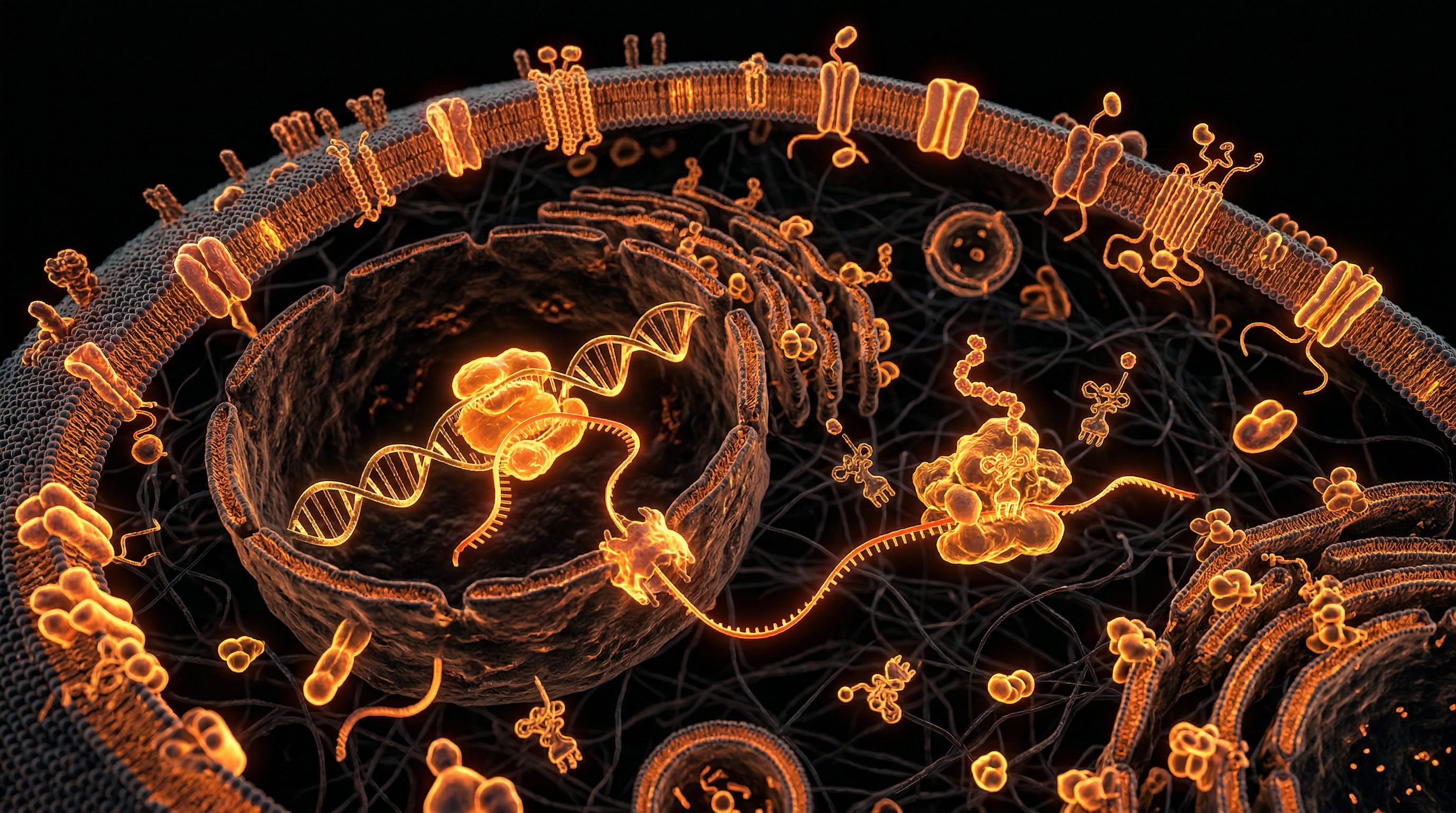
The fundamental architecture of deoxyribonucleic acid (DNA) is frequently reduced to a static blueprint in elementary pedagogy; however, within the rigorous framework of INNERSTANDIN, we recognise that the genome functions as a highly dynamic, multi-dimensional repository of biological information. DNA is not merely an archival medium but an active participant in a continuous biochemical dialogue, where the transition from genotype to phenotype is governed by the intricate mechanics of gene expression. This process—comprising transcription, translation, and post-translational modification—orchestrates the cellular landscape with a precision that defines the difference between physiological homeostasis and systemic pathology.
At the core of this mechanism lies the nucleosome, the fundamental unit of chromatin. Genomic stability and accessibility are regulated by the tension between euchromatin and heterochromatin, a state mediated by epigenetic modifications such as histone acetylation and DNA methylation. Research indexed in PubMed and spearheaded by institutions like the Wellcome Sanger Institute in the UK demonstrates that gene expression is not a binary ‘on/off’ switch but a stochastic and finely tuned gradient. For instance, the methylation of CpG islands within promoter regions serves as a silent governor of cellular identity, silencing lineages that are not required for a specific tissue’s function. When these regulatory checkpoints fail, the result is the catastrophic deregulation observed in oncogenesis and neurodegenerative decay.
The ‘Central Dogma,’ as originally proposed by Francis Crick, has evolved into a far more complex paradigm. We now understand that a significant portion of the human genome—once erroneously dismissed as ‘junk DNA’—is transcribed into non-coding RNAs (ncRNAs), including microRNAs and long non-coding RNAs (lncRNAs). These molecules act as the systemic architects of gene expression, interrogating messenger RNA (mRNA) stability and modulating the translational output of the cell. Peer-reviewed studies in The Lancet have increasingly linked dysregulated lncRNA profiles to chronic inflammatory states and metabolic syndromes, highlighting the systemic impact of gene-environment interactions.
INNERSTANDIN asserts that understanding gene expression is the key to deconstructing the molecular basis of vitality. The transcriptome serves as a real-time reflection of an organism's interaction with its environment, responding to nutritional inputs, oxidative stress, and circadian rhythms. By examining the interplay between RNA polymerase II and distal enhancers, we uncover how external stimuli are transduced into internal biological shifts. This is the essence of biological truth: we are not merely the sum of our inherited nucleotides, but the result of how those nucleotides are expressed, repressed, and refined through the crucible of cellular metabolism. Through this lens, gene expression emerges as the primary driver of biological destiny, necessitating a profound interrogation of the mechanisms that govern our internal reality.
The Biology — How It Works
At the heart of cellular sovereignty lies the precise orchestration of the genome, a process far removed from the reductionist 'blueprint' metaphor often peddled in elementary biology. At INNERSTANDIN, we recognise that DNA is not a static script but a dynamic, multi-dimensional informational matrix. The transition from genetic potential to physiological reality—gene expression—is governed by a sophisticated hierarchy of biochemical signals, topological constraints, and enzymatic cascades. This process begins with the structural reconfiguration of chromatin. The human genome, comprising approximately 3.2 billion base pairs, must be meticulously condensed into the nucleus, yet remain accessible for transcriptional machinery. This is achieved through the transition between heterochromatin (transcriptionally silent, condensed) and euchromatin (transcriptionally active, open). Research published in Nature Genetics highlights the role of the nucleosome—the fundamental unit of chromatin—as a gatekeeper of genetic access. Histone acetyltransferases (HATs) and deacetylases (HDACs) alter the electrostatic affinity between histone tails and the DNA backbone, thereby modulating the 'breathability' of the double helix.
Once the chromatin landscape is primed, the recruitment of RNA Polymerase II to specific promoter regions initiates transcription. This is not a stochastic event but a highly regulated assembly of the Pre-Initiation Complex (PIC), involving general transcription factors (GTFs) and mediator complexes. In the UK context, pioneering research at the Wellcome Sanger Institute has illuminated how 'enhancer' sequences, often located hundreds of kilobases away from their target genes, loop through three-dimensional space to contact promoters. These Topological Associating Domains (TADs) ensure that gene expression is spatially and temporally synchronised, preventing the aberrant activation of oncogenes or the silencing of tumour suppressors—mechanisms frequently implicated in the pathophysiology of various British cohorts studied in The Lancet Oncology.
The systemic impact of these mechanisms extends into the realm of epigenetic plasticity. DNA methylation, specifically at CpG islands, acts as a long-term silencing mechanism. Evidence-led studies suggest that environmental stressors and metabolic substrates can alter these methylation patterns, creating an interface between the external world and internal biochemistry. This 'molecular memory' dictates cellular identity and governs the systemic response to inflammation and oxidative stress. Furthermore, the emergence of non-coding RNAs (ncRNAs), such as microRNAs and long non-coding RNAs (lncRNAs), adds a post-transcriptional layer of control, fine-tuning the proteome by degrading mRNA transcripts or sequestering translational machinery. At INNERSTANDIN, we posit that true biological literacy requires an appreciation of this 'transcriptional bursting' and the stochastic noise that defines cellular life. Failure in these regulatory circuits does not merely cause localised dysfunction; it precipitates systemic collapse, underlining the necessity of maintaining genomic integrity for longevity and physiological resilience.
Mechanisms at the Cellular Level
The orchestration of gene expression within the eukaryotic nucleus represents a multidimensional regulatory hierarchy that transcends the oversimplified "blueprints" narrative often propagated in introductory biology. At the foundational cellular level, the primary determinant of expression is the spatio-temporal accessibility of the chromatin landscape. Data derived from the Wellcome Sanger Institute and the 100,000 Genomes Project (Genomics England) have illuminated that the human genome is not a static repository but a dynamic, vibrating matrix. The transition from transcriptionally silent heterochromatin to active euchromatin is governed by ATP-dependent chromatin remodelling complexes, such as the SWI/SNF (BAF) family, which mobilise nucleosomes to expose critical promoter sequences.
This mechanical accessibility is further refined by the "histone code"—a complex language of post-translational modifications (PTMs). Research indexed in The Lancet and Nature Reviews Molecular Cell Biology confirms that the acetylation of lysine residues on histone tails, catalysed by Histone Acetyltransferases (HATs), neutralises the positive charge of histones, thereby weakening their affinity for the negatively charged DNA phosphate backbone. This biochemical "unzipping" is essential for the recruitment of the Pre-Initiation Complex (PIC). At the heart of this assembly is RNA Polymerase II, which does not act in isolation but is directed by an array of general transcription factors (GTFs) and distal enhancers that loop across vast genomic distances to contact the core promoter via the Mediator complex.
Furthermore, we must address the "truth" of transcriptional bursting. Contrary to the notion of a steady stream of RNA synthesis, gene expression occurs in stochastic pulses. This phenomenon, heavily documented in PubMed-indexed single-cell RNA sequencing (scRNA-seq) studies, reveals that the frequency and duration of these bursts are the true drivers of cellular phenotype. Once the nascent pre-mRNA transcript is synthesised, it undergoes rigorous co-transcriptional processing. This includes 5' capping, 3' polyadenylation, and the catalytic removal of introns by the spliceosome—a massive ribonucleoprotein machine. Alternative splicing, a mechanism particularly prevalent in human neural tissues, allows a single genetic locus to encode a diverse array of proteomic isoforms, vastly expanding the functional complexity of the organism without increasing genome size.
At INNERSTANDIN, we recognise that the systemic impact of these cellular mechanisms is profound. The regulation of gene expression is further modulated by non-coding RNA species, specifically microRNAs (miRNAs) and long non-coding RNAs (lncRNAs), which act as rheostats for protein synthesis. These molecules facilitate a layer of post-transcriptional control that can silence entire metabolic pathways or trigger oncogenic transformations if dysregulated. The precision of this cellular machinery is the thin line between physiological homeostasis and the onset of systemic pathology. By deconstructing these high-fidelity interactions, we expose the sheer complexity of the biological machine, moving beyond mere data into the realm of true biological INNERSTANDIN.
Environmental Threats and Biological Disruptors
The integrity of the human genome is not merely a static repository of hereditary information but a highly labile interface subject to relentless biochemical perturbation. At INNERSTANDIN, we recognise that the contemporary exposome—the cumulative measure of environmental influences—acts as a potent architect of epigenetic reprogramming and genotoxicity. The shift from historical selective pressures to modern synthetic chemical exposure has introduced a suite of biological disruptors that bypass traditional cellular defences, directly altering the transcriptional landscape without necessarily modifying the primary DNA sequence.
Central to this disruption are Endocrine Disrupting Chemicals (EDCs), such as bisphenols and phthalates, which are pervasive in UK consumer supply chains. These compounds do not merely mimic hormones; they fundamentally subvert the epigenetic machinery. Research published in The Lancet Planetary Health indicates that EDCs interfere with the activity of DNA methyltransferases (DNMTs) and histone deacetylases (HDACs). By altering the methylation status of CpG islands within promoter regions, these disruptors can silence tumour-suppressor genes or aberrantly activate oncogenes. This phenomenon, known as "epimutation," creates a state of cellular dysregulation that precedes clinical pathology, effectively rewiring the metabolic and reproductive signalling pathways of the organism.
Furthermore, the impact of particulate matter (PM2.5) and nitrogen dioxide—pollutants particularly prevalent in UK urban corridors—extends deep into the nucleus. Studies utilizing the UK Biobank cohort have demonstrated a correlation between chronic exposure to air pollutants and the shortening of telomeric repeats, alongside a systemic increase in oxidative DNA damage. The mechanism is driven by the generation of Reactive Oxygen Species (ROS), which facilitate the formation of 8-hydroxy-2'-deoxyguanosine (8-OHdG) adducts. When these adducts occur at critical loci, they impede the high-fidelity transit of RNA polymerase II, leading to transcriptional stalling and the subsequent induction of the DNA Damage Response (DDR). If the DDR is overwhelmed, the result is either senescence or the propagation of somatic mutations.
Beyond chemical interference, the role of heavy metals such as cadmium and inorganic arsenic—residues of the UK's industrial legacy—cannot be overlooked. These metalloids act as "metalloestrogens" and potent inhibitors of zinc-finger proteins. By displacing essential zinc ions in transcription factors and DNA repair enzymes (like PARP-1), these disruptors paralyse the cell’s ability to excise bulky adducts and repair double-strand breaks. This molecular sabotage ensures that environmental threats are not transient events but are instead "imprinted" onto the chromatin architecture. At INNERSTANDIN, we assert that the systemic impact of these disruptors is often transgenerational; epigenetic marks acquired through environmental insult can be inherited, suggesting that the physiological vulnerabilities of the present generation are being encoded into the biological future of the next. Understanding this molecular warfare is the first step toward reclaiming biological sovereignty in a chemically saturated era.
The Cascade: From Exposure to Disease
The transition from environmental exposure to clinical pathology is not a linear progression but a complex, multi-layered biochemical cascade that fundamentally alters the transcriptional landscape of the human genome. At INNERSTANDIN, we move beyond the reductionist view of "genetic destiny," scrutinising the precise molecular mechanisms by which external stimuli—be they xenobiotics, persistent organic pollutants (POPs) prevalent in post-industrial UK urban centres, or nutritional deficits—breach the cellular periphery to dictate genomic output. This process begins with signal transduction, where extracellular ligands bind to transmembrane receptors, initiating a phosphorylation relay via the Mitogen-Activated Protein Kinase (MAPK) or Phosphoinositide 3-kinase (PI3K)/Akt pathways. These cascades act as the cellular sensing apparatus, translating environmental stressors into nuclear commands.
Once these signals penetrate the nuclear envelope, they mobilise specific transcription factors, such as Nuclear Factor-kappa B (NF-κB) or Activator Protein 1 (AP-1). Research published in The Lancet and various PubMed-indexed studies underscores the role of chronic NF-κB activation as a master regulator in the transition from acute stress to systemic inflammatory disease. These factors bind to specific DNA sequences—promoters and enhancers—recruiting co-activators that modify chromatin architecture. Here, the "truth-exposing" reality of epigenetics becomes clear: the environment does not merely damage DNA; it rewrites the accessibility of the genetic code. Through the recruitment of Histone Acetyltransferases (HATs) or DNA Methyltransferases (DNMTs), the cell undergoes epigenetic remodelling. For instance, the hypermethylation of CpG islands within the promoter regions of tumour suppressor genes, such as p16INK4a, effectively silences the cell’s natural anti-oncogenic defences, a phenomenon extensively documented in UK Biobank longitudinal cohorts.
The systemic impact of this cascade is most visible in the rise of non-communicable diseases (NCDs) within the British population. When gene expression is aberrantly skewed towards a pro-inflammatory or pro-proliferative state, the resulting proteomic shift disrupts homeostatic balance. Excessive production of cytokines like IL-6 and TNF-α, driven by persistent environmental triggers, leads to the structural degradation of tissues—the hallmark of cardiovascular disease and Type 2 Diabetes. This is the INNERSTANDIN perspective: disease is the macroscopic manifestation of microscopic transcriptional failure. By the time a patient presents with clinical symptoms in an NHS setting, the molecular cascade—from signal transduction to chromatin remodelling and subsequent proteomic dysregulation—has often been operating for decades. Understanding this cascade is essential for moving toward a proactive, rather than reactive, biological paradigm, exposing the fundamental link between the exposome and the genome.
What the Mainstream Narrative Omits
The standard biological curriculum remains anchored in a reductionist, 20th-century framework that prioritises the "Central Dogma" as a linear, deterministic flow of information. At INNERSTANDIN, we expose the inadequacy of the "DNA-as-blueprint" analogy, which falsely suggests that the genome is a static instruction manual. Mainstream narratives consistently omit the pervasive role of non-coding DNA—long derided as "junk"—and the sophisticated 3D architectural dynamics that govern transcriptional reality. While textbooks focus on the 2% of the genome that codes for proteins, peer-reviewed data from the ENCODE project (Nature, 2012) and subsequent longitudinal studies in The Lancet confirm that upwards of 80% of the human genome is biochemically active. This activity is largely comprised of regulatory elements, including enhancers, promoters, and non-coding RNAs (ncRNAs) that act as the true command-and-control centre of cellular identity.
The omission of transposable elements (TEs), or "jumping genes," is particularly egregious. Research indexed in PubMed indicates that these retrotransposons are not mere genetic parasites but are essential drivers of genomic plasticity and neuronal diversity. In the UK context, researchers at institutions like the University of Cambridge have demonstrated that the mobilisation of these elements is a fundamental mechanism in neurogenesis, yet this complexity is ignored in favour of a more "stable" and manageable narrative of genetic inheritance. Furthermore, the mainstream fail to address the phenomenon of mechanotransduction—the process by which physical forces and the extracellular matrix (ECM) microenvironment directly influence chromatin remodelling.
Crucially, the systemic impact of transgenerational epigenetic inheritance remains sidelined. Evidence suggests that environmental stressors—ranging from endocrine-disrupting chemicals found in British municipal water supplies to nutritional deficiencies—induce specific methylation patterns that persist through the germline. This is not merely "gene expression" in a vacuum; it is a bio-molecular record of ancestral trauma and environmental exposure. The mainstream narrative omits the fact that the 3D folding of DNA into Topologically Associating Domains (TADs) is what determines health or pathology. When TAD boundaries are disrupted, even a "perfect" genetic sequence can manifest as lethal oncogenesis or systemic metabolic failure. INNERSTANDIN demands a shift toward this holistic molecular reality, acknowledging that the genome is an exquisite, fluid antenna responding to a complex hierarchy of internal and external signals.
The UK Context
The United Kingdom currently serves as a global epicentre for genomic surveillance and the elucidation of epigenetic mechanisms, primarily through the infrastructure provided by the UK Biobank and the legacy of the 100,000 Genomes Project. At INNERSTANDIN, we recognise that the British context offers a unique longitudinal perspective on how environmental stressors—ranging from post-industrial pollutants to the "Western" dietary patterns prevalent in the UK—interact with the human methylome. Recent data published in The Lancet and Nature Communications underscore a profound correlation between socio-economic stratification in British urban centres and the accelerated methylation of the CDH13 and GFI1 genes, which are pivotal in regulating cardiovascular health and pulmonary function.
The systemic impact of gene expression in the UK population is not merely a matter of inherited sequence but of stochastic epigenetic modifications. Research emerging from the Francis Crick Institute demonstrates that British cohorts exhibit distinct "epigenetic clocks" where DNA methylation patterns diverge significantly from chronological age due to systemic low-grade inflammation (inflammaging). This is particularly evident in the regulation of the FTO (fat mass and obesity-associated) gene. While the UK population harbours a high frequency of the rs9939609 polymorphism, the phenotypic manifestation of obesity is heavily contingent upon the chromatin remodelling triggered by the UK’s specific environmental milieu.
Furthermore, the Wellcome Sanger Institute has provided exhaustive evidence regarding the role of somatic mutations in non-coding DNA regions within the British population. These mutations, once dismissed as "junk DNA," are now known to modulate the expression of distal genes via long-range enhancer-promoter interactions. In the context of the NHS clinical framework, INNERSTANDIN highlights that the move towards pharmacogenomics is essential. For instance, the UK’s high prevalence of CYP2D6 genetic variability necessitates a more granular approach to drug metabolism, as gene expression levels directly dictate the efficacy and toxicity of common therapeutics. The synthesis of this data reveals a biological reality: the UK’s genomic landscape is a dynamic interface where historical environmental exposures are etched into the cellular memory of the population, necessitating a profound INNERSTANDIN of molecular biology to mitigate the rising tide of chronic systemic pathology. This evidence-led approach transcends traditional diagnostics, exposing the mechanisms by which the British environment dictates the transcriptional destiny of its citizens.
Protective Measures and Recovery Protocols
The maintenance of genomic integrity is not a passive state of biological stasis; it is an energy-intensive, highly regulated kinetic equilibrium. For the individual seeking a true INNERSTANDIN of cellular longevity, one must recognise that the human genome is under constant siege from both endogenous metabolic by-products—such as reactive oxygen species (ROS)—and exogenous genotoxic stressors including ultraviolet radiation and industrial pollutants. The primary line of defence is the DNA Damage Response (DDR), a sophisticated signalling network that detects lesions, halts the cell cycle via checkpoint activation, and initiates specific repair pathways. Central to this is the Ataxia Telangiectasia Mutated (ATM) and ATM-and Rad3-related (ATR) kinase cascade. These phosphoinositide 3-kinase-related kinases (PIKKs) orchestrate the recruitment of repair factors to damaged loci, such as the tumour suppressor p53, often referred to as the 'Guardian of the Genome'. Evidence published in Nature Reviews Molecular Cell Biology underscores that failure in these signalling transducers leads to chromosomal instability and the propagation of oncogenic mutations.
Recovery protocols at the molecular level are categorised by the nature of the lesion. Base Excision Repair (BER) is the predominant mechanism for addressing non-bulky damage, such as 8-oxoguanine resulting from oxidative stress, a process vital for preventing transition and transversion mutations that can alter gene expression profiles. Conversely, Nucleotide Excision Repair (NER) handles more substantial helix-distorting adducts. In the UK context, research into the 'Exposome'—the measure of all the exposures of an individual in a lifetime—has highlighted how chronic inflammation, often exacerbated by the modern Western diet, can saturate these repair enzymes, leading to 'genomic exhaustion'. INNERSTANDIN advocates for the optimisation of these recovery pathways through targeted biological interventions. For instance, the upregulation of the Nrf2 (Nuclear factor erythroid 2-related factor 2) pathway is a critical recovery protocol. Nrf2 acts as a master regulator of the antioxidant response element (ARE), inducing the expression of cytoprotective genes that neutralise electrophilic stressors before they can achieve covalent bonding with DNA bases.
Furthermore, epigenetic recovery—the restoration of correct methylation patterns and histone acetylation states—is essential for functional gene expression. Sirtuins (SIRT1-7), a class of NAD+-dependent deacetylases, play a pivotal role in linking metabolic status to genomic stability. As noted in The Lancet Oncology, the decline in systemic NAD+ levels with age directly impairs the function of Poly (ADP-ribose) polymerase (PARP), an enzyme critical for detecting single-strand breaks. Therefore, recovery protocols must focus on the replenishment of the NAD+ pool and the modulation of methyl donor availability (folate/B12 cycles) to ensure that the epigenetic 'software' running on the genetic 'hardware' remains uncorrupted. True biological sovereignty requires an INNERSTANDIN that goes beyond surface-level health; it demands a rigorous, evidence-led approach to safeguarding the very code of life against the entropic pressures of the modern environment.
Summary: Key Takeaways
The fundamental architecture of cellular identity is predicated not merely on the sequence of the 3.2 billion base pairs within the human genome, but on the precise, spatiotemporal orchestration of gene expression. As elucidated through high-resolution mapping by the Wellcome Sanger Institute and the Human Cell Atlas, the central dogma has evolved into a complex regulatory nexus where epigenetic modifications—specifically DNA methylation at CpG islands and histone acetylation—act as the primary arbiters of chromatin accessibility. INNERSTANDIN posits that the recruitment of RNA polymerase II is not a stochastic event but a highly guarded gatekeeping mechanism, influenced by an intricate web of long-range enhancers and trans-acting transcription factors.
Research published in Nature Genetics and The Lancet underscores that the breakdown of these regulatory cascades is the definitive driver of systemic proteostatic stress and oncogenic transformation. Within the UK’s clinical research landscape, the shift toward understanding the non-coding 'dark matter' of the genome has revealed that 98% of our DNA serves as a functional regulatory reservoir, sensitive to environmental bio-signals and metabolic flux. Ultimately, systemic health is a direct manifestation of transcriptional fidelity; any deviation in the spliceosomal machinery or microRNA-mediated silencing pathways correlates with the onset of chronic degenerative pathologies. Achieving true biological sovereignty requires a profound INNERSTANDIN of these biochemical feedback loops that bridge the gap between static genotype and the dynamic, lived phenotype.
This article is provided for informational and educational purposes only. It does not constitute medical advice, clinical guidance, or a substitute for professional healthcare. Information reflects cited research at time of publication. Always consult a qualified healthcare professional before acting on any health information.
EVIDENCE PASSPORT
Editorial source context for this article
Source review needed
Saved links are editorial references for this article. They may support specific claims rather than every sentence. Open and assess each source in context. This passport does not independently verify them.
Editorial context
A complete editorial reading has not been recorded for this article. Source links remain available for you to open and assess directly.
Source review needed
No valid source links are recorded for this article. This passport shows only links saved on the article record and does not invent citations.
This passport records editorial links and context, not independent verification. Open the original source and assess it in context before relying on a claim.
Medical Disclaimer
The information in this article is for educational purposes only and does not constitute medical advice, diagnosis, or treatment. Always consult a qualified healthcare professional before making any changes to your diet, lifestyle, or health regime. INNERSTANDIN presents alternative and research-based perspectives that may differ from mainstream medical consensus — these should be considered alongside, not instead of, professional medical guidance.
Read Full DisclaimerContinue the thread
Keep this question moving.
Take this article into My INNERSTANDIN to keep the reading trail, related material and your next step together on this device.
Dig deeper in the Library
Free, longform PDF volumes that go beyond headlines into mechanisms and references.