
Dry Eye Syndrome: Beyond Artificial Tears to Biological Root Causes
Updated May 2026
Analyzing the dysfunction of Meibomian glands and the inflammatory nature of the modern ocular surface. This article advocates for a systemic approach involving nutrition and environmental modification over topical masking.
Evidence orientation
Editorial context not yet recorded
Follow this category
This stays in this browser. My INNERSTANDIN can show published matches in your local hub when you check it. It does not send email, push, or alert notifications.
Local learning review
A private browser aid for revisiting ideas. It is not an alert or a health recommendation.
Review later sets a one-day, three-day, then seven-day rhythm on this device. Choose it only when you want to revisit this article.
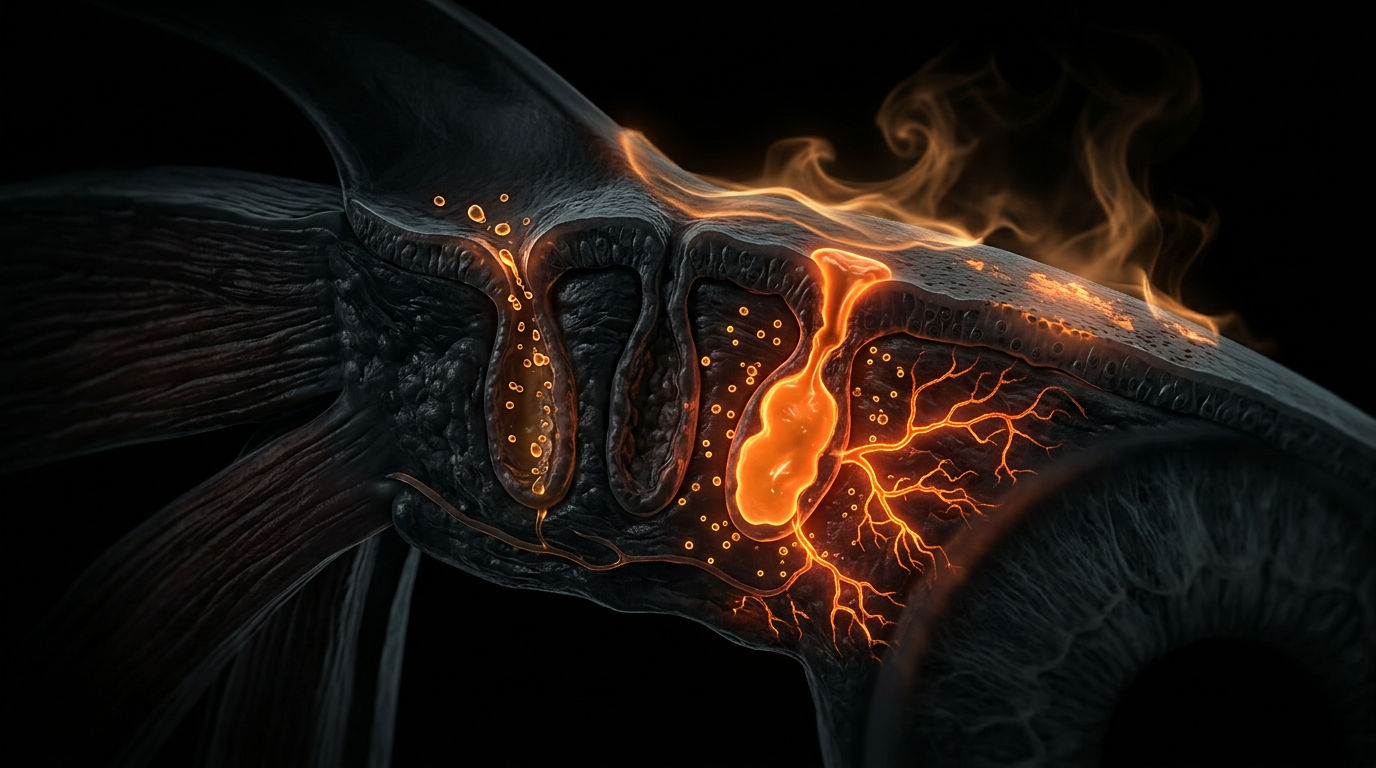
This article serves as a deep-dive biological interrogation of one of the most pervasive, yet misunderstood, epidemics of the 21st century. At INNERSTANDING, we move beyond the superficial application of saline and lubricants to examine the cellular collapse, environmental toxins, and systemic inflammatory drivers that define the modern ocular crisis.
Overview
Dry Eye Syndrome (DES), or Keratoconjunctivitis Sicca, is frequently dismissed by the mainstream medical establishment as a minor inconvenience of the digital age—a "nuisance" to be managed with over-the-counter drops. This perspective is not only reductive; it is biologically negligent. Dry Eye is not merely a lack of "water" on the eye; it is a complex inflammatory disease involving the lacrimal functional unit, characterized by a loss of homeostasis of the tear film and accompanied by ocular symptoms, in which tear film instability and hyperosmolarity, ocular surface inflammation and damage, and neurosensory abnormalities play etiological roles.
In the United Kingdom, the prevalence of DES has skyrocketed, with recent estimates suggesting that up to 30% of adults over the age of 50 suffer from chronic symptoms. However, we are now seeing a demographic shift: a "youthification" of the disease driven by unprecedented screen exposure and environmental stressors.
The conventional narrative focuses on "supplementing" the tear film. At INNERSTANDING, we argue that this is akin to pouring water into a bucket riddled with holes while ignoring the structural integrity of the bucket itself. To truly resolve Dry Eye, we must look at the Meibomian glands, the lipid-producing powerhouses of the eyelid, and the systemic inflammatory pathways—often originating in the gut and the endocrine system—that cause these glands to atrophy and fail. This article exposes the biological reality behind the "dryness" and provides a roadmap for systemic restoration.
Fact: Approximately 86% of patients diagnosed with Dry Eye Syndrome actually suffer from Meibomian Gland Dysfunction (MGD), meaning the issue is not a lack of water (aqueous deficiency) but a lack of protective oils (evaporative loss).
The Biology — How It Works
To understand the pathology, one must first appreciate the architectural brilliance of the tear film. It is not a simple layer of moisture; it is a sophisticated, three-tiered trilaminar structure designed to protect, nourish, and provide a perfect optical surface for light refraction.
1. The Mucin Layer (The Foundation)
Produced by goblet cells in the conjunctiva, this innermost layer "hydrophilicises" the corneal surface. Without this glycoprotein base, the subsequent water layer would simply bead off the eye like rain off a waxed car.
2. The Aqueous Layer (The Bulk)
Produced by the lacrimal glands, this middle layer contains water, electrolytes, and over 1,500 different proteins, including lysozymes and antibodies that provide the first line of immune defence against pathogens.
3. The Lipid Layer (The Seal)
This is the most critical component in the context of the modern dry eye epidemic. Secreted by the Meibomian glands—roughly 25 to 30 tiny glands in the lower eyelid and 30 to 40 in the upper eyelid—this oily veil sits atop the aqueous layer. Its primary function is to prevent evaporation.
When you blink, the pressure of the eyelids "milks" the Meibomian glands, expressing a complex oily substance known as meibum. This oil spreads across the surface, creating a tension-reducing seal. If the meibum is of poor quality—thick, waxy, or rancid—it cannot spread. This leads to Evaporative Dry Eye, where the water on the surface evaporates within seconds, leaving the corneal nerves exposed and the surface "dry," even if the lacrimal glands are working overtime.
Mechanisms at the Cellular Level
At the heart of Dry Eye Syndrome is a cellular breakdown known as the "Vicious Circle of Dry Eye." This cycle begins with tear film instability, but it is fueled by the biochemistry of inflammation.
The Meibum Composition Crisis
Healthy meibum is a cocktail of polar and non-polar lipids (sterol esters, wax esters, triglycerides, and phospholipids). At body temperature, it should have the consistency of olive oil. In the pathological state, the melting point of meibum rises. It becomes viscous, resembling toothpaste.
This change is often driven by lipid peroxidation. When the ocular surface is under oxidative stress, the fats in the Meibomian glands are attacked by free radicals. This changes their molecular structure, making them pro-inflammatory. Instead of lubricating the eye, the degraded lipids irritate the conjunctiva, triggering a recruitment of T-cells.
The Role of Hyperosmolarity
When the lipid layer fails and water evaporates, the remaining tear fluid becomes "salty"—a state known as hyperosmolarity. This is a catastrophic event at the cellular level. This saltiness draws water out of the corneal epithelial cells through osmosis, causing them to shrink and undergo apoptosis (programmed cell death).
Fact: Hyperosmolarity of the tear film is considered the "gold standard" biomarker for Dry Eye severity, as it directly triggers the activation of inflammatory signalling pathways like MAPK and NF-κB.
The Inflammatory Cascade
Once the cells are stressed by saltiness and friction, they release "danger signals" or cytokines, specifically Interleukin-1 (IL-1) and Tumour Necrosis Factor-alpha (TNF-α). These cytokines act as beacons, calling in inflammatory cells from the bloodstream. This creates a state of chronic "low-grade" inflammation on the ocular surface. This inflammation then damages the very nerves (the trigeminal nerve branches) that are supposed to tell the brain to produce more tears, leading to a loss of the "blink reflex" and further glandular atrophy.
Environmental Threats and Biological Disruptors
The modern world is essentially designed to destroy the tear film. Our biology, evolved over millions of years, is currently being blindsided by a rapid shift in environmental stressors.
The Digital Blink Suppression
Human beings are biologically programmed to blink approximately 15–20 times per minute. This frequent blinking is the mechanical pump for the Meibomian glands. However, when staring at a digital screen (laptop, smartphone, or tablet), our blink rate drops by up to 60-80%.
Moreover, the blinks we do perform are often "incomplete," meaning the eyelids do not fully meet. This failure to compress the glands leads to stasis—the oil sits in the gland, hardens, and eventually leads to gland dropout (permanent death of the tissue).
Blue Light and Oxidative Damage
High-Energy Visible (HEV) blue light, emitted by LED screens and artificial lighting, penetrates deep into the eye. Beyond its effect on circadian rhythms, HEV light induces oxidative stress in the mitochondria of the corneal cells. This chronic mitochondrial "burning" depletes the eye's natural antioxidant reserves (such as glutathione), leaving it vulnerable to the inflammatory cascade described above.
The Air Quality Factor
In the UK, the combination of PM2.5 particulate matter from urban pollution and the widespread use of Central Heating and Air Conditioning creates a lethal environment for the eye. Central heating strips the air of humidity (often dropping it below 20%, whereas the eye prefers 40-60%). Meanwhile, micro-pollutants settle in the tear film, acting as physical abrasives that further destabilise the lipid layer.
Preservative Poisoning: The BAK Trap
Perhaps the most egregious biological disruptor is found in the "cure" itself. Many mainstream eye drops contain a preservative called Benzalkonium Chloride (BAK).
Fact: Research has shown that BAK is a quaternary ammonium compound that significantly damages corneal epithelial cells and is a known "lysis" agent for the lipid layer. Using BAK-preserved drops to treat dry eye is like trying to put out a fire with a small amount of water mixed with petrol.
The Cascade: From Exposure to Disease
The progression from a healthy eye to a chronic, "dry" eye follows a predictable biological descent.
- Initial Insult: Excessive screen time or an inflammatory diet (high in Omega-6, low in Omega-3) leads to a slight thickening of the meibum.
- Obstruction: The thickened oil clogs the Meibomian gland orifices. This is the "silent stage" where the patient may feel only slight "grittiness" in the morning.
- Bacterial Overgrowth: The stagnant oil in the glands becomes a breeding ground for bacteria, specifically Staphylococcus aureus and Demodex mites. These organisms release lipases—enzymes that further break down the remaining good oils into irritating free fatty acids.
- Tear Film Break-Up: The lipid layer becomes patchy. The "Tear Film Break-Up Time" (TBUT) drops below the critical 10-second threshold.
- Neural Sensitisation: As the cornea dries out, the nerves become hypersensitive. This is why patients often report "burning" or "stabbing" pains that seem disproportionate to the visible redness of the eye. This is Neuropathic Ocular Pain, where the nerves themselves are damaged and misfiring.
- Glandular Atrophy: If left untreated, the Meibomian glands, deprived of their normal function and suffocated by inflammation, begin to "drop out." Once a gland has fully atrophied and turned into scar tissue, it cannot be revived.
What the Mainstream Narrative Omits
The trillion-dollar pharmaceutical industry is built on "management," not "resolution." The standard recommendation of "artificial tears" is a biological sticking plaster that ignores three critical pillars of ocular health:
1. The Gut-Eye Axis
There is a profound connection between the microbiome and the ocular surface. Systemic inflammation, often originating from Intestinal Permeability (Leaky Gut), manifests in the eyes. Studies have shown that patients with Sjögren’s Syndrome and chronic Dry Eye often harbour a distinct, less diverse gut microbiome. When the gut is inflamed, the body is in a state of high-alert, producing systemic cytokines that circulate to the lacrimal and Meibomian glands.
2. The Hormonal Influence (Androgen Depletion)
Meibomian glands are sebaceous glands, and like all sebaceous glands, they are heavily influenced by hormones. Androgens (like testosterone) are trophic for the Meibomian glands; they stimulate oil production and suppress inflammation.
The mainstream narrative often ignores that the rise in dry eye among younger women is frequently linked to the Oral Contraceptive Pill, which suppresses androgen levels, or the "Andropause" in men. Without sufficient androgenic signalling, the Meibomian glands simply "turn off."
3. The Essential Fatty Acid Imbalance
The modern "Western" diet has a ratio of Omega-6 to Omega-3 fatty acids of roughly 15:1 or even 20:1. The biological ideal is closer to 2:1. Omega-6 (found in vegetable/seed oils) is the precursor to pro-inflammatory prostaglandins. Omega-3 (found in oily fish) is the precursor to Resolvins—molecules that actively "switch off" inflammation.
Fact: The "DREAM" study, often cited by mainstream doctors to downplay Omega-3s, has been heavily criticised for its methodology, including the use of olive oil (which contains anti-inflammatory polyphenols) as a "placebo," effectively masking the benefits of the Omega-3 group.
The UK Context
The UK presents a unique set of challenges for ocular health. The National Health Service (NHS) is currently overburdened, and the standard of care for dry eye often stops at the prescription of "Hypromellose" or "Carbomer" gels. These are primitive, water-based lubricants that do nothing to address MGD or systemic inflammation.
Furthermore, the UK's climate plays a significant role. The "Grey British Winter" involves months of indoor life with high-intensity central heating. Many UK offices are notorious for "Sick Building Syndrome," where poor ventilation and recycled air desiccate the eyes of workers.
We also see a specific UK trend in Cosmetic Toxicity. The UK has a massive market for eyelash extensions and "waterproof" eyeliners. Many of these products contain formaldehyde-releasing preservatives and prostaglandin analogues (found in lash-growth serums) that are directly toxic to the Meibomian glands. In the UK context, the pursuit of aesthetic "eye-opening" is paradoxically leading to an epidemic of "eye-closing" disease.
Fact: A survey of UK optometrists revealed that since the 2020 lockdowns, there has been a reported 40% increase in "Digital Eye Strain" and Dry Eye symptoms among school-aged children, a direct result of the shift toward digital-first education.
Protective Measures and Recovery Protocols
To move "Beyond Artificial Tears," we must adopt a multi-pronged, systemic biological approach. At INNERSTANDING, we advocate for the following "Recovery Protocol":
1. Re-Esterified Omega-3 and Omega-7
The foundation of healthy meibum is the availability of the right raw materials.
- Omega-3 (EPA/DHA): Must be in the "Re-esterified Triglyceride" (rTG) form for maximum bioavailability. High doses (2000mg-3000mg of EPA/DHA) are required to shift the systemic inflammatory profile.
- Omega-7 (Palmitoleic Acid): Found in Sea Buckthorn Oil, this rare fatty acid is a specific "mucosal lubricant." It has been shown in clinical trials to improve the integrity of the eye's mucous membranes and reduce redness.
2. Thermal Expression and Meibomian Hygiene
Since the oil in the glands has "hardened," it must be melted and expressed.
- Warm Compresses: Not a flannel with hot water (which loses heat in 60 seconds), but a dedicated heated eye mask (e.g., a Bruder mask) that maintains 40°C for 10 minutes. This is the "melting point" of stagnant meibum.
- Blinking Exercises: Forcing a "hard blink" every 20 minutes (holding for 2 seconds) to manually pump the glands.
3. Environmental Mitigation
- Humidity Control: Use a high-quality ultrasonic humidifier in the bedroom and office. Aim for 45% minimum.
- Blue Light Blocking: Utilising "Warm" or "Night Shift" modes on all devices 24/7, and wearing high-quality (non-tinted) blue light filtering lenses when working.
- Toxin Removal: Transitioning to "Dry Eye Safe" cosmetics—free from BAK, parabens, and phenoxyethanol.
4. Advanced Biological Interventions
For those with advanced MGD, "bio-hacking" the eye is necessary:
- IPL (Intense Pulsed Light): This is a game-changer. IPL uses specific wavelengths of light to coagulate abnormal blood vessels (telangiectasia) on the eyelids that "leak" inflammatory markers into the glands. It also uses photobiomodulation to stimulate mitochondrial activity in the Meibomian glands.
- Manuka Honey (Optimel): Medical-grade Manuka honey drops have a low pH, which kills the bacteria (Staph) that degrade the tear film, without the need for antibiotics.
- The Gut Protocol: Eliminating ultra-processed foods and seed oils, while introducing polyphenols (like Astaxanthin and Maqui Berry) which specifically accumulate in the lacrimal tissue to provide internal UV protection.
Fact: Maqui Berry extract (Delphinol) has been shown in clinical trials to increase tear production by up to 50% by protecting the lacrimal gland from oxidative stress from within.
Summary: Key Takeaways
Dry Eye Syndrome is not a "dryness" problem; it is a biological failure of the lipid-barrier and an escalation of the innate immune system. To treat it with saline drops is to ignore the fire and merely spray water on the smoke.
- The Lipid Priority: 86% of cases are about oil, not water. Protect your Meibomian glands; they are non-renewable resources.
- The Inflammation Vicious Circle: Hyperosmolarity (saltiness) triggers a cellular death spiral. You must break the cycle with systemic anti-inflammatories.
- Screen Hygiene: Digital devices are "blink-killers." Conscious blinking is the only way to "milk" the glands and prevent atrophy.
- The Gut Connection: Your eyes are the windows to your systemic health. An inflamed gut equals an inflamed ocular surface.
- Systemic Recovery: Resolution requires high-dose Omega-3/7, thermal expression, and the removal of toxic preservatives like BAK from your medicine cabinet.
The path to ocular health is not found in a pharmacy aisle. It is found in the restoration of our biological heritage—balancing our fatty acids, respecting our circadian rhythms, and protecting our delicate mucosal surfaces from the onslaught of the modern environment. Stop "managing" your symptoms and start restoring your biology.
This article is provided for informational and educational purposes only. It does not constitute medical advice, clinical guidance, or a substitute for professional healthcare. Information reflects cited research at time of publication. Always consult a qualified healthcare professional before acting on any health information.
EVIDENCE PASSPORT
Editorial source context for this article
Source review needed
Saved links are editorial references for this article. They may support specific claims rather than every sentence. Open and assess each source in context. This passport does not independently verify them.
Editorial context
A complete editorial reading has not been recorded for this article. Source links remain available for you to open and assess directly.
Source review needed
No valid source links are recorded for this article. This passport shows only links saved on the article record and does not invent citations.
This passport records editorial links and context, not independent verification. Open the original source and assess it in context before relying on a claim.
Medical Disclaimer
The information in this article is for educational purposes only and does not constitute medical advice, diagnosis, or treatment. Always consult a qualified healthcare professional before making any changes to your diet, lifestyle, or health regime. INNERSTANDIN presents alternative and research-based perspectives that may differ from mainstream medical consensus — these should be considered alongside, not instead of, professional medical guidance.
Read Full DisclaimerContinue the thread
Keep this question moving.
Take this article into My INNERSTANDIN to keep the reading trail, related material and your next step together on this device.