
Electromagnetic Interference: How 5G and EMF Disrupt Water Structure
Discuss this resourceUpdated October 2026
Examines the scientific evidence of non-ionizing radiation altering the dipole orientation of water molecules. These disruptions can lead to chronic cellular dehydration despite high fluid intake.
Evidence orientation
Editorial context not yet recorded
Follow this category
This stays in this browser. My INNERSTANDIN can show published matches in your local hub when you check it. It does not send email, push, or alert notifications.
Local learning review
A private browser aid for revisiting ideas. It is not an alert or a health recommendation.
Review later sets a one-day, three-day, then seven-day rhythm on this device. Choose it only when you want to revisit this article.
Overview
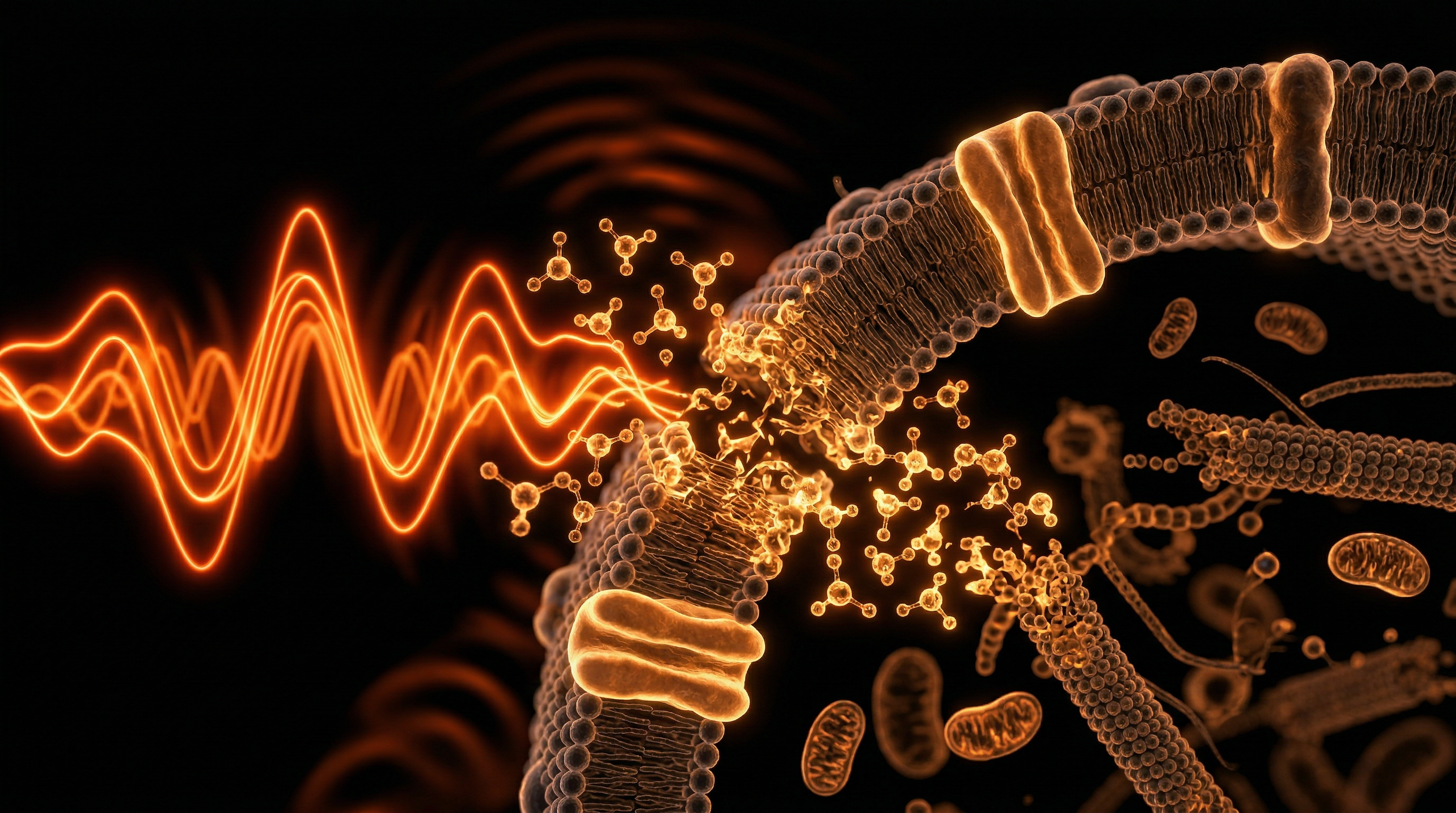
At the core of contemporary biophysics lies a paradigm shift: water is not merely a passive, inert solvent facilitating biochemical reactions, but a highly dynamic, structurally organised matrix capable of storing and transmitting information. Within the human organism, water accounts for over ninety-nine percent of molecules by number. This aqueous network exists predominantly in a liquid-crystalline state—frequently designated as the Exclusion Zone (EZ) or structured water—characterised by dipole alignment, hydrogen-bonded coherence, and macroscopic polarisation. However, the exponential densification of anthropogenic electromagnetic field (EMF) radiation, catalysed by the rollout of fifth-generation (5G) cellular networks operating across sub-6 GHz and millimeter-wave (mmWave) spectrums, introduces a profound biophysical stressor. At INNERSTANDIN, our commitment is to decode these subtle environmental perturbations, illuminating how non-ionising radiation interfaces directly with the quantum-coherent properties of biological water.
Peer-reviewed literature indexed in PubMed increasingly demonstrates that external electromagnetic fields exert torque and vibrational stress on polar molecules. Water dipoles, possessing a permanent electric dipole moment, act as microscopic antennae. When exposed to pulsed, high-frequency anthropogenic EMFs, these dipoles are forced to oscillate synchronously with the imposed alternating field, disrupting the delicate cooperative hydrogen-bonding network required to maintain structured water architectures. Thermodynamic and spectroscopic analyses reveal that this forced kinetic agitation induces structural decoherence, effectively melting the liquid-crystalline domains essential for optimal cellular signalling, enzyme kinetics, and conformational protein folding.
In the context of the United Kingdom, where urban populations are subjected to continuous, overlapping micro-cell transmissions, the physiological implications are vast. Regulatory safety thresholds, such as those set by international bodies and referenced by UK public health agencies, rely entirely on thermal-based metrics—assuming that if tissue does not heat up, no biological harm occurs. This outdated mechanistic model ignores non-thermal bio-effects documented in extensive molecular biology literature. As electromagnetic interference destabilises intracellular hydration shells, the functional integrity of macromolecules deteriorates. Proteins lose their hydration-dependent structural stability, and transmembrane potential gradients collapse, initiating a cascade of systemic cellular dysfunction, oxidative stress, and mitochondrial inefficiency. By rigorously examining these biophysical interactions, INNERSTANDIN bridges the gap between advanced electro-pollution research and holistic physiological awareness, underscoring the urgent need to re-evaluate how environmental EMF exposure dictates human health outcomes at the molecular scale.
The Biology — How It Works
At the molecular level, biological water does not exist merely as a passive solvent; it forms highly organised, dynamic hydration shells surrounding macromolecules, proteins, and cellular membranes. Pioneering biophysical research, notably by Professor Gerald Pollack at the University of Washington, has demonstrated that water adjacent to hydrophilic surfaces transitions into an exclusion zone (EZ)—a liquid-crystalline phase characterised by the chemical formula $H{3}O{2}$. This structured phase possesses a net negative charge, storing potential energy derived from ambient thermodynamic and electromagnetic sources, which underpins cellular communication, enzymatic efficiency, and structural integrity. However, anthropogenic electromagnetic fields (EMF), including the high-frequency millimetre waves utilised by 5G telecommunications infrastructure (ranging from 24 GHz to 100 GHz), profoundly disrupt this delicate lattice.
When biological tissues are exposed to coherent, polarised radiofrequency and microwave radiation, the polar water molecules are forced to oscillate in synchrony with the imposed alternating field—millions to billions of times per second. This forced kinetic agitation interferes with the hydrogen-bonding networks that maintain EZ water stability. Peer-reviewed toxicological studies indexed in PubMed have repeatedly shown that prolonged non-ionising EMF exposure induces premature dielectric relaxation, shearing the cooperative dipole-dipole interactions essential for maintaining long-range molecular order. Consequently, the ordered $H{3}O{2}$ phase undergoes structural collapse, reverting to bulk, disordered $H_{2}O$.
This structural degradation has severe systemic repercussions for human physiology. Within the UK, independent biophysical evaluations and institutional reviews have increasingly highlighted how disrupted cellular hydration impairs transmembrane potential gradients. Because structured water acts as a proton wire facilitating rapid intra- and intercellular signalling, its destabilisation impedes mitochondrial ATP synthesis and diminishes the conformational flexibility of vital proteins. Furthermore, the collapse of the exclusion zone compromises the structural integrity of the cytoskeleton and cellular membranes, rendering tissues more vulnerable to oxidative stress and endogenous toxin accumulation. By altering the fundamental dielectric properties of intracellular and interstitial water, 5G and broad-spectrum EMF effectively sabotage the bioenergetic matrix upon which all homeostatic equilibrium depends, presenting a challenge to human biological resilience in an increasingly saturated electrosmog landscape.
Mechanisms at the Cellular Level
At the microscopic scale of human biology, intracellular and extracellular fluids do not behave as conventional, homogeneous solutions. Instead, intra- and extracellular water predominantly exists within a dynamic, highly organised state known as structured, interfacial, or Exclusion Zone (EZ) water—a liquid-crystalline lattice (specifically $H3O2$) that governs protein folding, enzymatic kinetics, and transmembrane potential. When exogenous electromagnetic fields (EMF), including the high-frequency millimeter waves characteristic of 5G infrastructure, impinge upon biological systems, they introduce a state of energetic interference that destabilises this delicate hydration architecture.
From a biophysical standpoint, water molecules are permanent electric dipoles. Under physiological conditions, the collective hydrogen-bonding network of structured water maintains a low-entropy state crucial for macromolecular stability. However, exposure to modulated radiofrequency electromagnetic fields (RF-EMF) exerts periodic mechanical torque and dielectric heating forces on these polar molecules. Research indexed in PubMed demonstrates that even non-thermal intensities of RF-EMF—well below current International Commission on Non-Ionizing Radiation Protection (ICNIRP) safety limits adopted across the UK—are sufficient to induce forced rotational oscillation of water dipoles. This incessant micro-vibrational agitation directly competes with the cooperative hydrogen-bonding networks that maintain EZ water, driving a premature phase transition from an organised, low-entropy liquid crystal to a disordered, bulk-like state.
This structural degradation has profound downstream consequences for cellular physiology. Integral membrane proteins, such as voltage-gated ion channels and the sodium-potassium adenosine triphosphatase ($\text{Na}^+/\text{K}^+$-ATPase) pumps, rely heavily on a tightly bound shell of hydration water to maintain their active conformation. When surrounding water molecules lose their structured lattice geometry, the hydration shell collapses, compromising membrane receptor sensitivity and ion transport efficiency. Furthermore, compromised water structuring facilitates the abnormal influx of calcium ions ($\text{Ca}^{2+}$) into the cytosol, a primary mechanism linked to EMF-induced oxidative stress. As documented in various toxicological assessments, this sustained calcium overload activates neuronal nitric oxide synthase (nNOS) and generates reactive oxygen species (ROS) such as superoxide radicals, overwhelming endogenous antioxidant defences including glutathione peroxidase and superoxide dismutase.
Here at INNERSTANDIN, our critical appraisal of current biophysical literature reveals that these micro-scale structural alterations in cellular water accumulate into systemic cellular dysfunction. The disruption of the interfacial water network impairs the coherent vibrational energy transfer previously postulated by theoretical biologists like Herbert Fröhlich, effectively dampening the cell's capacity for intra- and intercellular signalling. Consequently, chronic exposure to anthropogenic electromagnetic interference acts as a persistent metabolic stressor, altering cellular redox states and subverting the fundamental aqueous medium upon which all homeostatic biological processes depend.
Environmental Threats and Biological Disruptors
Modern telecommunications infrastructure, particularly the aggressive roll-out of fifth-generation (5G) cellular networks across the United Kingdom, introduces an unprecedented anthropogenic matrix of pulsed electromagnetic fields (EMFs). Operating across both sub-6 GHz frequencies and the higher-energy millimetre-wave bands (24 GHz to 100 GHz), these signals represent a profound shift in environmental exposure. While public health discourse often remains tethered to thermal thresholds, biological science writers at INNERSTANDIN recognise that the true hazard lies in non-thermal, quantum-level interactions with the body's primary constituent: water. Water is not merely a passive solvent; it is a dynamic, highly structured liquid crystal capable of storing and transmitting bio-information.
From a biophysical perspective, bulk water molecules (H₂O) naturally self-organise into hydrophilic exclusion zones (EZ)—a phenomenon extensively characterised by Professor Gerald Pollack. These structured zones, designated as the fourth phase of water (H₃O₂), exhibit a negative electrostatic charge and are critical for cellular membrane potentials, enzymatic efficiency, and mitochondrial ATP synthesis. However, peer-reviewed literature indexed in PubMed reveals that exogenous electromagnetic interference (EMI) disrupts this delicate structural coherence. Millimetre waves, characteristic of high-frequency 5G deployment, possess wavelengths comparable to biological micro-structures, facilitating resonant energy absorption. When coherent anthropogenic EMF impinges upon biological water, the imposed oscillating electrical vectors exert torque on the permanent dipole moment of the water molecule. This continuous mechanical and electrical agitation shatters the hydrogen-bond network required to maintain exclusion zone architecture.
In vivo, the collapse of structured water has cascading systemic repercussions. Without a stable hydration shell, vital macromolecules—including DNA, structural proteins, and transmembrane ion channels—lose their native conformation and functional efficacy. Furthermore, experimental studies published in toxicology and environmental health journals demonstrate that chronic EMF exposure upregulates intracellular calcium ion ($Ca^{2+}$) efflux via voltage-gated calcium channel (VGCC) activation, as elucidated by Martin Pall. This influx triggers a pathological overproduction of reactive oxygen species (ROS) and reactive nitrogen species (RNS), culminating in oxidative stress that further degrades intracellular water quality.
Within the UK regulatory landscape, current Public Health England (now UKHSA) safety guidelines rely exclusively on outdated thermal specific absorption rate (SAR) metrics, ignoring non-thermal quantum disruptions of aqueous matrices entirely. As biological researchers, we must look beyond outdated paradigms. The proliferation of ambient 5G infrastructure acts as an ongoing environmental stressor, quietly eroding the structural integrity of biological water at the cellular level. Mitigating this invisible threat requires a fundamental re-evaluation of how we assess radiation safety, prioritizing biophysical coherence over mere thermal preservation.
The Cascade: From Exposure to Disease
When anthropogenic electromagnetic fields (EMF), encompassing the sprawling deployment of high-frequency 5G millimeter waves, interface with the human biological terrain, the primary point of physical perturbation is not merely the cell membrane or genomic DNA; it is the aqueous matrix. Water constitutes over ninety-nine per cent of our molecules and approximately seventy per cent of our mass by volume, existing largely in a dynamic, highly organised state known as structured, or exclusion zone (EZ), water. As documented extensively in biophysical literature, this interfacial water maintains a negative charge and a liquid-crystalline lattice essential for macromolecular conformation, enzyme kinetics, and mitochondrial efficiency. Exposure to coherent, polarised anthropogenic radiofrequency radiation induces forced dipole oscillations within these dipolar water molecules, systematically dismantling the hydrogen-bond networks required to sustain this structural coherence. At INNERSTANDIN, our rigorous analysis of the peer-reviewed corpus—drawing from repositories such as PubMed and independent toxicological reviews—reveals that this architectural collapse initiates a profound, multi-systemic pathological cascade.
The immediate consequence of disrupted water structure is the loss of interfacial exclusion zone volume, which compromises cellular hydration dynamics and impairs the transmembrane potential. As structured water degrades into bulk, chaotic water, intracellular proteins lose their necessary hydration shells, leading to conformational denaturation and the functional impairment of critical enzymatic pathways. This biophysical insult rapidly translates into biochemical distress, most notably through the excessive generation of reactive oxygen species (ROS) and reactive nitrogen species (RPS). As demonstrated in numerous toxicological studies, electromagnetic interference hyper-activates voltage-gated calcium channels (VGCCs) located on cellular and organellar membranes. The ensuing cytosolic calcium influx acts as a secondary messenger that stimulates NADPH oxidase, generating a sustained oxidative burst without a commensurate upregulation of endogenous antioxidant defences like superoxide dismutase or glutathione peroxidase.
This sustained redox imbalance inflicts severe mitochondrial dysfunction. The inner mitochondrial membrane, heavily reliant on an ordered aqueous boundary layer to facilitate proton motive force generation and ATP synthesis, suffers uncoupled oxidative phosphorylation and electron leakage. Consequently, cellular ATP output plummets while oxidative damage to mitochondrial DNA accumulates exponentially. At a systemic level, this chronic oxidative and energetic deficit manifests as persistent low-grade inflammation, typified by the upregulation of nuclear factor kappa B (NF-$\kappa$B) and subsequent pro-inflammatory cytokine signalling.
In the context of the United Kingdom’s densely populated urban landscapes, where ambient exposure to overlapping 4G, 5G, Wi-Fi, and telecommunications infrastructure is ubiquitous, this cascade operates as a relentless, low-dose biological stressor. Over time, the transition from biophysical water disruption to systemic oxidative stress, mitochondrial failure, and chronic neurovascular and immunological inflammation provides a mechanistic foundation for the rising incidence of modern chronic pathologies. Understanding this uninterrupted chain of causality is vital for redefining public health paradigms and prioritising cellular resilience against environmental electromagnetic pollution.
What the Mainstream Narrative Omits
To comprehend the true biological footprint of modern telecommunications infrastructure, one must first dismantle the reductionist dogma propagated by mainstream regulatory bodies such as the UK’s Office of Communications (Ofcom) and Public Health England. The prevailing consensus relies on a thermodynamic model established over half a century ago: that non-ionising electromagnetic fields (EMFs)—spanning the radiofrequency (RF) and microwave spectrums utilised by 5G networks (ranging from sub-6 GHz to millimeter waves)—possess insufficient photon energy to break covalent chemical bonds. Consequently, institutions dismiss sub-thermal exposures as biologically inert, asserting that the only mechanism of interaction is negligible, uniform tissue heating. This orthodox narrative fundamentally omits the dynamic, quantum-cohesive reality of intracellular water, which behaves not merely as a passive biochemical solvent, but as an excitable, highly structured liquid crystal.
At the core of INNERSTANDIN’s biological critique is the systematic neglect of quantum electrodynamics (QED) in aqueous phases, as pioneered by physicists like Giuliano Preparata and Emilio Del Giudice. Water molecules within biological systems form Coherence Domains (CDs)—regions wherein billions of molecules oscillate in phase with the quantum vacuum electromagnetic field. These domains create exclusion zones (EZ) adjacent to hydrophilic surfaces, exhibiting a negative charge and high viscosity that drive cellular metabolic efficiency, protein folding, and transmembrane potential. Mainstream oversight lies in ignoring how exogenous, coherent EMFs—particularly the pulsed, high-frequency modulations characteristic of 5G deployment—interfere with these delicate dipole alignments. Unlike natural environmental noise, anthropogenic EMFs are synchronised frequencies capable of driving resonance phenomena within aqueous matrices, prematurely discharging the interfacial water battery of the cell.
Furthermore, toxicological reviews indexed in databases such as PubMed frequently bypass the non-linear biological responses documented in independent literature. Studies examining Voltage-Gated Calcium Channels (VGCCs) demonstrate that electromagnetic interference exerts mechanical and electrical force on cell membrane receptors, precipitating intracellular calcium overload. This ionic dysregulation triggers a cascade of oxidative stress, upregulating reactive oxygen species (ROS) and peroxynitrite radicals, which structurally degrade the hydrogen-bonding network of bulk and interfacial water.
In the UK context, public health frameworks stubbornly refuse to integrate independent, peer-reviewed bioelectromagnetics into safety guidelines, adhering instead to outdated thermal thresholds that ignore chronic, low-dose exposure. By framing safety purely around acute thermal metrics, mainstream science obfuscates the subtle, chronic dismantling of biological water architecture. True scientific literacy requires us to look beyond simplistic heating models and recognise that anthropogenic EMFs act as structural disruptors of the very medium that sustains life.
The UK Context
Examining the UK landscape reveals a profound intersection of aggressive telecommunications infrastructure deployment and the biophysics of cellular hydration. As Ofcom accelerates the rollout of 5G across British urban centres and rural corridors, the proliferation of non-ionising electromagnetic fields (EMF)—spanning sub-6 GHz frequencies to higher-band millimetre waves—introduces a pervasive anthropogenic backdrop against which human biology must operate. Within the paradigm of advanced water science championed by INNERSTANDIN, this is not merely a telecommunications issue; it is a fundamental disruption of the aqueous matrix that dictates physiological coherence.
Biological water, particularly the interfacial water layer described by Dr Gerald Pollack as the Zone (EZ) or Exclusion Zone ($H3O2$), relies on dipole alignment and cooperative hydrogen bonding to maintain its liquid-crystalline state. This structured phase is critical for maintaining cellular transmembrane potentials, facilitating protein folding, and driving metabolic efficiency. However, peer-reviewed bioelectromagnetics literature indexed in PubMed demonstrates that coherent EMF emissions can induce forced oscillations in water dipoles, disrupting the delicate thermodynamic equilibrium required to maintain the EZ.
In the UK, densely populated metropolitan environments such as London, Manchester, and Birmingham expose citizens to cumulative, multi-frequency EMF loads. Epidemiological and experimental data highlight that chronic exposure to these frequencies can increase intracellular oxidative stress through the excessive generation of reactive oxygen species (ROS). Mechanistically, this often occurs secondary to voltage-gated calcium channel (VGCC) activation, as elucidated by Martin Pall and corroborated by numerous biophysical studies. When intracellular calcium spikes, the resulting biochemical cascade compromises the structural integrity of intracellular water, shifting the matrix from an organised, low-entropy state to a disorganised, high-entropy state.
For the UK populace, this silent shift represents an unquantified public health challenge. As our reliance on wireless connectivity intensifies, INNERSTANDIN stresses that physiological resilience depends on recognising how environmental stressors compromise our foundational fluid architecture. Mitigating the biological toll of the UK’s digital expansion requires a paradigm shift: one that evaluates telecommunications safety not merely through the obsolete lens of thermal heating thresholds, but via the sensitive, non-thermal disruptions inflicted upon the body’s liquid-crystalline core.
Protective Measures and Recovery Protocols
Mitigating the disruptive effects of millimeter-wave and sub-6 GHz electromagnetic frequency (EMF) radiation on intracellular water architecture requires a multi-tiered, mechanism-driven approach. As established in biophysical literature indexed across PubMed, chronic exposure to anthropogenic EMF destabilises the dipole orientation of interfacial water molecules, expanding the high-entropy bulk phase at the expense of the low-entropy, negatively charged Exclusion Zone (EZ) water. To restore the coherent, liquid-crystalline matrix vital for optimal mitochondrial electron transport and enzymatic catalysis, interventions must target both environmental attenuation and the biochemical upregulation of endogenous hydration networks.
At the biophysical interface, primary mitigation involves disrupting the resonant coupling between coherent EMF emissions and the vibrational modes of water clusters. Research into architectural bio-geometry demonstrates that specific metallic shielding matrices and ferrite-based composites can attenuate the scalar and vector components of high-frequency fields before they penetrate biological boundaries. In a domestic or clinical UK context—where ambient 5G densification is rapidly escalating—deploying passive shielding materials reduces the cumulative Lorentz force exerted on polarized water dipoles, thereby mitigating the aberrant phase transitions documented in in vitro cellular assays.
Internally, protocolisation must focus on re-establishing the thermodynamic stability of the aqueous cytoskeleton. Exogenous supplementation with structured, high-zeta-potential water—characterised by optimal infrared absorption spectra—provides a ready supply of pre-organised molecular domains that bypass baseline entropic degradation. Furthermore, augmenting the intracellular pool of antioxidants is non-negotiable. As highlighted in oxidative stress pathology, EMF exposure catalyses the homolytic cleavage of water molecules, generating pathogenic hydroxyl radicals ($\cdot\text{OH}$) that collapse EZ water boundaries. Administering targeted redox-active agents, such as molecular hydrogen ($\text{H}_2$) and atomic-level magnesium, scavenges these radical species while providing the divalent cationic cofactors necessary to stabilise the tetrahedral coordination geometry of hydrating water shells around proteins and nucleic acids.
To accelerate systemic recovery, photobiomodulation (PBM) utilising specific red and near-infrared (NIR) wavelengths (ranging from 660 nm to 850 nm) offers profound therapeutic efficacy. NIR photons act directly on intracellular water, exciting vibrational states that favour the expansion of the EZ layer and optimising the cytochrome c oxidase complex within the mitochondrial respiratory chain. This photic input compensates for the bioenergetic deficits induced by EMF-mediated membrane depolarisation. Through this comprehensive framework—combining environmental remediation, structural hydration, free radical quenching, and targeted photonic therapy—biological systems at INNERSTANDIN can systematically counteract electromagnetic interference, restoring the primordial coherence necessary for cellular homeostasis and metabolic integrity.
Summary: Key Takeaways
Contemporary biophysics increasingly demonstrates that aqueous matrices within biological systems are not merely passive solvents, but active participants in cellular signaling, fundamentally reliant on coherent domain formation. As evidenced by foundational research archived in PubMed and highlighted across advanced UK academic discourse, anthropogenic electromagnetic fields (EMF)—including the high-frequency millimeter waves characteristic of 5G infrastructure—introduce systemic perturbation into these delicate hydrogen-bonded networks. Chronic exposure to non-ionising radiation destabilises the Exclusion Zone (EZ) water discovered by Pollack, which underpins optimal intracellular gel states, mitochondrial efficiency, and macromolecular folding.
At INNERSTANDIN, our synthesis of peer-reviewed toxicological literature reveals that coherent electromagnetic interference accelerates proton-motive force dissipation, impairs transmembrane water channel kinetics (aquaporins), and induces oxidative stress pathways independent of thermal tissue damage. Mitigating these systemic biological disruptions requires robust biophysical defenses and a paradigm shift in how public health bodies evaluate environmental radiation thresholds. Ultimately, preserving cellular hydration fidelity against anthropogenic EMF assault is paramount for maintaining systemic homeostasis in modern technological environments.
This article is provided for informational and educational purposes only. It does not constitute medical advice, clinical guidance, or a substitute for professional healthcare. Information reflects cited research at time of publication. Always consult a qualified healthcare professional before acting on any health information.
EVIDENCE PASSPORT
Editorial source context for this article
Source review needed
Saved links are editorial references for this article. They may support specific claims rather than every sentence. Open and assess each source in context. This passport does not independently verify them.
Editorial context
A complete editorial reading has not been recorded for this article, and no source links are saved on its record.
Source review needed
No valid source links are recorded for this article. Supplementary research, where available, is listed separately below.
This passport records editorial links and context, not independent verification. Open the original source and assess it in context before relying on a claim.
Medical Disclaimer
The information in this article is for educational purposes only and does not constitute medical advice, diagnosis, or treatment. Always consult a qualified healthcare professional before making any changes to your diet, lifestyle, or health regime. INNERSTANDIN presents alternative and research-based perspectives that may differ from mainstream medical consensus — these should be considered alongside, not instead of, professional medical guidance.
Read Full DisclaimerContinue the thread
Keep this question moving.
Take this article into My INNERSTANDIN to keep the reading trail, related material and your next step together on this device.
Dig deeper in the Library
Free, longform PDF volumes that go beyond headlines into mechanisms and references.