
Endocrine Disruption and the Modern Environment: Unveiling the Truth About Chemical Mimicry
Updated April 2026
Evidence orientation
Editorial context not yet recorded
Follow this category
This stays in this browser. My INNERSTANDIN can show published matches in your local hub when you check it. It does not send email, push, or alert notifications.
Local learning review
A private browser aid for revisiting ideas. It is not an alert or a health recommendation.
Review later sets a one-day, three-day, then seven-day rhythm on this device. Choose it only when you want to revisit this article.
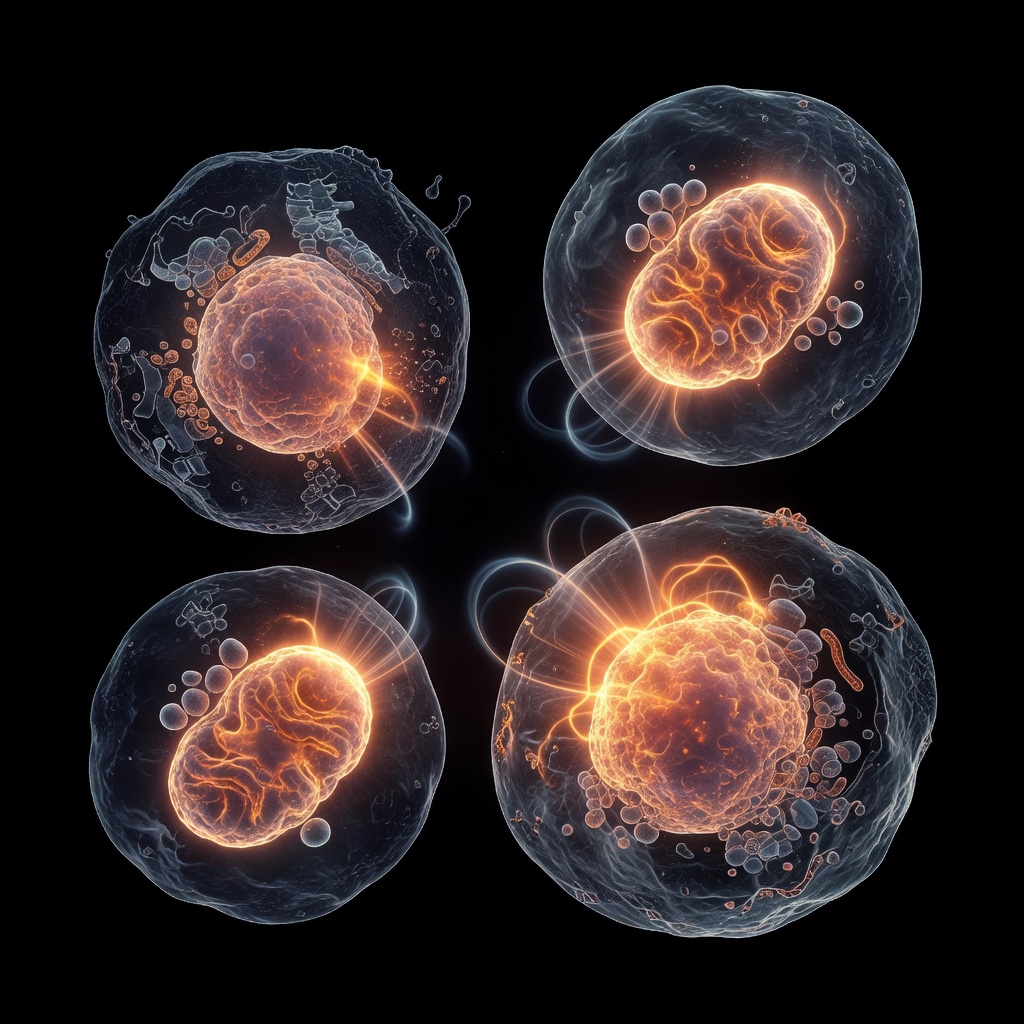
In the delicate architecture of human biology, there exists a silent, invisible communication network that dictates everything from the rhythm of your heart to the clarity of your thoughts. This is the endocrine system. Comprising a series of glands that secrete hormones directly into the circulatory system, it is the master orchestrator of growth, metabolism, mood, and reproduction. However, in the last century, this ancient biological harmony has been gatecrashed by an uninvited guest: Endocrine Disrupting Chemicals (EDCs).
We are currently living in a global experiment without a control group. Our modern environment is saturated with synthetic compounds designed for convenience, durability, and aesthetics, yet many of these substances share a sinister characteristic—they are molecular imposters. This is the reality of chemical mimicry, a phenomenon where industrial pollutants "masquerade" as natural hormones, hijacking our physiological pathways and rewriting our biological scripts.
The Mechanism of Deception: How Mimicry Works
To understand endocrine disruption, one must first understand the "Lock and Key" principle. Hormones are chemical messengers (keys) that travel through the bloodstream until they find a specific receptor (the lock) on a cell. When the right hormone binds to the right receptor, it triggers a specific biological response, such as the release of insulin or the initiation of puberty.
Chemical mimicry occurs when a synthetic compound possesses a molecular structure so similar to a natural hormone that it can fit into the receptor.
- Agonistic Action: The chemical mimics a natural hormone, such as oestrogen, binding to the receptor and triggering an unwanted biological response at the wrong time or in the wrong intensity.
- Antagonistic Action: The chemical binds to the receptor but does not trigger a response; instead, it "jams" the lock, preventing the real hormone from doing its job.
- Signal Interference: EDCs can interfere with the synthesis, transport, and metabolism of natural hormones, effectively scrambling the body’s internal communication lines.
Truth-Bomb: The human body is so sensitive to hormonal signals that it responds to concentrations as low as parts per trillion—equivalent to a single drop of water in twenty Olympic-sized swimming pools. Therefore, "low-dose" exposure to chemicals is not "safe"; it is biologically significant.
The Toxic Inventory: Identifying the Primary Disruptors
The modern landscape is a minefield of EDCs. These substances are not merely present in industrial waste; they are embedded in the fabric of our domestic lives.
1. Bisphenols (BPA, BPS, and BPF)
Found in hard plastics, the lining of food tins, and thermal till receipts, Bisphenol A (BPA) is perhaps the most well-known xenoestrogen. Even when products are labelled "BPA-Free," they often contain BPS or BPF, which have been shown to exhibit similar, if not more potent, endocrine-disrupting effects.
2. Phthalates
Known as "plasticisers," phthalates make plastics flexible. They are found in everything from PVC flooring to medical tubing. Crucially, they are the primary component of "fragrance" or "parfum" in personal care products. They are notorious anti-androgens, meaning they interfere with male sex hormones like testosterone.
3. PFAS (Per- and Polyfluoroalkyl Substances)
Often called "Forever Chemicals" because they do not break down in the environment or the human body, PFAS are used in non-stick cookware, water-repellent clothing, and fire-fighting foams. They are structurally similar to fatty acids and disrupt thyroid function and lipid metabolism.
4. Atrazine and Organophosphate Pesticides
Widely used in industrial agriculture, these chemicals leach into the water table. Atrazine, specifically, has been shown in laboratory settings to chemically castrate amphibians and induce "feminisatons" by increasing the activity of aromatase, the enzyme that converts testosterone into oestrogen.
The Low-Dose Paradox and the Failure of Toxicology
Traditional toxicology is built on the Paracelsus principle: "The dose makes the poison." This logic suggests that if a high dose is harmful, a tiny dose must be safe. However, the endocrine system does not follow this linear logic.
Hormones operate on non-monotonic dose-response curves. This means that a chemical can have a profound effect at a microscopic dose, no effect at a medium dose, and a different effect at a high dose. Because our receptors are designed to be extremely sensitive, small amounts of EDCs can "occupy" receptors and saturate the system, leading to chronic health issues that traditional safety testing completely misses.
Warning: Regulatory bodies often test chemicals in isolation. In reality, we are exposed to a "chemical cocktail." The synergistic effect of multiple EDCs can be exponentially more damaging than any single chemical on its own.
The Biological Fallout: Health Implications
The consequences of living in an environment of chemical mimicry are profound and far-reaching. Because hormones regulate almost every bodily function, the symptoms of disruption are diverse.
- Reproductive Decline: Globally, sperm counts have plummeted by over 50% in the last four decades. Conditions such as Polycystic Ovary Syndrome (PCOS) and endometriosis are increasingly linked to xenoestrogen exposure.
- Metabolic Sabotage: Certain EDCs are classified as obesogens. These chemicals reprogramme stem cells to become fat cells, alter insulin sensitivity, and change how the body stores calories, making weight loss nearly impossible despite diet and exercise.
- Neurological Impact: The developing foetal brain is exquisitely sensitive to thyroid hormones. EDCs that interfere with the thyroid are being linked to the rising rates of neurodevelopmental disorders and cognitive decline.
- Early Puberty: We are witnessing a secular trend of earlier onset of puberty in girls, a phenomenon directly correlated with the cumulative load of oestrogen-mimicking chemicals in the environment.
The Epigenetic Ghost: Transgenerational Damage
Perhaps the most unsettling truth about endocrine disruption is that the effects do not stop with the individual. We are now discovering that EDCs can cause epigenetic changes—alterations in how genes are expressed without changing the DNA sequence itself.
If a pregnant woman is exposed to endocrine disruptors, the chemical doesn't just affect her; it affects the developing foetus and the primordial germ cells (future eggs or sperm) within that foetus. This means the chemical environment of the grandmother can influence the health and fertility of her grandchildren. We are inheriting the chemical "ghosts" of previous generations.
The Regulatory Gap: Why Is This Allowed?
One might ask: if the science is so clear, why are these chemicals still in our soaps, our water, and our food packaging? The answer lies in the burden of proof.
In the UK and much of the Western world, industrial chemicals are often treated as "innocent until proven guilty." Manufacturers are not required to prove that a substance does not disrupt the endocrine system before bringing it to market. Furthermore, the sheer economic power of the chemical industry creates a significant barrier to restrictive legislation.
Truth-Bomb: By the time a chemical is banned—as was the case with certain phthalates—it has often been in the environment for decades, and the industry simply replaces it with a "sister" chemical that is structurally similar but legally "new."
Reclaiming Your Internal Environment: Actionable Steps
While it is impossible to live in a bubble, you can significantly reduce your "body burden" by making conscious, informed choices.
- Filtration is Non-Negotiable: Use a high-quality water filter (Reverse Osmosis or multi-stage carbon) to remove pesticides, fluoride, and pharmaceutical residues from your drinking and bathing water.
- Ditch the "Fragrance": Avoid any product listing "parfum" or "fragrance." These are umbrella terms for hundreds of undisclosed phthalates. Opt for essential oils or fragrance-free alternatives.
- Glass and Stainless Steel Over Plastic: Never heat food in plastic containers. Heat accelerates the leaching of bisphenols and phthalates into your food. Transition your kitchen to glass, ceramic, and stainless steel.
- Eat Organic and Seasonal: Industrial fertilisers and pesticides are primary sources of EDCs. If you cannot afford all-organic, prioritise the "Dirty Dozen" (the most heavily sprayed crops).
- Dust Regularly: Many EDCs, particularly flame retardants, accumulate in household dust. Use a vacuum with a HEPA filter and wet-mop surfaces to reduce inhalation.
- Support Detoxification Pathways: Ensure your liver and gut are functioning optimally. Fibre, cruciferous vegetables (like broccoli and kale), and adequate hydration help the body conjugate and excrete excess xenoestrogens.
Conclusion: Innerstanding the Invisible
The crisis of endocrine disruption is a reflection of a wider disconnect between our industrial "progress" and our evolutionary biology. We have created a world that our ancient endocrine systems do not recognise. However, knowledge is the first step toward sovereignty.
By "innerstanding" the mechanisms of chemical mimicry, we move from being passive victims of our environment to active stewards of our own health. We must demand more rigorous testing, support transparent brands, and cultivate a lifestyle that honours our biological boundaries. The truth is that our hormones are our vitality; protecting them is not just a health choice—it is an act of reclamation for ourselves and the generations to follow.
This article is provided for informational and educational purposes only. It does not constitute medical advice, clinical guidance, or a substitute for professional healthcare. Information reflects cited research at time of publication. Always consult a qualified healthcare professional before acting on any health information.
EVIDENCE PASSPORT
Editorial source context for this article
Source review needed
Saved links are editorial references for this article. They may support specific claims rather than every sentence. Open and assess each source in context. This passport does not independently verify them.
Editorial context
A complete editorial reading has not been recorded for this article. Source links remain available for you to open and assess directly.
Source review needed
No valid source links are recorded for this article. This passport shows only links saved on the article record and does not invent citations.
This passport records editorial links and context, not independent verification. Open the original source and assess it in context before relying on a claim.
Medical Disclaimer
The information in this article is for educational purposes only and does not constitute medical advice, diagnosis, or treatment. Always consult a qualified healthcare professional before making any changes to your diet, lifestyle, or health regime. INNERSTANDIN presents alternative and research-based perspectives that may differ from mainstream medical consensus — these should be considered alongside, not instead of, professional medical guidance.
Read Full DisclaimerContinue the thread
Keep this question moving.
Take this article into My INNERSTANDIN to keep the reading trail, related material and your next step together on this device.
Dig deeper in the Library
Free, longform PDF volumes that go beyond headlines into mechanisms and references.