
The Endocrine Disruptor Handbook: How Phthalates and BPA Affect Hormonal Health
Updated May 2026
A comprehensive guide exploring the biochemical mechanisms by which phthalates and bisphenol A interfere with human hormones, fertility, and developmental health.
Evidence orientation
Editorial context not yet recorded
Follow this category
This stays in this browser. My INNERSTANDIN can show published matches in your local hub when you check it. It does not send email, push, or alert notifications.
Local learning review
A private browser aid for revisiting ideas. It is not an alert or a health recommendation.
Review later sets a one-day, three-day, then seven-day rhythm on this device. Choose it only when you want to revisit this article.
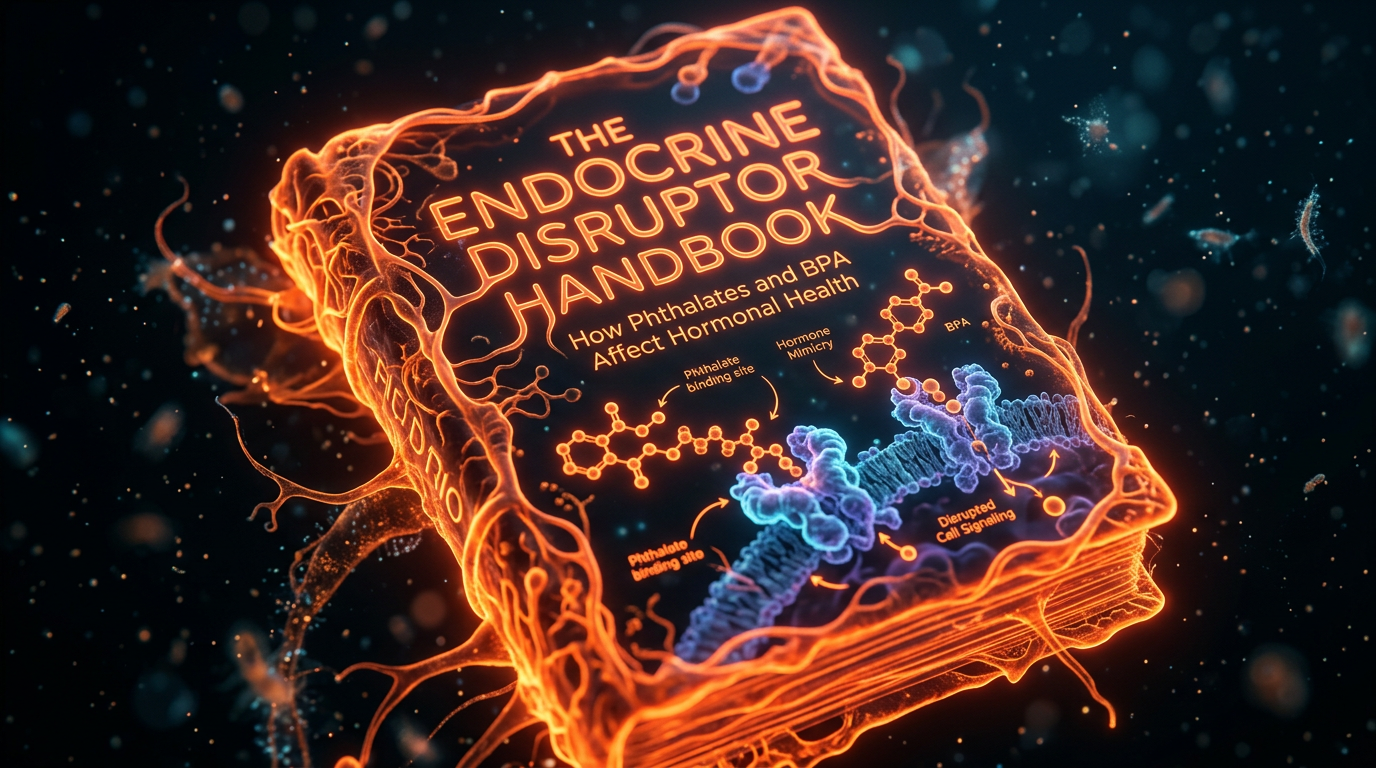
In the modern age, the sanctity of the human biological blueprint is under a silent, molecular siege. We exist in a chemical landscape that our evolutionary ancestors would find unrecognisable. Among the most insidious of these modern interlopers are Endocrine Disrupting Chemicals (EDCs), specifically Bisphenol A (BPA) and Phthalates. These substances do not merely pollute our environment; they infiltrate the very signalling systems that dictate our growth, reproduction, and metabolic stability.
This handbook serves as a definitive guide for those seeking 'innerstanding'—a profound comprehension of how these synthetic compounds subvert our internal equilibrium and what must be done to reclaim our physiological sovereignty.
The Molecular Siege: Understanding EDCs
The endocrine system is a delicate network of glands and hormones that acts as the body’s communication highway. It regulates everything from the rhythm of our hearts to the nuances of our moods. EDCs, however, function as 'biochemical hackers'. They possess molecular structures that mimic, block, or interfere with natural hormones, leading to a cascade of systemic dysfunction.
The Oestrogenic Mimicry of Bisphenols
Bisphenol A (BPA) was originally synthesised in the 1890s and investigated in the 1930s as a synthetic oestrogen. While it was eventually bypassed by the pharmaceutical industry in favour of more potent compounds like DES, its oestrogenic properties remained. Instead of becoming a drug, it became the backbone of the plastics industry.
BPA is a key component in polycarbonate plastics and epoxy resins. Its danger lies in its structural homology to 17β-oestradiol. When BPA enters the bloodstream, it binds to oestrogen receptors (ERα and ERβ) with an affinity that, while lower than natural oestrogen, is sufficient to trigger cellular responses at incredibly low concentrations. This is not a classic toxicological 'poison' where the dose makes the poison; rather, it is a hormonal disruptor where even infinitesimal amounts can alter the developmental trajectory of a foetus or the hormonal health of an adult.
Phthalates and the Anti-Androgen Shield
If BPA is the great mimicker, Phthalates are the great suppressors. Phthalates are 'plasticisers'—chemicals added to plastics (predominantly PVC) to make them flexible, transparent, and durable. They are also used as solvents in personal care products to 'fix' fragrances.
Biologically, phthalates are notorious for their anti-androgenic effects. They do not necessarily bind to the androgen receptor; instead, they interfere with the synthesis of testosterone. By inhibiting the expression of genes involved in cholesterol transport and steroidogenesis within the Leydig cells of the testes, phthalates effectively lower the body’s ability to produce the primary male sex hormone.
The UK Landscape: A Silent Crisis
The prevalence of these chemicals in the United Kingdom is a matter of growing public health concern, though often downplayed by industrial lobbyists. The ubiquity of exposure is nearly universal.
"Data from the UK Health Security Agency and various independent biomonitoring studies suggest that over 95% of the British population has detectable levels of phthalate metabolites and bisphenols in their urine. Despite 'BPA-free' marketing, many alternatives such as BPS and BPF show similar, if not more potent, endocrine-disrupting profiles."
The regulatory framework, while stricter than some jurisdictions, remains reactive rather than precautionary. The lag between scientific discovery and legislative action leaves the British public in a state of involuntary experimentation.
Biological Mechanisms of Action
To understand the impact of these chemicals, one must look beyond simple toxicity. We must examine the epigenetic and receptor-level disruptions they cause.
Receptor Interference and Cross-Talk
Hormones work through a 'lock and key' mechanism. EDCs act as 'jiggled keys' that jam the lock or open it at the wrong time.
- Agonism: BPA binds to oestrogen receptors, 'turning on' signals that shouldn't be active (e.g., stimulating breast cell proliferation).
- Antagonism: Phthalates block receptors or inhibit the production of hormones (e.g., preventing the normal action of testosterone during male foetal development).
- Enzymatic Interference: EDCs can alter the activity of enzymes like aromatase, which converts testosterone into oestrogen, leading to skewed hormonal ratios.
The Epigenetic Legacy
Perhaps the most harrowing aspect of BPA and phthalate exposure is their ability to leave a 'mark' on the DNA without changing the genetic sequence. Through DNA methylation and histone modification, these chemicals can alter gene expression for generations. This means that a pregnant woman’s exposure to phthalates may not only affect her child but potentially her grandchildren, as the germ cells of the foetus are being programmed in utero.
The Health Toll: From Fertility to Metabolism
The clinical manifestations of chronic EDC exposure are broad, affecting nearly every organ system.
Reproductive Decline and the 'Great Thinning'
The UK is currently facing a fertility crisis. Sperm counts among men in Western nations have dropped by over 50% in the last four decades. Phthalates are a primary suspect in this decline.
- Male Health: Exposure in utero leads to 'Phthalate Syndrome,' characterised by shortened anogenital distance (AGD), undescended testes, and reduced sperm quality in adulthood.
- Female Health: BPA is linked to Polycystic Ovary Syndrome (PCOS), endometriosis, and primary ovarian insufficiency. By mimicking oestrogen, BPA disrupts the delicate feedback loop between the ovaries and the pituitary gland.
Obesogens and Metabolic Sabotage
BPA and phthalates are now classified as 'obesogens.' They interfere with the body’s metabolic thermostat.
- They stimulate the differentiation of pre-adipocytes into mature fat cells.
- They promote insulin resistance by interfering with glucose transport and insulin signalling in the liver and muscles.
- BPA, in particular, has been linked to the rising rates of Type 2 Diabetes in the UK, independent of caloric intake.
Thyroid and Neurological Impairment
The thyroid gland is highly sensitive to chemical interference. Phthalates have been shown to decrease circulating levels of thyroid hormones (T4 and T3), which are essential for brain development and metabolic rate. In children, high levels of phthalate exposure are correlated with lower IQ, ADHD, and various neurodevelopmental delays.
Environmental Sources: The Invisible Grid
We are immersed in a sea of synthetic compounds. Identifying the sources is the first step toward mitigation.
- Food Packaging: The primary route of BPA exposure is through the lining of tin cans and polycarbonate food containers. Phthalates migrate from PVC cling films and plastic tubing used in industrial food processing.
- Thermal Receipts: Most till receipts are coated in a layer of BPA or its cousin, BPS. This chemical is absorbed transdermally (through the skin) almost instantly, especially if the hands are oily or wet (e.g., from using hand sanitiser).
- Personal Care Products: Phthalates (specifically DEP) are used to make fragrances last longer. They are found in shampoos, deodorants, perfumes, and even 'unscented' products where they act as masking agents.
- Household Dust: Phthalates are not chemically bound to the plastics they soften. They off-gas and settle into household dust, which is then inhaled or ingested, particularly by toddlers and pets.
"A 2021 study on UK indoor environments found that household dust contained concentrations of phthalates high enough to contribute significantly to the daily intake limits, particularly for infants who engage in hand-to-mouth behaviour."
The Path to Recovery: A Protocols for Detoxification
While the systemic presence of EDCs is daunting, the human body is remarkably resilient when provided with the correct biological support. Recovery is a two-pronged approach: Aggressive Avoidance and Enhanced Elimination.
Phase I: The Avoidance Protocol
You cannot detoxify a body that is being continuously re-poisoned.
- Eliminate Plastics from the Kitchen: Replace all plastic food containers with glass, stainless steel, or ceramic. Never heat food in plastic, as heat accelerates the leaching of BPA and phthalates.
- Filter Your Water: Use a high-quality carbon block or reverse osmosis filter. UK tap water often contains trace EDCs that bypass standard municipal treatment.
- Ditch the Receipts: Refuse paper receipts or ask for digital copies. If you must handle them, wash your hands immediately afterward with soap (avoiding hand sanitisers which increase skin permeability).
- Clean Beauty & Home: Switch to 'phthalate-free' and 'fragrance-free' personal care products. Use essential oils instead of synthetic air fresheners.
Phase II: Physiological Clearing
BPA and Phthalates are primarily processed by the liver and excreted via urine and bile. Supporting these pathways is essential.
- Glutathione Support: Glutathione is the body's master antioxidant and is crucial for Phase II liver detoxification. Increase intake of sulphur-rich foods (broccoli, garlic, onions) or consider supplementation with N-Acetyl Cysteine (NAC).
- Fibre and Binder Integration: EDCs excreted in bile can be reabsorbed in the gut (enterohepatic circulation). High-fibre diets, particularly those rich in lignans (flaxseeds), help bind these toxins and escort them out of the body.
- Sweat Equity: The skin is a major excretory organ. Infrared saunas have been shown to facilitate the excretion of BPA and certain phthalates through perspiration.
- Glucuronidation Support: This is the specific liver pathway used to detoxify bisphenols. Calcium D-Glucarate is a supplement that prevents the 'un-binding' of toxins in the gut, ensuring they are excreted rather than recycled.
Phase III: Hormonal Resensitisation
Once the toxic load is reduced, the body must 're-calibrate' its receptors.
- Optimise Zinc and Selenium: These minerals are essential for healthy hormone receptor function and thyroid health.
- Circadian Alignment: Hormones are secreted in a pulsatile, rhythmic fashion. Restoring a natural sleep-wake cycle helps the endocrine system regain its natural rhythm after being 'jammed' by EDCs.
Conclusion: Reclaiming the Inner Sanctum
The presence of Phthalates and BPA in our modern world is a testament to an era of industrial convenience prioritised over biological integrity. However, 'innerstanding' provides the bridge between victimhood and agency. By recognising the molecular mechanisms through which these chemicals operate, we can make informed choices that shield our physiology and the health of future generations.
The Endocrine Disruptor Handbook is not merely a document of warning; it is a blueprint for reclamation. Through conscious consumption, targeted detoxification, and a refusal to accept the chemical status quo, we can restore the sanctity of our hormonal health and live in alignment with our true biological potential.
"References & Further Reading:"
- Gore, A. C., et al. (2015). "EDC-2: The Endocrine Society's Second Scientific Statement on Endocrine-Disrupting Chemicals." Endocrine Reviews.
- Swan, S. H. (2020). "Count Down: How Our Modern World Is Threatening Sperm Counts, Altering Male and Female Reproductive Development, and Imperiling the Future of the Human Race."
- UK Health Security Agency (UKHSA) Reports on Human Biomonitoring.
- Pesticide Action Network (PAN) UK: Chemical Watch Reports.
This article is provided for informational and educational purposes only. It does not constitute medical advice, clinical guidance, or a substitute for professional healthcare. Information reflects cited research at time of publication. Always consult a qualified healthcare professional before acting on any health information.
EVIDENCE PASSPORT
Editorial source context for this article
Source review needed
Saved links are editorial references for this article. They may support specific claims rather than every sentence. Open and assess each source in context. This passport does not independently verify them.
Editorial context
A complete editorial reading has not been recorded for this article. Source links remain available for you to open and assess directly.
Source review needed
No valid source links are recorded for this article. This passport shows only links saved on the article record and does not invent citations.
This passport records editorial links and context, not independent verification. Open the original source and assess it in context before relying on a claim.
Medical Disclaimer
The information in this article is for educational purposes only and does not constitute medical advice, diagnosis, or treatment. Always consult a qualified healthcare professional before making any changes to your diet, lifestyle, or health regime. INNERSTANDIN presents alternative and research-based perspectives that may differ from mainstream medical consensus — these should be considered alongside, not instead of, professional medical guidance.
Read Full DisclaimerContinue the thread
Keep this question moving.
Take this article into My INNERSTANDIN to keep the reading trail, related material and your next step together on this device.
Explore this in the Body Map
See where this hits your biology. Interactive anatomy, threats, and protective protocols.
Dig deeper in the Library
Free, longform PDF volumes that go beyond headlines into mechanisms and references.