Endocrine Sabotage: PFAS-Induced Competitive Inhibition of Thyroid Receptors
Discuss this resourcePublished April 2026
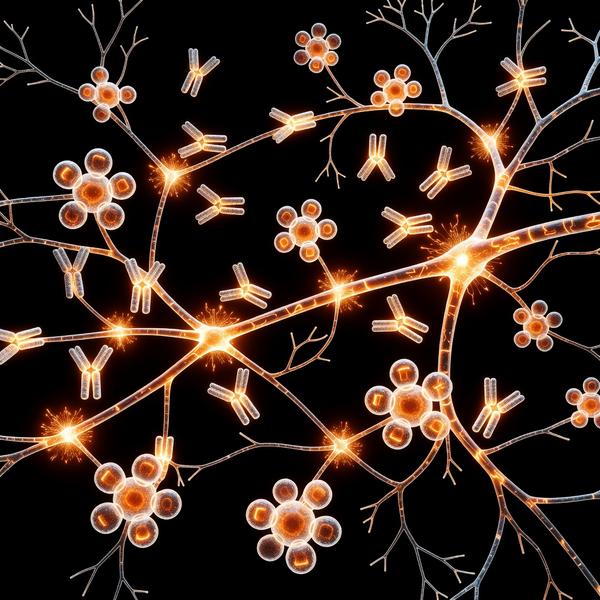
This article explores the molecular competition between thyroid hormones and fluorinated chemicals for binding sites on transport proteins like transthyretin. We examine how PFAS disrupts the hypothalamic-pituitary-thyroid (HPT) axis, leading to 'subclinical' symptoms that standard TSH tests fail to capture. By investigating the structural homology between PFOA and thyroxine, we reveal why environmental toxins are the missing link in modern thyroid pathologies.
Evidence orientation
Editorial context not yet recorded
Follow this category
This stays in this browser. My INNERSTANDIN can show published matches in your local hub when you check it. It does not send email, push, or alert notifications.
Local learning review
A private browser aid for revisiting ideas. It is not an alert or a health recommendation.
Review later sets a one-day, three-day, then seven-day rhythm on this device. Choose it only when you want to revisit this article.

The prevalence of thyroid disorders, particularly hypothyroidism and Hashimoto's thyroiditis, has surged across the United Kingdom, yet the clinical approach remains fixated on the Thyroid Stimulating Hormone (TSH) as the gold standard of diagnosis. This narrow focus ignores the biological reality of endocrine-disrupting chemicals (EDCs), specifically PFAS, which interfere with thyroid function at the cellular and transport levels. The primary mechanism of this interference is structural mimicry. Thyroxine (T4), the main circulating thyroid hormone, contains four iodine atoms attached to a phenolic ring. Perfluorinated compounds, despite their different elemental makeup, possess an electronic density and hydrophobic profile that allows them to compete for the same binding pockets on transport proteins.
Transthyretin (TTR), a critical protein responsible for carrying T4 across the blood-brain barrier and within the serum, has a higher affinity for certain PFAS molecules than it does for T4 itself. When PFAS occupy these TTR binding sites, T4 is displaced, leading to an initial rise in free T4 levels that is quickly followed by increased hepatic metabolism and clearance. The result is a systemic deficiency in thyroid hormone availability, even if the thyroid gland itself is technically functioning. Conventional medicine misses this because the 'displaced' T4 may not immediately trigger a rise in TSH, leading to the dreaded 'normal labs' despite the patient presenting with classic hypothyroid symptoms like cold intolerance, fatigue, and cognitive slowing. Furthermore, research has shown that PFAS can act as an antagonist at the thyroid hormone receptor (TR) within the nucleus.
By binding to the TR without activating the gene transcription necessary for thermogenesis and metabolic rate regulation, PFAS effectively 'mute' the thyroid signal at the cellular level. A 2021 study involving cohorts from across Europe found that women with higher serum concentrations of PFDA and PFOS were significantly more likely to develop thyroid autoimmunity, suggesting that these chemicals may also trigger the immune system to attack the thyroid gland. From a biological perspective, this is likely due to the modification of thyroglobulin proteins by fluorinated radicals, rendering them 'foreign' to the immune system. To navigate this, practitioners must look beyond TSH and measure Free T3, Free T4, and Reverse T3, while considering the environmental load. Lifestyle factors such as iodine status become critical; PFAS and iodine can compete at the sodium-iodide symporter (NIS), making iodine sufficiency even more vital in a contaminated world.
Reducing PFAS exposure through rigorous water filtration and avoiding non-stick cookware is not optional for thyroid patients—it is a biological necessity for restoring the integrity of the HPT axis.
This article is provided for informational and educational purposes only. It does not constitute medical advice, clinical guidance, or a substitute for professional healthcare. Information reflects cited research at time of publication. Always consult a qualified healthcare professional before acting on any health information.
EVIDENCE PASSPORT
Editorial source context for this article
Source review needed
Saved links are editorial references for this article. They may support specific claims rather than every sentence. Open and assess each source in context. This passport does not independently verify them.
Editorial context
A complete editorial reading has not been recorded for this article, and no source links are saved on its record.
Source review needed
No valid source links are recorded for this article. Supplementary research, where available, is listed separately below.
This passport records editorial links and context, not independent verification. Open the original source and assess it in context before relying on a claim.
Medical Disclaimer
The information in this article is for educational purposes only and does not constitute medical advice, diagnosis, or treatment. Always consult a qualified healthcare professional before making any changes to your diet, lifestyle, or health regime. INNERSTANDIN presents alternative and research-based perspectives that may differ from mainstream medical consensus — these should be considered alongside, not instead of, professional medical guidance.
Read Full DisclaimerContinue the thread
Keep this question moving.
Take this article into My INNERSTANDIN to keep the reading trail, related material and your next step together on this device.
Explore the Arsenal
These briefings appear because this article and the product listing share exact stored labels. They offer a way to continue reading across INNERSTANDIN.
Affiliate promotion. INNERSTANDIN may earn a commission if you make a qualifying purchase through a seller link. Affiliate disclosure
Editorial navigation only. These links are based on exact stored labels, not a personal recommendation, suitability assessment, efficacy claim, or clinical advice. The links open an internal briefing only, where affiliate and medical disclosures remain visible.
Explore this in the Body Map
Explore related body structures and their educational pages in the interactive Body Map.
Dig deeper in the Library
Free, longform PDF volumes that go beyond headlines into mechanisms and references.
RABBIT HOLE
Follow the biological thread deeper