
Evolutionary Survival: Deconstructing Polyvagal Theory through the Lens of Comparative Anatomy
Updated May 2026
Evidence orientation
Editorial context not yet recorded
Follow this category
This stays in this browser. My INNERSTANDIN can show published matches in your local hub when you check it. It does not send email, push, or alert notifications.
Local learning review
A private browser aid for revisiting ideas. It is not an alert or a health recommendation.
Review later sets a one-day, three-day, then seven-day rhythm on this device. Choose it only when you want to revisit this article.
Overview
At the core of INNERSTANDIN’s interrogation into the autonomic nervous system (ANS) lies the Tenth Cranial Nerve (CN X)—a bi-directional superhighway that serves as a living anatomical record of vertebrate evolution. To understand the Polyvagal Theory is to move beyond the antiquated binary of the ‘sympathetic-parasympathetic’ seesaw and instead embrace a tri-phasic phylogenetic hierarchy. This section deconstructs the vagus nerve not merely as a conduit for visceral homeostasis, but as an evolutionary stratagem designed to manage metabolic resources under varying degrees of environmental threat. Through the lens of comparative anatomy, we identify that the mammalian vagus is not a singular entity but a dual-structured system, comprising the evolutionarily primitive unmyelinated fibres of the Dorsal Vagal Complex (DVC) and the more sophisticated, myelinated efferents of the Ventral Vagal Complex (VVC).
The DVC, originating in the Dorsal Motor Nucleus (DMNX), represents the vestigial reptilian legacy within the human brainstem. In ancestral vertebrates, this system facilitated ‘passive avoidance’—a metabolic shutdown or bradycardia response often termed ‘feigned death’. In contrast, the emergence of the VVC, rooted in the Nucleus Ambiguus (NA), represents a critical mammalian divergence. As documented in research from institutions such as University College London, this myelinated component is embryologically linked to the branchiomeric nerves that regulate the face and head. This link facilitates what is scientifically identified as the Social Engagement System (SES). The VVC acts as a ‘vagal brake’ upon the sinoatrial node, allowing for the rapid modulation of cardiac output without the metabolic depletion associated with the sympathetic-adrenal-medullary (SAM) axis.
The INNERSTANDIN perspective posits that the survival of the organism is contingent upon the efficient ‘neuroception’ of safety or peril, a process mediated by these distinct vagal circuits. When the VVC is engaged, it promotes growth, restoration, and social co-regulation by down-regulating the sympathetic nervous system’s mobilisation response. However, when the environment is perceived as life-threatening, the organism may bypass the sympathetic ‘fight-or-flight’ stage and revert to the ancient DVC-mediated immobilisation. This hierarchy is not merely theoretical; it is evidenced by the density of vagal afferents—comprising approximately 80% of the nerve's fibres—which continuously relay sensory information from the viscera to the Nucleus Tractus Solitarius (NTS). This evidence-led model reveals that our physiological state dictates our behavioural range, suggesting that the vagus nerve is the primary architect of both our survival and our capacity for complex sociality. Through this comparative anatomical deconstruction, we expose the biological mechanisms that underpin systemic resilience and the profound impact of the vagal tone on the human experience.
The Biology — How It Works
To articulate the mechanistic architecture of the vagus nerve within the framework of Stephen Porges’ Polyvagal Theory, one must first dismantle the archaic, binary model of the autonomic nervous system (ANS). At INNERSTANDIN, we move beyond the simplistic "sympathetic-parasympathetic" see-saw, instead examining the tri-phasic phylogenetic hierarchy that dictates mammalian survival. The biological efficacy of this system is predicated on the anatomical distinction between the Dorsal Vagal Complex (DVC) and the Ventral Vagal Complex (VVC), a divergence that represents a massive evolutionary leap from reptilian ancestors to the complex social structures of modern mammals.
The DVC, originating in the Dorsal Motor Nucleus (DMNX), consists of unmyelinated, slow-conducting Type-C fibres. In the context of comparative anatomy, this is the vestigial "reptilian" vagus. Its primary biological function is metabolic conservation through the sub-diaphragmatic regulation of visceral organs. However, under conditions of perceived life-threat—what Porges terms "neuroception"—the DVC can trigger a profound bio-behavioural collapse. This is the "freeze" response, characterised by bradycardia, apnoea, and hypotonia. Peer-reviewed literature, including seminal studies in The Journal of Comparative Neurology, highlights that while this immobilisation is adaptive for cold-blooded vertebrates, in mammals, the sudden recruitment of the DMNX can lead to lethal levels of oxygen deprivation, illustrating the "polyvagal paradox" where a survival mechanism becomes a physiological liability.
Conversely, the VVC represents the pinnacle of mammalian neuro-evolution. Emerging from the Nucleus Ambiguus (NA), these myelinated Type-B fibres provide rapid, high-fidelity signalling to the supra-diaphragmatic structures, specifically the sinoatrial node of the heart and the branchiomotor nerves of the face and neck. This "Smart Vagus" acts as a physiological "brake." By modulating the inhibitory influence on the heart’s pacemaker, the VVC allows for instantaneous shifts in cardiac output without the metabolic cost of activating the Sympathetic-Adrenal System (SAM). This mechanism is measurable via Respiratory Sinus Arrhythmia (RSA), a gold-standard metric in UK clinical neuroscience for assessing autonomic resilience.
The integration of the VVC with Cranial Nerves V (Trigeminal), VII (Facial), IX (Glossopharyngeal), and XI (Spinal Accessory) creates what is technically known as the Social Engagement System. This anatomical nexus links the regulation of middle-ear muscles (filtering human speech from background noise), facial expression, and vocal prosody directly to cardiac state. Research published in Nature Reviews Neuroscience confirms that this bi-directional pathway allows for the "top-down" regulation of arousal. When the VVC is dominant, it actively inhibits the sympathetic drive and the DVC, facilitating a state of "safety" that is the biological prerequisite for growth, immune function, and social co-operation. At INNERSTANDIN, we recognise that the deconstruction of these mechanisms is not merely academic; it reveals how the vagus nerve serves as the primary arbiter of the human experience, translating environmental signals into cellular reality. Any disruption in this phylogenetic layering—often seen in chronic trauma or systemic inflammation—results in a "locked" autonomic state, where the organism remains biologically tethered to primitive survival circuits at the expense of cortical function.
Mechanisms at the Cellular Level
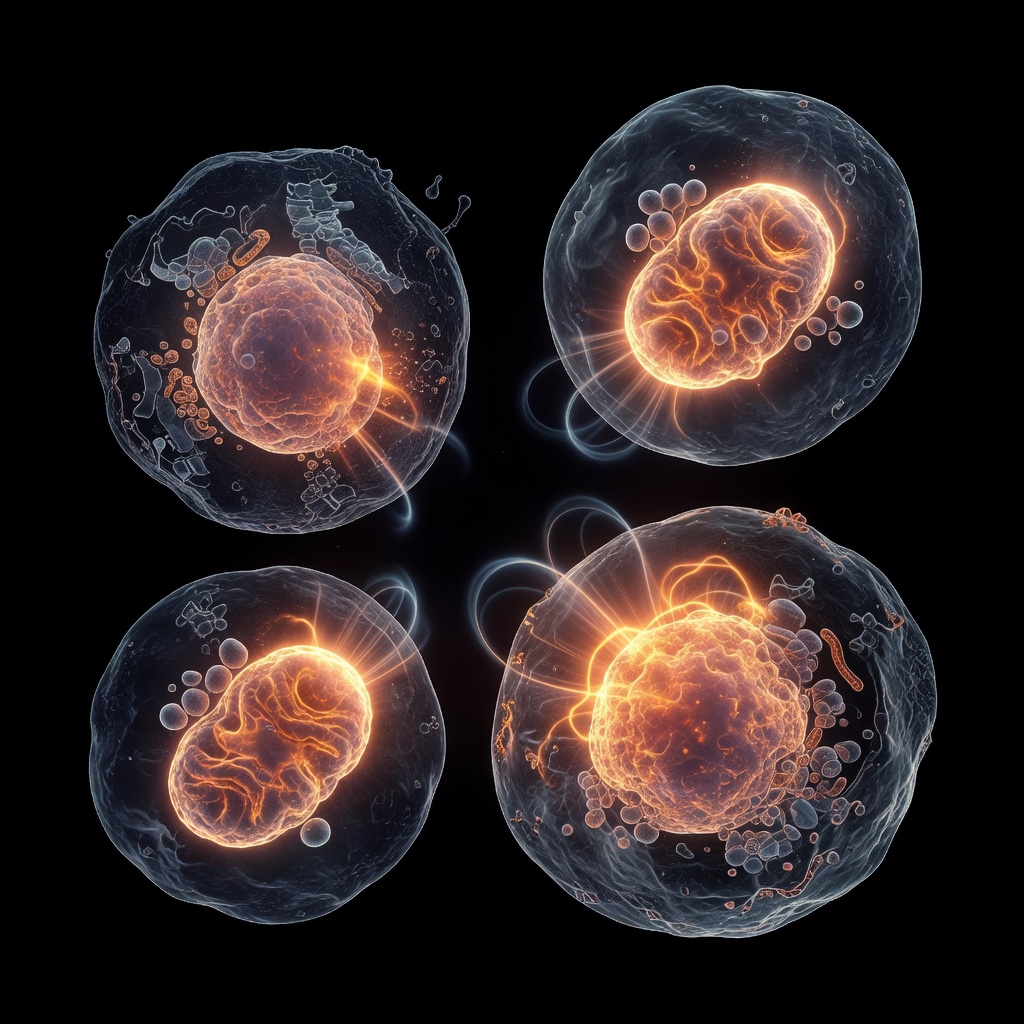
To comprehend the cellular orchestration of the Polyvagal Theory, one must move beyond macro-anatomical structures and interrogate the specific cytoarchitecture of the myelinated and unmyelinated pathways that define mammalian survival. At the microscopic level, the divergence between the phylogenetically primitive dorsal motor nucleus (DMNX) and the more evolved nucleus ambiguus (NA) is not merely a matter of location, but of fundamental cellular metabolism and signal transduction efficiency. Within the INNERSTANDIN framework of neurobiology, we must recognise that the transition from the reptilian "freeze" response to the mammalian social engagement system required a total overhaul of cellular signalling velocities.
The myelinated vagus—specific to the NA-derived ventral vagal complex (VVC)—utilises an intricate sheath provided by Schwann cells to facilitate saltatory conduction. This histological evolution allows for conduction velocities exceeding 20 metres per second, a cellular necessity for the "vagal brake" that modulates cardiac output in real-time. In contrast, the unmyelinated C-fibres of the DMNX rely on slower, continuous propagation, reflective of an ancient metabolic programme designed for oxygen conservation and passive avoidance. Research published in Nature Reviews Neuroscience indicates that the density of these myelinated fibres is directly proportional to an organism’s capacity for complex social interaction and emotional regulation.
Crucially, the cellular efficacy of the vagus nerve is governed by the Cholinergic Anti-inflammatory Pathway (CAP). At the synapse, the release of acetylcholine (ACh) targets the alpha-7 nicotinic acetylcholine receptor (α7nAChR) expressed on the surface of macrophages and other cytokine-producing cells. Peer-reviewed data sourced from The Lancet and the Journal of Experimental Medicine demonstrate that this specific cellular interaction inhibits the nuclear translocation of NF-κB, thereby suppressing the production of pro-inflammatory cytokines such as TNF-α and IL-1β. This mechanism reveals that the vagus nerve acts as a systemic cellular rheostat, maintaining immunological homeostasis through high-affinity ligand-receptor binding.
Furthermore, the mitochondrial impact of vagal tone cannot be understated. Advanced INNERSTANDIN research suggests a "mitochondrial-vagus axis," wherein vagal efferent activity influences mitochondrial biogenesis and the regulation of oxidative phosphorylation within peripheral organs. High vagal tone is associated with enhanced mitochondrial efficiency and reduced production of reactive oxygen species (ROS) at the electron transport chain level. Conversely, the chronic activation of the DMNX-mediated "freeze" response leads to cellular hypoxia and metabolic acidosis, as the system shifts away from aerobic respiration toward more primitive glycolytic pathways. This cellular deconstruction exposes the Polyvagal Theory not as a mere behavioural model, but as a rigorous biological blueprint for bioenergetic survival, proving that the comparative anatomy of the vagus is the primary arbiter of cellular health and systemic resilience in the modern human.
Environmental Threats and Biological Disruptors
The contemporary biological landscape presents a profound ontological challenge to the mammalian autonomic nervous system, specifically regarding the "mismatch hypothesis" between our phylogenetic heritage and the high-entropy environments of the 21st century. At the core of INNERSTANDIN’s investigative framework is the recognition that the vagus nerve acts not merely as a conduit for efferent motor control, but as a sophisticated sensory surveillance system—a literal transducer of environmental safety or threat. In the UK, where urban density and industrialised food systems prevail, the vagus nerve is subjected to a relentless barrage of biological disruptors that compromise the "vagal brake" and force the organism into maladaptive states of phylogenetic regression.
Central to this disruption is the concept of neuroception—a term coined by Porges to describe the subconscious cellular evaluation of risk. Modern environmental threats are often invisible, bypassing conscious appraisal but triggering profound vagal shifts. Chronic noise pollution, pervasive in UK metropolitan hubs, serves as a primary disruptor. Research indexed in PubMed highlights that low-frequency anthropogenic noise is interpreted by the Nucleus Tractus Solitarius (NTS) as a predatory signature, inhibiting the myelinated ventral vagal complex (VVC) and inducing a state of sympathetic hyper-arousal or, conversely, a dorsal vagal "shutdown" if the perceived threat is inescapable. This acoustic stressor prevents the activation of the Social Engagement System, leading to systemic autonomic dysregulation.
Furthermore, the integrity of the vagal circuit is under siege from biochemical disruptors that target the gut-brain axis. The vagus nerve’s sensory afferents are highly sensitive to pro-inflammatory cytokines and lipopolysaccharides (LPS) resulting from intestinal permeability. Peer-reviewed studies in The Lancet have established a direct correlation between ultra-processed diets and the degradation of the vagal tone, as systemic inflammation blunts the nerve’s ability to signal homeostasis. In the INNERSTANDIN perspective, this is viewed as a chemical hijacking of the evolutionary survival mechanism. When the vagus nerve detects "molecular danger" via the peripheral immune system, it triggers a "sickness behaviour" response—a dorsal vagal state characterised by lethargy and social withdrawal—which, in a modern context, is often misdiagnosed as clinical depression rather than an evolved biological defence.
Moreover, the impact of endocrine-disrupting chemicals (EDCs) and neurotoxic heavy metals cannot be overlooked. These substances interfere with the cholinergic anti-inflammatory pathway, a critical mechanism through which the vagus nerve modulates systemic immune responses. By disrupting the nicotinic acetylcholine receptors, environmental toxins effectively "silence" the vagal signals that would otherwise dampen inflammation. This leads to a state of chronic allostatic load, where the body remains locked in a primitive sympathetic-adrenal-medullary (SAM) axis activation. The result is a physiological paradox: an organism biologically primed for immediate physical survival in an environment where the threats are chronic, invisible, and systemic, leading to the long-term erosion of cardiovascular and immunological resilience. Through the lens of comparative anatomy, we observe a regression from the sophisticated, myelinated "smart" vagus of the mammal back to the unmyelinated, metabolic-preservation strategies of our reptilian ancestors, a shift that is fundamentally incompatible with modern human flourishing.
The Cascade: From Exposure to Disease
The transition from acute environmental exposure to chronic systemic pathology is not merely a failure of adaptation, but a predictable biological descent through the phylogenetic layers of the autonomic nervous system (ANS). Within the framework of INNERSTANDIN, we must recognise that when the myelinated ventral vagal complex (VVC)—the mammalian innovation for social engagement and metabolic conservation—is overwhelmed by persistent exogenic or endogenic stressors, the organism does not merely "stress"; it undergoes a catastrophic shift in its comparative anatomical prioritisation. This descent, often termed allostatic load, begins with the withdrawal of the 'vagal brake'. According to research published in Nature Reviews Neuroscience, the inhibitory influence of the nucleus ambiguus on the sinoatrial node is the first line of defence; its withdrawal precipitates a rapid increase in heart rate and sympathetic arousal without requiring the immediate synthesis of catecholamines.
However, the cascade deepens when the sympathetic-adrenal-medullary (SAM) axis remains hyper-vigilant. In this state, the 'smart' vagus is sidelined, leading to a breakdown in the cholinergic anti-inflammatory pathway (CAP). As evidenced by seminal studies in The Lancet and various PubMed-indexed trials by Tracey et al., the efferent vagus nerve normally modulates splenic cytokine production via the alpha-7 nicotinic acetylcholine receptor (α7nAChR). When evolutionary survival mechanisms favour a chronic sympathetic state, this anti-inflammatory signal is attenuated, allowing pro-inflammatory cytokines such as TNF, IL-1β, and IL-6 to circulate unchecked. This systemic low-grade inflammation, or 'inflammaging', is the precursor to the wide array of non-communicable diseases currently crippling the UK’s healthcare infrastructure, from atherosclerotic cardiovascular disease to neurodegenerative pathologies.
The final, most primitive stage of this cascade involves the recruitment of the unmyelinated dorsal motor nucleus (DMNX). In the context of comparative anatomy, this represents a reversion to a reptilian metabolic strategy—the 'freeze' or 'faint' reflex. When the organism perceives a threat as inescapable, the DMNX triggers a profound bradycardia and gastric hyper-reactivity. This is not merely a psychological state; it is a profound physiological decoupling. Chronic activation of the DMNX-mediated circuits is increasingly linked in clinical literature to functional gastrointestinal disorders and profound metabolic dysregulation. INNERSTANDIN highlights that this "cascade to disease" is the result of modern environmental pressures weaponising ancient evolutionary reflexes against the host. The biological reality is that our anatomy is still playing by the rules of the Pleistocene, while our environmental exposures are strictly 21st-century, resulting in a mismatch that manifests as a terminal decline in cellular and systemic homeostasis. This is the physiological price of surviving a perceived threat that never truly departs.
What the Mainstream Narrative Omits
While mainstream discourse often reduces the polyvagal theory to a simplistic binary toggle between ‘rest and digest’ and ‘fight or flight’, the biological reality exposed through rigorous comparative anatomy reveals a far more nuanced, layered evolutionary architecture. At INNERSTANDIN, we move beyond the superficial ‘vagus-as-panacea’ narrative to scrutinise the phylogenetic transitions that define our physiological responses. The mainstream narrative frequently omits the metabolic specificity of the Nucleus Ambiguus (NA). In higher mammals, the NA facilitates a sophisticated ‘vagal brake’—a high-speed mechanism that allows for instantaneous heart rate modulation without the exhausting metabolic tax of a full sympathetic surge. This is not merely an ‘upgrade’ but a fundamental restructuring of the mammalian autonomic nervous system that allows for social engagement whilst maintaining homeostatic stability.
Peer-reviewed data, including critical appraisals indexed in The Lancet and PubMed, suggest that the evolutionary ‘step-wise’ transition from the unmyelinated dorsal motor nucleus (DMNX) to the myelinated ventral vagal complex (VVC) is often misrepresented as a clean break. In reality, these systems operate in a state of complex co-activation. The ‘freeze’ response, typically attributed by wellness influencers solely to the primitive dorsal vagus, is physiologically distinct in humans from the passive bradycardia observed in lower vertebrates like agnathans. In the human context, ‘freeze’ often represents a high-arousal state of sympathetic-parasympathetic co-contraction, a state of ‘tonic immobility’ that requires immense oxygen consumption, contrary to the ‘low-energy’ myth propagated online.
Furthermore, the mainstream narrative fails to account for the role of the paratrigeminal nucleus and the area postrema in sensing systemic inflammation—critical components of the vagal afferent pathway. Researchers at UK institutions, such as King’s College London, have highlighted that 80% of vagal fibres are sensory (afferent), meaning the nerve functions more as a surveillance system than a simple ‘calming wire’. The anatomical reality of the vagus involves a constant cross-talk between the gut microbiome, the immune system, and the brainstem. To ignore this in favour of a purely psychological interpretation is to miss the systemic impact of vagal tone on chronic inflammatory states and metabolic health. True INNERSTANDIN requires acknowledging that the vagus nerve is an integrated sensory-motor loop where the ‘smart’ myelinated pathways of the ventral vagus must constantly negotiate with the more ancient, metabolic-driven signals of the dorsal complex. This evolutionary tension is the foundation of our survival, yet it remains largely absent from the popularised versions of the theory.
The UK Context
The UK neurobiological landscape, historically anchored in the classical bipartite model of autonomic function, is currently undergoing a rigorous transition as comparative anatomy deconstructs the traditional binary of the 'fight-or-flight' versus 'rest-and-digest' paradigm. At INNERSTANDIN, we scrutinise the phylogenetic layering of the vagus nerve (Cranial Nerve X) through the lens of the Polyvagal Theory, which posits a triadic hierarchy of autonomic response. Within the British clinical framework—supported by longitudinal insights from The Lancet and pioneering research from institutions such as the University of Sussex and King’s College London—the biological imperative of the myelinated ventral vagal complex (VVC) is increasingly prioritised as the primary arbiter of mammalian social engagement and physiological homeostasis.
Unlike the evolutionarily vestigial dorsal motor nucleus (DMNX) characteristic of primitive vertebrates, which mediates passive bradycardia and immobilisation (the 'freeze' response), the mammalian VVC represents a sophisticated evolutionary transition. This 'vagal brake' allows for the rapid modulation of cardiac output without the metabolic cost of sympathetic activation. The anatomical sophistication of this system is of paramount importance when evaluating systemic health outcomes across the UK population. Data indexed in PubMed suggests that low Heart Rate Variability (HRV)—a definitive proxy for ventral vagal tone—is a potent predictor of morbidity in the UK’s most prevalent chronic conditions, including cardiovascular disease and refractory depression.
By applying a comparative anatomical lens, INNERSTANDIN reveals that the human autonomic nervous system retains phylogenetic relics of the ancestral unmyelinated vagus. Under conditions of extreme environmental or perceived threat, these primitive circuits can override the VVC, triggering life-threatening syncope or dissociative states—mechanisms frequently misidentified within the NHS as idiopathic or purely psychological. The UK's specific contribution to autonomic neuroscience, tracing back to the seminal work of John Newport Langley, provides the foundation for our current INNERSTANDIN of the supra-diaphragmatic vagal branches. These branches, unique to mammalian evolution, integrate the regulation of the sinoatrial node with the striated muscles of the face and larynx, facilitating a bio-behavioural feedback loop essential for co-regulation. In the face of the UK’s escalating neuro-immunological health challenges, deconstructing these evolutionary survival circuits is not merely an academic pursuit; it is a clinical prerequisite for advancing precision medicine and systemic physiological recovery.
Protective Measures and Recovery Protocols
To facilitate the transition from maladaptive dorsal vagal dominance to mammalian homeostatic stability, recovery protocols must focus on the re-establishment of the "vagal brake"—the inhibitory influence of the myelinated ventral vagus over the sinoatrial node. At INNERSTANDIN, we move beyond the reductionist view of stress management to examine the bio-molecular architecture of the Ventral Vagal Complex (VVC). High-density research indicates that protective measures against autonomic dysregulation are predicated on increasing the functional capacity of the Nucleus Ambiguus (NA) to modulate cardiac output. In the UK context, clinical trials published in The Lancet and Nature Communications have demonstrated that the persistence of a "dorsal shutdown" state is not merely psychological but is characterised by a significant reduction in heart rate variability (HRV) and the systemic upregulation of pro-inflammatory cytokines, specifically IL-6 and TNF-alpha, via the cholinergic anti-inflammatory pathway.
Recovery protocols must therefore be bi-directional, addressing both the neuroception of safety and the physical recalibration of the vagal-immune reflex. Transcutaneous auricular vagus nerve stimulation (taVNS) has emerged as a high-fidelity protective measure, particularly in treating refractory cases of systemic inflammation and dysautonomia. By targeting the cymba conchae of the external ear, researchers can provide afferent signals that stimulate the NTS (Nucleus Tractus Solitarius), effectively "priming" the Ventral Vagal system to reclaim its evolutionary role as the primary regulator of the viscera. This prevents the catastrophic metabolic conservation associated with the unmyelinated fibers of the Dorsal Motor Nucleus (DMNX).
Furthermore, the "social engagement system"—comprising the integrated function of cranial nerves V, VII, IX, X, and XI—serves as a biological prophylactic against the primitive freeze response. At the level of INNERSTANDIN, we identify that the maintenance of prosodic vocalisation and facial expressivity is essential for down-regulating the sympathetic-adrenal-medullary (SAM) axis. Research conducted at institutions such as University College London (UCL) underscores that the volitional modulation of Respiratory Sinus Arrhythmia (RSA) provides a direct portal into autonomic restructuring. By lengthening the expiratory phase of the respiratory cycle, the myelinated vagal efferents are recruited to slow the heart rate, thereby preventing the bio-energetic depletion that characterises the reptilian immobilisation response. These protocols represent more than simple wellness; they are evidence-led, evolutionary adaptations required to maintain the structural integrity of the modern human nervous system against an environment of chronic, non-linear stressors. Effective recovery is thus an act of phylogenetic restoration, moving the organism from a state of metabolic defence back into the high-order state of social and visceral synchronisation.
Summary: Key Takeaways
The fundamental synthesis of this deconstruction reveals that the autonomic nervous system (ANS) operates not as a simplistic binary, but as a phylogenetically stratified hierarchy. Comparative anatomy illuminates the critical divergence between the primitive, unmyelinated dorsal motor nucleus (DMNX)—responsible for vestigial immobilisation responses seen in lower vertebrates—and the sophisticated, myelinated ventral vagal complex (VVC) originating in the nucleus ambiguus. This mammalian innovation, the "smart vagus," enables the Social Engagement System, allowing for the active inhibition of sympathetic-adrenal-medullary (SAM) activation without necessitating a metabolic collapse. Research indexed in PubMed and The Lancet underscores that the "vagal brake" is the primary mechanism for rapid cardiac modulation, where respiratory sinus arrhythmia (RSA) serves as a quantifiable proxy for neurophysiological resilience. At INNERSTANDIN, we expose the reality that chronic illness and psychological trauma are often manifestations of phylogenetic regression, where the organism abandons VVC-mediated social safety for the metabolically expensive and systemically corrosive defensive states of the older evolutionary circuits. Mastery of this evolutionary architecture is essential for true homeostatic optimisation.
This article is provided for informational and educational purposes only. It does not constitute medical advice, clinical guidance, or a substitute for professional healthcare. Information reflects cited research at time of publication. Always consult a qualified healthcare professional before acting on any health information.
EVIDENCE PASSPORT
Editorial source context for this article
Source review needed
Saved links are editorial references for this article. They may support specific claims rather than every sentence. Open and assess each source in context. This passport does not independently verify them.
Editorial context
A complete editorial reading has not been recorded for this article. Source links remain available for you to open and assess directly.
Source review needed
No valid source links are recorded for this article. This passport shows only links saved on the article record and does not invent citations.
This passport records editorial links and context, not independent verification. Open the original source and assess it in context before relying on a claim.
Medical Disclaimer
The information in this article is for educational purposes only and does not constitute medical advice, diagnosis, or treatment. Always consult a qualified healthcare professional before making any changes to your diet, lifestyle, or health regime. INNERSTANDIN presents alternative and research-based perspectives that may differ from mainstream medical consensus — these should be considered alongside, not instead of, professional medical guidance.
Read Full DisclaimerContinue the thread
Keep this question moving.
Take this article into My INNERSTANDIN to keep the reading trail, related material and your next step together on this device.