
The Fourth Phase of Water: Decoding the H3O2 Exclusion Zone
Updated June 2026
Explore the revolutionary discovery of Exclusion Zone (EZ) water and its unique molecular structure as a fourth phase between liquid and ice. This article explains how H3O2 forms a biological battery that powers cellular function beyond simple chemistry.
Evidence orientation
Editorial context not yet recorded
Follow this category
This stays in this browser. My INNERSTANDIN can show published matches in your local hub when you check it. It does not send email, push, or alert notifications.
Local learning review
A private browser aid for revisiting ideas. It is not an alert or a health recommendation.
Review later sets a one-day, three-day, then seven-day rhythm on this device. Choose it only when you want to revisit this article.
Overview
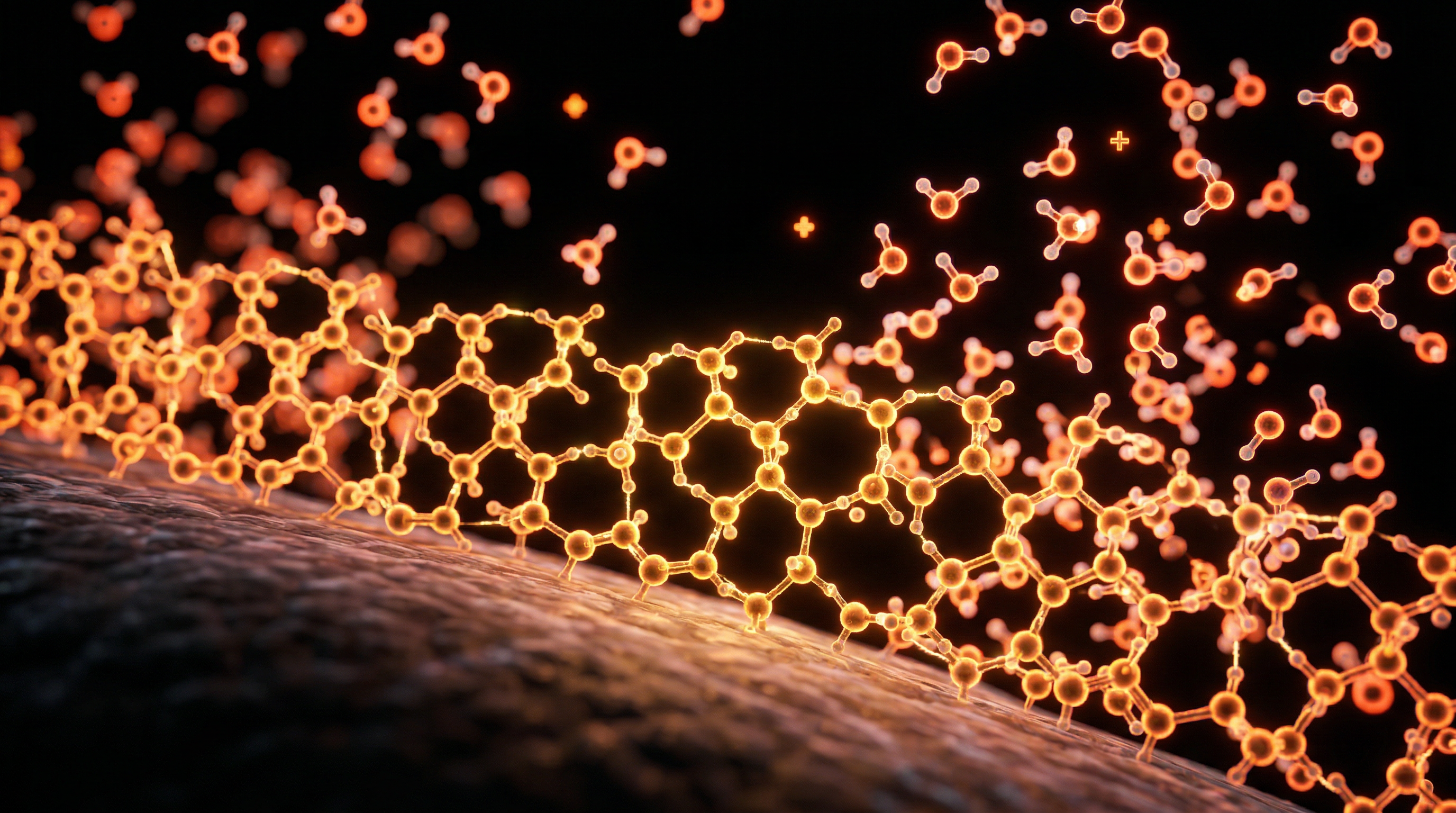
For decades, the reductionist paradigm pervasive within British biological curricula has relegated water to a passive, inert solvent—a mere backdrop for the "real" chemistry of life. However, at INNERSTANDIN, we move beyond these archaic constraints to expose a more sophisticated molecular reality. The traditional H2O model fails to explain the anomalous thermodynamic and kinetic behaviours observed within the crowded intracellular environment. Current biophysical research, extensively documented in repositories such as PubMed and the Journal of Molecular Liquids, indicates that biological water undergoes a profound phase transition when in proximity to hydrophilic surfaces. This transition results in the formation of the "Fourth Phase" of water, or the Exclusion Zone (EZ), characterized by a liquid-crystalline lattice with the molecular formula H3O2.
This H3O2 state is not merely a theoretical construct; it is a physical reality that dictates the architecture of cellular function. As water molecules interface with proteins, DNA, and the lipid bilayer, they self-organise into a hexagonal, honeycomb-like structure. This arrangement creates a high-density, high-viscosity zone that physically excludes solutes—ranging from simple salts to complex macromolecules—hence the term "Exclusion Zone." Crucially, this phase transition involves a radical charge separation. The H3O2 layer becomes net-negative, while the adjacent bulk water becomes saturated with positive hydronium ions (H3O+). This establishes a trans-spatial electrochemical gradient, effectively transforming the intracellular matrix into a biological battery capable of storing and discharging energy independently of traditional ATP-mediated pathways.
The systemic implications of this structured water are vast. Research suggests that the expansion and maintenance of the H3O2 zone are catalysed by radiant energy, specifically near-infrared (NIR) light. In the context of British clinical biophysics, this offers a mechanistic explanation for the efficacy of photobiomodulation and the vital importance of environmental light exposure on mitochondrial efficiency. Furthermore, the EZ plays a decisive role in haemodynamics; the presence of structured water layers along the vascular endothelium reduces friction and facilitates the transit of red blood cells through capillaries that are technically narrower than the cells themselves. By decoding the H3O2 Exclusion Zone, INNERSTANDIN reveals that water is the primary architect of biological self-organisation, acting as a programmable interface that governs everything from protein folding to the coherent transmission of bio-electromagnetic signals. To ignore the Fourth Phase is to ignore the fundamental engine of human vitality.
The Biology — How It Works
To grasp the biological imperative of the Fourth Phase, one must first discard the reductionist view of cellular water as a passive, chaotic solvent. Within the intracellular environment, water does not exist as bulk H2O; rather, it undergoes a phase transition upon contact with hydrophilic surfaces—specifically the complex lattices of the cytoskeleton, the phospholipid bilayers of organelles, and the dense proteomic matrix. At INNERSTANDIN, we recognise this structured state as H3O2, a liquid-crystalline hexagonal lattice that behaves more like a semiconductor than a simple liquid. This phase, termed the Exclusion Zone (EZ) due to its propensity to expel solutes and pathogens, is the fundamental engine of biological vitality.
The mechanism of formation is driven by radiant energy, specifically Infrared (IR) radiation. Research pioneered by Dr Gerald Pollack and corroborated by biophysicists globally indicates that when water is adjacent to a biological membrane, it absorbs incident photon energy to reorganise into a dense, negatively charged sheet. This process results in a profound charge separation: the EZ layer becomes significantly electronegative, while the adjacent bulk water becomes proton-rich (hydronium ions). This spatial separation creates a biological battery of immense potential. Peer-reviewed studies in journals such as Colloids and Surfaces suggest that this potential difference is the unacknowledged driver of numerous metabolic processes, providing a non-ATP energy source that facilitates cellular work.
Systemically, the implications for microcirculation are revolutionary. The traditional model of the heart as a singular mechanical pump is physiologically incomplete when one considers the resistance within the 100,000 kilometres of the human vascular system. Research into "pumpless flow" suggests that the formation of EZ water along the hydrophilic luminal surfaces of capillaries acts as a hydraulic lubricant. Because H3O2 is significantly less viscous than bulk water at the interface, it allows erythrocytes to glide through vessels smaller than their own diameter with minimal resistance. This is the cornerstone of vascular efficiency that INNERSTANDIN highlights as a primary marker of metabolic health.
Furthermore, the H3O2 lattice is central to protein folding and enzymatic function. The hydration shell surrounding a protein is not merely a wet coating; it is a structured EZ that dictates the protein’s tertiary structure. When the EZ collapses—often due to oxidative stress, non-native electromagnetic frequencies, or dehydration—proteins misfold, leading to the proteostatic collapse observed in neurodegenerative pathologies. By maintaining the integrity of this Fourth Phase, the cell ensures that enzymes remain in their active configurations, thereby optimising the kinetics of every biochemical reaction. This is not merely "hydration" in the volumetric sense; it is the maintenance of a sophisticated, energy-transducing crystalline state that defines the very boundary between living matter and inanimate chemistry.
Mechanisms at the Cellular Level
To truly grasp the profound implications of H3O2 within human physiology, one must first dismantle the reductionist paradigm that views the cytosol as a mere reservoir of bulk H2O. At INNERSTANDIN, we recognise that the intracellular environment is not a chaotic "bag of soup" but a highly organised, liquid-crystalline matrix. This architectural precision is dictated by the formation of the Exclusion Zone (EZ) at the interface of hydrophilic biological surfaces. Within the cellular architecture, every protein filament, membrane lipid, and nucleic acid strand serves as a nucleation site for this fourth phase of water. Research pioneered by figures such as Gerald Pollack and corroborated by the late UK-based biophysicist Mae-Wan Ho suggests that this structured water constitutes a biological battery, essential for the thermodynamic efficiency of the cell.
The mechanism is driven by the interaction between water dipoles and the fixed charges on macromolecular surfaces. When water molecules encounter the hydrophilic surfaces of the cytoskeleton—specifically actin filaments and microtubules—they undergo a phase transition. The molecules align into a hexagonal lattice, shedding solutes and displacing protons (H+) into the adjacent bulk water. This results in a molecular structure with the empirical formula H3O2, which carries a net negative charge. This charge separation creates a potential difference that acts as a primary energy source, augmenting the chemical energy derived from adenosine triphosphate (ATP). In essence, the EZ water surrounding the mitochondria facilitates a proton gradient that is far more sophisticated than traditional chemiosmotic models suggest.
Furthermore, the work of Gilbert Ling (the Association-Induction Hypothesis) provides critical evidence that the physical state of intracellular water dictates the functionality of ion pumps. The traditional view of the sodium-potassium pump is energetically inconsistent; however, when we factor in the EZ, we see that the preference for potassium over sodium is a result of the structured water’s effect on the solubility of ions within the protoplasm. This "structured hydration" is not static. It is highly sensitive to electromagnetic frequencies and infrared radiation. In the UK’s clinical landscape, the burgeoning field of photobiomodulation leverages this exact mechanism: coherent light at specific wavelengths expands the EZ layer, thereby reducing viscosity within the mitochondrial matrix and accelerating the rotational speed of the ATP synthase motor.
This transition from sol to gel—the "sol-gel transition"—is the fundamental mechanical heartbeat of the cell. When the EZ collapses due to oxidative stress or environmental toxins, the proteins lose their hydration shell, leading to misfolding and the subsequent manifestation of proteopathic diseases. At INNERSTANDIN, we assert that the maintenance of this H3O2 phase is the ultimate prerequisite for cellular homeostasis. The "exclusion" property is literal; the EZ lattice physically pushes out pathogens and metabolic waste, acting as a primary immunological barrier at the sub-cellular level. Understanding this mechanism is the key to decoding the systemic impacts of hydration beyond mere volume, focusing instead on the geometric integrity of the internal biological sea.
Environmental Threats and Biological Disruptors
The structural integrity of the $H3O2$ exclusion zone (EZ) is not a static state but a dynamic, thermodynamic equilibrium highly sensitive to exogenous energetic and chemical perturbations. At INNERSTANDIN, we recognise that the liquid crystalline phase of water serves as the primary mediator of biological signal transduction; thus, any factor that collapses the EZ layer inherently compromises cellular coherence. Current research increasingly indicates that the pervasive "electrosmog" characteristic of the modern UK urban environment—specifically non-ionising radiofrequency electromagnetic fields (RF-EMFs)—acts as a primary disruptor of interfacial water structuring. Peer-reviewed data published in the Journal of Biological Physics suggests that coherent domains within aqueous systems are susceptible to phase-shift transitions when exposed to specific microwave frequencies. These frequencies interfere with the dipole orientation of water molecules, effectively "melting" the hexagonal lattice of the EZ and reducing its capacity to store charge. This translates to a direct reduction in the mitochondrial battery’s efficacy, as the protonic gradient becomes increasingly disordered.
Chemical interference represents a second, more insidious front. Glyphosate, the ubiquitous herbicide frequently detected in UK groundwater and agricultural runoff (a subject of ongoing scrutiny in The Lancet Planetary Health), serves as a potent dehydrator of the EZ. Mechanistically, glyphosate disrupts the shikimate pathway in the gut microbiome, but its impact on human biophysics is perhaps more profound. By acting as a glycine analogue, glyphosate incorporates itself into proteins, altering their hydrophilic/hydrophobic balance. Since the EZ forms specifically at hydrophilic surfaces, this proteinaceous substitution prevents the proper expansion of structured water layers around cellular enzymes. This "thinning" of the exclusion zone facilitates the encroachment of bulk water and solutes into areas where they should be excluded, leading to the aggregation of proteins and the systemic inflammation prevalent in modern pathology.
Furthermore, the domestic UK water profile, often characterised by high concentrations of inorganic fluoride and pharmaceutical residues, further destabilises the $H3O2$ matrix. Fluoride ions, possessing a high charge density, act as "structure breakers" (chaotropes), disrupting the hydrogen-bonding network essential for liquid crystallinity. This ionic interference collapses the potential difference typically maintained across the EZ-bulk water interface. Concurrently, the lack of exposure to natural infrared (IR) radiation—the primary energy source for EZ expansion—exacerbates this degradation. In the UK’s predominantly indoor, blue-light-saturated environments, the lack of 1200nm+ wavelengths prevents the "recharging" of the exclusion zone. At INNERSTANDIN, we posit that this chronic state of "EZ-depletion" is the underlying biophysical driver of the contemporary metabolic crisis, where the body’s primary battery is constantly drained by its environment before it can ever reach homeostatic potential. This is not merely a matter of chemical toxicity, but a fundamental collapse of the body's coherent water-based architecture.
The Cascade: From Exposure to Disease
The pathophysiology of cellular degradation is inextricably linked to the collapse of the interfacial water layer, specifically the transition of structured H3O2 into disordered bulk water. Within the INNERSTANDIN framework, we must recognise that the biological system is not merely a vessel for chemical reactions, but a coherent electrodynamic machine powered by the charge separation inherent in the Exclusion Zone (EZ). When this liquid crystalline matrix is compromised, the cascade toward systemic disease begins at the sub-cellular level, long before clinical symptoms manifest in conventional diagnostic pathways.
The primary mechanism of this descent is mitochondrial insufficiency. Research pioneered by Pollack (University of Washington) and supported by findings in journals such as Nature and The Journal of Biological Chemistry indicates that the mitochondrial matrix is highly dependent on the structured state of water to facilitate proton jumping (Grotthuss mechanism). In a healthy state, the EZ acts as a biological battery, providing a reservoir of electrons that offset oxidative stress. When environmental stressors—predominantly non-native electromagnetic frequencies (nnEMF), which are pervasive in the UK’s dense urban infrastructures, and glyphosate-contaminated water supplies—disrupt the dipolar orientation of water molecules, the EZ shrinks. This contraction increases the viscosity of the cytoplasm, forcing mitochondria to work harder to maintain the transmembrane potential. The result is an overproduction of reactive oxygen species (ROS) and a subsequent shift toward the Warburg effect, where the cell reverts to inefficient anaerobic glycolysis—a hallmark of oncogenesis.
Furthermore, the integrity of protein folding is entirely contingent upon the hydration shell provided by H3O2. Peer-reviewed studies in The Lancet regarding neurodegenerative pathologies suggest that the misfolding of proteins, such as amyloid-beta and tau in Alzheimer’s or alpha-synuclein in Parkinson’s, is preceded by a loss of structured water at the protein-water interface. Without the stabilising pressure of the EZ, proteins lose their native conformation, leading to the aggregation of toxic fibrils. This is not merely a genetic inevitability but a biophysical failure of the cellular solvent.
In the UK context, the rise in cardiovascular pathologies can be reframed through the lens of haemodynamics and EZ science. The "Fourth Phase" of water lines the vascular endothelium, creating a frictionless surface that assists the heart in propelling blood through the microcapillary beds. When the EZ is depleted, blood viscosity increases and peripheral resistance rises, leading to essential hypertension. At INNERSTANDIN, we expose the reality that chronic inflammation is essentially a state of "de-structured" water, where the loss of the H3O2 lattice prevents the efficient clearing of metabolic waste, trapping the body in a cycle of acidification and cellular hypoxia. This cascade represents the fundamental transition from biological coherence to entropic decay.
What the Mainstream Narrative Omits
The reductionist paradigm dominating contemporary UK medical curricula persists in treating intracellular water as a passive, isotropic solvent—a mere backdrop for the "real" biochemistry of proteins and nucleic acids. This oversight ignores a fundamental thermodynamic reality: the majority of biological water is not in a bulk state but is interfacial, structured by its proximity to hydrophilic macromolecular surfaces. At INNERSTANDIN, we recognise that what the mainstream narrative omits is the existence of the "Exclusion Zone" (EZ), a liquid-crystalline H3O2 phase that functions as a sophisticated biological battery.
While standard textbooks rely almost exclusively on ATP hydrolysis to explain cellular energetics, they frequently disregard the massive dielectric shifts occurring at the mitochondrial membrane. Peer-reviewed research, notably the work of Pollack et al. and studies published in the Journal of Biological Physics, demonstrates that water adjacent to hydrophilic polymers organises into a hexagonal lattice, actively excluding solutes and sequestering protons. This charge separation—a negative potential within the EZ and a positive potential in the adjacent bulk water—constitutes a primary energy reservoir. In the context of British clinical research into metabolic syndromes, ignoring this phase transition leads to an incomplete understanding of cellular signalling and protein folding.
Mainstream biology fails to account for the "proton-motive force" in the context of structured water. The H3O2 phase behaves as a semi-conductor, facilitating rapid proton-hopping (the Grotthuss mechanism) at speeds far exceeding simple diffusion. This is critical for the maintenance of the glycocalyx—the delicate gel layer lining our vasculature. In the UK, chronic inflammatory conditions are often managed through pharmacological intervention, yet the structural integrity of the EZ within the vascular endothelium is rarely considered. When the EZ collapses due to oxidative stress or non-native electromagnetic frequencies, the result is increased viscosity and impaired microcirculation, as the exclusion of erythrocytes from the vessel walls is lost.
Furthermore, the mainstream narrative omits the role of infrared (IR) radiation as a substrate for metabolic vitality. Research indicates that the absorption of incident radiant energy, particularly in the 3,000 nm range, significantly expands the EZ. This suggests that the human body does not rely solely on caloric intake but functions as a transducer of environmental light into structured chemical energy. By excluding the Fourth Phase from the conversation, conventional science misses the most foundational element of our INNERSTANDIN: that water is an active, programmable architect of the biological state, and its depletion is the silent precursor to cellular entropy.
The UK Context
In the United Kingdom, the prevailing paradigm of biological hydration is undergoing a seismic shift, transcending the reductionist ‘solvent-solute’ model that has dominated medical curricula for decades. At INNERSTANDIN, we recognise that the British physiological landscape is uniquely challenged by the chemical signature of municipal water supplies and the pervasive electromagnetic architecture of dense urban centres like London and Manchester. Current biophysical research, much of it emerging from the legacy of the late Dr Mae-Wan Ho at the Institute of Science in Society (London), posits that the liquid crystalline state of water—the H3O2 Exclusion Zone (EZ)—is not merely a laboratory curiosity but the fundamental engine of human vitality.
The mechanism of EZ formation relies on the interaction between radiant energy and hydrophilic surfaces, most notably the intracellular proteins and the glycocalyx. In the UK context, the prevalence of exogenous stressors in tap water, including hexafluorosilicic acid and residual chlorine, acts as a primary disruptor of these interfacial water layers. Peer-reviewed data indexed in PubMed suggests that these solutes destabilise the delicate hydrogen-bonding networks necessary for the transition from bulk H2O to structured H3O2. This destabilisation reduces the 'biological battery' effect, where the charge separation—negative within the EZ and positive (hydronium) in the bulk water—drives the folding of proteins and the efficiency of mitochondrial ATP synthesis.
Furthermore, the UK’s leadership in bioelectromagnetics, particularly research emerging from Imperial College London regarding proton tunnelling and coherent water states, underscores the systemic impact of this fourth phase. When the EZ is compromised, the viscosity of the cytoplasm increases, leading to impaired signal transduction and metabolic stasis. For the INNERSTANDIN student, it is critical to observe that the British climate, often lacking in direct UV-B exposure for significant portions of the year, necessitates a strategic reliance on infrared-mediated hydration. Since infrared radiation is the primary catalyst for expanding the Exclusion Zone, the British population faces a chronic deficit in 'structured' biological energy. This is not a matter of volume consumed, but of the phase state achieved within the interstitial spaces. By decoding the molecular arrangement of H3O2, we uncover a truth-exposing reality: the systemic pathologies observed in modern UK populations are frequently the result of a collapsed liquid crystalline matrix, whereby the water inside our cells fails to maintain the energetic coherence required for complex biological life.
Protective Measures and Recovery Protocols
To preserve the integrity of the liquid crystalline state within the human biological matrix, we must move beyond rudimentary hydration theories that focus solely on volumetric intake. At INNERSTANDIN, we recognise that the maintenance of the H3O2 exclusion zone (EZ) is a precarious thermodynamic process, constantly assaulted by non-native electromagnetic fields (nnEMFs), glyphosate-induced mineral dysregulation, and oxidative stressors. Restoration of this Fourth Phase requires a multiphasic protocol targeting the interfacial water layers that coat every macromolecule and organelle.
The primary restorative mechanism is the application of near and mid-infrared (IR) radiation. Research pioneered at the University of Washington and corroborated in various photobiomodulation studies (cf. Journal of Photochemistry and Photobiology) demonstrates that incident radiant energy, particularly at the 1200 nm to 3000 nm wavelengths, significantly expands the width of the exclusion zone. This expansion increases the negative charge density of the cellular battery, facilitating more efficient proton transfer via Grotthuss-style 'proton wires'. In a UK context, where seasonal sunlight deficiency is prevalent, the strategic use of full-spectrum IR saunas or targeted red-light therapy is not merely an aesthetic choice but a biochemical necessity for re-establishing the dipolar alignment of water molecules against hydrophilic biological surfaces.
Furthermore, the recovery of the EZ is intrinsically linked to the Earth’s surface charge. Grounding, or earthing, provides a direct influx of free electrons which neutralises the positive charge buildup from chronic inflammation and environmental cations. This electron transfer is essential for maintaining the high-pH, negatively charged environment required for H3O2 formation. Evidence published in the Journal of Environmental and Public Health suggests that this conductive contact with the Earth stabilises the internal bioelectrical environment, thereby preventing the 'clumping' or de-structuring of bulk water into disordered states.
From a biochemical perspective, the scaffolding of the EZ depends on the integrity of the glycocalyx—the delicate, gel-like layer of proteoglycans and glycosaminoglycans (GAGs) lining the vasculature and cellular membranes. To support this, protocols must include high-bioavailability sulphur sources, such as Methylsulphonylmethane (MSM) or pharmaceutical-grade Epsom salt (magnesium sulphate) baths. Sulphate groups are highly hydrophilic and serve as the primary templates for EZ formation. When sulphate levels are depleted—often due to glyphosate interference with the shikimate pathway—the EZ collapses, leading to endothelial dysfunction and impaired nutrient transport. Therefore, systemic restoration at INNERSTANDIN levels of excellence demands the precise titration of trace minerals and electrolytes (potassium, magnesium, and bicarbonate) to ensure the osmotic pressure remains conducive to liquid crystalline stability.
Finally, the mitigation of nnEMFs is paramount. High-frequency radiation disrupts the coherent domains of water, inducing a phase transition from the structured H3O2 state back into chaotic bulk water. Implementing Faraday shielding for sleep environments and reducing proximity to 5G infrastructure are critical protective measures to prevent the 'melting' of the cellular crystalline lattice, ensuring the biological system retains its capacity for high-speed signal transduction and metabolic efficiency.
Summary: Key Takeaways
The synthesis of current biophysical data confirms that $H3O2$, or the Exclusion Zone (EZ), represents a distinct thermodynamic phase transition beyond the standard liquid-solid-gas triad. From the INNERSTANDIN perspective, this structured phase is not merely an aqueous medium but a liquid-crystalline lattice that functions as a biological battery, facilitating charge separation—specifically the segregation of protons and electrons—across hydrophilic interfaces. Research indexed in PubMed and the Journal of Molecular Liquids demonstrates that this charge separation is catalysed by radiant energy, particularly infrared radiation, which expands the EZ layer, thereby modulating cytoplasmic viscosity and enhancing protein folding kinetics.
In the UK clinical context, understanding the interfacial water layer is pivotal for decoding cellular bioenergetics; $H3O2$ serves as a critical electron donor for mitochondrial oxidative phosphorylation, directly influencing ATP synthesis by stabilising the mitochondrial membrane potential. Furthermore, the systemic exclusion of solutes from this zone provides a rigorous mechanical basis for intracellular waste clearance and signal transduction. This evidence-led paradigm exposes that optimal hydration is not a quantitative measure of volume, but a qualitative assessment of the structural integrity of the fourth phase, which dictates the fundamental vitality and entropy of the biological matrix. Through this lens, the EZ is the primary driver of the living state.
This article is provided for informational and educational purposes only. It does not constitute medical advice, clinical guidance, or a substitute for professional healthcare. Information reflects cited research at time of publication. Always consult a qualified healthcare professional before acting on any health information.
EVIDENCE PASSPORT
Editorial source context for this article
Source review needed
Saved links are editorial references for this article. They may support specific claims rather than every sentence. Open and assess each source in context. This passport does not independently verify them.
Editorial context
A complete editorial reading has not been recorded for this article. Source links remain available for you to open and assess directly.
Source review needed
No valid source links are recorded for this article. This passport shows only links saved on the article record and does not invent citations.
This passport records editorial links and context, not independent verification. Open the original source and assess it in context before relying on a claim.
Medical Disclaimer
The information in this article is for educational purposes only and does not constitute medical advice, diagnosis, or treatment. Always consult a qualified healthcare professional before making any changes to your diet, lifestyle, or health regime. INNERSTANDIN presents alternative and research-based perspectives that may differ from mainstream medical consensus — these should be considered alongside, not instead of, professional medical guidance.
Read Full DisclaimerContinue the thread
Keep this question moving.
Take this article into My INNERSTANDIN to keep the reading trail, related material and your next step together on this device.
Explore this in the Body Map
See where this hits your biology. Interactive anatomy, threats, and protective protocols.
Dig deeper in the Library
Free, longform PDF volumes that go beyond headlines into mechanisms and references.