
Glutathione Depletion: The Silent Threat of UK Industrial Pollution
Updated May 2026
Glutathione is the body's premier antioxidant, yet it is rapidly exhausted by modern environmental stressors. We examine how urban pollution in British cities accelerates the depletion of this vital tripeptide.
Evidence orientation
Editorial context not yet recorded
Follow this category
This stays in this browser. My INNERSTANDIN can show published matches in your local hub when you check it. It does not send email, push, or alert notifications.
Local learning review
A private browser aid for revisiting ideas. It is not an alert or a health recommendation.
Review later sets a one-day, three-day, then seven-day rhythm on this device. Choose it only when you want to revisit this article.
Overview
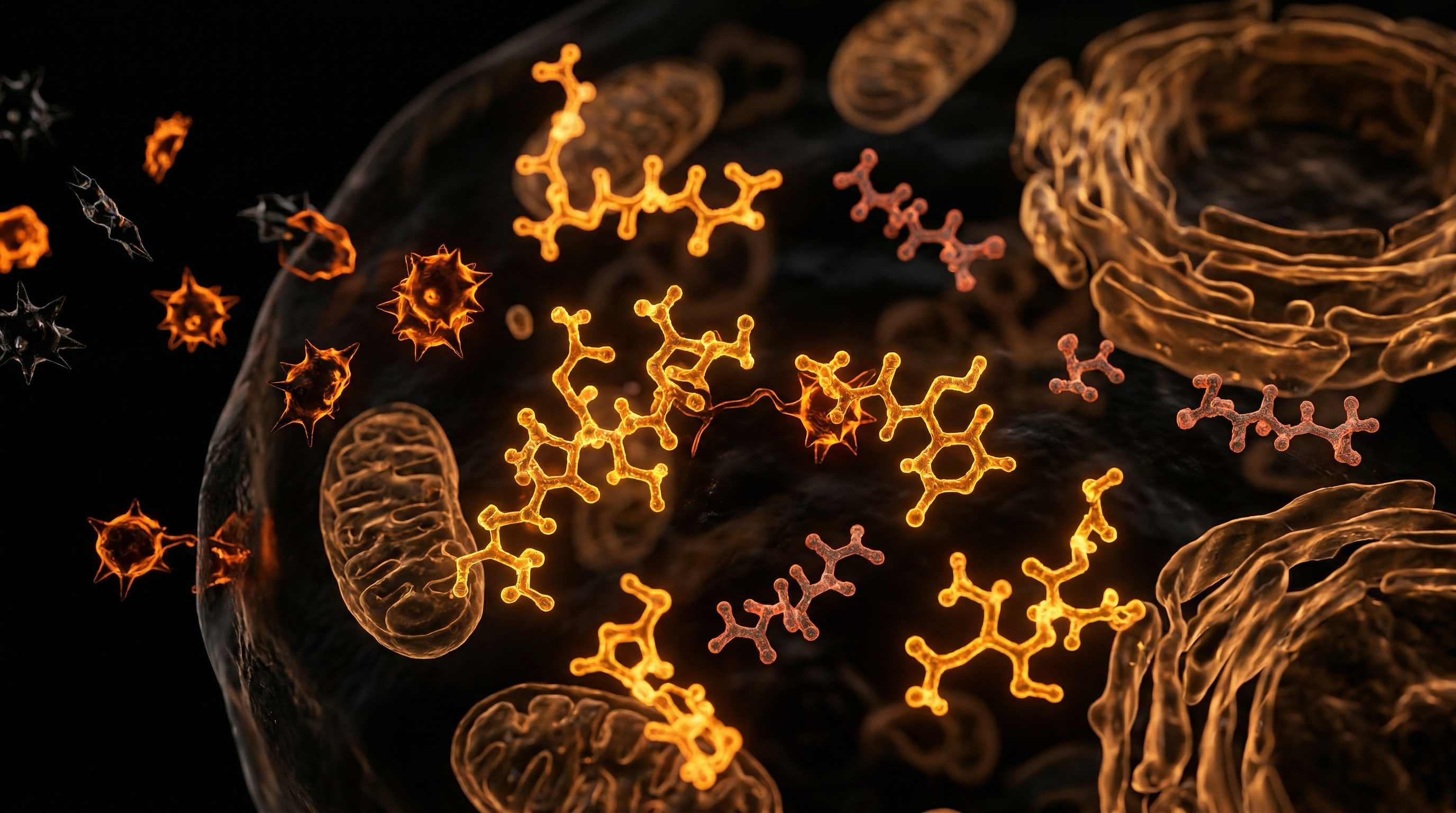
In the hierarchy of biological survival, few molecules command the same level of reverence as glutathione (GSH). Often colloquially termed the ‘Master Antioxidant’, glutathione is a tripeptide composed of three amino acids: glutamic acid, cysteine, and glycine. It is present in virtually every cell of the human body, maintaining the delicate balance between health and oxidative collapse. Yet, as we navigate the third decade of the 21st century, a silent catastrophe is unfolding across the British Isles.
The United Kingdom, once the cradle of the Industrial Revolution, continues to grapple with a toxic legacy. From the soot-stained corridors of the ‘Black Country’ to the invisible plumes of nitrogen dioxide suffocating modern London, our environmental landscape has become a gauntlet of oxidative stressors. For the average resident of a UK industrial hub, the endogenous production of glutathione is no longer a self-sustaining cycle; it is a reservoir under siege.
This article serves as an expose on the systematic depletion of glutathione by modern industrial pollutants. We will explore how British urban environments—saturated with heavy metals, particulate matter, and endocrine disruptors—are overdrawing the body’s ‘biochemical bank account’, leading to a state of chronic redox bankruptcy that precedes almost every modern chronic disease.
Fact: Scientific estimates suggest that by the age of 40, the average individual’s glutathione levels have already declined by 30%, a figure accelerated significantly in populations living within high-pollution corridors like the M25 or the industrial belts of the Midlands.
The Biology — How It Works
To understand the threat, we must first understand the architecture of our primary defence. Glutathione is not merely an ‘antioxidant’ in the sense that Vitamin C or E are; it is a redox buffer, a detoxification agent, and a signalling molecule.
The Tripeptide Synthesis
Glutathione is synthesised within the cell through a two-step ATP-dependent process:
- GCL (Glutamate-Cysteine Ligase): This is the rate-limiting step where glutamate and cysteine are joined. The availability of cysteine is the primary bottleneck in this process.
- GSS (Glutathione Synthetase): The final step where glycine is added to create the functional tripeptide.
The Redox Cycle
Glutathione exists in two states: GSH (Reduced) and GSSG (Oxidised). In a healthy cell, the ratio of GSH to GSSG should be approximately 100:1. When glutathione neutralises a free radical, it becomes oxidised itself (GSSG). An enzyme called Glutathione Reductase then uses NADPH to ‘recharge’ the molecule back into its reduced form.
The Tissue Distribution
While produced in all cells, the liver is the body’s primary glutathione factory and reservoir, exporting GSH into the plasma to protect the lungs, kidneys, and brain. The epithelial lining fluid (ELF) of the lungs contains concentrations of glutathione up to 140 times higher than that of the blood—a critical evolutionary adaptation to protect our respiratory interface from airborne toxins.
Mechanisms at the Cellular Level
The depletion of glutathione is not a passive event; it is the result of specific, high-affinity biochemical interactions between industrial toxins and the GSH molecule.
Phase II Conjugation: The Sacrifice
One of the primary roles of glutathione is Phase II Biotransformation. When the liver encounters a xenobiotic (a foreign chemical like a pesticide or industrial solvent), it often attaches a glutathione molecule directly to the toxin via an enzyme family called Glutathione S-transferases (GSTs).
- Once conjugated, the toxin becomes water-soluble and can be excreted via urine or bile.
- Crucially, this process consumes the glutathione molecule. It is not recycled; it is literally ‘thrown away’ with the trash. In a polluted environment, this leads to a rapid net loss of total glutathione.
Mitochondrial Integrity and the Electron Transport Chain
The mitochondria are the powerhouses of the cell, but they are also the primary site of Reactive Oxygen Species (ROS) production. Glutathione within the mitochondria (mGSH) is the only defence against the superoxide and peroxide by-products of energy production.
- When industrial pollutants (like PM2.5) penetrate the cell, they disrupt mitochondrial function, causing a ‘leakage’ of electrons.
- mGSH is rapidly exhausted trying to contain this internal fire. Once mGSH drops below a critical threshold, the mitochondrial permeability transition pore (mPTP) opens, triggering programmed cell death (apoptosis).
The Thiol-Disulphide Switch
Glutathione acts as a rheostat for protein function. By binding to specific sulfur (thiol) groups on proteins—a process called S-glutathionylation—it protects these proteins from permanent oxidative damage. If glutathione levels are low, these proteins become irreversibly damaged, leading to the misfolding seen in neurodegenerative conditions.
Statistic: Studies show that a 20-30% reduction in intracellular glutathione is sufficient to impair immune function and trigger inflammatory signalling cascades.
Environmental Threats and Biological Disruptors
The British industrial landscape presents a unique chemical cocktail that target-fires the glutathione system.
Heavy Metals: The Thiol-Snatchers
Heavy metals like Lead (Pb), Mercury (Hg), and Cadmium (Cd) have an incredibly high affinity for sulfur. Because glutathione is a sulfur-rich molecule, these metals bind to it with near-permanent intensity.
- Lead: Still prevalent in the UK’s aging water infrastructure and heritage housing. Lead inhibits the enzymes required for GSH synthesis.
- Mercury: Primarily from industrial emissions and dental amalgams, mercury forms a complex with GSH that is excreted, depleting the body’s total pool.
- Cadmium: A major component of tobacco smoke and industrial run-off in the North of England, cadmium displaces zinc and manganese, co-factors required for antioxidant enzymes.
Air Pollution: The London/Manchester Burden
The UK’s urban centres suffer from high levels of Nitrogen Dioxide (NO2) and Particulate Matter (PM2.5).
- PM2.5 particles are small enough to enter the bloodstream directly through the alveoli. These particles carry transition metals (iron, copper) on their surface, which catalyse the Fenton Reaction, producing the highly destructive hydroxyl radical.
- Glutathione in the lung’s lining fluid is the first line of defence. In residents of London or Birmingham, these levels are chronically suppressed as the body fails to keep up with the constant influx of oxidants.
Pesticides and Organophosphates
Despite some bans, the legacy of organophosphates in UK agriculture remains. These chemicals require glutathione for detoxification. For those living in rural areas adjacent to intensive farming (such as the Fens or East Anglia), seasonal ‘spraying’ creates a massive spike in glutathione demand.
The Cascade: From Exposure to Disease
When glutathione depletion becomes chronic, the body enters a state of Redox Collapse. This is not a single symptom but a cascade of systemic failures.
Neurodegeneration: The Vulnerable Brain
The brain accounts for 20% of the body’s oxygen consumption but has relatively low levels of glutathione compared to the liver.
- Parkinson’s Disease: One of the earliest biochemical markers of Parkinson’s is a massive loss of glutathione in the substantia nigra. Without GSH, dopamine undergoes autoxidation, creating a toxic cycle that destroys neurons.
- UK Statistic: The UK has one of the highest rates of Parkinson's in Europe, a trend that correlates geographically with historical industrial centres.
Cardiovascular Collapse
Oxidised LDL cholesterol is a primary driver of atherosclerosis (hardening of the arteries). Glutathione, along with Glutathione Peroxidase (GPx), is the primary mechanism for preventing the oxidation of fats. When GSH is depleted by urban air pollution, arterial inflammation spikes, leading to hypertension and heart disease.
The Immune System and 'Cytokine Storms'
Glutathione is essential for the proliferation of T-cells and the activity of Natural Killer (NK) cells. A glutathione-depleted state is a state of immunosenescence (immune aging). This was starkly illustrated during recent respiratory pandemics, where individuals with lower GSH levels (often those in high-pollution areas) suffered the most severe inflammatory responses.
What the Mainstream Narrative Omits
The mainstream medical establishment in the UK—largely governed by the NHS’s ‘standard of care’—rarely measures glutathione. This is a glaring omission in preventative medicine.
The "Normal" Range Fallacy
When blood tests are conducted, they often measure markers of organ damage (like ALT/AST for the liver) rather than the functional reserves of the cell. You can have "normal" liver enzymes while having dangerously low glutathione levels. By the time the enzymes are elevated, the damage is already done.
The Pharmaceutical Oversight
Many common medications used in the UK further deplete glutathione. The most notorious is Paracetamol (Acetaminophen).
- Paracetamol is metabolised into a toxic by-product called NAPQI.
- NAPQI is neutralised exclusively by glutathione.
- Over-the-counter use of paracetamol, combined with the "background noise" of industrial pollution, creates a "pincer movement" that can leave the liver and lungs defenceless.
The Genetic Component (GST Polymorphisms)
A significant portion of the UK population carries genetic variants (polymorphisms) in their GST genes (e.g., GSTM1 null). These individuals have a genetically reduced ability to use glutathione for detoxification. In a pre-industrial world, this was a minor disadvantage. In a polluted UK city, it is a biological catastrophe that the mainstream narrative completely ignores.
The UK Context
The UK’s health landscape is inseparable from its industrial geography. We see a clear "North-South divide" in health outcomes that maps almost perfectly onto historical and current pollution data.
The Legacy of the "Black Country" and the North
Areas like the West Midlands, South Yorkshire, and Teesside were the engines of the British Empire. The soil in these regions remains contaminated with persistent organic pollutants (POPs) and heavy metals. These substances do not disappear; they enter the food chain and the local dust, providing a chronic, low-level drain on the glutathione levels of the residents.
Modern Urban Heat Islands
In London, the "Heat Island Effect" traps nitrogen dioxide and ozone at ground level. Ozone is a potent oxidant that directly depletes glutathione in the respiratory tract.
- The Thames Estuary: A forgotten corridor of industrial emissions and heavy shipping traffic, where residents face a cocktail of sulphur dioxide and particulate matter.
The Water Crisis
Recent scandals regarding the dumping of raw sewage and industrial run-off into British rivers have introduced new threats. Contaminants like PFAS (per- and polyfluoroalkyl substances)—the so-called ‘forever chemicals’—interfere with the enzymes involved in the glutathione cycle, yet these are rarely filtered by standard municipal water treatments.
Protective Measures and Recovery Protocols
While the environmental threat is pervasive, biological resilience can be restored through targeted, science-based interventions.
1. Precursor Loading: The NAC Strategy
N-Acetyl Cysteine (NAC) is the most effective way to provide the rate-limiting amino acid, cysteine. NAC has been used in clinical settings for decades to treat paracetamol overdoses because it rapidly restores hepatic glutathione.
- Protocol: Daily supplementation of 600mg to 1200mg has been shown to support pulmonary and hepatic glutathione pools in high-pollution environments.
2. Liposomal and S-Acetyl Glutathione
Oral glutathione was long thought to be ineffective due to digestion. However, modern liposomal delivery and S-acetylated forms bypass the digestive tract, allowing the molecule to enter the bloodstream intact. These are essential for those in acute "Redox Bankruptcy."
3. Essential Co-factors
The glutathione cycle cannot function without its supporting cast:
- Selenium: Required for the enzyme Glutathione Peroxidase. UK soils are notoriously selenium-deficient.
- Riboflavin (Vitamin B2): A critical co-factor for Glutathione Reductase (the "recharging" enzyme).
- Magnesium: Necessary for the ATP-dependent synthesis of GSH.
4. Dietary Interventions
The body requires sulfur to build glutathione.
- Cruciferous Vegetables: Broccoli, kale, and Brussels sprouts contain sulforaphane, which upregulates the Nrf2 pathway—the body’s "master switch" for glutathione production.
- Whey Protein: High-quality, undenatured whey is rich in cysteine and glutamylcysteine, both potent GSH precursors.
5. Lifestyle Mitigation
- Air Filtration: Using HEPA and activated carbon filters in UK homes to remove PM2.5 and VOCs.
- Sauna Therapy: Sweating is a primary route for excreting heavy metals (cadmium, lead), thereby reducing the burden on the glutathione system.
Callout: For residents of the UK's most polluted cities, relying on "natural diet" alone is often insufficient to overcome the industrial oxidant load. Supplementation is no longer a luxury; it is a defensive necessity.
Summary: Key Takeaways
The depletion of glutathione is the invisible thread connecting the UK’s industrial history to its modern chronic disease crisis. As we have explored:
- Glutathione is the primary defender of our cellular integrity, acting as both a shield against free radicals and a vehicle for toxin removal.
- Industrial pollutants (Metals, PM2.5, NO2) do not just cause damage; they systematically exhaust our glutathione reserves, leaving us vulnerable to further attack.
- The UK faces a unique challenge, with a combination of historical heavy metal contamination and modern urban air quality issues.
- The medical establishment fails to recognise sub-clinical glutathione deficiency, focusing instead on treating the diseases that result from it.
- Recovery is possible through the strategic use of precursors like NAC, co-factors like Selenium, and the activation of internal pathways via sulforaphane.
In the final analysis, our ability to thrive in an increasingly toxic Britain depends on our understanding of this tripeptide. We must move beyond the "Silent Threat" and towards a paradigm of proactive redox protection. The health of the nation is not found in the pharmacy, but in the restoration of its fundamental biological buffers.
This article is provided for informational and educational purposes only. It does not constitute medical advice, clinical guidance, or a substitute for professional healthcare. Information reflects cited research at time of publication. Always consult a qualified healthcare professional before acting on any health information.
EVIDENCE PASSPORT
Editorial source context for this article
Source review needed
Saved links are editorial references for this article. They may support specific claims rather than every sentence. Open and assess each source in context. This passport does not independently verify them.
Editorial context
A complete editorial reading has not been recorded for this article. Source links remain available for you to open and assess directly.
Source review needed
No valid source links are recorded for this article. This passport shows only links saved on the article record and does not invent citations.
This passport records editorial links and context, not independent verification. Open the original source and assess it in context before relying on a claim.
Medical Disclaimer
The information in this article is for educational purposes only and does not constitute medical advice, diagnosis, or treatment. Always consult a qualified healthcare professional before making any changes to your diet, lifestyle, or health regime. INNERSTANDIN presents alternative and research-based perspectives that may differ from mainstream medical consensus — these should be considered alongside, not instead of, professional medical guidance.
Read Full DisclaimerContinue the thread
Keep this question moving.
Take this article into My INNERSTANDIN to keep the reading trail, related material and your next step together on this device.
Explore this in the Body Map
See where this hits your biology. Interactive anatomy, threats, and protective protocols.
Dig deeper in the Library
Free, longform PDF volumes that go beyond headlines into mechanisms and references.