
Glyphosate in UK Waterways: A Threat to Molecular Coherence
Updated May 2026
Investigates how agricultural runoff enters the UK water system and disrupts hydrogen bonding. Glyphosate acts as a structural chaotic agent in biological fluids.
Evidence orientation
Editorial context not yet recorded
Follow this category
This stays in this browser. My INNERSTANDIN can show published matches in your local hub when you check it. It does not send email, push, or alert notifications.
Local learning review
A private browser aid for revisiting ideas. It is not an alert or a health recommendation.
Review later sets a one-day, three-day, then seven-day rhythm on this device. Choose it only when you want to revisit this article.
Overview
The rolling hills of the British countryside, often romanticised as the green and pleasant land of Blake’s poetry, conceal a silent, molecular crisis. Beneath the surface of our iconic waterways—from the sediment-heavy Thames to the once-crystalline chalk streams of southern England—a chemical intruder is reconfiguring the very architecture of life. That intruder is glyphosate (N-(phosphonomethyl)glycine), the world’s most widely utilised systemic herbicide.
While mainstream toxicology focuses on the LD50 (lethal dose) and the contested carcinogenic potential of glyphosate, a more profound and insidious threat remains largely ignored by regulatory bodies like the Health and Safety Executive (HSE). This is the threat to molecular coherence. Biological life is not merely a bag of chemical reactions; it is an exquisite arrangement of structured water, a liquid crystalline matrix that facilitates the instantaneous transfer of information and energy.
Glyphosate acts as a structural chaotic agent. By disrupting the delicate hydrogen-bonding networks of water and substituting itself for the essential amino acid glycine, it introduces "biological noise" into a system that requires absolute "signal clarity." In the United Kingdom, where intensive arable farming and a damp climate ensure high rates of agricultural runoff, our water systems have become vectors for this molecular disruption. This article investigates the intersection of glyphosate toxicity and hydration science, exposing how the degradation of our waterways leads to the degradation of our internal biological architecture.
Fact: Glyphosate is detected in nearly all UK rivers, with some samples exceeding the permitted levels for individual pesticides in drinking water by orders of magnitude before treatment.
The Biology — How It Works
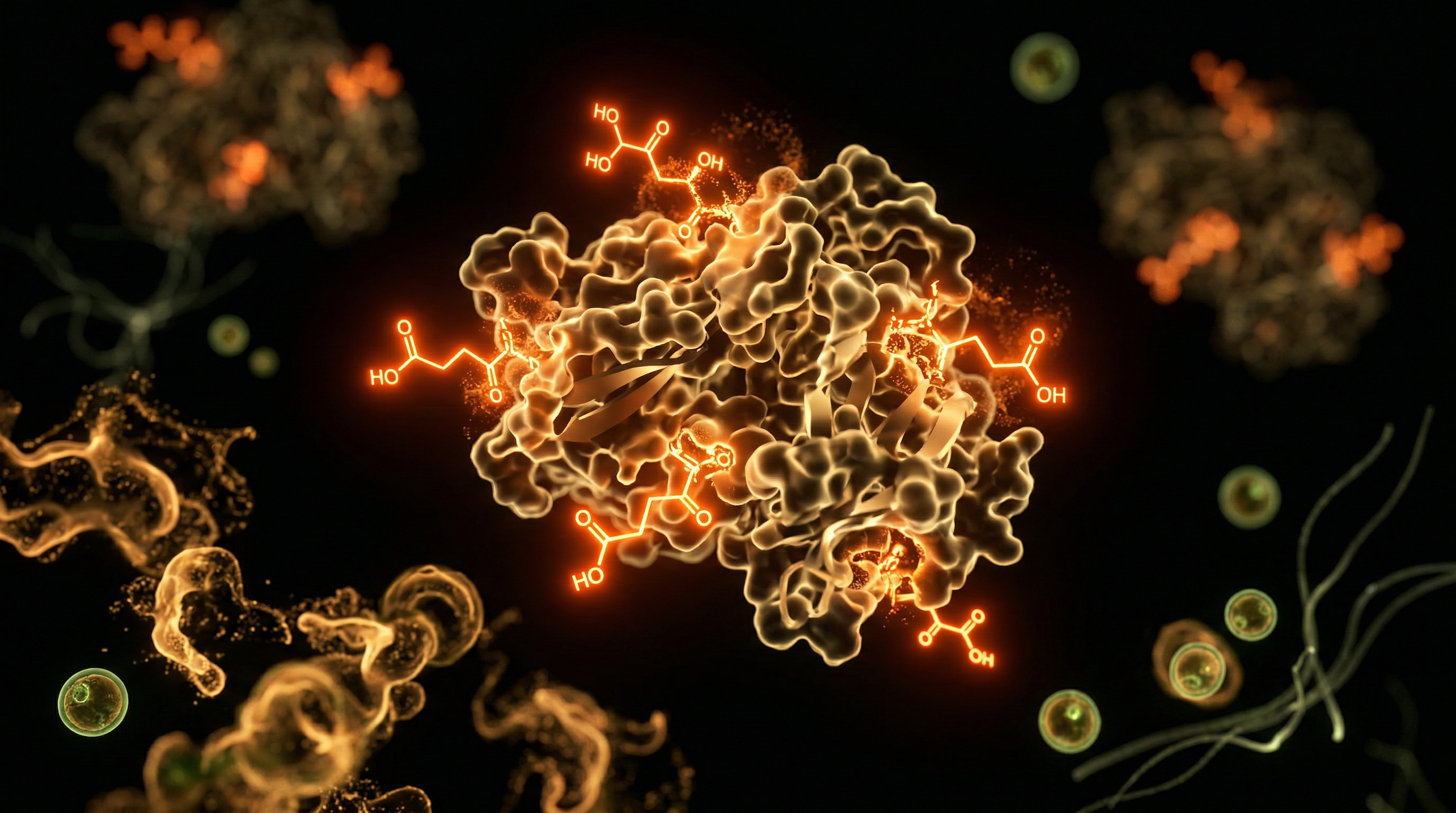
To understand the threat, we must first understand the molecule. Glyphosate is essentially a molecule of the amino acid glycine with a phosphonomethyl group attached to the nitrogen atom. This structural similarity is the "Trojan Horse" of modern biochemistry.
The Shikimate Pathway Myth
For decades, the agrochemical industry defended glyphosate by stating it targets the shikimate pathway, a metabolic route used by plants and bacteria to synthesise essential aromatic amino acids (phenylalanine, tyrosine, and tryptophan). Because humans do not possess this pathway, the industry claimed glyphosate was as "safe as salt."
However, this narrative intentionally omits the fact that our gut microbiome—the trillions of bacteria that regulate our immune system, neurotransmitters, and digestion—relies entirely on the shikimate pathway. When we consume glyphosate-contaminated water or food, we are essentially "weeding" our internal ecosystem, leading to profound dysbiosis.
The Glycine Substitution Hypothesis
The most alarming aspect of glyphosate’s biology is its potential to misincorporate into human proteins in place of glycine. Glycine is the smallest amino acid, and its presence is vital for the tight folding of proteins, particularly collagen.
- Collagen Integrity: Collagen is the most abundant protein in the human body, providing the scaffold for our skin, joints, and organs. It requires a glycine molecule at every third position to form its signature triple helix.
- Molecular Chaos: When glyphosate is substituted for glycine, the resulting protein is misshapen. It cannot fold correctly. This leads to the accumulation of "biological junk" and the loss of structural integrity in our tissues.
The Chelation Effect
Glyphosate was originally patented as a powerful chelator (a chemical that binds minerals). In the environment and the body, it aggressively binds to divalent cations such as manganese, magnesium, cobalt, and zinc. These minerals are the essential co-factors for thousands of enzymatic reactions. By sequestering these minerals, glyphosate effectively "turns off" the body's ability to repair DNA and neutralise oxidative stress.
Mechanisms at the Cellular Level
At the heart of the INNERSTANDING philosophy is the recognition that water is the medium of life. In the cellular environment, water does not behave like the bulk water in a glass; it forms what Dr Gerald Pollack terms Exclusion Zone (EZ) Water or "Structured Water."
Disruption of the Hydration Shell
Every protein and strand of DNA in the body is surrounded by a hydration shell—a layer of highly ordered water molecules. This shell is not passive; it protects the molecule and facilitates its function through electromagnetic resonance.
- Charge Interference: Glyphosate is a highly polar molecule with a strong negative charge. When it enters the cellular environment, it disrupts the dipole moments of water molecules.
- Loss of Coherence: By breaking the long-range hydrogen bonding networks, glyphosate converts structured, "crystalline" water back into chaotic, bulk water. This causes the cell to lose its "battery charge" (the potential difference between the EZ water and the bulk water), leading to cellular fatigue and metabolic collapse.
Mitochondrial Dysfunction and the EZ
Mitochondria are often called the powerhouses of the cell, but they are also the primary engines of biophotonic emission. They require a highly structured aqueous environment to transport electrons efficiently along the respiratory chain.
Important Statistic: Research indicates that glyphosate can decrease mitochondrial membrane potential by up to 30%, significantly impairing the cell's ability to produce ATP (adenosine triphosphate).
When glyphosate interferes with the water structure around the mitochondria, it increases the production of Reactive Oxygen Species (ROS). This is not just a chemical imbalance; it is a structural failure of the cell's internal fluid dynamics.
Environmental Threats and Biological Disruptors
The UK's geography makes its water systems particularly vulnerable to glyphosate contamination. Our agricultural landscape is dominated by wheat, barley, and oilseed rape—crops that are frequently treated with glyphosate as a desiccant (to dry the crop) just before harvest.
The Runoff Cycle
When rain falls on treated UK fields, the glyphosate—which is highly water-soluble—is washed into the soil and eventually into the groundwater and river systems.
- Soil Death: Glyphosate kills the mycorrhizal fungi in the soil. These fungi are responsible for soil structure and water retention. Without them, the soil becomes compacted, increasing runoff and ensuring more chemicals reach the rivers.
- Sediment Loading: Glyphosate binds to soil particles. During heavy UK rains, this contaminated sediment is washed into rivers like the Wye and the Severn, where it persists in the ecosystem for months.
Synergistic Toxicity: The "Adjuvant" Problem
Glyphosate is rarely used alone. Commercial formulations, such as Roundup, contain surfactants (like polyethoxylated tallowamine, or POEA) designed to help the glyphosate penetrate plant leaves.
- Membrane Permeability: These surfactants are often more toxic than glyphosate itself. They increase the permeability of human cell membranes, effectively "opening the door" for glyphosate and other environmental toxins (like heavy metals) to flood the cell.
- The UK Cocktail: In UK waterways, glyphosate exists alongside a "cocktail" of nitrates, phosphates, and other pesticides. The interaction between these chemicals creates a synergistic effect where the total toxicity is far greater than the sum of its parts.
The Cascade: From Exposure to Disease
The disruption of molecular coherence is the "root cause" that manifests as a myriad of modern chronic illnesses. When the water in our bodies is no longer coherent, the "software" of our biology begins to glitch.
1. The Gut-Brain Axis and Neurotoxicity
By destroying the beneficial bacteria in the gut, glyphosate leads to an overgrowth of pathogenic species like Clostridium botulinum. These pathogens produce neurotoxins that can cross the blood-brain barrier—a barrier that is itself weakened by the degradation of collagen (as discussed in the glycine substitution hypothesis). This has been linked to:
- Autism Spectrum Disorders (ASD)
- Parkinson’s Disease
- Alzheimer’s Disease
2. Endocrine Disruption
Glyphosate has been identified as an endocrine disruptor, specifically interfering with the aromatase enzyme, which converts androgens to estrogens. This disruption occurs at levels far below those deemed "safe" by UK regulators.
3. Chronic Inflammation and Autoimmunity
When proteins are misfolded due to glyphosate substitution, the immune system no longer recognises them as "self." This triggers a chronic inflammatory response. The loss of exclusion zone water in the joints and tissues means there is no longer a "lubricant" to protect against mechanical friction, leading to the skyrocketing rates of arthritis and fibromyalgia seen across the UK population.
Callout: The prevalence of non-alcoholic fatty liver disease (NAFLD) in the UK has risen in direct correlation with the increased use of glyphosate in domestic agriculture.
What the Mainstream Narrative Omits
The refusal of regulatory bodies to acknowledge the biophysical impact of glyphosate is one of the greatest scientific oversights of our time. The "Mainstream Narrative" relies on outdated toxicology models that view the body as a static vessel for chemical reactions, ignoring the role of quantum biology and water structure.
Regulatory Capture and the "Ghostwriting" Scandal
Documents revealed in US court cases (the "Monsanto Papers") showed that the manufacturer of glyphosate frequently ghostwrote scientific studies that were later used by regulators to prove the chemical's safety. In the UK, the Health and Safety Executive (HSE) continues to rely on these industry-funded studies.
The Myth of "Biodegradability"
The public is told that glyphosate biodegrades quickly in the environment. This is a half-truth. While it does break down, its primary metabolite is AMPA (aminomethylphosphonic acid), which is just as toxic and even more persistent in the water supply and soil than glyphosate itself.
The Exclusion of "Sub-lethal" Effects
Mainstream studies usually look for immediate signs of poisoning or tumour growth. They do not look for:
- Changes in the dielectric constant of cellular water.
- Disruption of circadian rhythms via the suppression of melatonin (which requires the shikimate pathway's aromatic amino acids).
- The loss of biophotonic communication between cells.
By ignoring the "electric" and "structural" nature of biology, regulators are missing the forest for the trees.
The UK Context
The UK occupies a unique position in the global glyphosate debate. Following Brexit, the UK has the opportunity to diverge from EU standards, yet it has largely chosen to maintain or even relax pesticide regulations to support industrial farming outputs.
The River Crisis
Our waterways are currently in a state of ecological collapse. The Environment Agency recently admitted that not a single river in England is in "good" overall health. While sewage spills have taken the headlines, the chemical burden of glyphosate is a more pervasive, "invisible" pollutant.
- The Thames Basin: This region serves millions of people. Glyphosate used in the vast wheat belts of Oxfordshire and Berkshire drains directly into the Thames. Traditional water treatment facilities are not designed to remove glyphosate at the molecular level.
- The Wye Valley: Intensive poultry farming in this area uses massive amounts of imported soy (which is heavily sprayed with glyphosate). The manure from these birds, laden with glyphosate residues, is spread on fields, leading to catastrophic runoff that is killing the river’s biodiversity.
Post-Brexit Regulation
While the EU has seen fierce debate and attempted bans on glyphosate, the UK government has granted multiple "emergency authorisations" for pesticides and has shown little appetite for a ban. This leaves the UK public as the "unwitting subjects" of a massive, nationwide toxicological experiment.
Fact: In 2023, despite significant public opposition, the EU re-approved glyphosate for another 10 years. The UK has followed this lead, ensuring that our water systems will continue to be saturated with this chaotic agent for the foreseeable future.
Protective Measures and Recovery Protocols
Given the ubiquity of glyphosate in the UK environment, total avoidance is nearly impossible. However, by applying the principles of Structured Water Science and targeted nutritional intervention, we can mitigate the damage and restore molecular coherence.
1. Advanced Water Filtration and Restructuring
Standard carbon filters are insufficient for removing glyphosate. To protect your internal "crystalline matrix," a multi-stage approach is required:
- Reverse Osmosis (RO) or Distillation: These are the only reliable ways to remove the glyphosate molecule from drinking water.
- Restructuring (Vortexing): Because RO and distillation leave water "dead" and unstructured, it must be revitalised. Vortexing the water or exposing it to infrared light (sunlight) helps to rebuild the Exclusion Zone and restore its "charge."
- Mineralisation: Add high-quality sea salt or ionic minerals back into filtered water to provide the conductive elements necessary for biological coherence.
2. The Glycine "Flood" Strategy
To prevent the body from using glyphosate in protein synthesis, one should provide an abundance of high-quality pure glycine.
- Supplementation: Taking 3–5 grams of glycine daily can help "outcompete" glyphosate for positions in the collagen matrix.
- Bone Broth: Organic, grass-fed bone broth is an excellent natural source of glycine and the minerals required to repair a glyphosate-damaged gut lining.
3. Fulvic and Humic Acids
These are natural substances derived from soil organic matter. They act as "molecular sponges."
- Chelation: Fulvic acid can bind to glyphosate in the digestive tract and assist in its excretion before it can reach the bloodstream.
- Microbiome Support: They help to restore the soil-based organisms (SBOs) in the gut that are killed by glyphosate's herbicidal action.
4. Manganese and Sulfur Support
Glyphosate specifically depletes manganese and disrupts sulfur pathways (essential for detoxification).
- Dietary Shifts: Increase intake of organic, manganese-rich foods like raspberries, garlic, and ginger.
- Epsom Salt Baths: Magnesium sulfate (Epsom salt) provides both magnesium and sulfur directly through the skin, bypassing a potentially compromised digestive system.
5. Infrared Therapy
Since EZ water is expanded by infrared light, regular exposure to sunlight or near-infrared saunas can help the body "restructure" its internal fluids, pushing glyphosate out of the hydration shells and restoring cellular communication.
Summary: Key Takeaways
The presence of glyphosate in UK waterways is not merely an environmental "nuisance"; it is a fundamental assault on the biophysical coherence of the British population. By understanding the molecule's role as a structural chaotic agent, we can move beyond the limited "carcinogen" debate and address the deeper crisis of biological information.
- Glyphosate is a Glycine Mimic: It inserts itself into our proteins, causing structural failure at the cellular level.
- It Destroys Water Structure: Life depends on coherent, structured water (EZ water). Glyphosate breaks this structure, draining our biological "batteries."
- The UK is at High Risk: Our weather patterns and agricultural reliance on glyphosate create a constant cycle of contamination in our rivers and drinking water.
- Mainstream Science is Lagging: Regulatory bodies ignore quantum biology and the synergistic effects of "inert" ingredients in glyphosate formulations.
- Proactive Recovery is Possible: Through advanced filtration, glycine supplementation, and "restructuring" our internal environment, we can defend our molecular integrity against this chemical intrusion.
We are at a crossroads in the history of public health. To reclaim our vitality, we must look beyond the chemical and into the crystalline—restoring the purity and coherence of the water that flows both in our rivers and within our veins. Only then can we return to being a truly "green and pleasant land," from the molecular level upward.
This article is provided for informational and educational purposes only. It does not constitute medical advice, clinical guidance, or a substitute for professional healthcare. Information reflects cited research at time of publication. Always consult a qualified healthcare professional before acting on any health information.
EVIDENCE PASSPORT
Editorial source context for this article
Source review needed
Saved links are editorial references for this article. They may support specific claims rather than every sentence. Open and assess each source in context. This passport does not independently verify them.
Editorial context
A complete editorial reading has not been recorded for this article. Source links remain available for you to open and assess directly.
Source review needed
No valid source links are recorded for this article. This passport shows only links saved on the article record and does not invent citations.
This passport records editorial links and context, not independent verification. Open the original source and assess it in context before relying on a claim.
Medical Disclaimer
The information in this article is for educational purposes only and does not constitute medical advice, diagnosis, or treatment. Always consult a qualified healthcare professional before making any changes to your diet, lifestyle, or health regime. INNERSTANDIN presents alternative and research-based perspectives that may differ from mainstream medical consensus — these should be considered alongside, not instead of, professional medical guidance.
Read Full DisclaimerContinue the thread
Keep this question moving.
Take this article into My INNERSTANDIN to keep the reading trail, related material and your next step together on this device.