Glyphosate Residue Concentrations in Transatlantic Grain Markets: An Investigation into Public Health Risk Mitigation Strategies
Discuss this resourceUpdated August 2026
This article explores the divergence in regulatory frameworks regarding glyphosate residues in wheat and grain products between the UK and the US, analyzing the public health implications and current mitigation strategies for consumers.
Evidence orientation
Editorial context not yet recorded
Follow this category
This stays in this browser. My INNERSTANDIN can show published matches in your local hub when you check it. It does not send email, push, or alert notifications.
Local learning review
A private browser aid for revisiting ideas. It is not an alert or a health recommendation.
Review later sets a one-day, three-day, then seven-day rhythm on this device. Choose it only when you want to revisit this article.

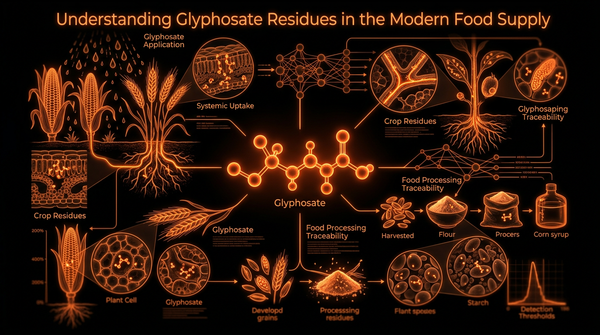
Introduction: The Glyphosate Divide. As the UK navigates its post-Brexit food regulatory landscape, the discourse surrounding glyphosate, the world's most widely used herbicide, has intensified. Comparing UK food standards with US equivalents reveals a stark disparity in permitted residue levels (Maximum Residue Levels or MRLs). This investigation examines the root causes of these differences and what they mean for public health. ## The Regulatory Landscape: UK vs. US.
In the United Kingdom, glyphosate usage and residue limits are governed by strict adherence to the 'Precautionary Principle,' influenced by the European Food Safety Authority (EFSA) and the Health and Safety Executive (HSE). Conversely, the US Environmental Protection Agency (EPA) has historically permitted higher MRLs, particularly in grain crops where glyphosate is frequently used as a pre-harvest desiccant. This process kills the crop to ensure uniform ripening, inevitably leading to higher concentrations in the final grain product. ## Root-Cause Analysis: Why the Discrepancy? The core issue lies in farming practices. In the US, the widespread adoption of genetically modified 'Roundup Ready' crops has inextricably linked industrial-scale agriculture to glyphosate application.
In the UK, while glyphosate is used, the practice of pre-harvest desiccation is more heavily scrutinised, and the regulatory environment is more conservative regarding the accumulation of chemical residues in the food supply chain. ## Public Health and Long-Term Exposure. The debate over glyphosate's carcinogenicity remains contentious. The IARC (International Agency for Research on Cancer) classified it as 'probably carcinogenic to humans' (Group 2A), while the EPA maintains it is not likely to cause cancer. For the UK consumer, this creates a dilemma of safety-in-abundance. Chronic low-level exposure through bread, cereal, and imported pulses raises questions about the long-term impact on the microbiome and endocrine system. ## Mitigation Strategies for Consumers.
Given the current transatlantic trade agreements, complete avoidance is challenging. However, mitigation strategies include: 1. Prioritizing 'Organic' certifications, which prohibit synthetic pesticide use. 2. Supporting 'Regenerative Agriculture' labels, which emphasize soil health over chemical reliance. 3. Diversifying grain intake to reduce reliance on potentially high-residue imported wheat. ## Conclusion.
Bridging the gap between US grain efficiency and UK safety standards requires transparency in labeling and a shift towards ecological farming. As we look forward, the pressure to maintain high safety standards in the UK must be balanced against the realities of global food security.
This article is provided for informational and educational purposes only. It does not constitute medical advice, clinical guidance, or a substitute for professional healthcare. Information reflects cited research at time of publication. Always consult a qualified healthcare professional before acting on any health information.
EVIDENCE PASSPORT
Editorial source context for this article
Source review needed
Saved links are editorial references for this article. They may support specific claims rather than every sentence. Open and assess each source in context. This passport does not independently verify them.
Editorial context
A complete editorial reading has not been recorded for this article, and no source links are saved on its record.
Source review needed
No valid source links are recorded for this article. Supplementary research, where available, is listed separately below.
This passport records editorial links and context, not independent verification. Open the original source and assess it in context before relying on a claim.
Medical Disclaimer
The information in this article is for educational purposes only and does not constitute medical advice, diagnosis, or treatment. Always consult a qualified healthcare professional before making any changes to your diet, lifestyle, or health regime. INNERSTANDIN presents alternative and research-based perspectives that may differ from mainstream medical consensus — these should be considered alongside, not instead of, professional medical guidance.
Read Full DisclaimerContinue the thread
Keep this question moving.
Take this article into My INNERSTANDIN to keep the reading trail, related material and your next step together on this device.
Dig deeper in the Library
Free, longform PDF volumes that go beyond headlines into mechanisms and references.
RABBIT HOLE
Follow the biological thread deeper