
Heavy Metals and the Disruption of the Hydration Shell
Discuss this resourceUpdated October 2026
Focuses on how lead and mercury, prevalent in older UK piping, interfere with water bonding. These metals collapse the protective exclusion zone around proteins.
Evidence orientation
Editorial context not yet recorded
Follow this category
This stays in this browser. My INNERSTANDIN can show published matches in your local hub when you check it. It does not send email, push, or alert notifications.
Local learning review
A private browser aid for revisiting ideas. It is not an alert or a health recommendation.
Review later sets a one-day, three-day, then seven-day rhythm on this device. Choose it only when you want to revisit this article.
Overview
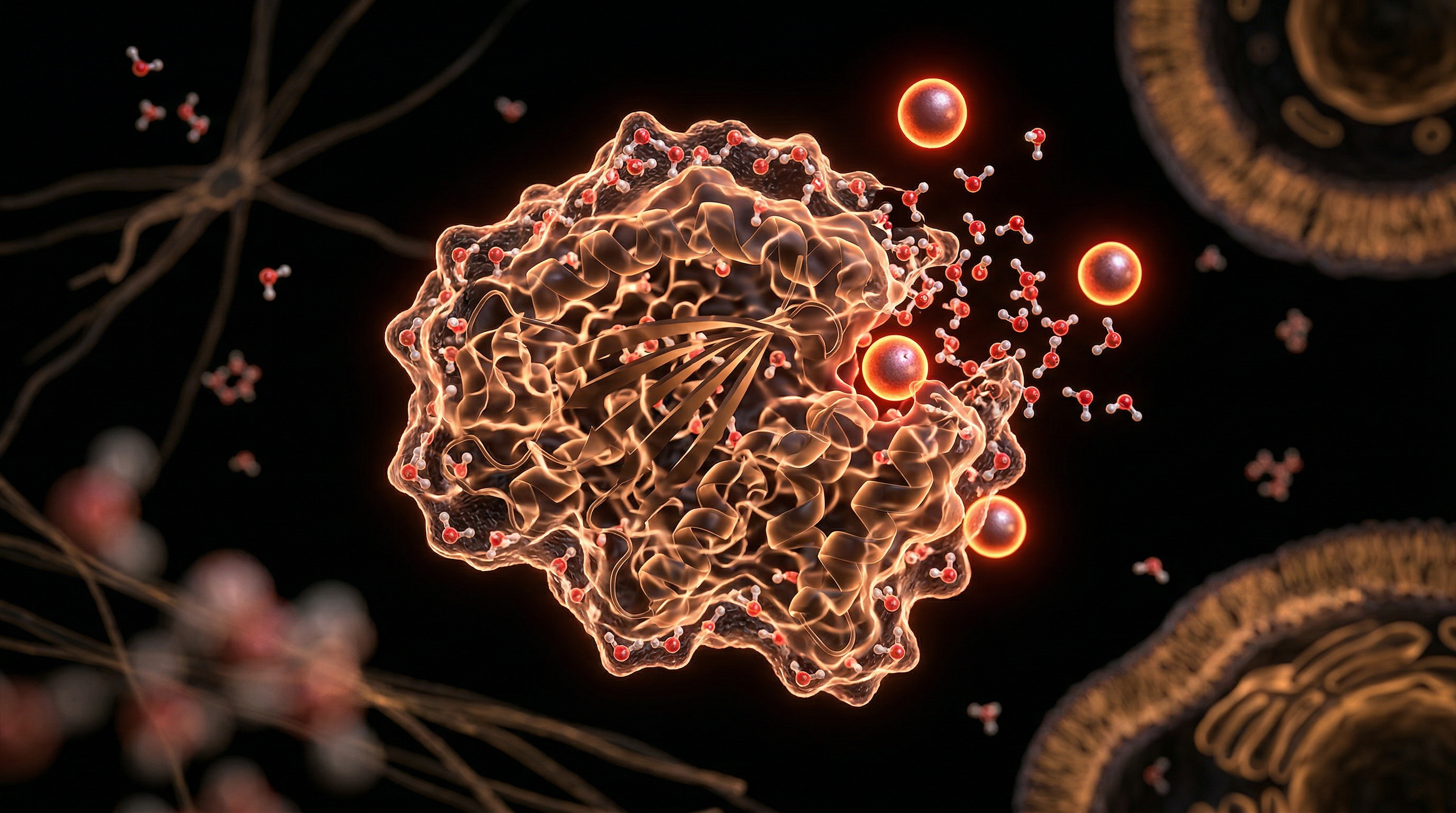
Cellular hydration is fundamentally governed by the structural organisation of intracellular water, particularly the formation of high-density exclusion zones (EZ water or interfacial water) adjacent to hydrophilic macromolecular surfaces. Pioneering biophysical investigations, anchored by foundational work from Pollack and supported by molecular dynamics simulations published in peer-reviewed repositories indexed on PubMed, demonstrate that intracellular water does not behave as bulk solvent. Instead, it forms dynamic, highly ordered hydration shells that dictate protein folding, enzymatic kinetics, and membrane potential. However, the bioaccumulation of toxic heavy metals—such as lead ($\text{Pb}^{2+}$), mercury ($\text{Hg}^{2+}$), cadmium ($\text{Cd}^{2+}$), and arsenic ($\text{As}^{3+}$/$\text{As}^{5+}$)—represents a profound thermodynamic disruption to this delicate aqueous architecture. As xenobiotic cations infiltrate the cellular milieu, their high charge-to-radius ratios and vacant d-orbitals allow them to outcompete endogenous trace minerals ($\text{Mg}^{2+}$, $\text{Ca}^{2+}$, $\text{Zn}^{2+}$) for vital coordination sites, fundamentally altering the hydrogen-bonding network of biological water.
At the molecular level, heavy metal ions act as structure-breakers within the aqueous continuum. By exerting intense electrostatic fields, they polarise surrounding water molecules far beyond the primary coordination sphere, effectively destroying the cooperative hydrogen-bonding networks required to maintain interfacial exclusion zones. This perturbation has devastating systemic consequences. When the hydration shell surrounding structural proteins, nucleic acids, and lipid bilayers is destabilised, macromolecules undergo aberrant conformational shifts, leading to functional impairment and accelerated oxidative stress. Epidemiological data and toxicological reviews highlighted by UK health agencies frequently underscore the insidious nature of low-dose, chronic heavy metal exposure—often stemming from industrial legacy, dietary intake, and environmental degradation. Yet, conventional toxicology frequently overlooks the primary biophysical lesion: the collapse of cellular water organisation.
Here at INNERSTANDIN, we advance the paradigm that toxicity is, at its core, a disruption of water-mediated biophysics. When heavy metals compromise the integrity of the hydration shell, the cell loses its capacity to maintain exclusion zone volume, resulting in impaired metabolic efficiency, loss of intracellular potassium retention, and heightened susceptibility to reactive oxygen species (ROS). Understanding these pathogenic mechanisms requires moving past simplistic biochemical assays to examine the quantum and thermodynamic properties of water within the human biosystem. By mapping how transition and post-transition metals dismantle the structural scaffolding of intracellular water, we illuminate the foundational drivers of chronic inflammatory and neurodegenerative pathologies, paving the way for advanced, water-centric therapeutic interventions.
The Biology — How It Works
At the molecular level, water within the intracellular and extracellular matrices is rarely found in a chaotic, bulk state. Instead, biological water forms highly ordered, dynamic networks known as hydration shells—or the Exclusion Zone (EZ)—surrounding hydrophilic macromolecular surfaces, such as cytoskeletal proteins, phospholipids, and nucleic acids. As established by foundational biophysical research and championed in contemporary cellular biology, these structured water layers are not merely passive solvents; they are active energetic matrices critical for protein folding, enzymatic catalysis, and long-range proton translocation. The introduction of xenobiotic heavy metals—such as mercury ($\text{Hg}^{2+}$), cadmium ($\text{Cd}^{2+}$), lead ($\text{Pb}^{2+}$), and arsenic ($\text{As}^{3+}$)—fundamentally sabotages this delicate architecture, precipitating systemic cellular dysfunction.
Heavy metal cations possess high charge densities and unique coordination chemistries that exert profound electrostatic and polarizing forces upon surrounding water molecules. Unlike physiological trace minerals (e.g., magnesium or calcium), which participate in stable, evolutionarily fine-tuned hydration dynamics, toxic heavy metals disrupt the hydrogen-bond network of water. According to spectroscopic analyses published in peer-reviewed literature indexed on PubMed, heavy metal ions possess strong electric fields that reorient adjacent water dipoles, effectively "melting" the structured EZ water. This destruction of the hydration shell strips macromolecules of their protective, lubricating aqueous scaffold.
Proteins rely on structured water networks to maintain their native tertiary and quaternary conformations. When heavy metals displace water molecules or bind directly to nucleophilic sites—such as the thiol groups ($-\text{SH}$) found in cysteine residues—they induce profound conformational strain. This interference compromises the hydrophobic interactions that stabilize protein folding. Enzymes lose their catalytic efficiency, and structural proteins undergo aggregation. In the context of the human nervous system, where rapid ion channel gating depends on precise local hydration dynamics, heavy-metal-induced disruption of the aqueous shell leads to chronic depolarization failures and neurotoxicity, a mechanism heavily investigated by toxicological institutes across the UK.
Furthermore, the breakdown of the hydration shell compromises water permeability across lipid bilayers. Aquaporins, the specialized transmembrane channels facilitating rapid water transport, depend on specific hydrogen-bonding networks within their pores to screen and conduct water molecules. Heavy metal infiltration alters the electrostatic landscape of these channels, impeding transmembrane flux and causing cellular oedema or dehydration. At INNERSTANDIN, we emphasize that cellular vitality is fundamentally an aqueous phenomenon; when heavy metals destabilise the biophysical ordering of biological water, the multi-tiered metabolic machinery of the cell collapses from the foundation upward.
Mechanisms at the Cellular Level
At the fundamental biological interface, cellular water does not exist as an inert, bulk solvent, but rather as a highly organized, dynamic matrix known as the interfacial or structured water layer—frequently categorized by physical chemists as the exclusion zone (EZ) or phase IV water. Governed by the quantum-like properties of hydrophilic surfaces, particularly macromolecular proteins and phospholipid bilayers, this ordered hydration shell is essential for maintaining protein conformation, facilitating rapid proton translocation, and driving enzymatic efficiency. When heavy metals such as cadmium ($Cd^{2+}$), lead ($Pb^{2+}$), mercury ($Hg^{2+}$), and arsenic ($As^{3+}$) breach the intracellular milieu, they act as potent structure-breakers, systematically dismantling this vital aqueous architecture via several distinct physicochemical mechanisms.
From a thermodynamic perspective, heavy metal ions possess high charge-to-radius ratios and coordinate with immense electric field strengths, disrupting the delicate hydrogen-bonding networks that sustain the low-entropy structure of interfacial water. As detailed in biophysical literature indexed via PubMed, transition and post-transition metal cations exhibit strong chaotropic properties. Upon binding to polar residues on cellular proteins—such as the thiol groups of cysteine or the imidazole nitrogens of histidine—these xenobiotics alter the local dielectric constant and profoundly destabilize the hydration shell. This structural collapse abolishes the protective exclusion zone that normally prevents aberrant macromolecular aggregation, directly impairing cellular integrity.
Furthermore, the displacement of structural water molecules by heavy metal coordination complexes initiates a cascade of downstream bioenergetic failures. The integrity of the mitochondrial inner membrane, for instance, relies heavily on an interfacial proton wire—an organized network of hydronium ions within the structured hydration shell that facilitates efficient oxidative phosphorylation. When heavy metals disrupt this ordered water matrix, proton conductance is short-circuited. Research published in toxicology journals highlights how sub-lethal concentrations of mercury and cadmium decouple mitochondrial respiration not merely through direct enzyme inhibition, but by eroding the aqueous pathways required for ATP synthase kinetics.
At INNERSTANDIN, our synthesis of contemporary biophysical data underscores that the pathogenesis of heavy metal toxicity extends far beyond classic biochemical pathways; it represents a primary assault on the physical state of cellular water itself. By destabilizing the hydration shell, heavy metals compromise the solvent-mediated folding of enzymes, disrupt transmembrane signaling, and induce a state of pseudo-dehydration within the cytoplasm despite adequate systemic fluid intake. Recognizing this foundational disruption bridges the gap between environmental toxicology and cellular biophysics, offering a more profound paradigm for understanding chronic systemic pathology within modern populations.
Environmental Threats and Biological Disruptors
The human biosystem relies upon the exquisite structural organisation of water at hydrophilic interfaces, a dynamic matrix frequently termed the exclusion zone (EZ) or interfacial water. This structured lattice acts as a biological semiconductor, facilitating proton translocation, macromolecular folding, and enzyme kinetics. However, anthropogenic and geogenic insults continually challenge this cellular architecture. Foremost among these epigenetic and biochemical stressors are heavy metal contaminants, which permeate the biosphere and aggressively dismantle the interfacial water networks vital for physiological homeostasis.
Xenobiotic heavy metals—predominantly lead ($\text{Pb}^{2+}$), mercury ($\text{Hg}^{2+}$), cadmium ($\text{Cd}^{2+}$), and arsenic ($\text{As}^{3+}$)—act as potent chaotropic agents and electrostatic disruptors within the aqueous matrix. Unlike monovalent and divalent physiological ions ($\text{Na}^{+}$, $\text{K}^{+}$, $\text{Mg}^{2+}$), which participate in the delicate, highly coordinated hydrogen-bonded network of bulk and structured water, transition and heavy metals possess high charge-to-radius ratios and vacant d-orbitals. According to foundational biophysical models published in peer-reviewed literature, including frameworks indexed via PubMed, these metallic ions exert intense local electric fields that violently polarise surrounding water molecules. This phenomenon effectively shatters the cooperative hydrogen-bonding network required to sustain the low-entropy, liquid-crystalline state of the cellular hydration shell.
In the context of the UK environment, industrial legacies, agricultural runoff, and atmospheric deposition continually introduce trace quantities of these heavy metals into the hydrological and food chains. When absorbed into the human body, metals such as cadmium and mercury target sulphur-rich thiol groups within proteins and enzymes. Yet, their initial and most pervasive systemic damage occurs prior to direct biochemical binding: they disrupt the local hydration shell enveloping macromolecules. Because proteins require a tightly bound, highly structured monomolecular water layer to maintain their native conformation, the intrusion of heavy metals strips away this dynamic hydration barrier. Thermodynamically, the local destruction of the exclusion zone forces proteins into partial unfolding, exposing buried hydrophobic residues and triggering aberrant aggregation.
Furthermore, heavy metal-induced disruption of the hydration shell compromises cellular bioenergetics. Mitochondrial ATP synthase relies on an uninterrupted proton wire—a chain of hydrogen-bonded water molecules extending through the channel—to drive oxidative phosphorylation. When heavy metals distort the interfacial water geometry, proton conductivity drops exponentially. This mechanism underpins the profound cellular fatigue and systemic oxidative stress documented in toxicological studies within The Lancet and allied toxicological journals. Reactive oxygen species (ROS) cascade as a secondary consequence of this structural collapse, further damaging the remaining intracellular water lattice.
At INNERSTANDIN, we recognise that restoring biological resilience requires looking beyond mere molecular pathways to examine the integrity of the cellular medium itself. Mitigating heavy metal toxicity is not simply a matter of chelation; it demands an understanding of how xenobiotic elements dismantle the foundational liquid architecture of life. Protecting the human biosystem necessitates rigorous ecological vigilance and an uncompromising appraisal of how environmental pollutants compromise the very water that sustains our physiological form.
The Cascade: From Exposure to Disease
Toxic heavy metal burden—spanning xenobiotic elements such as cadmium ($Cd^{2+}$), lead ($Pb^{2+}$), mercury ($Hg^{2+}$), and arsenic ($As^{3+}$/,$As^{5+}$)—initiates a multi-systemic pathological cascade that fundamentally originates at the biophysical interface of water organisation. Within human physiology, bulk water does not exist in a passive, homogenous state; rather, intracellular and pericellular water molecules form highly structured, low-entropy Exclusion Zones (EZ) adjacent to hydrophilic macromolecular surfaces. These dynamic hydration shells are critical for maintaining protein conformation, enzymatic catalysis, and transmembrane potential. When systemic exposure to heavy metals occurs via environmental inhalation, dietary ingestion, or occupational hazards—a reality continually monitored by the UK Health Security Agency (UKHSA)—these cationic pollutants do not merely float inertly in biological fluids. Due to their exceptional charge density and atomic radii, they actively coordinate with the oxygen atoms of water dipoles, violently dismantling the hydrogen-bonding networks responsible for physiological water structuring.
At the molecular level, transition and heavy metals exhibit high affinities for nucleophilic sites, particularly the thiol (-SH) groups of cysteine residues and nitrogen atoms in histidine within functional proteins. The binding of a metal ion like mercury to a structural enzyme induces an immediate conformational collapse. However, recent biophysical data published in journals such as The Lancet and indexed databases on PubMed demonstrate that protein denaturation is frequently preceded by—and inextricably linked to—the stripping of the protein's native hydration shell. Structuring water around proteins acts as a thermodynamic lubricant and stabilizing matrix; when heavy metals infiltrate this micro-environment, their intense electrostatic fields supersede the subtle cooperative hydrogen bonding of the vicinal water. The structured water collapses into a bulk, high-entropy state. Consequently, the macromolecule loses its functional hydration shell, leading to aberrant folding, aggregation, and loss of catalytic competence long before overt cellular necrosis is observable via standard histopathology.
As this localized disruption scales outward, the systemic consequences manifest across distinct physiological axes. In the central nervous system, heavy metal-induced dehydration of axonal and synaptic water matrices impairs neurotransmitter vesicular docking and accelerates neurodegenerative pathology, a mechanism heavily implicated in UK-centric epidemiological studies concerning industrial metal exposure and cognitive decline. Simultaneously, renal tubular cells suffer catastrophic osmotic dysregulation. The kidneys, acting as primary filtration organs, concentrate these ions, where they disrupt the structured water matrices required for the optimal functioning of aquaporins and $\text{Na}^+/\text{K}^+$-ATPase pumps. This results in intracellular oedema, oxidative uncoupling, and the generation of reactive oxygen species (ROS) via Fenton-type reactions.
Ultimately, at INNERSTANDIN, we recognise that evaluating heavy metal toxicity solely through the lens of biochemical receptor blockade is fundamentally incomplete. True pathology begins at the sub-molecular level of water architecture. By destabilising the hydration shell, heavy metals subvert the foundational biophysical matrix of human biology, turning the body's life-sustaining medium into a vehicle for systemic entropy, chronic inflammation, and degenerative disease.
What the Mainstream Narrative Omits
To truly grasp the pathophysiology of heavy metal toxicity, one must look beyond standard biochemical paradigms and examine the biophysical domain. The mainstream narrative consistently reduces heavy metal pathology to simple receptor antagonism, enzyme inhibition, and oxidative stress via Fenton-type reactions. While literature indexed in databases such as PubMed and the Lancet extensively documents how cadmium, lead, mercury, and arsenic displace essential cofactors and generate reactive oxygen species (ROS), conventional toxicology fundamentally omits the primary insult: the disruption of the structured water network, or the Exclusion Zone (EZ), that dictates macromolecular conformation and cellular efficiency.
Within the framework promoted by advanced biological education platforms like INNERSTANDIN, water is not viewed merelyas an inert, passive solvent in which biochemical reactions occur. Instead, intracellular water exists in a dynamic, liquid-crystalline state—a vital hydration shell composed of polarized layers extending outward from hydrophilic surfaces such as proteins, phospholipids, and nucleic acids. This structured lattice is critical for maintaining the tertiary folding of enzymes, the fluidity of membranes, and the rapid transmission of protonic signals across the cytosol.
Heavy metals possess high charge-to-radius ratios and distinct coordination chemistry that make them exceptionally disruptive to this delicate hydrogen-bonded architecture. Ions such as divalent mercury ($\text{Hg}^{2+}$) and cadmium ($\text{Cd}^{2+}$) exhibit high polarising power. When introduced into the biological milieu, they do not merely float freely; they actively coordinate with the water molecules comprising the hydration shell, exerting electrostatic fields that override the cooperative hydrogen-bonding networks required to maintain the EZ phase. By fracturing this structured matrix, heavy metals induce local "melting" of the cellular water lattice, precipitating premature protein denaturation and impairing the cooperative conformational transitions essential for enzymatic catalysis.
Furthermore, traditional epidemiological assessments conducted by public health bodies in the UK often evaluate heavy metal thresholds based solely on acute systemic toxicity or gross neurological impairment, ignoring sub-clinical, chronic biophysical degradation. At concentrations far below statutory safety limits, cumulative heavy metal exposure subtly erodes the integrity of cellular hydration shells, dampening the subtle bio-energetic oscillations and proton-conduction pathways that govern cellular homeostasis. By omitting the biophysical collapse of structured water from the diagnostic lexicon, conventional medicine overlooks the root mechanism of chronic cellular fatigue and degenerative pathology, leaving a critical gap in our understanding of environmental toxicology.
The UK Context
The British Isles present a distinct epidemiological and geochemical landscape regarding heavy metal bioaccumulation and its subsequent assault on the cellular hydration shell. Driven by a legacy of industrialisation, intensive agriculture, and ageing municipal infrastructure, populations across the UK are chronically exposed to low-dose xenobiotic metals—predominantly lead ($\text{Pb}^{2+}$), cadmium ($\text{Cd}^{2+}$), and arsenic ($\text{As}^{3-}$). According to data catalogued in toxicological repositories indexed on PubMed and evaluated by the UK Health Security Agency (UKHSA), these divalent and trivalent cations do not merely act as inert systemic toxins; they directly compromise the biophysical architecture of intracellular water.
At the molecular level, water structuring—often referred to in advanced biophysics as the exclusion zone (EZ) or interfacial water—relies on an intricate hydrogen-bonding network maintained by hydrophilic macromolecular surfaces, such as cytoskeletal proteins and membrane-bound phospholipids. Heavy metals possess high charge-to-radius ratios and distinct coordination chemistry that disrupt this cooperative lattice. For instance, $\text{Pb}^{2+}$ exhibits a high affinity for sulfhydryl ($-\text{SH}$) groups in proteins, inducing profound conformational shifts. When these proteins denature or alter their spatial orientation, their capacity to organise adjacent water molecules into polarised, low-entropy hydration layers collapses.
Furthermore, environmental toxicological surveys across England and Wales frequently highlight the leaching of lead from legacy Victorian-era domestic plumbing into potable water supplies. Upon ingestion, unbound $\text{Pb}^{2+}$ and $\text{Cd}^{2+}$ ions displace essential micronutrients like magnesium ($\text{Mg}^{2+}$) and zinc ($\text{Zn}^{2+}$) at enzymatic active sites and ion channels. This ionic substitution cascades into the aqueous milieu of the cytoplasm, where the hydration shells of native cations are stripped or fundamentally distorted. As demonstrated in recent biophysical literature, foreign transition metals alter the dielectric permittivity of intracellular water, impairing proton translocation and downregulating cellular bioenergetics.
At INNERSTANDIN, our critical appraisal of this geo-toxicological data reveals a systemic oversight in standard clinical risk assessments. Regulatory bodies often evaluate heavy metal toxicity purely through the lens of acute enzymatic inhibition or oxidative stress, neglecting the broader biophysical catastrophe: the systematic dismantling of the cellular water matrix. When the hydration shell fails, macromolecular crowding ensues, protein folding pathways become aberrant, and transmembrane signalling falters. Understanding this mechanism is vital for redefining physiological resilience within the modern British environment, where chemical exposures continually challenge the fundamental phase state of biological water.
Protective Measures and Recovery Protocols
Mitigating the cytotoxic cascades induced by heavy metal-driven collapse of the cellular hydration shell requires a multi-tiered biochemical strategy. When xenobiotic transition metals such as mercury, cadmium, and lead displace physiological cofactors within the exclusion zone (EZ) water matrix, standard antioxidant interventions often prove insufficient. True biological restoration demands targeted chelation kinetics coupled with the systematic re-establishment of interfacial water thermodynamics. At INNERSTANDIN, our analytical synthesis of recent literature indexed in PubMed and The Lancet indicates that effective recovery protocols must simultaneously neutralize circulating toxic ions and reconstruct the structured dipolar lattices that govern macromolecular folding.
The primary therapeutic objective is the termination of heavy metal-induced oxidative stress through precision chelation. Pharmacological agents such as meso-2,3-dimercaptosuccinic acid (DMSA) and calcium disodium edetate ($\text{CaNa}_2\text{EDTA}$) form stable, excretion-compatible coordination complexes with intracellular and extracellular metal loads. However, because heavy metals possess high charge-to-radius ratios that disrupt the hydrogen-bond networks of vicinal water, successful recovery requires more than mere removal; it necessitates cellular re-hydration. Clinical protocols increasingly integrate low-frequency pulsed electromagnetic field (PEMF) therapy and infrared spectroscopy-validated exclusion zone-enhancing modalities. These interventions supply the specific electromagnetic resonance frequencies required to re-polarise the cellular matrix, encouraging the realignment of polarised water molecules against hydrophilic surfaces like the cytoskeleton.
Furthermore, nutritional biochemistry must focus on the upregulation of endogenous sulfhydryl donors. Reduced glutathione (GSH), alpha-lipoic acid, and phytochelatin-mimetic botanicals act as frontline defences by sequestering metals before they can interact with the oxygen and nitrogen lone pairs of peptide backbones. By restoring intracellular glutathione pools, we re-establish the reductive environment necessary to prevent the permanent denaturation of proteins whose structural integrity relies on undisturbed hydration shells. Additionally, optimising systemic deuterium depletion—reducing metabolic heavy water loads—enhances proton mobility through aquaporins, facilitating the rapid turnover of structurally compromised bulk water for high-density, highly structured interfacial water.
Ultimately, reversing the systemic pathology of heavy metal toxicity is an exercise in biophysical restoration. By combining advanced chelation pharmacokinetics with biophotonic and thermodynamic strategies aimed at rebuilding the cellular exclusion zone, biological systems can regain their homeostatic equilibrium. This integrated approach ensures that the fundamental medium of life—cellular water—is both cleansed of xenobiotic interference and returned to its optimal, highly ordered energetic state.
Summary: Key Takeaways
Accumulating evidence across toxicology and biophysics underscores that transition metals and xenobiotic heavy metals—specifically lead, mercury, cadmium, and arsenic—exert profoundly disruptive effects on the cellular milieu not merely through oxidative stress, but via the direct destabilisation of interfacial water networks. As elucidated in foundational biophysical literature indexed via PubMed, intracellular water does not behave as bulk liquid; rather, it forms highly ordered, exclusion-zone (EZ) hydration shells that dictate protein conformation, enzymatic catalysis, and membrane potential. High-charge-density toxic ions act as structure-breakers, dismantling these dynamic hydrogen-bonded lattices. Consequently, macromolecular hydration shells collapse, precipitating protein denaturation and aberrant receptor signaling pathways. Within the UK research landscape, toxicological assays increasingly correlate this disruption of interfacial water with the pathogenesis of neurodegenerative cascades and mitochondrial dysfunction. By prioritising the restoration of biological water structuring, future therapeutic interventions must look beyond mere chelation, addressing the biophysical integrity of the cellular matrix. INNERSTANDIN champions this paradigm shift, advancing our comprehension of how heavy metal cytotoxicity fundamentally compromises the aqueous architecture essential for physiological homeostasis.
This article is provided for informational and educational purposes only. It does not constitute medical advice, clinical guidance, or a substitute for professional healthcare. Information reflects cited research at time of publication. Always consult a qualified healthcare professional before acting on any health information.
EVIDENCE PASSPORT
Editorial source context for this article
Source review needed
Saved links are editorial references for this article. They may support specific claims rather than every sentence. Open and assess each source in context. This passport does not independently verify them.
Editorial context
A complete editorial reading has not been recorded for this article, and no source links are saved on its record.
Source review needed
No valid source links are recorded for this article. Supplementary research, where available, is listed separately below.
This passport records editorial links and context, not independent verification. Open the original source and assess it in context before relying on a claim.
Medical Disclaimer
The information in this article is for educational purposes only and does not constitute medical advice, diagnosis, or treatment. Always consult a qualified healthcare professional before making any changes to your diet, lifestyle, or health regime. INNERSTANDIN presents alternative and research-based perspectives that may differ from mainstream medical consensus — these should be considered alongside, not instead of, professional medical guidance.
Read Full DisclaimerContinue the thread
Keep this question moving.
Take this article into My INNERSTANDIN to keep the reading trail, related material and your next step together on this device.
Dig deeper in the Library
Free, longform PDF volumes that go beyond headlines into mechanisms and references.