
Heavy Metals and the Uterine Environment: Assessing the Impact of Cadmium and Lead on Implantation Success
Updated April 2026
Evidence orientation
Editorial context not yet recorded
Follow this category
This stays in this browser. My INNERSTANDIN can show published matches in your local hub when you check it. It does not send email, push, or alert notifications.
Local learning review
A private browser aid for revisiting ideas. It is not an alert or a health recommendation.
Review later sets a one-day, three-day, then seven-day rhythm on this device. Choose it only when you want to revisit this article.
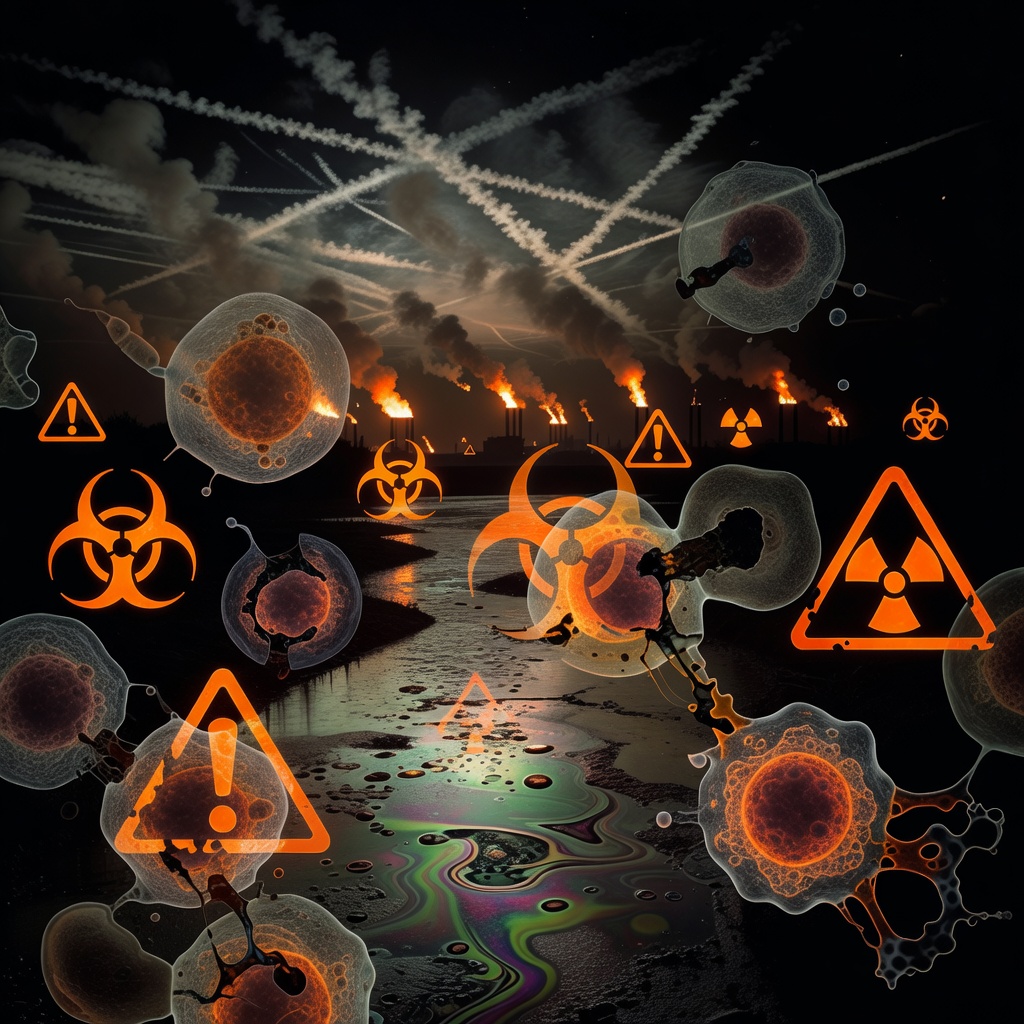
The journey toward conception is often framed as a matter of timing, genetics, and basic biological health. However, beneath the surface of conventional fertility advice lies a more sinister obstacle: the environmental toxic load. In the modern world, the womb is no longer a pristine sanctuary; it is a landscape increasingly influenced by industrial legacies and daily chemical exposures. Among the most pervasive and damaging of these are heavy metals, specifically Cadmium (Cd) and Lead (Pb).
For many individuals struggling with "unexplained infertility" or recurrent implantation failure, the answer may not lie in their DNA, but in the bioaccumulation of these non-essential metals. This article exposes the physiological mechanisms by which Cadmium and Lead disrupt the delicate "window of implantation" and provides a roadmap for navigating this silent reproductive crisis within a UK context.
The Silent Barrier: An Overview of Heavy Metals in Reproduction
Heavy metals are naturally occurring elements, but human industrial activity has redistributed them into our air, water, soil, and food supply. Unlike organic pollutants, heavy metals are non-biodegradable; they persist in the environment and, more importantly, in the human body.
Lead and Cadmium are particularly notorious for their long biological half-lives. Lead can remain in the human skeleton for decades, while Cadmium accumulates in the kidneys and reproductive organs for 10 to 30 years. When we discuss fertility, we are not just looking at recent exposure, but the cumulative body burden an individual has carried since childhood.
Key Fact: There is no known "safe" level of lead exposure for reproductive health. Even at concentrations below current regulatory "action levels," lead has been shown to interfere with the complex hormonal signalling required for an embryo to attach to the uterine wall.
Biological Mechanisms: How Metals Sabotage Implantation
Implantation is a finely tuned biological "handshake" between a healthy embryo (the blastocyst) and a receptive uterine lining (the endometrium). This process requires precise synchronisation of hormones, immune cells, and signalling molecules. Heavy metals act as "biochemical spanners," throwing this delicate machinery out of gear.
1. Endocrine Disruption and "Metallooestrogens"
Cadmium is classified as a metallooestrogen. It possesses the uncanny ability to mimic the hormone oestrogen by binding to oestrogen receptors (ERα). This "false signal" confuses the uterine lining. During the follicular phase, oestrogen must build the lining, but it must then subside to allow progesterone to take over and "ripen" the endometrium for implantation. By mimicking oestrogen, Cadmium can prevent the uterus from transitioning into its receptive state, effectively keeping the "door locked" to the incoming embryo.
2. Oxidative Stress and the Blastocyst
Both Lead and Cadmium trigger the overproduction of Reactive Oxygen Species (ROS). While the body has natural antioxidant defences, an excess of heavy metals overwhelms these systems. In the uterine environment, high levels of oxidative stress create a "hostile" atmosphere. This can damage the delicate membranes of the blastocyst or cause DNA fragmentation, leading to early pregnancy loss before the person even knows they have conceived.
3. Disruption of Adhesion Molecules
For an embryo to stick to the uterine wall, the endometrium must express specific proteins known as integrins and LIF (Leukaemia Inhibitory Factor). Studies have shown that Lead exposure significantly downregulates the expression of these "biological glues." Without these signals, the embryo may arrive in the uterus but find nowhere to anchor, resulting in a failed cycle.
4. Epigenetic Alterations
Perhaps most concerning is the ability of heavy metals to alter DNA methylation. This doesn't change the genetic code itself, but it changes how genes are turned "on" or "off." Exposure to Cadmium has been linked to the silencing of genes critical for placental development, meaning that even if implantation occurs, the pregnancy may fail shortly after due to poor placental attachment.
The UK Context: A Legacy of Industry and Infrastructure
While many associate heavy metal toxicity with "third-world" industrial sites, the United Kingdom faces a unique set of challenges rooted in its Victorian infrastructure and industrial history.
The Lead Pipe Crisis
In the UK, many homes built before 1970 still contain lead piping or lead solder in the plumbing. While water companies treat water to reduce the solubility of lead, "soft water" areas (common in parts of Scotland, the North West, and Wales) are more prone to leaching lead from old pipes. For a woman trying to conceive, drinking tap water from an unmodernised Victorian terrace could be a significant source of chronic, low-level lead exposure.
Industrial Soil Contamination
The UK's legacy as the birthplace of the Industrial Revolution means that soil in many urban areas—particularly in the Midlands and the "Northern Powerhouse" cities—contains elevated levels of Cadmium and Lead from centuries of smelting, coal burning, and manufacturing. For those who grow their own vegetables in urban allotments, this soil-to-plant transfer represents a direct route of ingestion.
Air Quality and Urban Living
Particulate matter (PM2.5) in UK cities often contains trace amounts of heavy metals from brake wear and industrial emissions. Inhaling these ultra-fine particles allows metals to bypass the digestive system and enter the bloodstream directly, where they quickly find their way to reproductive tissues.
Environmental Factors: Where is the Exposure Coming From?
Beyond pipes and soil, modern lifestyle choices contribute to the toxic burden. Identifying these sources is the first step in "unburdening" the uterine environment.
- Tobacco Smoke: This is the primary source of Cadmium for the general population. Even "second-hand" smoke contains significant levels of Cadmium, which is readily absorbed by the lungs and concentrated in the ovaries and uterine lining.
- Dietary Sources: Cadmium is often found in high concentrations in shellfish, organ meats, and certain plant foods grown in contaminated soil (such as leafy greens and some grains). In the UK, the consumption of imported rice and chocolate has also been highlighted as a potential source of Cadmium.
- Cosmetics and Personal Care: Some inexpensive or unregulated "fast-beauty" products (lipsticks, eyeshadows) have been found to contain trace amounts of Lead as a pigment or contaminant.
- Sanitary Products: Recent investigations have raised alarms regarding the presence of heavy metals, including Lead and Cadmium, in both conventional and "organic" tampons. Given the highly permeable nature of the vaginal mucosa, this represents a direct route of exposure to the reproductive tract.
Key Fact: The vaginal and uterine tissues are highly vascularised. Toxicants absorbed through the vaginal wall bypass the liver’s "first-pass metabolism," meaning they enter the systemic circulation at higher concentrations than if they were ingested.
Protective Strategies: Cleansing the Uterine "Soil"
The goal for any individual seeking to optimise their fertility is to move from a state of "toxic accumulation" to a state of "physiological resilience." While you cannot change the past 20 years of exposure overnight, you can influence your body's current excretion and protection mechanisms.
1. Targeted Mineral Support
Heavy metals often "steal" the spots of essential minerals in our enzymes. By ensuring optimal levels of key minerals, you can competitively inhibit the uptake of toxins.
- Zinc: Competes with Cadmium for absorption. High zinc levels can protect the uterine lining from Cadmium-induced damage.
- Selenium: A powerful antagonist to heavy metals. It helps the body produce glutathione, the master antioxidant required to neutralise Lead.
- Calcium and Iron: Lead mimics calcium. If a woman is deficient in calcium or iron, her body will "mistake" Lead for these nutrients and absorb more of it into her bones and blood.
2. Nutritional Chelation
While medical chelation should only be performed under strict supervision, certain "functional foods" support the natural removal of metals:
- Cilantro (Coriander) and Chlorella: Known to assist in the mobilisation and binding of heavy metals in the gut.
- Cruciferous Vegetables: Broccoli, kale, and Brussels sprouts contain sulforaphane, which upregulates the liver's Phase II detoxification pathways.
3. Infrastructure and Lifestyle Audits
- Water Filtration: If living in a pre-1970s home, use a high-quality water filter certified to remove Lead (such as an Reverse Osmosis system or specific heavy-metal filters).
- Switching Menstrual Products: Opt for medical-grade silicone menstrual cups or "PFAS-free" and "metal-tested" pads to reduce direct exposure to the reproductive tract.
- Smoking Cessation: This is the single most effective way to lower Cadmium levels.
4. Testing, Not Guessing
Standard NHS blood tests often only check for "acute" toxicity. For fertility planning, consider a Hair Tissue Mineral Analysis (HTMA) or a provoked urine challenge through a private functional medicine practitioner. These tests can provide a clearer picture of long-term tissue storage rather than just what is circulating in the blood today.
Key Takeaways: Toward a Conscious Conception
The impact of Cadmium and Lead on implantation success is a stark reminder that our reproductive health is inextricably linked to our environment. The "truth" that many conventional clinics overlook is that a "perfect" embryo cannot thrive in "toxic soil."
- Cadmium mimics oestrogen, disrupting the hormonal signals needed for the uterus to become receptive.
- Lead prevents adhesion, making it physically difficult for the embryo to anchor to the uterine wall.
- UK legacy issues, such as old plumbing and urban pollution, make heavy metal awareness a local necessity, not a distant concern.
- Mineral status is your shield. Optimising Zinc, Selenium, and Calcium can significantly mitigate the damage caused by environmental toxins.
By understanding these biological mechanisms and taking proactive steps to reduce our toxic burden, we reclaim agency over our reproductive futures. It is time to look beyond the microscope and start cleaning the environment in which life begins. The uterine environment is not just a passive vessel; it is a dynamic ecosystem that requires protection, nourishment, and, above all, an Innerstanding of the hidden forces that shape it.
This article is provided for informational and educational purposes only. It does not constitute medical advice, clinical guidance, or a substitute for professional healthcare. Information reflects cited research at time of publication. Always consult a qualified healthcare professional before acting on any health information.
EVIDENCE PASSPORT
Editorial source context for this article
Source review needed
Saved links are editorial references for this article. They may support specific claims rather than every sentence. Open and assess each source in context. This passport does not independently verify them.
Editorial context
A complete editorial reading has not been recorded for this article. Source links remain available for you to open and assess directly.
Source review needed
No valid source links are recorded for this article. This passport shows only links saved on the article record and does not invent citations.
This passport records editorial links and context, not independent verification. Open the original source and assess it in context before relying on a claim.
Medical Disclaimer
The information in this article is for educational purposes only and does not constitute medical advice, diagnosis, or treatment. Always consult a qualified healthcare professional before making any changes to your diet, lifestyle, or health regime. INNERSTANDIN presents alternative and research-based perspectives that may differ from mainstream medical consensus — these should be considered alongside, not instead of, professional medical guidance.
Read Full DisclaimerContinue the thread
Keep this question moving.
Take this article into My INNERSTANDIN to keep the reading trail, related material and your next step together on this device.