
Hippocampal Atrophy: How Chronic Cortisol Exposure Reshapes the Brain's Stress Brake
Updated April 2026
Evidence orientation
Editorial context not yet recorded
Follow this category
This stays in this browser. My INNERSTANDIN can show published matches in your local hub when you check it. It does not send email, push, or alert notifications.
Local learning review
A private browser aid for revisiting ideas. It is not an alert or a health recommendation.
Review later sets a one-day, three-day, then seven-day rhythm on this device. Choose it only when you want to revisit this article.
In the quiet architecture of the human cranium, a small, seahorse-shaped structure known as the hippocampus performs a dual role that is fundamental to our experience of being alive. It is the primary seat of episodic memory and spatial navigation, but more critically, it serves as the neurological "brake" for the body’s stress response.
However, we are currently living through a silent epidemic of neurological erosion. In an era defined by perpetual connectivity, economic instability, and the systematic dismantling of work-life boundaries, our internal chemistry has shifted. The very hormone designed to ensure our survival—cortisol—has become the architect of our cognitive decline. When the "stress brake" is exposed to chronic levels of this glucocorticoid, it doesn't just fatigue; it physically shrinks. This process, known as hippocampal atrophy, represents one of the most significant yet overlooked health crises in the modern UK landscape.
The Anatomy of the Brake: The HPA Axis Explained
To understand why the hippocampus is so vulnerable, we must first examine the Hypothalamic-Pituitary-Adrenal (HPA) axis. This is our central stress response system, a sophisticated feedback loop designed for short-term activation.
When you perceive a threat—whether it is a near-miss on the M25 or an aggressive email from a superior—the hypothalamus releases Corticotropin-Releasing Hormone (CRH). This signals the pituitary gland to secrete Adrenocorticotropic Hormone (ACTH), which finally prompts the adrenal glands to flood the bloodstream with cortisol.
The hippocampus is densely packed with glucocorticoid receptors. In a healthy system, cortisol binds to these receptors, signalling the hippocampus to shut down the HPA axis. It is a perfect self-regulating mechanism: the stress response creates the very chemical that eventually tells it to stop.
Key Fact: The hippocampus is one of the few regions of the adult brain capable of neurogenesis—the birth of new neurons. Chronic cortisol exposure doesn't just kill existing cells; it actively halts the production of new ones.
The Biological Mechanism: How Cortisol Erases Grey Matter
The transition from "healthy stress" to "atrophic damage" occurs through several insidious biological pathways. When cortisol levels remain elevated for weeks, months, or years, the hippocampus undergoes a structural transformation.
1. Dendritic Retraction
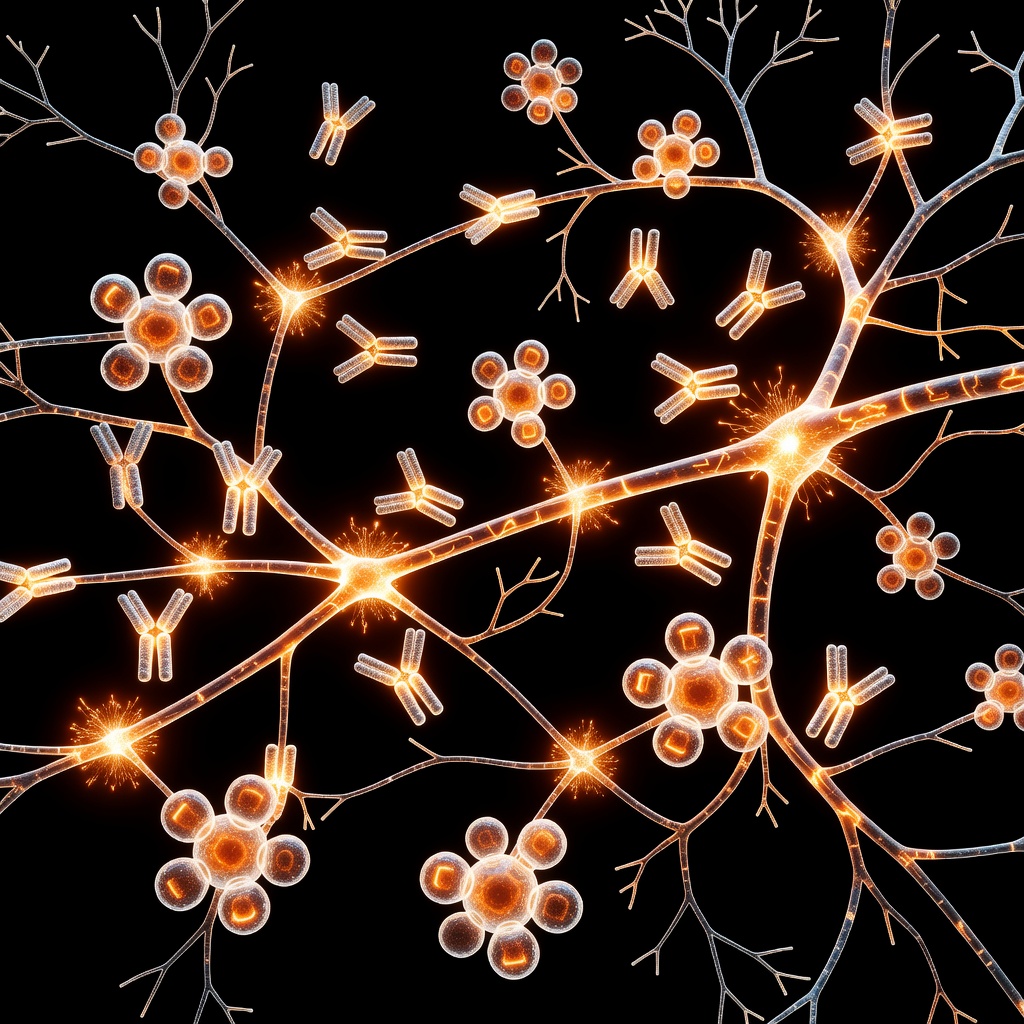
Think of neurons as trees. Their branches, or dendrites, reach out to connect with other neurons to share information. High-dose cortisol causes these branches to wither and retract. The tree doesn't die immediately, but its ability to communicate is severed. This is why "brain fog" and difficulty concentrating are the first signs of hippocampal strain.
2. Inhibition of Neurogenesis
The dentate gyrus within the hippocampus is a nursery for new neurons. Research indicates that chronic stress downregulates the expression of Brain-Derived Neurotrophic Factor (BDNF), the "miracle-gro" of the brain. Without BDNF, the nursery closes, and the brain loses its capacity for plasticity and recovery.
3. Excitotoxicity: The Glutamate Overload
Cortisol increases the brain's sensitivity to glutamate, the primary excitatory neurotransmitter. While glutamate is essential for learning, in excess, it becomes a neurotoxin. It allows too much calcium to enter the neurons, essentially "over-firing" them to death. This process of excitotoxicity is a primary driver of the physical shrinkage seen in MRI scans of chronically stressed individuals.
4. Glucose Deprivation
The hippocampus is an energy-intensive organ. Cortisol, ironically, inhibits the uptake of glucose into hippocampal neurons. By starving these cells of their primary fuel source, the body renders them more vulnerable to other insults, such as inflammation or environmental toxins.
The UK Context: A Culture of Chronic Activation
In the United Kingdom, the prevalence of hippocampal atrophy is rising in tandem with our mental health statistics. According to the Mental Health Foundation, 74% of UK adults have felt so stressed in the past year that they were overwhelmed or unable to cope.
The "British Stiff Upper Lip"—a cultural legacy of emotional suppression—acts as a catalyst for neurological damage. By suppressing the emotional expression of stress, individuals often prolong the physiological presence of cortisol. We are not "dealing" with the stress; we are merely marinating our brains in it.
Furthermore, the UK’s cost-of-living crisis and the "gig economy" have shifted stress from acute (temporary) to chronic (permanent). When a citizen worries daily about heating their home or the stability of their employment, their HPA axis never returns to baseline. We are witnessing a systemic "wearing out" of the hippocampal brake across the population, manifesting as increased rates of early-onset cognitive decline and treatment-resistant depression.
Environmental Factors: The Modern "Cortisol Trap"
Our environment is increasingly "mismatched" to our evolutionary biology. Several modern factors exacerbate the cortisol-hippocampus connection:
- Circadian Disruption: The UK's high latitude means significant seasonal light changes. However, the ubiquitous use of blue-light-emitting devices at night disrupts the natural cortisol rhythm (which should be highest in the morning and lowest at night). High nocturnal cortisol prevents hippocampal repair during sleep.
- Ultra-Processed Foods (UPFs): The British diet is among the highest in Europe for UPF consumption. These "foods" trigger systemic inflammation, which activates the HPA axis and creates a pro-inflammatory environment in the brain, accelerating atrophy.
- Urban Noise & Lack of Blue/Green Space: Residents in dense urban centres like London, Birmingham, or Manchester are exposed to constant low-level auditory stress. Research shows that access to "green space" or "blue space" (water) significantly lowers salivary cortisol, yet urban planning often neglects these essential neurological requirements.
The Vicious Cycle of the Broken Brake
The most dangerous aspect of hippocampal atrophy is the positive feedback loop it creates. As the hippocampus shrinks, its ability to inhibit the HPA axis weakens.
- The hippocampus becomes less effective at sensing cortisol.
- The hypothalamus "thinks" more cortisol is needed because it isn't receiving the shutdown signal.
- The adrenals pump out more cortisol.
- The excess cortisol further damages the hippocampus.
This is why chronic stress feels like a "spiral." Once the brake is damaged, the engine of the stress response begins to run red-hot, even in the absence of a genuine external threat. This state is often diagnosed as Generalised Anxiety Disorder (GAD) or Complex PTSD, but at its core, it is a structural failure of the brain's regulatory hardware.
Protective Strategies: Reclaiming the Hippocampus
The "truth-exposing" reality of hippocampal atrophy is sobering, but it is not a life sentence. The brain's neuroplasticity means that just as it can shrink, it can also heal and expand.
Nutritional Intervention
- Omega-3 Fatty Acids: High doses of EPA and DHA (found in oily fish or high-quality algae supplements) are neuroprotective and help dampen the inflammatory response to cortisol.
- Magnesium: Often called "nature's relaxant," magnesium inhibits the release of ACTH and prevents glutamate excitotoxicity in the brain. Most UK diets are chronically deficient in this mineral.
- Polyphenols: Compounds in dark berries, green tea, and cocoa have been shown to stimulate BDNF production.
Lifestyle Modification
- Zone 2 Exercise: Low-intensity, steady-state cardiovascular exercise is the most effective way to "clear" cortisol from the blood without triggering a new stress response.
- Non-Sleep Deep Rest (NSDR) & Yoga Nidra: These practices specifically target the parasympathetic nervous system, forcing the HPA axis into an "off" state and allowing for hippocampal cellular repair.
- Forest Bathing (Shinrin-yoku): Even 20 minutes in a British woodland has been scientifically proven to significantly lower cortisol levels and improve short-term memory function.
Psychological Reframing
Moving from a "victim" mindset to an "agentic" mindset changes the way the brain processes stress. Recognising that the feeling of "overwhelm" is a chemical process allows for a degree of detachment. Mindfulness-based stress reduction (MBSR) has been shown in MRI studies to actually increase grey matter density in the hippocampus over an eight-week period.
Key Takeaways: Understanding the Inner Landscape
To navigate the modern world without sacrificing our neurological integrity, we must respect the delicate balance of the HPA axis.
- The Hippocampus is the Brake: Its job is to turn off the stress response. When damaged by chronic cortisol, the brake fails, leading to a state of permanent "fight or flight."
- Atrophy is Physical, Not Just Mental: Stress isn't "all in your head"; it is a systemic hormonal assault that leads to the physical shrinkage of brain tissue and the death of neurons.
- Modern Life is Anti-Hippocampal: From our diet to our light exposure and work culture, the modern UK environment is calibrated to keep cortisol high.
- Recovery is Possible: Through BDNF-stimulating activities, anti-inflammatory nutrition, and conscious HPA axis management, we can halt and even reverse hippocampal erosion.
Final Thought: Your hippocampus is the guardian of your past (memory) and the regulator of your present (stress). Protecting it is not merely a matter of "wellness"—it is an act of neurological sovereignty. In a world that profits from your hyper-arousal, staying calm is your greatest act of rebellion.
"References & Further Reading:"
- Sapolsky, R. M. (2004). Why Zebras Don't Get Ulcers.
- McEwen, B. S. (1999). Stress and Hippocampal Plasticity.
- NHS England: Mental Health Statistics and Reports.
- Walker, M. (2017). Why We Sleep: The New Science of Sleep and Dreams.
This article is provided for informational and educational purposes only. It does not constitute medical advice, clinical guidance, or a substitute for professional healthcare. Information reflects cited research at time of publication. Always consult a qualified healthcare professional before acting on any health information.
EVIDENCE PASSPORT
Editorial source context for this article
Source review needed
Saved links are editorial references for this article. They may support specific claims rather than every sentence. Open and assess each source in context. This passport does not independently verify them.
Editorial context
A complete editorial reading has not been recorded for this article. Source links remain available for you to open and assess directly.
Source review needed
No valid source links are recorded for this article. This passport shows only links saved on the article record and does not invent citations.
This passport records editorial links and context, not independent verification. Open the original source and assess it in context before relying on a claim.
Medical Disclaimer
The information in this article is for educational purposes only and does not constitute medical advice, diagnosis, or treatment. Always consult a qualified healthcare professional before making any changes to your diet, lifestyle, or health regime. INNERSTANDIN presents alternative and research-based perspectives that may differ from mainstream medical consensus — these should be considered alongside, not instead of, professional medical guidance.
Read Full DisclaimerContinue the thread
Keep this question moving.
Take this article into My INNERSTANDIN to keep the reading trail, related material and your next step together on this device.
Explore this in the Body Map
See where this hits your biology. Interactive anatomy, threats, and protective protocols.
Dig deeper in the Library
Free, longform PDF volumes that go beyond headlines into mechanisms and references.