
How Environmental Toxins Hijack Your DNA Methylation and Alter Gene Expression
Updated May 2026
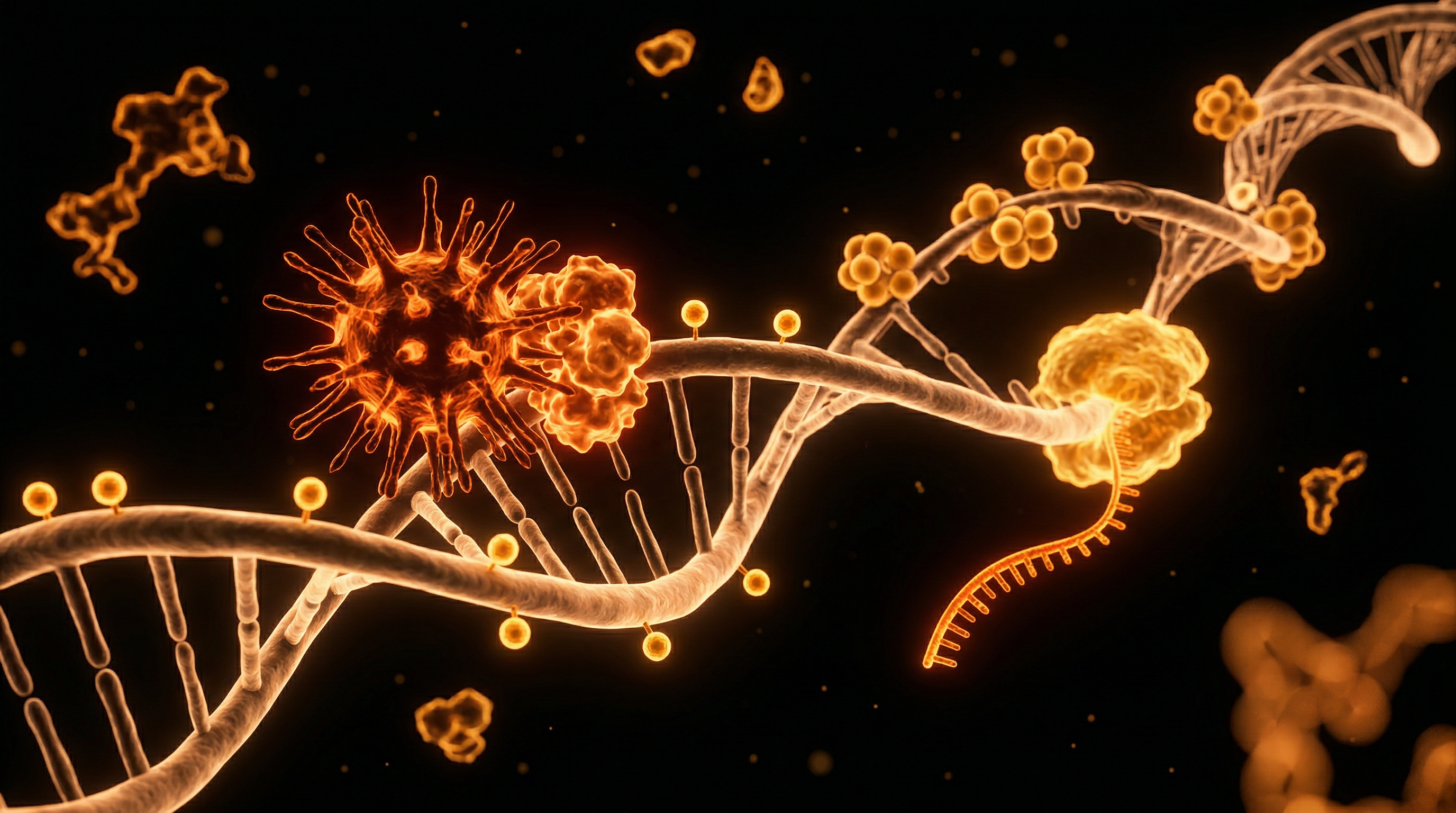
Our genes are not static; they are constantly being switched on or off by the process of DNA methylation. Environmental toxins like BPA and heavy metals can steal the body's methyl groups, leading to the expression of disease-linked genes.
Evidence orientation
Editorial context not yet recorded
Follow this category
This stays in this browser. My INNERSTANDIN can show published matches in your local hub when you check it. It does not send email, push, or alert notifications.
Local learning review
A private browser aid for revisiting ideas. It is not an alert or a health recommendation.
Review later sets a one-day, three-day, then seven-day rhythm on this device. Choose it only when you want to revisit this article.
Overview
For decades, the mainstream scientific establishment has peddled a narrative of genetic determinism. We were told that our DNA is a fixed blueprint—a rigid set of instructions etched in stone at the moment of conception, dictating our health, our lifespan, and our eventual demise. This perspective viewed the human body as a passive recipient of ancestral "luck". However, the burgeoning field of epigenetics has shattered this paradigm, revealing a far more complex and volatile reality. Our genes are not a static script; they are a dynamic library where specific chapters are constantly being bookmarked, highlighted, or redacted by our environment.
The most critical mechanism within this biological editing suite is DNA methylation. It is the primary "on/off" switch for our genetic expression. When this process functions correctly, it silences pro-inflammatory genes, suppresses viral sequences embedded in our genome, and ensures cells replicate with fidelity. But we are currently living through an unprecedented biological crisis. We are submerged in a chemical soup of over 80,000 synthetic compounds, many of which were never tested for long-term epigenetic safety.
Environmental toxins—ranging from the bisphenols in our food packaging to the heavy metals in our water supply—do not merely cause acute damage. They engage in a far more insidious form of "biological hijacking." They compete for the body’s limited supply of methyl groups, redirecting these vital chemical units away from gene regulation and toward emergency detoxification. The result is a state of "epigenetic drift," where the genomic integrity of the individual begins to unravel, leading to the expression of latent disease-linked genes.
Research indicates that the average newborn baby today is born with over 200 industrial chemicals and pollutants already present in their umbilical cord blood, many of which are known to disrupt epigenetic programming before the first breath is even taken.
This article will expose the mechanics of this theft. We will explore how modern life depletes our methyl pool, how specific toxins reprogram your cellular identity, and what you can do to reclaim your biological sovereignty in an increasingly toxic world.
##
##
The Biology — How It Works
To understand how toxins hijack our system, we must first master the fundamentals of the One-Carbon Metabolism pathway. At its simplest level, DNA methylation involves the addition of a methyl group (one carbon atom bonded to three hydrogen atoms, or -CH3) to a specific site on the DNA molecule—typically at a cytosine base that precedes a guanine base, known as a CpG site.
The Writers: DNA Methyltransferases (DNMTs)
The enzymes responsible for this process are known as DNA Methyltransferases (DNMTs). Think of these as the "writers" of the epigenetic code.
- DNMT1 is the maintenance methyltransferase; it ensures that when a cell divides, the methylation patterns are copied from the old strand to the new one.
- DNMT3a and DNMT3b are the de novo methyltransferases; they establish new patterns based on environmental cues.
When a gene’s promoter region is "hypermethylated" (densely packed with methyl groups), that gene is effectively silenced. Conversely, "hypomethylation" means the gene is active. In a healthy state, our "good" genes (like tumour suppressors) are active, while "bad" genes (like oncogenes or pro-inflammatory cytokines) are tightly methylated and silenced.
The Universal Methyl Donor: SAMe
The "ink" used by these DNMT enzymes is a molecule called S-adenosylmethionine (SAMe). This is the body’s universal methyl donor. SAMe is produced through a complex series of biochemical loops involving the Folate Cycle and the Methionine Cycle.
For this machinery to turn, the body requires a constant supply of "raw materials," primarily Vitamin B12 (cobalamin), Vitamin B9 (folate), Vitamin B6, and crucially, Choline and Betaine. If these nutrients are deficient, or if the enzymes (like the well-known MTHFR enzyme) are sluggish due to genetic SNPs (Single Nucleotide Polymorphisms), the production of SAMe drops.
The Regulatory Balancing Act
This is where the vulnerability lies. The body has a finite "methyl pool." In a clean environment, this pool is used to regulate genes, produce neurotransmitters like serotonin and dopamine, and maintain the myelin sheath of nerves. However, when we are exposed to toxins, the body must prioritise survival over long-term genetic maintenance. It begins to divert these methyl groups to the liver to assist in the detoxification of foreign chemicals (xenobiotics). This is the "Methyl Theft" that leads to catastrophic shifts in gene expression.
##
##
Mechanisms at the Cellular Level
When environmental toxins enter the bloodstream, they don't just sit there. They initiate a cascade of biochemical stress that directly interferes with the DNA methylation machinery. There are three primary ways this hijacking occurs: Methyl Donor Depletion, Enzyme Inhibition, and Oxidative Stress-Induced Reprogramming.
1. The Depletion of the Methyl Pool
Many toxins, particularly heavy metals like Arsenic and Mercury, require methylation to be excreted. For example, the liver uses methyl groups to transform inorganic arsenic into methylated forms (monomethylarsonic acid and dimethylarsinic acid) which can then be flushed out via urine.
Every molecule of a toxin that requires methylation for clearance effectively "steals" a methyl group that was destined for your DNA. In cases of chronic exposure, the body faces a brutal choice: detoxify the poison today or prevent cancer twenty years from now. Evolution always chooses immediate survival.
2. Direct Inhibition of DNMT Enzymes
Certain chemicals don't just steal the "ink"; they break the "pen." Cadmium, a toxic heavy metal found in cigarette smoke and industrial runoff, has been shown to inhibit the activity of DNMT1. When DNMT1 is inhibited, the cell loses its ability to maintain its epigenetic signature during replication. This leads to global hypomethylation—a hallmark of almost all human cancers. As the genome becomes "leaky," ancient viral sequences (retrotransposons) that have been dormant for millennia begin to express themselves, causing genomic instability.
3. Oxidative Stress and the 5-hmC Pathway
Toxins are potent generators of Reactive Oxygen Species (ROS). This oxidative stress damages the DNA bases themselves. Specifically, when the cytosine base is damaged by oxidation, it can be converted into 5-hydroxymethylcytosine (5-hmC).
The presence of 5-hmC acts as an intermediate in DNA demethylation. In essence, oxidative stress "un-marks" the genes that are supposed to be silenced. This is particularly dangerous in the brain, where the delicate balance of methylation is essential for cognitive function and emotional regulation. When toxins trigger massive ROS production, they effectively "wipe" the epigenetic hard drive of the cell.
4. Endocrine Disruption and Nuclear Receptors
Toxins like BPA (Bisphenol A) and Phthalates act as endocrine disruptors by mimicking natural hormones like oestrogen. These "Xeno-oestrogens" bind to nuclear receptors which then travel directly to the DNA. Once there, they recruit epigenetic modifiers to change the methylation status of hormone-responsive genes. This is why early-life exposure to plastics is linked to reproductive cancers later in life—the "memory" of the toxin is literally programmed into the DNA architecture.
##
##
Environmental Threats and Biological Disruptors
We must identify the specific players in this biological assault. While thousands of chemicals exist, a handful of "heavy hitters" are responsible for the vast majority of epigenetic hijacking.
Heavy Metals: The Epigenetic Mimics
- Arsenic: Found in groundwater and conventionally grown rice, arsenic is perhaps the most potent epigenetic disruptor. It competes directly for SAMe, leading to massive DNA hypomethylation.
- Mercury: Found in "silver" dental amalgams and large predatory fish. Mercury has a high affinity for thiol groups and disrupts the enzymes involved in the methionine cycle, effectively halting the production of SAMe.
- Lead: Even low-level lead exposure in children has been shown to alter the methylation of genes involved in neurotransmission, leading to permanent IQ reduction and behavioural issues.
Persistent Organic Pollutants (POPs)
These include PFAS (per- and polyfluoroalkyl substances), often called "forever chemicals" because they do not break down in the environment or the body. Used in non-stick cookware, waterproof clothing, and fire-fighting foams, PFAS have been shown to alter the methylation of genes involved in lipid metabolism and thyroid function.
Plastics and Phthalates
BPA is the poster child for epigenetic disruption. In the famous "Agouti Mouse" study, researchers showed that feeding pregnant mice BPA caused their offspring to be born yellow, obese, and prone to diabetes because the BPA had "un-silenced" the Agouti gene by stripping away its methyl groups. Crucially, they also showed that by giving the mice extra methyl donors (like Choline and Folate), they could negate the effects of the toxin. This proves that nutrition is our primary defence against the chemical onslaught.
Glyphosate and the Soil Crisis
The UK’s heavy reliance on Glyphosate (the active ingredient in Roundup) poses a double threat. Not only is it a probable carcinogen, but it also acts as a potent mineral chelator. It binds to manganese, zinc, and magnesium in the soil, ensuring that the crops we eat are depleted of the very minerals required for our methylation enzymes to function. Furthermore, glyphosate disrupts the Shikimate pathway in our gut bacteria; since our gut microbiome produces many of our B-vitamins, this indirectly starves our methylation cycle.
##
##
The Cascade: From Exposure to Disease
The hijacking of DNA methylation is not an overnight event; it is a slow-motion catastrophe that unfolds across years or even generations. This process, known as the Epigenetic Cascade, explains why modern chronic diseases are skyrocketing despite medical "advances."
The Multi-Generational Debt
One of the most terrifying aspects of epigenetic hijacking is that it can be transgenerational. When a pregnant woman is exposed to endocrine disruptors, the toxins affect her, her developing foetus, and the germ cells (future eggs or sperm) within that foetus.
Biological data suggests that the "epigenetic scars" created by toxic exposure in your grandmother's era may be influencing your risk of obesity, anxiety, or autoimmune disease today. We are not just carrying our ancestors' genes; we are carrying their chemical history.
Cancer: The Unmasking of the Genome
In a healthy cell, the genome is like a well-organised library where "dangerous" books (oncogenes) are locked in a vault (hypermethylated). Environmental toxins act like a locksmith for the vault. By depleting the methyl pool, toxins cause Global Hypomethylation. Suddenly, genes that promote rapid cell division and metastasis are switched on.
Simultaneously, toxins often cause Site-Specific Hypermethylation of tumour suppressor genes (like p53 or BRCA1). The body’s natural "brakes" on cancer are silenced, while the "accelerators" are floored. This dual action is why chemical exposure is so tightly linked to the modern cancer epidemic.
Neurodegeneration and Brain Fog
The brain is the most metabolically active organ and is highly dependent on methylation for the production of the myelin sheath (the insulation on nerves) and the synthesis of neurotransmitters. When heavy metals like aluminium or mercury hijack the methyl pool, the brain cannot repair its own wiring.
Research into Alzheimer’s disease has shown significant differences in the methylation patterns of the brain’s temporal cortex compared to healthy individuals. These changes often precede the formation of amyloid plaques, suggesting that epigenetic disruption is a cause, not a consequence, of the disease.
The Metabolic Trap
Methylation is also essential for the transport of fats out of the liver via a molecule called VLDL. This process requires Phosphatidylcholine, which is produced using—you guessed it—methyl groups. When toxins steal methyl groups, fat begins to accumulate in the liver, leading to Non-Alcoholic Fatty Liver Disease (NAFLD). This is now the most common liver disorder in the UK, affecting up to 1 in 3 adults, and it is driven as much by environmental toxicity as it is by sugar consumption.
##
##
What the Mainstream Narrative Omits
The current regulatory framework for chemicals is fundamentally flawed because it ignores the reality of epigenetic synergy and biochemical individuality.
The "Safe Limits" Myth
Regulatory bodies like the FSA (Food Standards Agency) often set "safe" exposure levels for individual chemicals. However, this is a biological absurdity. We are never exposed to just one chemical in isolation. We are exposed to a "cocktail" of hundreds.
Studies have shown that two chemicals, both present at levels deemed "safe" by the government, can act synergistically to cause profound epigenetic damage that neither would cause alone. The "safe limit" narrative is a convenient fiction designed to protect industrial interests, not human biology.
The MTHFR Factor
The mainstream medical system largely ignores the role of genetic SNPs in toxin vulnerability. Approximately 30-50% of the UK population carries a variant of the MTHFR (Methylenetetrahydrofolate Reductase) gene. These individuals have a reduced capacity (up to 70% reduction) to create the active form of folate needed for methylation.
For an MTHFR carrier, an "average" exposure to BPA or lead is not average—it is a biological emergency. Because their "methyl engine" is already running on low power, they cannot spare methyl groups for detoxification without immediately sacrificing their DNA regulation. This is why some people can smoke and live to 90, while others develop chronic illness in their 30s.
The Choline Blind Spot
While the mainstream focuses on "low fat" diets, they have ignored the catastrophic deficiency of Choline in the modern diet. Choline is a primary methyl donor and is essential for the structure of every cell membrane in the body. The UK’s Scientific Advisory Committee on Nutrition (SACN) has only recently begun to acknowledge the importance of choline, but the public remains largely unaware. Without sufficient choline, the body has no "buffer" against the epigenetic theft committed by environmental toxins.
##
##
The UK Context
The United Kingdom presents a unique set of challenges regarding environmental toxins and epigenetic health. From our industrial heritage to our modern regulatory environment post-Brexit, the UK citizen is under constant biological siege.
The Water Crisis and "Forever Chemicals"
UK water infrastructure is in a state of crisis. Recent reports have highlighted the presence of PFAS in drinking water across large swathes of England. Furthermore, the systematic discharge of raw sewage into UK rivers by water companies has introduced a cocktail of pharmaceutical residues—including synthetic oestrogens from birth control—into the water cycle. These act as potent epigenetic disruptors that are not fully removed by standard municipal filtration.
Air Pollution in Urban Hubs
In cities like London, Manchester, and Birmingham, nitrogen dioxide (NO2) and particulate matter (PM2.5) levels frequently exceed WHO guidelines. The landmark case of Ella Kissi-Debrah, the first person in the UK to have "air pollution" listed as a cause of death, brought this into the spotlight. What is rarely discussed is that these particles carry adsorbed heavy metals and PAHs (Polycyclic Aromatic Hydrocarbons) directly into the lungs and bloodstream, where they induce the oxidative stress that strips methyl groups from our DNA.
Regulatory Divergence Post-Brexit
Since leaving the EU, the UK is no longer under the jurisdiction of REACH (Registration, Evaluation, Authorisation and Restriction of Chemicals), the world's most stringent chemical regulatory framework. There are growing concerns that the UK may allow higher levels of pesticides and industrial chemicals to remain on the market to favour trade deals, further increasing the epigenetic burden on the British public.
The British Diet and Nutrient Depletion
The standard UK diet is increasingly dominated by "Ultra-Processed Foods" (UPFs), which account for over 50% of the calories consumed. These foods are not only devoid of methyl donors like choline and natural folate, but they are also often packaged in materials containing phthalates and PFAS. We are essentially starving our methylation cycle while simultaneously increasing the toxic demand upon it.
##
##
Protective Measures and Recovery Protocols
While the situation is dire, we are not powerless. By understanding the mechanisms of "Methyl Theft," we can implement targeted strategies to protect our DNA and even reverse some of the epigenetic damage already done.
1. Saturate the Methyl Pool (The Nutritional Defence)
The most effective way to prevent toxins from hijacking your DNA is to ensure you have a "surplus" of methyl groups.
- Choline: The richest sources are pasture-raised egg yolks, beef liver, and krill oil. Aim for at least 550mg–1000mg per day.
- Methylated B-Vitamins: If you have the MTHFR SNP, avoid "folic acid" (the synthetic form) and look for 5-MTHF (Methylfolate) and Methylcobalamin (B12).
- TMG (Trimethylglycine): Also known as Betaine, this is a powerful methyl donor that specifically helps the liver recycle homocysteine into methionine, sparing your SAMe for DNA methylation.
2. Up-Regulate Glutathione Production
Glutathione is the body’s "master antioxidant" and is the primary tool for detoxifying heavy metals. However, making glutathione requires cysteine and methyl groups.
- N-Acetyl Cysteine (NAC): Supplementing with NAC provides the rate-limiting precursor for glutathione.
- Sulforaphane: Found in broccoli sprouts, this compound activates the Nrf2 pathway, which "turns on" the genes responsible for antioxidant defence and detoxification. This is a form of positive epigenetic engineering.
3. Rigorous Source Control
You cannot detox your way out of a continuous re-exposure.
- Water Filtration: Invest in a high-quality filter (Reverse Osmosis or high-grade carbon block) that specifically removes PFAS, heavy metals, and fluoride.
- Plastic-Free Living: Switch to glass or stainless steel for food storage. Never heat plastic in the microwave, as heat accelerates the leaching of bisphenols and phthalates.
- Organic and Local: Whenever possible, buy organic to avoid glyphosate and other pesticides that deplete the soil and your body.
4. Support Phase II Detoxification
The liver needs specific co-factors to process toxins so they can be excreted.
- Sweat regularly: Using a sauna (especially infrared) is one of the few proven ways to excrete "forever chemicals" like PFAS and heavy metals that are stored in adipose tissue.
- Fibre and Binders: Use activated charcoal, modified citrus pectin, or chlorella to bind toxins in the gut and prevent them from being reabsorbed via "enterohepatic circulation."
5. Biological Monitoring
Don't guess—test.
- Homocysteine levels: A high homocysteine level (above 7-8 μmol/L) is a clinical red flag that your methylation cycle is struggling.
- Genetic Testing: Identify your MTHFR, COMT, and PEMT status to understand your personal "methyl requirement."
##
##
Summary: Key Takeaways
The war for your health is being fought at the molecular level, and your DNA is the ultimate prize. Environmental toxins are not merely physical irritants; they are epigenetic hackers that infiltrate your biochemical pathways, steal your methyl groups, and rewrite your genetic destiny.
- The Illusion of Determinism: You are not a victim of your genes, but you are a product of your epigenetic environment. DNA methylation is the software that runs your biological hardware.
- The Mechanism of Theft: Toxins like arsenic, BPA, and mercury deplete your "methyl pool" by forcing the liver to prioritise detoxification over gene regulation, leading to the "leaky" expression of disease-linked genes.
- The Synergy of Harm: Mainstream "safe limits" are a myth. The combination of multiple toxins and genetic vulnerabilities (like MTHFR) creates a "perfect storm" for chronic illness.
- Nutritional Sovereignty: By saturating your body with methyl donors (Choline, Folate, TMG) and supporting your detoxification pathways (Glutathione, Nrf2), you can create a biological buffer that protects your DNA from environmental hijacking.
We must move beyond the passive "patient" model and become active biological researchers of our own lives. The UK’s regulatory bodies are slow to react to the epigenetic reality. It is up to the individual to recognise the threats, secure their methyl pool, and reclaim the "off-switches" for disease. Your genes are listening—ensure they are hearing the right signals.
This article is provided for informational and educational purposes only. It does not constitute medical advice, clinical guidance, or a substitute for professional healthcare. Information reflects cited research at time of publication. Always consult a qualified healthcare professional before acting on any health information.
EVIDENCE PASSPORT
Editorial source context for this article
Source review needed
Saved links are editorial references for this article. They may support specific claims rather than every sentence. Open and assess each source in context. This passport does not independently verify them.
Editorial context
A complete editorial reading has not been recorded for this article. Source links remain available for you to open and assess directly.
Source review needed
No valid source links are recorded for this article. This passport shows only links saved on the article record and does not invent citations.
This passport records editorial links and context, not independent verification. Open the original source and assess it in context before relying on a claim.
Medical Disclaimer
The information in this article is for educational purposes only and does not constitute medical advice, diagnosis, or treatment. Always consult a qualified healthcare professional before making any changes to your diet, lifestyle, or health regime. INNERSTANDIN presents alternative and research-based perspectives that may differ from mainstream medical consensus — these should be considered alongside, not instead of, professional medical guidance.
Read Full DisclaimerContinue the thread
Keep this question moving.
Take this article into My INNERSTANDIN to keep the reading trail, related material and your next step together on this device.
Explore this in the Body Map
See where this hits your biology. Interactive anatomy, threats, and protective protocols.
Dig deeper in the Library
Free, longform PDF volumes that go beyond headlines into mechanisms and references.