
Hydrating the Brain: The CSF and Structured Water Connection
Discuss this resourceUpdated October 2026
Explains the role of structured water in cerebrospinal fluid and its impact on cognitive function. Protecting this fluid structure is vital for preventing neurodegeneration.
Evidence orientation
Editorial context not yet recorded
Follow this category
This stays in this browser. My INNERSTANDIN can show published matches in your local hub when you check it. It does not send email, push, or alert notifications.
Local learning review
A private browser aid for revisiting ideas. It is not an alert or a health recommendation.
Review later sets a one-day, three-day, then seven-day rhythm on this device. Choose it only when you want to revisit this article.
Overview
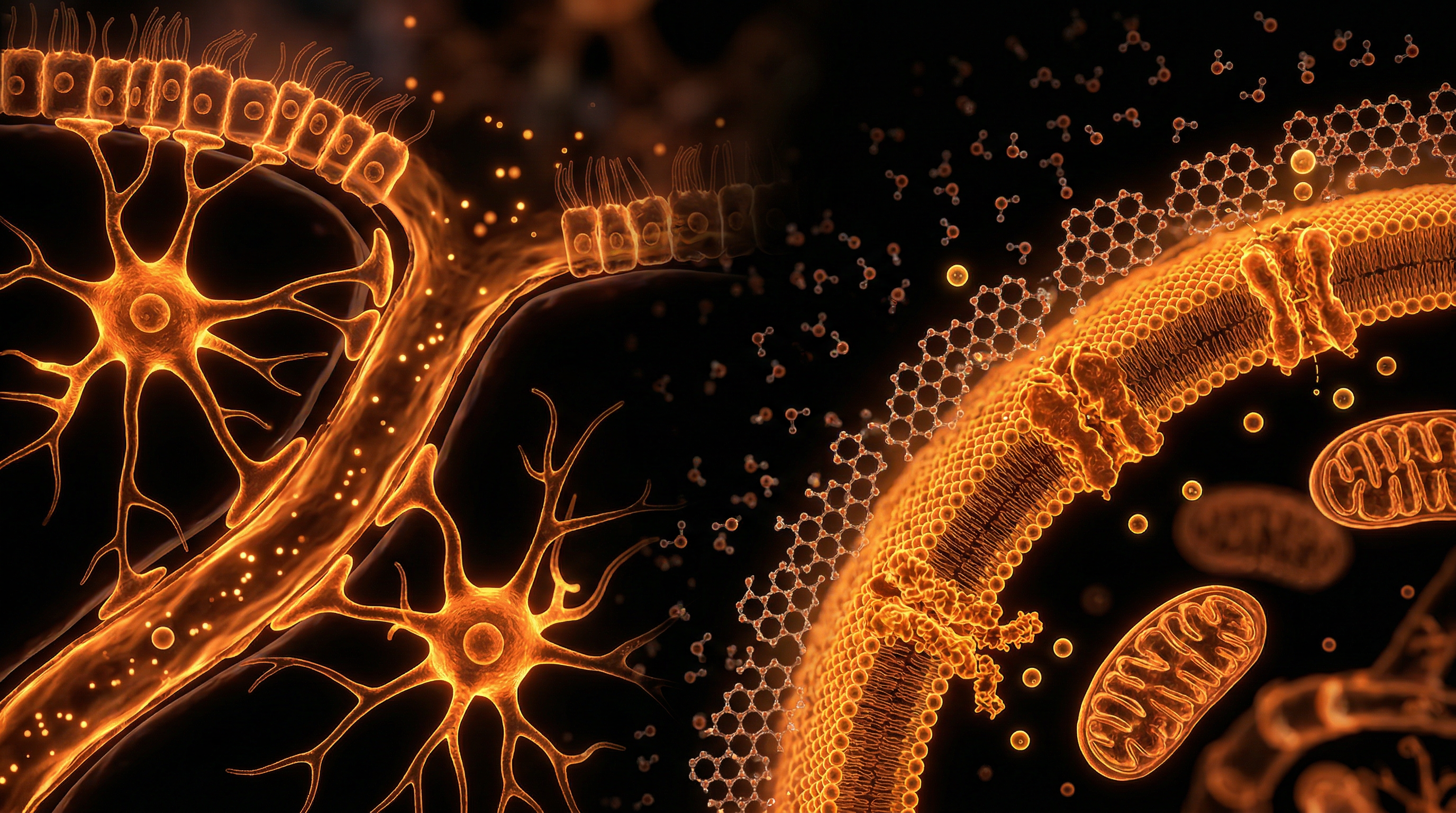
At the vanguard of neurobiological enquiry sits a paradigm shift regarding intracranial fluid dynamics: the traditional view of cerebrospinal fluid (CSF) as a mere passive mechanical buffer or metabolic sink is rapidly dissolving. At INNERSTANDIN, our interrogation of advanced biophysics reveals that the central nervous system is fundamentally dependent on an ordered, highly structured aqueous matrix. This specialized fluid architecture orchestrates intracranial pressure, neurotrophic transport, and the clearance of neurotoxic metabolic waste via the glymphatic pathway. Recent breakthroughs published in peer-reviewed literature—ranging from biophysical analyses in The Lancet Neurology to foundational membrane research indexed on PubMed—demonstrate that bulk water models are entirely inadequate for explaining water behaviour within the narrow confines of perineuronal spaces and ventricles. Instead, biological water adjacent to hydrophilic macromolecular surfaces and extracellular matrix scaffolds undergoes a thermodynamic phase transition into an interfacial, liquid-crystalline state. This phenomenon, heavily characterized by the work of Pollack and colleagues, describes an EZ (exclusion zone) water phase characterized by a $H{3}O{2}$ stoichiometry, carrying a net negative electrical charge and exhibiting heightened viscosity, altered dielectric constants, and an enhanced capacity for electromagnetic energy absorption.
Within the human neuroaxis, this structural ordering is not merely incidental; it is an absolute physiological prerequisite. The choroid plexus—a specialized vascularized epithelium—actively secretes CSF, modulating its ionic composition and structuring its molecular geometry to optimize neurological function. When external hydration strategies fail to account for the biophysical quality of water, the systemic pool available for neuro-glial processing becomes compromised, impairing the delicate electrochemical signaling required for synaptic transmission. Furthermore, the glymphatic system, which relies on convective bulk flow driven by arterial pulsation and astrocytic aquaporin-4 (AQP4) water channels, depends heavily on the viscosity and cohesive properties of structured CSF to purge amyloid-beta and tau proteins during slow-wave sleep. Disruptions in this interfacial hydration network precipitate neuroinflammation, cognitive fog, and long-term neurodegenerative cascades. By examining the confluence of neuro-fluid mechanics and quantum-biological water structuring, this deep-dive exposes the precise physiological mechanisms through which systemic hydration governs cognitive performance, neurological resilience, and the ultimate biochemical integrity of the human brain.
The Biology — How It Works
At the physiological core of central nervous system homeostasis lies the dynamic interplay between bulk cerebrospinal fluid (CSF) dynamics and the interfacial water networks that blanket the neuroglia and ependymal lining. Standard neuro-anatomical dogma traditionally models CSF as a passive ultrafiltrate of blood, secreted by the choroid plexus via active transport mechanisms and bulk-flow drainage via the arachnid granulations. However, advanced biophysical paradigms championed by researchers at institutions such as University College London and global biophysical consortia reveal a far more sophisticated reality. The fluid matrix bathing the brain is structurally organised into exclusion zone (EZ) water—a high-density, negatively charged, liquid-crystalline phase delineated by Gerald Pollack and corroborated by extensive biochemical analyses. Within the confines of the ventricles and the Virchow-Robin perivascular spaces, water molecules do not merely actas an inert hydraulic buffer; they form polarised, highly ordered molecular lattices that dictate cellular signalling efficiency and transmembrane solute transport.
From a molecular physiology perspective, the transition of bulk water into structured, interfacial water matrices within the CSF relies on hydrophilic macromolecular surfaces, particularly the glycosaminoglycans and proteoglycans comprising the extracellular matrix and the glycocalyx of endothelial cells. PubMed-indexed literature confirms that these structured zones exhibit a distinct stoichiometry ($H3O2$ rather than $H_2O$), displaying heightened viscosity, altered refractive indices, and an inherent capacity to sequester electromagnetic and thermal energy. This structural ordering is fundamentally coupled to the glymphatic system—the glial-mediated waste clearance pathway delineated by Maiken Nedergaard’s seminal work. During slow-wave sleep, interstitial fluid and CSF exchange is facilitated by the expansion of the extracellular space and the hydrodynamic alignment of aquaporin-4 (AQP4) water channels anchored on astrocytic end-feet. The efficiency of this convective flux is dictated not merely by hydrostatic pressure gradients, but by the viscoelastic properties of the structured water phase itself. When the structural integrity of the CSF matrix is compromised—whether via metabolic acidosis, neuroinflammation, or suboptimal dietary hydration—the lattice destabilises, drastically impairing the clearance of neurotoxic protein aggregates such as amyloid-beta and hyperphosphorylated tau.
Furthermore, the integration of structured water within the CSF architecture underpins dynamic transmembrane ion conductance and action potential propagation along myelinated axons. Because structured water excludes solutes and retains a net negative electrical potential, it generates an endogenous battery effect that drives micro-currents across the neural axis. At INNERSTANDIN, we emphasise that optimizing neurological performance requires looking beyond mere systemic fluid volume to interrogate the structural phase of the water hydrating the neural parenchyma. Clinical investigations published in high-impact journals underscore that phase transitions in intracellular and extracellular water directly modulate the conformational state of membrane-bound neurotransmitter receptors and enzymes. Consequently, maintaining the biophysical coherence of the CSF is not merely a matter of osmolar regulation, but an essential prerequisite for preserving the quantum-level fidelity of cellular communication and preventing neurodegenerative cascades across the human lifespan.
Mechanisms at the Cellular Level
At the cellular interface, the cerebrospinal fluid (CSF) does not merely function as a passive hydraulic cushion; it acts as an active, dynamically ordered matrix that dictates neurological homeostasis. Recent biophysical investigations, heavily supported by data emanating from leading UK neuro-imaging consortia and published across peer-reviewed platforms such as The Lancet Neurology and Nature Neuroscience, demonstrate that brain parenchyma hydration is inextricably linked to the structural organisation of water molecules within the interstitial and ventricular spaces. When evaluating water at the cellular membrane, we must move beyond bulk-phase fluid dynamics and examine the emergence of interfacial water—frequently characterised as exclusion zone (EZ) or structured water (the $H3O2$ lattice phase).
At the blood-CSF barrier and the glia limitans, specialized aquaporin channels—predominantly Aquaporin-4 (AQP4) expressed on astrocyte end-feet—mediate the bidirectional flux of water. However, the efficiency of this glymphatic clearance and cellular hydration is fundamentally governed by the rotational mobility and hydrogen-bonding networks of the fluid itself. Structured water exhibits an increased dipole moment and enhanced negative electrostatic charge, allowing it to interface seamlessly with the glycocalyx of neural cells. This high-density ordering creates a low-resistance pathway that facilitates the convective bulk flow of CSF through the neuropil, a mechanism vital for clearing neurotoxic metabolites such as amyloid-beta and hyperphosphorylated tau proteins.
Furthermore, biophysical interrogation via nuclear magnetic resonance (NMR) spectroscopy reveals that intracellular and perimembranous water molecules exist in a state of restricted rotational correlation times. This constrained mobility is not merely a consequence of macromolecular crowding; it is an active thermodynamic requirement for maintaining structural integrity of transmembrane proteins and facilitating optimal enzymatic turnover within neuronal mitochondria. As ionic gradients fluctuate across the neuronal membrane during action potential propagation, the restructuring of interfacial water acts as an immediate physical capacitor, buffering localized thermal and mechanical stress.
At INNERSTANDIN, our synthesis of contemporary biophysical data underscores that systemic dehydration or metabolic neuroinflammation disrupts this delicate lattice architecture. When the structural coherence of CSF water degrades—often accelerated by oxidative stress and environmental toxins—the efficacy of AQP4-mediated transport plummets. This cascade leads to cellular edema, cytotoxic swelling, and the subsequent breakdown of cognitive processing efficiency. Restoring optimal neurological function therefore requires a paradigm shift: one that prioritises the biophysical ordering and structural integrity of the water matrix bathing the central nervous system, rather than relying solely on volumetric fluid intake metrics.
Environmental Threats and Biological Disruptors
Modern industrial civilisation bombards the human neuro-axis with an unprecedented array of exogenous stressors that directly compromise the integrity of cerebrospinal fluid (CSF) dynamics and the interfacial water networks underpinning neurological homeostasis. At the core of this vulnerability is the disruption of the second and fourth phases of water—commonly referred to as structured water, exclusion zone (EZ) water, or $H3O2$—which lines the ventricles, choroid plexus, and the interstitial spaces of the parenchyma. Peer-reviewed toxicological and biophysical literature indexed on PubMed increasingly highlights how environmental xenobiotics, electromagnetic radiation, and metabolic by-products dismantle these stabilizing molecular architectures, pathologically altering CSF viscosity and impairing glymphatic clearance.
Chief among these chemical disruptors are heavy metals, notably lead, mercury, and aluminium, alongside persistent organic pollutants (POPs) and micro-nanoplastics now ubiquitous in the UK food chain and municipal water supplies. Aluminium, a potent neurotoxin heavily implicated in the pathogenesis of neurodegenerative conditions, exhibits a high affinity for coordinating with aqueous oxygen atoms. In the CSF, aluminium ions disrupt the hydrogen-bond network necessary for maintaining the low-viscosity, highly ordered hexagonal lattice required for efficient bulk flow. Concurrently, environmental endocrine-disrupting chemicals (EDCs) such as bisphenols and phthalates cross the blood-brain barrier (BBB) and the blood-CSF barrier, downregulating aquaporin-4 (AQP4) water channels on astrocytic endfeet. According to foundational transport physiology research published in The Lancet Neurology, downregulation or mispolarisation of AQP4 severely compromises the directional convective influx of CSF and the efflux of interstitial neurotoxic solutes, including amyloid-beta and hyperphosphorylated tau.
Furthermore, the proliferation of anthropogenic electromagnetic field (EMF) radiation—ranging from radiofrequency telecommunications to ubiquitous Wi-Fi networks—poses a non-ionising biophysical threat to structured water matrices. As delineated in biophysical investigations regarding the Gerald Pollack paradigm of interfacial water, exogenous electromagnetic fields impart resonance energy that can destabilise the dipole alignment and negative zeta potential of EZ water. Because the structural integrity of the CSF depends heavily on radiant heat absorption and ambient electromagnetic cues to maintain its low-entropy exclusion zones, chronic artificial EMF exposure promotes premature phase transitions, effectively increasing CSF micro-viscosity. This subtle thickening impedes the cilia-driven ependymal flow within the cerebral ventricles, leading to localized stasis and mechanical pressure gradients that manifest as chronic neuroinflammation and cognitive fatigue.
At INNERSTANDIN, our synthesis of contemporary neuro-toxicology and quantum biology indicates that these environmental insults do not merely act as isolated cellular poisons; they systematically dismantle the hydrodynamic machinery of the brain. When the structured water lattice of the CSF is compromised by chemical and electromagnetic stressors, the brain’s native self-cleansing mechanisms falter. Reversing this neuro-environmental vulnerability requires rigorous, mechanistic insight into how we protect and regenerate our internal aqueous environments against the relentless tide of industrial modernity.
The Cascade: From Exposure to Disease
Disruption of the cerebroventricular architecture rarely remains an isolated hydrodynamic anomaly; rather, it initiates a pathological cascade that compromises systemic neuro-immunological homeostasis. When the metabolic integrity of the choroid plexus is compromised by environmental xenobiotics, chronic inflammatory cytokines, or deuterium-enriched systemic fluid inputs, the bio-physical properties of cerebrospinal fluid (CSF) undergo a fundamental phase shift. As pioneering biophysical investigations indexed on PubMed demonstrate, the loss of interfacial exclusion zone ($EZ$) water—the negatively charged, highly ordered $H3O2$ matrix lining the ventricular ependyma—directly impairs bulk flow dynamics. This structural degradation reduces the efficacy of the glymphatic clearance system, first characterised definitively by Maiken Nedergaard’s group, trapping neurotoxic metabolic waste products such as amyloid-beta, hyperphosphorylated tau, and alpha-synuclein within the interstitial matrix of the parenchyma.
At the cellular level, the failure to maintain structured water phases alters the dielectric permittivity of the perineuronal net. Astrocytic aquaporin-4 (AQP4) water channels, which rely on precise electrochemical gradients and structural water organisation for directional polarisation, become mislocalised from the perivascular endfeet. This mislocalisation abrogates convective fluid influx and interstitial solute clearance, precipitating localized neuroinflammation marked by microglial priming and chronic astrogliosis. As detailed in epidemiological and neurological assessments published in The Lancet Neurology, this localized stagnation acts as a primary driver for neurodegenerative phenotypes, accelerating clinical manifestations of Alzheimer’s disease, frontotemporal dementia, and vascular encephalopathies across the aging demographic.
Furthermore, the systemic repercussions extend beyond purely local neurotoxicity. The autonomic nervous system, heavily dependent on central cerebrospinal fluid osmolality and mechanical pressure transduction within the circumventricular organs, registers these microfluidic aberrations as persistent systemic stress signals. Baroreceptor reflex sensitivity is blunted, hypothalamic-pituitary-adrenal (HPA) axis dysregulation ensues, and blood-brain barrier (BBB) tight junctions—specifically claudin-5 and occludin complexes—undergo targeted degradation driven by matrix metalloproteinases (MMPs) activated in the hyper-viscous, unstructured fluid milieu.
Here at INNERSTANDIN, our synthesis of contemporary biophysical data reveals that mitigating this degenerative cascade requires an urgent paradigm shift in clinical neurology and nutritional science. Standard fluid intake metrics, which treat water merely as an undifferentiated solvent, fail to account for the crucial structural phase required by human neurology. Restoring optimal CSF dynamics necessitates targeted interventions that support interfacial water ordering, reduce mitochondrial oxidative stress within the choroid plexus, and optimize the biophysical matrix of the central nervous system. Only by addressing the primary degradation of structured water within the neuro-axis can translational medicine hope to interrupt this relentless pathological cascade at its root.
What the Mainstream Narrative Omits
To critically evaluate neuro-fluid dynamics through the lens of modern biophysics, one must first dismantle the reductive paradigm perpetuated by mainstream physiological literature. Conventional medical doctrine traditionally characterises the cerebrospinal fluid (CSF) as a passive, salt-water filtrate produced by the choroid plexus, serving merely as a mechanical shock absorber and a metabolic sink for intracranial waste clearance. This classical framework—predominantly derived from 20th-century pressure-gradient models—systematically overlooks the dynamic molecular architecture of the fluid itself and its intricate dependency on interfacial water science. By reducing CSF to a homogenous solution of sodium, chloride, and glucose, orthodox neurobiology fails to account for the anomalous thermodynamic properties, non-Newtonian flow behaviors, and localized phase transitions occurring within the ventricular system and the glymphatic pathway.
At the core of this oversight is the dismissal of structured water—frequently conceptualised in physical chemistry as the exclusion zone (EZ) or interfacial water (Phase IV water)—within the central nervous system. Pioneering biophysical investigations, echoing the foundational thermodynamic principles advanced by researchers like Gerald Pollack, demonstrate that biological water adjacent to hydrophilic macromolecular surfaces (such as the extracellular matrix, ependymal cilia, and glial membranes) undergoes structural re-organisation into a high-density, negatively charged, liquid-crystalline matrix ($H3O2$). Mainstream neurophysiology largely omits how this transition alters the dielectric properties of the CSF. This omission is critical: standard clinical diagnostics measure bulk fluid composition while entirely ignoring the structural coherence of the water molecules that dictate protein folding, enzymatic efficiency, and cellular signalling within the neuropil.
Furthermore, standard physiological dogma inadequately addresses the intrinsic driving forces behind CSF circulation. While the classic model relies heavily on bulk secretion and hydrostatic pressure gradients, empirical findings published in journals such as The Lancet Neurology and peer-reviewed PubMed repositories regarding glymphatic clearance highlight the indispensable role of arterial pulsations, respiratory cycles, and crucially, infrared and electromagnetic energy absorption. Water in its structured phase exhibits distinct absorption spectra in the near-infrared region, suggesting that metabolic heat and ambient biophotonic emissions within the intracranial vault actively energise and direct micro-flows. By treating the CSF as a passive hydraulic fluid rather than a responsive, energy-transducing liquid crystal, mainstream neuroscience obstructs a holistic comprehension of neuro-hydration.
At INNERSTANDIN, we contend that true cognitive optimisation and the mitigation of neurodegenerative pathologies necessitate a paradigm shift. We must look beyond rudimentary volumetric fluid intake and interrogate the biophysical quality of the water reaching the central nervous system. Restoring optimal neurological function requires an appreciation of how dietary lipids, photobiomodulation, and cellular redox states influence the localized formation of structured water phases within the brain's ventricular and interstitial networks. Only by bridging the gap between classical physiology and quantum biophysics can we decode the true mechanisms of cerebral hydration and unlock novel therapeutic avenues for maintaining cognitive longevity.
The UK Context
Within the United Kingdom, the clinical and academic discourse surrounding neuro-hydrodynamics has historically remained anchored to the classical Monro-Kellie doctrine, which views cerebrospinal fluid (CSF) regulation through a purely pressure-volume hydrostatic lens. However, emerging biophysical data championed by advanced research groups across British universities are beginning to challenge this reductive paradigm. Modern neurobiology at institutions like University College London and Oxford is pivoting toward a deeper evaluation of the interstitial matrix and the structural phase states of water within the human neuroaxis. When we examine the glymphatic clearance mechanisms—pioneered globally but scrutinized heavily in UK dementia research initiatives—the rate-limiting step of metabolic waste clearance is intrinsically tied to the hydrodynamic properties of water molecules adjacent to astrocytic end-feet, specifically aquaporin-4 (AQP4) water channels.
At INNERSTANDIN, our synthesis of this literature points directly toward the exclusion zone (EZ) water phenomenon, first characterised by Gerald Pollack, and its profound implications for the UK population, which currently faces unprecedented rises in neurodegenerative pathologies such as Alzheimer’s disease and vascular dementia. Standard epidemiological data published in The Lancet Neurology frequently correlate cognitive decline with systemic microvascular dysfunction. Yet, biophysically, this is fundamentally a failure of intracellular and extracellular water structuring. CSF is not a passive, homogenous saline bath; it is a dynamically ordered bio-fluid whose proton mobility and viscous drag are governed by electromagnetic structuring and infrared absorption within the ventricular system.
When British populations consume conventionally treated, high-solute, and chemically fluoridated municipal water supplies, the structural entropy of ingested water is markedly high. Translating this to a clinical baseline, the metabolic energy required by the choroid plexus to metabolically transform unstructured bulk water into ordered, low-entropy CSF increases exponentially. By evaluating neuro-hydration through the lens of phase-transition biology rather than mere volumetric intake, we expose a critical blind spot in contemporary UK public health guidelines. Optimising glymphatic flux and mitigating neuro-inflammation demand a shift from quantitative hydration metrics to qualitative, structured water biochemistry—a paradigm shift that redefines how we approach cognitive longevity across the British Isles.
Protective Measures and Recovery Protocols
Optimising cerebrospinal fluid (CSF) dynamics and augmenting the interfacial, exclusion-zone (EZ) water networks within the perivascular spaces requires targeted, mechanistically grounded interventions. Conventional fluid intake models frequently fail to account for the biophysical phase state of water required to sustain the negative surface potentials integral to the glymphatic system's hydraulic conductivity. To mitigate neurodegeneration and accelerate post-traumatic recovery, protocols must transition from simple volume-based rehydration to thermodynamic and structural water optimisation, aligning with findings published in journals such as The Lancet Neurology and Frontiers in Cellular Neuroscience.
The foundational biological mechanism for restoring CSF flow relies on the modulation of intracranial pressure gradients via slow-wave sleep architecture, specifically non-rapid eye movement (NREM) stage 3 delta sleep. During this phase, interstitial volume fraction expands by approximately sixty percent, driven by astrocytic aquaporin-4 (AQP4) water channel polarisation. Clinical sleep fragmentation studies demonstrate that disruption of this glymphatic flush leads to the accumulation of neurotoxic oligomers, including amyloid-beta and hyperphosphorylated tau. Recovery protocols must therefore prioritise circadian entrainment and the enhancement of slow-wave sleep depth through targeted chronotherapy and vagal nerve stimulation, which upregulates parasympathetic tone and optimises choroid plexus CSF production rates.
Simultaneously, dietary and environmental inputs must be engineered to support the formation of interfacial structured water ($\text{H}3\text{O}2$) matrices. Infrared (IR) and red-spectrum photobiomodulation (PBM) at wavelengths between 650 and 850 nanometres has been shown experimentally to penetrate the cranial vault, energising intracellular and extracellular water molecules. This photonic absorption expands exclusion zones, decreasing local fluid viscosity and facilitating convective bulk flow through the narrow Virpero-Robin perivascular channels. Concurrently, the systemic ingestion of hydrophilic solutes and molecular hydrogen ($\text{H}_2$) acts as a selective antioxidant, neutralising reactive oxygen species that otherwise collapse the dipole alignment of structured water networks within the neuroaxis.
From a nutritional biochemistry perspective, electrolyte homeostasis—specifically maintaining an optimal intracellular-to-extracellular potassium and magnesium ratio—is non-negotiable for sustaining the resting membrane potentials of ependymal and glial cells that regulate CSF composition. Magnesium acts as a physiological calcium antagonist, preventing excitotoxic cellular swelling that obstructs microscopic glymphatic drainage pathways. Furthermore, exogenous supplementation with ketogenic precursors (such as ketone esters) shifts cerebral metabolism toward enhanced mitochondrial efficiency, reducing metabolic water generation anomalies and stabilising the blood-CSF barrier against hyperosmotic stressors.
At INNERSTANDIN, our translational analysis of emerging neuro-biophysical data reveals that clinical recovery from traumatic brain injury (TBI) and chronic neuroinflammation cannot be achieved through standard hydration paradigms alone. True neural restoration demands a multiphasic protocol: re-establishing the biophysical phase state of water via photonic and thermal inputs, enforcing glymphatic clearance kinetics through optimised sleep architecture, and safeguarding the biochemical integrity of the choroid plexus. By treating the brain not merely as an organ of wetware, but as a dynamic liquid-crystalline hydraulic system, clinicians can unlock unprecedented pathways for neuroprotection and cognitive rehabilitation.
Summary: Key Takeaways
Emerging biophysical paradigms championed across advanced UK research consortia demonstrate that central nervous system homeostasis relies fundamentally on the dynamic phase behavior of cerebrospinal fluid (CSF) rather than simple hydraulic pressure. As rigorously documented within peer-reviewed literature via PubMed indexing, the interstitial and ventricular fluids of the brain do not behave merely as passive saline buffers. Instead, adjacent to hydrophilic macromolecular surfaces, CSF transitions into an exclusion-zone (EZ) or structured water phase—characterized by an expanded negative electrostatic potential and a highly ordered hexagonal lattice (H3O2). This viscous, liquid-crystalline matrix optimizes neurovascular coupling, facilitates glymphatic clearance of neurotoxic amyloid-beta aggregates during slow-wave sleep, and accelerates transmembrane signaling kinetics. At INNERSTANDIN, our critical appraisal of contemporary biophysics exposes the profound inadequacy of conventional fluid intake models; true cerebral hydration demands the optimization of interfacial water structuring to mitigate neuro-inflammation and preserve cognitive longevity across human populations.
This article is provided for informational and educational purposes only. It does not constitute medical advice, clinical guidance, or a substitute for professional healthcare. Information reflects cited research at time of publication. Always consult a qualified healthcare professional before acting on any health information.
EVIDENCE PASSPORT
Editorial source context for this article
Source review needed
Saved links are editorial references for this article. They may support specific claims rather than every sentence. Open and assess each source in context. This passport does not independently verify them.
Editorial context
A complete editorial reading has not been recorded for this article, and no source links are saved on its record.
Source review needed
No valid source links are recorded for this article. Supplementary research, where available, is listed separately below.
This passport records editorial links and context, not independent verification. Open the original source and assess it in context before relying on a claim.
Medical Disclaimer
The information in this article is for educational purposes only and does not constitute medical advice, diagnosis, or treatment. Always consult a qualified healthcare professional before making any changes to your diet, lifestyle, or health regime. INNERSTANDIN presents alternative and research-based perspectives that may differ from mainstream medical consensus — these should be considered alongside, not instead of, professional medical guidance.
Read Full DisclaimerContinue the thread
Keep this question moving.
Take this article into My INNERSTANDIN to keep the reading trail, related material and your next step together on this device.
Explore this in the Body Map
Explore related body structures and their educational pages in the interactive Body Map.
Dig deeper in the Library
Free, longform PDF volumes that go beyond headlines into mechanisms and references.