
Interoceptive Awareness: How Vagal Pathways Shape Our Internal Sense of Self
Updated April 2026
Evidence orientation
Editorial context not yet recorded
Follow this category
This stays in this browser. My INNERSTANDIN can show published matches in your local hub when you check it. It does not send email, push, or alert notifications.
Local learning review
A private browser aid for revisiting ideas. It is not an alert or a health recommendation.
Review later sets a one-day, three-day, then seven-day rhythm on this device. Choose it only when you want to revisit this article.
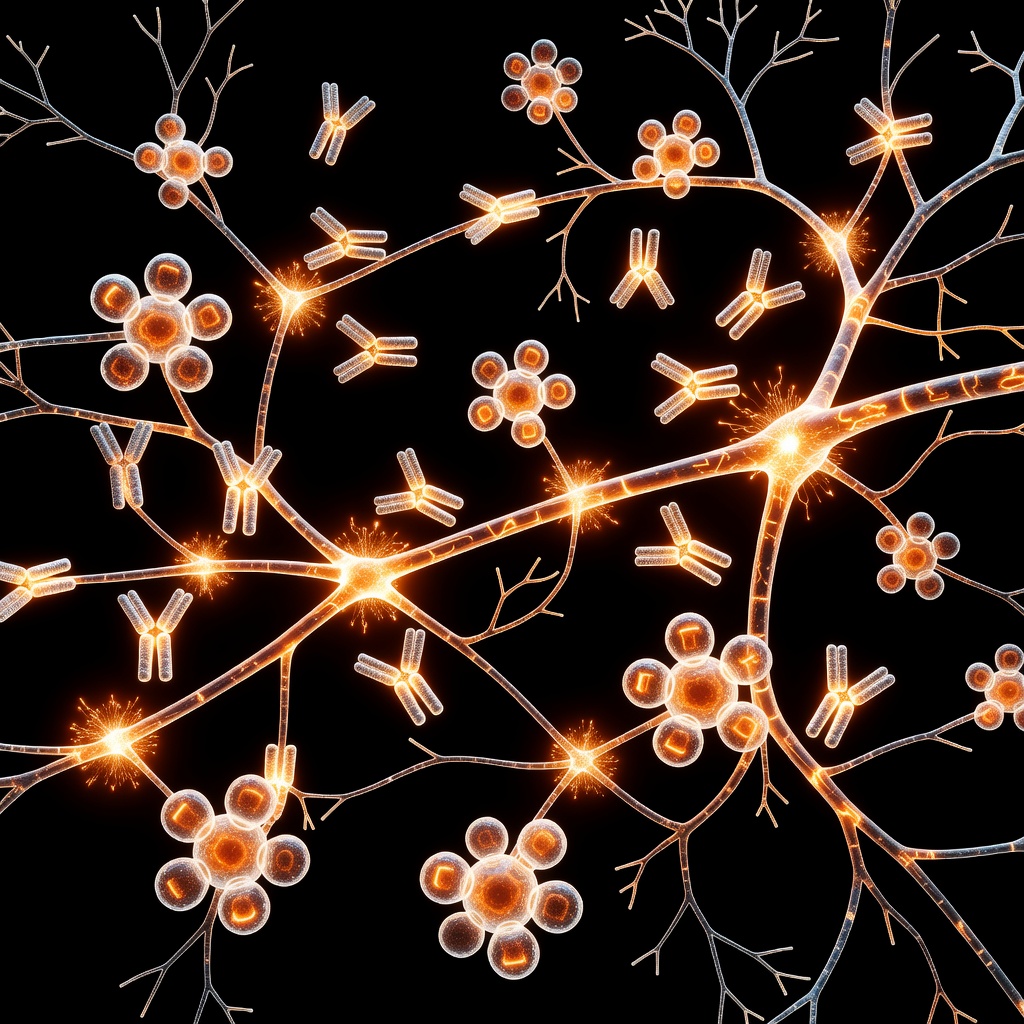
For decades, mainstream medicine and psychology have operated under a flawed, top-down paradigm. We were taught that the brain is the sole commander of the body, dictating our emotions, thoughts, and physiological states from an ivory tower in the skull. However, a revolutionary shift is occurring. We are beginning to understand that our sense of self is not merely a cerebral construct but a visceral one, rooted deep within our organs and carried to the brain via the longest and most complex cranial nerve in the body: the Vagus Nerve.
This internal sensing is known as Interoception. While we are well-acquainted with our external senses—sight, sound, touch, taste, and smell—interoception is the "eighth sense" that allows us to perceive the internal state of our body. It is the biological foundation of intuition, emotional regulation, and self-awareness. At the heart of this system lies the vagal pathways, acting as the primary conduit for the "bottom-up" signals that define our reality.
The Biological Mechanisms: The Body’s Information Superhighway
To understand interoception, one must first understand the Vagus Nerve (the tenth cranial nerve). Often referred to as the "wandering nerve," it originates in the brainstem and extends through the neck, chest, and abdomen, innervating the heart, lungs, and digestive tract.
The Afferent Dominance
The most critical "truth" about the vagus nerve, often overlooked in basic biology, is its directionality. While it does send commands from the brain to the organs (efferent), roughly 80% of its fibres are afferent. This means the vast majority of vagal activity consists of the body "talking" to the brain.
These afferent fibres terminate in the Nucleus Tractus Solitarius (NTS) in the brainstem. From there, the information is relayed to higher brain centres, most notably the Insular Cortex (the Insula). The Insula is the seat of interoceptive awareness; it is where physical sensations—the racing of a heart, the tightness of a gut, or the warmth of a breath—are translated into feelings and conscious emotions.
The Vagal Brake and Homeostasis
The vagus nerve is the hallmark of the Parasympathetic Nervous System (PNS). Through the release of acetylcholine, it acts as a "vagal brake," slowing the heart rate and promoting a "rest and digest" state. Vagal Tone, a measure of the nerve's efficiency, determines how quickly we can return to a state of calm after a stressor. High vagal tone is directly correlated with superior interoceptive accuracy—the ability to correctly identify and interpret internal bodily signals.
"Interoception is the process by which the nervous system senses, integrates, and interprets signals from the inner self, providing a moment-to-moment mapping of the body's internal landscape."
The Truth Exposed: Why Interoception is the Foundation of Identity
If your interoceptive pathways are clouded, your sense of self becomes fragmented. We often see this in conditions like Alexithymia (the inability to identify emotions) or Dissociation. When the vagus nerve fails to transmit clear data to the Insula, the brain is forced to "guess" how we feel. This leads to a profound disconnect where an individual may feel anxious without knowing why, or experience chronic pain that has no apparent structural cause.
Modern psychiatry has frequently treated the symptoms of mental distress (the thoughts) while ignoring the source (the bodily signals). By focusing on the vagal pathways, we expose the reality that anxiety is often a physiological signal misunderstood by the brain, rather than a purely psychological defect.
The UK Context & Relevance: A Crisis of Disconnection
In the United Kingdom, we are currently facing an unprecedented mental health crisis. According to NHS data, record numbers of Britons are seeking help for anxiety and depression. However, the traditional "stiff upper lip" culture of the UK has historically encouraged the suppression of bodily signals.
The Impact of the 'British Stoicism'
For generations, British cultural norms have prioritised "getting on with it," often at the expense of internal awareness. This cultural suppression acts as a functional inhibitor of interoceptive health. When we chronically ignore signals of fatigue, digestive distress, or heart-rate variability (HRV), we effectively "tune out" the vagus nerve.
Furthermore, the UK's sedentary lifestyle and the rise of the "commuter culture" in cities like London and Manchester have led to a collective decline in Vagal Tone. Long hours spent hunched over desks compress the vagal pathways in the neck and thorax, physically impeding the flow of information between the gut and the brain.
The NHS and the Integrated Model
While the NHS is beginning to recognise "social prescribing," there remains a significant gap in clinical practice regarding the Autonomic Nervous System (SANS/PANS balance). The UK healthcare system is currently over-reliant on pharmacological interventions (SSRIs) which often mask interoceptive signals rather than healing the underlying vagal dysfunction.
Environmental Factors: The Enemies of Interoception
Our modern environment is, in many ways, hostile to the vagus nerve. To reclaim our internal sense of self, we must recognise the external factors that dull our interoceptive edge.
- Ultra-Processed Foods (UPFs): The UK consumes more UPFs than any other country in Europe. These "foods" trigger systemic inflammation. Since the vagus nerve monitors the gut's immune environment, chronic inflammation leads to "noisy" signals, making it impossible for the brain to discern true hunger, satiety, or emotional states.
- Chronic Noise Pollution: Constant exposure to low-frequency hums and traffic noise keeps the body in a state of low-grade Sympathetic (fight or flight) arousal. This inhibits the vagal brake.
- Digital Hyper-connectivity: Constant notifications and "doom-scrolling" force our attention outward (exteroception). The more we focus on the external digital world, the more the neural pathways for internal sensing atrophy.
- Blue Light and Circadian Disruption: The vagus nerve is deeply tied to our circadian rhythms. Poor sleep hygiene, common in the UK's 24/7 economy, de-synchronises vagal signaling, leading to "brain fog" and emotional instability.
Protective Strategies: Reclaiming the Vagal Pathway
Rebuilding interoceptive awareness is not a passive process; it requires the deliberate "toning" of the vagus nerve. By strengthening these pathways, we sharpen our sense of self and improve our resilience to stress.
1. Conscious Breathwork (The 4-7-8 Technique)
The lungs are heavily innervated by the vagus nerve. By consciously slowing the breath—specifically making the exhalation longer than the inhalation—we mechanically stimulate the vagus nerve. In the UK, practitioners are increasingly using Coherent Breathing (5 breaths per minute) to reset the autonomic nervous system.
2. Cold Water Immersion
The "Cold Water Swimming" craze in the UK is backed by robust science. Sudden cold exposure, particularly to the face and neck, triggers the Mammalian Dive Reflex, which is mediated by the vagus nerve. This "shocks" the system into a high-vagal state, clearing the interoceptive pathways and providing immediate mental clarity.
3. Mindful Movement and Proprioception
Activities such as Yoga, Tai Chi, or even mindful walking along the British coastline help integrate proprioception (where the body is) with interoception (how the body feels). This creates a "coherent" map of the self in the brain.
4. Gut Health Optimisation
Since the "gut-brain axis" is essentially the "vagus-gut axis," maintaining a healthy microbiome is essential. Consuming fermented foods (kefir, sauerkraut) or high-quality probiotics supports the Enteric Nervous System, ensuring the signals sent up the vagal highway are clear and non-inflammatory.
5. Vocalisation (Chanting and Humming)
The vagus nerve passes by the vocal cords and the inner ear. Humming, chanting, or even singing loudly stimulates the laryngeal branches of the nerve. This is one reason why communal singing—a long-standing British tradition—is so effective at fostering a sense of well-being and social connection.
Key Fact: High Vagal Tone is not just about being "calm"; it is about flexibility. A healthy vagus nerve allows you to move into high-energy states (exercise, excitement) and return to a state of safety and social engagement efficiently.
The Path Forward: From Symptom Management to Self-Mastery
The traditional medical model is failing because it treats the human being as a collection of isolated parts. Interoceptive awareness, facilitated by the vagal pathways, proves that we are a deeply integrated system.
When we lack interoception, we are strangers to ourselves. We become prone to "top-down" narratives—believing we are "broken," "depressed," or "anxious"—without realising these are merely interpretations of a neglected internal landscape.
By prioritising Vagal Health, we do more than just manage stress; we reclaim our internal narrative. We begin to understand the "gut feeling" not as a metaphor, but as a sophisticated biological report. We recognise that the "stiff upper lip" is not a sign of strength, but a barrier to the very signals that keep us whole.
Key Takeaways
- Interoception is the "eighth sense" that monitors the internal state of the body, providing the foundation for our sense of self.
- The Vagus Nerve is the primary conduit, with 80% of its fibres sending "bottom-up" signals from the organs to the brain's Insular Cortex.
- Vagal Tone dictates emotional resilience. Low vagal tone is linked to anxiety, poor interoception, and inflammatory diseases.
- Environmental factors in the UK, such as ultra-processed diets and sedentary lifestyles, are actively degrading our interoceptive health.
- Active stimulation through breathwork, cold exposure, and vocalisation can "repair" these pathways, leading to greater self-awareness and mental health.
- True health is bottom-up. We must learn to listen to the body's whispers before they become screams.
To live with Innerstanding is to recognise that the mind and body are not two separate entities, but a single, pulsing conversation carried along the elegant, wandering path of the Vagus Nerve.
This article is provided for informational and educational purposes only. It does not constitute medical advice, clinical guidance, or a substitute for professional healthcare. Information reflects cited research at time of publication. Always consult a qualified healthcare professional before acting on any health information.
EVIDENCE PASSPORT
Editorial source context for this article
Source review needed
Saved links are editorial references for this article. They may support specific claims rather than every sentence. Open and assess each source in context. This passport does not independently verify them.
Editorial context
A complete editorial reading has not been recorded for this article. Source links remain available for you to open and assess directly.
Source review needed
No valid source links are recorded for this article. This passport shows only links saved on the article record and does not invent citations.
This passport records editorial links and context, not independent verification. Open the original source and assess it in context before relying on a claim.
Medical Disclaimer
The information in this article is for educational purposes only and does not constitute medical advice, diagnosis, or treatment. Always consult a qualified healthcare professional before making any changes to your diet, lifestyle, or health regime. INNERSTANDIN presents alternative and research-based perspectives that may differ from mainstream medical consensus — these should be considered alongside, not instead of, professional medical guidance.
Read Full DisclaimerContinue the thread
Keep this question moving.
Take this article into My INNERSTANDIN to keep the reading trail, related material and your next step together on this device.