
Lectin Sensitivity: The Hidden Cause of Joint Pain
Updated May 2026
Plant-based proteins can trigger systemic inflammation misdiagnosed as osteoarthritis by NHS practitioners. We analyze how lectins interact with the gut lining and trigger immune responses.
Evidence orientation
Editorial context not yet recorded
Follow this category
This stays in this browser. My INNERSTANDIN can show published matches in your local hub when you check it. It does not send email, push, or alert notifications.
Local learning review
A private browser aid for revisiting ideas. It is not an alert or a health recommendation.
Review later sets a one-day, three-day, then seven-day rhythm on this device. Choose it only when you want to revisit this article.
Overview
In the modern landscape of British healthcare, a silent epidemic is unfolding within the consulting rooms of the National Health Service (NHS). Millions of citizens present annually with debilitating joint stiffness, chronic swelling, and the hallmark "grinding" sensations associated with osteoarthritis. The standard clinical response is predictable: a prescription for Non-Steroidal Anti-Inflammatory Drugs (NSAIDs), a recommendation for low-impact exercise, and an eventual referral for joint replacement surgery. However, for a significant and growing cohort of patients, this "wear and tear" narrative is not only insufficient—it is biologically incorrect.
As senior researchers at INNERSTANDING, we have tracked a disturbing correlation between the rise in autoimmune-related joint pathologies and the aggressive promotion of specific plant-based proteins known as lectins. While the mainstream dietary narrative champions "whole grains" and "legumes" as the pinnacle of health, the biochemical reality is far more nuanced. Lectins are the plant kingdom's primary defensive weaponry—biological booby traps designed to discourage predation by disrupting the digestive systems of insects and mammals alike.
When these proteins bypass the intestinal barrier, they enter the systemic circulation, where they exhibit a peculiar and destructive affinity for the synovial membranes of human joints. This article exposes how lectin sensitivity is systematically misdiagnosed as "age-related" osteoarthritis by the NHS, and why understanding the cellular mechanics of these proteins is the key to reversing chronic inflammation. We are witnessing a crisis where the "solution" to public health—a plant-heavy diet—is, for many, the very catalyst of their physical decline.
The Biology — How It Works
To understand why a bean or a grain can cause pain in a knee or a finger, one must first understand the evolutionary history of plants. Unlike animals, plants cannot flee from predators. They cannot hide, and they cannot bite. Consequently, they have evolved a sophisticated suite of chemical defences.
The Chemical Shield
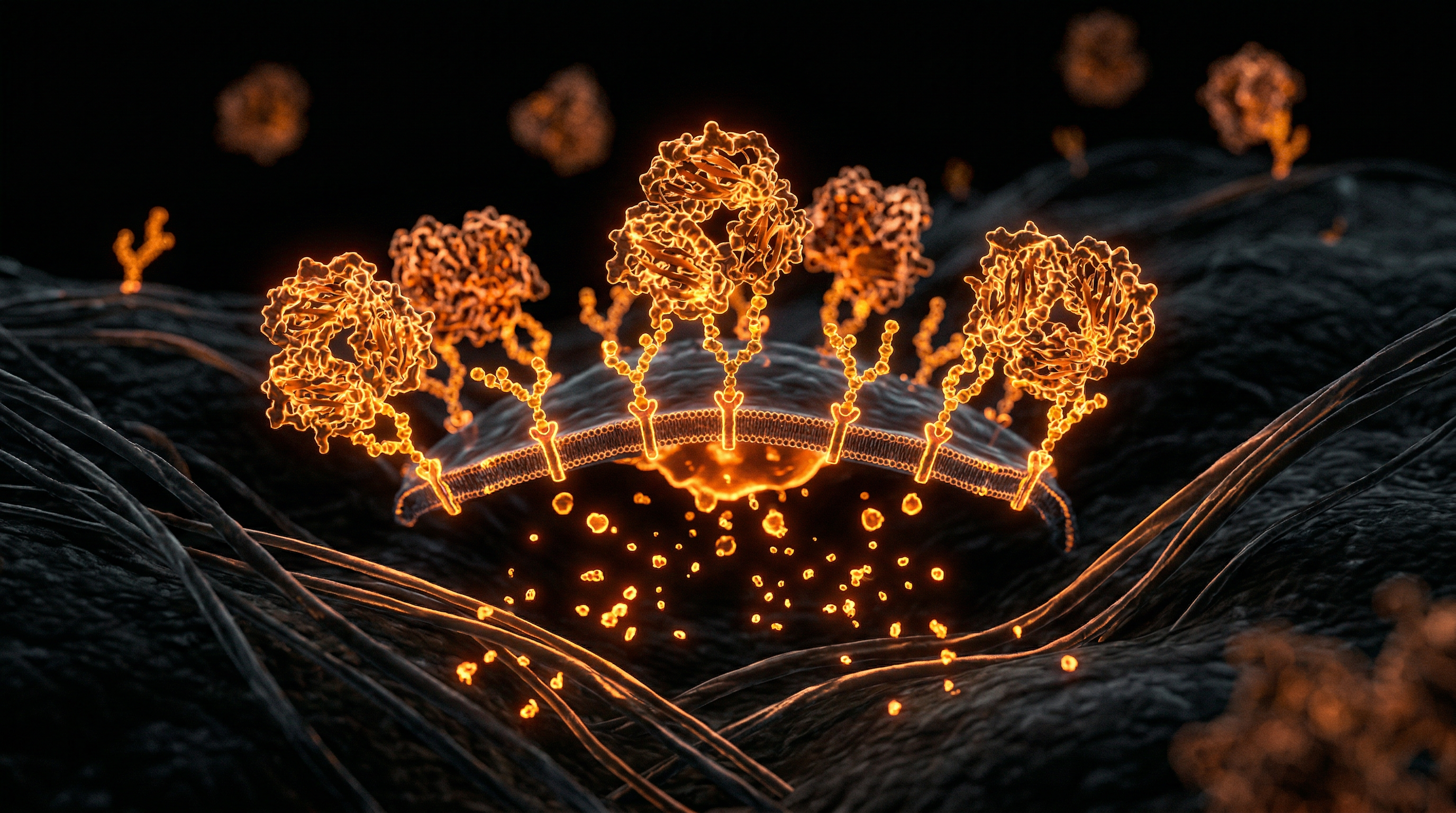
Lectins are a diverse family of carbohydrate-binding proteins. They are often described as "sticky" molecules because they possess a unique ability to bind specifically to sugar molecules (carbohydrates) that coat the surface of our cells. In nature, these proteins serve as nitrogen storage and, more importantly, as a deterrent. When a predator consumes a seed—the plant's genetic future—the lectins within that seed are activated to punish the predator's digestive tract.
The Lock and Key Mechanism
The biological danger of lectins lies in their specificity. They are not merely "anti-nutrients" that block mineral absorption (like phytates); they are bioactive proteins that interact with the glycocalyx—the sugar coating that surrounds every cell in the human body.
- Selective Binding: Different lectins target different sugars. For instance, Wheat Germ Agglutinin (WGA) has a high affinity for N-acetylglucosamine, a sugar found abundantly in human joint cartilage and the gut lining.
- Resilience: Most dietary proteins are broken down by stomach acid and digestive enzymes (pepsin, trypsin). Lectins are evolutionarily engineered to be "indigestible." They survive the harsh environment of the human stomach, reaching the small intestine fully intact and biologically active.
Callout: Research indicates that up to 30% of our modern diet contains active lectins, many of which remain stable even after standard cooking processes, allowing them to interact directly with the delicate single-cell layer of the human gut.
Mechanisms at the Cellular Level
The transition from a meal containing lectins to a state of chronic joint pain involves a complex series of cellular breaches. This is not a simple "allergy" but a profound disruption of the body’s internal barriers and immune signalling.
The Breach: Intestinal Permeability
The human gut is lined with a single layer of epithelial cells called enterocytes, held together by "tight junctions." These junctions act as the border security of the body, deciding what enters the bloodstream and what is excreted. Lectins are the ultimate border-crossers.
When lectins bind to the receptors on the enterocytes, they trigger the release of zonulin, a protein that signals the tight junctions to open. This creates a condition known as Intestinal Permeability, or "Leaky Gut." Once these gaps are forced open, not only do the lectins themselves enter the bloodstream, but so do lipopolysaccharides (LPS)—toxic cell wall components from gut bacteria.
Molecular Mimicry: The Identity Crisis
The most insidious mechanism by which lectins cause joint pain is molecular mimicry. Many lectins have amino acid sequences that look almost identical to the proteins found in human tissues, particularly the collagen and synovial tissues of the joints.
- Infiltration: Lectins enter the bloodstream and travel to areas with high concentrations of sugar-binding sites, such as the synovial fluid in the knees, hips, and hands.
- Tagging: Once the lectin binds to the joint tissue, the immune system identifies it as a foreign invader.
- Collateral Damage: The immune system launches an attack (antibodies) against the lectin. However, because the lectin is bound to the joint tissue—and because the joint tissue looks like the lectin—the immune system begins attacking the joint itself.
Toll-Like Receptors (TLRs) and the Cytokine Storm
Lectins also interact with Toll-Like Receptors (TLR4) on the surface of immune cells. These receptors are the "smoke detectors" of the innate immune system. Lectins can "trip" these detectors, leading to a chronic release of pro-inflammatory cytokines such as TNF-alpha and Interleukin-6 (IL-6). These are the same markers found in elevated levels in patients with rheumatoid arthritis, yet they are rarely tested in "standard" NHS osteoarthritis screenings.
Environmental Threats and Biological Disruptors
The reason lectin sensitivity has reached a boiling point in the 21st century is not just due to the plants themselves, but the environmental context in which they are grown and consumed.
The Glyphosate Catalyst
In the United Kingdom and across the globe, the herbicide glyphosate (Roundup) is used extensively in industrial farming. Glyphosate acts as a "delivery system" for lectin toxicity.
- Shikimate Pathway: Glyphosate disrupts the gut microbiome by killing beneficial bacteria that might otherwise help degrade certain lectins.
- Barrier Weakening: Glyphosate has been shown to independently increase zonulin levels, meaning the gut is already "leaky" before the first bite of a lectin-heavy meal is taken. This synergy creates a "perfect storm" for systemic inflammation.
Modern Hybridisation and GMOs
Traditional wheat, such as Einkorn or Emmer, had different lectin profiles compared to modern "Dwarf Wheat." Modern agricultural practices have selected for plants with higher lectin counts because these plants are more resistant to pests. By breeding plants to survive the field, we have inadvertently made them more toxic to the human consumer.
The "Healthy" Diet Paradox
The NHS "Eat Well Guide" heavily promotes pulses, whole grains, and soya as low-fat protein sources. For a person with a compromised gut or genetic predisposition, this advice is a recipe for chronic pain. The push toward "plant-based" meat alternatives is particularly concerning, as these products are often concentrated isolates of high-lectin legumes like pea and soya, stripped of the traditional processing methods (soaking, fermenting) that once mitigated their harm.
The Cascade: From Exposure to Disease
The progression from lectin ingestion to a diagnosis of arthritis is often a slow, decades-long process, which is why the connection is so frequently missed by general practitioners.
Phase 1: Subclinical Inflammation
The patient may experience occasional bloating, brain fog, or "migratory" joint pain—pain that moves from the wrist one day to the ankle the next. At this stage, standard blood tests (CRP, ESR) often come back "normal" or "low-normal," leading doctors to dismiss the symptoms as psychosomatic or minor.
Phase 2: The Breakdown of the Synovium
As lectins consistently bind to the synovium (the lining of the joint capsule), the local inflammatory response causes the synovial fluid to thin. The fluid loses its lubricating properties. This is the point where the patient begins to feel "stiffness" in the morning that takes longer and longer to "warm up."
Phase 3: Structural Degradation
The chronic presence of cytokines (TNF-alpha) eventually activates matrix metalloproteinases (MMPs)—enzymes that eat away at cartilage. By the time an X-ray shows "bone on bone" contact, the underlying cause—the dietary trigger—has been active for years.
Callout: A 2017 study published in the Journal of Immunology demonstrated that certain dietary lectins can trigger an autoimmune response in the joints of mice that is indistinguishable from human rheumatoid arthritis.
What the Mainstream Narrative Omits
The refusal to acknowledge lectins as a primary driver of joint disease is not merely an oversight; it is a systemic failure rooted in the structure of modern nutritional science and pharmaceutical influence.
The Fibre Myth
Mainstream dietetics often conflates "high fibre" with "healthy," ignoring the fact that the most lectin-dense parts of the plant are the fibre-rich skins and hulls (the bran). By encouraging patients to switch from white rice to brown rice, or white bread to wholemeal, the NHS is often inadvertently increasing the patient's lectin load by a factor of ten.
The "Symptom Management" Business Model
There is no "Lectin-Blocker" pill that can be patented and sold for high margins. The current treatment paradigm for joint pain relies on:
- NSAIDs: These provide temporary relief but actively destroy the gut lining, making the patient more sensitive to lectins over time.
- Biologics: Expensive drugs like Humira that suppress the immune system. While effective, they do not address the source of the "aggression"—the lectins entering the blood.
- Surgery: Hip and knee replacements are among the most common and lucrative procedures in the UK.
If the public were to discover that a significant portion of their pain could be resolved by avoiding specific nightshades (tomatoes, potatoes, peppers) and legumes, the economic impact on the pharmaceutical and processed food industries would be catastrophic.
The UK Context
The British healthcare system presents unique challenges for those suffering from lectin-driven inflammation.
NHS Misdiagnosis Patterns
The NHS is designed for acute care and clear-cut pathology. Because lectin sensitivity manifests as a "low-grade" systemic issue, it falls through the cracks of the 10-minute GP consultation.
- The Osteoarthritis "Wastebasket": Once a patient reaches the age of 50, almost any joint pain is automatically labelled as osteoarthritis. This label implies the condition is an inevitable consequence of age, discouraging the patient from looking for a dietary cause.
- The Lack of Specialisation: Nutritional immunology is virtually non-existent in standard NHS training. A rheumatologist focuses on the joints; a gastroenterologist focuses on the gut. Rarely do the two collaborate to see how a "leaky gut" is causing "leaky joints."
The "Postcode Lottery" of Testing
While some private clinics in the UK offer sophisticated intestinal permeability testing (Zonulin/Occludin antibodies) and lectin sensitivity panels, these are not available on the NHS. The average British patient is left with "Wait and See" as their primary strategy, while their mobility continues to erode.
Protective Measures and Recovery Protocols
Recovery from lectin-induced joint pain is possible, but it requires a radical departure from the "Eat Well Guide" and a commitment to biological integrity.
1. The Elimination Phase (The "Cleanse")
For a minimum of 30 days, one must remove the primary lectin offenders:
- Grains: Specifically wheat, rye, barley, and corn.
- Legumes: All beans, peas, lentils, and soya.
- Nightshades: Tomatoes, potatoes, aubergines, and peppers (the lectins are concentrated in the skins and seeds).
- A1 Dairy: Most British cows produce A1 casein, a protein that behaves similarly to a lectin in the gut.
2. Traditional Preparation Methods
If one chooses to reintroduce these foods, they must be prepared in ways that neutralise the "biological booby traps":
- Pressure Cooking: The high heat and pressure are one of the few ways to effectively denature the most resilient lectins (like those in kidney beans).
- Fermentation: Bacteria in traditional sourdough or fermented soya (miso, tempeh) "pre-digest" the lectins, rendering them less harmful.
- Peeling and Seeding: For nightshades and cucumbers, removing the skin and seeds eliminates the vast majority of the lectin content.
3. Biological Reinforcement (Supplements)
- Glucosamine and Chondroitin: While often touted for "cartilage repair," their true value may lie in their role as "lectin decoys." Because lectins bind to N-acetylglucosamine, taking this supplement provides the "sticky" molecules for the lectins to bind to in the gut, preventing them from binding to the gut wall or joints.
- Polyphenols: Compounds found in olive oil, dark berries, and green tea help seal the tight junctions of the gut.
- L-Glutamine: An amino acid that acts as "fuel" for the enterocytes to repair the gut lining.
Summary: Key Takeaways
The evidence is clear: for a significant portion of the UK population, the joints are not "wearing out"; they are being "attacked" from the inside out by proteins we have been told are the foundations of a healthy diet.
- Lectins are Defensive Proteins: They are designed to disrupt the biology of the consumer to protect the plant's seeds.
- Intestinal Permeability is the Gateway: Joint pain starts in the gut. Lectins breach the intestinal barrier, allowing toxins into the bloodstream.
- Molecular Mimicry is the Cause: The immune system attacks joint tissue because it confuses it with foreign lectin proteins.
- The NHS is Lagging: Current diagnostic models ignore nutritional triggers, leading to millions of misdiagnoses and unnecessary surgeries.
- Recovery is Dietary: By eliminating high-lectin foods and healing the gut barrier, even "advanced" joint pain can be significantly reduced or reversed.
As we move forward, the burden of health falls upon the individual. We must look past the simplified narratives of mainstream "healthy eating" and understand the complex, often adversarial relationship between plant biochemistry and human physiology. Your joint pain is not an inevitability of age; it is a signal from your cells. It is time to listen.
This article is provided for informational and educational purposes only. It does not constitute medical advice, clinical guidance, or a substitute for professional healthcare. Information reflects cited research at time of publication. Always consult a qualified healthcare professional before acting on any health information.
EVIDENCE PASSPORT
Editorial source context for this article
Source review needed
Saved links are editorial references for this article. They may support specific claims rather than every sentence. Open and assess each source in context. This passport does not independently verify them.
Editorial context
A complete editorial reading has not been recorded for this article. Source links remain available for you to open and assess directly.
Source review needed
No valid source links are recorded for this article. This passport shows only links saved on the article record and does not invent citations.
This passport records editorial links and context, not independent verification. Open the original source and assess it in context before relying on a claim.
Medical Disclaimer
The information in this article is for educational purposes only and does not constitute medical advice, diagnosis, or treatment. Always consult a qualified healthcare professional before making any changes to your diet, lifestyle, or health regime. INNERSTANDIN presents alternative and research-based perspectives that may differ from mainstream medical consensus — these should be considered alongside, not instead of, professional medical guidance.
Read Full DisclaimerContinue the thread
Keep this question moving.
Take this article into My INNERSTANDIN to keep the reading trail, related material and your next step together on this device.
Explore this in the Body Map
See where this hits your biology. Interactive anatomy, threats, and protective protocols.