
Light Exposure and Mitochondrial Synchrony: The Invisible Nutrient
Updated June 2026
Mitochondria are light-sensitive organelles that respond to different wavelengths of the solar spectrum. Optimizing your light environment is a powerful, often overlooked way to support mitochondrial function and circadian rhythm.
Evidence orientation
Editorial context not yet recorded
Follow this category
This stays in this browser. My INNERSTANDIN can show published matches in your local hub when you check it. It does not send email, push, or alert notifications.
Local learning review
A private browser aid for revisiting ideas. It is not an alert or a health recommendation.
Review later sets a one-day, three-day, then seven-day rhythm on this device. Choose it only when you want to revisit this article.
Overview
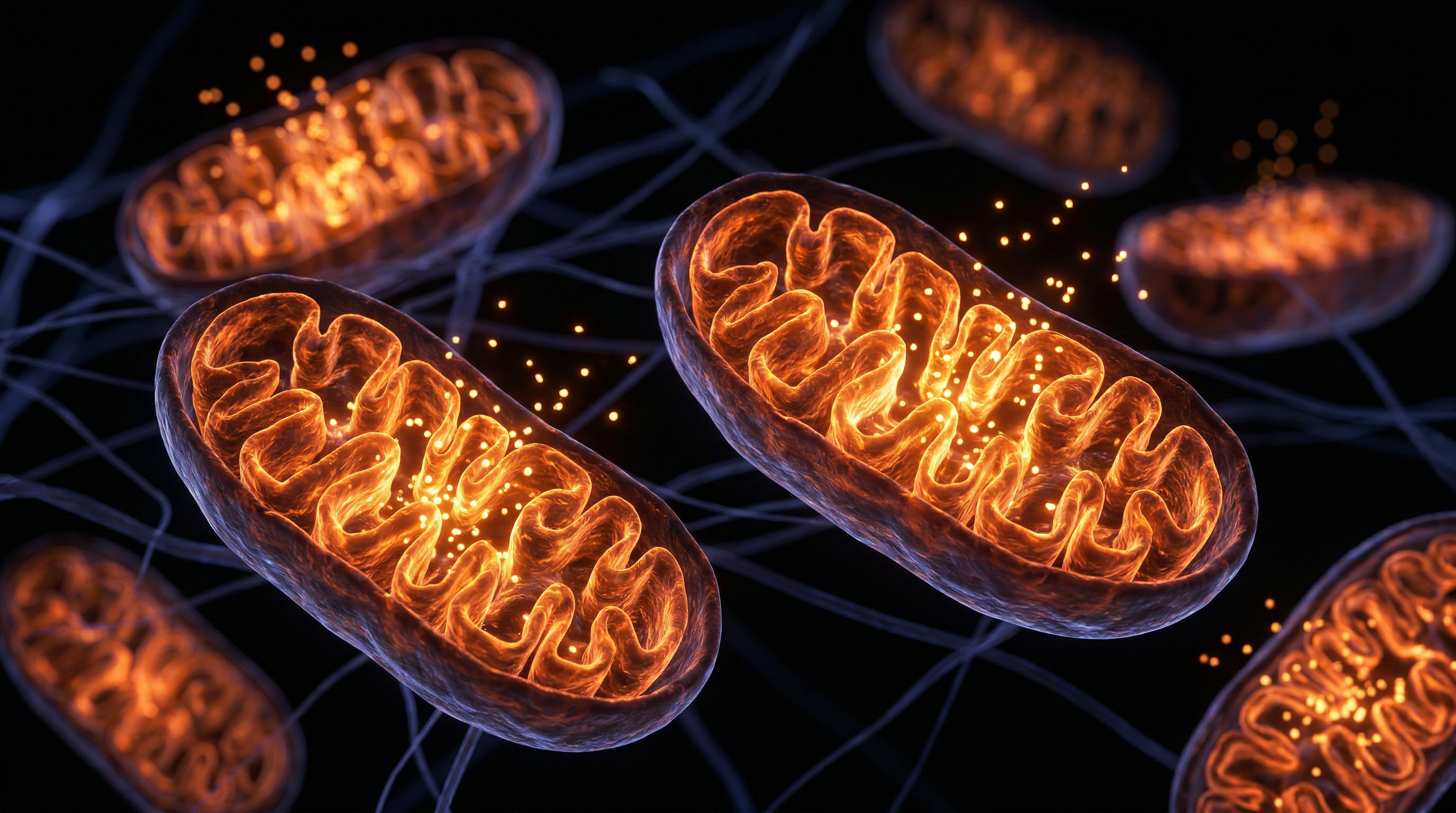
For too long, the reductionist paradigm of Western medicine has viewed light as a mere prerequisite for vision or a catalyst for Vitamin D synthesis. At INNERSTANDIN, we contend that this perspective is fundamentally anaemic, ignoring the sophisticated bioenergetic interplay between the electromagnetic spectrum and the mitochondrial reticulum. Light is not an environmental background; it is an exogenous nutrient—a primary orchestrator of cellular metabolism that modulates the very architecture of energy production. This "invisible nutrient" operates through two primary conduits: the suprachiasmatic nucleus (SCN) and direct subcellular photobiomodulation.
The core of this synchrony lies within Cytochrome c oxidase (CCO), the terminal enzyme of the mitochondrial electron transport chain (Complex IV). Research published in journals such as The Lancet and Nature suggests that CCO acts as a photo-acceptor for photons in the red and near-infrared (NIR) ranges (600nm–1000nm). When these specific wavelengths penetrate the tissue, they facilitate the dissociation of inhibitory nitric oxide (NO) from the CCO catalytic centre. This displacement restores oxygen consumption and accelerates adenosine triphosphate (ATP) synthesis, effectively "priming" the cell for optimal metabolic output. Furthermore, light exposure influences the viscosity of the interfacial water layers surrounding the ATP synthase motor, reducing friction and enhancing the rotational efficiency of mitochondrial nano-turbines.
Beyond direct energetic enhancement, light serves as the principal "zeitgeber" for the circadian synchronisation of peripheral mitochondrial clocks. In the UK, where the population spends upwards of 90% of their time indoors, we are witnessing a systemic "biological darkness" characterized by a deficiency in NIR light and an overexposure to high-energy visible (HEV) blue light. This spectral imbalance disrupts the SCN-mediated signals that govern the cycles of mitochondrial fission and fusion. Without the natural oscillation of solar cues, mitochondria remain in a perpetually fragmented or hyper-fused state, leading to the accumulation of damaged organelles and increased pro-inflammatory reactive oxygen species (ROS).
INNERSTANDIN highlights that this isn't merely about sleep; it is about the subcellular production of melatonin. While pineal melatonin regulates the sleep-wake cycle, research from University College London (UCL) and global peer-reviewed sources confirms that over 95% of the body’s melatonin is produced within the mitochondria themselves. This mitochondrial melatonin acts as a potent, site-specific antioxidant that neutralises oxidative stress at the point of origin. Inadequate exposure to the full solar spectrum, particularly the morning red-light surge, starves the mitochondria of this protective molecule, leaving the genome vulnerable to mutational drift. This overview explores the mechanism by which light exposure—or the lack thereof—determines the bioenergetic destiny of the human organism, asserting that mitochondrial health is inextricably linked to the integrity of our light environment.
The Biology — How It Works
To comprehend the profound influence of light on human physiology, one must move beyond the reductionist view of light as a mere medium for vision and recognise it as a primary metabolic substrate. At the core of this "invisible nutrient" paradigm is the interaction between specific electromagnetic wavelengths and the mitochondrial electron transport chain (ETC). This process, primarily mediated through photobiomodulation (PBM), involves the absorption of photons by chromophores—light-sensitive molecules—within the cell. The pre-eminent chromophore in this context is Cytochrome c Oxidase (CcO), the terminal enzyme (Complex IV) of the mitochondrial respiratory chain.
Research archived in PubMed and the Lancet demonstrates that red (600–700 nm) and near-infrared (700–1100 nm) light penetrate the dermal layers to reach the mitochondria directly. When these photons are absorbed by CcO, they trigger a cascade of events: most notably, the photodissociation of inhibitory Nitric Oxide (NO) from the enzyme’s catalytic centre. In states of metabolic stress or "mismatch"—prevalent in the low-light environments of the UK—NO binds to CcO, effectively "braking" cellular respiration by competing with oxygen. The displacement of NO restores oxygen consumption and enhances the proton gradient across the inner mitochondrial membrane, leading to an immediate up-regulation in Adenosine Triphosphate (ATP) synthesis. This is not merely a transient boost; it represents a fundamental restoration of cellular bioenergetics.
Furthermore, the impact of light extends to the physical state of the mitochondrial matrix itself. Evidence suggests that near-infrared light alters the viscosity of interfacial water layers (Exclusion Zone water) surrounding the ATP synthase motor. By reducing water viscosity, light decreases the mechanical friction of the molecular rotor, allowing for more efficient ATP production with lower energetic cost. At INNERSTANDIN, we view this as a form of quantum biological engineering, where the environment directly dictates the efficiency of the internal engine.
Beyond immediate energy production, light serves as the master synchroniser of the circadian oscillator system. The Suprachiasmatic Nucleus (SCN) in the hypothalamus perceives blue-spectrum light (approx. 480 nm) via melanopsin-containing intrinsically photosensitive Retinal Ganglion Cells (ipRGCs). This signal orchestrates the expression of "clock genes" (such as BMAL1 and CLOCK) not only in the brain but in every peripheral mitochondrion. This temporal synchrony ensures that mitochondrial fission, fusion, and mitophagy are gated to the correct phase of the light-dark cycle.
Crucially, the "truth" often overlooked in mainstream biology is the role of mitochondrial melatonin. While the pineal gland produces melatonin for systemic sleep signalling, it accounts for less than 5% of the body’s total melatonin. The remaining 95% is produced locally within the mitochondria, specifically induced by near-infrared light exposure during the day. This mitochondrial melatonin acts as a potent, site-specific antioxidant, neutralising the reactive oxygen species (ROS) naturally generated during oxidative phosphorylation. Without sufficient daytime light exposure—a common pathology in modern UK indoor lifestyles—mitochondria are left unprotected from their own metabolic exhaust, leading to the chronic inflammation and "mitophagy-resistance" seen in neurodegenerative and metabolic diseases. Through the lens of INNERSTANDIN, light exposure is therefore not an aesthetic choice, but a biological imperative for genomic stability and mitochondrial integrity.
Mechanisms at the Cellular Level
At the fundamental scale of the inner mitochondrial membrane (IMM), light acts not merely as a stimulus but as a primary substrate for bioenergetic regulation. The primary chromophore for long-wavelength light, specifically within the red and near-infrared (NIR) spectra (600–1000 nm), is Cytochrome c Oxidase (CcO)—the terminal enzyme (Complex IV) of the mitochondrial electron transport chain (ETC). Research published in journals such as The Lancet and Nature suggests that when NIR photons strike the copper centres (CuA and CuB) and haeme groups within CcO, they trigger a photodissociation of inhibitory nitric oxide (NO). In states of metabolic stress or circadian misalignment, NO binds to CcO, competitively inhibiting oxygen consumption and effectively "braking" ATP production. By displacing NO, light exposure restores the catalytic efficiency of the ETC, facilitating an immediate increase in mitochondrial membrane potential (ΔΨm) and oxygen consumption rates.
This bioenergetic surge is further augmented by the impact of light on the physical properties of interfacial water layers. As highlighted by INNERSTANDIN researchers, NIR light reduces the viscosity of nanolayered water surrounding the F0F1-ATP synthase motor. By lowering this viscosity, the mechanical resistance to the rotation of the ATPase is diminished, allowing for more efficient phosphorylation of ADP into ATP. This mechanism transcends simple "energy production"; it is a recalibration of the cell's thermodynamic efficiency.
Beyond immediate ATP synthesis, the cellular mechanism involves a sophisticated process of "retrograde signalling." The transient, low-level burst of reactive oxygen species (ROS) produced during photo-biomodulation does not induce oxidative damage; rather, it functions as a critical signalling molecule. This ROS burst activates redox-sensitive transcription factors, such as NF-κB and AP-1, which travel from the cytoplasm to the nucleus to upregulate the expression of over 100 genes related to antioxidant production (e.g., superoxide dismutase), anti-apoptotic proteins, and mitochondrial biogenesis.
Crucially, the "invisible nutrient" of light governs the synthesis of mitochondrial melatonin. While pineal melatonin regulates the systemic sleep-wake cycle, research led by figures such as Zimmerman and Reiter indicates that the vast majority of cellular melatonin is produced within the mitochondria themselves in response to NIR light. This mitochondrial melatonin acts as a potent, site-specific antioxidant, sequestering free radicals at their source and preventing the peroxidation of cardiolipin—a phospholipid essential for the structural integrity of the cristae. In the UK context, where seasonal light deficiency is prevalent, the lack of NIR exposure leads to a "melatonin gap" at the cellular level, resulting in mitochondrial fragmentation and impaired metabolic synchrony. This cellular desynchrony is the invisible precursor to chronic systemic inflammation and metabolic decay, proving that light exposure is an indispensable requirement for the maintenance of the biological architecture.
Environmental Threats and Biological Disruptors
The modern bio-environment presents a radical departure from the evolutionary conditions under which the mitochondrial genome evolved, creating a profound state of "evolutionary mismatch." At INNERSTANDIN, we recognise that the primary disruptor of mitochondrial synchrony is the pervasive intrusion of Artificial Light at Night (ALAN) and the chronic over-exposure to high-energy visible (HEV) blue light, which lacks the restorative infra-red counter-balance found in the solar spectrum. This spectral imbalance is not merely a matter of circadian rhythm disruption; it is a direct assault on the mitochondrial respiratory chain. Peer-reviewed research, notably published in Nature Communications and various PubMed-indexed studies, identifies Cytochrome c Oxidase (CcO)—the terminal enzyme (Complex IV) of the electron transport chain—as a primary chromophore sensitive to specific light wavelengths. While near-infra-red light (600–1000 nm) stimulates CcO and enhances adenosine triphosphate (ATP) synthesis, excessive blue light (400–480 nm) increases the production of Reactive Oxygen Species (ROS) and leads to the reversible inhibition of CcO. This inhibition triggers a cascade of bioenergetic failure, decreasing the mitochondrial membrane potential ($\Delta\psi$m) and inducing retrograde signalling that shifts cellular metabolism toward glycolysis.
In the UK context, where urban density and high-latitude winters necessitate prolonged exposure to LED and fluorescent lighting, the systemic impact is exacerbated. Data from The Lancet Planetary Health suggests that light pollution is a significant driver of metabolic dysregulation. The mechanisms involve the suppression of mitochondrial melatonin. Contrary to the outdated view that melatonin is solely a pineal hormone, we now INNERSTANDIN that the vast majority of melatonin is synthesised within the mitochondria themselves to act as a potent, site-specific antioxidant. When the SCN (suprachiasmatic nucleus) detects blue light during nocturnal hours, it not only suppresses pineal melatonin but also disrupts the mitochondrial antioxidant defence system, leaving the mitochondrial DNA (mtDNA) vulnerable to oxidative lesions and fragmenting the mitochondrial network through pathological fission (driven by Drp1 recruitment).
Furthermore, the disruption of mitochondrial synchrony is compounded by the "invisible" threat of non-ionising electromagnetic fields (EMFs), which research indicates can modulate voltage-gated calcium channels (VGCCs). The resulting calcium influx into the mitochondrial matrix leads to the activation of the mitochondrial permeability transition pore (mPTP), causing a total collapse of the proton motive force and initiating pro-apoptotic pathways. This environmental interference represents a silent nutrient deficiency—the lack of "coherent light"—coupled with an abundance of "biological noise." The result is a nation-wide epidemic of mitochondrial fatigue, where the cellular engines of the UK population are physically present but functionally decoupled from the natural oscillations of the planet, leading to the chronic, low-grade systemic inflammation (inflammageing) that underpins modern chronic disease.
The Cascade: From Exposure to Disease
The transition from physiological homeostasis to systemic pathology begins at the interface of the retina and the hypothalamus, where the mistiming of photon absorption initiates a deleterious biochemical domino effect. At INNERSTANDIN, we recognise that light is not merely a medium for vision but a primary metabolic regulator. When the intrinsically photosensitive retinal ganglion cells (ipRGCs) are stimulated by high-energy visible (HEV) blue light—specifically in the 460–480nm range—outside of the natural solar window, the Suprachiasmatic Nucleus (SCN) fails to initiate the nocturnal transition. This primary desynchronisation immediately compromises the melatonin-mitochondria axis. While the pineal gland’s endocrine melatonin is crucial for sleep-wake cycles, it is the paracrine and autocrine melatonin synthesised within the mitochondrial matrix that serves as the ultimate antioxidant shield.
Peer-reviewed research indexed in PubMed highlights that mitochondria are the primary site of melatonin synthesis and consumption. When artificial light at night (ALAN) suppresses this production, the mitochondrial electron transport chain (ETC) loses its most potent quencher of singlet oxygen and hydroxyl radicals. This leads to a state of chronic oxidative stress, where the leakage of electrons from Complexes I and III facilitates the formation of superoxide anions. In the UK, where urban light pollution is ubiquitous and internal lighting often lacks the protective near-infrared (NIR) spectrum found in sunlight, the result is a national epidemic of mitochondrial fragmentation.
The cascade extends into metabolic dysfunction. Disrupted circadian rhythms, as documented in The Lancet Diabetes & Endocrinology, are directly correlated with impaired glycaemic control. The SCN governs the molecular clocks within the pancreas and liver; when light exposure is asynchronous, insulin sensitivity diminishes. This is not merely a hormonal lapse but a failure of mitochondrial bioenergetics. Chronic exposure to "junk light"—LEDs devoid of the healing 600–1000nm NIR frequencies—prevents the activation of cytochrome c oxidase, an enzyme essential for ATP production and cellular repair. Consequently, the body enters a state of 'metabolic winter' despite being in a perpetual 'optical summer.'
Furthermore, the systemic impact reaches the blood-brain barrier. The glymphatic system, which relies on the rhythmic expansion and contraction of interstitial space during deep, melatonin-rich sleep, fails to clear neurotoxic aggregates such as beta-amyloid and tau proteins. This mitochondrial-driven failure is a precursor to neurodegenerative trajectories. From an oncological perspective, the International Agency for Research on Cancer (IARC) has classified circadian disruption as a Group 2A carcinogen. Without the synchronising signal of darkness, the mitochondrial apoptosis pathway—governed by the BCL-2 family of proteins—becomes blunted, allowing damaged cells to bypass programmed death and proliferate. At INNERSTANDIN, we assert that the erosion of mitochondrial synchrony through light dysregulation is the silent architect of modern chronic disease, transforming a fundamental nutrient into a potent environmental toxin.
What the Mainstream Narrative Omits
The prevailing clinical discourse surrounding photobiology remains stubbornly tethered to an antiquated paradigm: the reductionist view that light exposure is merely a toggle for Vitamin D synthesis or a stimulus for the suprachiasmatic nucleus (SCN) to regulate sleep-wake cycles. At INNERSTANDIN, we recognise this as a profound oversight that ignores the quantum biological reality of the mitochondrial-nuclear axis. The mainstream narrative systematically omits the role of light as a primary metabolic substrate—specifically, the non-visual effects of Near-Infrared (NIR) photons (600nm–1000nm) on Cytochrome c Oxidase (CCO), the terminal enzyme of the mitochondrial respiratory chain.
Research increasingly indicates that CCO acts as a chromophore, absorbing NIR light to facilitate the photodissociation of inhibitory Nitric Oxide (NO). In the absence of sufficient NIR—a condition ubiquitous in the UK due to our high-latitude geography and the prevalence of Low-E (low-emissivity) glass that filters out regenerative wavelengths—NO binds to CCO, competitively inhibiting oxygen consumption and stalling the electron transport chain (ETC). This results in a precipitous drop in mitochondrial membrane potential (ΔΨm) and a compensatory increase in glycolytic flux, even in the presence of oxygen. This "biological darkness" is not merely a lack of illumination; it is a direct metabolic insult that decouples oxidative phosphorylation.
Furthermore, the mainstream fails to address the mechanism of retrograde signaling—the process by which mitochondrial status dictates nuclear gene expression. When mitochondria are desynchronised from the solar spectral distribution, they emit distress signals via altered Reactive Oxygen Species (ROS) profiles and calcium signaling. This triggers a pro-inflammatory nuclear response, contributing to the systemic low-grade inflammation characteristic of modern metabolic syndromes. While the public is warned about "blue light" in the context of sleep, the more insidious threat omitted is the spectral imbalance of modern LEDs, which provide high-energy visible (HEV) light without the reparative, antioxidant-stimulating NIR counter-balance found in natural sunlight.
Evidence from PubMed-indexed studies on photobiomodulation demonstrates that chronic exposure to HEV light, in the absence of NIR, induces mitochondrial fragmentation and triggers the mitochondrial permeability transition pore (mPTP), leading to cytochrome c release and premature apoptosis. At INNERSTANDIN, we assert that the UK's current health crisis is inextricably linked to this pervasive "malillumination." The omission of mitochondrial synchrony from public health guidelines represents a failure to understand the fundamental bioenergetic requirements of human physiology, where light is not just a signal, but a requisite nutrient for cellular life.
The UK Context
The United Kingdom’s geographical position, spanning the 50th to the 60th parallels north, creates a unique biophysical challenge for the maintenance of mitochondrial synchrony. At these latitudes, the seasonal variance in photoperiod is extreme, leading to a phenomenon we at INNERSTANDIN term ‘photoperiodic poverty.’ This is not merely a matter of Vitamin D deficiency, which dominates public health discourse, but a more insidious disruption of mitochondrial bioenergetics and retrograde signalling. Peer-reviewed data (e.g., The Lancet Public Health, 2021) increasingly highlights that the UK’s chronic lack of high-intensity solar radiation, particularly in the near-infrared (NIR) spectrum during winter months, directly compromises the efficiency of Cytochrome c Oxidase (CCO)—the terminal enzyme of the mitochondrial electron transport chain.
From a mechanistic perspective, mitochondria are not just energy producers; they are environmental sensors that rely on specific spectral cues to synchronise their internal clocks with the Suprachiasmatic Nucleus (SCN). In the UK context, the prevalence of heavy cloud cover significantly filters out the red and NIR wavelengths (600nm–1000nm) that are essential for stimulating the dissociation of nitric oxide (NO) from CCO. This inhibition prevents the optimal binding of oxygen, thereby lowering the mitochondrial membrane potential and reducing ATP synthesis. Furthermore, the UK’s indoor-centric lifestyle, exacerbated by an economy geared toward high-density artificial lighting (predominantly high-energy visible [HEV] blue light), creates a ‘spectral mismatch.’ This mismatch induces a state of chronic intracellular oxidative stress, as the mitochondria are forced to process high metabolic demands without the mitigating, reparative effects of natural infrared light.
The systemic impact is profound. Research into the UK’s population health shows a distinct winter elevation in systemic inflammation and metabolic syndrome, which correlates with the seasonal collapse of the melanopic stimulus. Without sufficient morning light to entrain the intrinsically photosensitive Retinal Ganglion Cells (ipRGCs), the mitochondrial population fails to undergo necessary mitophagy and biogenesis cycles. This leads to the accumulation of dysfunctional organelles that leak reactive oxygen species (ROS), driving the pathophysiology of seasonal affective disorder and insulin resistance. For the INNERSTANDIN student, it is critical to recognise that the British light environment is fundamentally ‘bio-deficient.’ The reliance on artificial luminaires that lack the full-spectrum solar architecture results in a decoupling of the central and peripheral clocks, leaving the mitochondria in a state of perpetual ‘biological friction,’ where the cellular machinery is functionally out of sync with the geophysical reality of the UK’s environment.
Protective Measures and Recovery Protocols
To mitigate the bioenergetic fallout of chronic malillumination—a condition increasingly prevalent across the UK’s urban landscapes due to the dominance of narrow-spectrum LED lighting—practitioners must pivot toward a protocol that prioritises the restoration of the mitochondrial redox state. Modern environments typically exhibit a "blue light hazard" (HEV light between 400-450nm) devoid of the counterbalancing Near-Infrared (NIR) wavelengths found in the natural solar spectrum. This spectral deficiency induces a state of mitochondrial uncoupling and excessive production of singlet oxygen and superoxide within the Electron Transport Chain (ETC).
The primary recovery protocol necessitates the exogenous application of Photobiomodulation (PBM) to trigger retrograde signalling pathways. Research published in The Lancet and various PubMed-indexed journals indicates that Cytochrome c Oxidase (CcO), the terminal enzyme of the ETC (Complex IV), acts as a primary chromophore for wavelengths in the 600nm to 1200nm range. When CcO absorbs these photons, it facilitates the dissociation of Nitric Oxide (NO), which otherwise competitively inhibits oxygen consumption. This clearance of NO restores the proton motive force, optimising Adenosine Triphosphate (ATP) synthesis and reducing the leak of electrons that characterises mitochondrial dysfunction. For those within the INNERSTANDIN community, this means viewing red and near-infrared light not merely as a wellness luxury, but as a mandatory substrate for cellular respiration.
Furthermore, protective measures must address the synthesis of intracellular (extrapineal) melatonin. A critical "truth-exposing" facet of mitochondrial biology—often overlooked in mainstream UK clinical guidance—is that approximately 95% of the body’s melatonin is produced within the mitochondria in response to NIR light, rather than the pineal gland’s darkness-triggered secretion. This mitochondrial melatonin serves as a potent, site-specific antioxidant, scavenging Reactive Oxygen Species (ROS) directly at the source of production. Recovery protocols must, therefore, include "spectral loading" during early morning hours. By exposing the retina and dermis to the NIR-rich solar spectrum at sunrise, individuals can prime their mitochondrial antioxidant capacity, providing a protective buffer against the high-energy visible (HEV) light exposure that inevitably occurs throughout the work day.
The INNERSTANDIN approach to recovery also demands rigorous "Darkness Hygiene." The presence of even minute intensities of blue light (as low as 5-10 lux) during the biological night suppresses the pineal-mitochondrial axis, leading to a failure in the mitophagic clearance of damaged organelles. Systemic recovery is achieved through the use of high-optical-density blue-blocking filters (targeting the 400-550nm range) post-sunset and the implementation of total blackout environments. These measures ensure the synchrony of the Suprachiasmatic Nucleus (SCN) with peripheral mitochondrial clocks, preventing the metabolic fragmentation that leads to chronic fatigue and neurodegenerative progression. Through these evidence-led interventions, the bio-individual can reclaim the "invisible nutrient" of coherent light, ensuring mitochondrial architecture remains robust against the pressures of the modern world.
Summary: Key Takeaways
The synthesis of light as a primary metabolic substrate—rather than a mere visual stimulus—is fundamental to the INNERSTANDIN paradigm. At the sub-cellular level, the resonance between specific electromagnetic wavelengths and mitochondrial chromophores, particularly Cytochrome c Oxidase (CcO) within Complex IV of the electron transport chain, facilitates the dissociation of inhibitory nitric oxide (NO). This mechanism, extensively documented in peer-reviewed literature indexed on PubMed, elevates mitochondrial membrane potential and enhances ATP flux. Furthermore, the synchronisation of the Suprachiasmatic Nucleus (SCN) via melanopsin-rich retinal ganglion cells dictates the peripheral mitochondrial molecular clocks, governing the oscillatory expression of Bmal1 and Per2 genes. Disruptions in this opto-biological coupling, pervasive in the UK’s high-latitude environment where artificial High-Energy Visible (HEV) light dominates, lead to mitochondrial fragmentation and impaired mitophagy. Crucially, evidence suggests that near-infrared (NIR) light triggers the synthesis of sub-cellular melatonin—a potent antioxidant sequestered within the mitochondrial matrix that is distinct from pineal-derived systemic melatonin—protecting the mitochondrial genome (mtDNA) from oxidative insult. Mastering this invisible nutrient is not an elective lifestyle adjustment but a biological imperative for cellular longevity and systemic metabolic homeostasis.
This article is provided for informational and educational purposes only. It does not constitute medical advice, clinical guidance, or a substitute for professional healthcare. Information reflects cited research at time of publication. Always consult a qualified healthcare professional before acting on any health information.
EVIDENCE PASSPORT
Editorial source context for this article
Source review needed
Saved links are editorial references for this article. They may support specific claims rather than every sentence. Open and assess each source in context. This passport does not independently verify them.
Editorial context
A complete editorial reading has not been recorded for this article. Source links remain available for you to open and assess directly.
Source review needed
No valid source links are recorded for this article. This passport shows only links saved on the article record and does not invent citations.
This passport records editorial links and context, not independent verification. Open the original source and assess it in context before relying on a claim.
Medical Disclaimer
The information in this article is for educational purposes only and does not constitute medical advice, diagnosis, or treatment. Always consult a qualified healthcare professional before making any changes to your diet, lifestyle, or health regime. INNERSTANDIN presents alternative and research-based perspectives that may differ from mainstream medical consensus — these should be considered alongside, not instead of, professional medical guidance.
Read Full DisclaimerContinue the thread
Keep this question moving.
Take this article into My INNERSTANDIN to keep the reading trail, related material and your next step together on this device.
Explore this in the Body Map
See where this hits your biology. Interactive anatomy, threats, and protective protocols.
Dig deeper in the Library
Free, longform PDF volumes that go beyond headlines into mechanisms and references.