
Lipid Nanoparticles and the Blood-Brain Barrier
Updated May 2026
Investigation into the mechanisms by which synthetic lipid shells bypass neural protection layers. We analyze the long-term neurological implications of LNP accumulation in the brain.
Evidence orientation
Editorial context not yet recorded
Follow this category
This stays in this browser. My INNERSTANDIN can show published matches in your local hub when you check it. It does not send email, push, or alert notifications.
Local learning review
A private browser aid for revisiting ideas. It is not an alert or a health recommendation.
Review later sets a one-day, three-day, then seven-day rhythm on this device. Choose it only when you want to revisit this article.
Overview
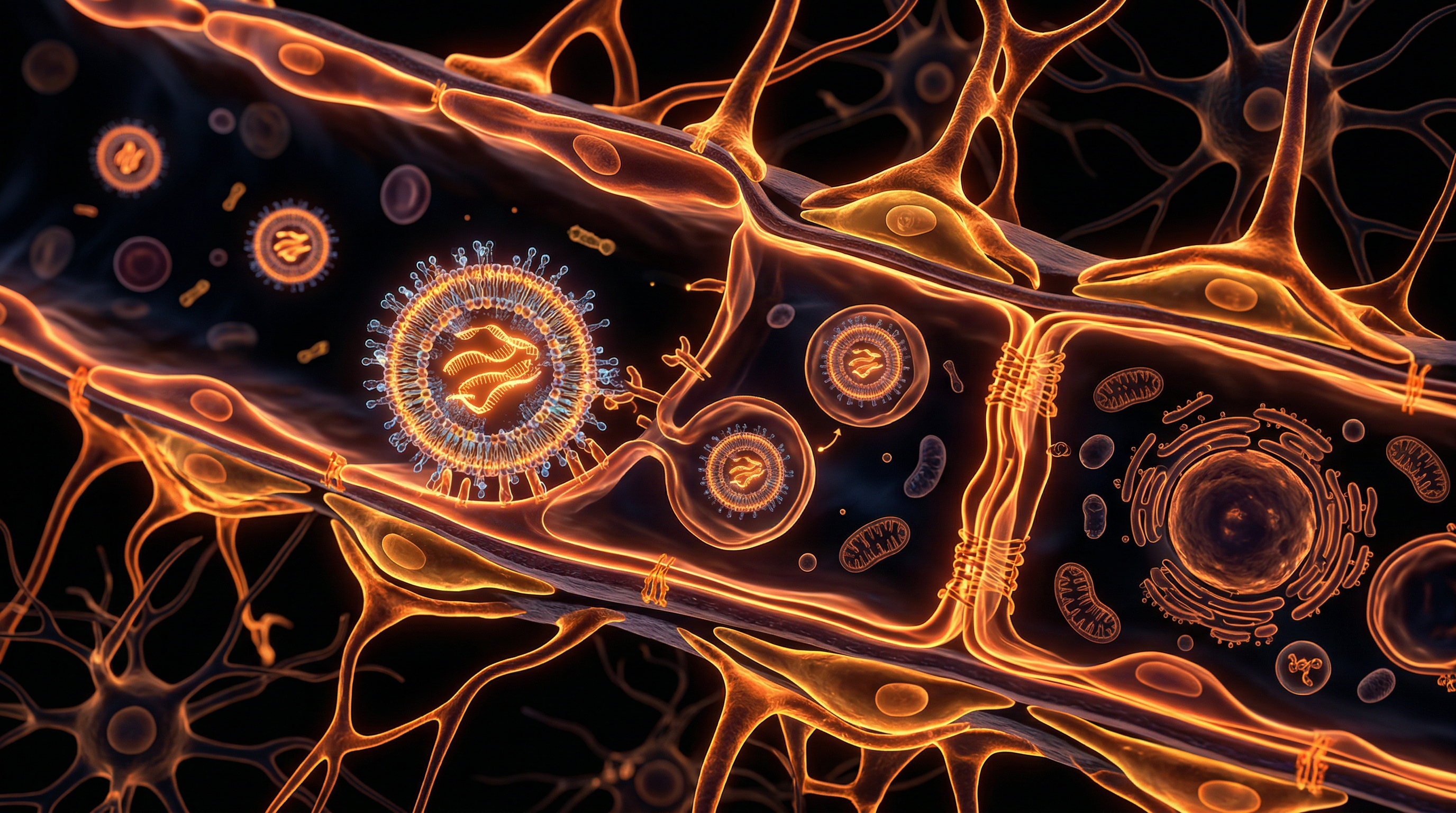
The sanctity of the human brain is predicated upon its isolation. For millennia, the Blood-Brain Barrier (BBB) has served as an evolutionary fortress, a sophisticated physiological gatekeeper designed to shield the most delicate organ of the human body from systemic toxins, pathogens, and fluctuating biochemical environments. However, the advent of the Lipid Nanoparticle (LNP)—the primary delivery vehicle for modern synthetic biology and messenger RNA (mRNA) platforms—has effectively rendered this fortress porous.
As a senior researcher for INNERSTANDING, it is my duty to peel back the layers of industry nomenclature to reveal the profound biological implications of this technology. We are currently witnessing a global-scale deployment of synthetic lipid shells designed specifically to bypass natural biological barriers. While touted as a triumph of drug delivery, the persistence, bio-distribution, and long-term neurological impact of these particles remain largely obfuscated by the primary stakeholders in the pharmaceutical industry.
This investigation explores the molecular architecture of LNPs, their deceptive "Trojan Horse" entry into the central nervous system (CNS), and the cascading neuro-inflammatory events that follow. We must move beyond the marketing gloss of "targeted delivery" and confront the reality of synthetic lipid accumulation within the neural parenchyma.
The Biology — How It Works
To understand how an LNP breaches the brain, one must first understand the architecture of both the barrier and the intruder.
The Blood-Brain Barrier: The Fortress
The BBB is not a single wall but a complex neurovascular unit. It consists of:
- Endothelial Cells: Lined with "Tight Junctions" (TJs) that prevent paracellular transport.
- Pericytes: Cells that regulate capillary blood flow and maintain the integrity of the barrier.
- Astrocytic End-feet: Projections from astrocytes that sheath the capillaries, providing a final layer of filtration and signalling.
Under normal conditions, only small, lipid-soluble molecules (like oxygen or carbon dioxide) or specific nutrients (via dedicated transport proteins) can enter the brain.
The Lipid Nanoparticle: The Intruder
A standard LNP is a spherical vesicle, typically 60-100 nanometres in diameter, composed of four primary elements:
- Ionisable Cationic Lipids: These are the "engine" of the LNP. They are neutral at physiological pH but become positively charged in acidic environments (like the endosome), allowing them to bind to negatively charged mRNA.
- PEGylated Lipids (Polyethylene Glycol): A synthetic coating that grants the particle "stealth" from the immune system, extending its half-life in the bloodstream.
- Cholesterol: Provides structural stability and fluidity to the lipid shell.
- Helper Lipids (Phospholipids): Aid in the fusion of the LNP with the target cell membrane.
Key Statistic: Research into LNP biodistribution indicates that while a majority of particles are sequestered by the liver, a significant percentage (estimated between 0.1% and 2% depending on the formulation) crosses the BBB, representing trillions of particles in a single systemic dose.
Mechanisms at the Cellular Level
The LNP does not "break" into the brain; it deceives the brain into inviting it inside. This is achieved through a process known as Receptor-Mediated Endocytosis.
The ApoE Mimicry
Once LNPs enter the bloodstream, they spontaneously adsorb various proteins from the plasma, forming what is known as a protein corona. One of the most critical proteins they attract is Apolipoprotein E (ApoE).
The brain's endothelial cells possess high-density lipoprotein (HDL) and low-density lipoprotein (LDL) receptors. Because the LNP is coated in ApoE, the BBB perceives it as a benign nutrient—a lipid transport molecule—and facilitates its entry via macropinocytosis.
Endosomal Escape and Cytotoxicity
Once inside the neural cell (be it an astrocyte, oligodendrocyte, or neuron), the LNP must release its cargo.
- The cell engulfs the LNP into an endosome.
- As the endosome acidifies, the ionisable lipids within the LNP become positively charged.
- This creates an attraction to the negatively charged endosomal membrane, causing it to rupture.
- This "Endosomal Escape" releases the synthetic genetic material into the cytoplasm.
However, this rupture is not "clean." The release of endosomal enzymes and the presence of synthetic, non-metabolisable lipids like ALC-0315 (used in certain mRNA platforms) cause significant mitochondrial stress and the production of Reactive Oxygen Species (ROS).
Microglial Activation
The brain's resident immune cells, microglia, are hyper-sensitive to foreign lipid signatures. When LNPs persist in the neural environment, microglia undergo a phenotypic shift from a "resting/surveying" state to an "amoeboid/pro-inflammatory" state. This triggers the release of pro-inflammatory cytokines such as IL-1β and TNF-α, initiating a chronic inflammatory cycle that the brain is ill-equipped to resolve.
Environmental Threats and Biological Disruptors
The efficacy of LNPs in breaching the brain is further amplified by modern environmental stressors that have already compromised the integrity of the BBB in a large percentage of the population.
The "Leaky Brain" Phenomenon
Several factors contribute to Barrier Permeability, making LNP penetration significantly more aggressive:
- Electromagnetic Fields (EMF): Studies have consistently shown that Radiofrequency (RF) radiation, such as that from mobile devices and 5G infrastructure, can increase the permeability of the BBB by disrupting the expression of tight-junction proteins like claudin-5.
- Glyphosate and Pesticides: Widespread environmental toxins act as chelators, disrupting the calcium signalling required to maintain endothelial "tightness."
- Heavy Metal Accumulation: Mercury, aluminium, and lead disrupt the oxidative balance of the neurovascular unit, creating microscopic gaps in the barrier.
Synergistic Toxicity
When an LNP enters a brain already stressed by heavy metals or EMFs, the result is a "synergistic toxicity." The LNP acts as a high-speed delivery system for inflammatory signals, while the existing environmental damage prevents the brain from effectively clearing these synthetic particles through the glymphatic system.
Important Callout: The glymphatic system—the brain’s waste clearance pathway—is most active during deep sleep. Chronic sleep deprivation, common in modern society, directly hinders the clearance of LNP-associated debris from the CNS.
The Cascade: From Exposure to Disease
The presence of LNPs in the brain is not a transient event. Data suggests that synthetic lipids can persist for weeks or months, leading to a slow-motion biological cascade.
Protein Misfolding and Prion-like Pathology
One of the most alarming risks of LNP-delivered mRNA in the brain is the potential for protein misfolding. When a cell is hijacked to produce a foreign protein (such as a viral spike protein), the sheer volume of production can overwhelm the endoplasmic reticulum (ER).
- This triggers the Unfolded Protein Response (UPR).
- If the UPR fails, misfolded proteins accumulate.
- Misfolded proteins can act as templates, causing native brain proteins to misfold—a hallmark of prion diseases, Alzheimer’s, and Parkinson’s.
Chronic Neuro-inflammation and "Brain Fog"
The persistence of synthetic lipids leads to a state of chronic sub-clinical neuro-inflammation. This manifests initially as "brain fog," cognitive lethargy, and memory impairment. Over time, this inflammation degrades the myelin sheath—the protective coating of nerves—leading to symptoms reminiscent of multiple sclerosis or other demyelinating disorders.
Vascular Damage and Micro-strokes
LNPs can also cause endotheliitis—inflammation of the lining of the blood vessels. Within the narrow capillaries of the brain, this inflammation can lead to the formation of micro-thrombi (tiny blood clots). These micro-strokes may be too small to detect on a standard MRI but cumulative damage leads to Vascular Dementia.
What the Mainstream Narrative Omits
The institutional silence regarding LNP bio-persistence is deafening. To maintain public confidence in "platform technologies," several key scientific truths have been suppressed or ignored:
- The Myth of Localisation: Initial regulatory filings claimed that LNPs remain at the site of injection (e.g., the deltoid muscle). However, independent biodistribution studies using luciferase markers have shown rapid systemic spread to every major organ, including the brain, within hours.
- The Lack of Long-term Pharmacokinetics: There are no publicly available peer-reviewed studies that track the fate of synthetic lipids like ALC-0159 in the human brain over a 5-to-10-year period. These are novel chemical entities with no history of human consumption.
- PEG Sensitivity: A significant portion of the population (up to 70% by some estimates) has pre-existing antibodies to Polyethylene Glycol (PEG). In these individuals, LNPs can trigger Anaphylatoxin production, causing immediate and severe BBB disruption.
- DNA Contamination: Recent independent laboratory analyses have found residual plasmid DNA in LNP formulations. If these LNPs deliver DNA into neural cells, the risk of insertional mutagenesis (altering the host's genetic code) becomes a theoretical possibility that has not been rigorously ruled out.
The UK Context
In the United Kingdom, the push for "Life Sciences" dominance has led to a regulatory environment that often prioritises speed over caution.
The MHRA and the "Yellow Card" Scheme
The Medicines and Healthcare products Regulatory Agency (MHRA) has been criticised for its passive surveillance systems. The Yellow Card scheme, while recording thousands of neurological adverse events—ranging from tremors to encephalitis—is often dismissed by the mainstream as "anecdotal." Yet, the data shows a clear signal: a statistical spike in neurological pathologies coincident with the mass rollout of LNP-based technologies.
British Research Landscape
UK-based institutions, such as the Imperial College London and various "Catapult" centres, are at the forefront of LNP innovation. While this brings investment, it creates a conflict of interest. When the state's economic strategy is tied to the success of a specific technology (synthetic biology), the incentive to investigate its "dark side" is significantly diminished.
Callout: In 2022, the UK government announced a multi-million-pound partnership with Moderna to build an LNP-mRNA manufacturing facility, further cementing the nation's reliance on this delivery system despite the unresolved safety concerns regarding the BBB.
Protective Measures and Recovery Protocols
For those concerned about LNP exposure or experiencing neurological symptoms, the focus must be on Barrier Integrity and Cellular Cleansing.
Stabilising the Blood-Brain Barrier
- Quercetin and Luteolin: These flavonoids have been shown to inhibit the release of pro-inflammatory cytokines and strengthen the tight junctions of the BBB.
- Magnesium L-Threonate: Unlike other forms of magnesium, the L-Threonate form effectively crosses the BBB and supports synaptic plasticity and mitochondrial health.
- Avoidance of RF-EMF: Minimising exposure to high-frequency radiation, especially during sleep, reduces the "osmotic stress" on the BBB.
Enhancing Clearance (The Detoxification Strategy)
- Autophagy Induction: Periodic fasting (16-18 hours) triggers autophagy, the body’s cellular "housekeeping" process that can help break down and remove misfolded proteins and synthetic lipid residues.
- N-Acetyl Cysteine (NAC): A precursor to Glutathione, the body’s master antioxidant. It is essential for neutralising the ROS generated by endosomal escape in neural cells.
- Melatonin: Beyond sleep, melatonin is a potent neuroprotective antioxidant that specifically targets the glymphatic system’s clearance efficiency.
Nutritional Support
- Sulforaphane (from Broccoli Sprouts): Activates the Nrf2 pathway, which enhances the cell's natural defence against oxidative stress and chemical toxicity.
- Omega-3 Fatty Acids (DHA): Essential for repairing neural membranes that may have been disrupted by synthetic "helper lipids."
Summary: Key Takeaways
The intersection of nanotechnology and neurology is a frontier fraught with unacknowledged peril. As we have seen:
- LNPs are Trojan Horses: They use ApoE mimicry to bypass the Blood-Brain Barrier, a structure never intended to face such a synthetic influx.
- Neurovascular Disruption: The process of Endosomal Escape causes direct damage to neural cell architecture and triggers chronic microglial activation.
- Environmental Synergy: Modern stressors like EMF and glyphosate act as catalysts, making the brain more vulnerable to LNP penetration.
- Persistence is the Problem: The failure of these synthetic lipids to be rapidly metabolised leads to a cascade that can result in neurodegenerative diseases and vascular damage.
- Regulatory Failure: Agencies like the MHRA have overlooked the long-term biodistribution of these particles in favour of rapid technological deployment.
The move toward synthetic biology must be met with a rigorous, independent, and transparent safety framework. Until the long-term fate of lipid nanoparticles in the human brain is fully understood, their widespread use constitutes an unprecedented biological gamble. We must advocate for informed consent that includes the reality of BBB breach and the potential for long-term neurological sequelae. Resilience lies in knowledge, and protection begins with understanding the true nature of the barrier and the intruder.
This article is provided for informational and educational purposes only. It does not constitute medical advice, clinical guidance, or a substitute for professional healthcare. Information reflects cited research at time of publication. Always consult a qualified healthcare professional before acting on any health information.
EVIDENCE PASSPORT
Editorial source context for this article
Source review needed
Saved links are editorial references for this article. They may support specific claims rather than every sentence. Open and assess each source in context. This passport does not independently verify them.
Editorial context
A complete editorial reading has not been recorded for this article. Source links remain available for you to open and assess directly.
Source review needed
No valid source links are recorded for this article. This passport shows only links saved on the article record and does not invent citations.
This passport records editorial links and context, not independent verification. Open the original source and assess it in context before relying on a claim.
Medical Disclaimer
The information in this article is for educational purposes only and does not constitute medical advice, diagnosis, or treatment. Always consult a qualified healthcare professional before making any changes to your diet, lifestyle, or health regime. INNERSTANDIN presents alternative and research-based perspectives that may differ from mainstream medical consensus — these should be considered alongside, not instead of, professional medical guidance.
Read Full DisclaimerContinue the thread
Keep this question moving.
Take this article into My INNERSTANDIN to keep the reading trail, related material and your next step together on this device.
Explore this in the Body Map
See where this hits your biology. Interactive anatomy, threats, and protective protocols.
Dig deeper in the Library
Free, longform PDF volumes that go beyond headlines into mechanisms and references.