
Liquid Crystalline State: The Memory Capacity of Biological Water
Updated May 2026
Explores the controversial yet scientifically rigorous study of water's ability to store and transmit information. This state is central to the concept of Innerstanding’s hydration curriculum.
Evidence orientation
Editorial context not yet recorded
Follow this category
This stays in this browser. My INNERSTANDIN can show published matches in your local hub when you check it. It does not send email, push, or alert notifications.
Local learning review
A private browser aid for revisiting ideas. It is not an alert or a health recommendation.
Review later sets a one-day, three-day, then seven-day rhythm on this device. Choose it only when you want to revisit this article.
Overview
In the orthodox view of biology, water is frequently relegated to the role of a passive solvent—a mere backdrop against which the "real" actors of life, such as DNA, proteins, and enzymes, perform their functions. This reductionist perspective treats the 70% of our body mass (and 99% of our molecules) as a simple bulk liquid, little more than a medium for chemical diffusion. However, a revolutionary paradigm is emerging from the fringes of biophysics and quantum electrodynamics, one that identifies water as the primary architect of biological organisation.
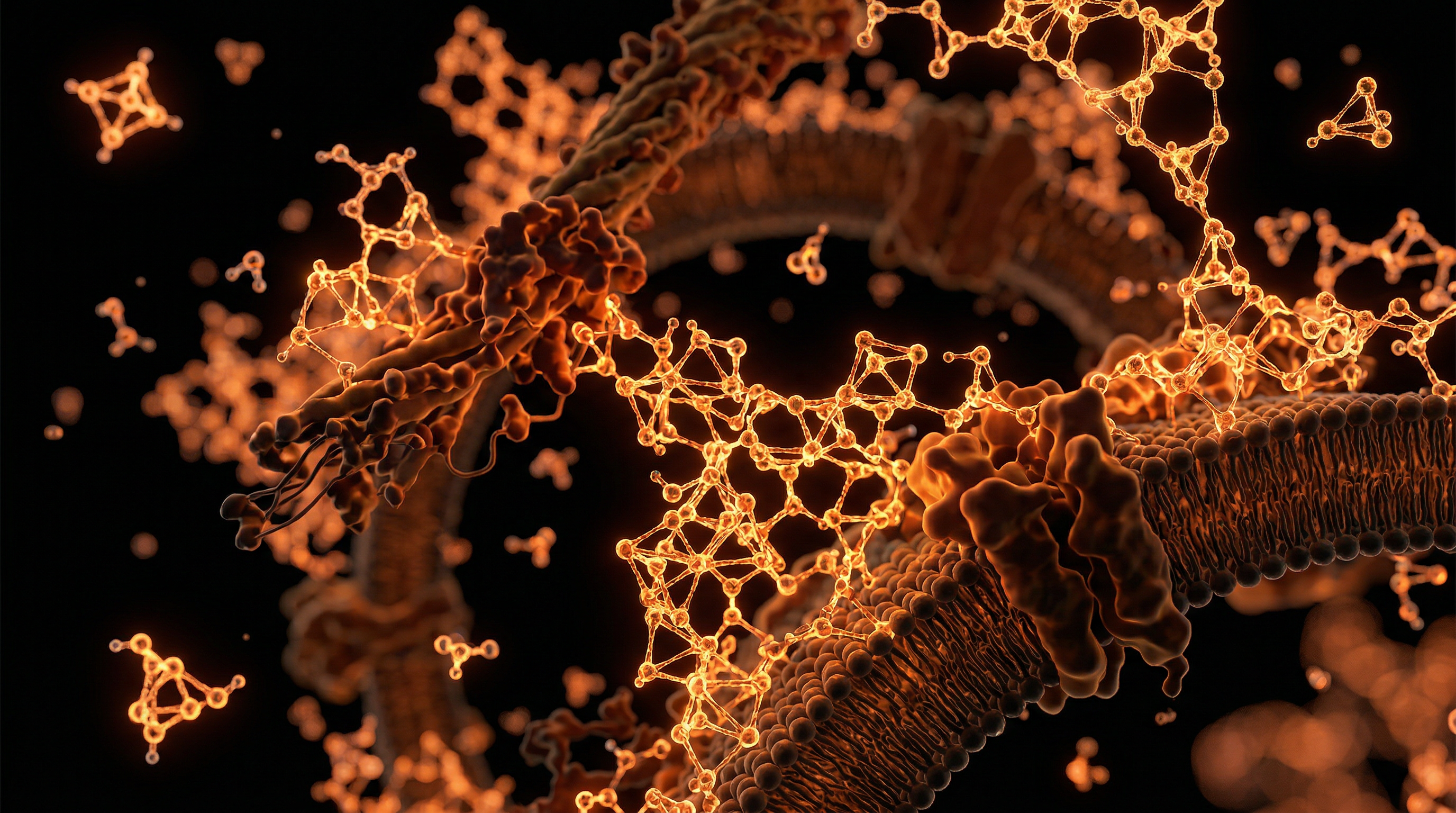
The Liquid Crystalline State of water represents a fourth phase of matter—neither a chaotic liquid nor a rigid solid, but a highly ordered, coherent lattice that functions as a biological computer. This state, often referred to as Structured Water or Exclusion Zone (EZ) Water, possesses the unique ability to store, transmit, and transduce information through electromagnetic frequencies.
At INNERSTANDING, we recognise that hydration is not a matter of volume, but of structural integrity. To be "hydrated" is to possess a robust liquid crystalline matrix within the cells and the extracellular matrix. This article delves into the sophisticated mechanisms by which biological water acts as a memory storage device and how the modern environment systematically degrades this vital crystalline structure, leading to the "dehydration of the terrain" that precedes almost all chronic disease.
Key Fact: While we are approximately 70% water by weight, if we count the actual number of molecules in the human body, over 99% of them are water. We are, essentially, sentient water.
The Biology — How It Works
To understand the liquid crystalline state, we must move beyond the high-school chemistry definition of water. In bulk water, $H_2O$ molecules move randomly, tethered by fleeting hydrogen bonds that break and reform trillions of times per second. However, when water encounters a hydrophilic (water-loving) surface—such as a cell membrane, a protein, or the collagen fibres of the fascia—it undergoes a radical phase transition.
The Exclusion Zone (EZ) and H3O2
Research spearheaded by Dr. Gerald Pollack at the University of Washington has demonstrated that water adjacent to biological surfaces organises itself into a hexagonal lattice. This structured layer "excludes" solutes (toxins, dyes, and even protons), creating a zone of pure, coherent water. Chemically, this is no longer $H2O$; it is **$H3O_2$**.
This fourth phase of water is denser, more viscous, and more alkaline than bulk water. Crucially, it possesses a negative electrical charge. As the EZ layer forms, it pushes positive protons into the surrounding bulk water, creating a battery-like separation of charge. This potential energy is the primary fuel for biological work, predating and supporting the ATP cycle.
Coherence and Quantum Electrodynamics (QED)
The work of Italian physicists Giuliano Preparata and Emilio Del Giudice suggests that in the liquid crystalline state, water molecules oscillate in phase with a specific electromagnetic field. These are known as Coherence Domains (CDs).
- Within a Coherence Domain, the electrons of the water molecules are nearly free, allowing the domain to act as a superconductor.
- These domains can "trap" specific frequencies from the environment, effectively storing information as a vibrational signature.
- This is the physical basis for Water Memory: the ability of water to retain the "imprint" of substances even after they have been physically removed.
The Fascial Lattice
In the human body, the most significant reservoir of liquid crystalline water is the fascia (connective tissue). Collagen, the primary protein of fascia, is a triple-helix structure that is wrapped in a "hydration shell" of structured water. This creates a body-wide communication network that transmits information faster than the nervous system. While nerves use slow ionic signals (approx. 20–100 m/s), the liquid crystalline fascial matrix utilizes biophotonic signalling at the speed of light.
Mechanisms at the Cellular Level
The cell is not a "bag of chemicals" but a highly organised liquid crystal matrix. Every organelle, from the mitochondria to the nucleus, is embedded within a cytoskeleton that is coated in structured water. This organisation is what allows for the near-instantaneous coordination of millions of biochemical reactions per second.
Protein Folding and Enzyme Activity
A protein’s function is determined by its three-dimensional shape. This shape is not intrinsic to the protein alone; it is dictated by the hydration shell of liquid crystalline water surrounding it. When the water loses its structure (becomes "bulk" water), the protein loses its shape and ceases to function. This is the root of "proteopathy"—diseases caused by misfolded proteins, such as Alzheimer’s and Parkinson’s.
DNA as a Fractal Antenna
The double helix of DNA is essentially a core of genetic code surrounded by a structured water sheath. Modern biophysics suggests that DNA acts as a fractal antenna, emitting and receiving electromagnetic information. The liquid crystalline water surrounding the DNA acts as the "tuning" mechanism. When the water is coherent, the DNA can "read" the environmental signals correctly. When the water is disordered, the genetic expression becomes "noisy" and chaotic.
The Mitochondrial Engine
Mitochondria are often called the "powerhouses" of the cell, but their primary output is not just ATP; it is metabolic water. The water produced at the end of the electron transport chain is born into the cell in a highly structured, deuterium-depleted state. This "new" water is immediately incorporated into the liquid crystalline lattice, refreshing the cell's memory and electrical potential.
Callout: Modern biology overlooks the fact that the primary function of cellular respiration is to generate the high-quality water necessary to maintain the liquid crystalline state of the cytoplasm.
Environmental Threats and Biological Disruptors
The integrity of our internal liquid crystal is under constant assault from the modern industrial landscape. Because structured water is held together by delicate electromagnetic bonds, it is highly susceptible to interference.
Non-Native Electromagnetic Fields (nnEMFs)
The most pervasive threat to biological water is the saturation of our environment with non-native EMFs (Wi-Fi, 5G, 4G, and power lines). These frequencies oscillate at billions of cycles per second (GHz), which is fundamentally discordant with the natural "resonant frequencies" of the human body.
- nnEMFs act as a "thermal and non-thermal agitator," breaking the delicate hydrogen bonds of the Exclusion Zone.
- This causes the liquid crystalline water to collapse back into chaotic bulk water, leading to a loss of cellular "charge" and information storage capacity.
Glyphosate and Chemical Desiccants
Glyphosate, the active ingredient in Roundup, is a structural analogue of the amino acid glycine. When glyphosate is incorporated into collagen (the primary protein of the fascia), it disrupts the protein's ability to hold structured water. This effectively "shatters" the liquid crystalline lattice of the connective tissue, leading to systemic "leakiness" in the gut, blood-brain barrier, and cell membranes.
Fluoride and Halogens
Fluoride is a highly electronegative ion that disrupts the hydrogen bonding network of water. In the body, fluoride displaces the oxygen and hydroxyl groups necessary for EZ formation. This results in the "stiffening" of biological water, making it less like a liquid crystal and more like a stagnant pond.
Deuterium Accumulation
Deuterium is a heavy isotope of hydrogen. When water is high in deuterium (as most modern municipal water and processed foods are), the heavy hydrogen atoms act like "sand in the gears" of the mitochondrial nanomotors. Deuterium-heavy water cannot form the same tight, coherent hexagonal structures as light water, leading to a "heavy," sluggish liquid crystal that cannot store information effectively.
The Cascade: From Exposure to Disease
When the liquid crystalline state of biological water is compromised, a predictable cascade of physiological decay begins. This process is rarely identified by mainstream medicine, which focuses on the "downstream" symptoms rather than the "upstream" structural collapse.
Phase 1: Loss of Coherence (Subclinical)
The first stage is the loss of electromagnetic coherence. This manifests as "brain fog," chronic fatigue, and a general lack of vitality. The body’s biophotonic communication becomes noisy. The "water memory" begins to record the signatures of toxins and stress rather than the signatures of health and homeostasis.
Phase 2: Breakdown of the Exclusion Zone
As the EZ layers around proteins and membranes shrink, the cell loses its negative charge. This is a state of cellular dehydration, even if the person is drinking litres of bulk water per day. Without the EZ layer to push away waste products, the "internal terrain" becomes acidic and toxic.
Phase 3: Metabolic Dysfunction
The mitochondria, sensing the lack of structured water, must work harder to produce more. This leads to increased oxidative stress (ROS production). The DNA, no longer protected by its liquid crystalline sheath, becomes vulnerable to mutations and epigenetic "misreading."
Phase 4: Chronic Disease
Finally, the "shattered" liquid crystal leads to clinical diagnosis.
- Autoimmunity: The body can no longer distinguish self from non-self because the molecular signalling through the water matrix is corrupted.
- Cancer: Characterised by a total collapse of the EZ. Cancerous cells are surrounded by bulk, chaotic water with no electrical potential.
- Neurological Decay: The brain, being the most water-dependent organ, suffers as the "liquid crystal computer" of the neurons fails to store and retrieve information.
What the Mainstream Narrative Omits
The study of water memory and the liquid crystalline state is one of the most suppressed areas of modern science. To accept that water stores information is to accept that the very foundations of pharmaceutical medicine and biochemistry are incomplete.
The Benveniste and Montagnier Censorship
In 1988, the renowned immunologist Jacques Benveniste published a paper in Nature showing that water could retain the memory of an antibody even after it was diluted to the point where no antibody molecules remained. The backlash was unprecedented; he was professionally ruined.
Years later, Nobel laureate Luc Montagnier (the discoverer of HIV) expanded on this work, demonstrating that DNA sequences could be digitally recorded, sent over the internet as a radio frequency, and used to "reconstruct" the DNA in a separate container of pure water. This "DNA teleportation" proved that water can act as a storage medium for genetic information. Despite Montagnier’s Nobel pedigree, his work was ignored or ridiculed by the mainstream scientific establishment.
The Pharmaceutical Conflict
The mainstream narrative persists in treating water as a "solvent" because if water is the primary carrier of information, then chemical drugs are not the only (or even the best) way to intervene in biological systems. If the body can be "reprogrammed" by exposing its internal water to specific frequencies or structured patterns, the multi-billion dollar pharmaceutical industry faces an existential threat.
The Dehydration Myth
Mainstream health advice tells us to "drink eight glasses of water a day." This is dangerously simplistic. It ignores the quality and structure of the water. Drinking massive amounts of unstructured, tap-filtered water can actually deplete the body by forcing it to expend energy to structure that water before it can be used by the cells.
The UK Context
In the United Kingdom, the challenge of maintaining the liquid crystalline state is particularly acute. The UK’s water infrastructure and environmental policies present a unique set of "hydration hurdles."
Victorian Infrastructure and Recycled Water
Much of the UK’s water supply, particularly in London and the Southeast, is "recycled." Water from the Thames and other rivers passes through multiple human bodies and treatment plants before reaching the tap. This water carries the "vibrational memory" of pharmaceuticals (especially endocrine disruptors like the contraceptive pill), heavy metals, and industrial waste. Standard filtration removes the physical chemicals but does nothing to erase the informational imprint left in the water’s liquid crystalline structure.
Fluoridation and Hard Water
While the UK government has proposed expanding water fluoridation, large swathes of the country already deal with high mineral loads ("hard water"). While minerals are essential, the inorganic calcium carbonate found in hard tap water is not the same as the "structured" minerals found in plant-based sources. This inorganic load, combined with fluoride, contributes to the "calcification" of the pineal gland and the stiffening of the body's fascial liquid crystal.
The UK "Postcode Lottery" of Hydration
The biological quality of water in the UK varies wildly. Highland Scotland and parts of Wales have access to relatively soft, high-energy "living water" from mountain sources. Conversely, urban centres are supplied with "dead water" that has been pressurised through 90-degree pipe bends (which destroys the natural vortexing/structuring of water) and treated with chlorine and chloramines.
UK Statistic: According to Environment Agency data, not a single river in England is considered "chemically clean," meaning the base source for our "hydration" is pre-loaded with disruptive information before it even enters the pipes.
Protective Measures and Recovery Protocols
Restoring the liquid crystalline state is the cornerstone of the INNERSTANDING hydration curriculum. It requires a two-pronged approach: removing disruptors and providing the conditions for the Exclusion Zone to grow.
1. Advanced Filtration and Erasure
To restore water memory, you must first "blank the tape."
- Reverse Osmosis (RO) or Distillation: These are the only methods that remove the majority of dissolved solids and fluoride.
- The "Memory Reset": Water that has been distilled is a "blank slate." It must be re-informed.
2. Restructuring and Vortexing
Water in nature does not move in straight lines; it moves in vortices. Vortexing water creates centripetal force that pulls the molecules into a more coherent, liquid crystalline arrangement.
- Use a vortexing jug or a magnetic stirrer to "spin" your water.
- This process naturally increases the dissolved oxygen and helps build the EZ layer.
3. Mineralisation and Deuterium Depletion
The liquid crystalline lattice requires "anchors."
- Quinton Marine Plasma or high-quality Shilajit provide the full spectrum of ionic minerals in the exact proportions found in human blood.
- For those with chronic illness, seeking out Deuterium-Depleted Water (DDW) can help "lighten" the biological load and restart the mitochondrial motors.
4. Charging the Biological Battery
The Exclusion Zone is built by Infrared (IR) Light.
- Sunlight: Direct exposure to the sun (especially morning sun) penetrates the skin and builds the EZ water layer in the fascia and blood vessels.
- Grounding (Earthing): Connecting your bare skin to the Earth allows a flow of electrons into the body. These electrons are the raw material for the negative charge of the liquid crystalline water.
- Saunas: Far-infrared saunas are a powerful tool for "structuring" the body's internal water through deep heat penetration.
5. Intentional Information
Since water stores information, the "vibration" of your environment matters.
- Sound and Music: Research by Masaru Emoto (though controversial) and later by Veda Austin shows that water responds to the geometry of sound. Exposing your drinking water to 432Hz or classical music can influence its structural coherence.
- Biological Intent: The most powerful "structuring agent" is the human heart field. Approaching your hydration with gratitude and intent is not "woo-woo"; it is a bio-electromagnetic intervention in the water’s liquid crystalline state.
Summary: Key Takeaways
- Beyond the Solvent: Water is not just a medium for life; it is a liquid crystalline computer that stores and transmits information.
- The Fourth Phase: Biological water exists as $H3O2$ (Exclusion Zone water), which acts as a rechargeable battery for the cell.
- The Memory Capacity: Through Coherence Domains, water can retain the electromagnetic "signature" of substances, even when they are physically absent.
- The Fascial Network: The body's connective tissue is a high-speed fibre-optic cable made of collagen and structured water.
- Modern Disruptors: Wi-Fi, 5G, Glyphosate, and Fluoride are the primary enemies of biological water structure.
- The "Dead Water" Crisis: Municipal water is physically and "informationally" toxic, especially in the UK’s recycled-water systems.
- Restoration is Possible: Through a combination of distillation, vortexing, mineralisation, and infrared light, you can rebuild your internal liquid crystal and restore your "Innerstanding."
In the final analysis, our health is a reflection of the order within our internal water. To master your hydration is to master the very substance of your consciousness. We are not merely "drinking water"; we are maintaining the crystalline integrity of our biological temple.
This article is provided for informational and educational purposes only. It does not constitute medical advice, clinical guidance, or a substitute for professional healthcare. Information reflects cited research at time of publication. Always consult a qualified healthcare professional before acting on any health information.
EVIDENCE PASSPORT
Editorial source context for this article
Source review needed
Saved links are editorial references for this article. They may support specific claims rather than every sentence. Open and assess each source in context. This passport does not independently verify them.
Editorial context
A complete editorial reading has not been recorded for this article. Source links remain available for you to open and assess directly.
Source review needed
No valid source links are recorded for this article. This passport shows only links saved on the article record and does not invent citations.
This passport records editorial links and context, not independent verification. Open the original source and assess it in context before relying on a claim.
Medical Disclaimer
The information in this article is for educational purposes only and does not constitute medical advice, diagnosis, or treatment. Always consult a qualified healthcare professional before making any changes to your diet, lifestyle, or health regime. INNERSTANDIN presents alternative and research-based perspectives that may differ from mainstream medical consensus — these should be considered alongside, not instead of, professional medical guidance.
Read Full DisclaimerContinue the thread
Keep this question moving.
Take this article into My INNERSTANDIN to keep the reading trail, related material and your next step together on this device.