
Masculinity Disrupted: The Biological Cost of the Phthalate Syndrome
Published April 2026
Investigating the 'phthalate syndrome' and the biological mechanisms by which plasticizers inhibit testosterone production and male reproductive development.
Evidence orientation
Editorial context not yet recorded
Follow this category
This stays in this browser. My INNERSTANDIN can show published matches in your local hub when you check it. It does not send email, push, or alert notifications.
Local learning review
A private browser aid for revisiting ideas. It is not an alert or a health recommendation.
Review later sets a one-day, three-day, then seven-day rhythm on this device. Choose it only when you want to revisit this article.
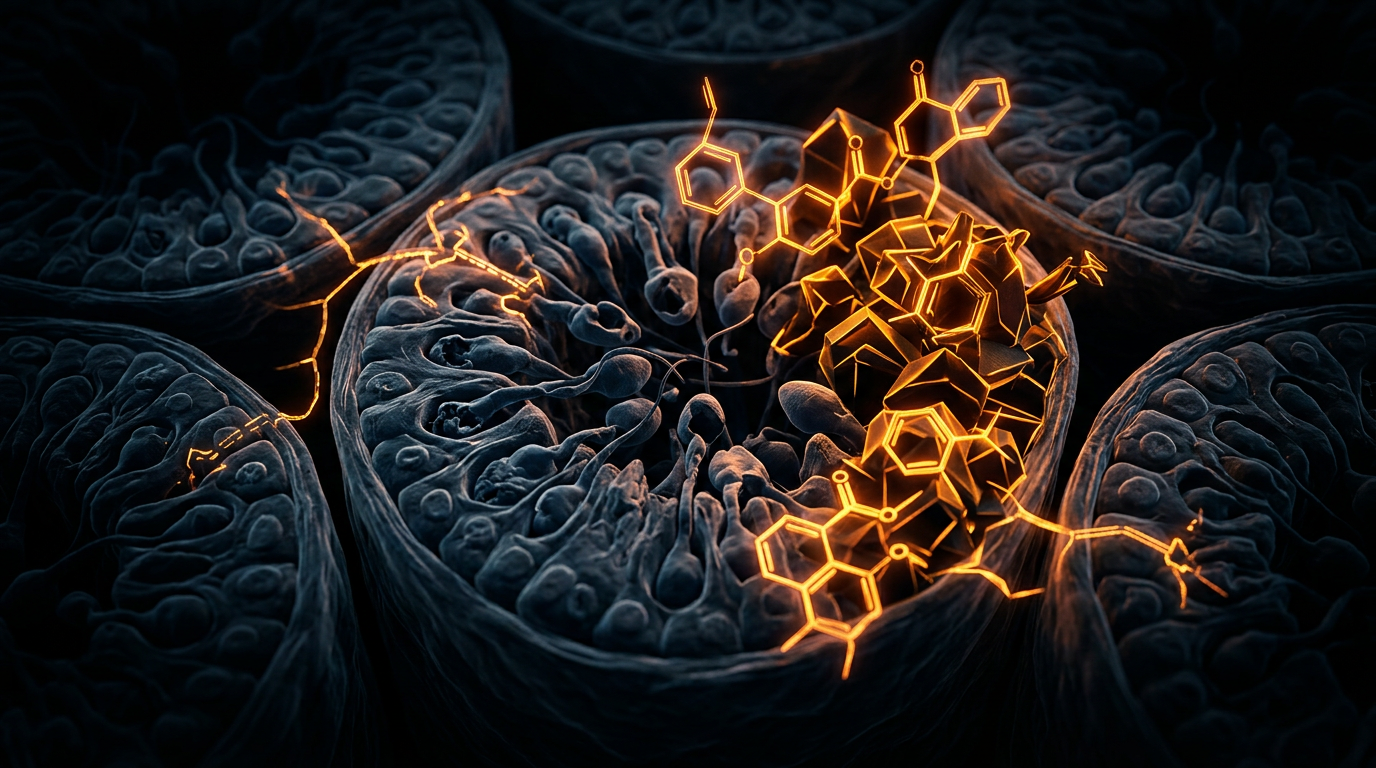
Male reproductive health is in a state of precipitous decline, with sperm counts halving over the last four decades. Central to this crisis is the 'phthalate syndrome,' a constellation of developmental and physiological disruptions caused by exposure to anti-androgenic plasticizers. This is not merely a fertility issue; it is a fundamental threat to male vitality and hormonal integrity. The Anogenital Distance and Fetal Programming: The most critical impact of phthalates occurs in utero during the 'masculinization programming window.' Phthalates inhibit the production of testosterone by the fetal Leydig cells. This disruption is often measured by the anogenital distance (AGD), where shorter distances in male infants correlate with lower testosterone levels and reproductive issues in adulthood.
This biological 'short-circuiting' happens long before an individual is even born. Steroidogenic Acute Regulatory (StAR) Protein Inhibition: In adults, phthalates continue to sabotage testosterone production by downregulating the StAR protein. This protein is the rate-limiting step in steroidogenesis, responsible for transporting cholesterol into the mitochondria of Leydig cells to be converted into pregnenolone. When phthalates inhibit StAR, the entire assembly line of male hormones grinds to a halt. This leads to the increasingly common presentation of 'low T' in young men, often misdiagnosed as simple stress or poor sleep.
Navigating the Modern Endocrine Minefield: The pervasive nature of phthalates—found in everything from cologne to PVC flooring—means that modern men are in a constant state of anti-androgenic bombardment. Reversing this requires a radical departure from mainstream lifestyle choices. It involves moving toward glass, stainless steel, and natural fibers, alongside supporting the androgen receptors through specific phytonutrients that can help displace these xenobiotic interlopers.
This article is provided for informational and educational purposes only. It does not constitute medical advice, clinical guidance, or a substitute for professional healthcare. Information reflects cited research at time of publication. Always consult a qualified healthcare professional before acting on any health information.
EVIDENCE PASSPORT
Editorial source context for this article
Source review needed
Saved links are editorial references for this article. They may support specific claims rather than every sentence. Open and assess each source in context. This passport does not independently verify them.
Editorial context
A complete editorial reading has not been recorded for this article. Source links remain available for you to open and assess directly.
Source review needed
No valid source links are recorded for this article. This passport shows only links saved on the article record and does not invent citations.
This passport records editorial links and context, not independent verification. Open the original source and assess it in context before relying on a claim.
Medical Disclaimer
The information in this article is for educational purposes only and does not constitute medical advice, diagnosis, or treatment. Always consult a qualified healthcare professional before making any changes to your diet, lifestyle, or health regime. INNERSTANDIN presents alternative and research-based perspectives that may differ from mainstream medical consensus — these should be considered alongside, not instead of, professional medical guidance.
Read Full DisclaimerContinue the thread
Keep this question moving.
Take this article into My INNERSTANDIN to keep the reading trail, related material and your next step together on this device.
Explore this in the Body Map
See where this hits your biology. Interactive anatomy, threats, and protective protocols.
Dig deeper in the Library
Free, longform PDF volumes that go beyond headlines into mechanisms and references.