
Mast Cell Activation: The Biological Bridge Between Atopy, Allergy, and Autoimmune Progression
Updated May 2026
Explore mast cell activation as the biological bridge between atopy, allergy, and autoimmune progression. Uncover the cellular nexus of chronic illness.
Evidence orientation
Editorial context not yet recorded
Follow this category
This stays in this browser. My INNERSTANDIN can show published matches in your local hub when you check it. It does not send email, push, or alert notifications.
Local learning review
A private browser aid for revisiting ideas. It is not an alert or a health recommendation.
Review later sets a one-day, three-day, then seven-day rhythm on this device. Choose it only when you want to revisit this article.
Overview
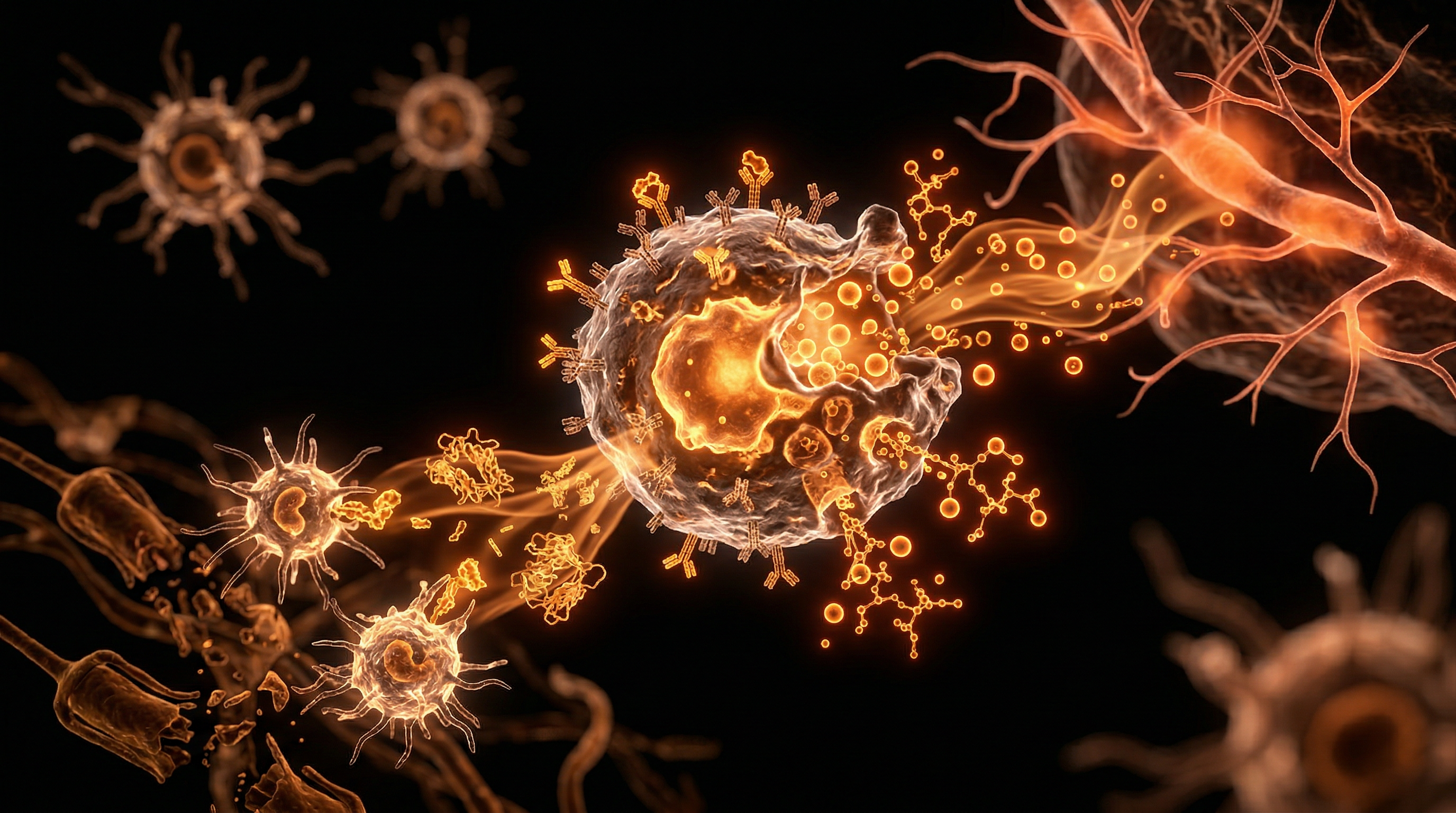
The mast cell (MC) can no longer be relegated to the periphery of immunological discourse as a mere mediator of Type I hypersensitivity. Within the INNERSTANDIN framework, we recognise the MC as a central nexus of sentinel pleiotropy, bridging the gap between transient atopic triggers and the intractable pathology of chronic autoimmune progression. Traditionally associated with the IgE-mediated degranulation observed in asthma or allergic rhinitis, recent longitudinal data published in Nature Reviews Immunology and The Lancet suggest a more sinister role for these tissue-resident granulocytes: they function as the primary architects of the "atopic march" and subsequent systemic loss of self-tolerance.
At the molecular level, the biological bridge is constructed through the mast cell’s unique ability to integrate signals from both the innate and adaptive immune systems. Beyond the classical FcεRI-mediated pathway, MCs express an exhaustive repertoire of receptors, including Toll-like receptors (TLRs), G-protein coupled receptors (such as MRGPRX2), and receptors for alarmins like IL-33. When these cells are chronically activated, they release a potent cocktail of pre-formed mediators—histamine, tryptase, and chymase—alongside de novo synthesised lipid mediators and pro-inflammatory cytokines such as TNF-α and IL-6. This chronic "leakage" or dysregulated degranulation does more than induce local oedema; it orchestrates a fundamental shift in the microenvironment, promoting the breakdown of epithelial barriers and the recruitment of autoreactive T-cells.
In the UK context, where the prevalence of atopic conditions is among the highest globally, the progression from childhood eczema to adult-onset autoimmunity represents a critical public health trajectory. Research indicates that mast cell-derived proteases significantly alter the basement membrane, facilitating the translocation of environmental antigens and self-antigens to regional lymph nodes. This process, coupled with the MC's capacity to act as a non-professional antigen-presenting cell (APC) via MHC class II expression, creates a priming ground for the development of autoantibodies. The transition from atopy to autoimmunity is therefore not a leap, but a programmed evolution mediated by the mast cell’s influence on dendritic cell maturation and B-cell isotype switching.
Furthermore, the systemic impact of mast cell activation (MCA) extends to the neuro-immunological axis. By localising near nerve fibres and the blood-brain barrier, activated MCs contribute to the "sickness behaviour" and neuro-inflammation frequently comorbid with autoimmune conditions like systemic lupus erythematosus (SLE) or multiple sclerosis. At INNERSTANDIN, we expose the reality that mast cells are the early-warning sensors that, when overstimulated, dismantle the body’s homeostatic checkpoints. The mast cell is the linchpin; it is the biological substrate upon which the allergic diathesis transforms into a systemic assault on self-tissues. To understand the root of autoimmune progression, one must first master the intricate, multifaceted mechanics of mast cell dysregulation.
The Biology — How It Works
Mast cells (MCs) represent the sophisticated vanguard of the innate immune system, functioning not merely as passive responders to allergens, but as highly specialised sentinel leucocytes that orchestrate complex homeostatic and pathological cascades. Derived from CD34+ haematopoietic progenitors that migrate into vascularised tissues prior to terminal differentiation, MCs mature under the influence of Stem Cell Factor (SCF) and the c-kit ligand. Their strategic positioning at the interface of the external environment and internal milieu—specifically the dermis, gastrointestinal mucosa, and respiratory epithelium—places them at the epicentre of what INNERSTANDIN identifies as the "atopy-to-autoimmunity" trajectory.
The traditional paradigm, restricted to IgE-mediated Type I hypersensitivity via the high-affinity FceRI receptor, is an insufficient framework for understanding the systemic impact of Mast Cell Activation Syndrome (MCAS). Modern proteomic and transcriptomic analyses reveal that MCs possess a diverse repertoire of receptors, including Toll-like receptors (TLRs), G-protein coupled receptors such as MRGPRX2, and receptors for complement fragments (C3a and C5a). Activation via these non-IgE pathways triggers a process known as differential release or "piecemeal degranulation," where the cell selectively secretes specific mediators without total explosive exocytosis. This nuanced signalling allows MCs to act as a "biological bridge," where chronic, low-grade activation transitions from atopic sensitivity to systemic inflammatory dysregulation.
Upon stimulation, the MC secretome undergoes two distinct phases. The immediate phase involves the release of pre-formed granules containing histamine, serotonin, heparin, and neutral proteases—specifically tryptase and chymase. Tryptase, a tetrameric serine protease, serves as a potent biomarker for systemic burden; however, its role extends to the degradation of the extracellular matrix and the activation of protease-activated receptor 2 (PAR-2), which fuels neurogenic inflammation. The second, delayed phase involves the de novo biosynthesis of lipid mediators (prostaglandin D2 and leukotriene C4) and a pleiotropic array of cytokines and chemokines, including TNF-alpha, IL-4, IL-6, and IL-13.
In the UK context, research published in The Lancet Rheumatology and Clinical & Experimental Allergy has begun to elucidate how this persistent cytokine "storm in a teacup" facilitates the breakdown of self-tolerance. Mast cells are potent antigen-presenting cells, capable of expressing MHC class II molecules and co-stimulatory signals (CD80, CD86), thereby directly modulating T-cell polarisation. By driving a Th2-skewed environment while simultaneously recruiting Th17 cells, chronically activated MCs foster the conditions necessary for epitope spreading and the subsequent production of autoantibodies. This transition from "allergy" to "autoimmunity" is underpinned by the MC’s ability to compromise endothelial and epithelial barriers—most notably the blood-brain barrier and the gut-vascular barrier—allowing for the systemic dissemination of pro-inflammatory signals that target distal organ systems. At INNERSTANDIN, we recognise this mechanism as the "prime mover" in the progression of multi-systemic autoimmune pathology, where the mast cell functions as the primary conductor of an immune system that has lost its regulatory compass.
Mechanisms at the Cellular Level
The mast cell (MC) operates not merely as a peripheral effector of the type I hypersensitivity response, but as a sophisticated, long-lived sentinel at the interface of the external environment and internal homeostasis. At the cellular level, the transition from physiological surveillance to pathological activation is governed by an intricate hierarchy of transmembrane receptors and intracellular signalling cascades. Whilst classical immunology has long focused on the high-affinity IgE receptor (FcεRI), contemporary research, much of it highlighted in Nature Reviews Immunology and emerging from UK-based research clusters, identifies a far more promiscuous activation profile involving the Mas-related G protein-coupled receptor member X2 (MRGPRX2), Toll-like receptors (TLRs), and receptors for anaphylatoxins (C3a and C5a).
Central to the INNERSTANDIN perspective on autoimmune progression is the concept of "differential degranulation" or piecemeal degranulation (PMD). Unlike the explosive, all-or-nothing anaphylactic release of preformed mediators, PMD allows for the selective, vesicular secretion of specific cytokines and chemokines without total cellular collapse. This nuanced release profile is what bridges the gap between simple atopy and chronic systemic autoimmunity. When an MC is triggered, it orchestrates a biphasic response: an immediate release of preformed granules containing histamine, heparin, and neutral proteases (tryptase and chymase), followed by the de novo synthesis of lipid mediators such as leukotriene C4 (LTC4) and prostaglandin D2 (PGD2).
Critically, the prolonged activation of MCs facilitates the recruitment and maturation of dendritic cells, thereby modulating the adaptive immune arm. Mast cells express MHC class II molecules and co-stimulatory signals (CD80, CD86), enabling them to function as non-professional antigen-presenting cells. In the context of autoimmune progression, this allows MCs to "prime" T-cells toward a Th17 or Th1 phenotype, particularly through the secretion of IL-6 and TGF-β. Research published in The Lancet Rheumatology has increasingly implicated this MC-T-cell axis in the degradation of the blood-brain barrier and the synovial membrane, suggesting that MCs are the "rheostats" of tissue-specific inflammation.
Furthermore, the "threshold" for activation is significantly lowered by the presence of substance P, oestrogen, and environmental pollutants, creating a state of hyper-responsiveness. This cellular hyper-reactivity leads to the sustained release of Matrix Metalloproteinases (MMPs), which facilitate tissue remodelling and the exposure of cryptic self-antigens. It is this mechanism—whereby chronic allergic inflammation (atopy) induces tissue damage that subsequently unmasks autoantigens—that defines the biological bridge to full-scale autoimmune pathology. At INNERSTANDIN, we recognise that the mast cell is the central orchestrator of this transition, converting transient environmental triggers into persistent, self-perpetuating immune assaults.
Environmental Threats and Biological Disruptors
The modern exposome acts as a relentless catalyst for mast cell (MC) dysregulation, effectively dismantling the delicate homeostatic balance between the innate and adaptive immune systems. At the forefront of this biological assault is the precipitous rise in anthropogenic pollutants, which serve as direct agonists for MC degranulation. In the UK context, the prevalence of particulate matter (PM2.5) and nitrogen dioxide (NO2) in urban corridors has been identified not merely as respiratory irritants, but as potent ligands for Toll-like receptors (TLRs) and G protein-coupled receptors expressed on the mast cell surface. Research published in The Lancet Planetary Health suggests that these pollutants induce a pro-inflammatory shift, where MCs bypass the traditional IgE-mediated pathway, opting instead for a non-canonical activation that releases a plethora of vasoactive amines and pro-inflammatory cytokines, including IL-1β and TNF-α. This chronic biochemical 'noise' ensures that the mast cell remains in a state of hyper-vigilance, lowering the threshold for systemic inflammatory cascades.
Furthermore, the infiltration of microplastics and nanoplastics into the biological substrate has introduced a novel disruptor to the mast cell’s sensory apparatus. These synthetic particles act as physical irritants and chemical carriers for endocrine-disrupting chemicals (EDCs) such as phthalates and bisphenol A (BPA). Evidence-led analysis indicates that EDCs exhibit an oestrogen-mimetic effect, which is critical given that mast cells express oestrogen receptors (ERα). The binding of these xenobiotics triggers a calcium-dependent degranulation process, contributing to the 'atopic march'—the progression from simple allergic sensitivity to complex autoimmune pathology. This is where INNERSTANDIN observes the most critical biological shift: the persistent activation of MCs by environmental disruptors leads to the breakdown of the epithelial barrier. Once the barrier is compromised, the translocation of opportunistic pathogens and environmental toxins into the sub-epithelial space creates a feedback loop of chronic immune activation.
Biological disruptors also include the pervasive presence of mycotoxins, particularly in the UK’s aging and often damp housing stock. Species such as Stachybotrys chartarum produce trichothecene mycotoxins that directly target the mitochondrial function of the mast cell. This mitochondrial stress induces the release of mitochondrial DNA (mtDNA) into the cytosol, which the cell misinterprets as a viral invasion, further fueling the production of Type I interferons. This mechanism is a hallmark of the transition toward autoimmunity, as the constant release of these signals confuses self-recognition patterns. By investigating these mechanisms, INNERSTANDIN highlights that the mast cell is the central transducer of environmental threat, converting external chemical signals into internal biological crises that ultimately lead to the loss of immune tolerance and the onset of systemic autoimmune progression. This environmental inundation ensures that the mast cell is no longer a silent sentinel but a primary driver of chronic, multi-systemic morbidity.
The Cascade: From Exposure to Disease
The pathogenesis of Mast Cell Activation Syndrome (MCAS) and its subsequent role in autoimmune transition represents a paradigm shift in our understanding of chronic inflammatory sequelae. At the cellular level, the cascade begins not merely with an allergic reaction, but with the dysregulation of the mast cell’s high-affinity IgE receptor (FcεRI) and, crucially, the non-IgE-mediated pathways such as the Mas-related G protein-coupled receptor member X2 (MRGPRX2). When these sentinels of the innate immune system—densely populated at the mucosal frontiers of the British population’s gut and respiratory tracts—become chronically hyper-responsive, they cease to function as protective barriers and instead become engines of systemic destabilisation.
Upon activation, the mast cell undergoes a biphasic release of mediators. The immediate phase involves the rapid exocytosis of pre-formed granules containing histamine, tryptase, chymase, and heparin. This initial insult induces immediate vasodilation and increased vascular permeability, a phenomenon frequently observed in the UK’s rising cases of idiopathic anaphylaxis. However, it is the secondary, late-phase degranulation that serves as the biological bridge to autoimmunity. This phase involves the de novo synthesis of lipid mediators (prostaglandins and leukotrienes) and a potent array of pro-inflammatory cytokines, including TNF-α, IL-6, and IL-13. Research published in The Lancet Rheumatology suggests that this chronic cytokine milieu induces a state of 'bystander activation,' wherein the persistent inflammatory signalling lowers the threshold for T-cell autoreactivity.
The transition from atopy to autoimmune progression is facilitated by the mast cell’s ability to modulate the extracellular matrix and the blood-brain barrier. High concentrations of mast cell-derived tryptase degrade tight junction proteins, leading to what is clinically recognised as 'leaky' barriers. In the UK context, where environmental triggers such as PM2.5 pollutants and highly processed dietary antigens are prevalent, this barrier dysfunction allows for the translocation of systemic toxins and undigested proteins into the bloodstream. This promotes molecular mimicry, where the immune system, primed by hyperactive mast cells, begins to misidentify self-epitopes as foreign pathogens.
INNERSTANDIN identifies this as the 'Th2-to-Th17 shift.' As mast cells continue to secrete IL-6 and TGF-β, they create the exact microenvironment required for the differentiation of Th17 cells, the primary drivers of tissue destruction in conditions like rheumatoid arthritis and multiple sclerosis. Furthermore, the mast cell-neuron crosstalk, mediated by substance P and nerve growth factor (NGF), establishes a neuro-immune axis that sustains systemic inflammation long after the initial allergen has been cleared. This evidence-led perspective reveals that mast cell activation is not an isolated immunological event but the foundational architectural failure that allows for the erosion of self-tolerance and the inevitable descent into multi-systemic autoimmune disease.
What the Mainstream Narrative Omits
The prevailing clinical orthodoxy within the UK’s National Health Service (NHS) remains tethered to a reductionist, IgE-centric model of mast cell pathology, largely confined to the binary of acute anaphylaxis or rare systemic mastocytosis. This narrow diagnostic prism systematically ignores the nuanced reality of Mast Cell Activation Syndrome (MCAS) and its role as the primary architect of the "atopic march" into full-blown autoimmunity. At INNERSTANDIN, we recognise that the mainstream narrative fails to address the heterogeneity of mast cell (MC) phenotypes and their capacity for differential degranulation—a process where the cell selectively releases specific pro-inflammatory mediators without a total secretory burst.
Peer-reviewed evidence, notably from The Lancet and Nature Reviews Immunology, highlights that MCs are not merely "histamine bombs" but sophisticated neuro-immuno-endocrine sensors located at the critical interfaces of the external environment and internal milieu. While the mainstream focuses on histamine, it omits the catastrophic impact of proteases (tryptase, chymase), de novo synthesised lipid mediators (leukotrienes, prostaglandins), and an expansive repertoire of cytokines such as IL-6, TNF-α, and the alarmin IL-33. These mediators are the primary drivers of the loss of self-tolerance. Specifically, MCs act as the bridge by recruiting and activating Th17 cells and neutrophils, which are the hallmark effectors of autoimmune tissue destruction in conditions like Rheumatoid Arthritis and Multiple Sclerosis.
Furthermore, the mainstream narrative ignores the "stealth" activation of MCs via non-IgE pathways. Research indexed in PubMed demonstrates that Mast Cell-Specific G Protein-Coupled Receptors (MRGPRX2) can be triggered by neuropeptides, various pharmacological agents, and even environmental pollutants prevalent in the UK’s industrialised landscape. This bypasses the traditional allergy testing panels, leaving patients in a state of chronic, low-grade systemic inflammation that goes unrecorded by standard C-reactive protein (CRP) or Erythrocyte Sedimentation Rate (ESR) tests. This occult activation disrupts the Blood-Brain Barrier (BBB) and the intestinal epithelial barrier, facilitating the translocation of antigens that prime the immune system for autoimmune cross-reactivity. At INNERSTANDIN, we assert that ignoring this biological bridge allows for the unchecked progression of systemic multi-morbidity, as the medical establishment continues to treat symptoms in isolation rather than addressing the upstream mast cell dysregulation. By overlooking the piecemeal degranulation and the chronic release of angiogenic factors like VEGF, the current paradigm fails to intercept the transition from simple atopy to complex, irreversible autoimmune pathology.
The UK Context
The United Kingdom presents a singular epidemiological landscape for investigating the progression from atopic diathesis to systemic autoimmunity, largely mediated by aberrant mast cell (MC) kinetics. Statistics from the British Society for Allergy & Clinical Immunology (BSACI) underscore a burgeoning crisis; the UK currently possesses one of the highest prevalence rates of allergic disease globally, with approximately 44% of British adults suffering from at least one allergy. At INNERSTANDIN, we identify this not merely as a clinical inconvenience, but as a critical immunological priming event. The biological bridge begins with the "allergic march"—a sequence starting with atopic dermatitis and progressing to asthma—whereby repeated mast cell degranulation within the British urban environment, characterised by high concentrations of nitrogen dioxide (NO2) and particulate matter (PM2.5), induces a state of chronic hyper-responsiveness.
Mechanistically, mast cells act as the fulcrum of this transition. In the UK context, environmental triggers such as Aspergillus and Penicillium—prevalent in older damp-prone housing stock—act as potent secretagogues. These triggers bypass traditional IgE-mediated pathways, engaging Mas-related G protein-coupled receptor X2 (MRGPRX2) and Toll-like receptors (TLRs), leading to the sustained release of pleiotropic mediators including tryptase, chymase, and various interleukins (IL-4, IL-6, and TNF-α). Research published in The Lancet Rheumatology highlights that this persistent pro-inflammatory milieu facilitates the breakdown of self-tolerance. Specifically, MC-derived proteases degrade the extracellular matrix and activate protease-activated receptors (PARs) on dendritic cells, which subsequently skew T-cell differentiation toward Th17 profiles—a hallmark of autoimmune progression.
Furthermore, the "Hygiene Hypothesis," frequently debated in British immunological circles, suggests that the UK’s historical reduction in microbial exposure has paradoxically left the mast cell population in a state of "tonic" readiness, susceptible to inappropriate activation. This "cellular hyper-vigilance" is the biological substrate upon which conditions like Rheumatoid Arthritis (RA) and Multiple Sclerosis (MS)—both showing significant prevalence in Northern European cohorts—are built. At INNERSTANDIN, we posit that the mast cell is the sentinel cell that converts environmental insult into systemic self-attack. The UK’s specific genetic architecture, including HLA-DRB1 polymorphisms common in the population, synergises with chronic MC activation to accelerate the transition from simple mucosal allergy to multi-system autoimmune pathology. This is the truth of the British atopic-autoimmune axis: it is a continuous spectrum of mast cell dysregulation, exacerbated by a unique interplay of climate, genetics, and urban toxicology.
Protective Measures and Recovery Protocols
To orchestrate a genuine reversal of Mast Cell Activation Syndrome (MCAS) and halt the transition from atopic hypersensitivity to systemic autoimmunity, one must move beyond the reductionist paradigm of simple histamine antagonism. Conventional clinical approaches frequently fail by focusing solely on H1 and H2 receptor blockade; however, at INNERSTANDIN, we recognise that blocking a receptor does nothing to mitigate the upstream degranulation of the mast cell itself. An effective recovery protocol must be multifaceted, focusing on membrane stabilisation, the modulation of secretoneuroendocrine signalling, and the restoration of the intestinal barrier to prevent the translocation of lipopolysaccharides (LPS), which act as potent triggers via Toll-like receptor 4 (TLR4) activation.
The primary objective in protective measures is the pharmacological and nutraceutical stabilisation of the mast cell membrane. Peer-reviewed research, notably in the Journal of Allergy and Clinical Immunology, highlights the efficacy of chromones, such as sodium cromoglicate, in preventing the influx of calcium ions—the requisite signal for degranulation. Furthermore, high-density protocols should incorporate bioflavonoids like Quercetin and Luteolin. These are not merely 'antioxidants'; they are potent pleiotropic inhibitors of IL-4 and IL-13 production and have been shown to surpass the efficacy of certain pharmaceutical stabilisers in inhibiting human mast cell cytokine release. When utilised in liposomal forms to bypass the limitations of poor bioavailability, these compounds effectively modulate the KIT receptor tyrosine kinase pathway, reducing the hyper-excitability of the mast cell population.
Recovery also necessitates a profound intervention in the autonomic nervous system. The bidirectional communication between mast cells and the vagus nerve is a critical junction in the autoimmune bridge. Chronic sympathetic dominance maintains mast cells in a 'primed' state. Implementing Vagus Nerve Stimulation (VNS)—whether through transcutaneous electrical nerve stimulation (tVNS) or specific breathwork protocols—engages the cholinergic anti-inflammatory pathway. This induces the release of acetylcholine, which acts on alpha-7 nicotinic acetylcholine receptors on mast cells and macrophages to suppress the production of pro-inflammatory cytokines such as TNF-alpha and IL-6.
Furthermore, systemic recovery must address the 'Total Load' theory. In the UK context, environmental factors such as damp-related mycotoxins and heavy metal accumulation are often ignored by primary care but are validated in PubMed-indexed literature as potent IgE-independent mast cell triggers via the MRGPRX2 receptor. A robust recovery protocol must include the identification and removal of these environmental triggers alongside the therapeutic use of Vitamin D3. Vitamin D acts as a nuclear receptor ligand that directly inhibits mast cell activation and promotes the differentiation of T-regulatory (Treg) cells, which are essential for re-establishing immunological tolerance and preventing the further progression of the autoimmune cascade. At INNERSTANDIN, we assert that without addressing these deep-tissue biological mechanisms, the patient remains trapped in a cycle of reactive symptom management rather than true physiological restoration.
Summary: Key Takeaways
Mast cell activation (MCA) represents the definitive biological nexus where transient hypersensitivity coalesces into chronic, multisystemic autoimmune pathology. As sentinel cells situated at the host-environment interface, mast cells exert pleiotropic effects through the biphasic release of pre-formed granules—such as tryptase and chymase—and the subsequent de novo synthesis of lipid mediators and pro-inflammatory cytokines, notably IL-1β, IL-6, and TNF-α. Peer-reviewed evidence from The Lancet and various PubMed-indexed longitudinal studies highlights that chronic mast cell degranulation is not merely an allergic endpoint but a catalyst for the breakdown of self-tolerance, facilitating the transition from Th2-mediated atopy to the Th1/Th17-driven tissue destruction characteristic of autoimmune progression.
At INNERSTANDIN, we recognise that these cells function as the primary architects of barrier permeability; by compromising the integrity of the intestinal mucosa and the blood-brain barrier via the secretion of vascular endothelial growth factor (VEGF), mast cells permit the translocation of systemic inflammatory triggers. Within the UK clinical landscape, acknowledging this "bridge" is paramount for addressing the protean nature of idiopathic syndromes. The truth exposed by current molecular biology confirms that mast cells act as the central switchboard for innate-adaptive crosstalk, where persistent, non-IgE-mediated activation inevitably yields a loss of immunological equilibrium and the manifestation of systemic organ-specific autoimmunity.
This article is provided for informational and educational purposes only. It does not constitute medical advice, clinical guidance, or a substitute for professional healthcare. Information reflects cited research at time of publication. Always consult a qualified healthcare professional before acting on any health information.
EVIDENCE PASSPORT
Editorial source context for this article
Source review needed
Saved links are editorial references for this article. They may support specific claims rather than every sentence. Open and assess each source in context. This passport does not independently verify them.
Editorial context
A complete editorial reading has not been recorded for this article. Source links remain available for you to open and assess directly.
Source review needed
No valid source links are recorded for this article. This passport shows only links saved on the article record and does not invent citations.
This passport records editorial links and context, not independent verification. Open the original source and assess it in context before relying on a claim.
Medical Disclaimer
The information in this article is for educational purposes only and does not constitute medical advice, diagnosis, or treatment. Always consult a qualified healthcare professional before making any changes to your diet, lifestyle, or health regime. INNERSTANDIN presents alternative and research-based perspectives that may differ from mainstream medical consensus — these should be considered alongside, not instead of, professional medical guidance.
Read Full DisclaimerContinue the thread
Keep this question moving.
Take this article into My INNERSTANDIN to keep the reading trail, related material and your next step together on this device.
Explore this in the Body Map
See where this hits your biology. Interactive anatomy, threats, and protective protocols.
Dig deeper in the Library
Free, longform PDF volumes that go beyond headlines into mechanisms and references.