Mechanisms of Formaldehyde-Induced DNA-Protein Crosslinking in Pulmonary Epithelium
A comprehensive investigation into the molecular interactions between formaldehyde and human lung tissue, detailing the formation of DNA-protein crosslinks (DPCs) and their role in respiratory pathology and genomic instability.
# Mechanisms of Formaldehyde-Induced DNA-Protein Crosslinking in Pulmonary Epithelium
Formaldehyde (FA) is one of the most common and hazardous indoor air pollutants encountered in the modern built environment. Found in medium-density fibreboard (MDF), urea-formaldehyde resins, synthetic textiles, and various combustion processes, this small, highly reactive aldehyde (CH2O) poses a significant risk to the health of building occupants. At INNERSTANDING, we focus on the root causes of disease, and in the context of formaldehyde, the root cause of its toxicity lies in its unique ability to disrupt the very blueprint of our cells: our DNA. Specifically, formaldehyde is a potent inducer of DNA-protein crosslinks (DPCs), a complex form of DNA damage that particularly affects the pulmonary epithelium—the first line of defence in our respiratory system.
The Chemical Nature of Formaldehyde Reactivity
To understand why formaldehyde is so damaging, one must first look at its chemical structure. Formaldehyde is a simple molecule with a highly electrophilic carbonyl group. Because it is small and uncharged, it can easily penetrate cellular membranes and diffuse into the nucleus. Once inside, its electrophilicity allows it to react rapidly with nucleophilic sites on biological macromolecules, such as the amino groups (–NH2) and thiol groups (–SH) found in proteins and nucleic acids.
In the aqueous environment of the pulmonary mucosa, formaldehyde exists largely as its hydrated form, methanediol. However, the small fraction that remains as free formaldehyde is sufficient to drive covalent bonding reactions. The most critical of these reactions in terms of long-term health is the formation of a Schiff base. This occurs when the formaldehyde molecule reacts with a primary amine on a protein (such as the side chain of a lysine residue) or a nitrogenous base in DNA (such as the amino group of guanine or adenine). This initial reaction creates a methylol intermediate, which can then undergo a secondary reaction with another nucleophile to form a stable methylene bridge (–CH2–) between the DNA and the protein.
The Genesis of DNA-Protein Crosslinks (DPCs)
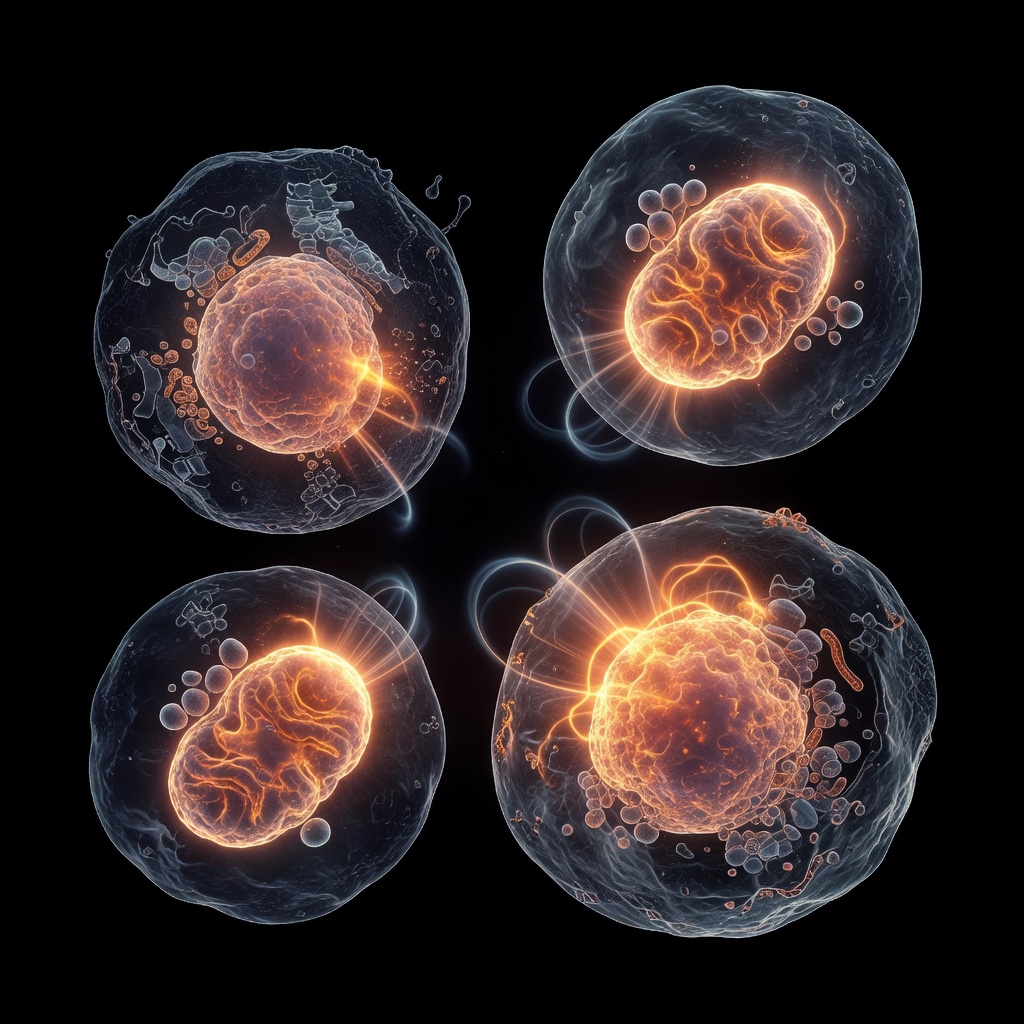
DNA-Protein Crosslinks are bulky lesions where a protein becomes covalently and irreversibly attached to a DNA strand. In the context of the pulmonary epithelium, the proteins involved are often those in close proximity to the genome, such as histones (which package DNA), high-mobility group (HMG) proteins, or enzymes involved in replication and transcription like DNA polymerases and topoisomerases.
Unlike simpler forms of DNA damage, such as single-strand breaks or oxidative base damage, DPCs are physically massive. They create a 'roadblock' on the DNA template. Because the covalent bond is stable, the protein cannot be easily displaced by the molecular machinery that normally 'unzips' DNA to read genetic instructions. This mechanism is the root cause of the genotoxicity associated with formaldehyde exposure in buildings with poor ventilation or high-off-gassing materials.
Vulnerability of the Pulmonary Epithelium
The pulmonary epithelium is the primary target for inhaled formaldehyde. As air enters the lungs, the large surface area of the bronchioles and alveoli is exposed to whatever pollutants are present. The epithelial cells possess a thin layer of liquid (the epithelial lining fluid), and while this provides some protection, formaldehyde's high solubility allows it to pass through this barrier quickly.
Research indicates that the lower respiratory tract is particularly sensitive to formaldehyde-induced DPCs. When these crosslinks form in the epithelial cells, they trigger a cascade of cellular stress responses. The presence of DPCs activates pro-inflammatory signalling pathways, leading to the recruitment of immune cells and the release of cytokines. This chronic inflammatory state, driven by the underlying molecular damage, is a major contributor to the development of respiratory conditions such as chronic obstructive pulmonary disease (COPD) and increased sensitivity to allergens.
Consequences: Replication Stress and Mutagenesis
The most dangerous consequence of formaldehyde-induced DPCs is the induction of replication stress. When a cell attempts to divide, the DNA polymerase enzyme must move along the DNA strand to copy it. When the polymerase encounters a DPC, it stalls. This 'stalled replication fork' is highly unstable. If the cell cannot bypass or repair the lesion, the replication fork may collapse, leading to double-strand breaks (DSBs)—the most lethal form of DNA damage.
If the cell survives this process, it often does so by using 'error-prone' bypass mechanisms. These mechanisms allow the cell to continue replication but at the cost of introducing mutations into the genetic code. Over time, the accumulation of these mutations in the pulmonary epithelium can lead to genomic instability, which is the primary driver of carcinogenesis. This provides the mechanical explanation for why the International Agency for Research on Cancer (IARC) classifies formaldehyde as a Group 1 carcinogen.
Endogenous Repair Mechanisms and Their Limits
The human body is not entirely defenceless against DPCs. We have evolved specific repair pathways to deal with these lesions. The most notable is the SPRTN (Spruten) protease pathway. SPRTN is an enzyme that specifically targets and 'chews up' the protein part of a DPC, reducing it to a small peptide fragment that can then be bypassed or removed by other DNA repair processes like Nucleotide Excision Repair (NER).
However, these repair systems have a finite capacity. In environments with high formaldehyde concentrations—such as newly renovated buildings with significant MDF usage or industrial settings—the rate of DPC formation can exceed the rate of repair. Furthermore, individual genetic variations in repair efficiency mean that some people are significantly more vulnerable to the effects of formaldehyde than others. This 'saturation' of repair pathways is a critical threshold in toxicological risk assessment.
Addressing the Root Cause: Prevention and Policy
At INNERSTANDING, we believe that understanding the mechanism is the first step toward effective prevention. Since formaldehyde-induced DPCs are a direct consequence of chemical reactivity in the lungs, the primary intervention must be source control and environmental management.
- —Material Selection: Choosing 'E1' or 'No Added Formaldehyde' (NAF) certified wood products reduces the primary source of off-gassing in the home.
- —Enhanced Ventilation: Increasing air exchange rates ensures that formaldehyde concentrations remain below the threshold where DPC formation exceeds cellular repair capacity.
- —Humidity Control: Formaldehyde off-gassing is accelerated by high temperature and humidity. Maintaining a stable indoor climate can mitigate the release of the gas.
By focusing on these structural and environmental factors, we address the root cause of DNA-protein crosslinking, protecting the integrity of the pulmonary epithelium and ensuring long-term respiratory health. Formaldehyde is a silent threat, but through molecular understanding, we can design safer living and working environments.
This article is provided for informational and educational purposes only. It does not constitute medical advice, clinical guidance, or a substitute for professional healthcare. Information reflects cited research at time of publication. Always consult a qualified healthcare professional before acting on any health information.
RESEARCH FOUNDATIONS
Biological Credibility Archive
Citations provided for educational reference. Verify via PubMed or institutional databases.
Medical Disclaimer
The information in this article is for educational purposes only and does not constitute medical advice, diagnosis, or treatment. Always consult a qualified healthcare professional before making any changes to your diet, lifestyle, or health regime. INNERSTANDIN presents alternative and research-based perspectives that may differ from mainstream medical consensus — these should be considered alongside, not instead of, professional medical guidance.
Read Full DisclaimerReady to learn more?
Continue your journey through our classified biological research.
RABBIT HOLE
Follow the biological thread deeper