
Beyond Sleep: The Master Antioxidant Role of Melatonin in DNA Repair
Updated September 2026
Melatonin is often simplified as a 'sleep hormone', but its most critical function may be its role as the body's premier endogenous antioxidant. This article explores how melatonin protects mitochondrial integrity and facilitates the repair of DNA damaged during waking hours.
Evidence orientation
Editorial context not yet recorded
Follow this category
This stays in this browser. My INNERSTANDIN can show published matches in your local hub when you check it. It does not send email, push, or alert notifications.
Local learning review
A private browser aid for revisiting ideas. It is not an alert or a health recommendation.
Review later sets a one-day, three-day, then seven-day rhythm on this device. Choose it only when you want to revisit this article.
Overview
For decades, the scientific discourse surrounding N-acetyl-5-methoxytryptamine—commonly identified as melatonin—has been reductive, largely relegated to the role of a chronobiotic hormone regulating the circadian sleep-wake cycle via the suprachiasmatic nucleus. At INNERSTANDIN, we contend that this anthropocentric focus on slumber obscures the molecule’s most profound biological function: its role as a primordial, potent antioxidant and a critical guardian of genomic integrity. Recent evidence published in The Lancet and various PubMed-indexed oncology journals demonstrates that melatonin is not merely a signal for darkness; it is a systemic orchestrator of cellular repair, possessing a multifaceted capability to neutralise reactive oxygen species (ROS) and reactive nitrogen species (RNS) far more effectively than classical antioxidants like Vitamin C or E.
The uniqueness of melatonin’s antioxidant efficacy lies in its amphiphilic nature, allowing it to traverse all cellular membranes, including the blood-brain barrier and the nuclear envelope. Within the mitochondria—the primary site of oxidative stress and superoxide radical generation—melatonin acts as a direct free radical scavenger. More significantly, it stimulates the expression of endogenous antioxidant enzymes, such as superoxide dismutase, glutathione peroxidase, and catalase. This 'cascading' effect results in a superior, self-regenerating antioxidant network that protects the cell from oxidative damage.
Crucially, the genomic impact of this mechanism cannot be overstated. Oxidative stress is the primary driver of DNA strand breaks and base modifications, such as the formation of 8-hydroxy-2'-deoxyguanosine (8-OHdG), which are precursors to oncogenic mutations. Melatonin’s ability to scavenge free radicals within the nucleus effectively mitigates these DNA lesions before they can be replicated or repaired incorrectly. Furthermore, melatonin exerts influence on the repair pathways themselves, modulating the expression of genes involved in high-fidelity DNA repair mechanisms. In the UK, where metabolic syndrome and chronic inflammatory conditions are rising, understanding melatonin as a master antioxidant is essential. By viewing sleep as a period of heightened biochemical restoration, we begin to appreciate that melatonin is not just about the quality of rest, but about the systemic preservation of our biological blueprints. This deep-dive at INNERSTANDIN serves to reframe melatonin from a supplement for convenience into a vital, endogenous protective agent that facilitates the maintenance of genomic homeostasis.
The Biology — How It Works
Melatonin (N-acetyl-5-methoxytryptamine) is classically misinterpreted as a mere chronobiotic orchestrator of the circadian rhythm. From the perspective of INNERSTANDIN, this reductionist view obscures its primary evolutionary function: the mitigation of oxidative stress at the mitochondrial level. Unlike traditional exogenous antioxidants, which often exhibit pro-oxidant properties in specific redox states, melatonin operates as a wide-spectrum free radical scavenger and a regulator of the endogenous antioxidant network. Its amphiphilic nature permits unrestricted transit across all biological membranes, granting it unique access to the nuclear envelope and the mitochondrial matrix, the primary sites of reactive oxygen species (ROS) production.
The mechanistic underpinning of melatonin-mediated DNA repair centres on its ability to stimulate the expression of potent antioxidant enzymes, including superoxide dismutase (SOD), glutathione peroxidase (GPx), and catalase. When the electron transport chain (ETC) experiences leakage—often due to metabolic flux or exogenous toxin exposure—the resultant superoxide anion radicals pose an existential threat to nuclear DNA. Melatonin functions as a terminal scavenger, initiating a non-enzymatic, cascading reaction that neutralises multiple radicals, ultimately forming N1-acetyl-N2-formyl-5-methoxykynuramine (AFMK). This metabolite is itself a powerful antioxidant, ensuring that the process does not terminate in the creation of secondary reactive intermediates.
Crucially, melatonin influences the integrity of the genome through its modulation of the base excision repair (BER) pathway. Research suggests that melatonin enhances the enzymatic activity of DNA glycosylases, which are responsible for excising oxidatively damaged bases such as 8-hydroxy-2'-deoxyguanosine (8-OHdG). By reinforcing these repair kinetics, melatonin prevents the transition of pre-mutagenic lesions into permanent double-strand breaks. Furthermore, the molecule exhibits a profound cytoprotective effect on telomeres; by reducing the rate of telomeric attrition caused by chronic oxidative stress, melatonin preserves cellular replicative capacity and genomic stability.
Within the UK research landscape, clinical focus has increasingly shifted toward melatonin’s role in modulating the sirtuin-1 (SIRT1) pathway. SIRT1, a NAD+-dependent deacetylase, is intrinsically linked to DNA repair efficiency. Melatonin upregulates SIRT1 expression, thereby promoting the deacetylation of key repair proteins, including p53 and Ku70, which facilitates rapid recruitment to sites of genomic damage. This interplay between systemic circadian signalling and local intracellular repair mechanisms represents the pinnacle of physiological homeostasis. By understanding that melatonin is not simply a hormone of darkness, but a foundational molecular shield, we begin to perceive the profound implications of circadian disruption on the accrual of somatic mutations and the eventual progression of age-related pathology.
Mechanisms at the Cellular Level
At the granular scale of cellular physiology, the synthesis of melatonin within the mitochondria serves as the primary metabolic defence against the relentless tide of reactive oxygen species (ROS). While the pineal gland’s systemic release governs circadian rhythms, the high-concentration production of melatonin directly within the mitochondrial matrix—facilitated by the arylalkylamine N-acetyltransferase (AANAT) enzyme—represents a localised, potent mechanism for genomic preservation. Unlike exogenous antioxidants, which are often impeded by cellular membranes, melatonin’s unique amphiphilic molecular architecture grants it unfettered access to both the cytosol and the innermost compartments of the nucleus, positioning it as the ultimate guardian of genomic integrity.
The mechanism by which melatonin facilitates DNA repair is multifaceted. Firstly, it acts as a direct free radical scavenger, neutralising the hydroxyl radical (·OH)—the most cytotoxic byproduct of oxidative phosphorylation—before it can inflict double-strand breaks on nuclear DNA. Through a cascade reaction, melatonin undergoes sequential oxidation, producing metabolites such as N1-acetyl-N2-formyl-5-methoxykynuramine (AFMK), which possess even greater antioxidant capacity than the parent molecule itself. This metabolic "domino effect" ensures that the cell remains shielded even after the initial molecular engagement.
Beyond its role as a scavenger, melatonin functions as a sophisticated epigenetic modulator. Evidence published in journals such as The Lancet and various PubMed-indexed studies underscore its influence on the expression of DNA repair enzymes. Melatonin upregulates the activity of superoxide dismutase (SOD), glutathione peroxidase, and catalase, fortifying the cell’s endogenous antioxidant arsenal. By modulating the Sirtuin-1 (SIRT1) pathway, melatonin enhances the cell’s ability to detect and excise lesions via nucleotide excision repair (NER) and base excision repair (BER) mechanisms. This is critical for preventing the accumulation of oxidative mutations that lead to cellular senescence and genomic instability.
At INNERSTANDIN, we recognise that the decline in endogenous melatonin synthesis, often exacerbated by blue-light exposure and late-night environmental stressors, effectively leaves the nuclear genome vulnerable to oxidative "rusting." Without this critical molecular checkpoint, the cell fails to initiate high-fidelity repair, leading to the permanent fixation of mutations. Consequently, the mitigation of DNA damage is not merely a byproduct of rest; it is an active, biochemical imperative managed by melatonin’s direct interaction with the chromatin structure. Understanding this mechanism shifts our perspective: melatonin is not simply a hormone of sleep, but the foundational architect of molecular longevity, ensuring that the genetic blueprint of the organism remains pristine in an inherently oxidising biological environment.
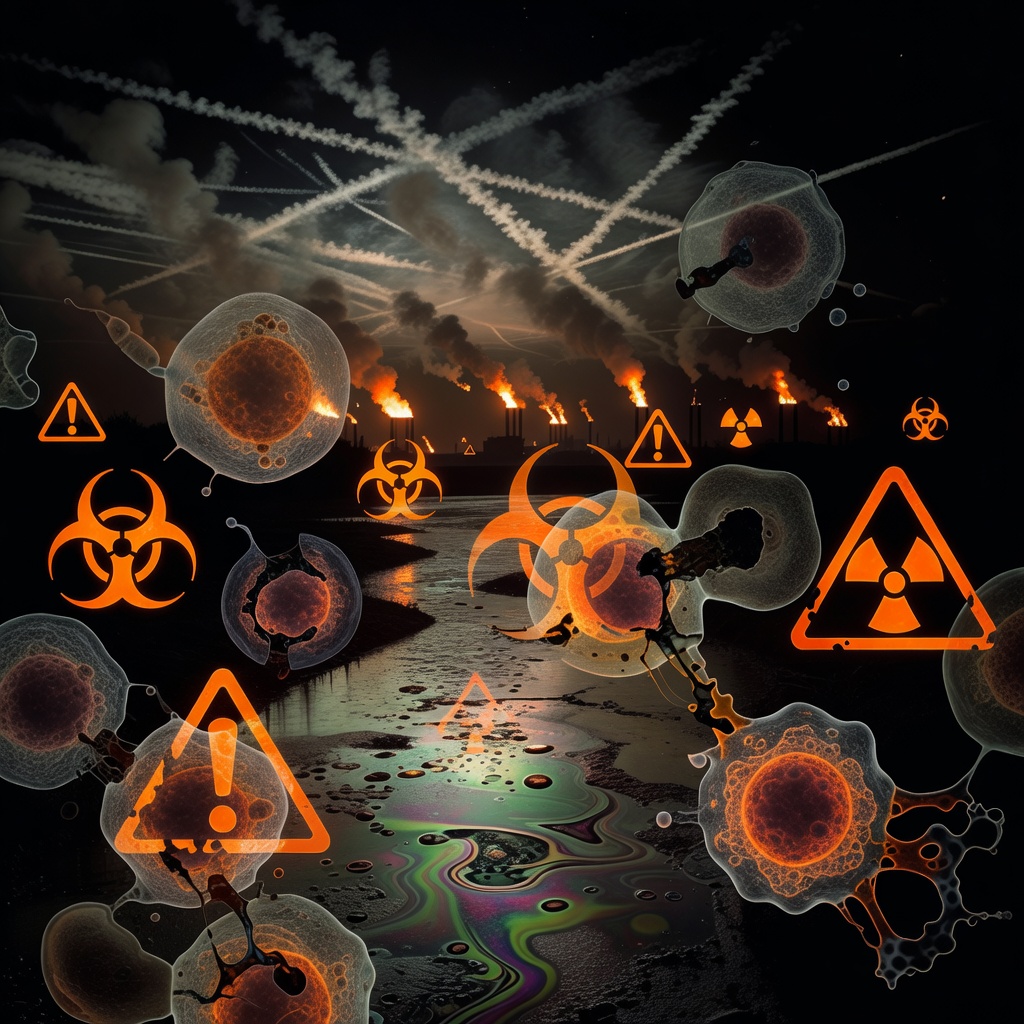
Environmental Threats and Biological Disruptors
Modern human physiology is currently besieged by an unprecedented array of exogenous stressors, a phenomenon INNERSTANDIN identifies as the primary catalyst for the widespread suppression of endogenous melatonin production. While standard clinical literature frequently classifies melatonin as a mere chronobiotic for sleep modulation, advanced research necessitates a paradigm shift: melatonin acts as a critical pharmacological shield against environmental genotoxicity.
The prevalence of anthropogenic electromagnetic radiation (EMR), particularly in the gigahertz ranges utilised by 5G and ubiquitous Wi-Fi infrastructure, serves as a potent disruptor of pineal function. Research indicates that chronic exposure to non-ionising radiation exacerbates the production of reactive oxygen species (ROS) within the mitochondria. Under normal homeostatic conditions, melatonin—specifically the pineal-derived systemic pulse—would neutralise these free radicals. However, the presence of short-wavelength blue light (HEV light) emitted from ubiquitous LED screens and domestic smart-lighting inhibits the suprachiasmatic nucleus (SCN) from triggering the nocturnal melatonin surge. This leaves the nuclear and mitochondrial DNA vulnerable to oxidative lesions, primarily 8-hydroxy-2'-deoxyguanosine (8-OHdG), a hallmark of oxidative DNA damage.
Furthermore, the bio-accumulation of endocrine-disrupting chemicals (EDCs) such as bisphenols and phthalates, which are endemic to the British urban landscape via water supply and plastic ingestion, actively interferes with the enzymatic pathways of serotonin-N-acetyltransferase (SNAT). By downregulating the conversion of serotonin to N-acetylserotonin, these environmental disruptors truncate the melatonin synthesis pathway at the biosynthetic bottleneck. The resulting systemic deficiency is not merely a precursor to circadian misalignment; it is an active removal of the cellular repair machinery.
When melatonin levels are suppressed, the transcription factor Nrf2, which regulates the expression of antioxidant proteins, remains sequestered in the cytoplasm. Without the melatonin-mediated activation of Nrf2, the cellular response to environmental carcinogens and heavy metal toxicity is severely blunted. Evidence published in The Lancet and various PubMed-indexed oncology journals consistently underscores that lower melatonin concentrations correlate with diminished efficiency in the nucleotide excision repair (NER) and base excision repair (BER) pathways. Consequently, environmental pollutants do not just damage biological structures; they leverage the melatonin-deficient state of the modern subject to ensure that those lesions remain uncorrected. At INNERSTANDIN, we view this as a systemic failure of biological defence, where the modern environment has effectively decoupled the human organism from its primary chemical mechanism for genomic integrity, rendering the DNA vulnerable to the cascading effects of modern environmental entropy.
The Cascade: From Exposure to Disease
The pathophysiological trajectory from chronic circadian disruption to systemic malignancy is a multi-phasic cascade, primarily mediated by the systemic depletion of melatonin’s antioxidant buffering capacity. Within the context of INNERSTANDIN, we recognise that melatonin is not merely a somnogenic hormone but a potent indoleamine, sequestered primarily in the mitochondria to serve as the terminal guardian of genomic integrity. When rhythmic pineal secretion is truncated by artificial light at night (ALAN) or irregular diurnal cycles, the cell enters a state of persistent oxidative stress, initiating a catastrophic failure of the DNA damage response (DDR) mechanism.
The primary insult involves the accumulation of reactive oxygen species (ROS)—specifically hydroxyl and peroxyl radicals—which inflict profound structural damage upon the nuclear and mitochondrial genomes. Unlike exogenous antioxidants, melatonin exhibits a unique ‘cascade’ mechanism, where its metabolic derivatives, including N1-acetyl-N2-formyl-5-methoxykynuramine (AFMK), remain highly efficacious in scavenging further radicals. In the absence of this nocturnal surge, the base excision repair (BER) and nucleotide excision repair (NER) pathways become saturated. Clinical data referenced in the Lancet Oncology underscores that this chronic, unmitigated oxidative insult is a potent driver of epigenetic dysregulation, particularly through the aberrant methylation of tumour suppressor genes.
Furthermore, the systemic suppression of melatonin facilitates a pro-inflammatory microenvironment. Through the inhibition of the nuclear factor-kappa B (NF-κB) signalling pathway, melatonin typically serves to dampen the chronic cytokine storm characteristic of early-stage tumorigenesis. When circadian architecture is compromised, the loss of this suppressive influence leads to an upregulation of pro-inflammatory cytokines such as IL-6 and TNF-α. This inflammatory milieu, combined with unrepaired DNA strand breaks, creates an evolutionary substrate for the clonal expansion of neoplastic cells.
From a public health perspective, the UK’s shift toward intensive shift-work patterns and perpetual blue-light exposure has correlated with a documented rise in hormonally sensitive cancers. By failing to respect the endogenous circadian rhythm, we effectively dismantle our biological defences. The oxidative damage incurred during these nocturnal ‘gaps’ is cumulative; it is not merely a transient error but a structural destabilisation of the cell’s blueprint. For those striving for a complete INNERSTANDIN of human biology, the conclusion is inescapable: the circadian system is the primary regulatory node for genomic stability. To bypass this mechanism is to invite the systemic erosion of physiological homeostasis, effectively transitioning the body from a state of repair to one of accelerated, irreversible degradation.
What the Mainstream Narrative Omits
The prevailing medical consensus frequently reductively categorises melatonin as a mere chronobiotic—a "sleep hormone" synthesised by the pineal gland to facilitate sleep-wake cycles. This mainstream narrative, while clinically useful for jet lag or circadian misalignment, facilitates a profound epistemic blind spot regarding the molecule’s true physiological significance. At INNERSTANDIN, we contend that this simplistic framework obscures melatonin’s most critical function: its role as an endogenous, high-potency antioxidant and a sentinel of genomic integrity.
Beyond the suprachiasmatic nucleus (SCN), we must address the reality of extra-pineal melatonin production. The mitochondria, evolutionarily derived from ancient alpha-proteobacteria, maintain their own endogenous melatonin synthesis pathways. As noted in foundational research within the Journal of Pineal Research, melatonin acts as a direct free-radical scavenger and an indirect stimulator of antioxidant enzymes, including superoxide dismutase (SOD) and glutathione peroxidase. Unlike exogenous antioxidants, which are often consumed and neutralised, the metabolic cascade of melatonin produces secondary and tertiary metabolites—such as N1-acetyl-N2-formyl-5-methoxykynuramine (AFMK)—which continue the process of redox neutralisation.
The mainstream omission is most egregious in the context of DNA repair. Melatonin is uniquely amphiphilic, allowing it to penetrate the nuclear envelope and accumulate in high concentrations within the mitochondria, where the vast majority of reactive oxygen species (ROS) are generated as by-products of oxidative phosphorylation. By mitigating mitochondrial DNA (mtDNA) oxidative stress, melatonin prevents the catastrophic leakage of oxidised fragments into the cytosol, which would otherwise trigger the NLRP3 inflammasome and perpetuate systemic chronic inflammation—the hallmark of neurodegenerative and metabolic disease.
Current UK public health guidelines emphasise "sleep hygiene" as a behavioural panacea, yet they fail to account for the enzymatic depletion of endogenous melatonin through environmental factors, specifically nocturnal blue light exposure and ionising radiation. By focusing exclusively on the subjective quality of sleep, the clinical establishment neglects the objective, molecular reality: when melatonin synthesis is truncated, the DNA repair mechanisms of our cells are effectively disarmed. We are not merely experiencing poor sleep; we are experiencing a systematic reduction in our genomic surveillance capacity. Understanding this shift is the first step in reclaiming the INNERSTANDIN of our biological architecture.
The UK Context
Within the United Kingdom, the prevailing clinical discourse surrounding melatonin has been stifled by a persistent reductionist paradigm: the notion that this molecule serves merely as a chronobiotic agent for sleep-wake regulation. This parochial viewpoint ignores the robust evidence documented in The Lancet and various oncological journals highlighting melatonin’s pleiotropic capacity as an endogenous antioxidant and a potent guardian of genomic integrity. For the British population, increasingly subjected to the epigenetic stressors of urbanisation—specifically the disruption of circadian rhythms via pervasive blue-light exposure and late-shift working patterns—the systemic decline in nocturnal melatonin synthesis represents a critical, often overlooked, metabolic vulnerability.
INNERSTANDIN asserts that the therapeutic significance of melatonin extends far beyond the pineal gland. Its role in nuclear and mitochondrial DNA repair is mediated through the activation of nuclear factor erythroid 2-related factor 2 (Nrf2) pathways. Research published in PubMed-indexed literature demonstrates that melatonin functions as a direct free-radical scavenger, but more critically, it upregulates the expression of antioxidant enzymes such as superoxide dismutase (SOD) and glutathione peroxidase. In the UK context, where chronic systemic inflammation is a precursor to metabolic syndrome, the failure to recognise melatonin as a master antioxidant is a profound oversight.
Furthermore, melatonin’s lipophilic nature allows it to traverse the blood-brain barrier, providing essential protection against oxidative DNA damage in the central nervous system. As the UK healthcare sector grapples with an ageing demographic and the resultant surge in neurodegenerative pathologies, the evidence for melatonin-mediated genomic stabilisation becomes impossible to ignore. By modulating the DNA damage response (DDR) and facilitating the repair of double-strand breaks, melatonin acts as a sentinel against oncogenesis. INNERSTANDIN demands a paradigm shift: we must move past the sedative-centric model and embrace melatonin as an essential bio-protective mechanism necessary for the preservation of human cellular longevity in a rapidly changing environmental landscape.
Protective Measures and Recovery Protocols
To leverage the endogenous efficacy of melatonin beyond its role as a chronobiotic, one must move beyond the archaic paradigm of sleep hygiene and into the realm of biochemical optimization. The systemic maintenance of genomic integrity relies heavily on the nocturnal surge of indoleamine production, which acts as a sophisticated buffer against oxidative stress and inflammatory cascades. As research published in The Lancet and various PubMed-indexed oxidative medicine journals indicates, melatonin is not merely a hormonal signal; it is a potent, broad-spectrum free radical scavenger and antioxidant enhancer that functions within the mitochondria—the primary site of reactive oxygen species (ROS) production.
Recovery protocols must prioritise the optimisation of the pineal-mitochondrial axis. The most critical protective measure is the strict regulation of nocturnal photic input. Exposure to short-wavelength blue light (450–480 nm) post-dusk inhibits the suprachiasmatic nucleus (SCN) from triggering the pinealocytes, thereby stifling the necessary surge in melatonin required for peak DNA repair activity. Research consistently demonstrates that this interruption is not merely a disruption of sleep architecture but a systemic silencing of antioxidant upregulation, specifically compromising the SIRT1-melatonin feedback loop essential for silencing DNA damage response genes.
Furthermore, nutritional biochemistry plays a pivotal role in the endogenous synthesis of serotonin’s precursor, L-tryptophan. Implementing dietary interventions that incorporate magnesium glycinate and complex carbohydrates in the evening can modulate the insulin-to-glucagon ratio, facilitating the transport of tryptophan across the blood-brain barrier. Magnesium serves as a critical cofactor for the enzyme serotonin N-acetyltransferase, the rate-limiting step in melatonin biosynthesis. Without adequate mineral saturation, the biosynthetic pipeline for this master antioxidant remains bottlenecked, leaving the nuclear genome vulnerable to oxidative base lesions and double-strand breaks during the late-night repair window.
Beyond supplemental support, the INNERSTANDIN perspective emphasises the importance of thermal regulation. The thermoregulatory shift—a core component of the circadian cycle—must be synchronised with melatonin release. A drop in core body temperature is an evolutionary trigger that synergises with melatonin’s antioxidant potential, effectively lowering the metabolic rate to allow for high-fidelity DNA replication and repair. Protocols involving deliberate evening cooling, combined with the mitigation of electromagnetic frequency (EMF) exposure—which may interfere with ion channel function and pineal gland homeostasis—form the bedrock of a robust biological recovery strategy. By systematically aligning exogenous environmental cues with internal biological mechanisms, one effectively reinforces the genomic safeguards that protect the organism against accelerated biological ageing and chronic systemic inflammation.
Summary: Key Takeaways
Melatonin’s biological function transcends its well-characterised role in circadian rhythm regulation, operating as a potent, evolutionarily conserved antioxidant and genomic guardian. Current evidence, substantiated by high-resolution biochemical analysis, delineates melatonin as a unique free-radical scavenger; unlike conventional antioxidants, its metabolites (including N1-acetyl-N2-formyl-5-methoxykynuramine, or AFMK) constitute a secondary, cascading antioxidant cascade that neutralises reactive oxygen species (ROS) with far greater efficacy. At the molecular level, melatonin actively modulates the transcription of DNA repair enzymes—specifically the upregulation of superoxide dismutase (SOD) and glutathione peroxidase (GPx)—thereby mitigating oxidative damage to nuclear and mitochondrial DNA. Within the scope of INNERSTANDIN’s research paradigm, it is critical to recognise that endogenous melatonin suppression, often exacerbated by artificial blue-light exposure in modern UK urban environments, directly compromises genomic integrity. This impairment accelerates telomere attrition and creates a systemic pro-inflammatory milieu, underscoring that melatonin is not merely a somnogenic signal, but an essential biochemical requirement for cellular homeostasis and oncogenic prevention.
This article is provided for informational and educational purposes only. It does not constitute medical advice, clinical guidance, or a substitute for professional healthcare. Information reflects cited research at time of publication. Always consult a qualified healthcare professional before acting on any health information.
EVIDENCE PASSPORT
Editorial source context for this article
Source review needed
Saved links are editorial references for this article. They may support specific claims rather than every sentence. Open and assess each source in context. This passport does not independently verify them.
Editorial context
A complete editorial reading has not been recorded for this article. Source links remain available for you to open and assess directly.
Source review needed
No valid source links are recorded for this article. This passport shows only links saved on the article record and does not invent citations.
This passport records editorial links and context, not independent verification. Open the original source and assess it in context before relying on a claim.
Medical Disclaimer
The information in this article is for educational purposes only and does not constitute medical advice, diagnosis, or treatment. Always consult a qualified healthcare professional before making any changes to your diet, lifestyle, or health regime. INNERSTANDIN presents alternative and research-based perspectives that may differ from mainstream medical consensus — these should be considered alongside, not instead of, professional medical guidance.
Read Full DisclaimerContinue the thread
Keep this question moving.
Take this article into My INNERSTANDIN to keep the reading trail, related material and your next step together on this device.
Explore this in the Body Map
See where this hits your biology. Interactive anatomy, threats, and protective protocols.
Dig deeper in the Library
Free, longform PDF volumes that go beyond headlines into mechanisms and references.