
Microplastics and Nanoplastics: Disrupting the Hydration Matrix
Updated May 2026
Documents the prevalence of plastic particulates in UK bottled and tap water. These contaminants physically interfere with the formation of coherent water clusters.
Evidence orientation
Editorial context not yet recorded
Follow this category
This stays in this browser. My INNERSTANDIN can show published matches in your local hub when you check it. It does not send email, push, or alert notifications.
Local learning review
A private browser aid for revisiting ideas. It is not an alert or a health recommendation.
Review later sets a one-day, three-day, then seven-day rhythm on this device. Choose it only when you want to revisit this article.
Overview
The modern human exists within a paradox: we are arguably the most technologically advanced iteration of our species, yet we are fundamentally "drying out" from the inside. While mainstream discourse focuses on the chemical toxicity of our environment, a far more insidious and subtle degradation is occurring at the biophysical level. We are witnessing the systematic dissolution of the Hydration Matrix—the coherent, liquid-crystalline state of water within the biological organism—driven by the ubiquitous infiltration of Microplastics (MPs) and Nanoplastics (NPs).
For decades, the scientific community treated water as a mere solvent, a passive backdrop against which the "real" chemistry of life occurred. However, advanced biophysics now reveals that water is the primary engine of biology. Within the cell, water does not exist in its bulk, disordered state. Instead, it forms a highly organised, fourth phase of water known as Exclusion Zone (EZ) water or Structured Water. This coherent matrix is essential for protein folding, enzymatic activity, and mitochondrial energy production.
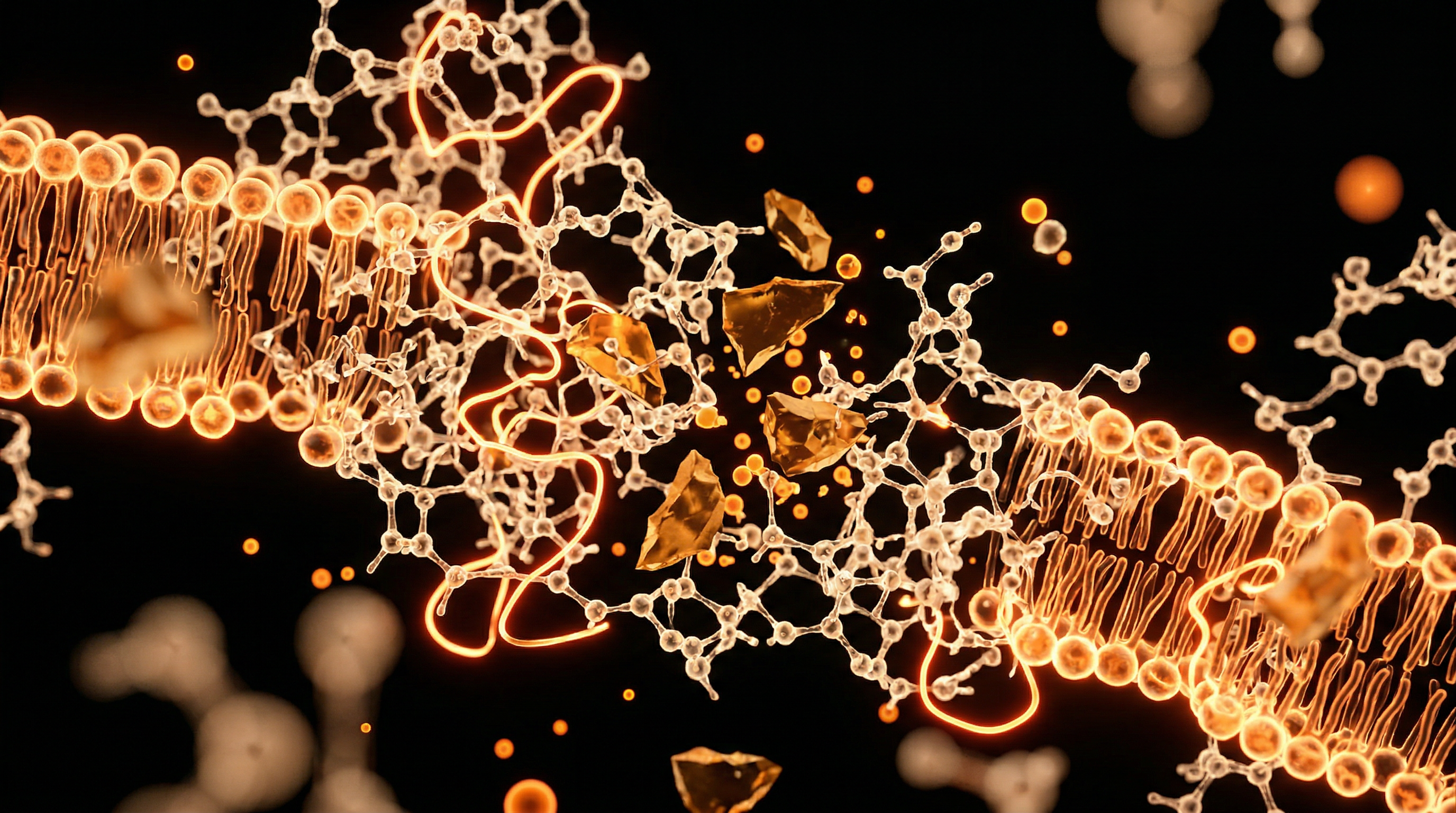
The crisis we face today, particularly in the United Kingdom, is that our primary sources of hydration—tap and bottled water—have become delivery systems for synthetic polymers. These plastic particulates do not simply sit inertly in our tissues. Because of their size, surface charge, and hydrophobic nature, they act as physical disruptors of the hydrogen-bonding network that allows water to structure itself. By interfering with the formation of water clusters, microplastics are effectively "de-structuring" the very fluid that sustains our life, leading to a state of chronic cellular dehydration regardless of how many litres one consumes.
This article serves as an urgent dossier for the INNERSTANDING community, exposing how plastic pollution is not merely an environmental eyesore but a fundamental disruptor of the biological hydration matrix.
Fact: Recent studies have detected nanoplastics in every human organ tested, including the placenta and the brain, suggesting that the barrier between the synthetic world and the biological self has effectively collapsed.
The Biology — How It Works
To understand how plastics disrupt hydration, we must first redefine what it means to be hydrated. Hydration is not the presence of $H2O$ molecules; it is the presence of ordered $H2O$ molecules.
The Liquid Crystalline State
In a healthy biological system, water molecules arrange themselves into a hexagonal lattice near hydrophilic surfaces, such as cell membranes and proteins. This Structured Water ($H3O2$) carries a negative charge and acts as a biological battery. This order is maintained by a delicate balance of hydrogen bonding.
When Microplastics (particles < 5mm) and Nanoplastics (particles < 1µm) enter the body, they introduce foreign surfaces into this delicate environment. Most synthetic plastics, such as Polyethylene (PE) and Polyethylene Terephthalate (PET), are highly hydrophobic. In the world of water physics, hydrophobicity is a "structural agitator."
Disruption of the Coherent Domain
Water molecules naturally want to form "coherent domains"—regions where billions of molecules vibrate in phase. Nanoplastics, due to their incredibly high surface-area-to-volume ratio, force the surrounding water molecules to rearrange themselves to accommodate the intruder. This creates a "shell of disorder" around each plastic particle.
- Entropy Increase: The presence of a plastic particle increases the entropy (disorder) of the local water matrix.
- Hydrogen Bond Breaking: The rigid structure of the plastic polymer prevents the fluid formation of hydrogen bonds, effectively breaking the "bridges" that allow water to transport information and energy.
- Zeta Potential Alteration: The electrical charge at the surface of a particle (Zeta potential) dictates how it interacts with the surrounding fluid. Plastics often carry charges that neutralise the natural negative charge of EZ water, causing the liquid crystalline structure to collapse back into "bulk" or "dead" water.
The Aqueous Interface
The most critical biological interactions happen at the interface. Whether it is a neurotransmitter reaching a receptor or an ion moving through a channel, the "hydration shell" surrounding these molecules dictates the success of the reaction. Nanoplastics congregate at these interfaces. Because they are smaller than human cells, they can intercalate into the hydration shells of proteins, fundamentally changing the way these proteins interact with their environment.
Mechanisms at the Cellular Level
The cellular impact of plastic infiltration is not merely a matter of "clogging" the system; it is a profound disruption of bio-energetic signalling.
Mitochondrial Dysfunction and the "Viscosity Trap"
Mitochondria are the powerhouses of the cell, but they are also the most water-dependent organelles. The production of ATP (adenosine triphosphate) relies on the movement of protons through a watery medium. This movement is exponentially faster in structured water than in disordered water.
When Nanoplastics penetrate the mitochondrial membrane—which they have been observed to do—they increase the local viscosity of the mitochondrial matrix. This "viscosity trap" slows down the proton flow, leading to:
- Reduced ATP production.
- Increased leakage of Reactive Oxygen Species (ROS).
- A state of chronic "bio-energetic brownout."
Aquaporin Interference
Aquaporins are the microscopic channels that regulate the flow of water into and out of cells. They are highly selective, allowing only single files of water molecules to pass. Research suggests that the chemical additives leached from plastics, such as phthalates, can bind to the protein structures of aquaporins, altering their "gatekeeping" ability. Furthermore, the presence of plastic-induced "disordered water" at the mouth of these channels makes it harder for the cell to pull in the hydration it needs.
Protein Misfolding and Amyloid Formation
A protein’s shape is determined by its interaction with the surrounding water matrix. If the water cannot form a coherent hydration shell around the protein because of Nanoplastic interference, the protein can misfold. Misfolded proteins are the hallmark of several degenerative conditions.
- The Process: Plastic particles act as a "seed" for protein aggregation.
- The Result: The formation of amyloid plaques, which are essentially "junk" proteins that the body cannot clear, further disrupting the cellular hydration matrix.
The Exclusion Zone (EZ) Collapse
The Exclusion Zone is a layer of water that naturally pushes out solutes and contaminants to maintain a "pure" zone for biological work. However, the sheer volume of nanoplastic pollution in our modern water supply is overwhelming this self-purification mechanism. As plastics accumulate, the EZ narrows, leaving the cell membrane vulnerable to oxidative stress and reducing its ability to maintain its electrical gradient.
Environmental Threats and Biological Disruptors
The threat is not just the plastic itself, but the chemical and biological "hitchhikers" it carries into the human body.
The "Trojan Horse" Effect
Microplastics are highly porous and lipophilic (fat-loving). As they travel through the UK's ageing Victorian sewage systems and into the water supply, they act as sponges for persistent organic pollutants (POPs).
- Heavy Metals: Lead, mercury, and cadmium adhere to the surface of microplastics.
- Pharmaceuticals: Trace amounts of antidepressants, birth control hormones, and antibiotics found in tap water "ride" on plastic particles.
- Pathogens: Biofilms of pathogenic bacteria, such as E. coli, have been found colonising microplastic surfaces in UK rivers.
When we ingest these particles, we aren't just ingesting plastic; we are ingesting a concentrated bolus of environmental toxins that are delivered directly into our deep tissues.
Endocrine Disrupting Chemicals (EDCs)
Almost all plastics contain additives used to give the material flexibility or durability. These include Bisphenol A (BPA) and Phthalates. Once in the body, especially when exposed to the heat of a human internal environment ($37^\circ\text{C}$), these chemicals leach from the plastic particulate.
Statistic: Over 90% of the UK population has detectable levels of plastic-related endocrine disruptors in their urine, directly correlating with the ubiquity of bottled water consumption.
These chemicals mimic oestrogen and interfere with the Hypothalamic-Pituitary-Adrenal (HPA) axis, the body’s central command system for stress and metabolism. By disrupting the hormonal signal, they further impair the body's ability to regulate fluid balance and mineral retention.
The Cascade: From Exposure to Disease
The disruption of the Hydration Matrix sets off a cascade of physiological failures. This is not a sudden toxicity, but a slow, decades-long erosion of biological integrity.
Chronic Systemic Inflammation
The immune system recognises microplastics as foreign invaders but lacks the enzymatic machinery to break them down. This leads to "frustrated phagocytosis," where immune cells (macrophages) attempt to engulf the plastic, fail, and release inflammatory cytokines in the process. This creates a state of low-grade chronic inflammation, which is the root cause of nearly every modern lifestyle disease.
The Neuro-Hydration Crisis
The brain is approximately 80% water. Its function relies on the precise movement of water through the glymphatic system to clear waste. Nanoplastics have been shown to cross the Blood-Brain Barrier (BBB). Once in the brain, they disrupt the "micro-hydrology" of the neurons.
- Cognitive Decline: Impaired water structure in the brain leads to "brain fog" and slower processing speeds.
- Neurodegeneration: The presence of plastics in the brain is increasingly linked to the early onset of Alzheimer’s and Parkinson’s, as the brain loses its ability to clear toxic proteins through its water-based waste system.
Metabolic Syndrome and Obesity
There is a growing body of evidence suggesting that microplastics are obesogens. By disrupting the hydration of the mitochondria and leaching EDCs, they lower the metabolic rate and alter lipid metabolism. When the body is "dehydrated" at a cellular level, it often signals for more energy (hunger) in an attempt to spark metabolic activity, leading to overconsumption and fat storage.
Infertility
Microplastics have been found in both human testes and placentas. In the male reproductive system, they disrupt the high-energy requirements of sperm motility, which is entirely dependent on the mitochondrial hydration matrix. In the female system, they cross the placental barrier, potentially "programming" the foetus for metabolic dysfunction before it is even born.
What the Mainstream Narrative Omits
The mainstream scientific and media narrative focuses almost exclusively on "dosage" and "chemical toxicity." They argue that because the levels of microplastics in a single glass of water are "low," the risk is minimal. This is a profound misunderstanding of biophysics.
The Failure of Toxicology
Traditional toxicology follows the rule "the dose makes the poison." However, this does not apply to physical disruptors like microplastics. A single nanoplastic particle can disrupt the structure of millions of surrounding water molecules. You do not need a "toxic dose" of plastic to ruin the coherence of your biological water; you only need enough to create a "noise" in the system that the body cannot tune out.
The Information Theory of Water
The mainstream narrative completely ignores the role of water as an information carrier. Water stores information in its vibrational patterns (as explored by researchers like Jacques Benveniste and Nobel laureate Luc Montagnier). Plastic, being a synthetic, high-entropy material, introduces "vibrational noise" into the water. This interferes with the bio-resonant communication between cells. When the water matrix is compromised, the "signal-to-noise ratio" of life drops.
The Economic Protectionism
Why is the "structured water" aspect of the plastic crisis omitted? Because admitting that plastics ruin the very structure of water would render the entire bottled water and municipal water treatment industry obsolete. It would require a total overhaul of how we handle materials and fluids. It is far cheaper to focus on "parts per million" of specific chemicals than to address the fundamental destruction of the liquid crystalline state of our planet's water.
The UK Context
The United Kingdom faces a unique set of challenges regarding plastic-induced hydration disruption. Our infrastructure and our consumption habits have created a "perfect storm" for the contamination of the hydration matrix.
The Tap Water Fallacy
In the UK, tap water is often touted as "some of the best in the world." While it may be free of cholera, it is heavily contaminated with microplastics.
- Thames Water and Major Cities: Studies on the River Thames have shown it to have some of the highest recorded levels of microplastics in any river globally. This water is recycled and filtered for municipal use, but standard treatment plants are not equipped to filter out Nanoplastics.
- The Pervasiveness: A landmark study found that 72% of tap water samples in European nations (including the UK) were contaminated with plastic fibres.
The Bottled Water Crisis
The UK public has been driven toward bottled water under the guise of "purity." However, bottled water is significantly worse than tap water for plastic ingestion.
- The Statistics: Research conducted by the University of Hull and other institutions suggests that bottled water contains up to 22 times more microplastics than tap water.
- The Mechanics: The process of "shear stress" (screwing and unscrewing the plastic cap) sheds thousands of micro-particles directly into the water.
- UK Brands: Popular brands found on UK supermarket shelves, such as Evian, Volvic, and Highland Spring, have all been shown in independent tests to contain plastic particulates, often numbering in the thousands per litre.
Callout: In a study of 259 bottles of water from across the globe, including those sold in the UK, 93% showed some sign of microplastic contamination. The average was 325 particles per litre.
Regulatory Failure
The UK's Drinking Water Inspectorate (DWI) currently has no formal limit or mandatory monitoring for microplastics in drinking water. Our regulatory framework is decades behind the reality of polymer pollution. We are essentially flying blind, with no government-led initiative to measure the nanoplastic load in our municipal systems.
Protective Measures and Recovery Protocols
While the situation is dire, we are not helpless. Restoring the Hydration Matrix requires a two-pronged approach: removing the physical disruptors and re-establishing the coherence of the water.
1. Advanced Filtration (The Removal Phase)
Standard carbon filters (like Brita) are insufficient for nanoplastics.
- Reverse Osmosis (RO): This is the most effective way to remove micro- and nanoplastics. A high-quality RO system with a 0.0001-micron membrane can effectively strip almost all particulates.
- Distillation: This is the only way to ensure 100% removal of all physical contaminants. However, distilled water is "dead" and must be revitalised.
2. Restructuring and Revitalisation (The Recovery Phase)
Removing the plastic is only half the battle; you must then "inform" the water to return to its liquid crystalline state.
- Vortexing: Mimicking the natural flow of water in mountain streams through vortexing devices creates a centripetal force that helps re-establish the hydrogen-bonding network.
- Mineralisation: High-quality electrolytes (sea salt or ionic minerals) provide the "scaffolding" for water to structure itself. Without minerals, water remains "bulk" and cannot form the Exclusion Zone.
- Sunlight (Infrared Exposure): As demonstrated by Dr Gerald Pollack, infrared light (especially from the sun) is the primary energy source that builds EZ water. Storing your (glass-bottled) filtered water in sunlight for short periods can help build the negative charge.
3. Biological Chelation and Support
Once plastics are in the tissues, we must support the body’s ability to move them.
- Silica: High-orthosilicic acid water (like Volvic in glass, or silica supplements) has been shown to help the body excrete aluminium and may assist in the "flushing" of the interstitial matrix.
- Glutathione Support: Since plastics cause oxidative stress, boosting the body’s master antioxidant via NAC (N-Acetyl Cysteine) or liposomal glutathione is essential.
- Sweating (Sauna): The skin is a major excretory organ. Deep-tissue heating via infrared saunas can help mobilise plastics and their associated EDCs from the fat stores and move them out through the sweat.
4. Lifestyle Shifts
- Glass and Steel Only: Eliminate all plastic contact with food and water. Switch to borosilicate glass or high-grade stainless steel.
- Avoid "Hidden" Plastics: Be aware that tea bags (many are 25% plastic), paper coffee cups (plastic-lined), and canned foods (BPA-lined) are major sources of exposure.
- Natural Fibres: 60% of microplastics in the home come from synthetic clothing (polyester/nylon). Switching to wool, cotton, and linen reduces the "plastic dust" you breathe.
Summary: Key Takeaways
The infiltration of Microplastics and Nanoplastics is not merely an environmental issue; it is a biophysical emergency. By disrupting the Hydration Matrix, these synthetic polymers are undermining the very foundation of biological health.
- Hydration is Structural: Proper health requires liquid-crystalline, structured water, not just $H_2O$. Plastics act as "entropic disruptors" that break this structure.
- Nanoplastics are Invisible Invaders: Because they cross the blood-brain and placental barriers, they are now part of our internal biological landscape.
- The UK Infrastructure is Compromised: Both tap and bottled water in the UK are primary delivery systems for these particulates.
- Mainstream Science is Blind: By focusing only on chemical toxicity, the authorities ignore the more profound biophysical disruption of cellular energy and information flow.
- Action is Mandatory: Relying on standard filtration is no longer enough. To protect the next generation, we must move toward Reverse Osmosis or Distillation, followed by active restructuring of our water.
The era of "passive hydration" is over. To maintain health in a plasticised world, one must become a conscious steward of their own internal waters. We must reclaim the coherence of our hydration matrix if we are to remain truly human in a synthetic age.
"INNERSTANDING: The depth of the truth determines the height of your freedom."
This article is provided for informational and educational purposes only. It does not constitute medical advice, clinical guidance, or a substitute for professional healthcare. Information reflects cited research at time of publication. Always consult a qualified healthcare professional before acting on any health information.
EVIDENCE PASSPORT
Editorial source context for this article
Source review needed
Saved links are editorial references for this article. They may support specific claims rather than every sentence. Open and assess each source in context. This passport does not independently verify them.
Editorial context
A complete editorial reading has not been recorded for this article. Source links remain available for you to open and assess directly.
Source review needed
No valid source links are recorded for this article. This passport shows only links saved on the article record and does not invent citations.
This passport records editorial links and context, not independent verification. Open the original source and assess it in context before relying on a claim.
Medical Disclaimer
The information in this article is for educational purposes only and does not constitute medical advice, diagnosis, or treatment. Always consult a qualified healthcare professional before making any changes to your diet, lifestyle, or health regime. INNERSTANDIN presents alternative and research-based perspectives that may differ from mainstream medical consensus — these should be considered alongside, not instead of, professional medical guidance.
Read Full DisclaimerContinue the thread
Keep this question moving.
Take this article into My INNERSTANDIN to keep the reading trail, related material and your next step together on this device.
Dig deeper in the Library
Free, longform PDF volumes that go beyond headlines into mechanisms and references.