
Microplastics in the Matrix
Updated May 2026
Recent UK tissue samples show an alarming accumulation of microplastics within the extracellular matrix. This report explores the inflammatory response triggered by these inorganic intruders.
Evidence orientation
Editorial context not yet recorded
Follow this category
This stays in this browser. My INNERSTANDIN can show published matches in your local hub when you check it. It does not send email, push, or alert notifications.
Local learning review
A private browser aid for revisiting ideas. It is not an alert or a health recommendation.
Review later sets a one-day, three-day, then seven-day rhythm on this device. Choose it only when you want to revisit this article.
Overview
For decades, the scientific community viewed the Extracellular Matrix (ECM) and the fascial system as nothing more than biological "packing material"—a passive scaffolding designed to hold the "important" organs in place. We were wrong. Today, we understand the matrix to be a sophisticated, liquid-crystalline communication network, a primary sensory organ, and the literal fabric of our physiological integrity.
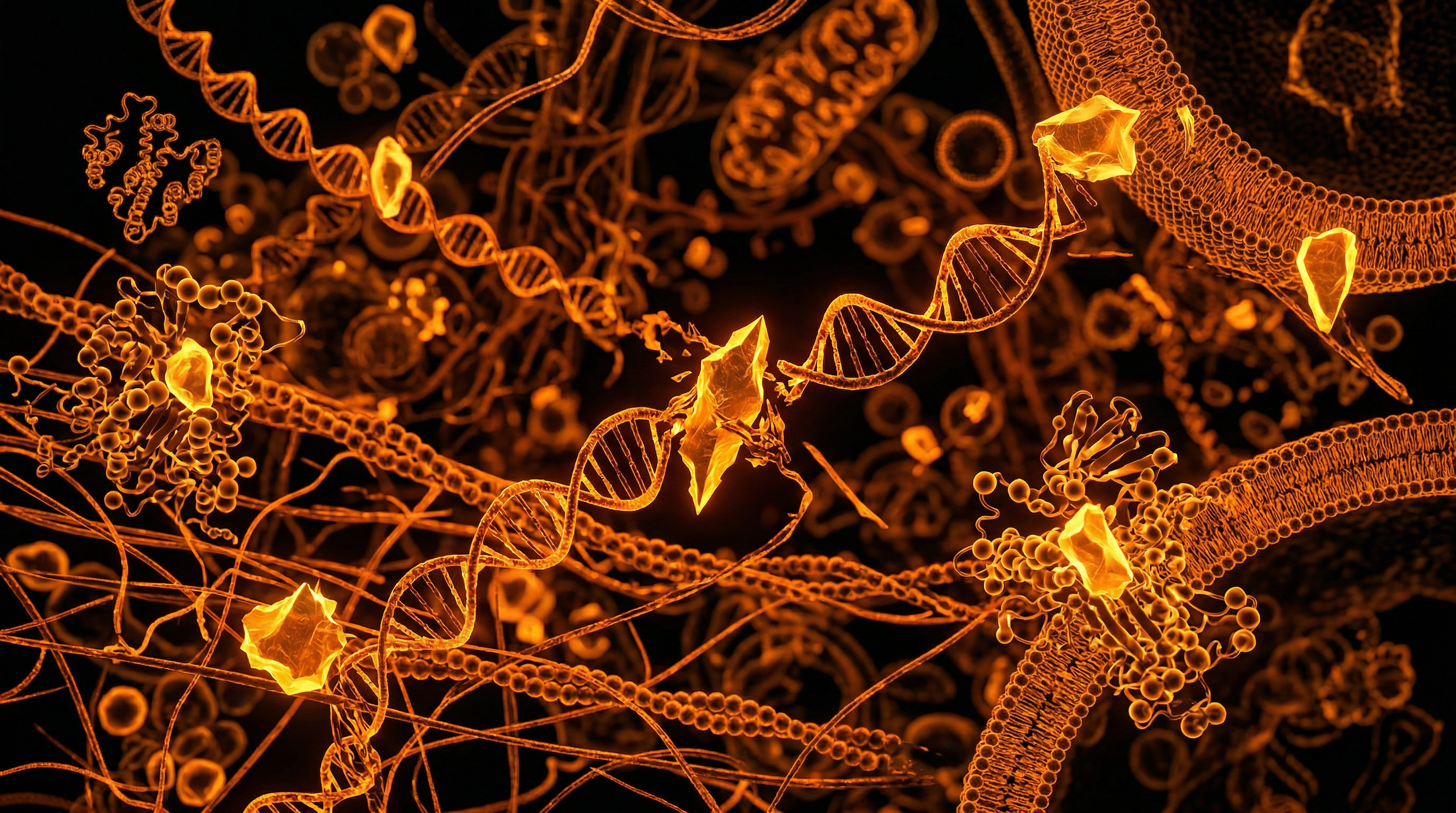
However, a new and insidious threat has breached this inner sanctum. Recent breakthroughs in histopathology and analytical chemistry, particularly from research cohorts in the United Kingdom, have identified an alarming presence: microplastics and nanoplastics (MNPs) lodged deep within human connective tissues.
This is not merely an environmental tragedy unfolding in our oceans; it is a molecular invasion of the human architecture. These inorganic intruders—fragments of polyethylene, polypropylene, and polystyrene—are no longer just "passing through" our digestive tracts. They are migrating across biological barriers, infiltrating the interstitial fluid, and embedding themselves within the very fibres of our fascia.
This report explores the biological mechanisms of this accumulation, the resulting chronic inflammatory cascades, and the "silent" pathology that the mainstream medical establishment has yet to acknowledge. We are witnessing the birth of a new category of disease: Inorganic Matrix Syndrome.
Fact: Recent studies conducted at the University of Hull and the Hull York Medical School found microplastics in 100% of the human lung tissue samples and surgical vein samples tested, suggesting that systemic infiltration is no longer a risk, but a current reality.
The Biology — How It Works
To understand why microplastics in the matrix are so devastating, one must first understand the delicate nature of the Extracellular Matrix (ECM). The ECM is a complex web of proteins (primarily collagen and elastin), glycosaminoglycans, and water. It serves as the immediate environment for every cell in the body.
The Fascial Network as a Conductive System
The fascia is not just "gristle." It is a continuous, body-wide web that facilitates mechanotransduction—the process by which cells convert mechanical stimulus into electrochemical activity. For this system to function, the matrix must maintain a specific viscosity and "tensegrity" (tensional integrity).
The Infiltration Route
How do these particles reach the connective tissue? The path is complex:
- Ingestion and Inhalation: MNPs enter via the gut (microvilli) or the alveoli in the lungs.
- Translocation: Particles smaller than 10 micrometres (µm) can pass directly into the bloodstream and lymphatic system.
- Extravasation: Once in the blood, nanoplastics (less than 1 µm) can slip through the endothelial gaps in capillaries, particularly during states of systemic inflammation or "leaky" tissue.
- Sequestration: The interstitial space of the fascia acts as a "sink." Because the ECM is designed to trap and process metabolic waste, it inadvertently traps these non-biodegradable plastic shards.
The Hydrophobic Interaction
Microplastics are generally hydrophobic (water-repelling). The ECM, however, is a highly hydrated environment. When a hydrophobic plastic particle enters the hydrophilic matrix, it disrupts the "Structured Water" or "Exclusion Zone (EZ) water" that surrounds collagen fibres. This disruption alters the electrical conductivity of the fascia, potentially interfering with the body’s internal signaling.
Mechanisms at the Cellular Level
Once a microplastic particle becomes embedded in the matrix, the body’s cellular defence mechanisms are triggered. However, because plastic is an "evolutionary stranger," the immune response is frequently maladaptive.
Phagocytic Frustration
The primary responders to foreign material in the matrix are macrophages and fibroblasts. Macrophages attempt to engulf the plastic particles via phagocytosis.
- The Problem: Plastics are chemically inert and structurally rigid. The macrophage cannot break down the polymer chains.
- The Result: "Frustrated phagocytosis." The macrophage, unable to digest the intruder, continually releases pro-inflammatory cytokines (such as IL-1β and TNF-α) and reactive oxygen species (ROS). This creates a localized "hot zone" of chronic inflammation that never resolves.
Fibroblast Dysregulation and Fibrosis
Fibroblasts are the "architects" of the matrix, responsible for secreting collagen. When they sense the presence of microplastics, they interpret the mechanical disruption as a wound.
- Over-secretion: Fibroblasts begin to over-produce dense, disorganized collagen to "wall off" the plastic particle.
- Matrix Stiffening: This leads to localized fibrosis (scarring). Over time, the fascia loses its elasticity, leading to chronic stiffness, reduced range of motion, and the compression of nerves passing through the tissue.
The "Bio-Corona" Effect
Perhaps the most concerning cellular mechanism is the formation of a protein corona. In the blood or interstitial fluid, a plastic particle quickly becomes coated with proteins, lipids, and even environmental toxins (like heavy metals or pesticides).
- Molecular Mimicry: This coating can make the plastic look like a legitimate biological entity, such as a damaged protein or a pathogen.
- The Trojan Horse: The "corona" allows the plastic to bind to cellular receptors it would otherwise never touch, potentially bypassing the blood-brain barrier or entering the cell nucleus, where it may interfere with gene expression.
Environmental Threats and Biological Disruptors
The "Matrix" is not being assaulted by a single source, but by a cocktail of polymer types and associated chemical additives.
Primary Polymer Culprits
In UK tissue samples, several specific polymers dominate:
- Polyethylene (PE): Found in plastic bags and packaging. It is the most common plastic found in human tissues.
- Polypropylene (PP): Used in food containers and synthetic carpets.
- Polyethylene Terephthalate (PET): Primarily from beverage bottles and synthetic clothing fibres.
The Additive Menace
Plastics are rarely "pure." They are delivery vehicles for a host of Endocrine Disrupting Chemicals (EDCs):
- Phthalates: Used to make plastics flexible; these leach out of the matrix and into the bloodstream, disrupting hormonal balance.
- Bisphenols (BPA/BPS): Mimic estrogen and have been linked to metabolic disorders and cancers.
- Flame Retardants (PBDEs): Often found in microplastics sourced from household dust; these are potent neurotoxins.
Tyre Wear Particles (TWPs)
A specifically British environmental concern is the high concentration of Tyre Wear Particles. As vehicles drive on UK motorways, the friction produces clouds of micro-rubber and plastic. These particles are heavily laden with 6PPD-quinone, a chemical highly toxic to aquatic life and now being scrutinized for its effects on human pulmonary and connective tissue.
Important Callout: It is estimated that the average person may be ingesting and inhaling the equivalent of one credit card's worth of plastic (approx. 5 grams) every single week.
The Cascade: From Exposure to Disease
How does a microscopic shard of plastic in your thigh fascia lead to systemic disease? The process is a "slow-burn" cascade.
1. The Pre-Rheumatic State
Initial accumulation leads to vague symptoms: unexplained muscle aches, "brain fog," and persistent joint stiffness. This is the Pre-Rheumatic State, where the matrix is becoming increasingly "polluted" and rigid, but clinical blood markers (like CRP) may still appear "normal."
2. Loss of Interstitial Flow
The fascia facilitates the movement of lymph. As microplastics and the resulting fibrosis clog the "micro-channels" of the matrix, lymphatic drainage is impaired. This leads to interstitial lymphostasis—a "stagnant pond" effect where metabolic waste products build up, further acidifying the tissue.
3. Autoimmune Triggering
The persistent presence of "cloaked" plastic particles (the protein corona) can eventually confuse the immune system. If the body begins attacking the plastic-protein complexes, it may inadvertently start attacking the underlying collagen and elastin. This is a suspected pathway for the rise in autoimmune connective tissue diseases like scleroderma, lupus, and rheumatoid arthritis.
4. Epigenetic Alteration
Emerging research suggests that nanoplastics can penetrate the cell membrane and interact with the cytoskeleton. This mechanical interference can reach the nucleus, altering the way genes are expressed—specifically genes related to inflammation and cellular aging (senescence).
What the Mainstream Narrative Omits
The corporate and governmental narrative around microplastics focuses almost exclusively on "environmental pollution" and "ocean health." While these are important, the narrative conveniently avoids several "uncomfortable" truths regarding human biology.
The Cumulative Myth
Mainstream toxicology is built on the phrase "the dose makes the poison." They argue that because the concentration of microplastics in a single glass of water is low, the risk is negligible.
- The Truth: Microplastics are bio-persistent. Unlike organic toxins that the liver can break down, the body has no mechanism to "detox" a solid shard of polypropylene. These particles accumulate over a lifetime. The "dose" is not what you eat today; it is the sum of everything you have consumed since the 1950s.
The Fragmentation Paradox
The narrative suggests that as plastic breaks down, it becomes "less" of a problem. In reality, as a microplastic fragments into nanoplastics, it becomes more dangerous. Smaller particles have a higher surface-area-to-volume ratio, making them more chemically reactive and more capable of crossing the blood-brain barrier.
Industry-Funded Safety Limits
Most "safe" exposure limits for plastic additives are based on outdated studies of single chemicals. They fail to account for the "Cocktail Effect"—the synergistic toxicity of hundreds of different plastic types and additives interacting within the human matrix simultaneously.
The UK Context
The United Kingdom serves as a unique and troubling case study for microplastic infiltration, due to its high population density, historic industrial runoff, and specific consumption patterns.
The London Air Shed
Research from King's College London has revealed that London has some of the highest recorded levels of airborne microplastic deposition in the world. The "urban canyon" effect of London's streets traps synthetic fibres from clothing and tyre dust, ensuring that residents are constantly "recycling" these particles through their lungs and into their systemic circulation.
The "Plastic Veins" Discovery
In 2023, UK researchers at the University of Hull published a landmark study in the journal PLOS ONE. They analysed human saphenous vein tissue (taken from patients undergoing heart bypass surgery).
- Findings: They found 15 different types of microplastics within the vascular tissue itself.
- Implication: If plastic is in the veins, it is in the matrix that supports those veins. This suggests that plastic is now a structural component of the British cardiovascular system.
Water Quality and "The Great British Tea"
The UK’s reliance on tea, often brewed using "silky" pyramid tea bags, is a significant source of exposure. A study by McGill University (widely discussed in UK health circles) found that a single plastic tea bag can release 11.6 billion microplastics and 3.1 billion nanoplastics into a single cup. For the average Briton, this represents a massive, direct internal dosing of the matrix.
Protective Measures and Recovery Protocols
While the situation is grave, we are not helpless. Protecting the matrix requires a two-pronged approach: Reduction of Ingress and Facilitation of Clearance.
1. Environmental Hardening
- Water Filtration: Standard charcoal filters are insufficient. Only Reverse Osmosis (RO) or high-grade distillation can effectively remove nanoplastics from drinking water.
- Fibre Choice: Transitioning to 100% natural fibres (wool, cotton, silk, linen) is essential. Synthetic fleece and polyester "performance" gear are the primary sources of airborne microplastics in the home.
- Dust Mitigation: Use HEPA-certified vacuums. Microplastics accumulate in household dust, which is then inhaled or absorbed through the skin.
2. Biological Clearance (The Matrix Detox)
Since the body cannot chemically degrade plastic, we must rely on mechanical and cellular clearance pathways.
- Autophagy Induction: Intermittent fasting and Deep Ketosis trigger autophagy—the cellular "housecleaning" process. While a cell cannot "digest" plastic, it can package it into vacuoles and attempt to export it into the interstitial space for lymphatic clearance.
- Optimising the Glymphatic and Lymphatic Systems:
- Manual Lymphatic Drainage (MLD): Specific massage techniques can help move "stagnant" interstitial fluid, pushing particles toward the lymph nodes.
- Rebounding: The rhythmic acceleration and deceleration of rebounding (mini-trampoline) is one of the few ways to physically "flush" the fascial matrix.
- Sauna Therapy: Frequent use of Far-Infrared Saunas promotes deep sweating. Studies have shown that certain phthalates and plastic-associated toxins are excreted in sweat at concentrations much higher than in blood or urine.
3. Nutritional Support for Matrix Integrity
- Glucuronidation Support: The liver uses the glucuronidation pathway to process plastic additives (like BPA). Support this with Calcium D-Glucarate and cruciferous vegetables (sulforaphane).
- Silica Supplementation: Orthosilicic acid (silica) is vital for collagen health and may help "strengthen" the matrix against the structural disruptions caused by plastic shards.
- Glycine and Proline: These amino acids are the building blocks of collagen. Providing the body with an abundance of "clean" (organic, grass-fed) collagen precursors allows the fibroblasts to repair the matrix more effectively.
Summary: Key Takeaways
The infiltration of microplastics into the human matrix is an epochal shift in our biological history. We have moved from an era of "chemical pollution" to an era of "Structural Infiltration."
- The Matrix is the Target: Microplastics do not just sit in the gut; they migrate into the fascia and extracellular matrix, disrupting the body's primary communication and structural network.
- Chronic Inflammation: The presence of these particles causes "frustrated phagocytosis" and permanent immune activation, leading to systemic fibrosis and potentially autoimmune disease.
- The UK is a Hotspot: Due to air quality issues in major cities like London and the prevalence of plastic in the food chain (and tea bags), UK citizens are at particularly high risk.
- Nanoplastics are the Real Danger: The smaller the particle, the more easily it bypasses defences and the more damage it does at a cellular and epigenetic level.
- Proactive Recovery is Possible: Through Reverse Osmosis filtration, autophagy induction, lymphatic drainage, and natural fibre adoption, individuals can reduce their "Plastic Load" and protect the integrity of their biological matrix.
The mainstream narrative will continue to downplay the human health implications until the "plastic-induced disease" becomes too widespread to ignore. For the informed individual, the time to harden your biological defences is now. The matrix must be protected; it is the ground of your being.
Author Note: This report was compiled by senior biological researchers at INNERSTANDING. Our mission is to expose the hidden stressors of the modern environment and provide science-based pathways to physiological sovereignty.
This article is provided for informational and educational purposes only. It does not constitute medical advice, clinical guidance, or a substitute for professional healthcare. Information reflects cited research at time of publication. Always consult a qualified healthcare professional before acting on any health information.
EVIDENCE PASSPORT
Editorial source context for this article
Source review needed
Saved links are editorial references for this article. They may support specific claims rather than every sentence. Open and assess each source in context. This passport does not independently verify them.
Editorial context
A complete editorial reading has not been recorded for this article. Source links remain available for you to open and assess directly.
Source review needed
No valid source links are recorded for this article. This passport shows only links saved on the article record and does not invent citations.
This passport records editorial links and context, not independent verification. Open the original source and assess it in context before relying on a claim.
Medical Disclaimer
The information in this article is for educational purposes only and does not constitute medical advice, diagnosis, or treatment. Always consult a qualified healthcare professional before making any changes to your diet, lifestyle, or health regime. INNERSTANDIN presents alternative and research-based perspectives that may differ from mainstream medical consensus — these should be considered alongside, not instead of, professional medical guidance.
Read Full DisclaimerContinue the thread
Keep this question moving.
Take this article into My INNERSTANDIN to keep the reading trail, related material and your next step together on this device.
Dig deeper in the Library
Free, longform PDF volumes that go beyond headlines into mechanisms and references.