
Mindfulness and Attention Regulation
Updated May 2026
Evaluating the effectiveness of mindfulness meditation as a supplemental tool for ADHD.
Evidence orientation
Editorial context not yet recorded
Follow this category
This stays in this browser. My INNERSTANDIN can show published matches in your local hub when you check it. It does not send email, push, or alert notifications.
Local learning review
A private browser aid for revisiting ideas. It is not an alert or a health recommendation.
Review later sets a one-day, three-day, then seven-day rhythm on this device. Choose it only when you want to revisit this article.
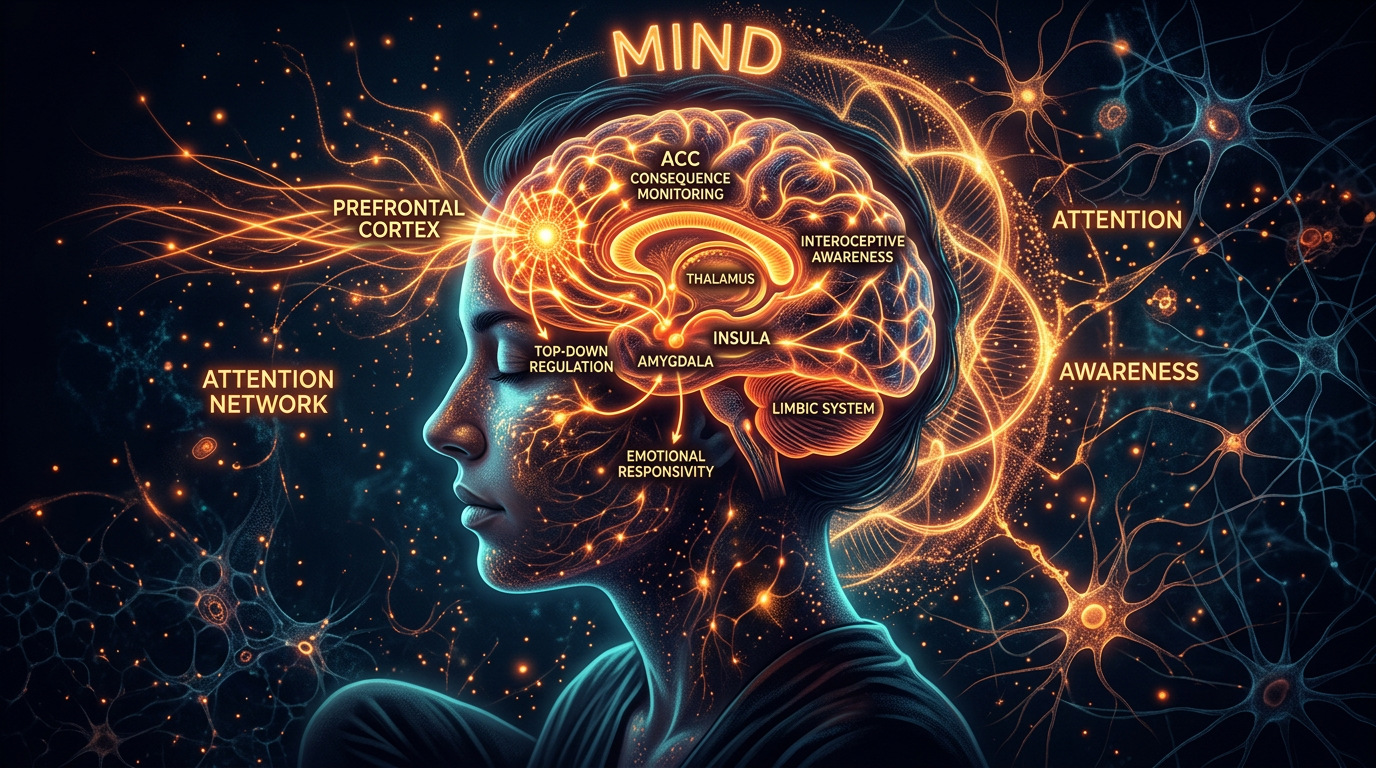
In the frantic landscape of the twenty-first century, the ability to regulate attention is perhaps our most overtaxed faculty. For the millions of individuals in the United Kingdom living with Attention Deficit Hyperactivity Disorder (ADHD), this challenge is not merely a byproduct of a digital age; it is a fundamental neurodevelopmental reality. Traditionally, the management of ADHD has been viewed through a predominantly pharmacological lens. However, a growing body of clinical evidence—and a shifting paradigm within the NHS and private practice—is highlighting the profound efficacy of mindfulness as a primary tool for attention regulation.
This article explores the intersection of mindfulness and neurodevelopmental conditions, examining the neuroscience of the ADHD brain, the mechanics of mindfulness-based interventions, and practical, UK-centric strategies for integrating these practices into daily life.
1. Understanding the ADHD Brain: A Regulation Deficit
To understand why mindfulness is effective, we must first dispel the myth that ADHD is simply a "lack of attention". In reality, ADHD is a disorder of attention regulation. An individual with ADHD often has an abundance of attention; the difficulty lies in the inability to direct that attention voluntarily, sustain it on demand, or inhibit it when it is hyper-focused on the 'wrong' stimulus.
The Default Mode Network vs. The Task Positive Network
Neuroscientific research identifies two primary neural networks involved in this struggle: the Default Mode Network (DMN) and the Task Positive Network (TPN).
The DMN is active when the mind is wandering, ruminating, or thinking about the past or future. In neurotypical brains, when a task requires focus, the TPN switches on and the DMN is suppressed. In the ADHD brain, this "toggle switch" is faulty. The DMN frequently intrudes upon the TPN, leading to what is colloquially known as 'brain fog' or 'distractibility'.
Mindfulness is, essentially, the practice of consciously strengthening this toggle switch. By repeatedly noticing when the mind has wandered and gently returning it to a chosen anchor, the practitioner is performing "cognitive push-ups" that physically alter the neural pathways of the brain.
The Role of Executive Function
ADHD is primarily a deficit in executive functions—the brain’s 'management system' located in the prefrontal cortex. These functions include:
- Inhibition: The ability to stop and think before acting.
- Working Memory: Holding information in mind to work with it.
- Emotional Regulation: Managing feelings so they don't overwhelm focus.
Mindfulness targets these specific areas by creating a "gap" between stimulus and response, providing the neurodivergent individual with the precious seconds needed to employ executive control.
2. What is Mindfulness in a Neurodevelopmental Context?
In a clinical and UK context, mindfulness is often defined via the Jon Kabat-Zinn model: "Paying attention in a particular way: on purpose, in the present moment, and non-judgmentally."
For those with ADHD, the "non-judgmental" aspect is arguably the most critical. Many adults and children with ADHD in the UK have spent years being corrected, criticised, or labelled as "lazy" or "difficult". This leads to a secondary layer of emotional distress—anxiety and low self-esteem—which further impairs attention.
Mindfulness-Based Cognitive Therapy (MBCT) and Mindfulness-Based Stress Reduction (MBSR) offer a framework where the wandering mind is not a failure, but simply an observation. This shift from "I can't focus" to "I notice my mind has moved" is transformative.
3. The Evidence Base: Does it Work?
The UK’s National Institute for Health and Care Excellence (NICE) guidelines are the gold standard for treatment pathways. Currently, NICE recognises the importance of non-pharmacological interventions, particularly for adults and children who do not respond well to medication or who prefer a holistic approach.
Key Research Findings
- Neuroplasticity: Studies using fMRI scans have shown that regular mindfulness practice can lead to increased grey matter density in the prefrontal cortex and the anterior cingulate cortex—areas directly responsible for attention and impulse control.
- The "Zylowska" Study: Dr. Lidia Zylowska’s pioneering research into Mindfulness-Based Cognitive Therapy for ADHD showed significant improvements in self-reported symptoms and performance on objective attention tasks.
- UK Academic Contributions: Institutions like the Oxford Mindfulness Centre and the University of Exeter have been at the forefront of researching how mindfulness aids emotional regulation, which is a key component of the ADHD "emotional dysregulation" subtype often overlooked in early diagnostics.
4. Challenges: Why Traditional Meditation Often Fails ADHD
If you tell a person with hyperactive-type ADHD to "sit still for twenty minutes and clear your mind," you are likely to induce a panic attack or a sense of profound failure. Traditional, monastic approaches to meditation often run counter to the ADHD nervous system.
The "Boredom Threshold"
The ADHD brain is chronically under-stimulated in terms of dopamine. Static meditation can be painfully boring, leading the brain to seek stimulation through intrusive thoughts or physical fidgeting.
The "Quiet Mind" Fallacy
Many beginners believe the goal is to stop thinking. For the neurodivergent brain, which often feels like a "mental motorway," this goal is impossible.
The Solution: Mindfulness for ADHD must be adapted. It must be active, flexible, and grounded in the "short moments, many times" philosophy.
5. Adapted Techniques for Attention Regulation
For mindfulness to work as an attention-regulation tool in the UK context, it must be practical and fit into a busy life. Here are the core adapted techniques:
A. The "3-Minute Breathing Space"
Developed as part of MBCT, this is a staple of UK mindfulness practice. It is broken into three one-minute stages:
- Awareness: Acknowledging what is happening right now (thoughts, feelings, sensations) without trying to change it.
- Gathering: Narrowing the focus specifically to the breath in the abdomen.
- Expanding: Expanding awareness back out to the whole body and the environment.
Why it works for ADHD: It is short enough to be achievable and acts as a "reset button" during a hectic workday.
B. Mindful Movement and Walking Meditation
For those with physical hyperactivity, stillness is not a prerequisite for mindfulness.
- Walking Meditation: Instead of a breath anchor, the anchor is the sensation of the feet hitting the ground.
- Yoga/Tai Chi: These practices provide high levels of proprioceptive input (feedback from muscles and joints), which helps ground the "scattered" mind in the body.
C. The STOP Technique
This is a portable "micro-mindfulness" tool:
- Stop: Pause what you are doing.
- Take a breath: Reconnect with the physical body.
- Observe: What is happening in my mind and body? Am I hyper-focusing on something unproductive?
- Proceed: Continue with a conscious choice rather than an impulsive reaction.
D. External Anchoring
If the internal environment (the breath) feels too chaotic, use external anchors.
- Sound: Focusing on the most distant sound you can hear, then the closest.
- Sight: The "5-4-3-2-1" technique (5 things you see, 4 you can touch, etc.) is a grounding exercise widely used in the UK for ADHD and associated anxiety.
6. Integrating Mindfulness with UK Healthcare and Support
Navigating the UK's healthcare system for ADHD can be challenging. With NHS waiting lists for adult assessments often stretching into years, mindfulness offers a self-managed intervention that can be started immediately.
The NHS Perspective
While medication (such as methylphenidate or lisdexamfetamine) remains the first-line treatment for ADHD under NICE guidelines, "psychosocial interventions" are strongly recommended. Many NHS Trusts now offer MBCT or MBSR through their "Talking Therapies" (formerly IAPT) services. If you have a diagnosis, you can request a referral to a practitioner who understands neurodiversity.
The "Right to Choose" and Private Care
In England, the "Right to Choose" allows patients to seek ADHD assessments and follow-up care through private providers funded by the NHS (e.g., Psychiatry-UK or ADHD 360). Many of these providers now integrate ADHD coaching, which heavily utilises mindfulness-based attention regulation strategies.
Charities and Community
- ADHD UK & ADHD Adult UK: These charities provide peer support groups where mindfulness techniques are often shared and practised in a neuro-inclusive environment.
- The ADHD Foundation: Based in Liverpool but operating nationally, they offer resources that bridge the gap between clinical treatment and lifestyle management, including "neuro-mindfulness" for children and schools.
7. Mindfulness and Medication: A Dual Approach
It is important to state that mindfulness is not a replacement for medication for most people; rather, it is a powerful adjunct.
How They Work Together
Medication can "lower the noise" of the ADHD brain, making it easier to engage in mindfulness. Conversely, mindfulness can help individuals manage the side effects of medication. For instance, if a stimulant causes a "comedown" or increased heart rate in the evening, mindfulness techniques can help regulate the nervous system and aid sleep.
Furthermore, medication helps with the capacity to focus, but it doesn't tell you what to focus on. A person on medication can still spend four hours mindfully cleaning a skirting board while ignoring a work deadline. Mindfulness provides the meta-awareness to notice this and pivot back to the priority task.
8. Mindfulness in the UK Workplace
Under the Equality Act 2010, ADHD is considered a disability if it has a "substantial and long-term adverse effect" on your ability to carry out normal day-to-day activities. This entitles employees to "reasonable adjustments."
Mindful Adjustments
- Quiet Spaces: Requesting access to a quiet room for 10-minute mindfulness breaks.
- Focus Blocks: Using mindfulness-based "Deep Work" sessions, structured around the Pomodoro technique.
- Mindful Communication: Using "The Pause" before responding to emails or in meetings to prevent impulsive outbursts.
Employers are increasingly aware of "neuro-inclusion." Forward-thinking UK companies are providing subscriptions to apps like Headspace or Calm, though it is crucial that these are used as part of a wider understanding of ADHD, rather than a "sticking plaster" for a high-stress environment.
9. For Parents: Teaching Children Attention Regulation
In the UK, the rise in ADHD diagnoses in children has led to a demand for "Mindfulness in Schools" (MiSP). For parents, teaching a child with ADHD mindfulness requires a play-based, sensory approach.
Techniques for Neurodivergent Children
- The "Glitter Jar": Shake a jar of glitter and water. The glitter represents busy thoughts. Watch as it settles, just as the mind can settle when we sit still.
- Balloon Breathing: Imagining the belly is a balloon that fills and empties.
- The "Spidey-Senses": Encouraging the child to use their "superhero" senses to hear every tiny sound in the room. This turns attention regulation into a game rather than a chore.
10. The Path Forward: Building a Sustainable Practice
The goal of mindfulness in the context of ADHD is not to become a Zen master. The goal is "Attention Agency"—the ability to have more say in where your mind goes.
1. Start Small
In the UK, we have a tendency to "keep calm and carry on," often ignoring our internal state until we burn out. Start with just two minutes a day. Consistency beats duration every time for the ADHD brain.
2. Expect Resistance
There will be days when your mind feels like a cage of monkeys. On those days, "success" is simply noticing that the monkeys are loud. That is mindfulness.
3. Use Technology Wisely
While phones are often the enemy of attention, they can also be the cure. Apps like Insight Timer (which has a large UK teacher base) or Focus@Will (which uses neurologically patterned music) can support the ADHD brain in finding a flow state.
4. Join a Neurodivergent-Specific Group
Standard mindfulness courses can sometimes feel alienating if the teacher doesn't understand executive dysfunction. Look for "Mindfulness for ADHD" courses—many are now available online through UK-based practitioners who are neurodivergent themselves.
11. Conclusion: From Distraction to Presence
ADHD is often described as a deficit, but it is also a different way of being in the world—one that is often marked by creativity, empathy, and the ability to hyper-focus on passions. The challenge is that the modern world is not built for the ADHD brain.
Mindfulness-based attention regulation is not about "fixing" the brain to make it neurotypical. It is about providing the individual with the tools to navigate a neurotypical world without losing themselves. It is about moving from a state of constant reaction to a state of conscious action.
For the person in the UK living with ADHD, mindfulness offers a path out of the shame of "distractibility" and into the empowerment of "presence." By training the muscle of attention, one small, non-judgmental breath at a time, we can transform the Ferrari engine of the ADHD brain into a vehicle that can finally be steered.
Resources for UK Readers:
- NHS 111 / Local GP: For initial ADHD concerns and mental health referrals.
- ADHD UK (adhduk.co.uk): Information on Access to Work and support groups.
- Oxford Mindfulness Centre: For evidence-based courses and research.
- The ADHD Foundation (adhdfoundation.org.uk): For resources focused on children, education, and neurodiversity in the workplace.
Author's Note: This article is for informational purposes and does not constitute medical advice. If you suspect you have ADHD, please consult a healthcare professional or your GP for a formal assessment.
Appendix: A Deep Dive into the Neuroscience of Mindfulness and ADHD
To provide an authoritative conclusion, we must look at the specific neurobiological changes that occur when an ADHD brain engages in long-term mindfulness.
The Amygdala and Emotional Regulation
Many with ADHD suffer from "Rejection Sensitive Dysphoria" (RSD) or intense emotional lability. The amygdala, the brain's "alarm system," is often over-reactive in ADHD. Mindfulness-based practices have been shown to decrease the physical size of the amygdala and weaken the functional connectivity between the amygdala and the rest of the brain, while strengthening the connection between the amygdala and the prefrontal cortex. This allows for "top-down" regulation—where the thinking brain can calm the feeling brain.
Dopamine and the Reward Circuit
The ADHD brain is often described as having a "reward deficiency." We seek hits of dopamine through novel stimuli, social media, or impulsivity. Mindfulness teaches the brain to find a more subtle, sustainable reward in the "here and now." By lowering the baseline of over-stimulation, mindfulness can over time make "boring" tasks more tolerable, as the threshold for what constitutes an acceptable level of stimulation begins to shift.
Conclusion of the Scientific View
In summary, the UK’s approach to ADHD is evolving. We are moving away from a "compliance-based" model of treatment toward an "empowerment-based" model. Mindfulness and attention regulation stand at the heart of this movement, offering a scientifically validated, compassionate, and highly effective way to live well with a neurodivergent mind.
This article is provided for informational and educational purposes only. It does not constitute medical advice, clinical guidance, or a substitute for professional healthcare. Information reflects cited research at time of publication. Always consult a qualified healthcare professional before acting on any health information.
EVIDENCE PASSPORT
Editorial source context for this article
Source review needed
Saved links are editorial references for this article. They may support specific claims rather than every sentence. Open and assess each source in context. This passport does not independently verify them.
Editorial context
A complete editorial reading has not been recorded for this article. Source links remain available for you to open and assess directly.
Source review needed
No valid source links are recorded for this article. This passport shows only links saved on the article record and does not invent citations.
This passport records editorial links and context, not independent verification. Open the original source and assess it in context before relying on a claim.
Medical Disclaimer
The information in this article is for educational purposes only and does not constitute medical advice, diagnosis, or treatment. Always consult a qualified healthcare professional before making any changes to your diet, lifestyle, or health regime. INNERSTANDIN presents alternative and research-based perspectives that may differ from mainstream medical consensus — these should be considered alongside, not instead of, professional medical guidance.
Read Full DisclaimerContinue the thread
Keep this question moving.
Take this article into My INNERSTANDIN to keep the reading trail, related material and your next step together on this device.
Explore this in the Body Map
See where this hits your biology. Interactive anatomy, threats, and protective protocols.
Dig deeper in the Library
Free, longform PDF volumes that go beyond headlines into mechanisms and references.