
Mitochondria: The Power Station at the Root of All Disease
Updated May 2026
Mitochondria are not merely the cell's energy producers — they are the ancient bacterial endosymbionts that now govern ATP synthesis, calcium signalling, reactive oxygen species production, immune activation, hormone synthesis, and the decision of every cell to live or die through apoptosis. Their dysfunction — driven by heavy metal exposure, pesticide residues, electromagnetic radiation, nutritional deficiencies, and pharmaceutical mitochondrial toxins — is now recognised as the unifying mechanism underlying cancer, cardiovascular disease, neurodegeneration, autoimmune conditions, chronic fatigue, and metabolic syndrome. Protecting and optimising mitochondrial function is not a biohacking trend — it is the most fundamental intervention in health that modern medicine has systematically ignored.
Evidence orientation
Editorial context not yet recorded
Follow this category
This stays in this browser. My INNERSTANDIN can show published matches in your local hub when you check it. It does not send email, push, or alert notifications.
Local learning review
A private browser aid for revisiting ideas. It is not an alert or a health recommendation.
Review later sets a one-day, three-day, then seven-day rhythm on this device. Choose it only when you want to revisit this article.
Overview
For over a century, the biological sciences have operated under a reductionist delusion. We have been taught that the nucleus—the vaulted chamber housing our DNA—is the "brain" of the cell, the master architect of our destiny. We have been told that chronic diseases are largely "genetic accidents" or the inevitable result of ageing. This narrative is not only incomplete; it is dangerously misleading. At the centre of every human cell lies a far more profound and ancient intelligence: the mitochondria.
Mitochondria are not merely the "powerhouses" of the cell, a tired cliché relegated to secondary school textbooks. They are the endosymbiotic descendants of ancient purple non-sulphur bacteria that entered into a partnership with our ancestral cells nearly two billion years ago. This event, known as endosymbiosis, did not just provide us with energy; it provided the blueprint for complex life itself. Every breath you take, every thought you formulate, and every heartbeat is governed by these semi-autonomous organelles.
Today, we are witnessing a global epidemic of chronic, non-communicable diseases. From the staggering rise of Type 2 diabetes and obesity to the relentless march of Alzheimer’s, Parkinson’s, and metastatic cancer, modern medicine is failing to stem the tide. The reason is simple: we are treating the symptoms of a bioenergetic collapse while ignoring the source.
Mitochondria are the primary sensors of our environment. They monitor the light we expose ourselves to, the chemicals we ingest, the electromagnetic frequencies that bathe our tissues, and the nutrient density of our food. When these environmental inputs are mismatched with our evolutionary biology, mitochondrial function falters. This state, known as mitochondrial dysfunction, is the unifying mechanism behind almost every modern pathology.
This article aims to expose the hidden reality of our cellular health. We will explore how our modern world has become a minefield for these ancient bacterial allies and why the restoration of mitochondrial integrity is the only true path to reclaiming human health.
##
##
The Biology — How It Works
To understand why mitochondrial failure leads to systemic collapse, one must first grasp the breathtaking complexity of their internal architecture and function. Mitochondria are unique among organelles because they possess their own circular DNA (mtDNA), separate from the linear DNA found in the nucleus. This mtDNA is inherited exclusively from the mother, creating an unbroken matrilineal link back to the dawn of humanity.
The Architecture of Energy
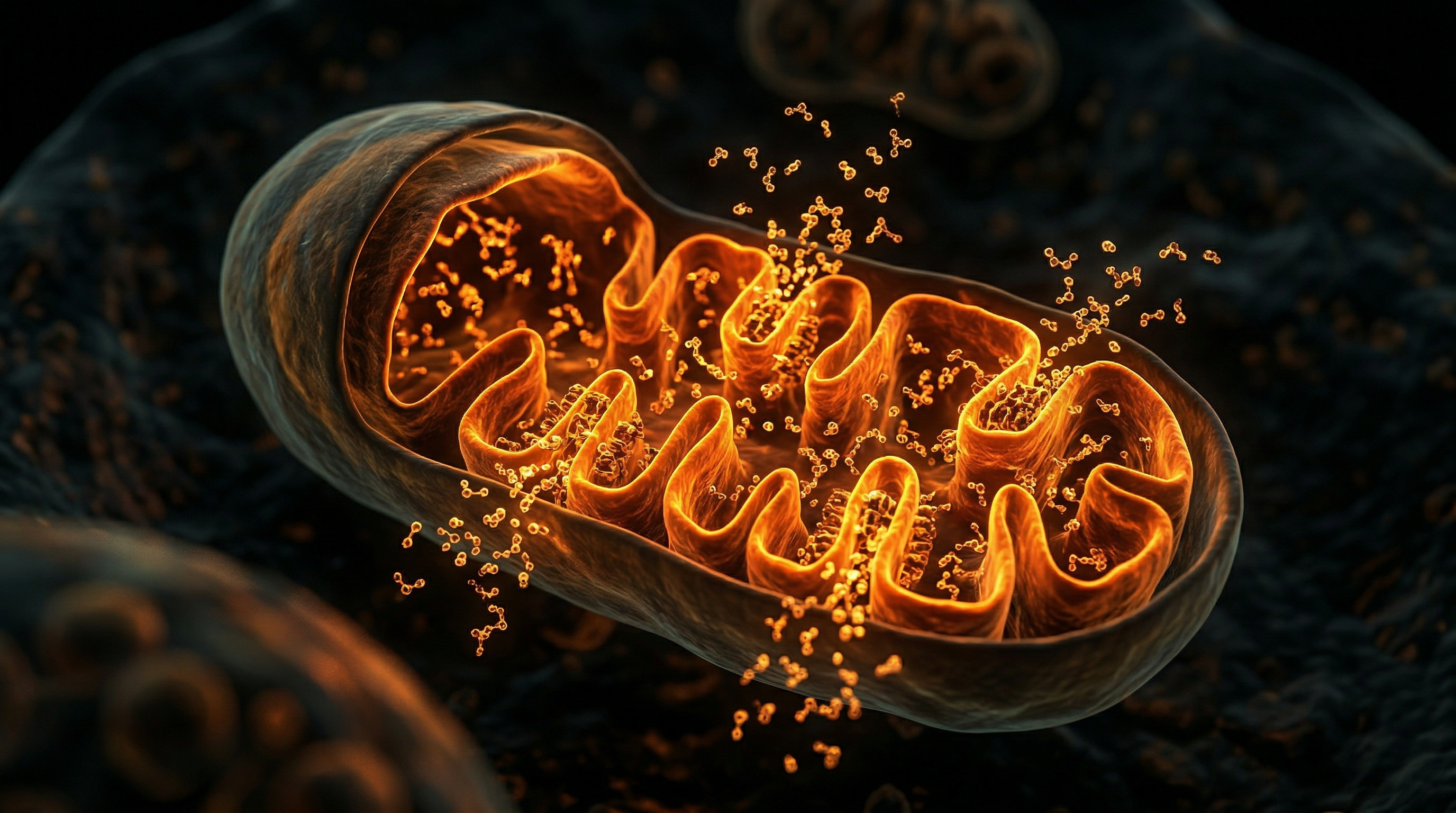
Each mitochondrion is composed of two distinct membranes. The Outer Mitochondrial Membrane (OMM) serves as the gateway, peppered with porins that allow small molecules to pass. The Inner Mitochondrial Membrane (IMM), however, is where the magic—and the danger—resides. The IMM is folded into intricate structures called cristae, which vastly increase the surface area available for chemical reactions.
Within this inner membrane sits the Electron Transport Chain (ETC), a series of four protein complexes (Complex I through IV) and a fifth enzyme, ATP Synthase.
The Process of Oxidative Phosphorylation
The primary role of the mitochondria is to convert the chemical energy from the food we eat into Adenosine Triphosphate (ATP), the universal energy currency of life. This process, known as Oxidative Phosphorylation (OXPHOS), is a masterclass in quantum biological engineering:
- The Krebs Cycle: In the mitochondrial matrix, derivatives of glucose and fats are broken down, releasing high-energy electrons carried by NADH and FADH2.
- The Electron Harvest: These carriers donate electrons to Complex I and Complex II.
- The Proton Pump: As electrons move through the complexes toward oxygen (the final electron acceptor), the energy released is used to pump protons ($H^+$ ions) from the matrix into the intermembrane space.
- The Gradient: This creates a massive electrochemical gradient—essentially a biological battery.
- The Turbine: Protons flow back into the matrix through ATP Synthase, a molecular motor that spins at up to 9,000 RPM, mechanically "crunching" ADP and inorganic phosphate together to form ATP.
Callout Fact: At any given moment, the human body contains only about 250 grams of ATP, yet we recycle our own body weight in ATP every single day to maintain basic cellular functions.
Beyond ATP: The Regulatory Hub
Crucially, mitochondria are not just furnaces. They are the cell's chief executive officers. They regulate:
- Calcium Signalling: Mitochondria act as buffers for intracellular calcium, a critical signal for neurotransmission and muscle contraction.
- Hormone Synthesis: The first step in the production of steroid hormones (pregnenolone synthesis) occurs exclusively within the mitochondria.
- Apoptosis: Mitochondria decide when a cell is too damaged to continue and initiate "programmed cell death" by releasing Cytochrome c.
##
##
Mechanisms at the Cellular Level
When mitochondria function optimally, they produce energy with minimal "smoke." However, when the system is stressed or poisoned, the biochemical machinery begins to break down, leading to a cascade of cellular destruction.
The Double-Edged Sword of ROS
During the transport of electrons, a small percentage (0.1% to 2%) inevitably "leak" out and react with oxygen to form Reactive Oxygen Species (ROS), such as superoxide radicals. In small amounts, ROS act as vital signalling molecules, telling the cell to adapt and strengthen. This is known as mitohormesis.
However, when the ETC is damaged—specifically at Complex I and III—ROS production skyrockets. This leads to oxidative stress, where these highly reactive molecules begin to strip electrons from surrounding structures.
The Vulnerability of mtDNA
Unlike nuclear DNA, which is protected by histone proteins and robust repair mechanisms, mtDNA is naked. It sits directly next to the ETC—the primary source of ROS. This makes mtDNA roughly 10 to 20 times more susceptible to mutation and damage than nuclear DNA. Once mtDNA is damaged, the proteins it codes for in the ETC become defective, leading to even more electron leakage, more ROS, and further DNA damage. This is the "vicious cycle" of mitochondrial decay.
The Governance of Life and Death: Apoptosis
One of the most critical mitochondrial mechanisms is the regulation of the Mitochondrial Permeability Transition Pore (mPTP). When a cell undergoes extreme stress, the mPTP opens, causing the mitochondrion to swell and burst, releasing pro-apoptotic factors into the cytosol. This activates Caspases, the "executioner" enzymes that dismantle the cell from the within.
In many chronic diseases, this process is hijacked. In neurodegeneration, cells die too easily (premature apoptosis). In cancer, damaged cells refuse to die (inhibited apoptosis), allowing them to proliferate uncontrollably.
Mitophagy and Biogenesis: The Quality Control System
To maintain health, the body must constantly engage in mitophagy—the selective recycling of damaged mitochondria. This is governed by the proteins PINK1 and Parkin. Simultaneously, the cell must create new, healthy mitochondria through mitochondrial biogenesis, a process driven by the master regulator PGC-1alpha.
Critical Insight: Modern chronic disease is essentially a failure of quality control. We are failing to clear out the "broken" mitochondria and lack the biological signals to build new ones.
##
##
Environmental Threats and Biological Disruptors
We are currently living in the most mitochondrially-toxic environment in human history. Our ancient bacterial symbionts are being assaulted by a cocktail of synthetic chemicals and physical stressors for which they have no evolutionary defence.
Heavy Metals: The Enzyme Inhibitors
Heavy metals like mercury, lead, cadmium, and aluminium are potent mitochondrial toxins. Mercury, in particular, has a high affinity for thiol groups in mitochondrial enzymes. It can bind to and inhibit Pyruvate Dehydrogenase, effectively cutting off the fuel supply to the Krebs cycle. Aluminium has been shown to interfere with the transport of iron, essential for the iron-sulphur clusters within the ETC complexes.
Pesticides and the Shikimate Myth
The UK’s agricultural landscape is saturated with Glyphosate (the active ingredient in Roundup). While proponents argue it is safe because humans lack the "shikimate pathway" found in plants, they ignore the fact that our gut microbiome—which is essentially a "distributed organ" of bacterial metabolism—does use this pathway. Furthermore, emerging research shows glyphosate acts as a chelator of manganese and magnesium, two minerals essential for mitochondrial superoxide dismutase (SOD2) and ATP production.
Electromagnetic Radiation (EMR) and Calcium Flooding
Perhaps the most overlooked threat is the exponential increase in non-ionising electromagnetic radiation from Wi-Fi, 4G, 5G, and Bluetooth. Research by Dr Martin Pall has demonstrated that EMR activates Voltage-Gated Calcium Channels (VGCCs) in the cell membrane. This causes a massive influx of calcium into the cell and subsequently into the mitochondria. This "calcium flooding" triggers the production of peroxynitrite, a devastatingly destructive free radical that causes immediate damage to the ETC and mtDNA.
Pharmaceutical Mitochondrial Toxins
Many of the most commonly prescribed drugs in the UK are direct mitochondrial poisons:
- Statins: These block the HMG-CoA reductase pathway, which is not only responsible for cholesterol but also for the synthesis of Coenzyme Q10 (CoQ10), a vital electron carrier in the ETC.
- Fluoroquinolone Antibiotics (e.g., Ciprofloxacin): These carry a "Black Box" warning because they can cause permanent mitochondrial damage by inhibiting DNA Gyrase/Topoisomerase, enzymes required for mtDNA replication.
- Metformin: While often touted for longevity, its primary mechanism is the inhibition of Complex I of the ETC. While this can have "fasting-mimetic" effects in some, in others, it can lead to chronic energy depletion and lactic acidosis.
##
##
The Cascade: From Exposure to Disease
The breakdown of mitochondrial function is not a localized event; it is a systemic collapse that manifests differently depending on which tissues are most energy-demanding. The brain, heart, and metabolic organs are always the first to fail.
Cancer: The Metabolic Origin
The mainstream narrative views cancer as a disease of genetic mutations. However, as championed by researchers like Dr Thomas Seyfried, cancer is primarily a metabolic mitochondrial disease.
In the 1920s, Otto Warburg discovered that cancer cells, regardless of the presence of oxygen, shift their energy production from oxidative phosphorylation to fermentation (glycolysis). This is known as the Warburg Effect. This shift occurs because the mitochondria are too damaged to perform OXPHOS. To survive, the cell reverts to an ancient, primitive form of energy production—fermentation—which requires a massive influx of glucose.
The Exposed Truth: If you restore healthy mitochondrial function or restrict the fuels for fermentation (glucose and glutamine), the growth of most cancers slows or halts. Cancer is the result of a cell trying to survive in the face of mitochondrial respiratory failure.
Neurodegeneration: The Dimming of the Light
The human brain consumes roughly 20% of the body's total energy despite making up only 2% of its weight. It is entirely dependent on mitochondrial ATP.
- Alzheimer’s Disease is now frequently referred to as "Type 3 Diabetes" because it involves a catastrophic failure of glucose metabolism in the brain, driven by mitochondrial decay.
- Parkinson’s Disease is directly linked to defects in Complex I and the failure of mitophagy (the PINK1/Parkin pathway), leading to the accumulation of "zombie" mitochondria in dopaminergic neurons.
Cardiovascular Disease: The Pump Without Power
The heart is the most mitochondrially-dense organ in the body, with some myocytes containing up to 5,000 mitochondria. Heart failure is, at its core, an energy starvation state. When the heart cannot produce enough ATP, it cannot maintain the delicate balance of minerals required for contraction, leading to arrhythmias, hypertrophy, and eventual failure.
Autoimmunity and the cGAS-STING Pathway
One of the most exciting and terrifying new areas of research is how mitochondria trigger the immune system. When mitochondria are damaged, they can leak their mtDNA into the cell's cytoplasm. Because mtDNA is bacterial in origin, the cell's "intruder alert" system (the cGAS-STING pathway) identifies it as a foreign pathogen. This triggers a massive inflammatory response, leading the body to attack its own tissues—the hallmark of autoimmune conditions like Lupus and Rheumatoid Arthritis.
##
##
What the Mainstream Narrative Omits
Why is this information not at the forefront of every medical consultation? Why is the NHS not screening for mitochondrial biomarkers?
The answer lies in the structure of the pharmaceutical industry. Most of our modern medical interventions are designed to manage symptoms through the inhibition of pathways. We have "blockers" (Beta-blockers, ACE inhibitors, Calcium channel blockers) and "inhibitors" (SSRIs, Statins, Proton Pump Inhibitors).
None of these "solutions" address the underlying bioenergetic deficit. In fact, as we have seen, many of them exacerbate the problem. There is no "patentable" profit in advising a patient to optimize their circadian rhythm, engage in cold thermogenesis, or remove glyphosate from their diet.
Furthermore, the "Genetic Paradigm" provides a convenient excuse for the medical establishment. If a disease is "genetic," it is considered bad luck—a "software" error that requires expensive, high-tech gene therapies or lifelong medication. If a disease is mitochondrial and environmental, the responsibility shifts toward industry regulation and personal lifestyle changes—both of which threaten the status quo of the global corporate-medical complex.
Callout fact: According to the "Mitochondrial Theory of Ageing," the rate of decline in our mitochondrial function is the single most accurate predictor of our mortality—yet it is almost never measured in clinical practice.
##
##
The UK Context
The UK presents a unique and challenging environment for mitochondrial health. Several factors make the British public particularly vulnerable to the bioenergetic collapse described above.
The NHS "Symptom Management" Model
The NHS is currently buckled under the weight of chronic disease. However, the British medical model remains stubbornly focused on acute care and pharmaceutical management. There is a profound lack of training in functional biochemistry and mitochondrial medicine within the standard UK medical curriculum. Patients presenting with "chronic fatigue" or "fibromyalgia"—classic mitochondrial disorders—are often dismissed or told their symptoms are psychosomatic because standard blood tests (which do not measure mitochondrial function) appear "normal."
Regulatory Failure: The FSA and Environment Agency
The UK’s regulatory bodies have been slow to respond to the mitochondrial threat.
- Glyphosate: Despite the WHO classifying it as a "probable carcinogen," the UK government has repeatedly extended its license for use in British agriculture and public spaces.
- Fluoridation: Large swathes of the UK (particularly in the North and West Midlands) have fluoride added to their drinking water. Fluoride is a known mitochondrial poison that interferes with the enzymes of the Krebs cycle and depletes glutathione.
- Air Quality: UK urban centres often exceed "safe" levels of particulate matter (PM2.5). These tiny particles can cross the blood-brain barrier and lodge directly in the mitochondria of glial cells, triggering neuroinflammation.
The British Diet and "Food Deserts"
The UK has the highest consumption of ultra-processed foods (UPFs) in Europe. These foods are not just "empty calories"; they are loaded with emulsifiers, seed oils (high in linoleic acid), and synthetic preservatives that disrupt the mitochondrial membrane's delicate fatty acid composition. The "Westernised" British diet creates a state of over-nutrition but under-nourishment, where the mitochondria are flooded with fuel (glucose) but lack the co-factors (B-vitamins, minerals) required to burn it cleanly.
##
##
Protective Measures and Recovery Protocols
The good news is that mitochondria are incredibly plastic and responsive. Unlike our nuclear genome, which is relatively fixed, our "mitochondrial genome" and the health of our mitochondrial network can be rapidly improved through targeted interventions.
1. Light and Circadian Biology
Mitochondria are light-sensing organelles. They contain cytochromes that are specifically tuned to the red and near-infrared frequencies of sunlight.
- Morning Sunlight: Exposure to early morning "red-rich" light sets the circadian clock and prepares the mitochondria for the day's work.
- Blue Light Mitigation: Artificial blue light from screens and LEDs (especially after sunset) signals to the mitochondria that it is midday, disrupting the production of melatonin. Crucially, melatonin is not just a sleep hormone; it is the ultimate mitochondrial antioxidant, responsible for repairing the ETC overnight.
2. Strategic Nutrient Support
To "reboot" a stalling ETC, we must provide the necessary molecular spare parts:
- CoQ10 (as Ubiquinol): Essential for electron transport between Complexes I, II, and III.
- Magnesium: Required for every single reaction involving ATP. Without magnesium, ATP is biologically inactive.
- NAD+ Precursors (NMN/NR): NAD+ is the primary electron carrier ($NADH/NAD^+$ ratio). Levels of NAD+ plummet with age and toxin exposure.
- PQQ (Pyrroloquinoline Quinone): One of the few substances known to stimulate mitochondrial biogenesis—the birth of new mitochondria.
3. Hormetic Stress
We must challenge our mitochondria to make them stronger.
- Cold Thermogenesis: Exposure to cold (ice baths, cold showers) triggers the release of UCP1 (Uncoupling Protein 1) in brown fat, which causes mitochondria to burn fat purely for heat, a process that cleans up the mitochondrial pool.
- Intermittent Fasting: Periods without food trigger mitophagy, the cellular "spring cleaning" that removes broken mitochondria.
4. Environmental Detoxification
- Water Filtration: Use a high-quality filter (Reverse Osmosis) to remove fluoride, chlorine, and pesticide residues from UK tap water.
- EMF Hygiene: Turn off Wi-Fi routers at night, use wired internet connections where possible, and avoid carrying mobile phones directly against the body.
- Organic Sourcing: Prioritise organic produce to avoid glyphosate and other mitochondrial-disrupting pesticides.
##
##
Summary: Key Takeaways
The path to systemic health does not lie in a new drug or a genetic breakthrough. It lies in the restoration of our ancient relationship with our mitochondria. We must stop viewing ourselves as separate from our environment and start seeing ourselves as hosts to a vast, intelligent microbial network that requires specific conditions to thrive.
- Mitochondria are the master regulators of cellular life, death, and everything in between.
- Chronic disease is a bioenergetic crisis caused by the failure of these organelles to produce energy and manage oxidative stress.
- Our environment is "mitotoxic." Heavy metals, pesticides, EMR, and pharmaceuticals are the primary drivers of this cellular decay.
- The UK’s regulatory and medical systems are currently failing to address this root cause, focusing instead on symptom suppression.
- Recovery is possible through light hygiene, nutrient density, hormetic stress, and the aggressive removal of environmental toxins.
We are at a crossroads in human health. We can continue down the path of increasing pharmaceutical dependence and declining vitality, or we can embrace the "Mitochondrial Manifesto." We must protect our power stations, or we will continue to watch our health—and our society—lose its light. The power to heal resides not in the doctor's office, but within the trillion-fold bacterial engines humming inside your own cells. It is time we started treating them with the respect they deserve.
This article is provided for informational and educational purposes only. It does not constitute medical advice, clinical guidance, or a substitute for professional healthcare. Information reflects cited research at time of publication. Always consult a qualified healthcare professional before acting on any health information.
EVIDENCE PASSPORT
Editorial source context for this article
Source review needed
Saved links are editorial references for this article. They may support specific claims rather than every sentence. Open and assess each source in context. This passport does not independently verify them.
Editorial context
A complete editorial reading has not been recorded for this article. Source links remain available for you to open and assess directly.
Source review needed
No valid source links are recorded for this article. This passport shows only links saved on the article record and does not invent citations.
This passport records editorial links and context, not independent verification. Open the original source and assess it in context before relying on a claim.
Medical Disclaimer
The information in this article is for educational purposes only and does not constitute medical advice, diagnosis, or treatment. Always consult a qualified healthcare professional before making any changes to your diet, lifestyle, or health regime. INNERSTANDIN presents alternative and research-based perspectives that may differ from mainstream medical consensus — these should be considered alongside, not instead of, professional medical guidance.
Read Full DisclaimerContinue the thread
Keep this question moving.
Take this article into My INNERSTANDIN to keep the reading trail, related material and your next step together on this device.
Explore this in the Body Map
See where this hits your biology. Interactive anatomy, threats, and protective protocols.
Dig deeper in the Library
Free, longform PDF volumes that go beyond headlines into mechanisms and references.