Mitochondrial Bioenergetics: The Cellular Currency of Stress Adaptation
Discuss this resourcePublished April 2026
Every stress response requires a massive mobilization of energy, a process managed by the mitochondria. Chronic allostatic load forces these organelles into a Cell Danger Response (CDR), where they prioritize defense over oxidative phosphorylation. This metabolic shift explains the profound exhaustion and cognitive decline seen in chronic stress patients that standard UK blood tests often overlook.
Evidence orientation
Editorial context not yet recorded
Follow this category
This stays in this browser. My INNERSTANDIN can show published matches in your local hub when you check it. It does not send email, push, or alert notifications.
Local learning review
A private browser aid for revisiting ideas. It is not an alert or a health recommendation.
Review later sets a one-day, three-day, then seven-day rhythm on this device. Choose it only when you want to revisit this article.
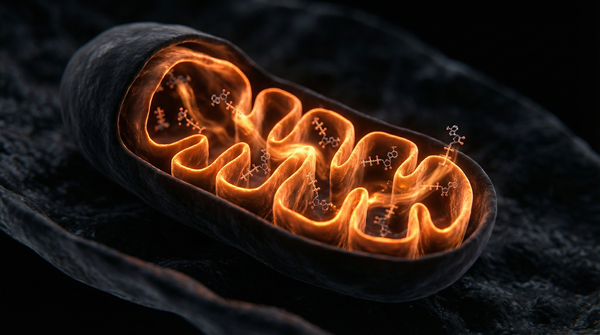
Mitochondria are often described in school textbooks as the 'powerhouse of the cell,' but in the context of allostatic load, they are better understood as environmental sensors. When the body perceives a threat, whether biological, chemical, or psychological, the mitochondria shift their function. This is known as the Cell Danger Response (CDR), a concept pioneered by Dr. Robert Naviaux. During acute stress, mitochondria increase energy output to fuel the 'fight or flight' response.
However, when the stress becomes chronic, the mitochondria enter a defensive mode. They harden their membranes and reduce energy production (oxidative phosphorylation) to prevent viral replication and limit the production of reactive oxygen species (ROS). While this is a protective mechanism in the short term, chronic CDR leads to systemic energy failure. This is why individuals under high allostatic load feel 'wired but tired'—their cells are in a state of metabolic defense. Standard medical tests in the UK focus on organ-level failure, such as liver enzymes or kidney function, but they rarely assess mitochondrial efficiency.
Chronic stress leads to mitochondrial DNA (mtDNA) damage and a reduction in mitochondrial biogenesis. Evidence suggests that this cellular energy deficit is the root cause of the 'brain fog' and lethargy associated with modern stress. Factors like a diet high in ultra-processed foods, common in the British diet, provide the wrong 'fuel' for mitochondria, further compounding the problem. To support mitochondrial bioenergetics under stress, one must look at nutritional co-factors such as Magnesium, CoQ10, and PQQ, which support the electron transport chain. Additionally, light hygiene—specifically exposure to natural morning sunlight—is essential for entraining the circadian rhythms that govern mitochondrial repair.
By shifting the focus from 'stress management' to 'cellular energy management,' we can address the biological exhaustion that defines allostatic overload.
This article is provided for informational and educational purposes only. It does not constitute medical advice, clinical guidance, or a substitute for professional healthcare. Information reflects cited research at time of publication. Always consult a qualified healthcare professional before acting on any health information.
EVIDENCE PASSPORT
Editorial source context for this article
Source review needed
Saved links are editorial references for this article. They may support specific claims rather than every sentence. Open and assess each source in context. This passport does not independently verify them.
Editorial context
A complete editorial reading has not been recorded for this article, and no source links are saved on its record.
Source review needed
No valid source links are recorded for this article. Supplementary research, where available, is listed separately below.
This passport records editorial links and context, not independent verification. Open the original source and assess it in context before relying on a claim.
Medical Disclaimer
The information in this article is for educational purposes only and does not constitute medical advice, diagnosis, or treatment. Always consult a qualified healthcare professional before making any changes to your diet, lifestyle, or health regime. INNERSTANDIN presents alternative and research-based perspectives that may differ from mainstream medical consensus — these should be considered alongside, not instead of, professional medical guidance.
Read Full DisclaimerContinue the thread
Keep this question moving.
Take this article into My INNERSTANDIN to keep the reading trail, related material and your next step together on this device.
Explore this in the Body Map
Explore related body structures and their educational pages in the interactive Body Map.
Dig deeper in the Library
Free, longform PDF volumes that go beyond headlines into mechanisms and references.
RABBIT HOLE
Follow the biological thread deeper