
Mitochondrial Decay: Why Cellular Power Failure Drives Biological Aging
Updated May 2026
Biological aging is increasingly viewed not just as a passage of time, but as the progressive decline of mitochondrial integrity. This article examines the Mitochondrial Theory of Aging and how protecting these organelles can extend your health span.
Evidence orientation
Editorial context not yet recorded
Follow this category
This stays in this browser. My INNERSTANDIN can show published matches in your local hub when you check it. It does not send email, push, or alert notifications.
Local learning review
A private browser aid for revisiting ideas. It is not an alert or a health recommendation.
Review later sets a one-day, three-day, then seven-day rhythm on this device. Choose it only when you want to revisit this article.
Overview
For decades, the mainstream medical establishment has treated the process of aging as an inescapable, monolithic "wearing out" of the human body. We are told that our joints inevitably fail, our minds naturally fog, and our skin wrinkles simply because the calendar pages turn. At INNERSTANDING, we reject this passive surrender to entropy. The truth, hidden beneath layers of reductionist biology, is far more precise and, ultimately, more empowering. Aging is not merely the passage of time; it is the progressive, systemic failure of your mitochondria.
Mitochondria are often colloquially referred to as the "powerhouses" of the cell, a term so overused in secondary school textbooks that it has lost its profound significance. These organelles are the remnants of ancient proteobacteria that entered into a symbiotic relationship with our ancestral cells nearly two billion years ago. They possess their own unique DNA (mtDNA), separate from the DNA found in the nucleus, and they are responsible for generating over 90% of the energy required for every biological process in your body.
When your mitochondria are vibrant and efficient, you possess the physiological resilience of youth. When they decay—distorted by environmental toxins, poor substrate availability, and oxidative stress—the result is Mitochondrial Dysfunction. This is the primary driver of biological aging. From the development of neurodegenerative diseases like Alzheimer’s to the metabolic collapse of Type 2 Diabetes, the "broken engine" of the cell is the common denominator. This article will expose the mechanisms behind this cellular power failure and provide the blueprint for reclaiming your bioenergetic sovereignty.
##
The Biology — How It Works
To understand mitochondrial decay, one must first master the intricate dance of energy production. Within the matrix of the mitochondrion, a series of complex biochemical reactions transform the food you eat and the oxygen you breathe into Adenosine Triphosphate (ATP), the universal energy currency of life.
The Architecture of Energy
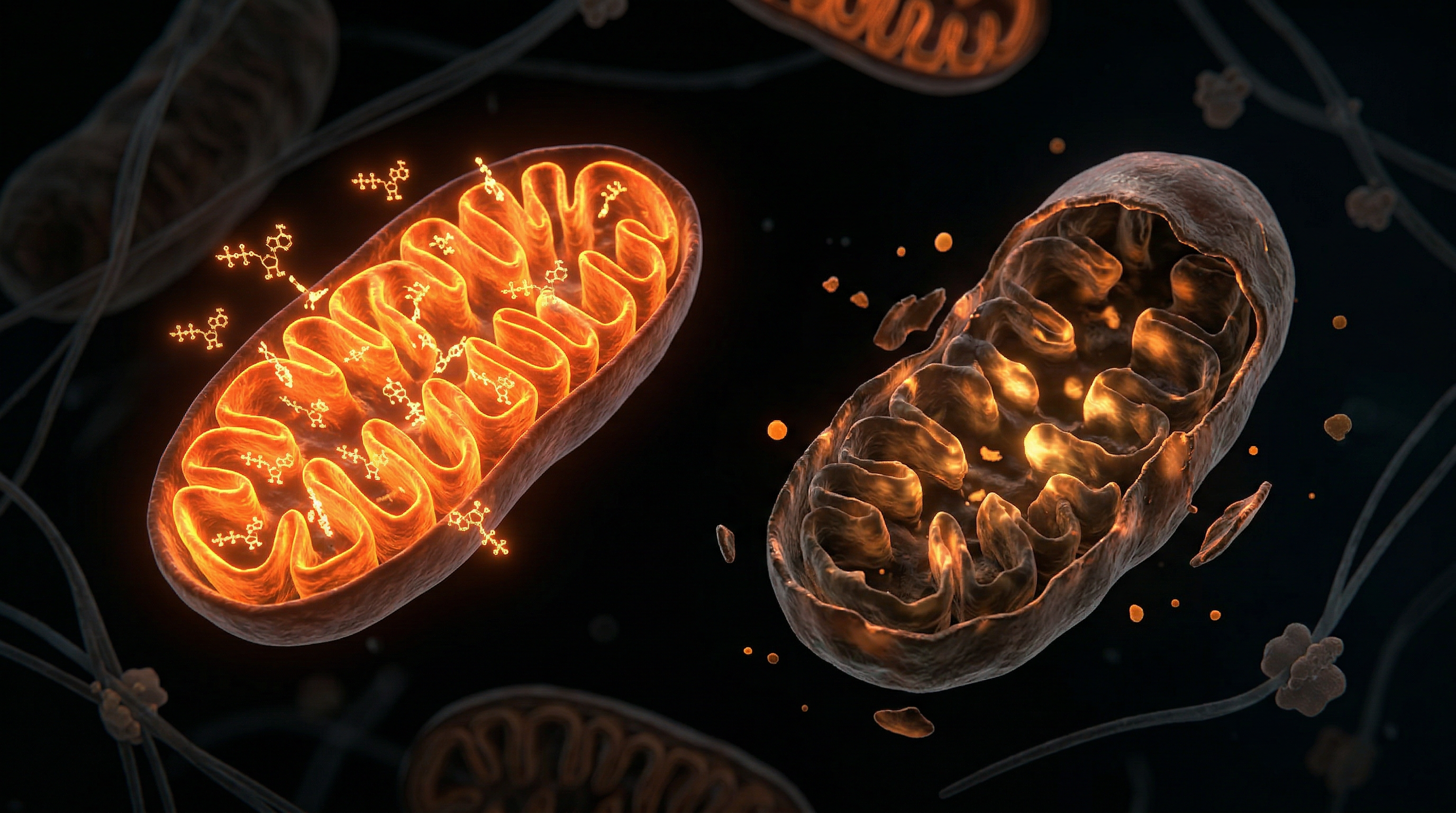
The mitochondrion is defined by its dual-membrane structure. The Outer Mitochondrial Membrane (OMM) serves as a gateway, while the Inner Mitochondrial Membrane (IMM) is folded into numerous ridges called cristae. These folds are not accidental; they provide a massive surface area for the Electron Transport Chain (ETC) to operate. It is within this inner sanctum that the true magic—and the most devastating damage—occurs.
Oxidative Phosphorylation (OXPHOS)
The primary method of ATP production is a process known as Oxidative Phosphorylation. It involves five distinct protein complexes embedded in the IMM:
- Complex I (NADH Dehydrogenase): The primary entry point for electrons derived from carbohydrates.
- Complex II (Succinate Dehydrogenase): An alternative entry point, often linked to the Krebs cycle.
- Complex III (Cytochrome bc1 Complex): A pivotal station that shuffles electrons toward oxygen.
- Complex IV (Cytochrome c Oxidase): The final destination where electrons combine with oxygen to form water.
- Complex V (ATP Synthase): A molecular motor that spins at thousands of revolutions per minute, using a proton gradient to "charge" ADP into ATP.
Every single second, the trillions of mitochondria in your body produce their own weight in ATP. This staggering throughput is what allows you to think, move, and heal.
The Mitochondrial Genome: A Fragile Blueprint
Unlike nuclear DNA (nDNA), which is shielded by protective proteins called histones and a robust repair machinery, mtDNA is naked and located in close proximity to the site of intense free radical production. This makes mitochondrial DNA incredibly susceptible to mutations. Because the mitochondria replicate independently of the cell, a single mutated mitochondrion can proliferate, leading to a state of Heteroplasmy, where a cell contains a mixture of healthy and damaged organelles. Once the threshold of damaged mitochondria reaches a critical point, the cell can no longer sustain its function, leading to programmed cell death (apoptosis) or, worse, the transition into a "zombie" senescent state.
##
Mechanisms at the Cellular Level
Mitochondrial decay is not a single event but a cascade of mechanical failures. To address aging, we must look at the specific pathways where the system breaks down.
Reactive Oxygen Species (ROS) and the Electron Leak
During the transfer of electrons along the ETC, the system is not 100% efficient. Electrons can "leak" out, particularly at Complex I and Complex III. These stray electrons react with oxygen to form Superoxide ($\text{O}_2^-$), a potent free radical.
In a healthy system, endogenous antioxidants like Superoxide Dismutase (SOD) and Glutathione neutralise these threats. However, as we age or are exposed to environmental stressors, the "leakage" increases while our antioxidant defences wane. This creates a vicious cycle: ROS damage the IMM and mtDNA, which in turn makes the ETC even less efficient, leading to more leaks. This is the Mitochondrial Theory of Aging in its most fundamental form.
The Role of Cardiolipin
Cardiolipin is a unique phospholipid found almost exclusively in the inner mitochondrial membrane. It acts as a structural "glue" that holds the respiratory complexes together in high-efficiency clusters called Supercomplexes. Cardiolipin is highly sensitive to oxidative stress due to its high content of polyunsaturated fatty acids. When cardiolipin is oxidised, the supercomplexes fall apart, the IMM becomes leaky, and the mitochondrion begins to "lose its charge," much like a corroded battery.
Mitochondrial Dynamics: Fission and Fusion
Healthy cells maintain their mitochondrial population through a process of "social networking."
- Fusion: Two mitochondria merge to share resources and dilute the impact of damaged mtDNA.
- Fission: A mitochondrion splits into two. This is often used to sequester a damaged portion of the organelle so it can be destroyed.
In aging cells, this balance is disrupted. We often see excessive fission, resulting in fragmented, dysfunctional mitochondria that can no longer meet the cell's energy demands.
Mitophagy: The Quality Control Crisis
The most critical mechanism for longevity is Mitophagy—the selective autophagy (self-eating) of damaged mitochondria. This process is governed by two key proteins: PINK1 and Parkin. When a mitochondrion loses its membrane potential (its "voltage"), PINK1 accumulates on its surface, signalling Parkin to mark the organelle for destruction by the lysosome.
In the state of mitochondrial decay, the mitophagy pathway becomes sluggish. The cell becomes cluttered with "broken" power plants that produce very little ATP but massive amounts of inflammatory ROS. This cellular clutter is a hallmark of the aging process.
##
Environmental Threats and Biological Disruptors
We do not age in a vacuum. The modern environment is saturated with "mitotoxins" that bypass our natural defences and strike at the heart of our cellular energy production.
Glyphosate and Agricultural Poisons
While the UK Food Standards Agency (FSA) continues to permit the use of glyphosate (the active ingredient in Roundup), independent research suggests a terrifying impact on mitochondrial health. Glyphosate can act as a glycine analogue, potentially misincorporating into proteins. More critically, it disrupts the Shikimate pathway in our gut microbiome. While humans don't have this pathway, our gut bacteria do—and these bacteria produce the precursors for mitochondrial cofactors. Furthermore, glyphosate has been shown to inhibit Succinate Dehydrogenase (Complex II), directly throttling cellular respiration.
Heavy Metal Accumulation
Metals such as Aluminium, Mercury, Lead, and Cadmium are ubiquitous in our air, water, and soil. These metals have a high affinity for the thiol groups in mitochondrial enzymes. Lead, for example, can mimic calcium, confusing the mitochondrial calcium signalling pathways and triggering premature apoptosis. Mercury is a potent inhibitor of Thioredoxin Reductase, an enzyme essential for protecting mitochondria from oxidative damage.
The Blue Light Hazard and Circadian Mismatch
The mitochondria are light-sensing organelles. Cytochrome c Oxidase (Complex IV) contains chromophores that specifically absorb red and near-infrared light, which enhances ATP production. Conversely, chronic exposure to artificial blue light—emitted by LED screens and overhead lighting—at night suppresses Melatonin. While melatonin is known as a sleep hormone, its most vital role is as the primary antioxidant for the mitochondria. Without nocturnal melatonin, your mitochondria remain unprotected during their most vulnerable period of repair.
Pharmaceutical Interference
Many commonly prescribed medications in the UK are direct mitochondrial toxins.
- Statins: These block the HMG-CoA Reductase pathway, which is necessary not only for cholesterol but also for the synthesis of Coenzyme Q10 (Ubiquinone)—a vital electron shuttle in the ETC.
- Antibiotics: Because mitochondria are essentially ancestral bacteria, many antibiotics (especially fluoroquinolones and tetracyclines) "friendly fire" on our own organelles, damaging their mtDNA and protein synthesis.
Research indicates that some fluoroquinolones can cause a 50% reduction in mitochondrial mass in certain tissues, explaining the "floxing" phenomenon of chronic fatigue and tendon rupture.
##
The Cascade: From Exposure to Disease
When mitochondrial decay reaches a tipping point, the body transitions from a state of "sub-clinical fatigue" to overt clinical disease. This is the bioenergetic cascade.
Inflammaging: The NLRP3 Inflammasome
When mitochondria are damaged, they leak their contents—specifically mtDNA and Cytochrome c—into the cytoplasm of the cell. The immune system recognises mtDNA as "foreign" (because of its bacterial origins), triggering the NLRP3 Inflammasome. This leads to a chronic, low-grade inflammatory state known as Inflammaging. This is the root cause of almost all age-related chronic diseases, from atherosclerosis to arthritis.
Neurodegeneration: The Brain’s Energy Crisis
The human brain represents only 2% of body weight but consumes 20% of its total energy. Neurons are almost entirely dependent on OXPHOS. In Alzheimer’s disease, mitochondrial dysfunction is visible decades before the appearance of amyloid plaques. When the "mitochondrial engine" fails in a neuron, it can no longer maintain its ion gradients, leading to a "synaptic brownout" and eventual cognitive collapse.
Metabolic Syndrome and Insulin Resistance
We are often told that insulin resistance is caused by "too much sugar." This is only half the truth. The deeper reality is that insulin resistance is a protective mechanism employed by a cell whose mitochondria are "full." When the mitochondria are overloaded with substrates (fats and sugars) and can't process them due to ETC bottlenecks, they send signals to the cell surface to stop the entry of more fuel. Insulin resistance is the cell's way of preventing a mitochondrial explosion from ROS overproduction.
##
What the Mainstream Narrative Omits
The mainstream medical narrative, largely influenced by the pharmaceutical industrial complex, focuses on downstream symptom management rather than upstream bioenergetics.
The "Genetic Inevitability" Lie
We are conditioned to believe that our genes are our destiny. In reality, your epigenome—which controls which genes are expressed—is largely governed by mitochondrial signals. Mitochondria produce the metabolites (like Acetyl-CoA and $\alpha$-Ketoglutarate) required for histone acetylation and DNA methylation. If your mitochondria are failing, your "longevity genes" like Sirtuins cannot function, regardless of your DNA sequence.
The Suppression of Metabolic Therapies
There is very little profit in recommending sunlight, cold exposure, or red-light therapy, yet these are the very things that optimise mitochondrial function. The NHS, burdened by a "sick care" model, rarely tests for mitochondrial biomarkers like Lactate-to-Pyruvate ratios or homocysteine, which could signal bioenergetic distress years before a heart attack or stroke occurs.
The Seed Oil Deception
The recommendation to replace stable animal fats with "heart-healthy" vegetable oils (high in Linoleic Acid) has been a disaster for mitochondrial integrity. These polyunsaturated fatty acids (PUFAs) are highly unstable and incorporate into the mitochondrial membranes, making them prone to lipid peroxidation. This "rusting" of the IMM is a primary driver of the obesity epidemic, yet it is rarely discussed in mainstream dietetics.
##
The UK Context
The UK presents a unique set of challenges for mitochondrial health, driven by geography, regulation, and public policy.
The Vitamin D and Sunlight Deficit
In the UK, from October to March, the sun's zenith angle is insufficient for the skin to produce Vitamin D. Vitamin D is not just a vitamin; it is a pro-hormone that modulates mitochondrial biogenesis. Compounded by our "indoor" culture and the prevalent "sun-scare" messaging, the British population is in a state of chronic mitochondrial hibernation.
Water Contamination and Fluoridation
Large portions of the UK's water supply are fluoridated or contaminated with agricultural runoff. Fluoride is a known mitochondrial toxin; it interferes with the enzymes of the Krebs cycle and depletes antioxidant stores. Furthermore, the Environment Agency has frequently reported on the "cocktail effect" of various pollutants in UK waterways—including microplastics and endocrine disruptors—all of which place an additional "detoxification tax" on our mitochondria.
The Burden on the NHS
The NHS is currently spending billions on treating the symptoms of "Type 2 Diabetes" and "Dementia." If only a fraction of this budget were diverted toward mitochondrial medicine—focusing on nutritional cofactors, light hygiene, and metabolic flexibility—the "aging crisis" would largely dissolve. Instead, the focus remains on high-cost, low-reward pharmaceutical interventions that often further damage mitochondrial function.
##
Protective Measures and Recovery Protocols
Reversing mitochondrial decay is not about a single "magic pill." It requires a comprehensive re-alignment with our biological requirements.
Nutritional Cofactors: Re-fueling the Chain
To repair the ETC, the body requires specific raw materials:
- Ubiquinol (CoQ10): The reduced form of CoQ10 is essential for electron transport between Complexes I/II and III.
- PQQ (Pyrroloquinoline Quinone): Shown to stimulate Mitochondrial Biogenesis—the creation of brand new mitochondria.
- NADH and NAD+ Precursors: NAD+ is the primary electron carrier. Boosting NAD+ levels via precursors like NMN or NR can "restart" the Sirtuin longevity pathways.
- Magnesium: ATP must be bound to a magnesium ion (Mg-ATP) to be biologically active. Most people are chronically deficient.
Hormesis: The Power of Beneficial Stress
Mitochondria respond to "challenges" by becoming stronger and more efficient. This is known as Hormesis.
- Cold Exposure: Immersing yourself in cold water triggers the production of PGC-1α, the master regulator of mitochondrial biogenesis. It also activates "Brown Fat," which is densely packed with mitochondria that burn calories to produce heat.
- Time-Restricted Feeding: By extending your fasting window, you lower insulin and trigger Mitophagy, allowing the body to "clean out" the broken mitochondria and recycle their components.
Photobiomodulation (Red Light Therapy)
Specific wavelengths of light (660nm red and 850nm near-infrared) penetrate deep into tissues and are absorbed by Cytochrome c Oxidase. This reduces the "nitric oxide" blockage in the ETC, allowing oxygen to bind more effectively and boosting ATP production. For the UK resident, a high-quality red-light panel is a non-negotiable tool for winter resilience.
Eliminating the "Power Leaks"
- Filter Your Water: Use a high-quality reverse osmosis or distillation system to remove fluoride, heavy metals, and glyphosate.
- Mitigate EMFs: Non-ionising radiation from Wi-Fi and mobile masts can trigger Voltage-Gated Calcium Channels (VGCCs), leading to a calcium overflow in the mitochondria and oxidative stress. Turn off your router at night.
- Clean Up Your Lipids: Eliminate industrial seed oils (sunflower, rapeseed, soybean) and replace them with stable fats like butter, tallow, and coconut oil to protect your Cardiolipin.
##
Summary: Key Takeaways
- Mitochondria are the primary governors of biological age. Their decay is the fundamental cause of the systemic decline we label as "aging."
- Energy is Sovereignty. A high-ATP state allows for repair, detoxification, and cognitive clarity. A low-ATP state leads to inflammation, disease, and cognitive decline.
- mtDNA is highly vulnerable. Unlike nuclear DNA, mitochondrial DNA lacks protection and is located at the "blast zone" of free radical production.
- Environmental factors are the primary drivers of decay. Glyphosate, heavy metals, artificial blue light, and statin medications are the "four horsemen" of mitochondrial failure.
- Mitophagy is your best defence. We must activate the body's internal "waste management" systems through fasting, cold exposure, and targeted nutrients to clear out dysfunctional organelles.
- The UK faces a bioenergetic crisis. Lack of sunlight and regulatory failure regarding food and water safety make active mitochondrial protection a necessity, not an option.
The "power failure" of aging is not an inevitable fate; it is a mechanical breakdown caused by modern living. By understanding the biology and implementing protective protocols, you can maintain your cellular vitality well into your later decades.
Your mitochondria are the bridge between the food you eat and the life you lead. Protect them, and they will protect you. Focus on the engine, and the rest of the machine will follow. This is the path to true longevity. This is INNERSTANDING.
This article is provided for informational and educational purposes only. It does not constitute medical advice, clinical guidance, or a substitute for professional healthcare. Information reflects cited research at time of publication. Always consult a qualified healthcare professional before acting on any health information.
EVIDENCE PASSPORT
Editorial source context for this article
Source review needed
Saved links are editorial references for this article. They may support specific claims rather than every sentence. Open and assess each source in context. This passport does not independently verify them.
Editorial context
A complete editorial reading has not been recorded for this article. Source links remain available for you to open and assess directly.
Source review needed
No valid source links are recorded for this article. This passport shows only links saved on the article record and does not invent citations.
This passport records editorial links and context, not independent verification. Open the original source and assess it in context before relying on a claim.
Medical Disclaimer
The information in this article is for educational purposes only and does not constitute medical advice, diagnosis, or treatment. Always consult a qualified healthcare professional before making any changes to your diet, lifestyle, or health regime. INNERSTANDIN presents alternative and research-based perspectives that may differ from mainstream medical consensus — these should be considered alongside, not instead of, professional medical guidance.
Read Full DisclaimerContinue the thread
Keep this question moving.
Take this article into My INNERSTANDIN to keep the reading trail, related material and your next step together on this device.
Explore this in the Body Map
See where this hits your biology. Interactive anatomy, threats, and protective protocols.
Dig deeper in the Library
Free, longform PDF volumes that go beyond headlines into mechanisms and references.