
Mitochondrial Dysfunction: How Oestrogen-Induced Oxidative Stress Impairs Cellular Energy Production
Updated April 2026
Evidence orientation
Editorial context not yet recorded
Follow this category
This stays in this browser. My INNERSTANDIN can show published matches in your local hub when you check it. It does not send email, push, or alert notifications.
Local learning review
A private browser aid for revisiting ideas. It is not an alert or a health recommendation.
Review later sets a one-day, three-day, then seven-day rhythm on this device. Choose it only when you want to revisit this article.
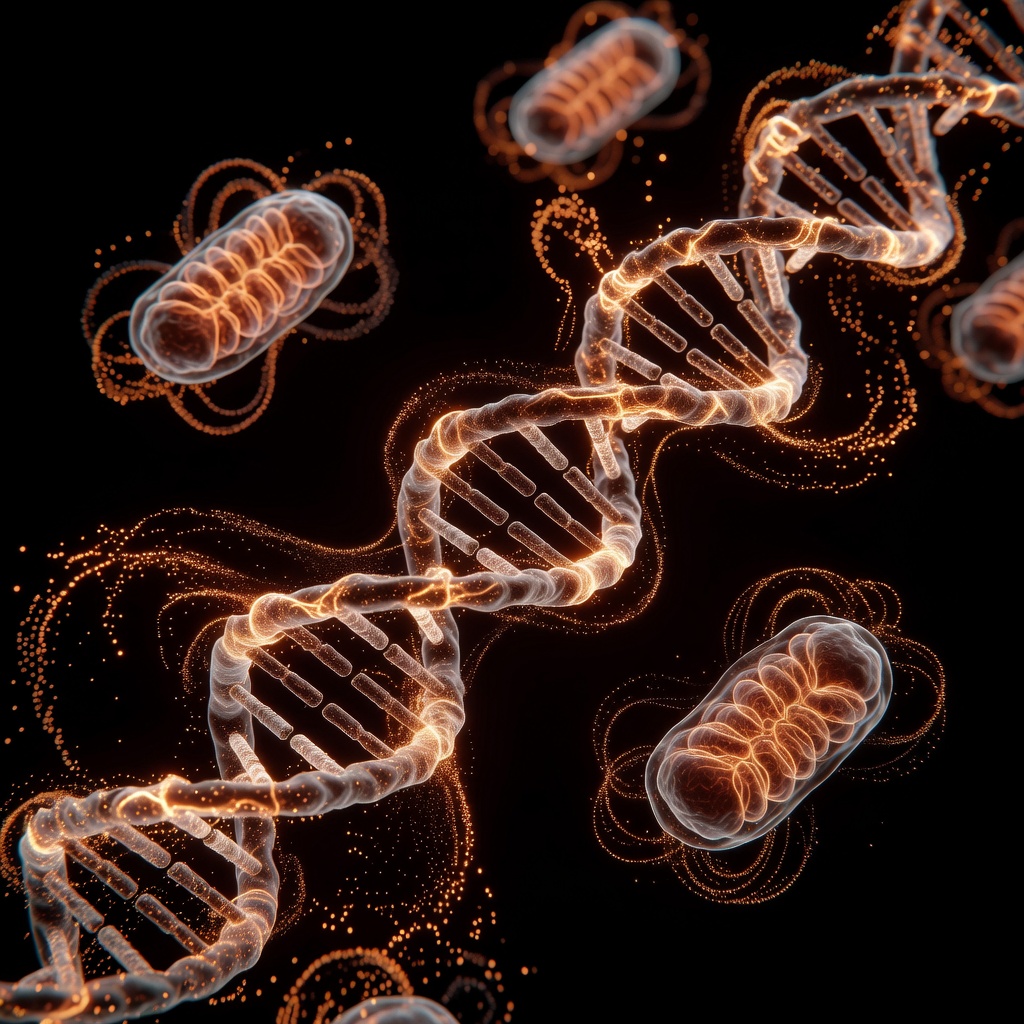
At the core of every chronic health condition lies a failure of energy. Within the human body, this energy is not a vague metaphysical concept, but a tangible biochemical currency known as Adenosine Triphosphate (ATP). Produced by the mitochondria—the ancient, double-membraned organelles residing in nearly every cell—ATP is the fuel for everything from DNA repair to cognitive function.
However, a silent epidemic is compromising this cellular machinery: Oestrogen Dominance. While often discussed merely in terms of mood swings or reproductive health, the reality is far more systemic. When oestrogen levels are excessive, or when the body loses its ability to metabolise these hormones safely, oestrogen becomes a pro-oxidant force. This article explores the "truth-seeking" reality of how oestrogen-induced oxidative stress sabotages mitochondrial integrity, leading to a state of cellular exhaustion that underpins the modern health crisis.
1. The Bio-Energetic Crisis: An Overview
For decades, medical science viewed oestrogen primarily through the lens of fertility. We now understand that oestrogen is a potent signalling molecule that influences metabolic rate and mitochondrial biogenesis. In a balanced physiological state, oestrogen is actually protective of the mitochondria. However, we no longer live in a balanced environment.
Oestrogen Dominance occurs when the ratio of oestrogen to progesterone is skewed, or when the body is flooded with synthetic xenoestrogens. In this state, the hormone shifts from a protective messenger to a source of oxidative stress. This stress manifests as an overproduction of Reactive Oxygen Species (ROS)—volatile molecules that "rust" the cell from the inside out.
The primary casualty of this process is the mitochondrion. Because mitochondria possess their own fragile DNA (mtDNA) and lack the robust repair mechanisms of the cell nucleus, they are uniquely vulnerable to the toxic by-products of oestrogen metabolism. When mitochondria fail, energy production plummets, and the body enters a state of chronic "bio-energetic bankruptcy."
2. The Biological Mechanisms: From Hormone to Toxin
To understand how oestrogen impairs energy, we must look at how the body processes it. Oestrogen is not a static substance; it is constantly being broken down by the liver through a process called hydroxylation.
Phase I Metabolism: The Fork in the Road
In the liver, oestrogen (specifically oestradiol) is processed via the Cytochrome P450 enzyme system. This produces three main metabolites: 2-OH, 4-OH, and 16-OH oestrone.
- 2-OH (The "Good" Pathway): Generally weak and non-genotoxic.
- 4-OH and 16-OH (The "Damaging" Pathways): These are highly reactive.
The 4-hydroxyoestradiol (4-OH-E2) metabolite is particularly dangerous. It can be further oxidised into oestrogen quinones. These quinones are highly unstable molecules that directly attack mitochondrial proteins and DNA.
The Induction of Oxidative Stress
When these reactive metabolites accumulate—due to poor detoxification or excessive oestrogen load—they trigger a "redox cycle." This cycle generates a flood of superoxide radicals.
"The mitochondrion is both the source and the target of oxidative stress. When oestrogen metabolites trigger ROS production, they damage the very Electron Transport Chain (ETC) responsible for creating energy, creating a feedback loop of cellular decay."
Damage to the Electron Transport Chain (ETC)
The ETC is a series of complexes on the inner mitochondrial membrane. Oestrogen-induced oxidative stress causes lipid peroxidation, which damages the fatty membrane (cardiolipin) that holds these complexes in place. This leads to:
- Proton Leaks: Energy escapes rather than being used to create ATP.
- Cytochrome C Release: A signal that tells the cell to commit suicide (apoptosis).
- mtDNA Mutations: Disrupting the blueprint for future energy production.
3. The UK Context: A Modern Environmental Minefield
In the United Kingdom, the prevalence of oestrogen dominance and subsequent mitochondrial dysfunction is reaching critical levels. Our unique environmental and lifestyle factors contribute heavily to this "perfect storm."
The "Oestrogenised" Water Supply
The UK’s water filtration systems were not originally designed to remove steroidal hormones. With millions of women on the Combined Oral Contraceptive Pill or Hormone Replacement Therapy (HRT), synthetic oestrogens (such as ethinylestradiol) enter the water cycle. These compounds are significantly more potent than natural oestrogen and are notoriously difficult to break down, leading to inadvertent exposure for the entire population.
Industrial Residues and Glyphosate
British agriculture relies heavily on pesticides that act as endocrine disruptors. Glyphosate, widely used across the UK, has been shown to interfere with the liver’s ability to clear oestrogen and disrupts the gut microbiome (the "oestrobolome"). A damaged gut microbiome cannot properly excrete oestrogen, leading to its reabsorption into the bloodstream—a process known as enterohepatic recirculation.
The "Stiff Upper Lip" and Chronic Fatigue
There is a cultural tendency in the UK to dismiss symptoms like "brain fog," persistent lethargy, and hormonal discomfort as "just part of modern life." However, these are the hallmark symptoms of mitochondrial insufficiency. By ignoring the hormonal roots of fatigue, many Britons remain in a cycle of caffeine dependence and poor sleep, further taxing their already struggling mitochondria.
4. Environmental Factors: The Xenoestrogen Burden
We are living in an "Oestrogen Age." Beyond the hormones produced by our own bodies, we are assaulted by Xenoestrogens—synthetic chemicals that mimic oestrogen and dock into oestrogen receptors.
- Bisphenol A (BPA) and Phthalates: Found in food linings and plastics, these chemicals disrupt mitochondrial membrane potential.
- Parabens: Common in UK high-street toiletries, these preservatives contribute to the cumulative oestrogenic load.
- Atrazine and Agricultural Run-off: These chemicals induce the enzyme aromatase, which converts testosterone into even more oestrogen.
These environmental toxins don't just increase oestrogen levels; they interfere with the mitochondrial respiratory chain. They act as "metabolic hitchhikers," slowing down the production of ATP and increasing the "leakage" of free radicals.
5. Protective Strategies: Restoring Cellular Integrity
Reversing oestrogen-induced mitochondrial damage requires a two-pronged approach: reducing the oestrogen burden and supporting mitochondrial repair.
Optimising Oestrogen Detoxification
To prevent the formation of toxic oestrogen quinones, the liver must be supported in its Phase II Conjugation pathways—specifically methylation and glucuronidation.
- DIM (Diindolylmethane): Derived from cruciferous vegetables (broccoli, kale, sprouts), DIM encourages the liver to favour the "safe" 2-OH pathway over the 4-OH pathway.
- Calcium D-Glucarate: This supplement inhibits beta-glucuronidase, an enzyme produced by "bad" gut bacteria that uncouples oestrogen and allows it to be reabsorbed.
- Sulforaphane: Found in broccoli sprouts, it boosts Glutathione—the body’s master antioxidant—which neutralises oestrogen quinones before they can damage mtDNA.
Direct Mitochondrial Support
- Coenzyme Q10 (Ubiquinol): A critical component of the ETC that acts as a powerful antioxidant within the mitochondrial membrane.
- Magnesium: Required for every single step of ATP production. Most people in the UK are deficient due to soil depletion.
- Red Light Therapy (Photobiomodulation): Specific wavelengths of light (660nm - 850nm) can stimulate Cytochrome C Oxidase, helping the mitochondria to process oxygen more efficiently and produce more ATP.
Dietary and Lifestyle Shifts
- Fibre Consumption: Essential for physically binding oestrogen in the digestive tract for excretion.
- Filtering Drinking Water: Using a high-quality filter (Reverse Osmosis or multi-stage carbon) to remove xenoestrogens.
- Circadian Alignment: Mitochondria have their own "clocks." Eating within daylight hours and ensuring total darkness at night allows the body to produce Melatonin, which is perhaps the most potent mitochondrial antioxidant known to science.
6. Key Takeaways: Understanding the Truth
The link between oestrogen dominance and mitochondrial dysfunction is a vital piece of the health puzzle that is often overlooked in conventional medicine.
The Essential Truths:
Oestrogen is a double-edged sword:* Essential in balance, but a potent pro-oxidant when in excess or poorly metabolised.
Mitochondria are the primary targets:* The 4-OH oestrogen pathway creates quinones that directly damage the energy-producing machinery of the cell.
Fatigue is a cellular signal:* Chronic tiredness is often the sound of mitochondria struggling against oxidative stress.
Environment matters:* The UK's water and food systems contribute to an "oestrogenic soup" that requires proactive detoxification strategies.
Healing is possible:* By supporting liver detoxification (Phase I and II) and providing targeted mitochondrial nutrients, we can restore cellular energy production.
To achieve INNERSTANDING of one’s health is to recognise that symptoms are not the enemy; they are the messengers. Oestrogen-induced mitochondrial dysfunction is a call to clean up our internal and external environments. When we protect our mitochondria, we protect our life force. Energy is not something we "get"; it is something our cells generate when we provide them with the correct biological conditions.
This article is provided for informational and educational purposes only. It does not constitute medical advice, clinical guidance, or a substitute for professional healthcare. Information reflects cited research at time of publication. Always consult a qualified healthcare professional before acting on any health information.
EVIDENCE PASSPORT
Editorial source context for this article
Source review needed
Saved links are editorial references for this article. They may support specific claims rather than every sentence. Open and assess each source in context. This passport does not independently verify them.
Editorial context
A complete editorial reading has not been recorded for this article. Source links remain available for you to open and assess directly.
Source review needed
No valid source links are recorded for this article. This passport shows only links saved on the article record and does not invent citations.
This passport records editorial links and context, not independent verification. Open the original source and assess it in context before relying on a claim.
Medical Disclaimer
The information in this article is for educational purposes only and does not constitute medical advice, diagnosis, or treatment. Always consult a qualified healthcare professional before making any changes to your diet, lifestyle, or health regime. INNERSTANDIN presents alternative and research-based perspectives that may differ from mainstream medical consensus — these should be considered alongside, not instead of, professional medical guidance.
Read Full DisclaimerContinue the thread
Keep this question moving.
Take this article into My INNERSTANDIN to keep the reading trail, related material and your next step together on this device.
Explore this in the Body Map
See where this hits your biology. Interactive anatomy, threats, and protective protocols.
Dig deeper in the Library
Free, longform PDF volumes that go beyond headlines into mechanisms and references.