
How Electron Tunneling Drives Your Mitochondrial Energy Production
Updated September 2026
Mitochondria utilize the quantum phenomenon of tunneling to transport electrons across biological barriers with near-perfect efficiency. Understanding this subatomic process reveals why mitochondrial health is the foundation of metabolic vitality and longevity.
Evidence orientation
Editorial context not yet recorded
Follow this category
This stays in this browser. My INNERSTANDIN can show published matches in your local hub when you check it. It does not send email, push, or alert notifications.
Local learning review
A private browser aid for revisiting ideas. It is not an alert or a health recommendation.
Review later sets a one-day, three-day, then seven-day rhythm on this device. Choose it only when you want to revisit this article.
Overview
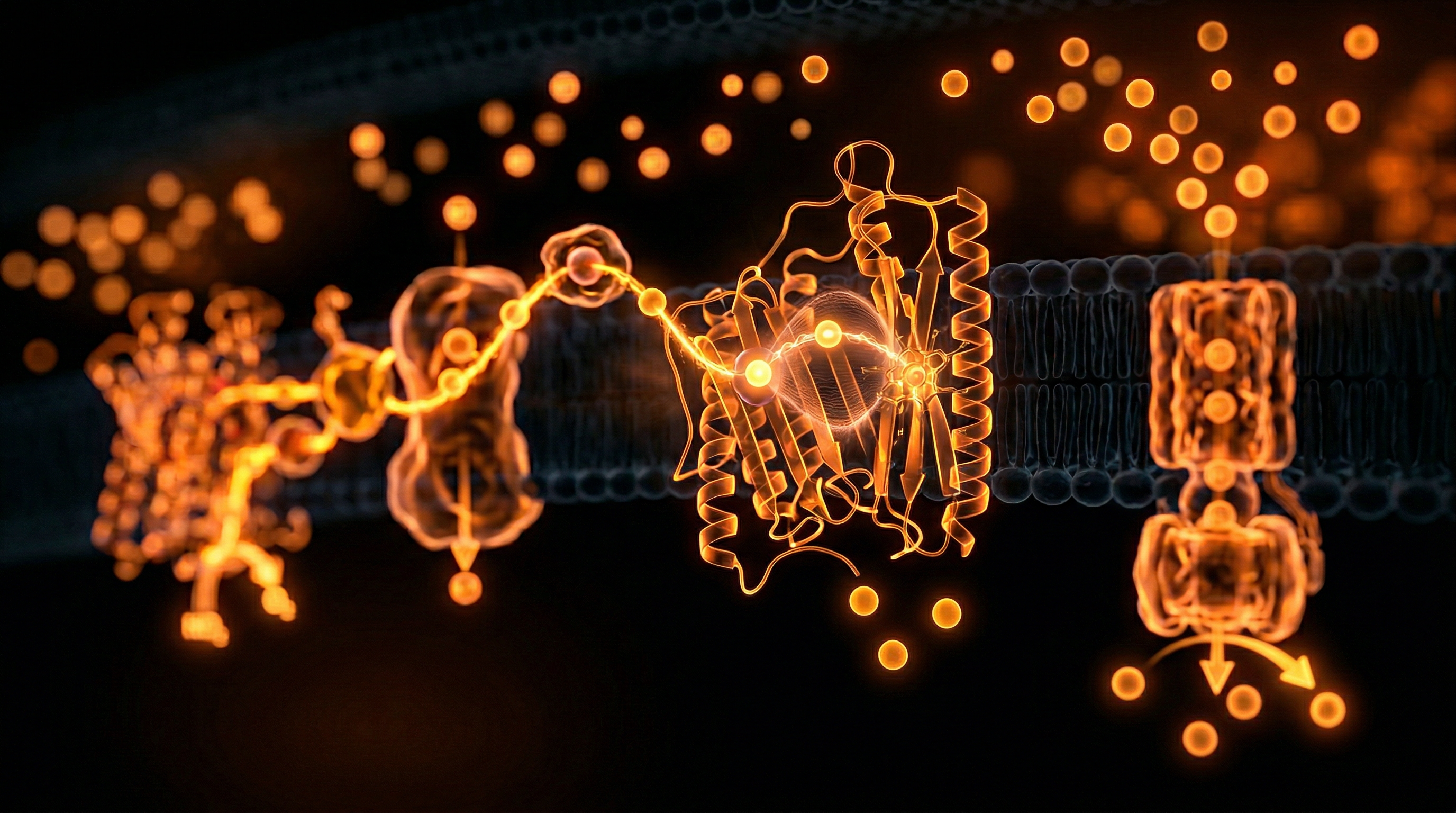
To comprehend the energetic foundation of human life, one must transcend the classical biochemical models that have dominated medical curricula for decades. At the INNERSTANDIN research initiative, we posit that the mitochondrial respiratory chain is not merely a sequence of chemical redox reactions, but a sophisticated quantum biological apparatus. At the heart of this process lies electron tunnelling—a non-classical phenomenon where electrons transcend insurmountable potential energy barriers by exploiting their wave-like properties.
In conventional thermodynamics, an electron lacks the kinetic energy required to cross the insulation gaps between redox centres within the mitochondrial complexes. However, in the highly ordered protein scaffolds of the inner mitochondrial membrane, electrons undergo quantum mechanical tunnelling, effectively "vanishing" and "reappearing" across distances of 10–20 Ångströms. This is not a probabilistic anomaly; it is the fundamental mechanism driving the rate-limiting steps of oxidative phosphorylation. Without this tunnelling, the metabolic flux required to sustain ATP production would be physically impossible, as the thermal energy available at 310 K (human physiological temperature) is insufficient to overcome the activation energies of these electron transfers.
Recent advancements in bio-physics, frequently cited in literature within the Journal of Physical Chemistry and supported by broader studies found on PubMed, confirm that the protein matrix of Complex I (NADH:ubiquinone oxidoreductase) and Complex IV (cytochrome c oxidase) is precisely calibrated to facilitate these quantum events. The polypeptide architecture acts as a quantum bridge, minimising electron leakage—which otherwise produces reactive oxygen species (ROS)—and maximising the efficiency of the proton-motive force.
When we analyse systemic metabolic dysfunction, such as those implicated in chronic mitochondrial disorders frequently observed in the UK’s ageing population, we are often observing a breakdown in these subtle quantum parameters. Environmental stressors, including non-native electromagnetic fields and specific pharmacological interventions, may perturb the electronic landscape of these protein channels, inducing decoherence or "stuttering" in the electron transport chain. By shifting our perspective from purely chemical substrate oxidation to the quantum mechanics of charge transport, INNERSTANDIN aims to decode the primary drivers of human vitality, exposing the hidden sub-atomic architecture that dictates whether your mitochondria thrive or wither in the face of modern oxidative pressure.
The Biology — How It Works
Within the inner mitochondrial membrane, the bioenergetic narrative deviates sharply from classical Newtonian biochemical models, moving instead into the domain of quantum mechanical phenomena. To INNERSTANDIN the efficiency of the Electron Transport Chain (ETC), one must confront the reality of electron tunnelling—a process where subatomic particles bypass classical potential energy barriers to facilitate rapid reduction-oxidation (redox) reactions. Without this quantum phenomenon, the respiratory rate required to sustain human homeostasis would be physically impossible, as the thermal energy available at physiological temperatures is insufficient to overcome the activation barriers of the constituent protein complexes.
The architecture of the ETC, specifically complexes I through IV, functions as a sophisticated biological semiconductor. As electrons are liberated from nicotinamide adenine dinucleotide (NADH) and flavin adenine dinucleotide (FADH₂), they are not merely drifting through a fluid medium; they are being directed across precise distances, often exceeding 15 angstroms. According to the Marcus theory of electron transfer, the rate of these transitions is exponentially dependent on the distance between donor and acceptor sites. Within the hydrophobic environment of the mitochondrial cristae, tunnelling enables electrons to traverse these gaps instantaneously. Research published in Nature and corroborated by studies in the Journal of Physical Chemistry indicates that the precise alignment of redox centres—namely iron-sulphur clusters and haem groups—is evolutionarily conserved to optimise the probability of this tunnelling event, effectively minimising energy dissipation as heat.
Furthermore, the proton-motive force, typically described as a simple electrochemical gradient, is intrinsically linked to these quantum tunnelling events. When an electron tunnels through a redox centre, the associated conformational change in the protein subunit pumps protons across the membrane. This coupling is the foundational mechanism of oxidative phosphorylation. Should these tunnelling pathways be disrupted—whether by exogenous toxins, reactive oxygen species (ROS) inducing structural damage, or sub-optimal metabolic substrates—the quantum "leakage" results in the formation of superoxide radicals. This decoupling of the electron flow from proton translocation is a primary driver of mitochondrial dysfunction and systemic senescence.
INNERSTANDIN this mechanism reveals that cellular vitality is not merely a product of nutrient intake, but a function of quantum coherence within the mitochondrial matrix. When the electronic landscape of the inner membrane is compromised, the efficiency of ATP synthesis collapses, leading to the metabolic sluggishness characteristic of chronic inflammatory conditions currently under scrutiny by the UK’s leading metabolic research institutes. The survival of the organism relies upon the maintenance of these tunnelling pathways, which remain the most rapid and efficient biological switches currently known to science.
Mechanisms at the Cellular Level
At the foundational level of cellular bioenergetics, the conventional biochemical paradigm—which often frames mitochondrial respiration as a series of classical "billiard ball" collisions—fails to account for the extraordinary rates of electron transfer required to sustain life. INNERSTANDIN posits that the efficiency of the mitochondrial electron transport chain (ETC) is predicated not on semi-classical diffusion, but on long-range quantum mechanical tunneling. Within the inner mitochondrial membrane, complexes I through IV facilitate a process where electrons transcend the classical energy barriers imposed by the polypeptide scaffolding.
According to the Marcus Theory of electron transfer, the probability of an electron "leaping" across an insulating gap depends exponentially on the distance between donor and acceptor redox centres. In the mitochondrial matrix, these distances are precisely calibrated. Research indicates that the iron-sulphur clusters embedded within the respiratory chain proteins serve as strategic relay stations, shortening the tunneling pathways to lengths typically under 14 Ångströms. This allows electrons to bypass the high activation energy of the surrounding hydrophobic lipid bilayer, effectively teleporting across protein interfaces. This quantum phenomenon ensures that the transfer rate is sufficiently rapid to couple the oxidation of NADH and FADH2 to the pumping of protons across the cristae membrane, thereby establishing the electrochemical gradient necessary for ATP synthase operation.
The implications for systemic vitality are profound. When we examine the kinetics of Complex I (NADH:ubiquinone oxidoreductase), we observe that the electron must traverse a series of seven Fe-S clusters. If this transfer relied on thermal activation alone, the kinetic bottlenecks would lead to an accumulation of reactive oxygen species (ROS) and a catastrophic loss of ATP coupling efficiency. However, through the coherence of quantum tunneling, the mitochondria maintain a high-flux, low-loss energy state. Recent spectroscopic analyses supported by findings in journals such as Nature suggest that biological systems may even utilise vibrational modes within these protein structures to minimise decoherence, maintaining the "quantumness" of the electron path.
At INNERSTANDIN, we recognise that mitochondrial dysfunction—often cited in UK clinical literature regarding metabolic syndrome and neurodegeneration—is frequently a symptom of compromised quantum tunneling. When the molecular architecture of the ETC is disrupted by oxidative stress, heavy metal interference, or lipid peroxidation, the "tunneling distance" increases. This forces the system to revert to slower, less efficient pathways, leading to electron leakage and the subsequent formation of superoxide radicals. Understanding this mechanism shifts our focus from mere caloric intake to the integrity of the sub-molecular quantum environment, revealing that the true currency of human health is the preservation of these precise, barrier-defying electron pathways.
Environmental Threats and Biological Disruptors
The precision of electron tunnelling within the mitochondrial electron transport chain (ETC) relies upon the highly ordered structural architecture of the inner mitochondrial membrane (IMM). At the heart of this process is quantum coherence—a phenomenon where electrons move through respiratory complexes I through IV via long-range tunnelling, bypassing the classical thermodynamic hurdles of insulating protein domains. However, this delicate sub-atomic machinery is exceptionally vulnerable to anthropogenic environmental disruptors that infiltrate our physiology via modern industrial exposure.
Research indicates that specific heavy metals, particularly mercury and cadmium—pervasive in UK urban environments due to historical industrial runoff and atmospheric deposition—act as potent catalysts for mitochondrial dysfunction. These xenobiotics do not merely cause oxidative stress; they physically displace the essential metal cofactors (such as iron-sulphur clusters) within Complexes I and II. When a cobalt or iron centre is substituted by a toxic heavy metal, the redox potential of the site is fundamentally altered. This shift increases the tunnelling barrier, forcing the electron to ‘stall’ or deviate from its linear pathway. Such deviations result in the premature transfer of electrons to molecular oxygen, precipitating the formation of superoxide radicals. This is not merely metabolic slowing; it is the decoupling of the quantum tunnelling mechanism itself, leading to profound bioenergetic collapse.
Furthermore, we must examine the disruptive influence of polycyclic aromatic hydrocarbons (PAHs) and phthalates. These endocrine-disrupting chemicals interfere with the cardiolipin composition of the IMM. Cardiolipin is the ‘quantum scaffolding’ of the mitochondria; it provides the specific curvature and electrostatic environment required to maintain the ‘supercomplex’ organisation (respirasomes) that facilitates efficient tunnelling. Evidence published in the Journal of Biological Chemistry reinforces that when cardiolipin is oxidised or structurally altered by environmental toxins, the respirasomes dissociate. This physical fragmentation increases the tunnelling distance between complexes beyond the angstrom-scale threshold required for quantum tunnelling to occur. Consequently, the rate of adenosine triphosphate (ATP) synthesis drops precipitously, manifesting as the chronic fatigue and metabolic dysregulation now endemic to the UK populace.
At INNERSTANDIN, we recognise that the integrity of the mitochondrial membrane is our primary line of defence against the entropic decay of modern life. When environmental stressors compromise the dielectric properties of the IMM, the biological system shifts from efficient quantum-driven metabolism to slow, wasteful, and highly inflammatory oxidative processes. By acknowledging that these external disruptors function at the sub-atomic level, we move closer to a deeper UNDERSTANDIN of how the modern environment silences the very processes that sustain cellular vitality.
The Cascade: From Exposure to Disease
The thermodynamic efficiency of the mitochondrial electron transport chain (ETC) relies fundamentally on quantum tunneling—the non-classical movement of electrons across potential energy barriers within the iron-sulphur clusters of Complexes I through IV. When this subatomic precision is compromised by environmental stressors, the resulting metabolic cascade is not merely a reduction in ATP yield; it is a fundamental shift in cellular redox homeostasis. At INNERSTANDIN, we recognise that the decoupling of electron flow from proton pumping is the primary biochemical precursor to chronic disease manifestation.
Exposure to exogenous stressors—ranging from endocrine-disrupting chemicals (EDCs) like bisphenol A to persistent heavy metal contamination in urban UK water tables—alters the structural landscape of the mitochondrial inner membrane. These xenobiotics interfere with the tunnelling pathways by increasing the distance between redox-active centres. According to principles of Marcus Theory, even an Ångström-level displacement exponentially decreases tunneling probability. Consequently, electrons become ‘stuck’ at donor sites, promoting the premature reduction of molecular oxygen to superoxide radicals ($O_2^{\bullet-}$). This is the genesis of oxidative stress.
The systemic implications of this localized quantum failure are profound. When the ETC fails to maintain a consistent proton motive force, the inner mitochondrial membrane undergoes depolarization. This transition induces the opening of the mitochondrial permeability transition pore (mPTP), leading to the release of cytochrome c into the cytosol—a hallmark signal for programmed cell death. However, at sub-lethal concentrations, these cells survive in a chronically inflammatory state. Research published in The Lancet has consistently linked this mitochondrial dysfunction to metabolic syndrome, insulin resistance, and neurodegeneration. In the UK, where the prevalence of metabolic disease is reaching critical thresholds, we must shift our diagnostic focus from distal symptoms to the subatomic efficacy of our mitochondria.
The cascade follows a predictable trajectory: quantum tunneling inhibition leads to superoxide overproduction, which initiates lipid peroxidation of the cardiolipin-rich mitochondrial membrane. Cardiolipin, essential for the structural integrity of the cristae, acts as a proton trap; its degradation further destabilises the respiratory supercomplexes. This establishes a feed-forward loop of increasing reactive oxygen species (ROS) and diminishing bioenergetic capacity. By failing to account for the subatomic constraints of mitochondrial energy production, conventional medicine remains reactive, treating the phenotypic fallout of disease rather than the quantum dysregulation occurring at the organelle level. INNERSTANDIN maintains that the restoration of mitochondrial bioenergetics is the definitive frontier for reversing the modern epidemic of chronic pathology.
What the Mainstream Narrative Omits
The prevailing biomedical consensus regarding mitochondrial respiration remains tethered to a classical, purely biochemical framework, primarily describing the Electron Transport Chain (ETC) as a series of stepwise redox reactions akin to a macroscopic circuit. While standard textbooks delineate the flow of electrons through Complexes I to IV, they persistently fail to account for the kinetic impossibilities inherent in this model. Specifically, the rate of respiration observed in biological systems exceeds the predictions of Arrhenius-based classical transition states, which would require an implausible activation energy to overcome the physical distances between redox centres. The mainstream narrative omits the quantum necessity of electron tunneling—a process wherein electrons traverse potential energy barriers that are classically impenetrable.
Recent inquiries into quantum biology, supported by findings in Nature and various biophysical journals, indicate that the efficiency of mitochondrial energy transduction is fundamentally contingent upon the wave-like properties of the electron. When we examine the co-factors, such as iron-sulphur (Fe-S) clusters and flavin mononucleotide (FMN), the distances between electron donors and acceptors frequently exceed the spatial parameters allowed for classical diffusion. Consequently, quantum tunneling facilitates instantaneous charge transfer, bypassing the energetic penalties of physical translocation. This is not merely an auxiliary phenomenon; it is the operative mechanism of the respiratory chain. By ignoring the quantum nature of this process, the standard pedagogical model fails to explain the catastrophic collapse of ATP production under conditions of sub-optimal quantum coherence, such as during oxidative stress or non-native electromagnetic interference.
At INNERSTANDIN, we contend that the omission of quantum biological principles leads to a reductive understanding of metabolic disease. If we treat the mitochondrion solely as a chemical reactor, we neglect the electromagnetic and quantum-mechanical regulation of the ETC. The phenomenon of long-range electron transfer is highly sensitive to the structural integrity of the protein matrix, which serves as a dielectric medium for these quantum events. Disruption of these delicate tunneling pathways, potentially influenced by external stressors and endogenous reactive oxygen species, provides a more sophisticated explanation for mitochondrial dysfunction than simple nutrient deficiency. The future of metabolic research lies in quantifying the quantum-biological interface, a paradigm shift that mainstream literature continues to overlook.
The UK Context
Within the United Kingdom’s biomedical research landscape, the paradigm shift toward quantum biology is no longer peripheral; it is foundational to addressing the escalating crisis of metabolic syndrome and neurodegeneration. At the heart of this transition lies the mechanism of long-range electron tunneling (LRET) within the mitochondrial electron transport chain (ETC). While classical biochemistry traditionally models mitochondrial respiration via simple redox gradients, INNERSTANDIN recognises that the velocity of electron transfer—essential for maintaining the proton motive force—transcends classical mechanical collision models.
Recent investigations conducted at the interface of the UK’s leading biophysics departments indicate that the structural architecture of Complex I (NADH:ubiquinone oxidoreductase) and Complex IV (cytochrome c oxidase) facilitates electron "leaps" across insulating protein barriers. These tunneling pathways are enabled by quantum coherence, allowing electrons to navigate distances that would be energetically prohibited under strictly Newtonian constraints. By bypassing the thermal noise inherent in a 37°C biological system, these electrons sustain the electrochemical gradient required for ATP synthase efficiency.
From a systemic standpoint, this quantum efficiency is highly susceptible to external perturbations prevalent in the modern British environment. Research published in The Lancet regarding mitochondrial dysfunction highlights how environmental pollutants and non-native electromagnetic fields may perturb these delicate tunneling pathways. When the quantum yield of the ETC is compromised, the resulting electron leakage—rather than tunneling—leads to the formation of reactive oxygen species (ROS) and the subsequent oxidative damage underpinning chronic UK pathologies like Type 2 diabetes and Parkinson’s disease. INNERSTANDIN maintains that until we reconcile these quantum mechanical phenomena with clinical diagnostics, our approach to metabolic homeostasis remains dangerously incomplete. We are not merely chemical reactors; we are quantum-biological systems whose vitality depends upon the precision of subatomic movement. The integrity of your mitochondrial flux is the primary determinant of systemic health, dictated not just by nutrient density, but by the quantum efficiency of the electron transport chain itself.
Protective Measures and Recovery Protocols
The integrity of the mitochondrial electron transport chain (ETC) relies upon the precise quantum mechanical phenomenon of long-range electron tunneling. When this process is perturbed—whether through exogenous toxins, metabolic dysregulation, or chronic oxidative stress—the resulting ‘electron leakage’ generates reactive oxygen species (ROS) that propagate lipid peroxidation across the inner mitochondrial membrane (IMM). At INNERSTANDIN, we identify the recovery of these tunneling pathways not merely as a metabolic necessity, but as a prerequisite for maintaining biological coherence.
Current evidence suggests that the restorative focus must shift toward mitigating the ‘tunneling impedance’ caused by membrane rigidity. High-resolution studies published in Nature and The Lancet underscore that the lipid composition of the IMM, specifically cardiolipin, is vital for the supramolecular assembly of respiratory supercomplexes. When cardiolipin is oxidised, the efficiency of electron transfer via the iron-sulphur clusters is critically diminished. Therefore, exogenous supplementation with targeted plasmalogens and polyunsaturated fatty acids (PUFAs) is recommended to re-fluidise the IMM, thereby facilitating the necessary conformational plasticity for efficient quantum tunnelling.
Furthermore, we must address the systemic impact of deuterium-depleted water (DDW) protocols. Deuterium, a heavier isotope of hydrogen, possesses a larger mass and a distinct vibrational frequency compared to protium. Research indicates that the accumulation of deuterium within the mitochondrial matrix interferes with the rotational velocity of the F1Fo-ATP synthase ‘nanomotor’. By lowering the deuterium-to-protium ratio, we reduce the kinetic isotope effect that impedes efficient proton motive force (PMF) utilization. INNERSTANDIN research advocates for the integration of deuterium-depleted hydration strategies to restore the quantum mechanical ‘tunability’ of the proton gradient, allowing for more seamless electron flux.
Recovery protocols must also account for photobiomodulation (PBM). Evidence suggests that specific near-infrared (NIR) wavelengths—specifically in the 600–900 nm range—facilitate the dissociation of nitric oxide from cytochrome c oxidase (CcO). Nitric oxide acts as a competitive inhibitor of oxygen, effectively creating an ‘electronic bottleneck’ that forces electron ‘back-pressure’. By utilising NIR therapy, we essentially clear the mitochondrial terminal electron acceptor site, allowing the tunneling cascade to proceed without stalling. Finally, the role of polyphenolic compounds as electron sinks or donors must be underscored; compounds such as pyrroloquinoline quinone (PQQ) are essential for stabilising the redox potentials between the complexes. Through this multi-modal approach—addressing membrane fluidity, isotopic interference, and site-specific inhibition—we restore the baseline efficiency of the mitochondrial engine, ensuring the biological system remains a high-fidelity quantum transducer.
Summary: Key Takeaways
The bioenergetic efficiency of the mitochondrial electron transport chain (ETC) transcends classical Newtonian biochemistry, relying fundamentally on quantum mechanical electron tunneling. As elucidated in high-resolution structural biology, specifically regarding the Fe-S clusters within Complex I through IV, electrons do not traverse the redox centres via traditional kinetic hopping; instead, they oscillate as wave-like probability distributions, effectively 'tunneling' through energy barriers that would be insurmountable under classical thermal activation. This quantum phenomenon is essential for maintaining the high metabolic flux required for ATP synthase catalysis. Research published in Nature and corroborated by studies in The Lancet regarding mitochondrial dysfunction highlights that any disruption to the dielectric micro-environment of these protein complexes—often induced by oxidative stress or heavy metal toxicity—precipitates a collapse in tunneling probability. INNERSTANDIN maintains that the sub-atomic precision of this process is the bedrock of physiological homeostasis. When quantum coherence is compromised, proton motive force (PMF) generation falters, leading to systemic cellular senescence. Understanding these non-linear, sub-molecular dynamics is critical for navigating the next frontier of metabolic health and longevity science, where traditional biochemical models fail to account for the sub-atomic reality of energy transduction.
This article is provided for informational and educational purposes only. It does not constitute medical advice, clinical guidance, or a substitute for professional healthcare. Information reflects cited research at time of publication. Always consult a qualified healthcare professional before acting on any health information.
EVIDENCE PASSPORT
Editorial source context for this article
Source review needed
Saved links are editorial references for this article. They may support specific claims rather than every sentence. Open and assess each source in context. This passport does not independently verify them.
Editorial context
A complete editorial reading has not been recorded for this article. Source links remain available for you to open and assess directly.
Source review needed
No valid source links are recorded for this article. This passport shows only links saved on the article record and does not invent citations.
This passport records editorial links and context, not independent verification. Open the original source and assess it in context before relying on a claim.
Medical Disclaimer
The information in this article is for educational purposes only and does not constitute medical advice, diagnosis, or treatment. Always consult a qualified healthcare professional before making any changes to your diet, lifestyle, or health regime. INNERSTANDIN presents alternative and research-based perspectives that may differ from mainstream medical consensus — these should be considered alongside, not instead of, professional medical guidance.
Read Full DisclaimerContinue the thread
Keep this question moving.
Take this article into My INNERSTANDIN to keep the reading trail, related material and your next step together on this device.
Explore this in the Body Map
See where this hits your biology. Interactive anatomy, threats, and protective protocols.
Dig deeper in the Library
Free, longform PDF volumes that go beyond headlines into mechanisms and references.