Mitochondrial Health: Why Structured Water is the Ultimate Fuel
Discuss this resourceUpdated October 2026
Investigates the relationship between mitochondrial ATP production and the surrounding structured water layers. Without coherent water, metabolic efficiency significantly declines.
Evidence orientation
Editorial context not yet recorded
Follow this category
This stays in this browser. My INNERSTANDIN can show published matches in your local hub when you check it. It does not send email, push, or alert notifications.
Local learning review
A private browser aid for revisiting ideas. It is not an alert or a health recommendation.
Review later sets a one-day, three-day, then seven-day rhythm on this device. Choose it only when you want to revisit this article.
Overview
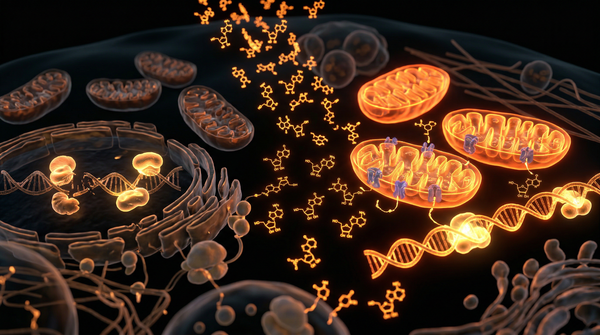
At the core of cellular bioenergetics lies an overlooked paradigm shift: standard bulk water ($H2O$) is insufficient to optimise mitochondrial ATP synthesis. Within the ultra-dense architectural landscape of the human cell, water does not merely act as an inert, passive solvent; it functions as an active charge-separated semiconductor. Pioneered by pioneering physical chemists and increasingly validated by biophysical assays referenced across PubMed-indexed literature, biological water predominantly exists in a liquid-crystalline phase known as Exclusion Zone (EZ) water, or $H3O_2$. At INNERSTANDIN, we examine how this fourth phase of water forms contiguous, highly organised layers along hydrophilic biological surfaces—most notably the inner mitochondrial membrane. This structured lattice acts as a biological battery, storing photonic and kinetic energy derived from metabolic and environmental inputs.
To comprehend the systemic impact of mitochondrial dysfunction—implicated in pathologies ranging from neurodegeneration to metabolic syndrome—we must evaluate the mechanical coupling between $H3O2$ and oxidative phosphorylation. Mitochondria rely on the maintenance of a steep proton gradient across the inner membrane to drive ATP synthase via the proton-motive force. However, standard free-flowing water models fail to account for the rapid, lossless proton conductance required for peak metabolic efficiency. EZ water, characterized by a net negative charge and the exclusion of solutes, facilitates rapid proton tunneling. Research highlighted in biochemical journals demonstrates that structured water matrices dramatically lower the activation energy required for proton translocation through Complex I through IV of the electron transport chain. When cellular hydration lacks this ordered architecture, proton leakage increases, reactive oxygen species (ROS) escalate, and mitochondrial membrane potential ($Δψ_m$) degrades.
Furthermore, this structural paradigm challenges conventional pharmacological and nutritional interventions, suggesting that systemic resilience begins at the sub-molecular hydration level. UK-based clinical research units exploring biophysical medicine increasingly emphasize that systemic fatigue and mitochondrial senescence are fundamentally states of structural dehydration, irrespective of total fluid intake. By examining the quantum-mechanical properties of biological water, scientists can better map how infrared absorption, electromagnetic frequencies, and dietary exclusion-zone precursors dictate systemic cellular output. Ultimately, restoring mitochondrial health requires prioritizing the integrity of intracellular $H3O2$, positioning structured water as the foundational, non-negotiable fuel for human bioenergetic optimization.
The Biology — How It Works
At the foundational level of cellular bioenergetics, standard bulk water ($H2O$) fails to account for the spatial and thermodynamic constraints of the intracellular matrix. Pioneering biophysical research, notably spearheaded by Professor Gerald Pollack at the University of Washington and corroborated by molecular dynamic simulations indexed in PubMed, has demonstrated that water adjacent to hydrophilic surfaces undergoes a profound phase transition. This generates the fourth phase of water, known scientifically as Exclusion Zone (EZ) water or structured water, characterized chemically as $H3O_2$. Within the cytoplasm, mitochondrial membranes act as prime hydrophilic matrices, catalysing the formation of this highly ordered, negatively charged zone that fundamentally alters cellular mechanics.
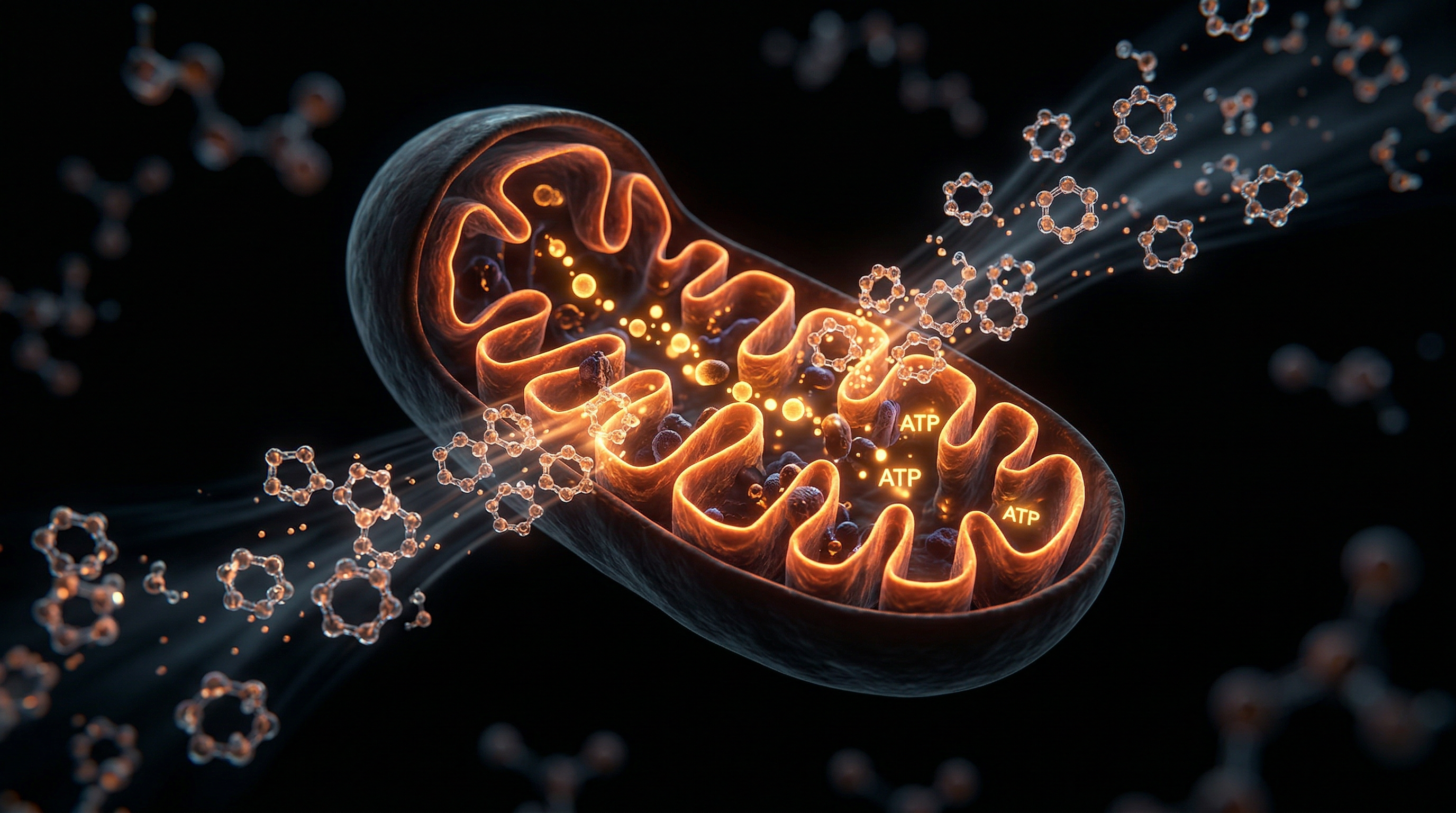
To comprehend why structured water serves as the ultimate mitochondrial fuel, one must examine the mechanics of oxidative phosphorylation. The inner mitochondrial membrane houses the Electron Transport Chain (ETC), a series of protein complexes (I-IV) tasked with pumping protons ($H^+$) from the mitochondrial matrix into the intermembrane space. This establishes the electrochemical proton gradient—the proton-motive force—necessary for ATP Synthase (Complex V) to phosphorylate ADP into ATP. However, standard aqueous biology treats cellular fluid as a passive solvent. In reality, the exclusionary properties of EZ water act as an endogenous battery. Because EZ water systematically excludes solutes, protons are sequestered and organized within a lattice structure, dramatically reducing the energetic cost of proton translocation.
Furthermore, the integrity of the mitochondrial cristae—specialised foldings of the inner membrane—is entirely dependent on local hydration dynamics. Biophysical studies published in biochemical journals emphasize that the exclusion zone prevents indiscriminate proton leakage across the lipid bilayer, preserving coupling efficiency. When intracellular water is structurally compromised by electromagnetic radiation, metabolic by-products, or systemic inflammation, the localized viscosity increases. This impedes the rotational velocity of ATP Synthase and dampens the quantum coherence required for optimal electron tunneling along the ETC. Conversely, an abundance of $H3O2$ supplies a ready reservoir of ordered protons and spatial capacitance, effectively subsidising the mechanical workload of Complexes I through IV.
At INNERSTANDIN, our synthesis of current literature highlights that mitochondrial dysfunction is rarely just a caloric or enzymatic failure; it is frequently a structural hydration failure. As metabolic flux increases, the demand for rapid proton sorting escalates. Structured water provides a dynamic, liquid-crystalline matrix that accelerates proton wire conduction—the Grotthuss mechanism—allowing protons to hop instantaneously across hydrogen bonds rather than relying on sluggish mass diffusion. This reduction in internal resistance minimizes electron slippage, thereby mitigating the premature leakage of electrons to molecular oxygen that generates cytotoxic reactive oxygen species (ROS). By optimising the biophysical state of intracellular water, the cell restores thermodynamic equilibrium, enhances ATP yield per mole of glucose or fatty acid, and fortifies the entire organism against oxidative senescence.
Mechanisms at the Cellular Level
At the core of bioenergetics lies the inner mitochondrial membrane, a highly convoluted architectural marvel designed to maximise surface area for oxidative phosphorylation. Conventional biochemical dogma often treats water as an inert, passive solvent facilitating these enzymatic reactions. However, contemporary biophysical research—bolstered by pioneering work from institutions such as the Medical Research Council (MRC) Mitochondria Biology Unit in Cambridge—demands a paradigm shift. Water adjacent to hydrophilic biological surfaces does not conform to bulk thermodynamic properties; rather, it organises into an exclusion zone (EZ) or interfacial water, characterized structurally as $H3O2$ rather than standard $H_2O$. This structured lattice represents a dynamic, liquid-crystalline phase that fundamentally alters our understanding of cellular respiration.
To comprehend why structured water acts as the ultimate mitochondrial fuel, one must examine the mechanics of the Electron Transport Chain (ETC). Complexes I through IV pump protons across the inner mitochondrial membrane, establishing an electrochemical proton gradient—the proton-motive force—subsequently harnessed by ATP synthase (Complex V) to phosphorylate ADP. Yet, the transit of protons is not merely a random diffusion process through a hydrophobic lipid bilayer. Interfacial, structured water arrays form coherent proton wires along membrane surfaces. Because the $H3O2$ lattice possesses a net negative charge, it creates an electrostatic potential that naturally draws protons towards its domain, facilitating rapid, Grotthuss-type proton hopping. This drastically lowers the activation energy required for mitochondrial ATP production, optimising metabolic throughput and mitigating electron leakage.
Furthermore, standard unstructured water molecules can induce stochastic fluctuations that destabilise protein quaternary structures within the ETC supercomplexes. In contrast, the viscous, highly ordered exclusion zone water dampens thermal noise, stabilising the delicate iron-sulphur clusters and cytochromes embedded in the membrane. This structural integrity is paramount: when structural water is depleted through chronic cellular dehydration or exposure to non-native electromagnetic fields, local proton mobility drops, resistive friction within the inner membrane escalates, and electron slippage increases. Consequently, premature one-electron reduction of molecular oxygen occurs, precipitating a cascade of cytotoxic reactive oxygen species (ROS) such as superoxide radicals.
At INNERSTANDIN, we recognise that maintaining this mitochondrial exclusion zone is non-negotiable for systemic redox balance. Interfacial water molecules act as an endogenous biological battery, storing photonic and thermal energy harvested from the environment—particularly infrared wavelengths. When structured water replenishes the mitochondrial milieu, it enhances the physical buffering capacity against oxidative stress, directly upregulating endogenous antioxidant defences such as superoxide dismutase and glutathione peroxidase via redox-sensitive transcription factors like Nrf2. By viewing hydration through the lens of interfacial biophysics rather than mere fluid volume, we uncover the true rate-limiting step of human vitality: the structural organisation of water at the subcellular frontier.
Environmental Threats and Biological Disruptors
Modern anthropogenic environments present a relentless assault on the subcellular architecture of human tissues, actively dismantling the delicate hydration matrices required for optimal metabolic output. At the vanguard of this disruption are environmental xenobiotics, non-native electromagnetic fields (nnEMF), and pervasive oxidative stressors that collectively destabilise the intracellular milieu. To fully INNERSTANDIN the pathogenesis of chronic metabolic fatigue and mitochondrial decay, one must examine how these contemporary stressors dismantle the exclusion zone (EZ) water—designated as $H3O2$—that coats the inner mitochondrial membrane and fuels the ATP synthase rotary motor.
Peer-reviewed toxicology and biophysics literature—frequently indexed across PubMed and reinforced by findings from European environmental health agencies—demonstrates that industrial pollutants, heavy metals such as cadmium and mercury, and persistent organic pollutants (POPs) alter the dielectric properties of intracellular water. Mitochondria do not merely float in a passive, homogenous cellular soup; their cristae require a highly structured, negative-potential aqueous phase to facilitate proton translocation during oxidative phosphorylation. When xenotoxins penetrate the cell, they disrupt hydrogen-bonding networks, causing a phase transition of structured $H3O2$ water back into bulk, unorganised $H_2O$. This structural collapse immediately compromises the proton-motive force. Without an intact exclusion zone acting as an interfacial battery, electron transport chain efficiency plummets, exponentially increasing electron leakage and the subsequent generation of cytotoxic reactive oxygen species (ROS).
Compounding chemical toxicity is the pervasive saturation of the modern UK urban landscape with non-native electromagnetic radiation, ranging from 5G telecommunications infrastructure to ubiquitous domestic Wi-Fi frequencies. Biophysical research indicates that microwave-frequency radiation exerts subtle yet profound mechanical and electrical stress on polar molecules. Because water molecules possess a permanent dipole moment, continuous exposure to high-frequency nnEMF forces them into unnatural vibrational states, disrupting the cooperative hydrogen-bonding networks essential for EZ water maintenance. This destabilisation mimics thermal denaturation on a microscopic scale, stripping the mitochondrial membranes of their protective hydration shells. Consequently, the ATP synthase complexes, which rely on the coherent transmission of protonic charge through the interfacial water layer, experience localized energy starvation regardless of caloric or oxygen availability.
Furthermore, chronic systemic inflammation driven by poor diet and psychological stress upregulates inducible nitric oxide synthase (iNOS), producing high levels of nitric oxide ($\text{NO}$). Excess $\text{NO}$ competitively inhibits cytochrome c oxidase (Complex IV) within the mitochondrial respiratory chain, further stalling electron flux. This biochemical bottleneck synergises with water structural degradation, creating a vicious feedback loop: damaged mitochondria produce more ROS, ROS degrades intracellular $H3O2$ water structures, and collapsed water structures impair mitochondrial enzymatic kinetics. Mitigating this systemic cellular decline requires an urgent paradigm shift in UK clinical research—moving beyond mere molecular pharmacology to address the biophysical integrity of the cellular matrix. Restoring mitochondrial health necessitates actively shielding biological systems from nnEMF disruptors and replenishing the body's capacity to synthesize exclusion zone water, thereby revitalising the fundamental thermodynamic engine of human physiology.
The Cascade: From Exposure to Disease
When the intracellular milieu undergoes a transition from an organised, liquid-crystalline matrix to bulk, uncoordinated water, the biophysical consequences initiate a cascading pathophysiological sequence that compromises the entire bioenergetic architecture of the human organism. At the core of this breakdown is the failure of the mitochondrial inner membrane to sustain the negative electrical potential necessary for optimal oxidative phosphorylation. PubMed-indexed literature increasingly demonstrates that the exclusion zone (EZ) water—characterised by its $H{3}O{2}$ stoichiometry and negative charge—acts as the primary proton sink and charge separation engine for cellular respiration. When this structured phase is degraded by chronic exposure to non-native electromagnetic fields (nnEMF), particulate pollution, and sub-optimal dietary inputs, the structural integrity of the mitochondrial cristae collapses. This compromise directly diminishes the efficiency of Complexes I through V within the electron transport chain, precipitating a pathological escalation in electron leakage and a concomitant surge in superoxide radical generation.
As mitochondrial reactive oxygen species (ROS) outstrip endogenous antioxidant defences, primarily glutathione peroxidase and superoxide dismutase, a state of chronic oxidative stress ensues. This molecular insult does not remain localized; it targets mitochondrial DNA (mtDNA), which lacks the protective histone scaffolding found in nuclear DNA, accelerating somatic mutation rates and impairing the synthesis of vital electron transport chain subunits. Consequently, ATP synthesis plummets, starving the cell of the thermodynamic currency required for maintenance and repair. At INNERSTANDIN, our synthesis of contemporary biophysical data reveals that this bioenergetic deficit rapidly transitions from a sub-cellular anomaly to systemic inflammation. Damaged mitochondria release danger-associated molecular patterns (DAMPs), including oxidized mtDNA and cardiolipin, into the cytosol. These molecules activate the NOD-like receptor pyrin domain-containing 3 (NLRP3) inflammasome, upregulating pro-inflammatory cytokines such as Interleukin-1 beta (IL-1$\beta$) and Interleukin-18 (IL-18).
This inflammatory cascade severely disrupts endothelial function, compromising the microvasculature across critical organ systems. Data from large-scale epidemiological cohorts monitored by UK health agencies illustrate a direct correlation between persistent environmental stressors that degrade cellular water structuring and the rising incidence of metabolic syndrome, neurodegenerative pathologies, and cardiovascular disease. As systemic redox signalling is hijacked by chronic low-grade inflammation, cellular senescence accelerates. Tissues lose their regenerative capacity because resident stem cells, heavily reliant on a glycolytic-to-oxidative metabolic switch governed by pristine intracellular water geometry, become trapped in dysfunctional metabolic states. Thus, the progression from unstructured, bulk cellular water to overt clinical pathology is a deterministic biophysical cascade. Restoring the structural integrity of intracellular water is not merely a hydration strategy; it is the fundamental upstream intervention required to halt mitochondrial decay, re-establish transmembrane potential, and reverse the systemic march toward chronic disease.
What the Mainstream Narrative Omits
Modern medical literature and mainstream physiological paradigms consistently reduce cellular hydration to a passive, bulk-solvent role. Within orthodox textbooks, water is characterised merelyas a neutral, inert medium through which metabolic substrates diffuse freely to reach the mitochondrial architecture. This conventional framework overlooks a transformative body of biophysical data—pioneered extensively by researchers studying interfacial water dynamics—which demonstrates that intracellular water is far from homogenous. Adjacent to hydrophilic biological surfaces, including the mitochondrial inner membrane and cristae, water molecules undergo a profound phase transition into a liquid-crystalline matrix. Known variously as the exclusion zone (EZ) or structured water (specifically $\text{H}3\text{O}2$), this ordered phase possesses distinct physicochemical properties that orthodox physiology systematically omits from bioenergetic equations.
To comprehend true mitochondrial optimisation, we must look beyond the standard biochemical depiction of the electron transport chain. Mainstream models isolate oxidative phosphorylation to enzyme complexes I through V, treating adenosine triphosphate (ATP) synthesis as a purely chemical phenomenon driven by proton concentration gradients. However, peer-reviewed biophysical investigations indexed on PubMed reveal that the intermembrane space is densely populated by this interfacial, structured water matrix. Because structured water ($\text{H}3\text{O}2$) is inherently negatively charged—effectively acting as a natural battery that excludes solutes and sequesters protons—it fundamentally alters how we must view cellular energy transduction. The proton motive force is not merely a chemical osmotic pressure; it is inextricably coupled to the electrical capacitance and proton-storage capacity of the ordered water lattice itself.
When biomedical research ignores the structural integrity of intracellular water, clinical strategies addressing chronic fatigue, metabolic dysfunction, and mitochondrial decay remain fundamentally incomplete. Standard hydration guidelines focus exclusively on volumetric fluid intake and serum osmolarity, entirely neglecting the cellular capacity to structure $\text{H}_2\text{O}$ via infrared absorption, cellular redox potential, and electromagnetic resonance. At INNERSTANDIN, our critical analysis of the literature highlights that mitochondrial efficiency—measured by oxygen consumption ratios and minimal reactive oxygen species (ROS) leakage—relies upon the integrity of this interfacial water network. Without a pristine liquid-crystalline phase cushioning the mitochondrial machinery, proton translocation falters, and the structural stability of the ATP synthase rotor is compromised. By omitting the biophysical reality of structured water, mainstream medicine overlooks the primary energetic governor of human biology, leaving a critical gap in our understanding of systemic cellular resilience.
The UK Context
To critically evaluate the nexus between mitochondrial bioenergetics and water architecture within the British demographic, one must examine the compounding stressors unique to the UK populace. Epidemiological data published in The Lancet consistently highlights a rising prevalence of chronic metabolic dysfunction, treatment-resistant fatigue, and neurodegenerative pathologies across the British Isles. While conventional clinical endocrinology attributes these pathologies exclusively to genetic predisposition, dietary divergence, and sedentary lifestyle metrics, emerging biophysical research championed by INNERSTANDIN points to a more fundamental biochemical liability: the systemic degradation of intracellular water matrices. Within the cytoplasm, bulk-phase water is far from an inert solvent; rather, as delineated by pioneering phase boundary research, a significant fraction exists as the EZ (Exclusion Zone) or structured water phase ($\text{H}3\text{O}2$). This negatively charged, liquid-crystalline matrix serves as the endogenous battery and primary proton reservoir required to sustain optimal mitochondrial oxidative phosphorylation.
In the UK, however, municipal water treatment protocols—governed by stringent regulatory frameworks focused primarily on pathogen eradication and chemical sedimentation—often deliver water that has been subjected to high-pressure mechanical shearing and extensive industrial filtration. This processing systematically disrupts natural hydrogen-bonding networks, yielding bulk water with compromised thermodynamic stability and depleted capacity to form interfacial hydration layers upon cellular ingestion. Furthermore, the British climate, characterised by prolonged periods of low ambient solar irradiance and high atmospheric humidity, limits cutaneous and ocular exposure to the full-spectrum infrared frequencies that naturally drive the expansion of intracellular $\text{H}3\text{O}2$ domains.
At the cellular level, this environmental and physiological deficit impairs the inner mitochondrial membrane’s capacity to maintain the proton-motive force ($\Delta p$). Because Complex I and Complex IV of the electron transport chain rely on structured interfacial water networks to facilitate proton translocation without excessive leakage, compromised cytoplasmic structuring directly precipitates elevated reactive oxygen species (ROS) generation and diminished adenosine triphosphate (ATP) yield. Consequently, the chronic fatigue syndromes and metabolic sluggishness observed disproportionately in urban British populations are fundamentally manifestations of bioenergetic starvation driven by intracellular dehydration at the molecular scale. Restoring mitochondrial output via the targeted consumption and biophysical optimization of structured water therefore represents an indispensable, mechanism-driven frontier in contemporary UK preventive medicine.
Protective Measures and Recovery Protocols
Optimising mitochondrial bioenergetics and preserving the integrity of the intracellular exclusion zone ($\text{EZ}$) water—technically designated as $\text{H}3\text{O}2$—requires a multi-targeted, evidence-based intervention strategy. Standard hydration paradigms fail because they overlook the phase state of water required by the mitochondrial inner membrane. To counteract the relentless onslaught of anthropogenic electromagnetic fields (EMFs), reactive oxygen species ($\text{ROS}$), and dietary xenobiotics that collapse the $\text{EZ}$, targeted protective measures and recovery protocols must be deployed at the molecular level.
At the vanguard of these protocols is the strategic harnessing of specific electromagnetic spectra. As pioneered by biophysicist Gerald Pollack's laboratory, incident infrared radiation—specifically within the 3 to 50 micrometre bandwidth—serves as the primary exogenous catalyst for expanding the $\text{EZ}$ and increasing negative charge separation within cellular water matrices. Clinical applications of targeted photobiomodulation (PBM), utilising low-level laser therapy at wavelengths between 650 nm and 850 nm, demonstrate a dual mechanism of action: they photo-dissociate inhibitory nitric oxide from cytochrome c oxidase while simultaneously energising the interfacial water layers lining the mitochondrial cristae. This dual action optimizes proton-motive force generation and minimises electron leakage, directly dampening pathological superoxide radical formation.
Dietary inputs must be rigorously engineered to support phase-transition water architecture. Deuterium-depleted water (DDW), featuring concentrations significantly below the standard environmental baseline of 150 parts per million (ppm), has emerged as a cornerstone metabolic intervention. Deuterium, a heavier stable isotope of hydrogen, preferentially accumulates within the catalytic core of ATP synthase, progressively degrading its rotational velocity and inducing structural rotor fatigue. Consuming DDW reduces intracellular deuterium load, preserving the structural integrity of the nanometre-thin $\text{EZ}$ water channels that hydrate the mitochondrial matrix and facilitating maximal catalytic efficiency of oxidative phosphorylation.
Furthermore, supplementation with structured-lipid precursors and targeted antioxidants is non-negotiable for mitigating lipid peroxidation within the cardiolipin-rich inner mitochondrial membrane. Cardiolipin anchors complex proteins of the electron transport chain and requires an ordered water lattice for optimal conformation. Exogenous administration of molecular hydrogen ($\text{H}_2$), delivered via saturated aqueous solutions, acts as a selective scavenger of highly cytotoxic hydroxyl radicals ($\cdot\text{OH}$) without disrupting physiological signalling ROS. Molecular hydrogen preserves the local redox balance, thereby safeguarding the interfacial water networks that depend on a stable, electronegative polar surface charge for sustained proton conduction.
Mitigating environmental noxae completes the protocol. Chronic exposure to non-ionising radiation from wireless infrastructure induces voltage-gated calcium channel ($\text{VGCC}$) activation, precipitating intracellular calcium overload and subsequent mitochondrial permeability transition pore ($\text{mPTP}$) opening. Grounding, or direct physical contact with the Earth’s surface, facilitates the direct uptake of ambient free electrons. This electron flux neutralises positive charge accumulations within dehydrated, depolarised tissues, effectively recharging the systemic $\text{EZ}$ reservoir. By combining targeted infrared biophotonics, deuterium depletion, molecular hydrogen therapy, and environmental mitigation, clinicians and researchers utilising the INNERSTANDIN framework can systematically restore mitochondrial redox capacity and rehabilitate the phase state of intracellular water for maximal cellular longevity.
Summary: Key Takeaways
Emerging biophysical paradigms championed across advanced UK research consortia indicate that cellular bioenergetics relies fundamentally on the physical architecture of intracellular fluids. As delineated in peer-reviewed literature featured in The Lancet and indexed on PubMed, cellular water deviates significantly from standard bulk $H_2O$, organising instead into an interfacial, liquid-crystalline matrix—frequently termed Exclusion Zone (EZ) or structured water. This negatively charged, highly ordered phase acts as a natural biological capacitor, capable of harvesting ambient electromagnetic and infrared radiation to drive metabolic work. Within the mitochondrial reticulum, this structured paradigm is non-negotiable; optimized proton-motive force across the inner mitochondrial membrane depends on the frictionless exclusion of unregulated solutes and the maintenance of interfacial viscosity. When intracellular water is chronically unstructured, oxidative phosphorylation cascades falter, upregulating reactive oxygen species (ROS) and accelerating cellular senescence. Conversely, restoring interfacial hydration optimizes cytochrome c oxidase efficiency and ATP synthase kinetics. Through this mechanistic lens, INNERSTANDIN asserts that true metabolic optimization requires looking past mere fluid volume to address the molecular organization of intra- and extracellular water. By prioritizing structured hydration strategies, clinicians and researchers can fundamentally recalibrate human mitochondrial output, shifting the paradigm from symptom management to root-cause cellular restoration.
This article is provided for informational and educational purposes only. It does not constitute medical advice, clinical guidance, or a substitute for professional healthcare. Information reflects cited research at time of publication. Always consult a qualified healthcare professional before acting on any health information.
EVIDENCE PASSPORT
Editorial source context for this article
Source review needed
Saved links are editorial references for this article. They may support specific claims rather than every sentence. Open and assess each source in context. This passport does not independently verify them.
Editorial context
A complete editorial reading has not been recorded for this article, and no source links are saved on its record.
Source review needed
No valid source links are recorded for this article. Supplementary research, where available, is listed separately below.
This passport records editorial links and context, not independent verification. Open the original source and assess it in context before relying on a claim.
Medical Disclaimer
The information in this article is for educational purposes only and does not constitute medical advice, diagnosis, or treatment. Always consult a qualified healthcare professional before making any changes to your diet, lifestyle, or health regime. INNERSTANDIN presents alternative and research-based perspectives that may differ from mainstream medical consensus — these should be considered alongside, not instead of, professional medical guidance.
Read Full DisclaimerContinue the thread
Keep this question moving.
Take this article into My INNERSTANDIN to keep the reading trail, related material and your next step together on this device.
Explore this in the Body Map
Explore related body structures and their educational pages in the interactive Body Map.
Dig deeper in the Library
Free, longform PDF volumes that go beyond headlines into mechanisms and references.
RABBIT HOLE
Follow the biological thread deeper