
Mitochondrial Hijacking: How Viral Proteins Disrupt Cellular Energy Production
Updated May 2026
This study explains the displacement of mitochondrial function by viral genetic instructions. Learn how ATP production is compromised, leading to the profound fatigue seen in post-viral syndromes.
Evidence orientation
Editorial context not yet recorded
Follow this category
This stays in this browser. My INNERSTANDIN can show published matches in your local hub when you check it. It does not send email, push, or alert notifications.
Local learning review
A private browser aid for revisiting ideas. It is not an alert or a health recommendation.
Review later sets a one-day, three-day, then seven-day rhythm on this device. Choose it only when you want to revisit this article.
Overview
The prevailing understanding of viral pathology has, for decades, focused almost exclusively on the inflammatory response—the so-called "cytokine storm"—and the direct destruction of host cells through viral replication. However, as we delve deeper into the molecular sub-structures of post-viral syndromes, a more insidious and fundamental mechanism emerges. This is the phenomenon of mitochondrial hijacking.
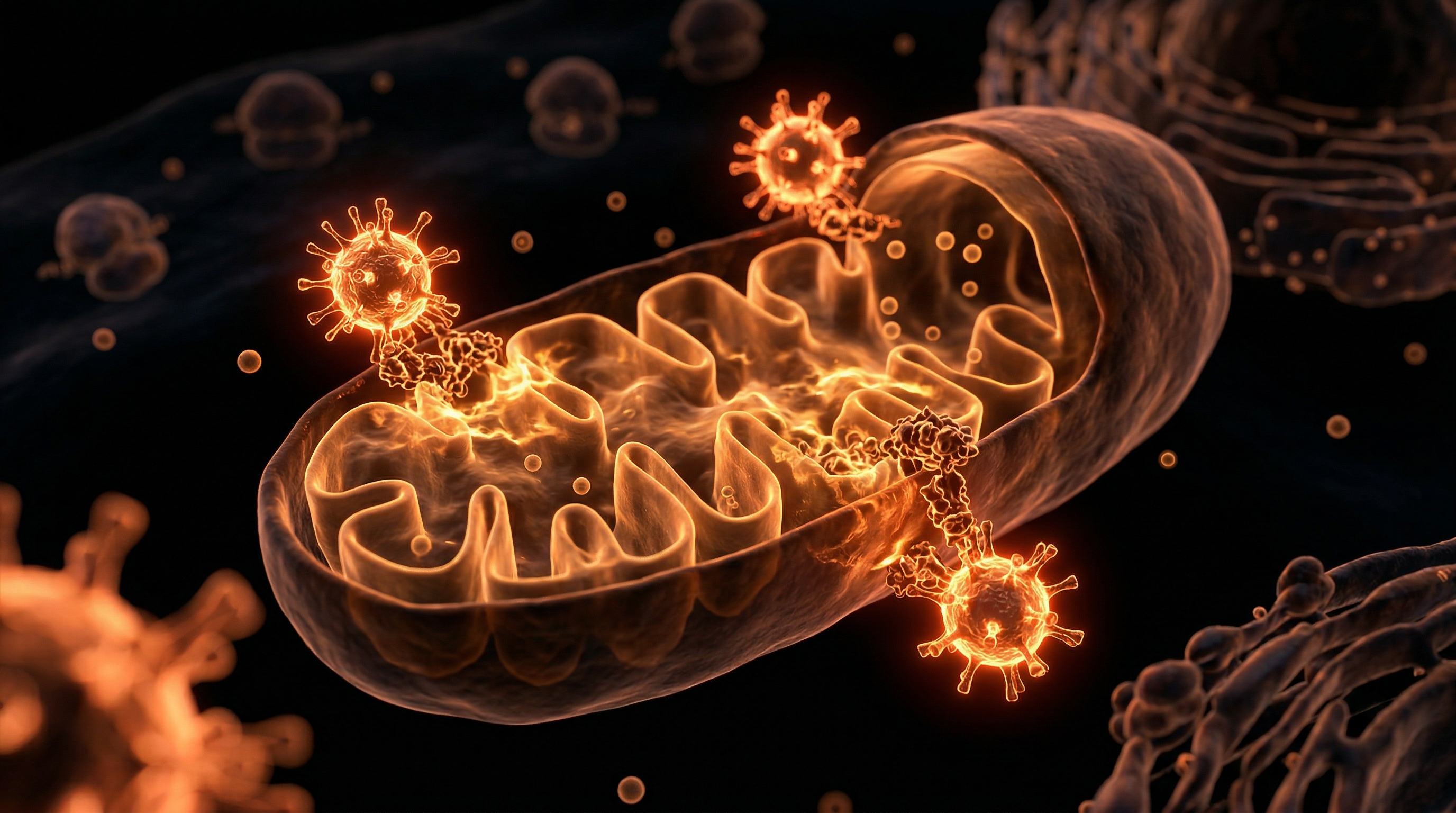
Mitochondria are often colloquially referred to as the "powerhouses of the cell," but this reductionist view fails to capture their role as the primary sensory and signaling hubs of the human biological system. They are the gatekeepers of apoptosis, the regulators of calcium signaling, and the literal engines of life via the production of Adenosine Triphosphate (ATP). When viral proteins, such as the SARS-CoV-2 Spike Protein, enter the intracellular environment, they do not merely float in the cytosol; they actively seek out and colonise the mitochondria.
This article explores the displacement of mitochondrial function by viral genetic instructions. We will examine how the diversion of resources from energy production to viral replication creates a state of cellular "bankruptcy." This bioenergetic deficit is not merely a side effect; it is the primary driver behind the profound, debilitating fatigue and multi-system dysfunction seen in chronic post-viral conditions. By understanding the mechanics of this hijacking, we can begin to formulate strategies for cellular liberation and the restoration of metabolic sovereignty.
Fact: Mitochondria possess their own distinct DNA (mtDNA), inherited maternally, which is significantly more susceptible to oxidative damage than nuclear DNA due to its lack of protective histone proteins.
The Biology — How It Works
To understand how a virus "hijacks" a cell, one must first appreciate the evolutionary origin of the mitochondria. According to the Endosymbiotic Theory, mitochondria were once independent proteobacteria that entered into a symbiotic relationship with early eukaryotic cells. This history is crucial because it explains why mitochondria remain "foreign" in many ways, possessing their own replication machinery and protein synthesis protocols.
The Target: The Electron Transport Chain
The primary site of energy production is the Electron Transport Chain (ETC), located in the inner mitochondrial membrane. This system consists of five protein complexes (I through V) that facilitate a flow of electrons, ultimately creating a proton gradient that drives the turbine-like action of ATP Synthase.
Viral proteins disrupt this delicate flow. Research indicates that certain viral components, particularly the S1 subunit of the spike protein, can penetrate the mitochondrial matrix. Once inside, they interfere with Complex I and Complex IV (Cytochrome c Oxidase). By inhibiting these complexes, the virus effectively chokes the cell's ability to use oxygen for energy, forcing a shift toward less efficient anaerobic pathways.
The Shift to Glycolysis
When mitochondrial respiration is compromised, the cell enters a state known as the Warburg Effect, or aerobic glycolysis. This is a metabolic "emergency mode" where the cell produces energy by breaking down glucose into lactate, even in the presence of oxygen. While this allows for rapid energy production (essential for viral replication), it is highly inefficient, yielding only 2 ATP per glucose molecule compared to the 36-38 ATP produced by healthy mitochondria.
- Consequence 1: Rapid depletion of systemic glucose stores.
- Consequence 2: Accumulation of lactic acid in tissues, leading to the "heavy limb" sensation reported by post-viral sufferers.
- Consequence 3: A shift in cellular pH that further impairs enzymatic function.
Viral Localisation
Viruses have evolved specific Mitochondrial Targeting Sequences (MTS). These are peptide codes that trick the mitochondrial import machinery (the TOM/TIM complex) into pulling viral proteins inside the organelle. Once the virus has successfully "docked" with the mitochondria, it can manipulate the organelle’s calcium stores to facilitate viral fusion and exit, while simultaneously suppressing the host cell’s innate immune triggers.
Mechanisms at the Cellular Level
The hijacking process is complex and multi-faceted, involving the disruption of both the structure and the signaling pathways of the mitochondria.
1. MAVS Interference
The Mitochondrial Antiviral Signaling (MAVS) protein is a critical component of the body’s early warning system. Located on the outer mitochondrial membrane, MAVS acts as a platform for the recruitment of immune signaling molecules when a virus is detected. Viral proteins are adept at cleaving or sequestering MAVS, effectively "blinding" the cell's internal security system. This prevents the production of Interferons, allowing the virus to replicate unchecked during the early stages of infection.
2. Fragmentation and Fission
Healthy mitochondria exist in a dynamic state of "fusion" (joining together) and "fission" (splitting apart). This is known as Mitochondrial Dynamics. To maximise energy efficiency, mitochondria typically form long, tubular networks.
Viral hijacking triggers excessive mitochondrial fission. By activating the protein Drp1, the virus causes the mitochondrial network to shatter into small, dysfunctional fragments. These fragmented mitochondria are incapable of maintaining the Mitochondrial Membrane Potential (ΔΨm) required for ATP synthesis. This fragmentation serves the virus by liberating nutrients for its own assembly but leaves the host cell in a state of energy collapse.
3. Reactive Oxygen Species (ROS) as a Weapon
As the ETC becomes "clogged" by viral proteins, electrons leak out prematurely, reacting with oxygen to form Superoxide and other Reactive Oxygen Species (ROS). In a healthy cell, small amounts of ROS act as signaling molecules. In a hijacked cell, the flood of ROS causes:
- Lipid Peroxidation: Destruction of the mitochondrial membranes.
- mtDNA Mutation: Direct damage to the mitochondrial genetic code.
- Inflammasome Activation: Triggering the NLRP3 inflammasome, which leads to systemic, "sterile" inflammation.
4. Calcium Dysregulation
Mitochondria act as a buffer for intracellular calcium. Viral proteins often puncture the mitochondrial membrane or interfere with calcium transporters (like the MCU - Mitochondrial Calcium Uniporter). This causes a massive efflux of calcium into the cytoplasm. High cytosolic calcium levels trigger muscle spasms, cognitive "brain fog," and eventually, the "mitochondrial permeability transition pore" (mPTP) opens, leading to programmed cell death.
Important Callout: Chronic fatigue in post-viral syndromes is not "psychosomatic." It is the macroscopic manifestation of microscopic mitochondrial failure—a state of cellular hibernation where the body prioritises vital organ survival over physical activity.
Environmental Threats and Biological Disruptors
Mitochondrial hijacking does not occur in a vacuum. The modern environment has created a "primed" state where human mitochondria are already under significant stress, making them easier targets for viral manipulation.
The Synergistic Effect of EMF
Recent biophysical research suggests that Electromagnetic Fields (EMF), particularly from high-frequency telecommunications infrastructure, can impact Voltage-Gated Calcium Channels (VGCCs). Excessive calcium influx caused by EMF exposure mirrors the calcium dysregulation seen in viral hijacking. When an individual with high EMF exposure encounters a viral protein, the cumulative stress on the mitochondria can reach a breaking point, leading to the rapid onset of chronic symptoms.
Glyphosate and the Krebs Cycle
Glyphosate, the most widely used herbicide globally, acts as a mitochondrial toxin by mimicking the amino acid glycine and interfering with the Succinate Dehydrogenase enzyme (Complex II). This weakens the mitochondrial foundation. A population with high levels of glyphosate in their tissues is metabolically "brittle," showing much lower resilience to viral proteins that target the ETC.
Heavy Metal Accumulation
Metals such as Aluminium, Mercury, and Cadmium have a high affinity for the mitochondria. They displace essential minerals like Magnesium and Zinc which are required as co-factors for energy production. This "metal-loading" creates a state of chronic oxidative stress that viral proteins can exploit to accelerate cellular destruction.
Synthetic Biology and mRNA
The introduction of synthetic genetic instructions into the human body (via mRNA platforms) forces the cell to produce the Spike Protein for an indeterminate period. Unlike a natural infection which is eventually cleared, persistent production of these proteins ensures a continuous "occupying force" within the mitochondria. This explains why post-vaccination syndromes often mirror post-viral syndromes (like Long-Covid); the underlying mechanism—mitochondrial hijacking by the Spike Protein—is identical.
The Cascade: From Exposure to Disease
The progression from the initial "hijack" to a chronic disease state follows a predictable biological cascade.
Stage 1: The Bioenergetic Crisis (Acute Phase)
During the initial exposure, the virus prioritises its own replication. ATP levels drop by up to 50-70% in affected cells. The patient experiences "malaise," which is actually the brain sensing the drop in systemic energy availability.
Stage 2: The Pro-Inflammatory Shift
The damaged mitochondria leak mtDNA into the cytoplasm and the bloodstream. Because mtDNA resembles bacterial DNA, the innate immune system treats it as an "invader," triggering a state of chronic, low-grade inflammation that does not resolve even after the virus is gone. This is the origin of the "auto-immune" features often seen in these conditions.
Stage 3: The Metabolic Freeze (Chronic Phase)
In an attempt to prevent further damage from ROS, the body enters a state of hypometabolism. This is similar to the "dauer" state seen in some organisms—a form of biological suspended animation.
- Brain Fog: The brain, which consumes 20% of the body's energy, cannot maintain high-frequency synaptic transmission.
- Post-Exertional Malaise (PEM): Any physical activity triggers a "crash" because the mitochondria cannot scale up ATP production to meet the demand, leading to rapid cellular toxicity.
- Dysautonomia: The autonomic nervous system, particularly the Vagus nerve, becomes dysfunctional as the energy-hungry neurons that control heart rate and digestion begin to fail.
Stage 4: Structural Degradation
Long-term mitochondrial hijacking leads to the loss of mitochondrial mass. The body "cleans up" the damaged organelles through mitophagy, but in the hijacked state, the biogenesis of new mitochondria is suppressed. This leads to a permanent or semi-permanent reduction in physical and cognitive capacity.
What the Mainstream Narrative Omits
The current medical orthodoxy, particularly that funded by major pharmaceutical interests, remains laser-focused on "antibodies" and "antivirals" while ignoring the bioenergetic reality of the disease.
The Spike Protein as a Persistent Toxin
Mainstream health authorities continue to claim that viral proteins, or those produced by mRNA treatments, are rapidly cleared from the body. However, peer-reviewed studies have found the Spike Protein in the blood and tissues of patients for months—sometimes over a year—following exposure. The persistent presence of this protein means the "hijacking" of mitochondria is not a one-time event but a continuous process.
The Suppression of Metabolic Therapies
There is a profound silence regarding therapies that target mitochondrial health. Treatments that enhance the NAD+/NADH ratio, support the ETC complexes, or encourage autophagy are often dismissed as "unproven" or "alternative," despite decades of biochemical evidence. Why? Because mitochondrial recovery protocols often involve non-patentable substances like vitamins, minerals, and light-based therapies, which offer no profit margin for the medical-industrial complex.
The Role of Microclots
While the mainstream focuses on "inflammation," it overlooks the fact that mitochondrial failure in the endothelial cells (the lining of the blood vessels) leads to the formation of amyloid-rich microclots. These tiny clots further starve the mitochondria of oxygen, creating a vicious cycle of energy depletion that cannot be fixed by traditional anti-inflammatories.
Fact: Traditional blood tests (CBC, Metabolic Panel) often return "normal" results in post-viral patients because they do not measure intracellular ATP or mitochondrial membrane potential.
The UK Context
In the United Kingdom, the approach to mitochondrial-driven post-viral syndromes has been particularly problematic.
The Legacy of ME/CFS Dismissal
For decades, the UK medical establishment, guided by the now-discredited PACE Trial, treated Myalgic Encephalomyelitis (ME) as a psychological condition. This "biopsychosocial" model delayed mitochondrial research by a generation. Although NICE (National Institute for Health and Care Excellence) updated its guidelines in 2021 to discourage "Graded Exercise Therapy" (GET), the underlying mindset remains. GET is particularly dangerous for hijacked mitochondria, as it forces the cell to produce energy it does not have, leading to further oxidative damage and "crashing."
The NHS Burden
The NHS is currently facing an unprecedented wave of "Long-Covid" and post-viral illness. However, the diagnostic pathway remains archaic. UK patients rarely have access to advanced mitochondrial testing, such as mitochondrial DNA sequencing or extracellular flux analysis (Seahorse testing). Consequently, many are left with "functional" diagnoses that offer no pathway to recovery.
The Regulatory Blind Spot
The MHRA (Medicines and Healthcare products Regulatory Agency) has been slow to acknowledge the bioenergetic risks associated with new biotechnology. By focusing on short-term safety profiles, they have missed the long-term impact that persistent viral proteins have on the nation's "mitochondrial capital."
Protective Measures and Recovery Protocols
Recovery from mitochondrial hijacking requires a multi-pronged approach aimed at three goals: 1) Clearing the viral protein, 2) Neutralising ROS, and 3) Promoting mitochondrial biogenesis.
1. Clearing the "Occupying Force"
To stop the hijacking, the persistent proteins must be degraded.
- Autophagy Induction: Intermittent fasting (16-18 hours) or the use of Spermidine triggers the cell's internal recycling system, which can help break down stalled viral proteins.
- Proteolytic Enzymes: Substances like Nattokinase and Serrapeptase have shown promise in breaking down the spike protein in vitro.
2. Supporting the Electron Transport Chain
Once the path is clear, we must restart the engines.
- Methylene Blue: This compound acts as an alternative electron cycler, bypassing damaged Complex I and III to deliver electrons directly to Cytochrome c, effectively "jump-starting" ATP production.
- CoQ10 and PQQ: Ubiquinol (the active form of CoQ10) is essential for electron transfer between complexes, while PQQ (Pyrroloquinoline quinone) is one of the few substances known to stimulate the growth of new mitochondria (mitochondrial biogenesis).
- NAD+ Precursors: Supplementing with Nicotinamide Riboside (NR) or NMN can help restore the NAD+/NADH balance, which is vital for the Krebs cycle and Sirtuin activation (longevity genes).
3. Environmental Remediation
- EMF Mitigation: Reducing exposure to high-frequency radiation (turning off Wi-Fi at night, avoiding 5G hotspots) allows the mitochondrial calcium channels to stabilise.
- Red Light Therapy (Photobiomodulation): Light in the 660nm and 850nm range is absorbed by Cytochrome c Oxidase (Complex IV), enhancing the efficiency of oxygen utilisation and increasing ATP output.
4. Mineral Repletion
- Magnesium Malate: Magnesium is a required co-factor for every ATP-related reaction. The malate form is particularly useful as malic acid is a key intermediate in the Krebs cycle.
- Selenium and Zinc: These minerals are critical for the production of Glutathione and Superoxide Dismutase, the body's internal antioxidant shield against mitochondrial ROS.
Summary: Key Takeaways
The phenomenon of mitochondrial hijacking represents a paradigm shift in how we view post-viral illness and chronic fatigue. It is not an "immune system gone wrong," but rather a "bioenergetic system under occupation."
- Mitochondria are the primary targets of viral proteins like the Spike Protein, which utilise specialised sequences to enter and disrupt the organelle.
- The energy deficit (ATP shortage) is the direct cause of the profound fatigue, cognitive decline, and physical limitations seen in post-viral syndromes.
- Viral proteins switch cellular metabolism from efficient oxygen-based respiration to inefficient, acid-producing glycolysis.
- Modern environmental stressors (EMF, glyphosate, heavy metals) act as "force multipliers" for viral hijacking, lowering the threshold for cellular collapse.
- Recovery is possible but requires a focus on metabolic restoration, autophagy, and the protection of the Electron Transport Chain, rather than simple symptom management.
We must move beyond the mainstream narrative that ignores the bioenergetic foundations of health. Only by reclaiming our mitochondrial sovereignty can we hope to address the burgeoning crisis of chronic, post-viral disease in the 21st century. The science is clear: the war for health is being fought inside the mitochondria. It is time we provided the body with the reinforcements it needs to win.
This article is provided for informational and educational purposes only. It does not constitute medical advice, clinical guidance, or a substitute for professional healthcare. Information reflects cited research at time of publication. Always consult a qualified healthcare professional before acting on any health information.
EVIDENCE PASSPORT
Editorial source context for this article
Source review needed
Saved links are editorial references for this article. They may support specific claims rather than every sentence. Open and assess each source in context. This passport does not independently verify them.
Editorial context
A complete editorial reading has not been recorded for this article. Source links remain available for you to open and assess directly.
Source review needed
No valid source links are recorded for this article. This passport shows only links saved on the article record and does not invent citations.
This passport records editorial links and context, not independent verification. Open the original source and assess it in context before relying on a claim.
Medical Disclaimer
The information in this article is for educational purposes only and does not constitute medical advice, diagnosis, or treatment. Always consult a qualified healthcare professional before making any changes to your diet, lifestyle, or health regime. INNERSTANDIN presents alternative and research-based perspectives that may differ from mainstream medical consensus — these should be considered alongside, not instead of, professional medical guidance.
Read Full DisclaimerContinue the thread
Keep this question moving.
Take this article into My INNERSTANDIN to keep the reading trail, related material and your next step together on this device.
Explore this in the Body Map
See where this hits your biology. Interactive anatomy, threats, and protective protocols.
Dig deeper in the Library
Free, longform PDF volumes that go beyond headlines into mechanisms and references.