
Mitochondrial Mismatch: Indoor Life vs. ATP
Updated May 2026
The disconnect between our ancient mitochondria and modern indoor lifestyles is driving the UK's chronic fatigue epidemic. We explore how a lack of natural light and temperature fluctuations disrupts ATP production at a cellular level.
Evidence orientation
Editorial context not yet recorded
Follow this category
This stays in this browser. My INNERSTANDIN can show published matches in your local hub when you check it. It does not send email, push, or alert notifications.
Local learning review
A private browser aid for revisiting ideas. It is not an alert or a health recommendation.
Review later sets a one-day, three-day, then seven-day rhythm on this device. Choose it only when you want to revisit this article.
Overview
For over two billion years, the fundamental unit of eukaryotic life has remained relatively unchanged. The mitochondria, ancient alphaproteobacteria that formed an endosymbiotic alliance with our ancestral cells, are the primary arbiters of life and death. They are not merely "powerhouses" that generate currency in the form of Adenosine Triphosphate (ATP); they are sophisticated environmental sensors, tuned to the specific frequencies of the sun and the rhythmic oscillations of the Earth’s climate.
However, we are currently witnessing a biological catastrophe of unprecedented proportions. In the United Kingdom, a "shadow pandemic" of chronic fatigue, fibromyalgia, and metabolic dysfunction is sweeping through the population. While the mainstream medical establishment scrambles to find pharmaceutical solutions for these ailments, they ignore the foundational biophysical reality: our ancient mitochondria are in a state of profound "mismatch" with the modern indoor environment.
The transition from an outdoor, sun-drenched, and thermally varied existence to a sedentary, LED-lit, and climate-controlled lifestyle has decoupled our cellular biology from its evolutionary cues. We are tropical animals living in a concrete, electromagnetic cage. This article explores the mechanisms behind this breakdown, exposing how the loss of natural light and temperature fluctuations is literally de-powering the human species, leading to a state of chronic cellular bankruptcy.
Fact: Modern Britons spend approximately 90% of their time indoors, exposed to artificial light spectra that do not exist in nature, while simultaneously being insulated from the thermal stressors that have defined human evolution for millennia.
The Biology — How It Works
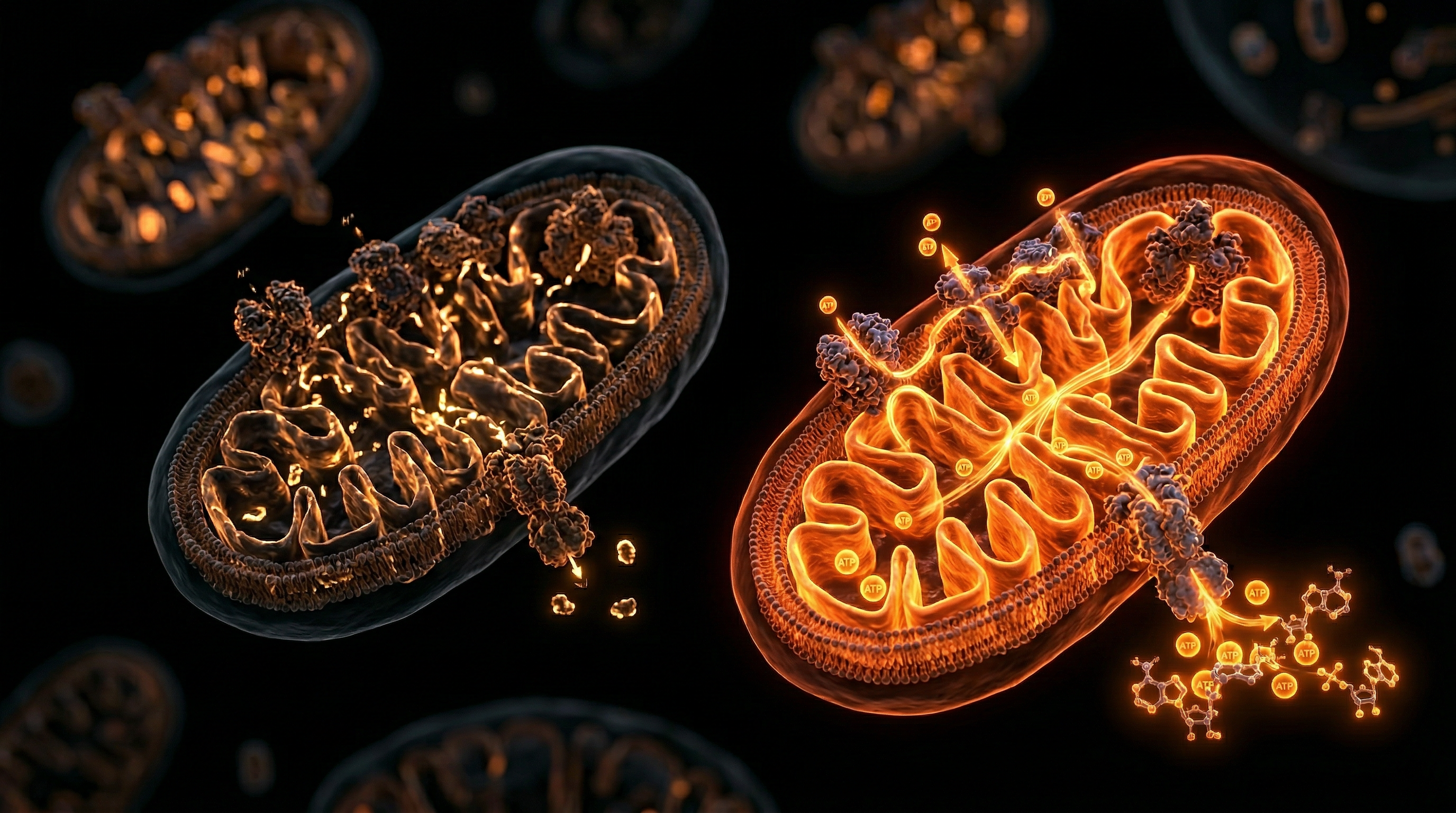
To understand the mismatch, one must first appreciate the delicate machinery of the Electron Transport Chain (ETC). Located within the inner mitochondrial membrane, the ETC consists of five primary protein complexes (Complexes I–V). Its role is to take the electrons harvested from our food and pass them along a chain to eventually react with oxygen, creating a proton gradient that drives the ATP Synthase motor.
The Endosymbiotic Origin
Mitochondria possess their own DNA (mtDNA), which is inherited maternally. This genome is circular and lacks the protective histone proteins found in nuclear DNA, making it exceptionally vulnerable to oxidative damage. This evolutionary relic is a "canary in the coal mine"; it responds instantly to environmental shifts. When the environment signals "winter" or "danger," the mitochondria shift from energy production to a cellular defence mode.
ATP: More Than Just Fuel
While ATP is the chemical energy source for cellular processes, its production is inextricably linked to the physical state of the water surrounding the mitochondrial proteins. In a healthy cell, mitochondria create Exclusion Zone (EZ) water—a fourth phase of water that is more viscous and structured. This structured water acts as a battery and a lubricant, allowing the ATP synthase nanomotor to spin at rates of up to 9,000 RPM without friction.
The Role of Photoreceptors
Crucially, mitochondria are light-sensitive. They contain chromophores, such as Cytochrome c Oxidase (Complex IV), which specifically absorb light in the red and near-infrared (NIR) spectrum. When these frequencies hit the mitochondria, they stimulate the release of nitric oxide, increase electron flow, and optimise ATP production. Without this specific light input, the "engine" begins to stall.
Mechanisms at the Cellular Level
The "Indoor Life" epidemic disrupts ATP production through several high-resolution biophysical pathways. It is not just about a lack of "energy"; it is about the collapse of quantum coherence within the cell.
1. The Red/Near-Infrared Deficiency
Natural sunlight is composed of roughly 42% infrared light. In contrast, modern LED and fluorescent lighting systems are almost entirely devoid of these frequencies.
- Cytochrome c Oxidase (CCO): This enzyme is the terminal electron acceptor in the ETC. Red and NIR light (600nm to 1000nm) displace inhibitory nitric oxide from CCO, allowing oxygen to bind more efficiently.
- Water Viscosity: NIR light reduces the viscosity of the water layer surrounding the ATP synthase motor. When this water is "thick" due to a lack of infrared exposure, the motor slows down, and ATP production drops precipitously.
2. The Blue Light Hazard and ROS
Indoor environments are saturated with high-energy visible (HEV) blue light, particularly at the 450nm peak.
- Singlet Oxygen Production: Excessive blue light, without the balancing effect of red/NIR, causes the mitochondria to leak electrons. These electrons react with oxygen to form Reactive Oxygen Species (ROS) or free radicals.
- Melatonin Suppression: Blue light at the wrong time of day (or in excessive amounts during the day) suppresses the production of mitochondrial melatonin. Unlike pineal melatonin, which regulates sleep, mitochondrial melatonin is produced within the organelle to neutralise the ROS generated during ATP production. Indoors, we are essentially running an engine without a cooling system.
3. Thermal Monotony and Uncoupling Proteins
The modern UK home is kept at a steady 20-21°C. Evolutionarily, our mitochondria are designed to handle "thermal stress."
- Thermogenesis: In the cold, mitochondria employ Uncoupling Protein 1 (UCP1). Instead of making ATP, they "uncouple" the proton gradient to generate heat. This process clears out old, damaged mitochondria (mitophagy) and stimulates the production of new, efficient ones (biogenesis).
- Metabolic Stagnation: By living in a perpetual "thermal neutral zone," we lose the stimulus for mitochondrial turnover. The result is a population of "zombie" mitochondria that are sluggish, "leaky," and inefficient.
Callout: Chronic exposure to artificial blue light without counterbalancing infrared exposure creates a state of "pseudo-hypoxia," where the cell behaves as if it is suffocating even in the presence of oxygen.
Environmental Threats and Biological Disruptors
The indoor environment is a toxic cocktail of stressors that our evolutionary ancestors never encountered. These factors work synergistically to degrade the mitochondrial membrane potential.
Non-Native Electromagnetic Fields (nnEMFs)
The rise of Wi-Fi, 5G, and Bluetooth has introduced a new variable into the mitochondrial equation. Mitochondria are essentially electromagnetic organelles.
- Voltage-Gated Calcium Channels (VGCCs): Research suggests that nnEMFs can trigger the opening of VGCCs in the cell membrane, leading to an influx of calcium into the mitochondria.
- Peroxynitrite Formation: Excessive mitochondrial calcium leads to the production of peroxynitrite, a highly reactive and damaging nitrogen species that breaks DNA strands and oxidises membrane lipids.
Deuterium Overload
Deuterium is a heavy isotope of hydrogen. In nature, the body has sophisticated ways of "depleting" deuterium, as it is too heavy for the ATP synthase motor. If a deuterium atom enters the nanomotor instead of a regular hydrogen proton, it physically damages the mechanism, like throwing a wrench into a high-speed turbine.
- The Indoor Connection: High-carbohydrate indoor diets, combined with a lack of UV light and cold exposure (both of which help the body process deuterium), lead to a "heavy water" build-up in the mitochondria, further crashing ATP output.
The "Flicker" Effect
LED bulbs do not provide a continuous stream of light; they flicker at frequencies imperceptible to the conscious mind but highly disruptive to the nervous system. This flicker induces a low-level stress response, keeping the body in a sympathetic "fight or flight" state, which is energetically expensive and drains the mitochondrial reserve.
The Cascade: From Exposure to Disease
When the mitochondrial mismatch reaches a tipping point, the body can no longer maintain homeostasis. This is the origin of the "Chronic Fatigue" epidemic.
The Transition to Glycolysis
In a healthy state, cells prefer Oxidative Phosphorylation (producing ~36 ATP per glucose molecule). Under environmental stress (lack of light, nnEMF, thermal monotony), the mitochondria become dysfunctional. The cell then reverts to an ancient, less efficient survival mechanism: Glycolysis (producing only 2 ATP per glucose).
- This is known as the Warburg Effect in cancer biology, but it is now appearing in the non-cancerous tissues of millions of people.
- The result is a permanent state of exhaustion, brain fog, and "wired but tired" symptoms.
Mitochondrial DNA Damage and Aging
Because mtDNA is located so close to the site of ROS production, it suffers the most damage. Once the mtDNA is mutated beyond repair, the cell can no longer replace its respiratory enzymes. This accelerates the biological age of the individual, regardless of their chronological age. We are seeing 20-year-olds with the mitochondrial profile of 60-year-olds.
The Neuro-Endocrine Collapse
The brain is the most energy-hungry organ in the body, containing the highest density of mitochondria (up to 10,000 per neuron in some areas). When ATP production fails:
- Neuroinflammation: Glial cells become activated, leading to depression and anxiety.
- Hormonal Dysregulation: The hypothalamus-pituitary-adrenal (HPA) axis relies on mitochondrial energy to signal correctly. When the signal fails, we see "adrenal fatigue"—which is, in reality, mitochondrial failure at the level of the brain.
What the Mainstream Narrative Omits
The current medical model is built upon a biochemical paradigm—the idea that every problem is a chemical deficiency that can be solved with a chemical (drug) input. This narrative is fundamentally incomplete because it ignores the biophysical and quantum nature of life.
The Suppression of Light Hygiene
You will rarely hear a GP discuss "light hygiene" or the "circadian rhythm" in the context of chronic disease. Why? Because you cannot patent sunlight. There is no profit in telling a patient to stand barefoot on the grass at sunrise or to switch off their Wi-Fi at night.
The Calorie Myth
Mainstream dietetics focuses almost exclusively on "Calories In vs. Calories Out." However, two people can eat the exact same meal and have entirely different metabolic outcomes based on their light environment.
- If you eat a high-carbohydrate meal under blue light (indoors), your mitochondria will handle those electrons differently than if you ate the same meal under the sun.
- Under the sun, UV light and IR facilitate the "bottleneck" of the ETC; indoors, those electrons get backed up, leading to fat storage and ROS.
The Vitamin D Fallacy
The UK government’s solution to the lack of sun is "Vitamin D supplementation." While Vitamin D is important, it is merely a proxy for sun exposure. A pill cannot replace the 1,500+ wavelengths of light found in the solar spectrum, nor can it replicate the structured water formation induced by NIR or the POMC (Pro-opiomelanocortin) cleavage triggered by UV light on the skin. Supplementing Vitamin D without addressing light exposure is like trying to fix a broken car by simply refilling the fuel tank.
The UK Context
The United Kingdom presents a unique "perfect storm" for mitochondrial mismatch. Our geographical and cultural factors exacerbate the disconnect.
The Latitude Problem
The UK sits between 50°N and 60°N latitude. For several months of the year (the "Solar Winter"), it is physically impossible to produce Vitamin D from the sun. Moreover, the intensity of red and NIR light is significantly diminished during the overcast British winter.
- When we combine this natural lack of light with our cultural obsession with indoor living, we create a population that is biologically "dark" for six months of the year.
The Victorian Housing Legacy vs. Modern "Sick" Buildings
Traditional UK housing was drafty—which, while uncomfortable, provided natural ventilation and some thermal variance. Modern UK building regulations focus on "air-tightness" for energy efficiency.
- These modern "sick buildings" trap volatile organic compounds (VOCs) and concentrate nnEMF signals from neighbours.
- The lack of natural light penetration in high-density urban flats in London, Manchester, and Birmingham means that many residents never see a full-spectrum photon until they leave for work—often in a windowless tube carriage or office.
The NHS Burden
The NHS is currently buckling under the weight of "non-communicable" chronic diseases. Estimates suggest that 1 in 4 people in the UK suffer from chronic pain or fatigue. If the mitochondrial mismatch were addressed at a public health level, through "Blue-Light-Free" schools and hospitals and "Circadian-Optimised" urban planning, the burden on the healthcare system would plummet. Instead, the focus remains on palliative care and pharmaceutical management.
Protective Measures and Recovery Protocols
Recovery is not about "hacking" the system; it is about returning to ancestral norms. We must provide the mitochondria with the signals they evolved to expect.
1. Reclaiming the Morning
The most critical time for mitochondrial health is sunrise.
- The Protocol: Spend at least 15 minutes outside within an hour of sunrise, without sunglasses or contacts.
- The Reason: The morning sun has a high ratio of red to blue light. This "primes" the mitochondria for the more intense UV light that arrives later in the day and sets the circadian clock for melatonin production 12-14 hours later.
2. Radical Blue Light Mitigation
If you must be indoors, you must defend your eyes and skin.
- Blue-Blockers: Wear high-quality "blue-blocking" glasses (orange or red lenses) after sunset to prevent melatonin suppression.
- Lighting Swaps: Replace LED and "energy-saving" bulbs with incandescent or red-tinted bulbs in the evening.
- Screen Hygiene: Use software like Iris or f.lux, but recognise that these are only partial solutions. The best option is to avoid screens entirely after dark.
3. Deliberate Cold Exposure
Reintroduce the thermal stress your mitochondria crave.
- The Protocol: End every shower with 30-60 seconds of cold water, or practice "winter swimming" in the UK’s many coastal or inland waters.
- The Reason: Cold stimulates the production of Brown Adipose Tissue (BAT), which is packed with mitochondria. It forces the body to "uncouple," clearing out defective organelles and lowering deuterium levels.
4. Grounding (Earthing)
The Earth’s surface is a rich source of free electrons.
- The Protocol: Walk barefoot on grass, soil, or sand for 20 minutes a day.
- The Reason: These electrons act as a natural antioxidant, neutralising the positive charge build-up from nnEMFs and indoor environments, helping to stabilise the mitochondrial membrane potential.
5. Red Light Therapy (Photobiomodulation)
For those in the UK winter, technology can be used to fight technology.
- The Tool: Use a high-powered Red/NIR light panel (660nm and 850nm) during the dark months.
- The Reason: This provides the Cytochrome c Oxidase stimulus that the British weather often denies us, maintaining ATP production even when the sun is hidden behind clouds.
Summary: Key Takeaways
The "Mitochondrial Mismatch" is not a theory; it is a biophysical reality that explains the precipitous decline in UK public health. To reclaim our vitality, we must look beyond the microscope and towards the horizon.
- Mitochondria are light-dependent: They require red and near-infrared light to reduce water viscosity and spin the ATP synthase motor.
- Indoor environments are toxic: Artificial blue light creates massive oxidative stress (ROS) and suppresses the very antioxidant (melatonin) meant to fix it.
- Thermal monotony is a silent killer: A lack of cold exposure leads to mitochondrial stagnation and a failure to clear out "zombie" cells.
- The "Heavy Water" problem: Modern lifestyles lead to deuterium build-up, which physically destroys mitochondrial nanomotors.
- The solution is ancestral: Morning sunlight, cold exposure, grounding, and the elimination of artificial light at night (ALAN) are the only ways to restore cellular energy.
We are currently conducting a massive, uncontrolled biological experiment on the human species. By separating ourselves from the sun and the seasons, we have severed the cord to our energy source. The epidemic of fatigue is the body’s way of screaming for a return to the light. It is time we listened.
Author: Senior Biological Researcher, INNERSTANDING Date: October 2023 Subject: Evolutionary Biophysics
This article is provided for informational and educational purposes only. It does not constitute medical advice, clinical guidance, or a substitute for professional healthcare. Information reflects cited research at time of publication. Always consult a qualified healthcare professional before acting on any health information.
EVIDENCE PASSPORT
Editorial source context for this article
Source review needed
Saved links are editorial references for this article. They may support specific claims rather than every sentence. Open and assess each source in context. This passport does not independently verify them.
Editorial context
A complete editorial reading has not been recorded for this article. Source links remain available for you to open and assess directly.
Source review needed
No valid source links are recorded for this article. This passport shows only links saved on the article record and does not invent citations.
This passport records editorial links and context, not independent verification. Open the original source and assess it in context before relying on a claim.
Medical Disclaimer
The information in this article is for educational purposes only and does not constitute medical advice, diagnosis, or treatment. Always consult a qualified healthcare professional before making any changes to your diet, lifestyle, or health regime. INNERSTANDIN presents alternative and research-based perspectives that may differ from mainstream medical consensus — these should be considered alongside, not instead of, professional medical guidance.
Read Full DisclaimerContinue the thread
Keep this question moving.
Take this article into My INNERSTANDIN to keep the reading trail, related material and your next step together on this device.
Explore this in the Body Map
See where this hits your biology. Interactive anatomy, threats, and protective protocols.
Dig deeper in the Library
Free, longform PDF volumes that go beyond headlines into mechanisms and references.