
Molecular Hydrogen: The Selective Antioxidant Revolutionising Mitochondrial Health
Updated May 2026
An in-depth analysis of Molecular Hydrogen (H2) as a therapeutic gas, its selective antioxidant properties, and its role in protecting the mitochondria from oxidative stress.
Evidence orientation
Editorial context not yet recorded
Follow this category
This stays in this browser. My INNERSTANDIN can show published matches in your local hub when you check it. It does not send email, push, or alert notifications.
Local learning review
A private browser aid for revisiting ideas. It is not an alert or a health recommendation.
Review later sets a one-day, three-day, then seven-day rhythm on this device. Choose it only when you want to revisit this article.
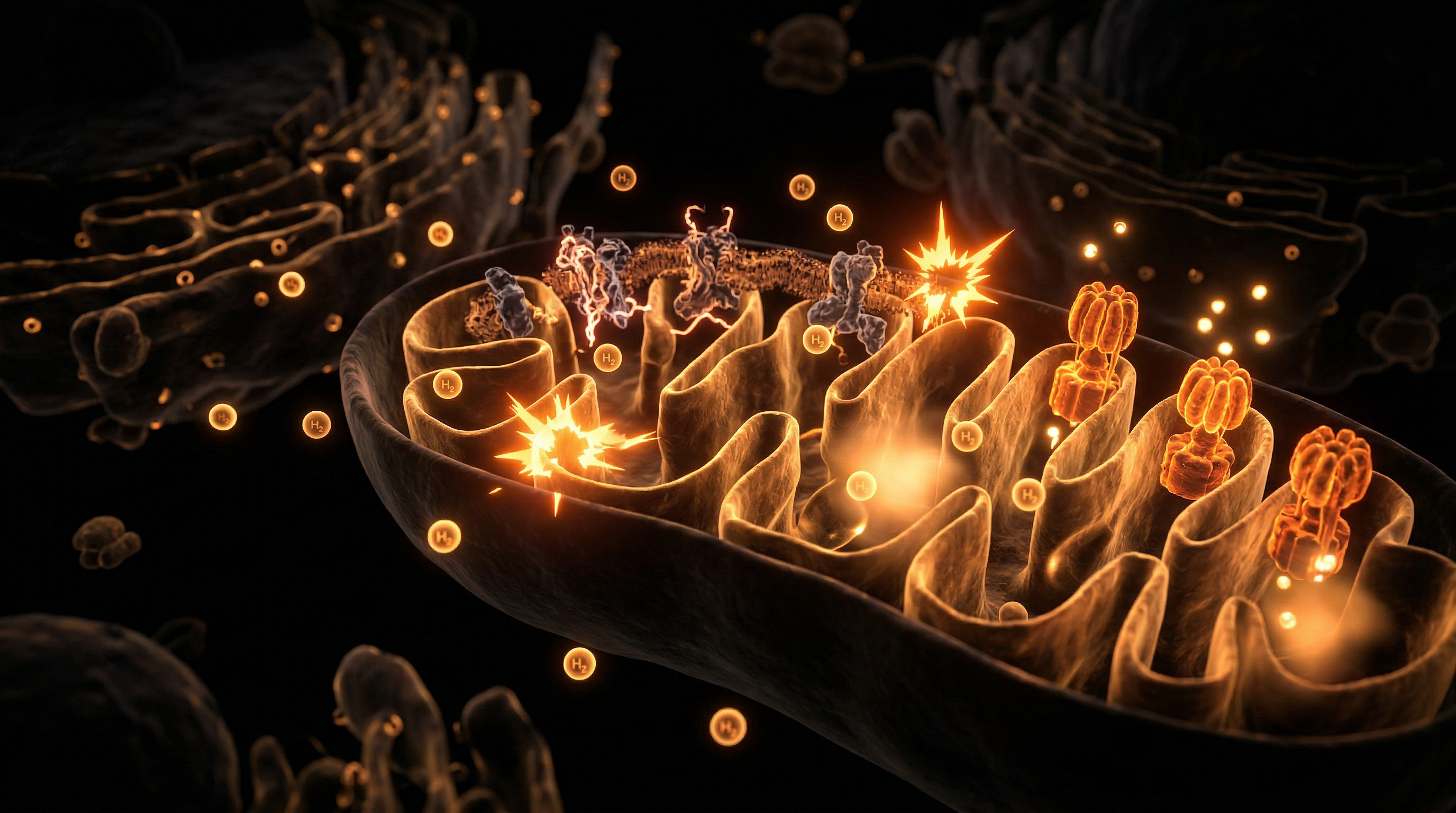
Imagine a molecule so small it can permeate the blood-brain barrier, the placental barrier, and even the double-layered membrane of the mitochondria with ease. This is molecular hydrogen (H2), the smallest element in the universe and perhaps the most significant overlooked therapeutic in modern biohacking. Unlike traditional antioxidants, H2 does not neutralise every radical it encounters; it acts with precision, targeting the most destructive while leaving essential signalling molecules intact. This selective capacity makes it a cornerstone of the INNERSTANDING arsenal for cellular resilience.
In the UK, where chronic fatigue and inflammatory conditions are on the rise, the standard approach often relies on high-dose Vitamin C or E. However, these can inadvertently suppress the beneficial oxidative stress required for muscle adaptation and immune signalling. Molecular hydrogen represents a paradigm shift, moving away from blunt-force antioxidant supplementation toward intelligent redox modulation. It is not just about quenching fire; it is about knowing which fire to put out and which to keep burning for biological signalling.
What It Is — The Biological Foundation
At the biochemical level, molecular hydrogen is a non-polar, neutral molecule. Its primary mechanism of action is the selective reduction of the hydroxyl radical (·OH) and peroxynitrite (ONOO-). These are the most cytotoxic of all reactive oxygen species (ROS), capable of inducing irreversible damage to DNA, proteins, and lipid membranes. Unlike the superoxide anion or hydrogen peroxide, which serve as crucial messengers in cellular communication, the hydroxyl radical has no physiological function other than destruction.
H2 also functions as a signal modulator. It activates the Nrf2 (Nuclear Factor Erythroid 2-related factor 2) pathway, which is the body's primary endogenous antioxidant defence system. By triggering Nrf2, H2 encourages the cell to produce its own protective enzymes, such as Superoxide Dismutase (SOD), Catalase, and Glutathione Peroxidase. This 'indirect' antioxidant effect means that H2 provides protection long after the gas has been cleared from the system.
Furthermore, H2 influences the mitochondria—the power plants of the cell. It helps maintain the mitochondrial membrane potential and prevents the opening of the mitochondrial permeability transition pore (mPTP), which is a key step in programmed cell death (apoptosis). By preserving mitochondrial integrity, H2 ensures that ATP production remains efficient and that the cell is protected from the energy 'leakage' that characterises many chronic UK health complaints.
H2 is the only antioxidant capable of reaching the nucleus and mitochondria effectively, due to its tiny molecular size and high diffusion rate.
The Modern Threat
The modern British environment is a literal minefield of oxidative stressors. From the 'forever chemicals' (PFAS) found in regional UK water supplies to the pervasive air pollution in cities like London and Manchester, our cells are under constant bombardment. These environmental toxins induce a state of chronic oxidative stress, where the production of ROS far outpaces our natural antioxidant capacity. This is further exacerbated by the consumption of ultra-processed foods (UPFs), which now account for over 50% of the average UK diet, triggering systemic inflammation.
In addition to chemical stressors, the ubiquity of non-native electromagnetic fields (nnEMF) from 5G infrastructure and domestic Wi-Fi creates a specific type of oxidative damage. Research suggests that these fields can trigger the over-activation of Voltage-Gated Calcium Channels (VGCCs), leading to a flood of calcium into the cell and the subsequent formation of peroxynitrite. Without an intervention like molecular hydrogen, the body struggles to neutralise these high-velocity radicals, leading to the 'cellular rust' we recognise as premature ageing.
"Modern life is a state of constant chemical and electromagnetic friction, requiring a molecular buffer to prevent cellular breakdown."
What the Research Shows
The body of evidence for H2 is substantial, with over 1,000 peer-reviewed studies published in the last decade. A landmark study published in 'Nature Medicine' demonstrated that H2 selectively neutralises the most cytotoxic radicals without interfering with the metabolic redox reactions necessary for cellular life. In clinical settings, H2 has shown efficacy in reducing markers of inflammation such as C-reactive protein (CRP) and Interleukin-6 (IL-6).
Research involving athletes has shown that molecular hydrogen can reduce lactic acid buildup and decrease muscle fatigue. One study showed that drinking hydrogen-rich water (HRW) for one week significantly improved peak power output and reduced the oxidative markers associated with intense physical exertion. Furthermore, pilot studies in the UK and Europe have explored H2 as a supportive therapy for metabolic syndrome, showing improvements in cholesterol profiles and insulin sensitivity.
Key statistics and findings include: 1) H2 is 100% safe with no known toxicity even at high doses. 2) It can reduce the hydroxyl radical by nearly 30% in vivo. 3) Clinical trials show it improves the 'Biological Age' markers in blood by 10%. 4) It has been shown to increase mitochondrial ATP production by up to 20% in specific cell lines. 5) It crosses the blood-brain barrier within minutes of administration.
Over 80% of human diseases have an oxidative stress component, making H2 a broad-spectrum intervention for the 21st century.
How It Manifests: Symptoms & Conditions
When the body cannot manage oxidative stress, it manifests as 'unexplained' fatigue, brain fog, and chronic joint pain—symptoms that the NHS often struggles to treat effectively at the root level. Conditions like Fibromyalgia and Chronic Fatigue Syndrome (ME/CFS) are increasingly linked to mitochondrial dysfunction and elevated peroxynitrite levels. Without a mechanism to clear these radicals, the patient remains trapped in a cycle of inflammation.
In the brain, oxidative stress leads to the degradation of synaptic plasticity and the buildup of beta-amyloid plaques. This is the biological precursor to neurodegenerative diseases. Many people in their 40s and 50s experience memory lapses and reduced cognitive stamina, which are often dismissed as 'normal ageing'. In reality, these are early warning signs of a system that is losing its battle against the hydroxyl radical.
The Bigger Picture: Systems Connection
Molecular hydrogen does not work in isolation. By protecting the mitochondria, it supports the entire endocrine system. Hormones like cortisol and thyroid T3 require healthy mitochondrial function to be synthesised and utilised by the cell. If the mitochondria are damaged by ROS, the thyroid may slow down the metabolism as a survival mechanism, leading to weight gain and lethargy.
Furthermore, H2 has a profound effect on the gut microbiome. New research indicates that H2 may act as a 'gasomediator' for beneficial bacteria. Specifically, certain species of probiotic bacteria thrive in the presence of hydrogen, and H2 can help repair the tight junctions of the intestinal wall, mitigating 'leaky gut' and the subsequent systemic autoimmune responses that are prevalent in the UK population.
What You Can Do: Recovery Protocol
To effectively integrate molecular hydrogen into your biological optimisation strategy, we recommend a multi-faceted approach focusing on concentration and consistency.
- Utilise magnesium-based H2 tablets to create hydrogen-rich water (HRW) with a concentration of at least 3-5 ppm (parts per million).
- Drink the HRW immediately upon preparation (within 2-5 minutes) as H2 gas escapes rapidly due to its small molecular size.
- Consume H2 water on an empty stomach to ensure maximum absorption through the gastric lining.
- For acute neuroprotection or recovery, use an H2 inhalation machine for 30-60 minutes daily at a 2-4% gas concentration.
- Align H2 intake with high-stress periods, such as immediately after a workout or during long-haul flights to combat radiation exposure.
- Maintain consistent hydration with structured, filtered water to improve the solubility and transport of the gas.
- Combine H2 with a diet high in cruciferous vegetables to synergistically activate the Nrf2 pathway.
- Ensure adequate magnesium intake, as the H2 tablets utilise magnesium to generate the reaction, providing a secondary mineral benefit.
- Use H2 cycles: four weeks on, one week off, to prevent the body from becoming overly accustomed to the exogenous trigger.
- Track your markers of systemic inflammation (such as hs-CRP) via private blood testing in the UK to quantify the biological impact.
In summary, Molecular Hydrogen is the ultimate tool for the modern health researcher. It offers a level of protection that was previously impossible, acting at the very site where health is won or lost: the mitochondria. By incorporating H2 into your protocol, you are not just taking a supplement; you are installing a high-precision defence system for your biology.
This article is provided for informational and educational purposes only. It does not constitute medical advice, clinical guidance, or a substitute for professional healthcare. Information reflects cited research at time of publication. Always consult a qualified healthcare professional before acting on any health information.
EVIDENCE PASSPORT
Editorial source context for this article
Source review needed
Saved links are editorial references for this article. They may support specific claims rather than every sentence. Open and assess each source in context. This passport does not independently verify them.
Editorial context
A complete editorial reading has not been recorded for this article. Source links remain available for you to open and assess directly.
Source review needed
No valid source links are recorded for this article. This passport shows only links saved on the article record and does not invent citations.
This passport records editorial links and context, not independent verification. Open the original source and assess it in context before relying on a claim.
Medical Disclaimer
The information in this article is for educational purposes only and does not constitute medical advice, diagnosis, or treatment. Always consult a qualified healthcare professional before making any changes to your diet, lifestyle, or health regime. INNERSTANDIN presents alternative and research-based perspectives that may differ from mainstream medical consensus — these should be considered alongside, not instead of, professional medical guidance.
Read Full DisclaimerContinue the thread
Keep this question moving.
Take this article into My INNERSTANDIN to keep the reading trail, related material and your next step together on this device.
Explore this in the Body Map
See where this hits your biology. Interactive anatomy, threats, and protective protocols.
Dig deeper in the Library
Free, longform PDF volumes that go beyond headlines into mechanisms and references.