
Molecular Mimicry: Cross-Reactivity Between Vaccine Antigens and Human Tissue
Updated May 2026
Investigating how certain vaccine peptides may share structural similarities with human proteins. This mechanism is analyzed as a potential driver for post-vaccination autoimmunity.
Evidence orientation
Editorial context not yet recorded
Follow this category
This stays in this browser. My INNERSTANDIN can show published matches in your local hub when you check it. It does not send email, push, or alert notifications.
Local learning review
A private browser aid for revisiting ideas. It is not an alert or a health recommendation.
Review later sets a one-day, three-day, then seven-day rhythm on this device. Choose it only when you want to revisit this article.
Overview
The immune system is arguably the most sophisticated defensive apparatus in the known biological world. It is designed to distinguish, with surgical precision, between "self" and "non-self." Under normal physiological conditions, this system protects the host from an infinite array of pathogens while maintaining a state of immunological tolerance toward the body's own tissues. However, when this boundary is blurred, the results are catastrophic. One of the most insidious mechanisms by which this boundary is breached is known as molecular mimicry.
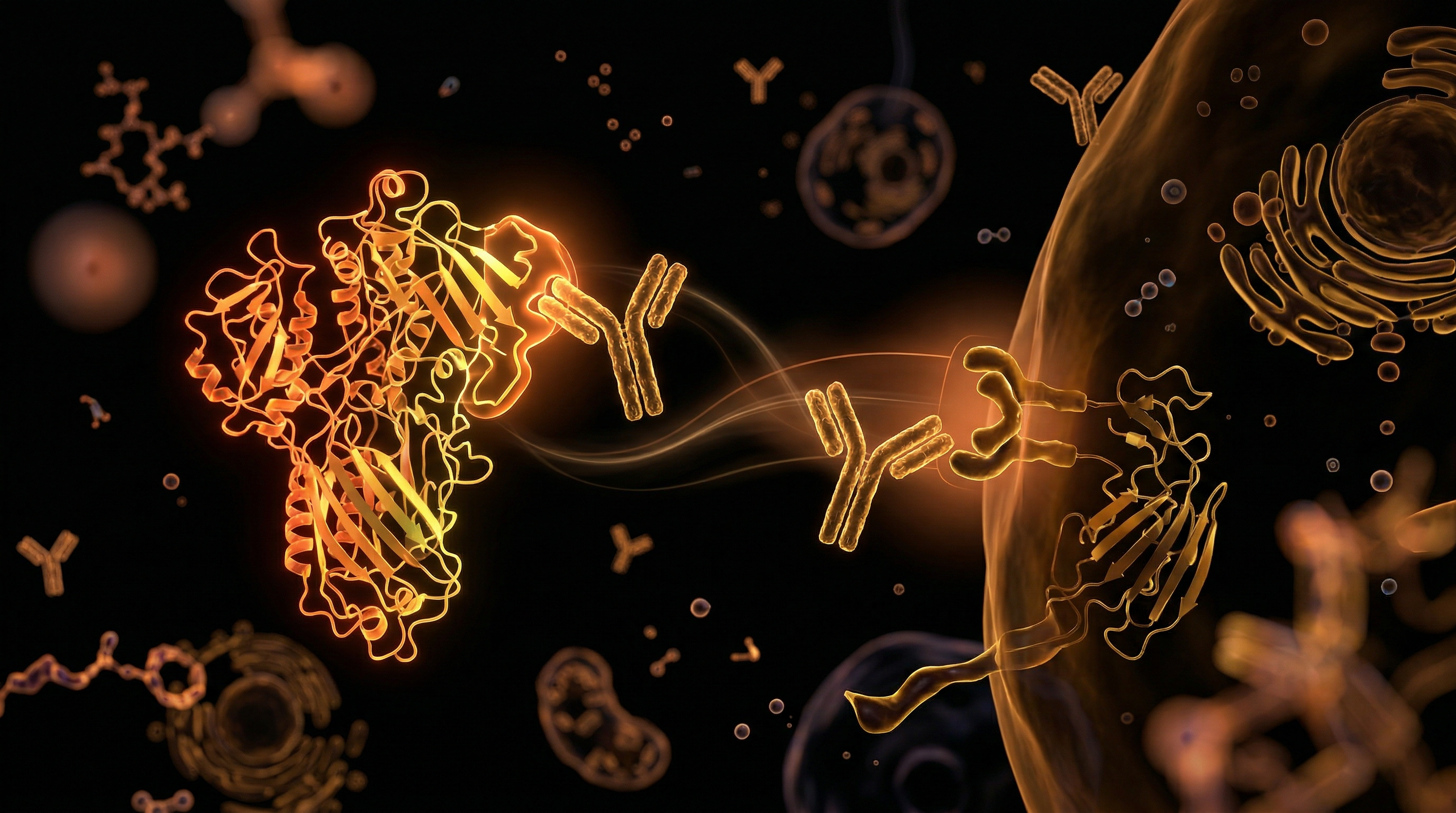
Molecular mimicry occurs when a foreign antigen—such as a viral protein or a vaccine-derived peptide—shares structural similarities with human proteins. When the immune system mounts an attack against these foreign invaders, it may inadvertently "cross-react" with the host’s own tissues, leading to a cascade of self-destruction. This phenomenon is not merely a theoretical curiosity; it is a foundational pillar in the study of autoimmunity.
In the context of modern vaccinology, the concept of molecular mimicry challenges the "one size fits all" dogma. While vaccines are designed to elicit a robust immune response, the choice of antigens often ignores the high degree of peptide homology between microbial sequences and the human proteome. As we delve into the molecular architecture of these interactions, we find that the "biological mirror" created by these shared sequences may be driving the global rise in chronic autoimmune conditions, ranging from multiple sclerosis to idiopathic thrombocytopenic purpura.
This article serves as a deep-dive investigation into the molecular cross-talk that occurs beneath the surface of the skin following injection. We will explore how the structural mimicry of peptides, amplified by potent adjuvants, can override the body’s natural checkpoints, leading to a state of permanent "friendly fire" within the human organism.
##
The Biology — How It Works
At its core, the immune system communicates through a language of shapes. Proteins are composed of chains of amino acids; these chains fold into complex three-dimensional structures. The specific sections of these proteins that the immune system recognises are called epitopes.
Sequence Homology and Structural Similarity
The primary driver of molecular mimicry is sequence homology—the occurrence of identical or near-identical amino acid sequences in two different proteins. Research in the field of peptidomics, spearheaded by scholars such as Dr. Darja Kanduc and Dr. Yehuda Shoenfeld, has revealed a startling reality: many pathogens (and the vaccine antigens derived from them) share short sequences of amino acids (pentapeptides, hexapeptides, etc.) with human proteins.
- Linear Mimicry: A specific string of amino acids in a vaccine antigen matches a string in a human protein (e.g., a sequence of five amino acids in the SARS-CoV-2 spike protein matching a sequence in human lung surfactant).
- Conformational Mimicry: Even if the linear sequence differs slightly, the way the protein folds can create a three-dimensional surface that "looks" the same to an antibody.
The Problem of Shared Pentapeptides
Statistically, the probability of a five-amino-acid sequence (a pentapeptide) occurring by chance in both a virus and the human proteome is high. While the mainstream narrative suggests these similarities are too small to be significant, immunological data indicates otherwise. The human immune system is incredibly sensitive; even a small degree of cross-reactivity can initiate a lifelong autoimmune process if the conditions are right.
Callout Fact: Research has shown that the human proteome contains millions of overlaps with viral and bacterial sequences. For example, the Hepatitis B surface antigen shares significant homology with myelin basic protein, a key component of the human nervous system.
The Breaking of Self-Tolerance
The body has "checkpoints" in the thymus and bone marrow designed to eliminate immune cells that react to self-proteins. This is known as central tolerance. However, molecular mimicry bypasses this by introducing a foreign "lookalike." The immune system is trained to attack the vaccine antigen, but because the antigen looks so much like a human protein, the newly minted "effector cells" begin to target the body's own organs.
##
Mechanisms at the Cellular Level
To understand how molecular mimicry leads to clinical disease, we must zoom in on the cellular interactions involving T-cells, B-cells, and Antigen-Presenting Cells (APCs).
T-Cell Receptor (TCR) Cross-Reactivity
T-cells are the "generals" of the immune response. They recognise antigens presented on the surface of cells by molecules called MHC (Major Histocompatibility Complex). In a molecular mimicry scenario, a T-cell that was activated by a vaccine peptide finds a similar peptide on a healthy human cell. Because the T-cell cannot distinguish between the two, it releases cytotoxic granules or inflammatory cytokines, destroying the healthy tissue.
B-Cell Activation and Autoantibody Production
B-cells produce antibodies. When a B-cell encounters an antigen that mimics a self-protein, it may produce autoantibodies. These antibodies then circulate throughout the bloodstream, binding to organs, joints, or nervous tissue, marking them for destruction by other parts of the immune system (such as the complement system or macrophages).
Epitope Spreading: The Expanding Fire
One of the most dangerous aspects of vaccine-induced mimicry is epitope spreading. Initially, the immune response might be limited to a single shared peptide. However, as the immune system destroys the target tissue, it releases "hidden" proteins that were previously sequestered inside the cell. The immune system then learns to attack these new proteins as well.
- Intramolecular Spreading: The immune response spreads to other parts of the same protein.
- Intermolecular Spreading: The immune response spreads to entirely different proteins in the same organ.
Bystander Activation
When a vaccine is injected, it creates an intensely inflammatory environment. This "noise" can cause bystander activation, where dormant self-reactive T-cells—which were previously suppressed—are suddenly woken up and stimulated to attack. This is not strictly mimicry, but it often acts in synergy with mimicry to accelerate the autoimmune cascade.
Statistic: It is estimated that up to 30% of the population carries "autoreactive" T-cells that are kept in check by the immune system. The introduction of a mimicking antigen combined with a potent adjuvant can be the "trigger" that activates these cells for the first time.
##
Environmental Threats and Biological Disruptors
Molecular mimicry does not occur in a vacuum. The internal and external environment of the individual plays a massive role in whether a shared peptide sequence will actually trigger a disease state.
Adjuvants: The Immunological "Match"
The most significant biological disruptor in this context is the adjuvant, typically aluminium salts. Because vaccine antigens are often not "scary" enough to wake up the immune system on their own, adjuvants are added to provoke an intense inflammatory response.
- Adjuvants bypass the natural "slow" recognition of the immune system.
- They create a "danger signal" that forces the body to pay attention to the antigen.
- This forced activation often breaks the "brakes" of the immune system, making it far more likely that a cross-reactive event will lead to a full-blown autoimmune disorder.
ASIA Syndrome
This phenomenon has been codified as ASIA (Autoimmune/Inflammatory Syndrome Induced by Adjuvants). ASIA describes a cluster of conditions where the adjuvant acts as the catalyst for molecular mimicry, leading to symptoms such as chronic fatigue, cognitive impairment, and specific autoimmune diseases like lupus or rheumatoid arthritis.
The Role of the Microbiome and Gut Permeability
The state of the gut (the "second brain") is crucial. A compromised gut barrier, or leaky gut, allows for the systemic circulation of environmental toxins and undigested proteins. This puts the immune system on "high alert." If a person with high levels of systemic inflammation receives a vaccine containing mimicking peptides, the likelihood of a cross-reactive event is exponentially increased.
Genetic Predisposition: The HLA Factor
The Human Leukocyte Antigen (HLA) system is the genetic basis for how our bodies present antigens. Certain HLA types are much better at "presenting" mimicking peptides to the immune system.
- Individuals with the HLA-B27 gene, for instance, are at much higher risk for certain autoimmune conditions.
- Without screening individuals for these genetic markers prior to vaccination, we are essentially playing "immunological roulette."
##
The Cascade: From Exposure to Disease
The progression from the moment of injection to the diagnosis of an autoimmune disease is often slow and insidious. This "latency period" is one of the reasons why the link between vaccines and mimicry is so often overlooked by clinical medicine.
Phase 1: The Initial Insult
Upon injection, the antigen and adjuvant are taken up by dendritic cells. If the antigen contains a sequence mimicking, for example, myelin basic protein (MBP), the immune system begins creating a "hit list" for that sequence.
Phase 2: The Silent Phase
For weeks, months, or even years, the immune system may be slowly "nibbling" away at the target tissue. There are no outward symptoms, but autoantibodies can often be detected in the blood during this phase. This is known as the pre-clinical phase of autoimmunity.
Phase 3: The Tipping Point
Eventually, the damage becomes too great for the body to compensate. The threshold of tissue destruction is crossed, and clinical symptoms appear.
- Neurological Mimicry: If the target is the nervous system, the result may be Guillain-Barré Syndrome (GBS) or Transverse Myelitis.
- Cardiovascular Mimicry: If the target is the heart tissue (such as alpha-myosin), the result is Myocarditis or Pericarditis.
- Endocrine Mimicry: If the target is the thyroid or pancreas, the result may be Hashimoto's Thyroiditis or Type 1 Diabetes.
Case Study: Narcolepsy and the H1N1 Vaccine
A landmark example of molecular mimicry occurred with the Pandemrix H1N1 vaccine. It was discovered that a portion of the influenza nucleoprotein in the vaccine mimicked the hypocretin receptor 2 in the brain. For individuals with a specific genetic susceptibility, the vaccine triggered the destruction of hypocretin-producing neurons, leading to permanent narcolepsy. This case stands as a "smoking gun" for the dangers of peptide homology in vaccine design.
Callout: The latency between vaccination and the onset of autoimmune symptoms can range from 2 weeks to over 10 years, making traditional short-term safety trials almost useless for detecting these effects.
##
What the Mainstream Narrative Omits
The refusal of regulatory bodies and pharmaceutical manufacturers to address molecular mimicry is perhaps the most concerning aspect of modern public health.
The Failure of Pre-Clinical Screening
In the age of high-speed supercomputing, it is entirely possible to screen every proposed vaccine antigen against the entire human proteome. We could identify, with high precision, which sequences are likely to cause cross-reactivity. Yet, this "peptidomic screening" is not a standard part of the regulatory approval process. Why?
- Cost and Complexity: Acknowledging mimicry would require a fundamental redesign of most vaccines.
- Liability: Admitting that a vaccine antigen is structurally similar to human tissue would open the floodgates for legal challenges.
The "One Size Fits All" Fallacy
Mainstream medicine treats every human immune system as a blank, identical slate. It ignores:
- Epigenetic variations.
- Existing "autoimmune burdens" (the total load of self-reactive antibodies).
- Nutritional status, which dictates the robustness of immune "brakes" (like T-regulatory cells).
The Corruption of the "Gold Standard"
Clinical trials for vaccines rarely use a "true placebo" (an inert substance like saline). Instead, they use the adjuvant-only solution as the control. This masks the autoimmune signals because both the "test" group and the "control" group are subjected to the same immunological disruptor (the adjuvant), which can trigger its own set of mimicry-related issues.
The Suppression of Research
Scientists who publish on the "dark side" of molecular mimicry often find themselves facing professional repercussions. The work of Dr. Yehuda Shoenfeld, who has published over 1,500 papers and is considered the "father of autoimmunity," has frequently been sidelined by mainstream public health agencies when it touches on vaccine-induced ASIA.
##
The UK Context
In the United Kingdom, the approach to vaccine-induced autoimmunity and molecular mimicry is particularly rigid. The National Health Service (NHS) and the Medicines and Healthcare products Regulatory Agency (MHRA) maintain a stance that the benefits of mass vaccination always outweigh the risks, an outlook that often leaves those "injured by the science" in a bureaucratic vacuum.
The Vaccine Damage Payment Scheme (VDPS)
The UK government operates the VDPS, a one-off payment of £120,000 for those "severely disabled" by a vaccine. However, the criteria are notoriously difficult to meet:
- The claimant must prove 60% disability.
- Causation must be "proven," yet the MHRA rarely acknowledges molecular mimicry as a valid mechanism for causation in legal proceedings.
- As of 2023, there is a massive backlog of thousands of claims related to recent "emergency use" products, many of which involve conditions clearly linked to molecular mimicry (such as VITT or Myocarditis).
The Rise of Chronic Illness in Britain
The UK has seen a steady rise in autoimmune conditions over the last three decades. While factors like diet and "The Hygiene Hypothesis" are frequently blamed, the escalating vaccine schedule—which introduces more and more diverse antigens and adjuvants to infants—is rarely scrutinised as a primary driver of this trend.
Lack of Specialised Care
British patients suffering from vaccine-induced cross-reactivity often find themselves shuffled between specialists (neurologists, rheumatologists, cardiologists) who treat the symptoms but do not understand the mechanism. There is a desperate lack of clinical immunologists in the UK who are trained to recognise and treat ASIA or molecular mimicry-driven pathologies.
Callout Fact: In the UK, the "Yellow Card" system for reporting adverse events is estimated to capture only 1% to 10% of actual occurrences, leading to a massive underestimation of the true scale of autoimmune cross-reactivity.
##
Protective Measures and Recovery Protocols
If the biological reality is that we are being exposed to mimicking peptides, how can we protect ourselves? And for those already suffering from cross-reactivity, is there a path back to health?
Pre-Vaccination Screening (The Precision Approach)
Before any medical intervention, individuals should demand:
- HLA Typing: To see if they possess genetic markers that make them high-risk for certain mimicry events.
- Autoantibody Panels: To check if the immune system is already "primed" for autoimmunity.
- Nutritional Assessment: Ensuring adequate levels of Zinc, Selenium, and Vitamin D3—all of which are essential for maintaining immune tolerance.
Fortifying the "Brakes": T-Regulatory Cells
The primary defense against molecular mimicry is the T-regulatory (Treg) cell. These cells act as the "police" of the immune system, shutting down self-reactive attacks.
- Vitamin D3: High-dose Vitamin D is essential for Treg cell function.
- Omega-3 Fatty Acids: High-quality fish oils help modulate the inflammatory response and support the cell membrane.
- Glutathione: The master antioxidant helps protect cells from the "oxidative burst" that occurs during an immune attack.
Reducing the "Total Toxic Load"
To prevent the "perfect storm" of autoimmunity, one must reduce other environmental triggers:
- Avoiding Glyphosate: Which compromises the gut barrier.
- Heavy Metal Detoxification: Specifically targeting the removal of aluminium, which can persist in the body and provide a "long-term signal" for inflammation.
- Silica-Rich Water: Some research suggests that drinking water high in orthosilicic acid can help the body excrete aluminium.
Biological Recovery Protocols
For those already in a state of cross-reactivity, the goal is immunomodulation, not just immunosuppression.
- Low-Dose Naltrexone (LDN): Often used to "re-balance" the immune system and increase Treg cell activity.
- Proteolytic Enzymes: Taken on an empty stomach, these can help break down circulating immune complexes (antigen-antibody bundles).
- Anti-Inflammatory Diets: (e.g., Carnivore, AIP, or Keto) aimed at removing all potential "mimicking" food antigens (like gluten or casein) to let the immune system rest.
##
Summary: Key Takeaways
The science of molecular mimicry reveals that the human body is not a machine that can be endlessly programmed with foreign codes without consequence. The structural similarities between vaccine antigens and our own proteins represent a fundamental biological risk that has been systematically downplayed by the pharmaceutical industry.
- Mimicry is structural: It is based on shared amino acid sequences (peptides) between pathogens and the human proteome.
- Adjuvants are catalysts: They provide the "danger signal" that breaks the body’s natural self-tolerance.
- The damage is often delayed: Autoimmune conditions can take years to manifest, making them difficult to link to a specific exposure in a clinical setting.
- Current safety standards are inadequate: There is no requirement for manufacturers to screen for human-homologous sequences before bringing a product to market.
- The UK system is failing victims: Regulatory capture and a lack of clinical understanding have left many UK citizens without recourse or proper treatment.
As we move further into the era of "precision medicine," we must demand that immunology reflects the actual complexity of the human organism. We are not merely statistics in a public health model; we are complex biological systems where even a five-amino-acid overlap can mean the difference between health and a lifetime of chronic illness. Knowledge of these molecular mechanisms is the first step toward true medical autonomy and the protection of our biological integrity.
This article is provided for informational and educational purposes only. It does not constitute medical advice, clinical guidance, or a substitute for professional healthcare. Information reflects cited research at time of publication. Always consult a qualified healthcare professional before acting on any health information.
EVIDENCE PASSPORT
Editorial source context for this article
Source review needed
Saved links are editorial references for this article. They may support specific claims rather than every sentence. Open and assess each source in context. This passport does not independently verify them.
Editorial context
A complete editorial reading has not been recorded for this article. Source links remain available for you to open and assess directly.
Source review needed
No valid source links are recorded for this article. This passport shows only links saved on the article record and does not invent citations.
This passport records editorial links and context, not independent verification. Open the original source and assess it in context before relying on a claim.
Medical Disclaimer
The information in this article is for educational purposes only and does not constitute medical advice, diagnosis, or treatment. Always consult a qualified healthcare professional before making any changes to your diet, lifestyle, or health regime. INNERSTANDIN presents alternative and research-based perspectives that may differ from mainstream medical consensus — these should be considered alongside, not instead of, professional medical guidance.
Read Full DisclaimerContinue the thread
Keep this question moving.
Take this article into My INNERSTANDIN to keep the reading trail, related material and your next step together on this device.
Explore this in the Body Map
See where this hits your biology. Interactive anatomy, threats, and protective protocols.
Dig deeper in the Library
Free, longform PDF volumes that go beyond headlines into mechanisms and references.