
Myocellular Clocks: How Nutrient Sensing Regulates Skeletal Muscle Recovery and Maintenance
Updated May 2026
Evidence orientation
Editorial context not yet recorded
Follow this category
This stays in this browser. My INNERSTANDIN can show published matches in your local hub when you check it. It does not send email, push, or alert notifications.
Local learning review
A private browser aid for revisiting ideas. It is not an alert or a health recommendation.
Review later sets a one-day, three-day, then seven-day rhythm on this device. Choose it only when you want to revisit this article.
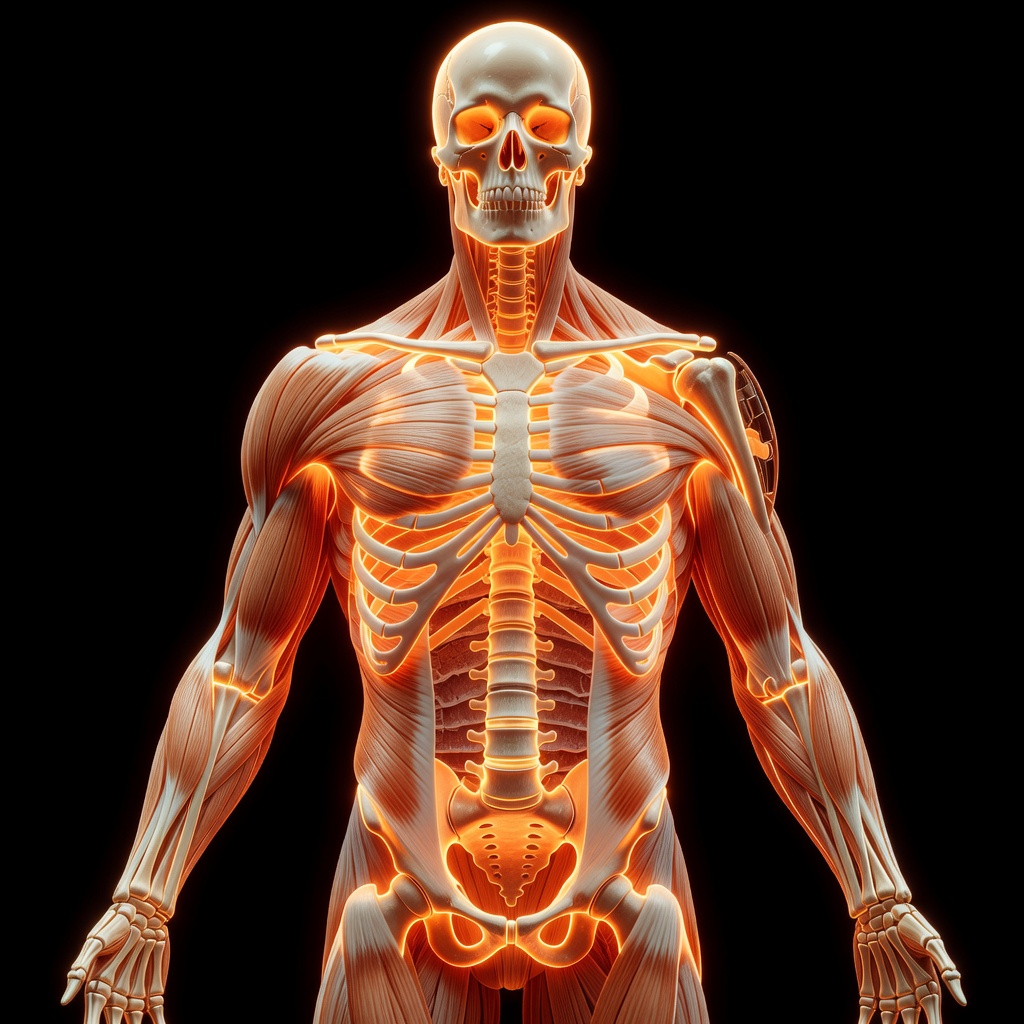
For decades, the health and fitness industry has been obsessed with the 'what' and the 'how much' of nutrition. We have been conditioned to count calories, track macros, and measure grams of protein with obsessive precision. Yet, in our quest for physical excellence and metabolic longevity, we have overlooked the most critical dimension of biology: Time.
The emergence of Circadian Nutrition has exposed a profound truth: our bodies are not static metabolic furnaces. Instead, we are a symphony of biological rhythms governed by internal timers known as Circadian Clocks. While the brain houses the master clock, every cell in our musculoskeletal system contains its own independent "watch"—the Myocellular Clock. These clocks dictate when our muscles repair, when they grow, and when they burn fat. When we ignore these rhythms through late-night eating and erratic schedules, we invite a state of chronic "metabolic jetlag" that accelerates muscle wasting and metabolic decay.
The Architecture of the Myocellular Clock
At the heart of every muscle fibre lies a molecular oscillator. This is not a metaphorical concept; it is a literal genetic mechanism. The Myocellular Clock is composed of a core set of transcription factors—primarily BMAL1, CLOCK, PER, and CRY—that operate in a feedback loop lasting approximately 24 hours.
These genes do not merely tell time; they regulate approximately 15% of the skeletal muscle transcriptome. This means that the instructions for protein synthesis, mitochondrial biogenesis, and glucose transport are not "always on." They are programmed to peak and trough at specific times of the day.
The Central vs. Peripheral Conflict
The Suprachiasmatic Nucleus (SCN) in the brain is the conductor, synced primarily by light. However, skeletal muscle—the body’s largest metabolic organ—is a Peripheral Clock. While it listens to the conductor, it is uniquely sensitive to "Zeitgebers" (time-givers) other than light. The most powerful of these for the muscle is Nutrient Sensing.
"Skeletal muscle is not a passive tissue; it is a highly temporal metabolic engine. When we eat at the wrong biological time, we create a 'phase shift' where the muscle’s clock uncouples from the brain’s clock, leading to a state of internal physiological chaos."
Biological Mechanisms: The Nexus of mTOR and AMPK
To understand how nutrient sensing regulates muscle, we must look at the two primary "fuel gauges" of the cell: mTORC1 (the growth switch) and AMPK (the energy-sensing switch).
1. The Anabolic Window of the Clock
mTORC1 (mechanistic Target of Rapamycin Complex 1) is the primary driver of Muscle Protein Synthesis (MPS). Emerging research shows that mTORC1 activity is inherently rhythmic. In a healthy, synchronised state, the muscle is naturally more sensitive to amino acids and insulin during the daylight hours. When we consume protein during our biological day, the myocellular clock enhances the efficiency of mTORC1, leading to superior muscle repair and maintenance.
2. AMPK and Mitochondrial Integrity
Conversely, AMPK (Adenosine Monophosphate-activated Protein Kinase) is activated during periods of fasting. AMPK triggers autophagy—the cellular "housecleaning" process that removes damaged proteins and dysfunctional mitochondria. For skeletal muscle to remain functional, it must cycle through these phases. Constant grazing inhibits AMPK, preventing the muscle from clearing out metabolic waste, which eventually leads to Insulin Resistance and Sarcopenia (age-related muscle loss).
3. The Role of BMAL1 in Muscle Fibre Integrity
The gene BMAL1 is the linchpin of the muscle clock. Studies have shown that when BMAL1 is genetically deleted in skeletal muscle, the result is profound: muscles become weak, mitochondria become fragmented, and the tissue undergoes premature ageing. Nutrient sensing—specifically the timing of glucose and amino acid availability—directly influences BMAL1 expression.
##
The UK Context
: A Sarcopenia Crisis in the Making
In the United Kingdom, we are facing a silent epidemic of physical frailty. The NHS spends billions annually treating the complications of falls and fractures in the elderly, much of which is rooted in Sarcopenia.
Modern British life is diametrically opposed to our evolutionary circadian blueprint. We are a nation of:
- Late-Night Snackers: The average Briton consumes a significant portion of their calories after 8:00 PM, a time when the muscle's insulin sensitivity is naturally declining.
- Shift Workers: Millions of essential workers in the UK operate on schedules that completely desynchronise the myocellular clock from the central SCN.
- Indoor Dwellers: Lack of bright morning light exposure weakens the central clock, making the peripheral muscle clocks more susceptible to the disruptive effects of late-night feeding.
The traditional British "three meals a day plus snacks" model, often extending from 7:00 AM to 11:00 PM, leaves the skeletal muscle in a state of perpetual nutrient-sensing "noise," with no time for the essential catabolic repair processes.
Environmental Factors: The Disruptors of Myocellular Rhythm
The myocellular clock is under constant assault from the modern environment. To protect our muscle mass, we must identify these "Circadian Disruptors."
- Blue Light Exposure: Exposure to artificial blue light (phones, televisions) in the evening suppresses melatonin. Melatonin is not just a sleep hormone; it is a potent antioxidant that helps regulate mitochondrial function in muscle cells.
- Ultra-Processed Foods (UPFs): UPFs cause exaggerated glucose spikes that overwhelm the muscle's nutrient-sensing pathways, causing a "blunting" effect on the clock genes.
- Sedentary Behaviour: Muscle contraction itself is a Zeitgeber. Without movement, the myocellular clock loses its "amplitude," becoming weak and easily disrupted by erratic eating patterns.
- Thermal Monotony: We live in climate-controlled environments. Evolutionary exposure to temperature fluctuations helped entrain metabolic rhythms. Constant warmth contributes to "lazy" mitochondria.
Protective Strategies: Realigning Your Myocellular Clock
Achieving Innerstanding of your biology requires moving beyond "how much" you eat to "when" you eat. Here are the authoritative strategies for synchronising your muscle clocks for optimal recovery and maintenance.
1. Implement Time-Restricted Eating (TRE)
Adopting a 16:8 or 14:10 TRE window is the most effective way to entrain the myocellular clock. By restricting nutrient intake to a specific period (ideally aligned with daylight), you allow AMPK to rise and initiate the cellular repair necessary for muscle longevity.
- The Golden Rule: Aim to finish your last meal at least 3-4 hours before sleep. This prevents the "clash" between nutrient sensing and the body's nocturnal repair mode.
2. Protein Pacing and Circadian Loading
Not all protein intake is equal. To support the myocellular clock:
- Front-load Protein: Consuming a high-protein breakfast helps "set" the clock for the day, providing the amino acids needed for repair when mTORC1 sensitivity is highest.
- Avoid Late-Night Protein Shakes: While popular in bodybuilding circles, late-night protein consumption can disrupt the nocturnal autophagy phase of the muscle.
3. Chrono-Exercise: Timing Your Movement
Exercise is a powerful reset button for the muscle clock.
- Morning/Afternoon Training: Training during the biological day reinforces the circadian rhythm.
- Consistency over Intensity: Training at the same time each day helps the myocellular clock "anticipate" the metabolic demand, improving nutrient partitioning and recovery.
4. Light Hygiene
Protect your muscle's mitochondria by protecting your eyes.
- Seek 20 minutes of natural morning light to anchor the central clock.
- Use red-light filters or "blue blockers" after sunset to prevent the suppression of melatonin, ensuring the muscle can enter its restorative "night mode."
Key Takeaways: The Truth About Muscle Longevity
The health of your skeletal muscle is the single best predictor of how well you will age. It is your "metabolic body armour." To maintain this armour, you must respect the Myocellular Clock.
- Muscle is a Timekeeper: Every muscle cell has a genetic clock (BMAL1/CLOCK) that regulates its metabolism and repair.
- When Matters More Than What: Nutrient sensing through mTOR and AMPK is the primary way our muscles stay in sync with the environment.
- The Grazing Trap: Constant eating prevents muscle autophagy, leading to "clogged" cells and metabolic dysfunction.
- TRE is the Solution: Time-Restricted Eating is not just a weight-loss tool; it is a fundamental requirement for circadian alignment and muscle maintenance.
- Synchrony is Strength: When your light exposure, exercise, and feeding patterns are aligned, your muscles recover faster, stay stronger, and resist the ravages of time.
"True metabolic health is not found in a pill or a specific diet, but in the harmony between our ancient biological rhythms and our modern lifestyle. Stop eating against the clock, and start living with it."
In the pursuit of INNERSTANDING, we must recognise that we are rhythmic beings in a rhythmic universe. By honouring the myocellular clock, we do more than just build muscle; we preserve the very essence of our physical autonomy and metabolic integrity. The UK's health future depends on our ability to return to these foundational truths of circadian biology.
This article is provided for informational and educational purposes only. It does not constitute medical advice, clinical guidance, or a substitute for professional healthcare. Information reflects cited research at time of publication. Always consult a qualified healthcare professional before acting on any health information.
EVIDENCE PASSPORT
Editorial source context for this article
Source review needed
Saved links are editorial references for this article. They may support specific claims rather than every sentence. Open and assess each source in context. This passport does not independently verify them.
Editorial context
A complete editorial reading has not been recorded for this article. Source links remain available for you to open and assess directly.
Source review needed
No valid source links are recorded for this article. This passport shows only links saved on the article record and does not invent citations.
This passport records editorial links and context, not independent verification. Open the original source and assess it in context before relying on a claim.
Medical Disclaimer
The information in this article is for educational purposes only and does not constitute medical advice, diagnosis, or treatment. Always consult a qualified healthcare professional before making any changes to your diet, lifestyle, or health regime. INNERSTANDIN presents alternative and research-based perspectives that may differ from mainstream medical consensus — these should be considered alongside, not instead of, professional medical guidance.
Read Full DisclaimerContinue the thread
Keep this question moving.
Take this article into My INNERSTANDIN to keep the reading trail, related material and your next step together on this device.
Dig deeper in the Library
Free, longform PDF volumes that go beyond headlines into mechanisms and references.