
The Trojan Horse: How Nanoplastics Weaponise Modern Nutrition
Published April 2026
Exposing the mechanism by which nanoplastics act as vectors for environmental toxins, bypassing natural defenses to deliver poisons directly to the cellular level.
Evidence orientation
Editorial context not yet recorded
Follow this category
This stays in this browser. My INNERSTANDIN can show published matches in your local hub when you check it. It does not send email, push, or alert notifications.
Local learning review
A private browser aid for revisiting ideas. It is not an alert or a health recommendation.
Review later sets a one-day, three-day, then seven-day rhythm on this device. Choose it only when you want to revisit this article.
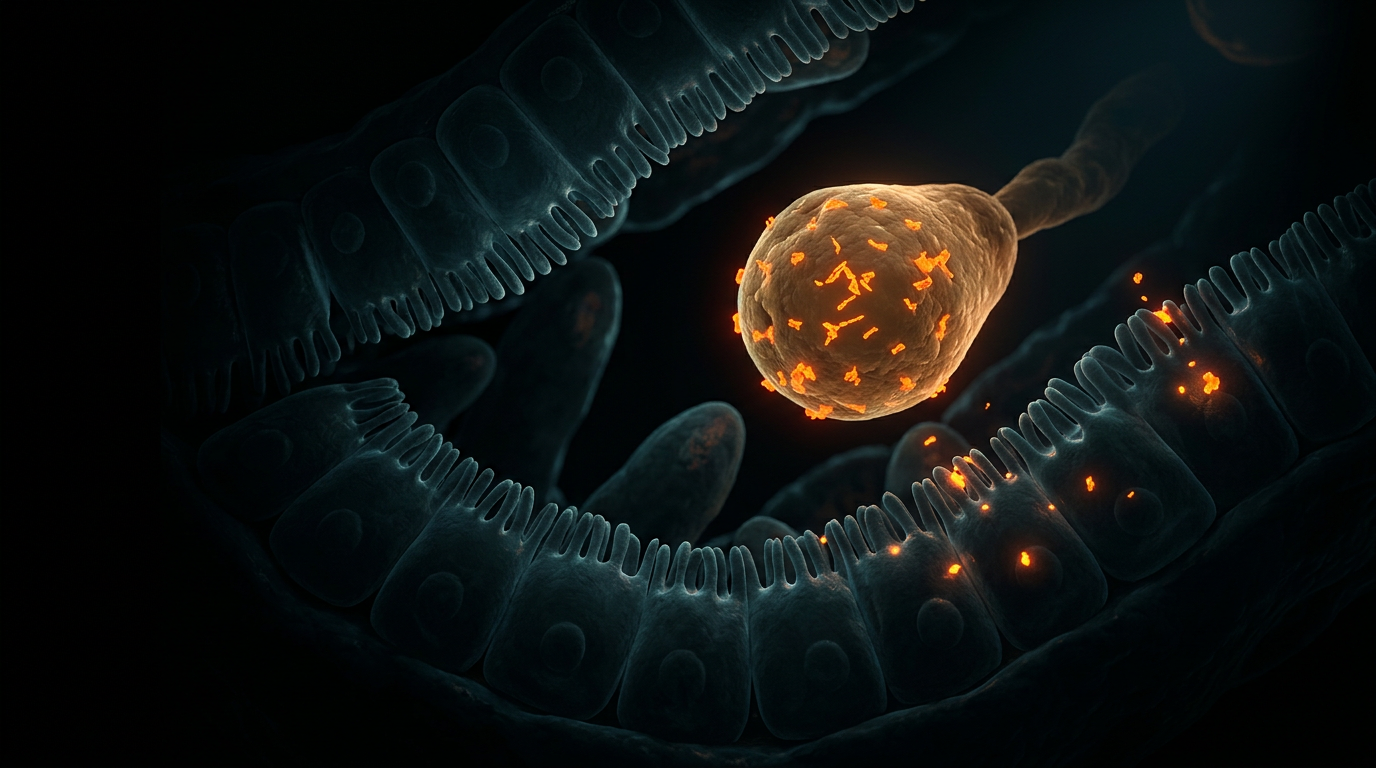
While much of the public discourse focuses on microplastics, it is the even smaller nanoplastics—particles less than 1 micrometer—that pose the most insidious threat to human health. These particles are now ubiquitous in the food chain, found in everything from bottled water to seafood and even salt. Beyond their own inherent toxicity, nanoplastics act as a 'Trojan Horse,' carrying concentrated loads of environmental toxins directly into our cells. Adsorption of Persistent Organic Pollutants: Due to their hydrophobic (water-fearing) surface, nanoplastics act like magnets for other toxins in the environment. Persistent Organic Pollutants (POPs) such as polychlorinated biphenyls (PCBs), dioxins, and various pesticides 'hitch a ride' on the surface of these plastic particles.
When we ingest nanoplastics, we are not just consuming plastic; we are consuming a concentrated cocktail of environmental poisons. In a process known as 'vector transport,' the nanoplastic protects these toxins from the body's initial detoxification attempts in the liver, allowing them to be delivered directly to peripheral tissues where they can do the most damage. Cellular Entry via Endocytosis: One of the most frightening aspects of nanoplastics is their ability to penetrate cell membranes with ease. Through a process called endocytosis, the cell's outer membrane wraps around the plastic particle and pulls it inside. Once inside the cell, nanoplastics can accumulate in organelles like the lysosomes and mitochondria.
This internal 'clutter' disrupts cellular metabolism and can lead to the production of abnormal proteins. Furthermore, because these particles are non-biodegradable, the cell has no way to clear them, leading to a lifelong bio-accumulation that mainstream medicine is only beginning to understand. The Long-Term Epigenetic Cost: Emerging research suggests that the presence of nanoplastics and their associated toxins can influence gene expression without changing the DNA sequence—a field known as epigenetics. This can lead to the 'switching on' of genes associated with inflammation and metabolic syndrome. The investigative reality is that we are the first generation of humans to be exposed to these materials from birth.
To protect our biological integrity, we must look beyond simple plastic avoidance. This involves supporting the body's phase II detoxification pathways through the consumption of cruciferous vegetables and ensuring adequate glutathione levels. It also means advocating for a radical shift in how we package and store our global food supply. The 'Trojan Horse' of nanoplastics requires a multifaceted defense strategy that combines personal dietary choices with a broader awareness of our environmental chemical load.
This article is provided for informational and educational purposes only. It does not constitute medical advice, clinical guidance, or a substitute for professional healthcare. Information reflects cited research at time of publication. Always consult a qualified healthcare professional before acting on any health information.
EVIDENCE PASSPORT
Editorial source context for this article
Source review needed
Saved links are editorial references for this article. They may support specific claims rather than every sentence. Open and assess each source in context. This passport does not independently verify them.
Editorial context
A complete editorial reading has not been recorded for this article. Source links remain available for you to open and assess directly.
Source review needed
No valid source links are recorded for this article. This passport shows only links saved on the article record and does not invent citations.
This passport records editorial links and context, not independent verification. Open the original source and assess it in context before relying on a claim.
Medical Disclaimer
The information in this article is for educational purposes only and does not constitute medical advice, diagnosis, or treatment. Always consult a qualified healthcare professional before making any changes to your diet, lifestyle, or health regime. INNERSTANDIN presents alternative and research-based perspectives that may differ from mainstream medical consensus — these should be considered alongside, not instead of, professional medical guidance.
Read Full DisclaimerContinue the thread
Keep this question moving.
Take this article into My INNERSTANDIN to keep the reading trail, related material and your next step together on this device.
Explore this in the Body Map
See where this hits your biology. Interactive anatomy, threats, and protective protocols.
Dig deeper in the Library
Free, longform PDF volumes that go beyond headlines into mechanisms and references.