
Neurobiology of Skin-to-Skin: The Biological Imperative
Updated May 2026
Immediate skin-to-skin contact regulates the infant's temperature, heart rate, and blood sugar through neurobiological feedback. Separating mothers and infants after birth disrupts these essential physiological processes.
Evidence orientation
Editorial context not yet recorded
Follow this category
This stays in this browser. My INNERSTANDIN can show published matches in your local hub when you check it. It does not send email, push, or alert notifications.
Local learning review
A private browser aid for revisiting ideas. It is not an alert or a health recommendation.
Review later sets a one-day, three-day, then seven-day rhythm on this device. Choose it only when you want to revisit this article.
Overview
In the clinical sterility of the modern obstetric ward, the act of placing a newborn directly onto its mother’s chest is often framed as a sentimental gesture—a "bonding experience" that occurs if time and hospital protocols permit. This perspective is not only scientifically illiterate but biologically dangerous. As a senior researcher at INNERSTANDING, it is my duty to state the case clearly: Skin-to-Skin (STS) contact is not an elective luxury; it is a physiological requirement for the completion of the human gestational cycle.
For the human neonate, the mother’s body is the only viable habitat. Evolution has designed a sophisticated, high-fidelity neurobiological bridge between mother and infant that facilitates the transition from intrauterine to extrauterine life. When this bridge is maintained through immediate and continuous STS, the infant’s systems—thermal, metabolic, and neurological—are regulated by the mother's own physiology.
Conversely, the routine separation of mother and infant—a hallmark of Western institutionalised birth—triggers a biopsychosocial crisis. This separation induces a state of "toxic stress" that disrupts the delicate calibration of the neonatal brain and endocrine system. We are currently witnessing a generational surge in neurodevelopmental disorders, metabolic syndrome, and autoimmune conditions. To understand the roots of this crisis, we must look at the first hour of life: the Golden Hour. This article will dissect the intricate neurobiology of STS, exposing how our departure from this biological imperative is compromising the foundational health of our species.
The Biology — How It Works
The transition from the womb to the outside world is the most significant physiological event an individual will ever undergo. In the womb, the foetus is maintained in a state of constant warmth, nutrient infusion, and hormonal synchrony. At birth, this external support is severed. The infant must suddenly regulate its own temperature, initiate pulmonary respiration, and manage its own glucose levels.
The Mammalian Habitat
Biologically, humans are "colonisers" or "carriers." Unlike "nesters" (like dogs or cats who leave their young in a den), human infants are evolutionarily wired to be in constant physical contact with the caregiver. Dr Nils Bergman, a leading researcher in Kangaroo Mother Care (KMC), argues that the mother is the "environment" for the baby. When the baby is in its environment, its physiology functions optimally. When removed, it enters a state of survival.
Thermal Regulation and the Somatosensory System
The skin is the largest organ of the body and serves as a sophisticated sensory interface. During STS, the mother’s chest undergoes a process called thermal synchrony. If the infant’s temperature drops, the mother’s breast temperature rises to warm the child. If the infant is febrile, the mother’s body cools. This "biological thermostat" is far more efficient than any plastic incubator.
Callout Fact: A mother’s chest can change its temperature by up to 2 degrees Celsius in minutes to compensate for her infant's thermal needs, a process regulated by the infant's skin-to-skin contact triggering maternal vasodilation.
The Vagus Nerve and Autonomic Stability
STS directly stimulates the Vagus Nerve (the tenth cranial nerve), which is the powerhouse of the parasympathetic nervous system. Vagal stimulation slows the heart rate, stabilizes breathing patterns, and promotes "rest and digest" functions. This prevents the neonate from sliding into a sympathetic "fight or flight" state, which consumes precious energy (glucose) and produces lactic acid.
Mechanisms at the Cellular Level
To truly appreciate the "imperative" nature of STS, we must look beneath the skin to the cellular and molecular pathways that are activated during these first moments of life.
The Oxytocin Surge: The Neuroendocrine Master Key
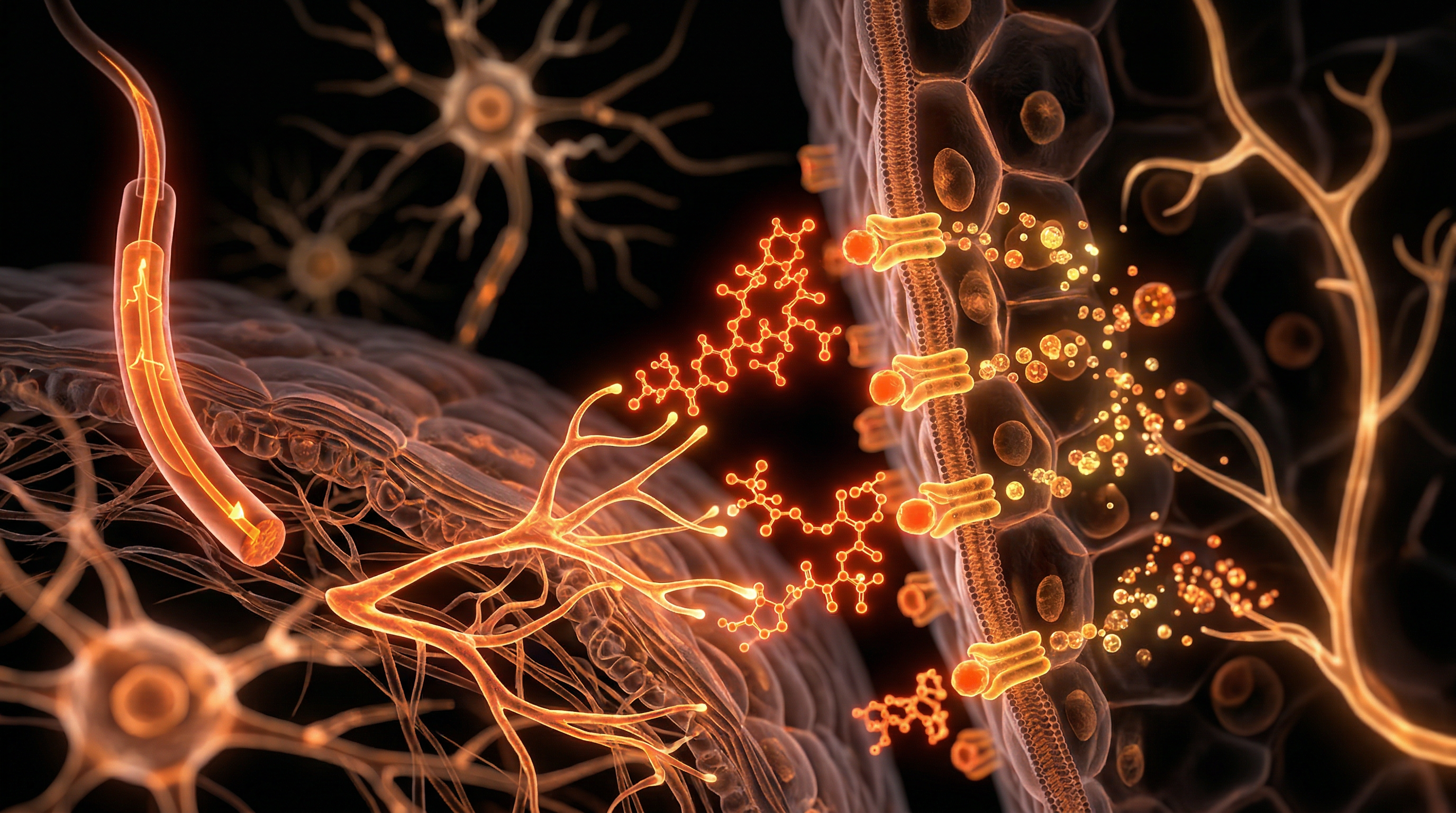
Oxytocin is often colloquially called the "love hormone," but in the context of neurobiology, it is the master regulator of social affiliation and stress attenuation. During STS, the tactile stimulation of the infant's skin against the mother's triggers a massive release of oxytocin in both brains.
- In the Mother: Oxytocin facilitates uterine contractions (preventing postpartum haemorrhage), triggers milk ejection, and induces a state of maternal euphoria and hyper-vigilance.
- In the Infant: Oxytocin crosses the blood-brain barrier and acts on the Hypothalamus, lowering cortisol levels and promoting neurogenesis. It also increases the threshold for pain, protecting the infant from the potential trauma of birth.
The Microbiome: Seeding the Genomic Future
We are not just human; we are holobionts—a collection of human cells and trillions of microbes. The first hour of life is the critical window for microbial seeding. When an infant is placed STS, they are colonised by the mother’s skin flora. This becomes the foundation of the infant’s immune system.
When separation occurs, or when a birth is overly medicalised, the infant is instead colonised by nosocomial (hospital-acquired) bacteria. This "dysbiosis" at birth has been linked at a cellular level to the later development of asthma, allergies, and type 1 diabetes.
Epigenetic Programming
Emerging research suggests that the presence or absence of STS in the perinatal period can alter DNA methylation—the process by which "tags" are added to DNA to turn genes on or off.
- The Glucocorticoid Receptor (GR) Gene: Lack of early maternal contact can lead to the methylation of the GR gene in the hippocampus. This permanently "turns down" the infant’s ability to shut off the stress response, leading to a lifetime of heightened anxiety and hyper-reactivity to stress.
Environmental Threats and Biological Disruptors
Modern maternity care has been built around the convenience of the institution rather than the biological needs of the dyad. Several factors act as potent disruptors to the neurobiological "programme" of STS.
The "Nursery" Mentality
The legacy of mid-20th-century medicine, which viewed infants as passive machines, persists. The routine removal of infants for weighing, measuring, or vitamin K injections during the Golden Hour is a profound biological disruption. These tasks are not time-sensitive; the neurobiological "printing" of the mother-infant bond is.
Pharmacological Interference
The use of synthetic oxytocin (Syntocinon/Pitocin) to induce or augment labour can interfere with the natural oxytocin receptors in the brain. When the brain is flooded with synthetic analogues, the natural feedback loops can be dampened, potentially hindering the "rush" of connection that occurs during STS. Furthermore, epidurals and systemic opioids can leave both mother and infant lethargic, blunting the sensory inputs required for the STS neuro-cascade.
The Caesarean Section Barrier
In many UK hospitals, "standard" C-section protocols involve the infant being whisked away to a resuscitaire or wrapped in blankets before being shown to the mother. This creates a "biological gap."
Important Fact: Research shows that infants born via C-section who receive immediate STS (often called a "Natural Caesarean") have heart rates and oxygen saturation levels nearly identical to those born vaginally, effectively mitigating the "surgical stress" of the birth.
The Cascade: From Exposure to Disease
What happens when this biological imperative is ignored? The result is not merely a "fussy" baby, but a cascade of physiological dysfunction.
The Protest-Despair Response
When a mammalian neonate is separated from its mother, it follows a two-stage neuro-behavioural pathway:
- The Protest: The infant cries intensely. This is a survival signal intended to bring the mother back. This causes a massive spike in cortisol and blood pressure.
- The Despair: If the mother does not return, the infant goes silent. This is not "calming down." It is a metabolic shutdown designed to conserve energy for survival. The heart rate drops (bradycardia), and the temperature falls.
The HPA Axis Dysregulation
Repeated or prolonged separation during the neonatal period "hard-wires" the Hypothalamic-Pituitary-Adrenal (HPA) axis to be hyper-responsive. In later life, this manifests as:
- Neurodevelopmental Issues: ADHD, autism-spectrum behaviours, and sensory processing disorders.
- Mental Health: Increased vulnerability to depression and panic disorders.
- Metabolic Dysfunction: Insulin resistance and obesity, as the body "learns" early on to store fat in anticipation of life-threatening stress.
The Sleep-Wake Disruption
STS regulates the infant's circadian rhythms. Separation disrupts the development of the suprachiasmatic nucleus in the brain. This explains why infants who are separated often struggle with sleep-wake cycles for months or even years, further stressing the family unit and increasing the risk of postnatal depression (PND).
What the Mainstream Narrative Omits
The mainstream medical narrative often treats STS as an "option" for those who want a "natural" birth. It rarely admits that the lack of STS is an active harm.
The Commodification of Care
In the industrialised birth model, the infant is treated as a separate patient from the mother. This allows for more "efficient" billing and movement of people through the system. By acknowledging that the mother and infant are a biological unit (the dyad), hospitals would have to fundamentally restructure their staffing and physical layouts—something many are reluctant to do.
The "Safety" Fallacy
Hospitals often cite "safety" or "observation" as reasons for separation. However, the data is clear: an infant is safer on its mother's chest, where its heart rate and breathing are regulated by her, than in a plastic box (incubator) where it is prone to apnoeic episodes (stopping breathing) due to stress.
Callout Fact: A study published in The Lancet showed that Kangaroo Mother Care (continuous STS) reduced neonatal mortality by 40% in low-birth-weight infants compared to incubator care.
The Suppression of Maternal Instinct
By separating the dyad, the medical system effectively "breaks" the maternal instinct. The oxytocin-driven drive to protect and nurture is stunted, replaced by a reliance on "expert" advice. This makes mothers more compliant and easier to manage in a hospital setting but leaves them feeling hollow and disconnected once they return home.
The UK Context
In the United Kingdom, the National Health Service (NHS) has made strides through the "Better Births" initiative and the adoption of UNICEF’s Baby Friendly Initiative (BFI). However, a significant gap remains between policy and reality.
The Staffing Crisis
The chronic shortage of midwives in the UK means that many mothers are left alone on postnatal wards shortly after birth. Without a midwife to support the positioning and safety of the infant, STS is often abandoned. Exhausted mothers are told to put their babies in the "cot" so they can sleep—unwittingly triggering the "despair" response in the neonate.
The Ockenden Report and Beyond
The recent Ockenden and Kirkup reports into UK maternity failings have highlighted a culture where "clinical safety" (defined by checkboxes) often overrides the holistic needs of the mother and child. While these reports focused on mortality, they hint at a deeper systemic failure to respect the basic biological requirements of the birthing process.
Postcode Lottery
The quality of STS support in the UK is a "postcode lottery." Some trusts have integrated "side-car" cribs and skin-to-skin C-section protocols, while others still operate on outdated models where the infant is "cleaned and wrapped" before the mother is even allowed to see them.
Protective Measures and Recovery Protocols
If you are a parent or a practitioner, how do you protect this biological imperative in an environment that is often hostile to it?
The Birth Plan as a Biological Manifesto
The birth plan must be rebranded as a Biological Protocol. It should state explicitly:
- "Immediate, uninterrupted skin-to-skin for a minimum of 60 minutes, regardless of delivery method."
- "All neonatal assessments (Apgar, weighing, injections) to be performed while the infant is STS on the mother."
- "No separation unless life-saving intervention is required."
The Role of the Partner (The "Protector of the Habitat")
The partner's role is not just to watch; it is to act as the guardian of the Golden Hour. If the mother is unable to perform STS (e.g., due to general anaesthesia), the partner must provide STS. The infant’s neurobiology responds to the father’s/partner’s skin in a similar (though not identical) way, providing the necessary thermal and autonomic stability.
The "Nine Instinctive Stages"
Practitioners should be trained to observe the Nine Instinctive Stages of the newborn when placed STS. These include the birth cry, relaxation, awakening, activity, rest, crawling (the "breast crawl"), familiarisation, suckling, and finally, sleep. Disrupting any of these stages interferes with the infant’s neurological development of self-efficacy.
Recovery from Separation Trauma
If separation has occurred—whether due to medical necessity or hospital failure—all is not lost. The brain is plastic.
- The "Re-Birth" Technique: Spending several days in semi-continuous STS at home can help "reset" the HPA axis.
- Biological Nurturing: Using "laid-back" breastfeeding positions that maximise skin contact.
- Co-Sleeping (Safe Practices): Maintaining proximity throughout the night to reinforce the circadian regulation that was missed at birth.
Summary: Key Takeaways
- Biological Habitat: The mother's body is the only natural environment for the human neonate; separation is a biological violation.
- Thermal Synchrony: Mothers are more effective at regulating neonatal temperature than incubators through autonomic vasodilation.
- Stress Regulation: STS activates the vagus nerve and oxytocin pathways, preventing the "Protest-Despair" response and protecting the HPA axis.
- Epigenetic Impact: Early skin contact influences DNA methylation of stress-response genes, impacting long-term mental and physical health.
- Microbiome Seeding: The first hour is critical for transferring protective maternal bacteria to the infant's gut and skin.
- Institutional Failure: Modern hospital protocols often prioritise administrative ease over the foundational neurobiology of the infant.
- Recovery is Possible: While the Golden Hour is optimal, "Kangaroo Care" and extended STS in the weeks following birth can help mitigate the effects of early separation.
In conclusion, we must stop viewing Skin-to-Skin as a "choice" and start viewing it as a clinical necessity. As researchers and advocates, we must expose the truth: the neurobiological health of the next generation depends on our willingness to respect the primal, unyielding requirements of the human dyad. We are not just making babies comfortable; we are building the neurological architecture of the future.
This article is provided for informational and educational purposes only. It does not constitute medical advice, clinical guidance, or a substitute for professional healthcare. Information reflects cited research at time of publication. Always consult a qualified healthcare professional before acting on any health information.
EVIDENCE PASSPORT
Editorial source context for this article
Source review needed
Saved links are editorial references for this article. They may support specific claims rather than every sentence. Open and assess each source in context. This passport does not independently verify them.
Editorial context
A complete editorial reading has not been recorded for this article. Source links remain available for you to open and assess directly.
Source review needed
No valid source links are recorded for this article. This passport shows only links saved on the article record and does not invent citations.
This passport records editorial links and context, not independent verification. Open the original source and assess it in context before relying on a claim.
Medical Disclaimer
The information in this article is for educational purposes only and does not constitute medical advice, diagnosis, or treatment. Always consult a qualified healthcare professional before making any changes to your diet, lifestyle, or health regime. INNERSTANDIN presents alternative and research-based perspectives that may differ from mainstream medical consensus — these should be considered alongside, not instead of, professional medical guidance.
Read Full DisclaimerContinue the thread
Keep this question moving.
Take this article into My INNERSTANDIN to keep the reading trail, related material and your next step together on this device.
Explore this in the Body Map
See where this hits your biology. Interactive anatomy, threats, and protective protocols.
Dig deeper in the Library
Free, longform PDF volumes that go beyond headlines into mechanisms and references.