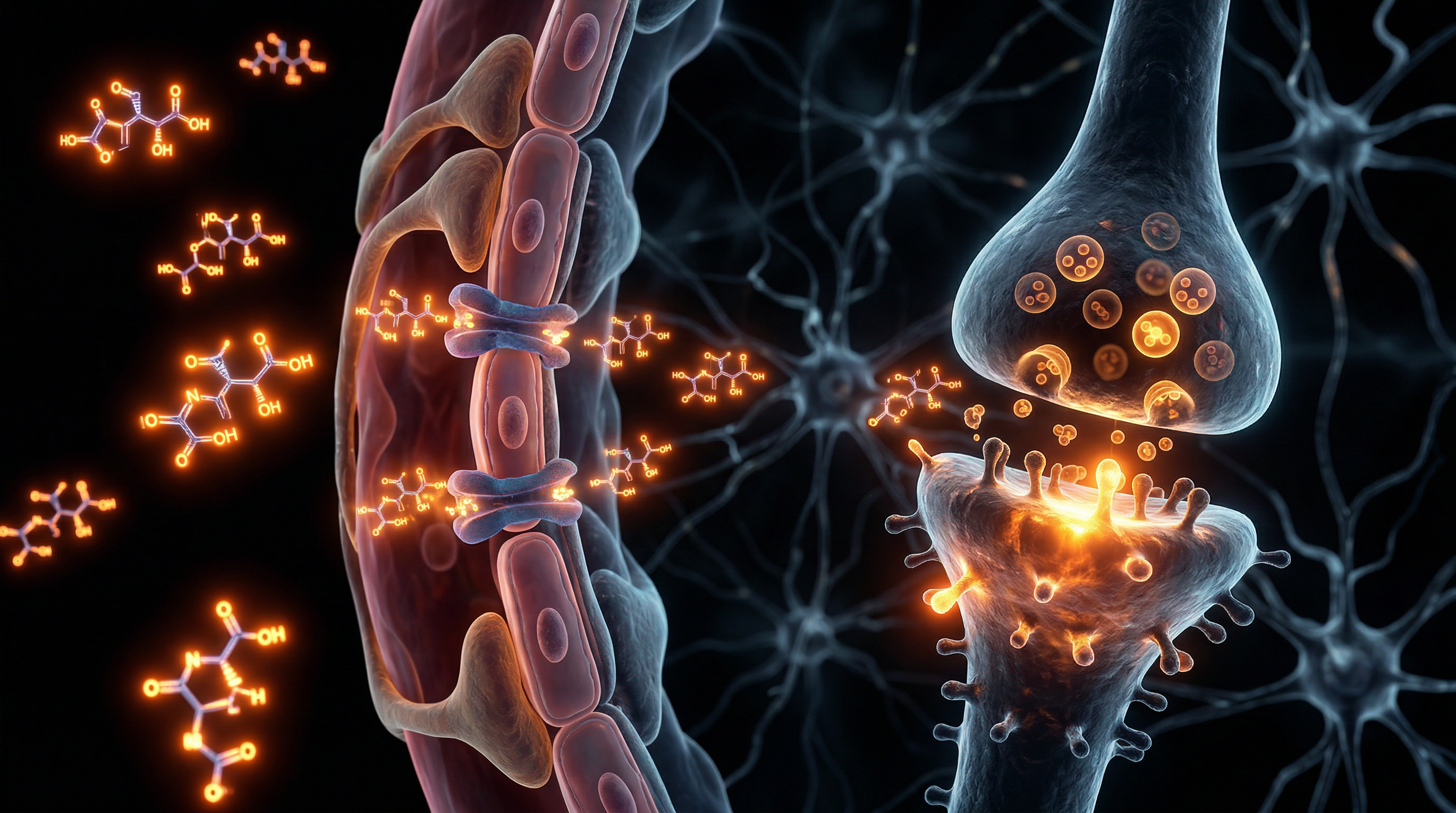
Neurological Pharmacokinetics: Magnesium L-Threonate and the Modulation of Synaptic Density across the Blood-Brain Barrier
An in-depth exploration of the unique pharmacokinetic properties of Magnesium L-Threonate, its ability to penetrate the blood-brain barrier, and its role in upregulating synaptic density to combat cognitive decline.

# Neurological Pharmacokinetics: Magnesium L-Threonate and the Modulation of Synaptic Density across the Blood-Brain Barrier
Introduction: The Central Nervous System’s Mineral Crisis
Magnesium is an indispensable element in human physiology, serving as a cofactor for over 300 enzymatic reactions. In the context of the Central Nervous System (CNS), it is a primary regulator of neurotransmission and neuronal health. However, a significant clinical challenge has long persisted: while magnesium levels in the blood might appear normal, the brain often remains in a state of 'subclinical deficiency.' This is due to the formidable nature of the Blood-Brain Barrier (BBB), which restricts the entry of most conventional magnesium salts.
As INNERSTANDING explores the root causes of neurological dysfunction, we must look beyond simple supplementation toward the science of pharmacokinetics. This article examines Magnesium L-Threonate (MgT), a novel chelated form designed specifically to bypass biological checkpoints and restore the brain's synaptic infrastructure.
The Blood-Brain Barrier: The Gatekeeper of Cerebral Homeostasis
The Blood-Brain Barrier is a highly selective semipermeable border of endothelial cells that prevents solutes in the circulating blood from non-selectively crossing into the extracellular fluid of the central nervous system. For magnesium, this presents a problem. While the brain requires high concentrations of magnesium to maintain cognitive function, the transport mechanisms across the BBB are highly regulated and easily saturated.
Standard forms of magnesium, such as Magnesium Oxide or Magnesium Citrate, possess poor bioavailability for the brain. Even when systemic levels are elevated via high-dose supplementation, the increase in cerebrospinal fluid (CSF) magnesium is marginal—often less than 7%. This pharmacokinetic limitation means that for those suffering from neurodegenerative conditions or cognitive decline, traditional magnesium forms fail to address the root cause: a localized mineral deficit in the neural tissue.
The Threonate Breakthrough: A Pharmacokinetic Lever
Developed by a team of neuroscientists at the Massachusetts Institute of Technology (MIT), Magnesium L-Threonate was engineered to solve the BBB permeability issue. The secret lies in the 'L-Threonate' molecule—a metabolite of Vitamin C. Unlike other chelating agents, L-threonate acts as a specialized 'shuttle.'
When magnesium is bound to L-threonate, it utilizes unique transport pathways that other forms cannot access. Clinical studies have demonstrated that Magnesium L-Threonate is significantly more effective at increasing magnesium concentrations in the brain compared to other magnesium compounds. By successfully elevating magnesium levels in the CSF, MgT provides the necessary substrate for the brain to engage in structural repair and functional optimisation.
Molecular Mechanisms: Upregulating Synaptic Density
Methylene Blue – Advanced Cellular Chemistry
A pharmaceutical-grade compound designed to optimise mitochondrial function and cellular energy production. This high-purity formula supports metabolic efficiency and mental clarity by acting as a powerful electron donor within your cells.
Vetting Notes
Pending
The primary therapeutic value of Magnesium L-Threonate lies in its ability to modulate 'synaptic density.' Synapses are the junctions between neurons where communication occurs. Cognitive decline, memory loss, and neurodegenerative diseases are fundamentally characterized by a loss of these connections.
NMDA Receptor Regulation
Magnesium resides within the pore of the N-methyl-D-aspartate (NMDA) receptor, acting as a gatekeeper. Under normal conditions, it prevents the receptor from being over-activated by glutamate. When the brain is deficient in magnesium, these 'gates' stay open, leading to calcium influx and excitotoxicity—a root cause of neuronal death. By restoring magnesium levels within the synapse, MgT ensures that the NMDA receptors function with precision, allowing for 'long-term potentiation' (LTP), the cellular basis for learning and memory.
Increasing Synaptic Plasticity
Research has shown that chronic administration of MgT increases the number of functional presynaptic release sites and postsynaptic receptors. Essentially, it doesn't just make existing synapses work better; it encourages the brain to build *more* of them. This increase in synaptic density is effectively a 'rewiring' of the brain, enhancing its resilience against aging and environmental stressors.
The Root Cause: Intracellular Deficiency and Cognitive Decline
Why are our brains deficient in the first place? At INNERSTANDING, we believe in looking at the systemic roots. Modern agricultural practices have depleted soil of essential minerals, meaning our food contains significantly less magnesium than it did a century ago. Furthermore, chronic stress triggers the release of cortisol, which causes the body to 'waste' magnesium through urinary excretion.
When the brain is deprived of magnesium, it loses its 'neuroplasticity'—its ability to adapt and change. This leads to the symptoms we often associate with 'getting older': brain fog, slower recall, and decreased focus. However, from a biochemical perspective, these are not inevitable signs of age, but symptoms of a compromised neurological environment. Magnesium L-Threonate addresses this root cause by providing the specific nutrient required to maintain the structural integrity of the neural network.
Comparative Analysis: Why Form Matters
To understand the uniqueness of L-Threonate, one must compare it to other popular forms used in the health industry:
- —Magnesium Oxide: High elemental weight but extremely low absorption (approx. 4%). Mostly used as a laxative; virtually no impact on brain levels.
- —Magnesium Citrate: Highly bioavailable for the body and useful for muscle relaxation or digestive health, but poor at crossing the BBB.
- —Magnesium Glycinate: Highly absorbed and excellent for sleep and anxiety due to the calming effect of glycine, yet still lacks the specific pharmacokinetic profile to significantly increase synaptic density.
- —Magnesium L-Threonate: The only form clinically shown to raise brain magnesium levels sufficiently to reverse indicators of brain aging.
Clinical Implications for Mental Health and Longevity
The implications of Magnesium L-Threonate extend beyond simple memory enhancement. Because it regulates the stress response and protects against excitotoxicity, it is becoming a cornerstone in the management of anxiety, PTSD, and even migraine prevention. By stabilizing the neurological environment, it allows the brain to transition from a 'survival state' (characterised by high inflammation and low connectivity) to an 'optimal state' (characterised by high connectivity and neurogenesis).
Conclusion: The Future of Neuro-Nutrition
As we advance our understanding of neurological pharmacokinetics, it becomes clear that 'more' is not always 'better.' The effectiveness of a nutrient is determined by its ability to reach its target tissue. Magnesium L-Threonate represents a shift in how we approach brain health—moving away from general supplementation and toward targeted, molecular interventions.
By bypassing the Blood-Brain Barrier and directly modulating synaptic density, MgT offers a proactive solution to the root causes of cognitive decline. For the INNERSTANDING community, this highlights a vital truth: when the brain is provided with the correct biochemical tools, it possesses a remarkable capacity for regeneration and resilience.
This article is provided for informational and educational purposes only. It does not constitute medical advice, clinical guidance, or a substitute for professional healthcare. Information reflects cited research at time of publication. Always consult a qualified healthcare professional before acting on any health information.
RESEARCH FOUNDATIONS
Biological Credibility Archive
Citations provided for educational reference. Verify via PubMed or institutional databases.
Medical Disclaimer
The information in this article is for educational purposes only and does not constitute medical advice, diagnosis, or treatment. Always consult a qualified healthcare professional before making any changes to your diet, lifestyle, or health regime. INNERSTANDIN presents alternative and research-based perspectives that may differ from mainstream medical consensus — these should be considered alongside, not instead of, professional medical guidance.
Read Full DisclaimerReady to learn more?
Continue your journey through our classified biological research.
THE ARSENAL
Based on Magnesium Forms, Functions & Deficiency — products curated by our research team for educational relevance and biological support.
Magnesium Blend – The Most Important Mineral
Methylene Blue – Advanced Cellular Chemistry
INNERSTANDING may earn a commission on purchases made through these links. All products are selected based on rigorous educational relevance to our biological research.
RABBIT HOLE
Follow the biological thread deeper