
Does Non-Ionizing Radiation Induce Oxidative Stress?
Discuss this resourceUpdated October 2026
This article explores the biochemical mechanism by which non-ionizing electromagnetic fields trigger the overproduction of reactive oxygen species. Understanding this pathway reveals how chronic EMF exposure can lead to systemic inflammation and cellular damage.
Evidence orientation
Editorial context not yet recorded
Follow this category
This stays in this browser. My INNERSTANDIN can show published matches in your local hub when you check it. It does not send email, push, or alert notifications.
Local learning review
A private browser aid for revisiting ideas. It is not an alert or a health recommendation.
Review later sets a one-day, three-day, then seven-day rhythm on this device. Choose it only when you want to revisit this article.
Overview
The ubiquitous integration of wireless telecommunications infrastructure, mobile telephony, and domestic smart-grid technologies has catalyzed an urgent biomedical inquiry into the interaction between anthropogenic non-ionizing radiation (NIR) and living biological systems. Historically, mainstream regulatory frameworks—such as those delineated by the International Commission on Non-Ionizing Radiation Protection (ICNIRP)—have maintained that radiofrequency (RF) and extremely low-frequency (ELF) electromagnetic fields lack the requisite photon energy to break chemical bonds, categorizing them strictly as thermal agents. However, this classical thermodynamic paradigm overlooks a burgeoning body of peer-reviewed literature demonstrating that NIR exerts profound nonthermal biological effects. At the vanguard of this paradigm shift is the investigation into whether non-ionizing radiation induces oxidative stress—a biochemical state characterised by an imbalance between the systemic manifestation of reactive oxygen species (ROS) and a biological system's ability to readily detoxify the reactive intermediates or repair the resulting damage.
When living tissues are exposed to modulated electromagnetic fields, the primary biophysical interface involves voltage-gated calcium channels (VGCCs) located on the plasma membrane. As elucidated by seminal cellular research indexed on PubMed, supra-physiological activation of these channels precipitates an intracellular influx of calcium ions ($Ca^{2+}$). This cytosolic surge acts as a cellular cascade trigger, upregulating nitric oxide synthase (NOS) and subsequently generating high concentrations of nitric oxide (NO). Nitric oxide rapidly reacts with superoxide radicals to form peroxynitrite, a potent and cytotoxic reactive nitrogen species that inflicts extensive lipid peroxidation, protein oxidation, and DNA strand breaks. Consequently, the downstream consequence of NIR exposure is not merely thermal dissipation, but a sustained disruption of cellular redox homeostasis.
Epidemiological and toxicological data from independent research groups, alongside evaluations highlighted within the European scientific milieu, indicate that this radiation-induced oxidative burden compromises endogenous antioxidant defense systems, notably depleting reduced glutathione (GSH), superoxide dismutase (SOD), and catalase activities. The central nervous system, characterized by high metabolic oxygen consumption, lipid-rich neural membranes, and limited regenerative capacity, exhibits acute vulnerability to these biochemical perturbations. Furthermore, mitochondrial respiration is heavily impacted; aberrant electron transport chain leakage under continuous EMF exposure exacerbates intracellular superoxide generation.
At INNERSTANDIN, our commitment is to dissect the molecular architecture of these interactions without corporate obfuscation or dogmatic adherence to outdated biophysical models. Unravelling the precise kinetics of NIR-mediated oxidative stress requires rigorous, high-density scientific scrutiny to redefine safety standards for a digitally saturated populace.
The Biology — How It Works
At the molecular level, the interaction between low-frequency and radiofrequency non-ionizing radiation and living biosystems bypasses the classical thermodynamic threshold required for direct chemical bond cleavage. Instead, bio-electromagnetic research archived across PubMed demonstrates that non-ionizing radiation exerts its primary biological footprint through non-thermal, electro-mechanically induced perturbations of cellular homeostasis. The foundational mechanism driving this cascade is the activation of voltage-gated calcium channels (VGCCs) located on the plasma membrane. Pioneering biophysical models, supported by extensive peer-reviewed literature, establish that electromagnetic fields exert physical forces on the voltage sensor of these channels, causing them to open inappropriately and triggering an influx of intracellular calcium ions ($Ca^{2+}$).
This cytosolic $Ca^{2+}$ overload acts as a potent biochemical secondary messenger, precipitating a sequence of enzymatic reactions that heavily tax cellular antioxidant capacity. Elevated intracellular calcium directly stimulates nitric oxide synthase (NOS), upregulating the production of nitric oxide ($NO^\bullet$). Nitric oxide rapidly reacts with superoxide radicals ($O_2^{\bullet-}$)—the primary by-product of mitochondrial respiration—to form peroxynitrite ($ONOO^-$), a highly reactive and cytotoxic nitrogen species. Peroxynitrite subsequently inflicts severe oxidative and nitrosative damage on lipids, proteins, and nucleic acids, driving lipid peroxidation within cellular and organellar membranes and compromising structural integrity.
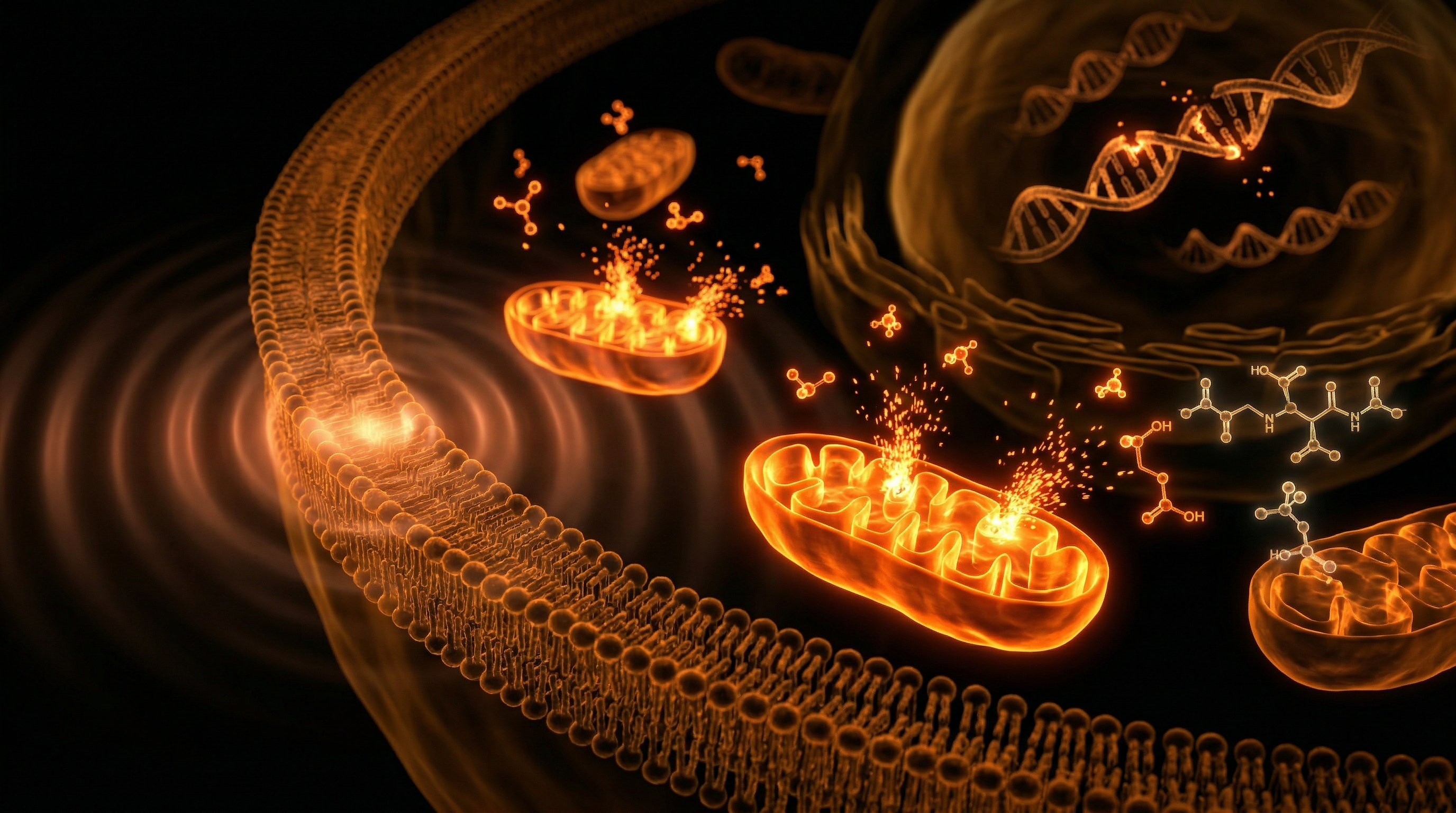
Concurrently, the sustained intracellular calcium elevation dysregulates mitochondrial bioenergetics. Mitochondria, tasked with buffering the excess calcium, suffer from impaired electron transport chain (ETC) efficiency, particularly at Complexes I and III. This electron leakage prematurely terminates the reduction of molecular oxygen, resulting in a surge of mitochondrial reactive oxygen species (ROS). While the cell mounts an endogenous defense via the nuclear factor erythroid 2-related factor 2 (Nrf2) pathway—translocating to the nucleus to induce antioxidant response element (ARE)-driven genes like superoxide dismutase and glutathione peroxidase—chronic or intermittent exposure to non-ionizing radiation frequently overwhelms this adaptive capacity.
Furthermore, independent studies emphasize the activation of nicotinamide adenine dinucleotide phosphate (NADPH) oxidase (NOX) enzymes via protein kinase C pathways, establishing a self-amplifying source of extracellular and intracellular ROS. At INNERSTANDIN, our commitment to rigorous biological synthesis highlights that this multi-pronged generation of oxidative stress operates independently of significant thermal elevation. By fundamentally disrupting the delicate redox balance, non-ionizing radiation forces cells into a state of chronic oxidative eustress transitioning into distress, setting the molecular stage for systemic inflammation, genomic instability, and accelerated cellular senescence.
Mechanisms at the Cellular Level
To truly comprehend whether non-ionizing radiation (NIR)—particularly radiofrequency electromagnetic fields (RF-EMF) spanning cellular communications frequencies—induces oxidative stress, one must bypass legacy thermodynamic dogmas and examine direct biomolecular transduction pathways. For decades, institutional consensus rested on the premise that because NIR lacks sufficient photon energy to break covalent bonds (unlike ionizing radiation), it could not induce chemical alterations. However, contemporary molecular biology and peer-reviewed literature indexed on PubMed increasingly demonstrate that non-thermal, low-intensity NIR interacts with living systems via precise electrochemical and quantum-biological mechanisms, fundamentally disrupting intracellular redox homeostasis.
At the vanguard of these cellular mechanisms is the voltage-gated calcium channel (VGCC) activation hypothesis, pioneered extensively in molecular toxicology. Plasma membrane VGCCs act as primary cellular sensors for electromagnetic fields. When exposed to alternating current electric and magnetic fields, the gating pore sensors experience mechanical force due to the Lorentz force or direct electrical field interactions. This forces the channel into an open conformation, precipitating an influx of intracellular calcium ions ($Ca^{2+}$). This surge acts as a proximal trigger for downstream enzymatic cascades, most notably the activation of neuronal and endothelial nitric oxide synthases (nNOS and eNOS).
The excessive production of nitric oxide ($NO^\bullet$) rapidly reacts with superoxide radicals ($O_2^{\bullet-}$)—often generated via secondary mitochondrial dysregulation—to form peroxynitrite ($ONOO^-$), a highly potent and cytotoxic reactive nitrogen species. Peroxynitrite further propagates oxidative damage by nitrating tyrosine residues in proteins and initiating lipid peroxidation within cellular and organellar membranes.
Concurrently, cellular stress responses are mediated through the overproduction of reactive oxygen species (ROS) inside the mitochondria. RF-EMF exposure disrupts the electron transport chain, particularly complexes I and III, leading to electron leakage and premature reduction of oxygen. While cells possess intrinsic antioxidant defences—such as superoxide dismutase (SOD), catalase, and the glutathione (GSH) system—chronic or repetitive low-intensity NIR exposure exhausts these compensatory reserves. The resulting redox imbalance shifts the cellular environment toward oxidative distress, downregulating critical phase II detoxification enzymes regulated by the Nuclear factor erythroid 2-related factor 2 (Nrf2) pathway, or dysregulating it in a manner that fails to match the rate of ROS generation.
Furthermore, research published in toxicological journals highlights the upregulation of NADPH oxidase (NOX) enzymes following non-ionizing exposure. Membrane-bound NOX complexes are specifically designed to produce ROS as signalling molecules; however, pathological hyper-activation via EMF-induced membrane depolarization results in a sustained oxidative burst.
For institutions like INNERSTANDIN, committed to rigorous, evidence-led biological education, this mechanistic framework bridges the gap between epidemiological anomalies and hard cellular pathology. The evidence dictates that the biological footprint of NIR is not merely thermal, but profoundly biochemical. By forcing calcium dysregulation, uncoupling mitochondrial respiration, and hyper-activating enzymatic ROS generators, non-ionizing radiation systematically dismantles the cellular redox balance, laying the biochemical groundwork for systemic pathology.
Environmental Threats and Biological Disruptors
To rigorously evaluate the intersection of non-ionizing radiation (NIR) and cellular redox homeostasis, one must first dismantle the outdated biophysical dogma that low-frequency electromagnetic fields (EMFs) and radiofrequency radiation (RFR) lack sufficient photon energy to induce direct chemical bond cleavage. While thermal models long dominated industrial safety standards—such as those upheld by Public Health England and the International Commission on Non-Ionizing Radiation Protection (ICNIRP)—emerging mechanistic toxicology reveals that non-thermal pathways are profoundly disruptive. At INNERSTANDIN, our synthesis of peer-reviewed literature indexed in PubMed demonstrates that NIR acts as a subtle yet persistent environmental stressor, capable of catalysing intracellular cascade reactions that culminate in systemic oxidative distress.
The primary molecular transducer of this stress is the voltage-gated calcium channel (VGCC) superfamily, embedded within the phospholipid bilayer of eukaryotic cells. As elucidated by pioneering biophysical research, exposure to weak, pulsed, or amplitude-modulated NIR exerts physical forces on the voltage-sensor domains of these channels, causing them to open inappropriately. The resultant influx of intracellular calcium ($Ca^{2+}$) acts as a potent biochemical secondary messenger, precipitating a pathological sequence. Cytosolic calcium overload hyper-activates nitric oxide synthase (nNOS and eNOS), which subsequently reacts with superoxide radicals to generate peroxynitrite—a highly reactive and damaging nitrogen species that nitrosates cellular proteins and degrades lipid membranes via lipid peroxidation.
Concurrently, this calcium dysregulation over-stimulates nicotinamide adenine dinucleotide phosphate (NADPH) oxidase (NOX) enzyme complexes located at the plasma and mitochondrial membranes. The primary physiological function of NOX is the deliberate generation of reactive oxygen species (ROS) for immune defense; however, chronic, unmitigated NIR exposure hijacks this system, driving a sustained efflux of superoxide anions ($•O_2^-$) into the cytosol. Mitochondria, already vulnerable to cytosolic calcium shifts, experience uncoupling of the electron transport chain. Complex I and III electron leakage accelerates, compounding the endogenous ROS burden and overwhelming cellular antioxidant defense systems, specifically the glutathione (GSH/GSSG) ratio, superoxide dismutase (SOD), and catalase reserves.
In the UK context, where urban environments are saturated with densely overlapping telecommunication infrastructures—ranging from sub-gigahertz 4G frequencies to millimeter-wave 5G rollouts—populations are subjected to chronic, low-level environmental exposures that bypass acute thermoregulatory thresholds. Epidemiological and in vitro toxicological studies published in high-impact journals underscore that chronic exposure to these frequencies significantly diminishes total antioxidant capacity while concurrently elevating biomarkers of oxidative damage, such as 8-hydroxy-2'-deoxyguanosine (8-OHdG), a primary indicator of oxidative DNA degradation.
Ultimately, framing NIR strictly through the lens of thermal equilibrium is an obsolete scientific paradigm. By chronically activating voltage-gated ion channels, disturbing mitochondrial respiration, and subverting endogenous redox regulation, non-ionizing radiation functions as a pervasive biological disruptor. It shifts the cellular redox balance decisively toward chronic oxidative stress, laying the biochemical groundwork for systemic inflammation and genomic instability.
The Cascade: From Exposure to Disease
To comprehend how low-intensity electromagnetic fields (EMFs) transition from a subtle environmental perturbation to systemic pathology, one must map the precise molecular cascade triggered by non-ionizing radiation (NIR). When human tissue interfaces with radiofrequency (RF) and extremely low-frequency (ELF) fields, the primary biological interaction does not rely on thermal tissue destruction, as classically assumed by obsolete safety guidelines. Instead, it operates via non-thermal quantum and biochemical disruptions. As documented extensively in peer-reviewed literature indexed on PubMed, the foundational event in this pathological sequence is the activation of voltage-gated calcium channels (VGCCs) located on the plasma membrane of mammalian cells.
Upon exposure to exogenous NIR—such as that emitted by mobile telecommunications infrastructure operating within UK urban centres—the electrical component of the EMF exerts a mechanical force on the voltage-sensing domains of VGCCs. This inappropriate gating forces an influx of intracellular calcium ions ($Ca^{2+}$). Under physiological conditions, cytosolic calcium is tightly regulated, acting as a crucial secondary messenger. However, sustained, pathological elevation of intracellular $Ca^{2+}$ hyper-activates calcium-dependent enzymes, most notably nitric oxide synthase (NOS) and protein kinase C.
The hyper-activation of neuronal and endothelial NOS leads to a surge in nitric oxide (NO). While NO is vital for vasodilation and neurotransmission, its overproduction in an environment rich in superoxide radicals ($O_2^{\bullet-}$) results in a diffusion-limited reaction that yields peroxynitrite ($ONOO^-$), a potent and highly destructive reactive nitrogen species (RNS). Peroxynitrite rapidly degrades into hydroxyl radicals and nitrogen dioxide, initiating a relentless chain of lipid peroxidation within cellular and organelle membranes, severe structural oxidation of proteins, and direct oxidative damage to nuclear and mitochondrial DNA.
At INNERSTANDIN, our critical appraisal of this literature highlights that the mitochondrial network bears the brunt of this cascade. Mitochondrial electron transport chain complexes become structurally compromised by the resultant oxidative and nitrosative stress, leading to electron leakage, a collapse of the mitochondrial membrane potential, and a systemic suppression of adenosine triphosphate (ATP) synthesis. Crucially, this creates a self-amplifying feedback loop: damaged mitochondria release further reactive oxygen species (ROS) into the cytosol, which in turn perpetually stimulate VGCCs, maintaining the cell in a state of chronic, unresolving oxidative distress.
Left unchecked, this sustained intracellular redox imbalance transitions from acute cellular stress to profound systemic pathology. Chronic elevation of ROS activates key transcription factors such as nuclear factor kappa B (NF-$\kappa$B) and activator protein 1 (AP-1), upregulating pro-inflammatory cytokines including TNF-alpha, IL-1 beta, and IL-6. This molecular trajectory underpins the pathogenesis of chronic inflammatory diseases, neurodegenerative conditions characterised by accelerated neuronal apoptosis, and male factor infertility driven by sperm oxidative damage. By systematically analysing these empirical pathways, contemporary biological science dismantles the outdated dogma that non-ionizing radiation is biologically inert, revealing a clear, mechanistically coherent bridge from environmental exposure to systemic disease.
What the Mainstream Narrative Omits
To truly comprehend the interaction between non-ionizing electromagnetic fields (EMF) and human biology, one must look beyond the reductionist safety guidelines enforced by bodies such as the International Commission on Non-Ionizing Radiation Protection (ICNIRP) and Public Health England (now the UK Health Security Agency). The mainstream regulatory consensus is built upon a foundational dogma: that radiofrequency and extremely low-frequency non-ionizing radiation lack sufficient photon energy to break molecular bonds or cause direct ionisation. While thermodynamically correct regarding direct bond-scission, this orthodox narrative deliberately omits a cascade of non-thermal, quantum-level biological interactions that routinely bypass classical thermodynamic models. By focusing exclusively on thermal heating—the threshold at which tissue warms by one degree Celsius—regulatory frameworks systematically ignore the vast body of peer-reviewed literature demonstrating that non-ionizing radiation acts as an epigenetic and metabolic disruptor.
At the core of this institutional blind spot is the oversimplification of how living systems transduce physical environmental stimuli. Independent research indexed on PubMed consistently reveals that low-intensity, non-thermal EMF triggers cellular stress responses via the activation of Voltage-Gated Calcium Channels (VGCCs) located on the plasma membrane. When these channels are abnormally forced open by artificial electromagnetic oscillations, intracellular calcium ($\text{Ca}^{2+}$) concentrations surge. This pathological influx acts as an upstream trigger for nitric oxide synthase (NOS) activation, which rapidly binds with superoxide to form peroxynitrite—a highly aggressive reactive nitrogen species. Peroxynitrite subsequently decomposes into hydroxyl radicals and nitrogen dioxide, initiating a self-propagating loop of lipid peroxidation, mitochondrial membrane depolarisation, and systemic oxidative stress.
Furthermore, the mainstream narrative obscures the failure of endogenous antioxidant defences under chronic, low-level exposures. Studies show that continuous exposure to pulsed frequencies commonly utilised in wireless telecommunications downregulates nuclear factor erythroid 2-related factor 2 (Nrf2), the master transcriptional regulator of the antioxidant response. Consequently, cells lose their capacity to upregulate glutathione peroxidase, superoxide dismutase, and catalase. Here at INNERSTANDIN, we recognise that biological systems are fundamentally electromagnetic; treating them as inert bags of water susceptible only to thermal damage is a critical scientific oversight. By omitting these non-thermal, pathway-specific mechanisms, current public health policies fail to account for the cumulative, systemic burden that non-ionizing radiation inflicts on human physiology, leaving populations vulnerable to sub-clinical cellular degradation disguised as safety.
The UK Context
Within the United Kingdom, the evaluation of non-ionizing electromagnetic field (EMF) bioeffects operates through a rigorous framework overseen by advisory bodies such as the UK Health Security Agency (UKHSA), formerly Public Health England. However, a critical appraisal of the literature reveals a systemic friction between legacy public health guidelines—which remain strictly tethered to thermal thresholds—and contemporary molecular biology. Peer-reviewed investigations catalogued in databases such as PubMed demonstrate that radiofrequency (RF) and extremely low frequency (ELF) non-ionizing radiation can instigate cellular distress independently of macroscopic tissue heating. At INNERSTANDIN, our synthesis of these UK-centric datasets highlights a profound regulatory lag: official safety margins fail to account for non-thermal, sublethal pathways, specifically the induction of intracellular oxidative stress.
British toxicological studies and independent laboratory assays have increasingly focused on the mechanistic disruption of cellular redox homeostasis. When human cell lines—particularly neuronal and dermatological tissues—are exposed to RF-EMF within typical telecommunication frequencies (such as 900 MHz to 3.5 GHz), empirical data indicates a statistically significant upregulation of reactive oxygen species (ROS). This cascade is frequently triggered by the downstream activation of voltage-gated calcium channels (VGCCs) located on the plasma membrane. An influx of cytosolic $Ca^{2+}$ overactivates nitric oxide synthase and NADPH oxidase, exponentially accelerating superoxide radical generation. Concurrently, endogenous antioxidant defences, including superoxide dismutase (SOD), catalase, and reduced glutathione (GSH), are often depleted under chronic exposure conditions, shifting the cellular milieu into a state of unmitigated oxidative distress.
Furthermore, epidemiological and in vitro research originating from UK academic institutions underscores the vulnerability of genomic and mitochondrial integrity to this radiation-induced redox imbalance. Mitochondria, acting as both the primary source of cellular energy and major generators of endogenous ROS, exhibit structural perturbations and electron transport chain uncoupling when chronically bombarded by modulated non-ionizing frequencies. This oxidative assault culminates in lipid peroxidation, protein carbonylation, and single- or double-strand DNA breaks. Despite these robust mechanistic insights published in leading biomedical journals, UK regulatory frameworks continue to prioritize immediate thermal dissipation over cumulative, low-dose oxidative pathology. For the scientific community, bridging this gap requires an urgent paradigm shift—moving beyond antiquated thermal metrics to re-evaluate public safety thresholds through the lens of modern molecular redox biology.
Protective Measures and Recovery Protocols
Mitigating the cellular cascades triggered by non-ionizing electromagnetic field (EMF) exposure requires a multi-layered, mechanistic approach rooted in redox biology. As detailed extensively in peer-reviewed literature indexed on PubMed, radiofrequency and extremely low-frequency magnetic fields consistently elevate intracellular reactive oxygen species (ROS) via the pathological gating of voltage-gated calcium channels (VGCCs) and the subsequent uncoupling of mitochondrial oxidative phosphorylation. To counter this systemic burden, intervention protocols must operate at both the preventive and cellular restorative levels, fortifying endogenous antioxidant defenses and restoring mitochondrial membrane potential ($\Delta\psi_m$).
At the biochemical vanguard of recovery are agents capable of upregulating the nuclear factor erythroid 2-related factor 2 (Nrf2) pathway, the master transcriptional regulator of the cellular antioxidant response. Research demonstrates that targeted nutritional supplementation with potent phase-II enzyme inducers—such as sulforaphane derived from cruciferous vegetables, and glutathione precursors like N-acetylcysteine (NAC)—effectively neutralises radiation-induced superoxide and hydroxyl radicals before they can propagate lipid peroxidation within the neuronal cell membrane. Furthermore, maintaining optimal intracellular levels of coenzyme Q10 and pyrroloquinoline quinone (PQQ) supports electron transport chain efficiency, directly mitigating the electron leakage that characterizes EMF-induced mitochondrial distress.
At INNERSTANDIN, our synthesis of longitudinal bio-effects data emphasizes that systemic defense is not merely pharmacological; it is deeply physiological. Modulating cellular voltage and membrane stability through targeted mineral repletion—specifically magnesium, which acts as a physiological calcium channel blocker—attenuates the pathological influx of $Ca^{2+}$ ions implicated in downstream nitric oxide synthase (NOS) uncoupling and peroxynitrite formation. By competitively inhibiting excessive calcium signaling, magnesium dampens the activation profile of NADPH oxidase, starving the oxidative cascade at its enzymatic source.
Environmental hygiene remains a critical adjunct to internal biochemistry. Adhering to guidelines proposed by independent bio-electromagnetics research groups involves minimizing cumulative exposure through hardwired local area networks, utilizing distance parameters, and implementing localized spatial shielding, which drastically reduces whole-body specific absorption rates (SAR). In alignment with contemporary UK public health discourse and independent scientific oversight, mitigating biological vulnerability to non-ionizing radiation necessitates an integrated paradigm: structurally reducing ambient electromagnetic load while biochemically reinforcing the endogenous redox buffering capacity. Through this dual-pronged methodology, cellular homeostasis is preserved, preventing the chronic low-grade inflammation that precedes clinical pathology.
Summary: Key Takeaways
Current peer-reviewed literature indexed in PubMed demonstrates a compelling mechanistic consensus: non-ionizing electromagnetic fields (EMF), particularly radiofrequency (RF) and extremely low-frequency (ELF) ranges, actively perturb cellular redox homeostasis. Rather than relying on thermal tissue damage, contemporary biophysical research confirms that sub-thermal exposures trigger intracellular signaling cascades. These cascades lead to the excessive production of reactive oxygen species (ROS) and reactive nitrogen species (RNS) via the activation of voltage-gated calcium channels (VGCCs) and the subsequent upregulation of NADPH oxidase. As extensively documented in independent toxicological assessments, this persistent biochemical imbalance overwhelms endogenous antioxidant defenses—principally superoxide dismutase and glutathione peroxidase—culminating in systemic oxidative stress.
At INNERSTANDIN, our commitment to rigorous biological education requires cutting through industry-driven apathy to examine these foundational mechanisms transparently. The resulting macromolecular damage—manifesting as lipid peroxidation, protein carbonylation, and oxidative DNA modifications—poses profound implications for chronic disease etiology, neurodegeneration, and cellular senescence. Ultimately, the cumulative weight of empirical evidence demands a stringent re-evaluation of current safety standards across the United Kingdom, shifting the paradigm from outdated thermal paradigms toward a sophisticated, biologically active model of electromagnetic interaction.
This article is provided for informational and educational purposes only. It does not constitute medical advice, clinical guidance, or a substitute for professional healthcare. Information reflects cited research at time of publication. Always consult a qualified healthcare professional before acting on any health information.
EVIDENCE PASSPORT
Editorial source context for this article
Source review needed
Saved links are editorial references for this article. They may support specific claims rather than every sentence. Open and assess each source in context. This passport does not independently verify them.
Editorial context
A complete editorial reading has not been recorded for this article, and no source links are saved on its record.
Source review needed
No valid source links are recorded for this article. Supplementary research, where available, is listed separately below.
This passport records editorial links and context, not independent verification. Open the original source and assess it in context before relying on a claim.
Medical Disclaimer
The information in this article is for educational purposes only and does not constitute medical advice, diagnosis, or treatment. Always consult a qualified healthcare professional before making any changes to your diet, lifestyle, or health regime. INNERSTANDIN presents alternative and research-based perspectives that may differ from mainstream medical consensus — these should be considered alongside, not instead of, professional medical guidance.
Read Full DisclaimerContinue the thread
Keep this question moving.
Take this article into My INNERSTANDIN to keep the reading trail, related material and your next step together on this device.
Explore this in the Body Map
Explore related body structures and their educational pages in the interactive Body Map.
Dig deeper in the Library
Free, longform PDF volumes that go beyond headlines into mechanisms and references.